
 Worksheets
4th grade review Q2
Total questions: 56
Worksheet time: 1hrs 25mins
A ball rolls down a hill at a constant speed. What changes about the ball as it rolls?
Position
Color
Temperature
Shape
A bobsled glides across the ice and gradually begins to slow down. Which force is acting on the bobsled?
Magnetism
Mass
Gravity
Friction
Jared wants to test the effect of friction on an object. Which would be the best experiment for him to test this effect?
Use a pulley to lift several blocks
Drop a ball from different heights
Roll a toy car across different surfaces
Use a balance to find the mass of objects
A force that slows or stops motion when objects rub together is called:
Friction
Energy
Magnetism
Gravity
Renee is throwing a ball high into the air and then catching it. What is the effect of gravity on the ball?
It increases the mass of the ball
It pulls the ball back to the ground
It makes the ball's speed slow down
It makes the ball's speed remain the same
The force that acts to pull all objects down to Earth is:
Friction
Energy
Magnetism
Gravity
Which surface would probably offer the least friction if you were to slide a box across it?
Glass
Wood
Carpet
Brick
Karyn designs an experiment to test the effect of force on her bike. She rides her bike along a path. She finds that when she moves off the path and onto grass, her speed decreases. What does she determine caused her change in speed on the grass?
Decrease in lift
Decrease in mass
Increase in friction
Increase in gravity
Which of these situations would probably NOT result in force from a magnet?
Two opposite poles facing each other
Two of the same poles facing each other
A magnet and a paper clip
A magnet and a sheet of paper
Sally is pushing on a door labeled "pull", and the door will not open. Which of these explains why the door doesn't move?
Sally isn't using any force
The door isn't made of steel, iron, nickel, or cobalt
The force of the door is greater than the force Sally is pushing on it
Gravity holds the door closed

What information do Sal and Ranasia need in order to determine which car won the race?
A. the distance their car traveled
B. the distance of track A
C. the distance of track B
D. the distance of track A and B
Sal measured the length of the track for car 2 and reported it was 10 meters long. Ranasia measured the length of the track for car 4 and reported it was 11 yards long. What could explain the difference in their results?
A. They each measured a different track.
B. They started at different positions on the track.
The used different tools to measure.
D. They stopped at different places on the track.
Sloane and Tyson were at the skatepark for the afternoon. Sloane wanted to race Tyson, but they couldn’t fit on the slope to race at the same time. What could Sloane and Tyson do to determine who had the greatest speed?
A. They could measure the distance and the height of the ramp.
B. They could measure the height of the ramp and the mass of their skateboards.
C. They could measure the distance they rode and the time it took to reach the same finish line.
D. They could measure the time it took both to stop rolling when they reached the bottom of the slope.
The local afterschool club was hosting a toy speedboat competition down at the lake. They were planning the event and discussing how they would determine which entry has the greatest amount of speed. Which tools would the club need to have in order to determine every boat’s speed?

A. measuring tapes and stopwatches

A. trundle wheels and spring scales

stopwatches and timers

A. measuring tapes and trundle wheels
At recess, the students were lining up at the edge of the court, running for five seconds, then marking their positions. Their teacher observed that some students were running at a lower speed than others. What data supports the teacher’s observations?
A. The students were running the same distances but in different amounts of time.
B The students were running for the same amount of time but travelling different distances.
C. The students were running the same distances in the same amount of time.
D. The students were running in different directions and stopping when they got tired.
Which of the following statements is true about an object in motion?
An object in motion will change direction randomly.
An object in motion will continue to move at a constant velocity unless acted upon by an external force.
An object in motion will eventually come to a stop.
An object in motion will always accelerate over time.
What happens to the position of an object in motion?
It stays the same.
It becomes smaller.
It disappears.
It changes.
What is the term used to describe when an object in motion changes its direction?
Acceleration
Inertia
Deceleration
Static
When an object changes its position, does it always change its direction?
Yes
No
Only if it is moving in a straight line
Sometimes
True or False: An object in motion can stay in the same position.
False
Only if it's a very small object
Sometimes
True
What is the main characteristic of an object in motion?
Changes position over time
Remains stationary
Changes shape over time
Has no velocity
Which of the following is an example of an object changing its position?
A person sitting in a chair
A tree growing taller
A book on a shelf
A car driving from one city to another
What is the opposite of an object in motion?
Object at rest
Object floating in space
Object in motion
Object spinning in circles
True or False: An object in motion can only change its position.
False
An object in motion can change its color
An object in motion can change its shape
True
What is an orbit?
The way the planets spin on their axis.
The path the Earth takes when it moves on its axis.
The path an object takes when it is rotating around an other object.
The path an object takes when it is revolving around an other object.
How many long does it take for the Earth to complete one revolution around the Sun?
24 hours
365 days
1 Week
30 Days
Which of the following best defines a rotation?
The Earth spinning on its axis
The Earth moving around the Sun
The Sun moving around the Earth
The planets moving around the Sun
Which of the following best defines a revolution?
The Earth spinning on its axis
The Sun moving around the Earth
The Earth moving around the Sun
The planets moving around the Sun
How long does it take for the Earth to rotate on its axis?
24 hours
365 days
1 Week
30 days
Complete the following statement: Every day, the Earth _____________ on its axis, causing day and night. Every year, the Earth ______________ around the Sun.
Revolves; Rotates
Rotates; Rotates
Rotates; Revolves
Revolves; Revolves
True or False. The Earth's axis is slightly tilted, causing some parts of the Earth to receive more sunlight than others.
True
False
Which of the following best describes Earth's axis?
An invisible line that runs from the United States to Japan
An invisible line that runs from South America to Hawaii
An invisible line that runs from Europe to Asia
An invisible line that runs from the North Pole to the South Pole

Take a look at the image. What is being depicted here?
The Earth rotating on its axis and causing day and night
The Earth rotating on its axis and causing the seasons
The Earth rotating on its axis, causing the clouds to move
The Earth rotating on its axis, causing the water cycle
True or False. Without the Earth's tilt, there would be no change in the seasons.
True
False
West to East
East to West
revolves around Sun
revolves around the Earth

This picture shows a phase of the moon. What will the next phase be?
new moon
first quarter
last quarter
full moon
The sun appears to move across the sky during the day. Why does this happen?
Earth's tilt on its axis
moon orbiting Earth
Earth's rotation on its axis
Earth's orbit around the sun
Earth spins at a very constant and regular speed. How long does it take for Earth to make one complete rotation?
24 hours
24 days
365 hours
365 days
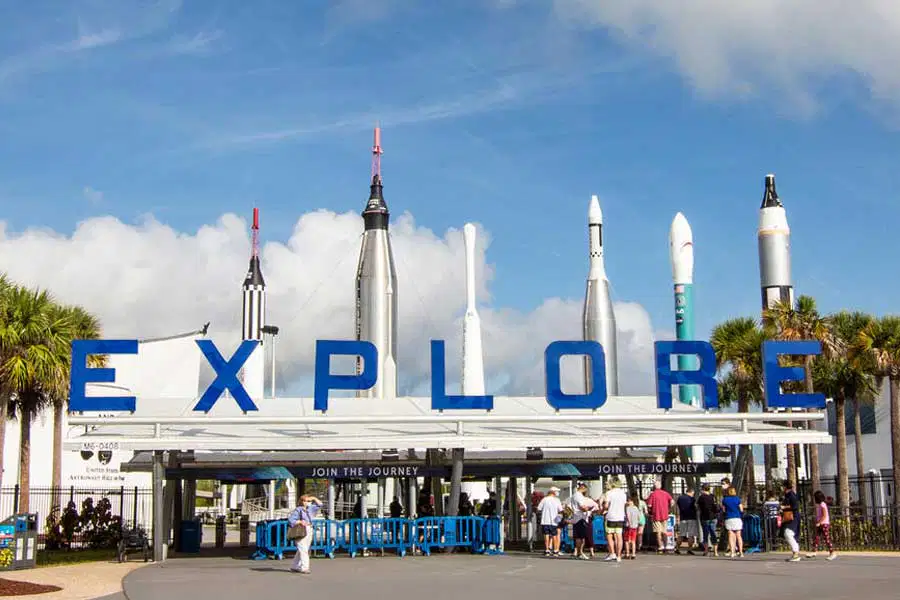
Alessandro visited Kennedy Space Center. Many other people were visiting there too. How does a high number of visitors to the space center most help Florida?
People get to meet the astronauts.
Many people get to see the shuttle.
More people get to visit the beaches.
Visitors bring more money into the state.
Colin likes to look out the window at the moon. He observes that it seems to change every week. Which sentence best explains why this happens?
The moon moves between Earth and the sun.
The moon rotates only once in about a month.
The same side of the moon always faces Earth.
The amount of the lighted part of the moon that faces Earth changes.
Earth orbits the sun. Yet the sun appears to move through the sky. For example, the sun always appears to rise in the east and set in the west. What is responsible for this apparent motion of the sun?
Earth's size
Earth's orbit
Earth's rotation
Earth's revolution
We know that each year has four seasons: winter, spring, summer, and fall. Why do we have seasons?
tilt of Earth's axis
shape of Earth's orbit
length of a year on Earth
rotation of Earth about its axis
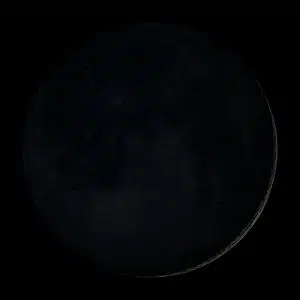
Blaed saw the moon one night. It looked like this picture (new moon). One week later, why did the moon look bigger?
The moon became larger.
The moon became brighter.
Earth and the moon moved closer together.
Blaed could see more of the side of the moon that was lit.
Which is a natural resource?
car
bridge
computer
rock
Which is used to produce electricity?
coal
limestone
iron
copper
Which is a renewable resource?
marble
oil
sunlight
aluminum
Which is a nonrenewable resource?
wind
iron
water
a tree
Florida's phosphate rock formed from
phosphorus
weathering
remains of ocean animals
fertilizer
What is limestone in Florida mostly used for?
to build roads
to build up beaches
to make fertilizer
to make glass
People cut down pine trees to make paper. People plant new pine trees so they can make more paper. Pine trees are
a fossil fuel
a mineral resource
a renewable resource
a nonrenewable resource
Which energy resource does Florida have the most of?
sunlight
coal
gas
oil
Which of these natural resources does Florida have more of than any other state?
coal
oil
trees
phosphates
Which resource is available in Florida?
phosphate
solar energy
limestone
all answer choices are correct
Nonrenewable resources can take _____ year(s) to be replaced
0
10
100
1000 or more

