
Font size
 Worksheets
3rd Six Weeks Extra Credit
Total questions: 501
Worksheet time: 16hrs 49mins

The diagram shows a model of an atom. The model contains 3 different subatomic particles. (a) have either a positive or a neutral charge. (b) has a negative charge.
If a Fluorine (F) atom has a mass number of 19, how many neutrons are in the atom?

How many neutrons are in the nucleus of a potassium atom with a mass number of 39?

The atomic number of Krypton is 36. If the mass number of a krypton atom is 84, which table shows the number of subatomic particles INSIDE and OUTSIDE the nucleus of the krypton atom?


Drag the hotspot to the location of the nucleus in the Atom featured here.

Place the elements in the correct order by LEAST (left) number of Protons to MOST (right) number of protons.
Hydrogen
Carbon
Aluminum
Potassium
Xenon
The electrons in an atom are (a) the nucleus and have a (b) charge.
Label the two parts of the atom here.
Match the following mass amounts with the proper charge.
Protons
(+)positive
Electron
(-) negative
Neutron
(0) neutral, no charge
Both the proton and the (a) have a mass unit of 1 AMU, while the (b) has a mass unit of 0 AMU.
Which statement correctly describes the location and charge of the neutrons in an atom?
The neutrons are inside the nucleus and have a positive charge.
The neutrons are outside the nucleus and have a neutral charge.
The neutrons are outside the nucleus and have a negative charge.
The neutrons are inside the nucleus and have a neutral charge.
What type of particles are found in the cloud surrounding the atom's nucleus?
Neutral particles and positively charge particles
Positive charge particles only
Negatively charge particles and positively charge particles
Negatively charge particles only
Which of the following best describes a proton?
It has a positive charge and the same mass as an electron
It has a neutral charge and the same mass as an neutron
It has a positive charge and the same mass as an neutron
It has a negative charge and the same mass as an electron


How many atoms are represented in the reactants in the equation?
6
7
4
5
In which of these compounds are there twice as many oxygen atoms as hydrogen atoms?
H3PO4
H2SO4
HCIO3
H2O
The chemical formula for sodium sulfate is Na2SO4. How many sulfur atoms are in the formula for sodium sulfate?
1
2
6
7
How many atoms of oxygen are in a molecule of glucose (C6H12O6)?
4
6
12
24

How many atoms in all are found in the compound above?
3
4
5
6
Which of the models best represents CaCO3?


How many elements are in C6H12O6?
1
2
3
4
Sodium sulfate is used in laundry detergent. It is a compound that contains 2 atoms of sodium, 1 atom of sulfur, and 4 atoms of oxygen. What is the correct chemical formula for sodium sulfate?
NA2SO4
Na2S2O4
Na2SO4
Na2SO8
The smallest particle of an element that cannot be broken down further without changing the properties of the element.
cell
atom
charge
isotope
What is in the center of an atom?
way
structure
cell
nucleus
The area of space surrounding the nucleus.
proton
isotope
electron cloud
neutron
Subatomic particles within the atom.
protons, neutrons, and electrons
neutrons, isotopes, rotopes
protons, botons, critons
neutrons, botons, rotopes
Which subatomic particle does not have an electrical charge and is found inside of the nucleus?
electrons
protons
neutrons
isotopes
Positively charged particles found in
the nucleus of an atom.
electrons
neutrons
isotopes
protons
Negatively charged particles within the electron cloud outside the nucleus.
neutrons
protons
electrons
isotopes
If the number of protons equals the number of electrons in the atom the electrical charge is-
negative
neutral
positive
If there are more protons than electrons, the
atom is ______ charged.
positively
negatively
neutral
If there are more electrons than protons, the atom is _______ charged.
positively
negatively
neutral
Where are electrons found?
proton cloud
nucleus
neutron cloud
electron cloud
_____ have a smaller mass than protons and neutrons.
isotopes
electrons
ions
breons
The three smaller components that make up atoms are
neutrons, protons and ions.
neutrons, electrons and protons.
protons, ions and electrons.
electrons, neutrons and ions.
Which of the following lists the two particles found together inside the nucleus of an atom?
Photons and ions
Neutrons and electrons
Protons and neutrons
Electrons and protons
Which of the following correctly lists the pair of subatomic particles that balance the charge of the atom?
Protons and neutrons
Electrons and neutrons
Protons and electrons
Electrons and ions
An element’s reactivity and other chemical properties are determined by the number of -
isotopes it has
oxidation states
orbitals in an atom
valence electrons

Molybdenum has an atomic number of 42. This means that molybdenum –
has a freezing point of 42° Fahrenheit.
belongs to Group 42 on the Periodic Table.
can form 42 bonds with other atoms.
contains 42 protons in its nucleus.
Which of the following properties of carbon distinguishes it from all other elements?
Carbon has six protons in its nucleus.
Carbon is a gray solid at room temperature.
Carbon forms compounds with oxygen
Carbon can be found in Earth’s crust.

The table provides information on four different elements. Based on the information provided, it can be concluded that –
sodium is the most reactive.
strontium is the best conductor.
phosphorus is the least stable.
aluminum has the most protons.
What is the name for the type of subatomic particle that is electrically neutral and found in the nucleus of an atom?
Proton
Neutron
Ion
Electron
Which particles would you find in the nucleus of an atom?
Protons and neutrons
Electrons and protons
Electrons only
Neutrons and electrons
Which subatomic particle(s) would be found orbiting around the nucleus?
Electrons and protons
Neutrons only
Protons and neutrons
Electrons only
Which of the following correctly lists the pair of subatomic particles that balance the charge of the atom?
Protons and neutrons
Electrons and neutrons
Protons and electrons
Electrons and ions
What is the mass of an atom with seven protons, seven neutrons, and eight electrons?
15
14
13
22
A form of charge, designated negative, positive, or neutral (without charge) that is found on the subatomic particles that make up all atoms.
atomic mass
p+
e-
electrical charge
The tiny, very dense, positively charged region in the center of an atom; made up of protons and neutrons.
(a)

The smallest particle of an element; made of electrons, protons, and neutrons
valence electron
electron cloud
atomic mass
atom

What is the arrow pointing to?
atomic number
atomic mass
chemical formula
valence shell
Which of the following atoms would have a charge of +1?
An atom with 9 protons, 9 electrons, and 9 neutrons.
An atom with 7 protons, 11 electrons, and 8 neutrons.
An atom with 5 protons, 5 electrons, and 4 neutrons.
An atom with 6 protons, 5 electrons, and 7 neutrons
The nucleus of the atom contains 8 protons and 9 neutrons. The atom is electrically neutral. How many electrons does this atom have?
4
9
8
15
If an atom has 17 protons, 18 neutrons, and 17 electrons, what is the mass of this atom?
17
18
35
52
The charge of an atom is determined by the
shape of the electron cloud.
atomic mass of the element.
radius of the outermost electron.
number of protons and electrons.
Which of the following lists the two subatomic particles that contribute the most to the mass of an atom?
Protons and electrons
Protons and neutrons
Neutrons and electrons
Electrons and ions
A certain atom has 11 electrons, 8 neutrons, and a charge of -1. What is its atomic mass?
19
15
11
18

Which value is most likely the number of protons for saturntonium?
388
219
169
171

Which statement is a valid conclusion based on the information?
Saturntonium is nonreactive
Saturntonium has properties unlike any other element
Saturntonium is very reactive
Saturntonium has properties most similar to period 7 metals

What information from the table could help the student identify the element?
Protons
Neutrons
Atomic mass
Valence electrons
Which model represents the most reactive atom?
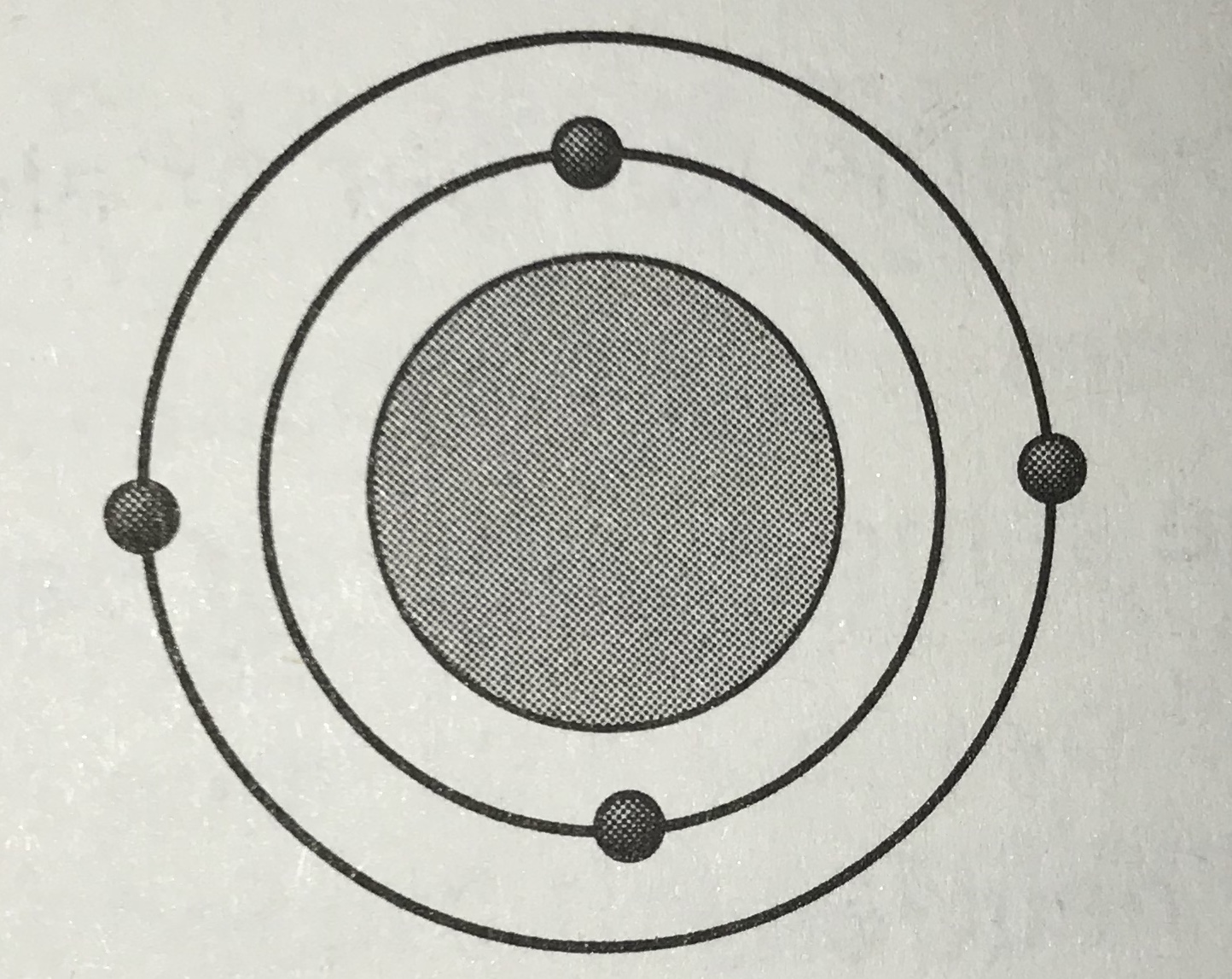
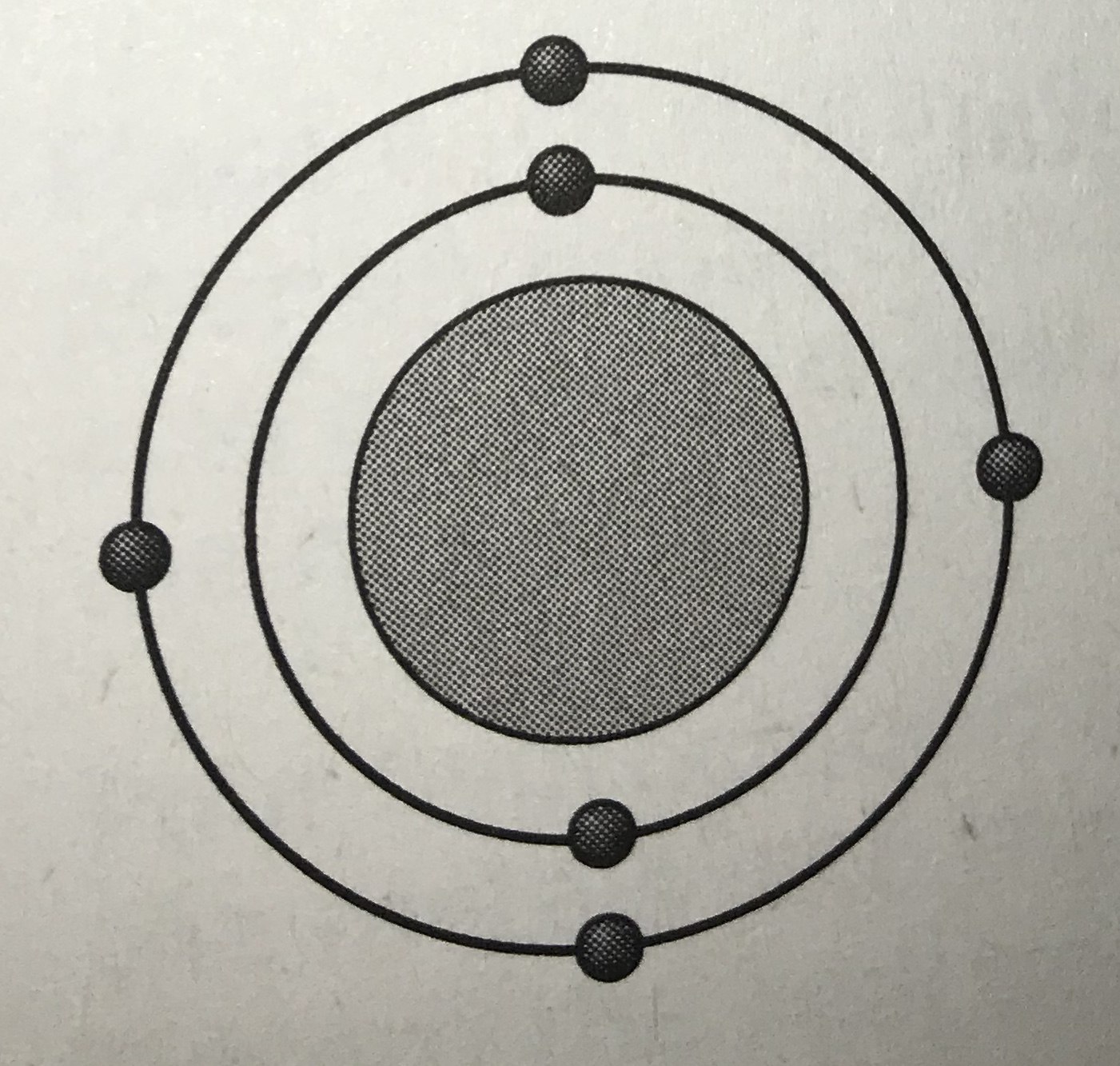
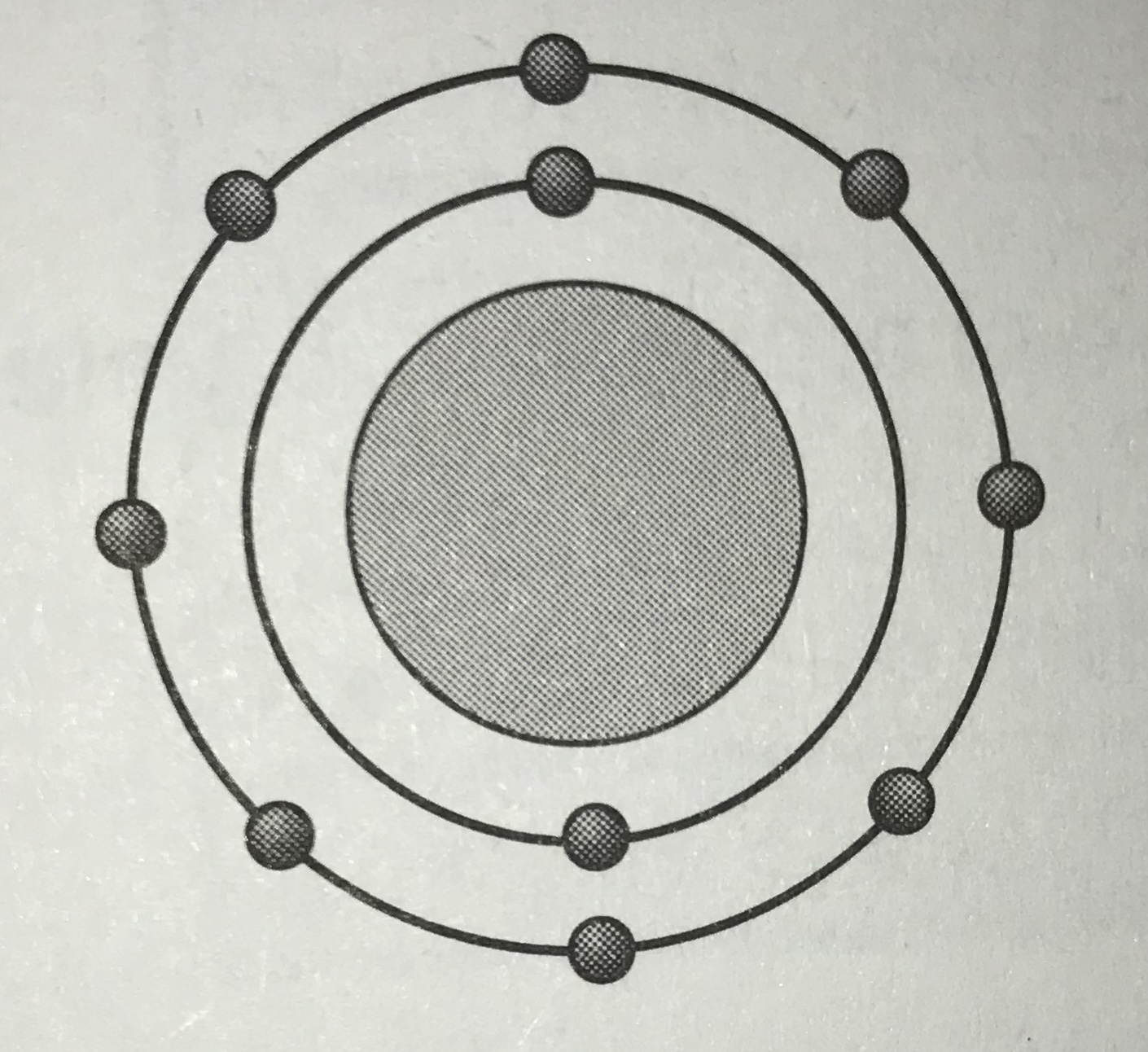
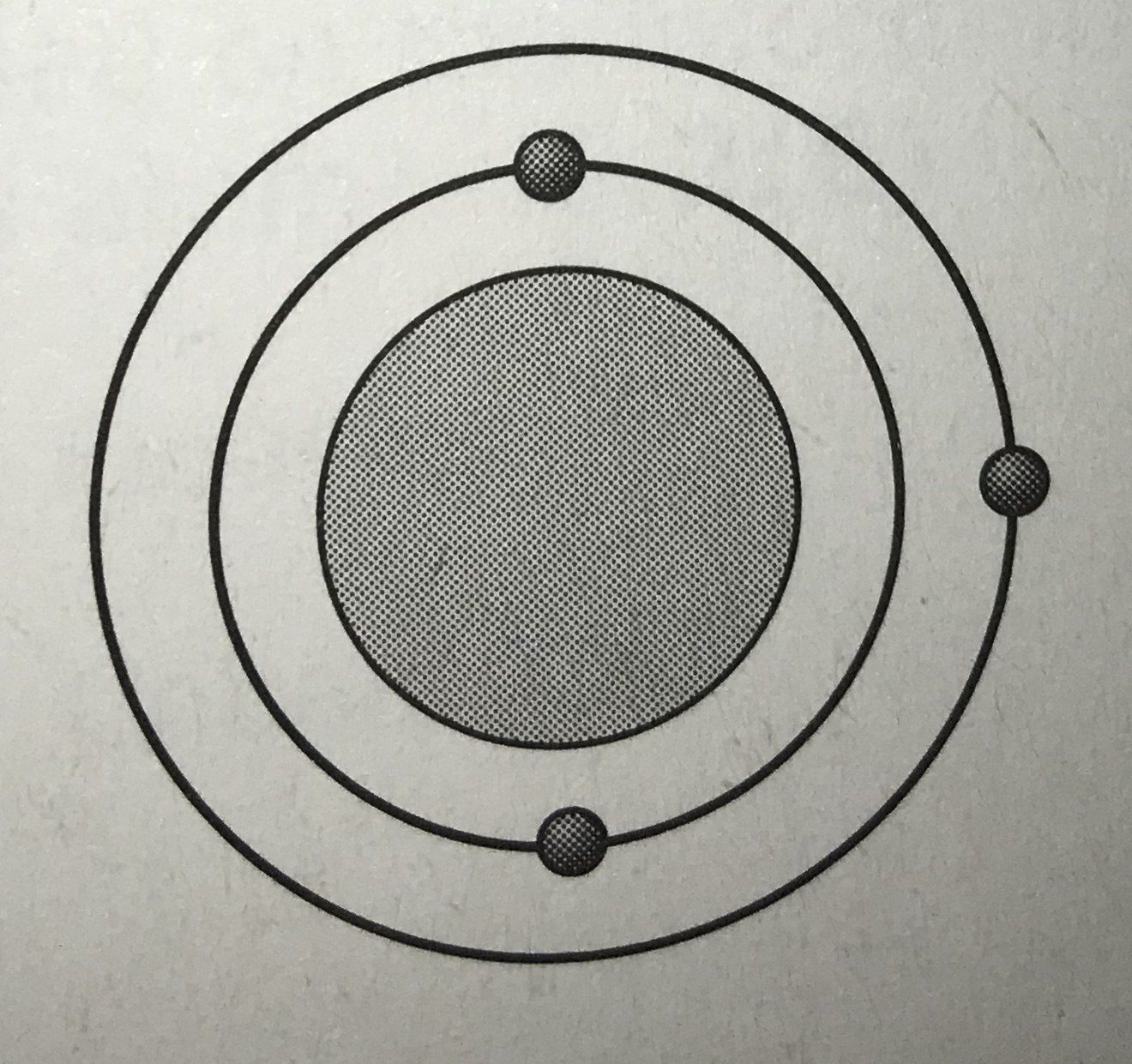

What element, based on the subatomic particles in the atom, is shown?
Beryllium
Helium
Lithium
Oxygen
Which of the following characteristics is similar for fluorine and iodine?
Number of protons
Number of neutrons
Number of orbitals
Number of valence electrons
What element contains 7 protons and 5 valence electrons?
Boron
Vanadium
Nitrogen
Lithium
The atomic number of an element is equal to its number of protons. Therefore, a logical conclusion is that the number of protons determines an element's
Mass and atomic weight
Number of stable isotopes
Identity
State of matter
Which statement is NOT accurate describing the element krypton?
The element has 36 protons
The element has 48 neutrons
The element has 6 valence electrons
The element has properties similar to neon
Which statement would be most helpful in determining an element's reactivity?
The element has the same number of electron shells as iodine
The element has the same number of valence electrons as cesium
The element has 47 neutrons
The element is a metal

Based on the model, which statement accurately describes the reactivity of sodium?
Sodium is slightly reactive because it has one more neutron than protons
Sodium is highly reactive because it has a filled outer shell of valence electrons
Sodium is slightly reactive because it has an equal number of protons and electrons
Sodium is highly reactive because it has only one valence electron

Where are valence electrons located on the model?
Near the nucleus
In the middle of the atom
At the innermost level
At the outermost level

Based on the information, what is the identity of this atom?
Fluorine (F)
Cobalt (Co)
Germanium (Ge)
Nickel (Ni)

Which student's claim about valence electrons in a sulfur atom is correct?
Student 1
Student 2
Both Student 1 and Student 2
Neither Student 1 nor Student 2
Which statement best explains why protons are used to identify an element?
Protons are the most easily identified subatomic particles
Positive charges are more easily detected during an investigation than negative and neutral charges
The number of protons is unique to each element and remains constant
Protons alone cannot be used to identify an element. The number of electrons and neutrons must also be known.
A group of students examines a Bohr model of an atom with 8 valence electrons. What conclusion can the students make about the chemical reactivity of the element?
The element is extremely reactive because the outer energy level is full
The element is nonreactive because the outer energy level is full
The element is somewhat reactive because the outer energy level is full
Additional information is necessary to determine reactivity

Which area would be most useful in determining the identity of an element?
Area 1
Area 2
Area 3
Area 4

What reasonable conclusion can be made from the information given?
Element 1 has the same atomic mass as Element 4
Element 3 has very similar chemical properties as Element 4
Element 1 has very similar chemical properties as Element 3
None of the above

Based on the data, which number shows the correct location of the element with 2 valence electrons and 3 energy levels.
1
2
3
4

Based on the data, which number shows the correct location of the element with 2 valence electrons and 1 energy levels.
1
2
3
4
Which pair of properties describe the elements in group 18
They have 8 valence electrons and are very reactive
They have 8 energy levels and are stable
They are gases at room temperature and are stable
They are gases at room temperature and very reactive.

Which statement best describes the position of the two elements in the periodic table.
The two elements are in the same period, with Mg the first element in the period table and Ca the last element
The two elements are in the same group, with Mg just above Ca
The two elements are side by side in the same period, with Ca to the left of Mg
The two elements are in the same group, with Ca just below Mg

Which of these elements is in this group?
Lithium
Silicon
Aluminum
Strontium
Which two elements on the periodic table are in the same group?
Na and He
O and C
Li and Ne
He and Ar
Which pair of properties describes the elements in Group 1?
They are chemically stable
They have 8 valence electrons
They are the most reactive metals
They are the most reactive non metals
How many valence electrons are in an element in group 15 in the periodic table?
5
15
7
8

Which two atoms are elements in the same group in the periodic table?
Atom 3 and Atom 4
Atom 1 and Atom 4
Atom 3 and Atom 2
Atom 1 and Atom 2
Which two atoms are elements that belong in period two in the periodic table?
Atom 3 and Atom 4
Atom 1 and Atom 4
Atom 3 and Atom 2
Atom 1 and Atom 2
Based on the data, which number shows the correct location of the element that is brittle and dull.
1
2
3
4
Based on the data, which number shows the correct location of the element that is malleable and a good conductor.
1
2
3
4
which set of elements represents a period within the periodic table?
H, He, Ar, Xe, and Rn
K, V, Fe, Ga, and Kr
N, P, As, Sb, and Bi
La, Pd, Sm, Tb, and Yb

In the periodic table above, which elements are predominantly gases with low densities?
Elements in area A
Elements in area B
Elements in area C
Elements in area D
All of the following properties describe the element calcium EXCEPT
reactive
shiny and silvery-white in color
found in nature
soft enough to be cut with a knife

Which statement best describes the positions of Elements J and Z in relation to each other?
Elements J and Z are part of the same group in different periods
Elements J and Z are part of different groups in the same period
Elements J and Z are part of groups next to each other in the same period
Elements J and Z are part of different groups in different periods
Fluorine is classified as part of the halogen group because all the elements
are conductors of electricity
have the same atomic mass
have similar chemical and physical properties
are malleable and ductile

Which sets of elements have similar chemical and physical properties?
1 and 2
1 and 3
2 and 3
2 and 4
Which of the following best describes the location of an element in the same period as the element tin?
Group 14(4A), Period 4
Group 16(6A), Period 5
Group 14(4A), Period 5
Group 13(3A), Period 6
Which set of elements has properties similar to phosphorus?
Aluminum, silicon, sulfur, and chlorine
Carbon, selenium, iodine, and radon
Oxygen, germanium, indium, and mercury
Nitrogen, arsenic, antimony, and bismuth

What property does element X have based on its location in the periodic table?
Highly reactive gas
Manmade radioactive substance
Nonreactive nonmetal
Metallic solid

Which elements would most likely fill these spaces?
Cu, Ag, and Au
Ti, V, and Cr
Mn, Ru, and Os
Co, Pd, and Au
A student is given two unknown metals and asked to determine whether these two elements belong to the same group in the periodic table. Which of the following will help the student determine if the metals belong to the same group?
Measure only physical properties of the metals
Measure both chemical and physical properties of the metals
Measure only chemical properties of the metals
Measure the densities of the metals
Under special conditions, pure calcium reacts with water. Which element could be substituted for calcium in this reaction?
Potassium
Aluminum
Magnesium
Chlorine

Which statement best describes the relationship between elements D and E?
Element D has more valence electrons than Element E
Element D is more reactive than Element E
Elements D and E are metals
Element D has a smaller atomic size than Element E
CO2
How many elements make up this chemical formula?
(a)
C6H12O6
How many elements make up this chemical formula?
(a)
C6H12O6
How many atoms of Hydrogen are there?
(a)
18 H2O
How many atoms of Oxygen are there?
(a)
2 C2H18
How many atoms of Carbon are there?
(a)
2 Al2O3
How many atoms of Oxygen are there?
(a)
2 Al2O3
How many atoms of Aluminum are there?
(a)
FeS2
How many different elements make up this compound?
(a)
FeS2
What is the TOTAL number of atoms that make up this compound?
(a)
NaNO2
How many elements make up this chemical formula?
(a)
Sn(NO3)2
How many elements make up this chemical formula?
(a)
Sn(NO3)2
How many atoms of Tin are there?
(a)
Sn(NO3)2
How many atoms of Nitrogen are there?
(a)
(NH4)2Cr2O7
How many elements make up this chemical formula?
(a)
(NH4)2Cr2O7
How many atoms of Chromium are there?
(a)
(NH4)2Cr2O7
How many atoms of Hydrogen are there?
(a)
CaCO3
How many elements make up this chemical formula?
(a)
CaCO3
What is the TOTAL number of atoms that make up this compound?
(a)
2 Pb(NO3)2
How many elements make up this chemical formula?
(a)
2 Pb(NO3)2
How many atoms of Lead are there?
(a)
2 Pb(NO3)2
How many atoms of Nitrogen are there?
(a)
NaHCO3
How many elements make up this chemical formula?
(a)
NaHCO3
How many atoms of Carbon are there?
(a)
2C2H2 + 5O2 ---> 4CO2 + 2H2O
2C2H2 + 5O2 ---> 4CO2 + 2H2O
2C2H2 + 5O2 ---> 4CO2 + 2H2O

Which of these formulas contain equal numbers of nitrogen atoms?
Formulas I and III
Formulas I and IV
Formulas I, II and V
Formulas II and III
How many atoms are represented in the reactants in the equation?
6
7
4
5
How many elements are represented in the products in the equation?
2
3
4
5
In which of these compounds are there twice as many oxygen atoms as hydrogen atoms?
H3PO4
H2SO4
HCIO3
H2O
The chemical formula for sodium sulfate is Na2SO4. How many sulfur atoms are in the formula for sodium sulfate?
1
2
6
7
How many atoms of oxygen are in a molecule of glucose (C6H12O6)?
4
6
12
24
How many atoms in all are found in the compound above?
3
4
5
6
Which of the models best represents CaCO3?
How many elements are in C6H12O6?
1
2
3
4

What combination of beads should the use to model the formula? Blue represents carbon, green represent oxygen and red represent hydrogen.
6 blue, 6 red and 6 green
12 green, 6 red and 6 blue
12 red, 6 blue and 6 green
12 blue, 6 green and 6 red


Which of the models of a chemical reaction best represents the Law of Conservation of Mass?
A
B
C
D

How many grams of OXYGEN would be needed to show conservation of mass in the example below?
100 g
93 g
7 g
0 g
A student mixes 125 grams of sugar, 250 grams of water and 5 grams of flavoring. The solution weighs...
250 grams
380 grams
375 grams
400 grams
________ are the starting substances in a chemical equation.
Reactants
Producer
Reaction
Products
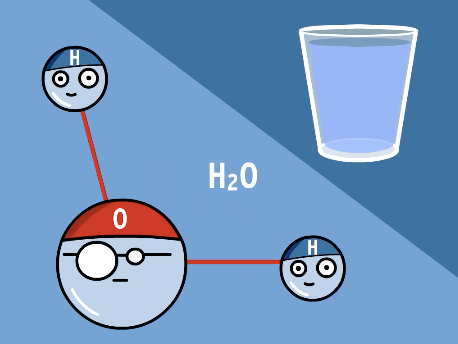
4 grams of hydrogen and 32 grams of oxygen will combine to form:
36 grams of water
28 grams of hydroxide
32 grams of oxygen
36 grams of deuterium

If this reaction occurs in a sealed container, will the mass of the container and everything in it increase, decrease, or stay the same and why?

The law of conservation of mass says substances can neither be ____________ nor_________.
created; destroyed
condensed; extracted
Sodium and chlorine combine t form sodium chloride, or table salt. Sodium and chlorine are:
products
reactants
4 grams of hydrogen and 32 grams of oxygen will combine to form:
36 of deuterium
32 grams of oxygen
28 grams of hydroxide
36 grams of water
Which of the following describes a chemical reaction?
ice melts into water
carbon dioxide freezes to make dry ice
oxygen interacts with iron to form rust
rocks split apart over many years due to weathering
When sodium and chlorine combine to form sodium chloride, sodium chloride is the:
product
reactants


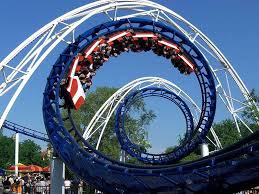
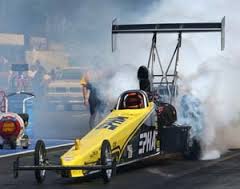


Green object is moving at a faster constant speed than Red
Red object is moving at a faster constant speed than Green
Green object is moving at a slower constant speed than Red
Red object is moving 2 times faster than Green


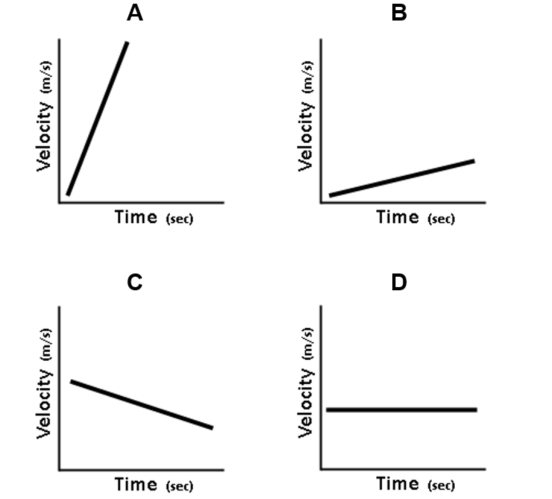
Which graph represents slowing down?
A
B
C
D







Which of the formulas is incorrect for speed
s=d/t
speed= distance/ time
speed= t/d




What is the force of gravity on a ball if the ball has a mass of 10kg and accelerates to earth at 9.8m/s2 ?
98 N
9.8 N
980 N
10 N
The coin was at rest until the card was removed, so it tended to remain in the same location. Once the card was gone, the unbalanced force of gravity caused the coin to fall.
Moving the card applied an action force on the coin. Since the card was gone, gravity applied a reaction force on the coin.
The card had less mass than the coin, so a smaller force of gravity acted on the card. The larger force of gravity on the coin made it fall.
The acceleration of the coin falling into the cup was equal and opposite to the acceleration of the card.


A
B
C
D

An illustration of how a convection current creates a wind, called a land breeze, is provided.Which of the following best explains what creates this convection current?
The rotation of Earth makes the air above it rotate, but not the same over land and water.
Because of its mass, Earth’s gravity creates a high pressure area over both the land and water.
Salt in the ocean makes it more dense than the land, so its gravity pulls more on the air above it.
During the evening, the land cools off more quickly than the water, so the air is different temperatures.


An illustration of how a convection current creates a wind, called a sea breeze, is provided. Which of the following best explains what creates this convection current?
Salt in the ocean makes it more dense than the land, so its gravity pulls more on the air above it.
During the day, the Sun’s energy heats up the land faster, which makes the air above it warmer.
The rotation of Earth makes the air above it rotate, but not the same over land and water.
During the day, Earth’s gravity creates a high pressure area over both the land and water.

Which of the following correctly shows the direction of convection currents in water?
A
B
C
D


The warmer air is above the land in a ___________.
Hurricane
Land Breeze
Mountain Breeze
Sea Breeze
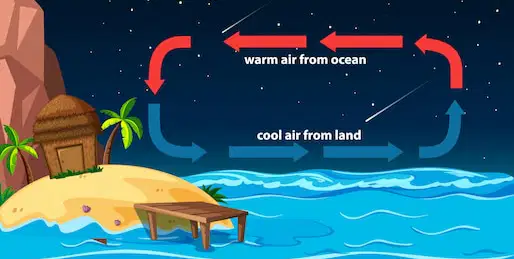
The warmer air is above the sea in a ___________.
Hurricane
Land Breeze
Mountain Breeze
Sea Breeze


What are winds that blow short distances – Examples: land breeze, sea breeze

What is a current of fast moving air in the upper atmosphere
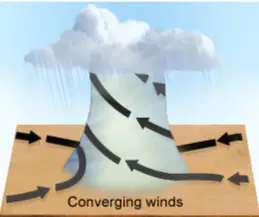
warmer, less dense, rising air that causes cloudy skies

cooler, more dense, sinking air that causes sunny skies
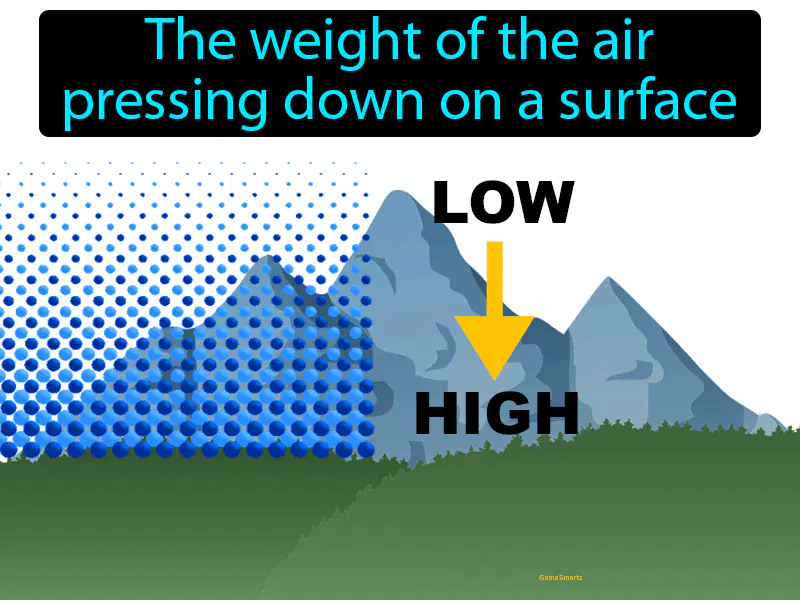
the weight of the air pressing down on a surface
Gravity
Wind Speed
Air Pressure
What is the source of the thermal energy that heats our planet’s atmosphere?
Earth's core
Green plants
The Sun
Fossil Fuels
The Sun warms the atmosphere and drives convection currents because -
warm air is less dense, so it rises.
the warmed air cools and makes rain.
the cooler land pushes away warm air.
warm air, in contact with cool air, rotates.
Winds in our atmosphere are created as a result of which of the following processes?
Energy that is absorbed in the atmosphere
Gravitational attraction from the Moon
Density of the air particles in the atmosphere
Uneven heating of the air in the atmosphere
The major patterns of movement of air and water on Earth are the result of –
different densities of seawater and fresh water.
diversity in the height of coastal landforms.
uneven heating and the rotation of Earth.
irregular durations of daytime and nighttime.
What is one effect of the uneven heating of Earth caused by the Sun?
Rotation of Earth
Generation of wind
Oceans losing salt
Plants failing to grow
Which of the following changes would remove the source of energy that generates the convection which makes wind here on Earth?
Growing more vegetation in barren areas.
Removing all the salt from sea water.
Blocking all solar radiation.
Reversing the rotation of Earth.
Winds in our atmosphere are created as a result of which of the following processes?
Energy that is absorbed in the atmosphere
Gravitational attraction from the Moon
Density of the air particles in the atmosphere
Uneven heating of the air in the atmosphere
Michael and Isabella are working together on an assignment. They must search some illustrations to find an example of heat transfer by convection. Which illustration best represents convection?
An illustration of heat being transferred by wind
An illustration of heat being transferred by objects in contact
An illustration of heat being transferred between rocks
An illustration of the Sun’s heat moving through empty space
An illustration of how a convection current creates a wind, called a land breeze, is provided.Which of the following best explains what creates this convection current?
The rotation of Earth makes the air above it rotate, but not the same over land and water.
Because of its mass, Earth’s gravity creates a high pressure area over both the land and water.
Salt in the ocean makes it more dense than the land, so its gravity pulls more on the air above it.
During the evening, the land cools off more quickly than the water, so the air is different temperatures.
The energy that generates wind comes from what source?
The energy that generates wind comes from what source?
Solar radiation
Electromagnetic waves
Severe thunderstorms
Convection is the type of heat transfer that occurs in which of the following?
Empty space
Solid materials
Liquids and gases
Objects in contact
Winds in the Northern Hemisphere shift in a clockwise direction. What causes this change in direction?
The magnetic field of Earth
The gravitational pull of the Moon
The rotation of Earth
The heat generated by the Sun’s energy
The energy that generates wind comes from what source?
Solar radiation
Magnetic attraction
Moon's gravity
Coriolis effect
An illustration of how a convection current creates a wind, called a sea breeze, is provided. Which of the following best explains what creates this convection current?
Salt in the ocean makes it more dense than the land, so its gravity pulls more on the air above it.
During the day, the Sun’s energy heats up the land faster, which makes the air above it warmer.
The rotation of Earth makes the air above it rotate, but not the same over land and water.
During the day, Earth’s gravity creates a high pressure area over both the land and water.

The illustrations show the usual wind pattern at the shore during the day and night.What is the most important factor that creates these wind patterns?
Most people visit the shore during the day and are not there at night.
The air above the land heats up and cools off more quickly than the air over the water.
The seawater is capable of having salt dissolved in it, but the land cannot.
The shape of the land is constantly being changed by the motion of the seawater.

A student models convection currents in a laboratory activity.
The warm air in Earth's atmosphere and the warm water in Earth's ocean sink instead of rise.
The heat source for Earth's atmosphere and oceans is the sun, which heats from above instead of below.
Convection cells in Earth's atmosphere and oceans flow in the same direction instead of opposite directions.
Cold air in Earth's atmosphere and cold water in Earth's oceans are less dense than warm air and warm water instead of being more dense.

The weather map shows air pressure in millibars.
Which set of conditions best describes the weather at the area of lowest air pressure?
Bright sun with no wind
Partly cloudy with no wind
Mostly sunny with light winds
Overcast skies with strong winds

In 2011, Typhoon Nesat struck the Philippines and caused widespread flooding. After hitting the Philippines, Typhoon was predicted to hit the large city of Hanoi, Vietnam.
If Typhoon Nesat had continued along the same path, which development would most likely have reduced its strength before it hit Hanoi?
The formation of a low-pressure area south of Bangkok
The formation of a high-pressure area south of Bangkok
Cool water moving into the sea east of Hanoi
Warm water moving into the sea east of Hanoi

Thunderstorms are more common in some areas than in others. The map shows the average number of thunderstorms per year in different part of the United States.
Why are there significantly more thunderstorms in Florida than in California.
The state of Florida is smaller than the state of California
The air in Florida is more stable than the air in California
The air above Florida holds less moisture than the air above California
The ocean currents near Florida are warmer than the ocean currents near California

Hurricanes and similar storm systems begin over oceans. The map shows average surface temperatures of the oceans in the summer.
Based on the map, which area probably produced the most violent storm systems?
1
2
3
4
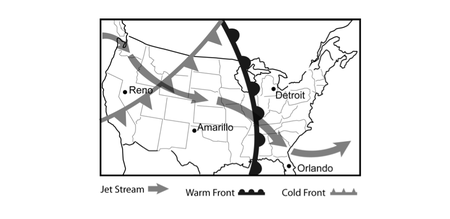
The Jet Stream is a global pattern of atmospheric movement that influences patterns in local weather. Based on the information provided in the weather map, which city shown most recently experienced a temperature rise?
Amarillo
Detroit
Orlando
Reno

The Jet Stream is a global pattern of atmospheric movement that influences patterns in local weather. Based on the information provided in the weather map, which city shown will likely see a drop in temperature in the near future?
Albany
Bismarck
Nashville
San Diego

The Jet Stream is a global pattern of atmospheric movement that influences patterns in local weather. Based on the information provided in the weather map, which city shown most recently saw a rise in air pressure?
Baltimore
Jacksonville
Portland
Rapid City
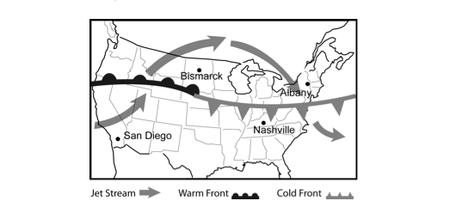
The Jet Stream is a global pattern of atmospheric movement that influences patterns in local weather. Based on the information provided in the weather map, which city shown most recently experienced a drop in temperature?
Albany
Bismarck
Nashville
San Diego

The Jet Stream is a global pattern of atmospheric movement that influences patterns in local weather. Based on the information provided in the weather map, which city shown will most likely experience a drop in pressure over the next few days?
Baltimore
Jacksonville
Portland
Rapid City


Major surface currents of the ocean are shown in the diagram.
Ocean currents affect weather patterns by--
Regulating when tides occur in coastal area
Trapping heat at the equator to regulate the global climate
Distributing heat from the uneven absorption of solar energy
Increasing the rate of evaporation to transport water to area experiencing droughts

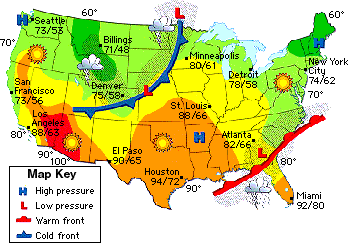


Where does the Storm Start?
Over Cold Water
Over Antartica
Over Warm Water
Overseas



What destroys a hurricane?
strong vertical winds
Cold water
Movement over land
All of the above
One of the major ways oceans contribute to weather systems is that the oceans -
provide a diverse habitat for many organisms.
store and transport the Sun’s heat energy.
experience changes in amounts of dissolved salt.
reach depths that can be as much as 12,000 meters.
Most of the water vapor in the atmosphere comes from evaporation of water from oceans. Most of this evaporation occurs where there is the greatest solar radiation, which is -
along the coast of Europe.
around islands in the Pacific.
near the Equator.
at both of the poles.
The majority of heat transfer performed on Earth by oceans is from what region to what other region?
From the Equator to the poles.
From coastal regions to inland.
From North America to South America.
From the Pacific to the Atlantic Ocean.
Which of the following correctly identifies the major source for the energy that creates hurricanes?
Sun's radiation
Ocean currents
Moon's gravity
Earth's rotation
The ocean currents that influence weather are not able to carry heat energy directly from south to north or from north to south. Currents are deflected consistently to the right in the Northern Hemisphere and consistently to the left in the Southern Hemisphere due to -
collisions with the coastlines of continents.
the irregular shape of the ocean floor.
the rotation of Earth on its axis.
the strong winds above the ocean.
Which of the following is a major way in which oceans contribute to weather systems?
Ocean water has high salinity.
Oceans transfer energy from the Sun.
Most volcanic activity occurs in the ocean.
Oceans have high levels of biodiversity.
Why are regions that receive more solar energy more likely to develop hurricanes?
Plants are more likely to thrive in those regions.
Those regions have more water evaporation.
Regions that receive more solar energy are typically drier.
Those regions are always located at high elevations.
Thermal energy from evaporating water drives the weather systems. The regions on Earth that would have the most evaporation are those regions -
near the Equator.
along the coasts of Asia.
near tropical rainforests.
along mountain ranges.
Force = Mass x Acceleration
Newton's 1st Law
Newton's 2nd Law
Newton's 3rd Law
Newton's 4th Law
"An object in motion (or at rest) will to stay in motion (or at rest) until an outside force acts upon it."
Newton's 1st Law
Newton's 2nd Law
Newton's 3rd Law
Newton's 4th Law

In the picture, the vehicle will move because of...
Newton's 1st Law
Newton's 2nd Law
Newton's 3rd Law
Newton's 4th Law
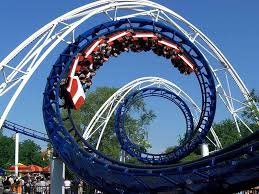
If 2 roller coaster cars race with the same force, the car with greater mass will have a lower acceleration. This is an example of Newton's ____ Law of Motion.
Fir
Second
Third
Fourth
To calculate the speed of the coaster, you need to know the distance it travels and...
the time it takes
mass of the cars
height of the hills
how many passengers
In a roller coaster, where is there the most kinetic energy?
As the coaster climbs the second hill
As the coast is at the top of the highest hill
As the coaster speeds down the hill
As the coaster is at the bottom
"For everry action, there is an equal and opposite reaction."
Newton's 1st Law
Newton's 2nd Law
Newton's 3rd Law
Newton's 4th Law


A person’s body is thrown outward as a car rounds a curve on a highway.
Newton's 1st Law
Newton's 2nd Law
Newton's 3rd Law
None of them
A push or a pull is called a
Gravity
Force
What is Newton's 2nd Law?
For every action there is an equal and opposite reaction.
Acceleration depends on two variables, the mass of the object and the amount of force.
What is Newton's 3rd Law?
For every action there is an equal and opposite reaction.
Acceleration depends on two variables, the mass of the object and the amount of force.
What explains why objects resist changes in their state of motion?
gravity
inertia
force
friction

Looking at the image. Decide if this is balanced or unbalanced.
Unbalanced
Balanced

Looking at the image. Decide if this is balanced or unbalanced.
Unbalanced
Balanced

The girl on the sled will remain in motion unless
her motion is changed by magnetic forces.
she is stopped by an outside force.
she accelerates at a constant speed.
the force of friction forcer her to move faster.
"A body at rest tends to remain at rest, and a body in motion, tends to remain in motion, unless acted upon by an unbalanced force."
This is describing the law of
forces
inertia
velocity
gravity

The picture shows a spinning water sprinkler.
Water comes through the hose and is sprayed by the sprinkler.
Which principle best explains why the sprinkler spins?
Energy is released when water condenses.
Most substances expand when heated and contract when cooled.
Every action has an equal and opposite reaction.
Solid substances are usually more dense than liquid.

The picture shows a weightlifter holding the barbell over his head.
The force of gravity pulling down on the barbell is 756 newtons.
How many newtons of force are exerted by the weightlifter to hold the barbell up?
No Newtons
756 Newtons
368 Newtons
14767 Newtons

An inflated balloon released from rest moves horizontally.
The law that best explains this event is
Newton's 1st Law
Newton's 2nd Law
Newton's 3rd Law
Law of Gravity
The force of an object, with a certain mass accelerating at a certain rate, can be determined by the equation below:
force = mass x acceleration
Which object would have the greatest force?
a 5-kg object accelerating at 100 m/s
a 5-kg object accelerating at 20 m/s
a 20-kg object accelerating at 4 m/s
a 20-kg object accelerating at 3 m/s
A dictionary weighing 15 Newtons is placed on a desk.
What is the force that the desk exerts on the dictionary?
none
15 N
1.5 N
150 N

The diagram below shows unequal opposing forces.
Which way will the wagon move?
The cart will move to the right.
The wagon will move to the left.
The wagon will remain stationary.
The wagon will move left and then right and then stop.
30 mph west is an example of ________
Force
Speed
Velocity
Acceleration
A lamp sitting on a table is best demonstrating Newton's ___ Law
1st
2nd
3rd
4th
Newton's 3rd Law states that for every action, there is an equal and opposite _____.
Reaction
Refraction
Retraction
Reflection
A ____ is a push or pull on an object
Force
Acceleration
Speed
Velocity
A car traveling 65 mph is an example of its _____.
Force
Speed
Accerelation
Velocity
A force that causes an object to slow down when it touches another object is ____.
Gravity
Interia
Friction
Newton
Newton's 2nd Law says that the acceleration of an object depends on its _____ and _____.
Force
Gravity
Weight
Mass
Which of Newton's Laws explains a rocket's movements during launch?
Newton's 1st Law
Newton's 2nd Law
Newton's 3rd Law
Newton's 4th Law
What is Newton's 1st Law of Motion?
Force = Mass x Acceleration
An object at rest stays at rest unless acted on by an unbalanced, external force
What goes up must come down
For every action, there is an equal and opposite reaction.
What is Newton's 2nd Law of Motion?
Force = Mass x Acceleration
An object at rest stays at rest unless acted on by an unbalanced, external force
What goes up must come down
For every action, there is an equal and opposite reaction.
What is Newton's 3rd Law of Motion?
Force = Mass x Acceleration
An object at rest stays at rest unless acted on by an unbalanced, external force
What goes up must come down
For every action, there is an equal and opposite reaction.
True or False: objects with greater mass require more force to accelerate when compared to objects with less mass.
True
False
You are testing a slingshot with different objects. You try it with a mini-marshmallow, a quarter, and a large marble. If you pull it back with the same force each time, which object should leave the slingshot with the most acceleration?
Marshmellow
Quarter
Marble
A rocket pushes extremely hot gas (propellant) out of its thrusters, and the propellant pushes back on the rocket, allowing it to take off. Which of Newton's Laws is this an example of?
Newton's 1st
Newton's 2nd
Newton's 3rd
Newton's 4th
A force that causes an object to slow down when it touches another object is ____.
Gravity
Interia
Friction
Newton
A Newton's 1st Law is also called the Law of ____.
Gravity
Interia
Friction
Newton
When an unbalanced force acts on an object, the force ______________________.
changes the motion of the object
is cancelled by another force
does not change the motion of an object
is equal to the weight of the object
When two equal forces act in opposite directions on an object, they are called ______________________.
frictional force
balanced force
centripetal force
gravitational force
The resistance of an object to any change in its motion is called ______________________.
inertia
friction
gravity
weight
According to Newton’s second law of motion, force is equal to mass times ______________________.
inertia
weight
acceleration
direction
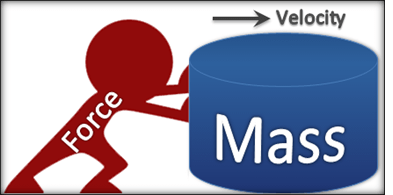
The picture is an example of Newton's...
1st Law
2nd Law
3rd Law
The picture is an example of Newton's...
1st Law
2nd Law
3rd Law


Identify which law applies.
Newton's 1st law of motion
Newton's 2nd law of motion
Newton's 3rd law of motion

Identify which law applies.
Newton's 1st law of motion
Newton's 2nd law of motion
Newton's 3rd law of motion

Identify which law applies.
Newton's 1st law of motion
Newton's 2nd law of motion
Newton's 3rd law of motion

Identify which law applies.
Newton's 1st law of motion
Newton's 2nd law of motion
Newton's 3rd law of motion

Identify which law applies.
Newton's 1st law of motion
Newton's 2nd law of motion
Newton's 3rd law of motion

Identify which law applies.
Newton's 1st law of motion
Newton's 2nd law of motion
Newton's 3rd law of motion
You are waiting in line to use the diving board at your local pool. While watching people dive into the pool from the board, you realize that using a diving board to spring into the air before a dive is a good example of which Newton's law?
Newton's 1st law of motion
Newton's 2nd law of motion
Newton's 3rd law of motion
You know the mass of an object and the acceleration it is going. Which of Newton’s laws of motion will help you calculate the force the object has?
Newton's 1st law of motion
Newton's 2nd law of motion
Newton's 3rd law of motion
Identify which law applies: You dribble a basketball while walking on a basketball court.
Newton's 1st law of motion
Newton's 2nd law of motion
Newton's 3rd law of motion
Pushing a child on a swing is easier than pushing an adult on the same swing, because the adult has more mass.
Newton's 1st Law
Newton's 2nd Law
Newton's 3rd Law
None of them

An object's resistance to motion is called
Force
Inertia
motion
Newton's First Law
An object in motion stays in motion and an object at rest stays at rest is which of Newton's Laws?
First Law
Second Law
Third Law

An object has more inertia because it has more
force
speed
mass
acceleration

Force is equal to mass times acceleration is Newton's
First Law
Second Law
Third Law
unbalanced forces cause
reverse
motion
gravity
inertia

What is the rate that gravity pulls objects to the Earth?
9.81 m/s
9.81 m/s^2
9.81 m/hour
9.81 miles/second

The force of gravity is otherwise known as
mass
speed
weight
volume
For every action there is an equal and opposite reaction is Newtons
3rd Law
2nd Law
1st Law
Newton Law

What is the unit of force?
gram
mass
kilogram
Newton

A book has a mass of 5 kilograms and an acceleration of 5 m/s/s. What is the force on the book?
220 N
20 N
25 N
10 N

A wagon has a mass of 100 kilograms and an acceleration of 2m/s/s. What is the force on the wagon?
50 N
200 kg
200 m/s^2
200 N

An object has a mass of 1000g (1 kilogram) and an acceleration of 20 m/s/s. What is the force on the object?
20000 m/s^2
20000 N
500 N
20 N

A box has 1000N of force. It has an acceleration of 10 m/s/s. What is the mass of the box?
100 m/s
100 g
100 kg
100 m/s^2

A car has a force of 2000N and a mass of 1000kg. What is the acceleration of the car?
20 m/s^2
20 m/s
2 m/s^2
2 m/s

A robot has a force of 100N and an acceleration of 4m/s/s? What is the mass of the bot?
50 kg
25 meters
25 kg
25 N

