
 Worksheets
Semester 1 Review/Preview Ancient Civilization
Total questions: 63
Worksheet time: 1hrs 13mins
Which civilization invented the wheel?
Mesopotamia
Egypt
India or China
Greece
Rome
Egyptians wrote in....
Cuneiform
Sanscrit
Hieroglyphs
Hieroglyphics
Urban Planning means to...
plan cities instead of build them
build cities on a plan
build cities on a grid
plan some urbs
Identify the ancient civilization that developed on the Nile River?
Egypt
Mesopotamia
India
China
Identify the ancient civilization that developed on the Tigris and Euphrates River System.
Egypt
Mesopotamia
India
China
1. What religions originated in and had the greatest impact on the ancient civilization India?
Judaism and Taoism
Hinduism and Buddhism
Confucianism and Taoism
Buddhism and Taoism
What was the first major monotheistic religion?
Buddhism
Confucianism
Hinduism
Judaism
Which ancient civilization has the following social order?
King
Priest
Craftsman, Merchants, Traders
Farmers/Laborers
Slaves
Egypt
India
China
Mesopotamia
Which ancient civilization had the following social order?
Caste System
India
Egypt
Mesopotamia
China
Primary reason that early civilizations developed near rivers?
Rivers were necessary for religious rituals in the early civilization.
Rivers kept the population low due to seasonal flooding.
Rivers provided natural resources and trade routes.
Rivers gave invading armies easy access to early civilizations.
This type of landscape was present on both sides of the Nile River.
Desert
Steppe
Tropical Savannas
Humid Tropical
The law below comes from what early law system:
“If a noble has knocked out the tooth of a noble of his own rank, they shall knock out his tooth. But if he has knocked out a commoner’s tooth, he shall pay one-third mina of silver.”
Code of Hammurabi
Twelve Tables
Ten Commandments
Justinian Codes
Which ancient civilization used the Silk Road, which was 4000 miles of trade routes from China to Mediterranean Sea?
China
Egypt
Mesopotamia
India
What ancient civilization leader was known as Confucius, who developed Confucianism?
India
Egypt
China
Mesopotamia
What ancient civilization used pyramids as burial places for their pharaohs?
Egypt
India
Mesopotamia
China
Jewish scripture states that the laws of God were declared to the ancient Hebrews by which prophet?
David
Soloman
Abraham
Moses
Where did the first civilizations rise?
Along river valleys
Near mountains
Along the ocean front
Near Seas
Mesopotamia means the land between two rivers. Name the two rivers.
Nile and Amazon
Tigris and Euphrates
Snake and Colorado
Pol and Yangtze
Building dams, channels, canals, and ditches to bring water to crops is known as
irrigation
architecture
fishing
cuneiform

- Nile River
- Hieroglyphics
- Pyramids
Sumer

- Huang He (Yellow) River
- Calligraphy writing
- Paper and Silk
Sumer
- Huang He (Yellow) River
- Calligraphy writing
- Paper and Silk
Sumer
The Egyptians enlisted thousands to build the pyramids. The major purpose of the pyramids was to...
practice the building skills of the laborers.
house the pharaoh for the afterlife ensuring the continuation of the civilization.
prove the wealth of the Pharaoh and to add beauty to the Egyptian landscape.
provide all Egyptians to be preserved.

Sumer

Sumer


How did the religious beliefs of the Ancient Egyptians impact the way they lived?
It had little impact on their lives since only the priests could communicate with the gods
It impacted the lives of the rulers who were the only ones to communicate with the gods
It impacted every aspect of their lives by praying to the gods, living their lives to please the gods, and preparing for the afterlife
It impacted their lives because each day they would pray and attend the temple
Which two civilizations had the most similar social class structure?
Egypt
China
Mesopotamia
Which two civilizations' geographic features were able to protect them from invaders?
Mesopotamia
Egypt
China
Achievements of this civilization included medicine, papyrus, and hieroglyphics
Mesopotamia
Egypt
China

What is a ziggurat?
a building built for gods and priests
a palace for the king
a building for slaves
a palace for Hammurabi

are pieces of ox scapula or turtle plastron, which were used in ancient China, mainly during the late Shang dynasty.
Mandate of Heaven
delta
oracle bones
vizier

wetlands that form as rivers empty their water and sediment into another body of water, such as an ocean, lake, or another river.
theocracy
rivers
oceans
delta

A large landmass which is either smaller than a continent, or part of an even larger continent
continent
Asia
vizier
subcontinent
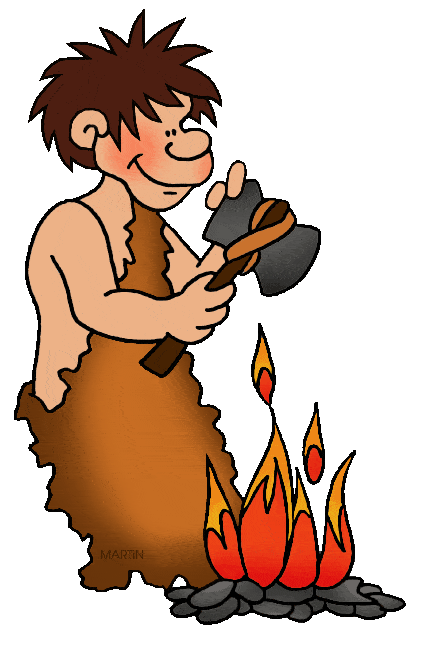
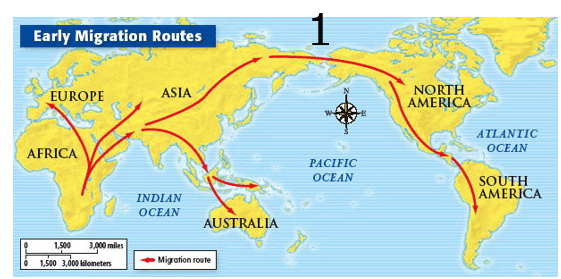
How were farmers and hunter-gatherers different?
famers = collaborated; hunter-gatherers = competed
farmers = could adapt land; hunter-gatherers = needed land that had food READY
farmers = were able to grow a variety of foods; hunter-gatherers were on a limited diet
farmers = live in communities; hunter-gatherers were scattered in different areas
Why was fire important?
It cooks meat and makes digestion easier
It makes light
Protection from animals
Provides warmth
All of the above
Babylonian King who wrote 282 laws
Sargon
Hammurabi
Ziggurat
Cuneiform
Nebuchadnezzar
The writing that the Mesopotamians developed
City-State
Scribbles
Ziggurat
Hieroglyphics
Cuneiform
Several regions controlled by one person
Tokens
Empire
City-State
Papyrus
a country made up of a city and the surrounding land
Tokens
Empire
City-State
Papyrus
development of different kinds of jobs
polytheistic
artisan
specialization
governmet
belief in many gods
monotheism
civilization
naturism
polytheism

The ancient Egyptians did not think ____ _____ was important. So, they pulled it out through the nose.
The stomach
The brain
The lungs
The liver
What is the river ancient Israelites settled near?
Tigris
Euphrates
Nile
Jordan
Which river did ancient Chinese civilization develop in?
Nile
Volga
Tigris
Yellow
What benefit did standardized currency (money) bring to China?
It made it easier to trade anywhere in the empire.
It reduced the economic power of the warlords.
It increased wealth for all citizens.
It allowed the government to collect taxes.
What geographic barrier is north of China?
Plateau of Tibet
Sierra Mountains
Sahara Desert
Gobi Desert
What continent is China part of?
Europe
North America
Asia
Africa
China borders all of the following seas, except...
Red Sea
China
Yellow Sea
South China Sea

