
 Worksheets
Physical Science Semester 1 Review
Total questions: 501
Worksheet time: 8hrs 35mins
Using one or more of your senses to gather information is called...
Infering
Predicting
Observing
Hypothesizing
A testable postulate is a...
Theory
Hypothesis
Law
Conclusion
A statement that describes the most logical explanation based on an experiment is a...
Theory
Hypothesis
Law
Observations that deal with a number or amount are called
Qualitative
Quantitative
The Skittles are yellow, red and green is an example of _____________.
Qualitative observations
Hypothesis
Quantitative observations
The statement that correctly lists the steps of the scientific method in order is _______________.
Conclusion, research, hypothesis, ask a question.
Hypothesis, ask a question, research, experiment.
Ask a question, hypothesis, experiment, collect data and analyze.
The part of an experiment that does not change is a __________.
Control
Conclusion
Constant
The steps commonly used by scientists in gathering information to test hypotheses and solve problems are called _____.
Scientific inquiry
Scientific method
Hypothesis
The variable that is changed by the scientist to test a hypothesis is called the ________________.
Dependent variable
Control
Independent variable
A process that uses observation and experimentation to gain knowledge about events in nature is ____________.
Gravity
Scientific method
Science
Which is the best description of the dependent variable?
The variable that is changed by the scientists
The variable that does not change
The measurable variable
Which of the following should be a goal of a scientific investigation?
To help the scientist make money
To help the scientist solve a problem
To prove something
A prediction about a problem that can be tested is __________.
Variable
Theory
Hypothesis
Law
One way to analyze data from a study is to ____________.
Make a graph
Recognize a problem
Develop a hypothesis
Catherine is testing which soil will help grow grass the tallest. The height of the grown grass is the ____________ variable.
Constant (stays the same)
Independent (it's what you change)
Dependent (it's what you measure)
Students took a test after they had studied either in silence or with the television turned on. What is the dependent variable?
Silence
Television turned on
The student
Score on test
What would the independent variable be in an experiment testing which paper airplane design goes furthest?
The paper used
The paper airplane design
The distance of each plane's flight
How hard the plane is thrown
The plant has grown 4 cm since yesterday.
This is an example of what kind of data?
Qualitative
Quantitative
Both
Neither
The barn is full of pigs, cows and horses.
This is an example of what kind of data?
Qualitative
Quantitative
Both
Neither
Which of the following represents ethical behavior in scientific investigation?
Accurate reporting of results
Not allowing test subjects to be exposed to unnecessary risks in medical trials
Allowing others to review your work
All of these choices

What is the mass of a 25 cm3 liquid if it has a density of 5 g/cm3?
125 g
5 g
cm35g
0.2 cm3

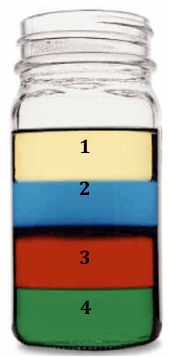
Three liquids and two solids are placed in a graduated cylinder. The substances arrange themselves in the cylinder according to their densities. Use the information to identify the liquids and solids in the graduated cylinder. start with the top solid as substance 1, and the top liquid as substance 2, and so on
Gold
Mercury
water
Gasoline
Cork

Which object has the highest density in this picture?
A
B
C


What is the density of the sphere, if its mass is 50 g?
mL40 gr
g65mL
cm32 g
mL25g

How many eggs were measured altogether in this experiment?
25
40
90
100
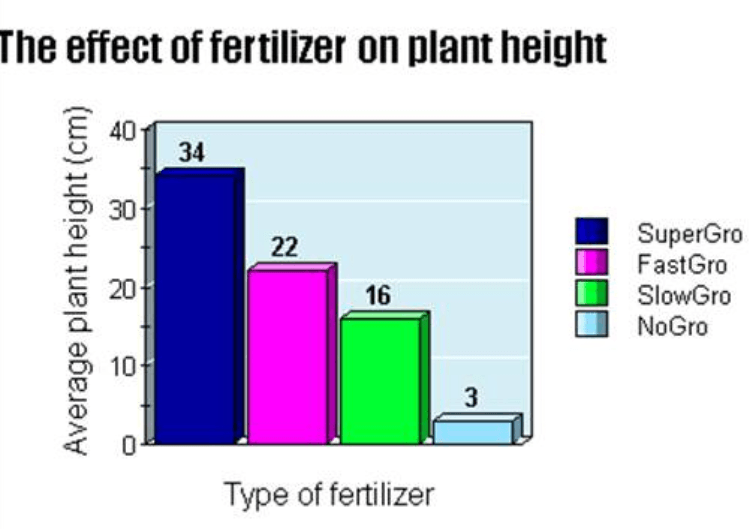
What is the independent variable?
Type of fertilizer
Average plant height
The effect of fertilizer on plant height
The effect of plant height on fertilizer
What is the title of this graph?
Type of fertilizer
Average plant height
The effect of fertilizer on plant height
The effect of plant height on fertilizer
What is the dependent variable?
Type of fertilizer
Average plant height
The effect of fertilizer on plant height
The effect of plant height on fertilizer

What is the BEST title for this graph?
The Relationship between Time Spent Studying and Test Grades
The effect of Time Spent Studying and Test Grades
Time Spent Studying
Test Grades
What is the independent variable for this graph?
The Relationship between Time Spent Studying and Test Grades
The effect of Time Spent Studying and Test Grades
Time Spent Studying
Test Grades

Which discipline division awarded the least degrees?
Pyschology
Business
Engineering
Education
Visual & Performing Arts

What is the best TITLE for this graph?
The effect of missed free throws on wins
The relationship between missed free throws and wins
Number of missed free throws
Number of wins
Which variable always goes on the y-axis (vertical)?
Independent
Dependent
Constant
Control

What is the independent variable on this graph?
Year
Number of Visitors
Visitors to a Park
none of these
How many people visited the park in 1997?
20
40
60
50
35


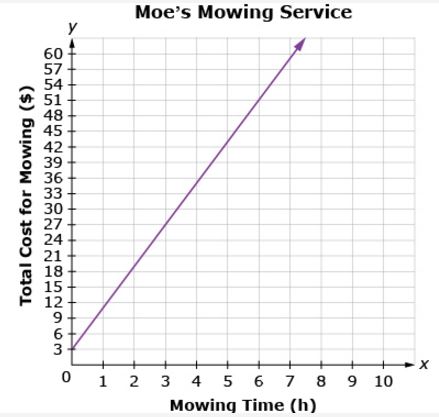

Which month had the biggest difference between the high and low temperatures?
January
April
October
November
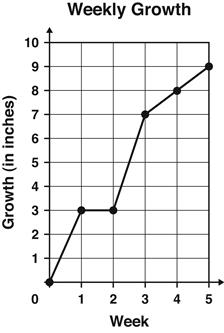
The graph shows the number of inches a plant grew each week.
Between which 2 weeks did the plant grow the MOST?
Week 1 and Week 2
Week 2 and Week 3
Week 3 and Week 4
Week 4 and Week 5
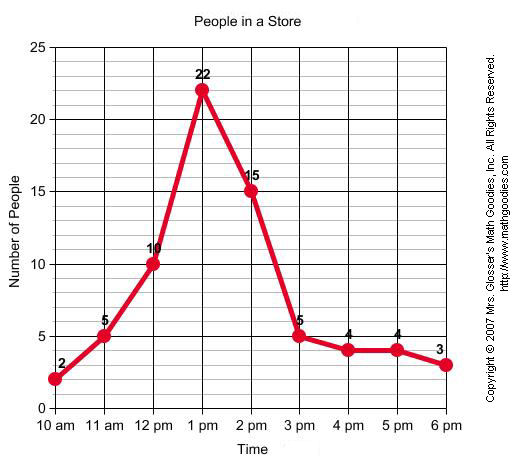
An object starts from rest and after 2 seconds has a speed of 5 m/s. Calculate the acceleration
0 m/s^2
5 m/s^2
2.5 m/s^2
10 m/s^2
An object is accelerating if
It has a constant speed
It is changing direction
It is speeding up
It is slowing down
Calculate the acceleration of a car with an initial speed of 10 m/s and a final speed of 2 m/s if it is accelerating for 8 seconds
1 m/s^2
- 1 m/s^2
-1.25 m/s ^2
1 m/s^2
What part of a position-time graph allows you to calculate the speed of the object?
intercept
area under the curve
slope
What part of a velocity-time graph allows you to calculate the acceleration of the object?
intercept
area under the curve
slope
What part of a velocity-time graph allows you to calculate the displacement of the object?
intercept
area under the curve
slope
A car exerts a driving force of 200 N to the right. The resistive forces have a total of 150 N. Describe the motion of the car.
It is travelling at a constant speed to the right
It is accelerating to the right
It is travelling to the right but decelerating
It is accelerating to the left
A car exerts a driving force of 200 N to the right. The resistive forces have a total of 150 N. If the mass is 1000kg, what is the acceleration of the car.
50 m/s^2
0.2 m/s^2
0.5 m/s^2
0.05 m/s^2
Friction depends on what
Normal force
Type of Surface
Gravity
Mass
Newton's First Law
The acceleration is proportional to the force and inversely proportional to mass
For every force, there is an equal and opposite force acting on the other object
An object remains at rest or in constant motion unless acted on by a net force.
Newton's Second Law
The acceleration is proportional to the force and inversely proportional to mass
For every force, there is an equal and opposite force acting on the other object
An object remains at rest or in constant motion unless acted on by a net force.
Newton's Third Law
The acceleration is proportional to the force and inversely proportional to mass
For every force, there is an equal and opposite force acting on the other object
An object remains at rest or in constant motion unless acted on by a net force.
What is the interaction pair of forces for the WEIGHT on a person
The normal force of the person acting on the ground
The normal force of the ground acting on the person
The force of gravity acting on the person by earth
The force of gravity on the earth by the person

What is the acceleration in the first 10 minutes
60 m / min^2
6 m/min^2
0 m/ min^2
What is the acceleration between 10 and 15 minutes?
60 m / min^2
6 m/min^2
0 m/ min^2
What is the acceleration between 15 and 40 minutes?
4 m / min^2
- 4 m/min^2
0 m/ min^2
What does a vector have?
Magnitude Only
Direction Only
Neither
Both magnitude and direction
What is the displacement after 10 minutes?
30 m
60 m
300 m
600 m
What is the total displacement after 55mins.
550 m
1050m
1550 m
-550 m
What do you need to calculate momentum
Mass
Velocity
Acceleration
Speed
Momentum is a scalar quantity
True
False
Calculate the momentum of a 500g object travelling at 10 m/s
0.5 kgm/s
5 kgm/s
500 kgm/s
5000kgm/s
An object is travelling towards a wall with a speed of V and bounces back. Its final speed is also V. What is the change in momentum of the object in terms of m and v
0
mv
2mv
-2mv
An 10 kg object is travelling at a speed of 10 m/s and an external force is applied. It has a new speed of 12 m/s. What is the change in momentum?
100 kgm/s
120 kgm/s
20 kgm/s
220 kgm/s
Momentum is conserved when there is:
An external force to the system
Only internal forces between objects in the system
Friction acting on the body
Two cars collide. The system is the two cars. What physics principle is this question talking about?
Conservation of Momentum because the forces are external
Conservation of Momentum because the forces are internal
Conservation of Mass
Conservation of Grass
Two cars collide. The system is only one of the cars. What happens
Momentum is conserved because the forces are internal
Momentum is conserved because the forces are external
There is a change in momentum of the single car because of an external force
There is a change in momentum of the single car because of an internal force
A cannon has a mass of 1000 kg and a cannon ball has a mass of 10 kg. After firing the cannon ball moves at a speed of 30 m/s to the right. What is the speed of the cannon
0.03 m/s to the right
0.03 m/s to the left
30 m/s to the right
30 m/s to the left
A 1000kg car is travelling at 10 m/s when it collides with a stationary 1500kg car. The 1000 kg car comes to a stop. What is the velocity of the 1500kg car?
6.7 m/s
10 m/s
0 m/s
A 1000kg car is travelling at 10 m/s when it collides with a stationary 1500kg car. The 1000 kg car rebounds at 1 m/s. What is the velocity of the 1500kg car?
6 m/s
9 m/s
11 m/s
A 1000kg car is travelling at +10 m/s when it collides with a 1500kg car travelling towards it at a speed of 10 m/s. The cars stick together. What is the final velocity of the cars.
-10 m/s
-2 m/s
2 m/s
10 m/s
How do safety mats protect stunt men when they are falling?
Increase the time it takes to fall so reduces the force
Increases the time of collision so reduces the force
Decreases the time so reduces the force


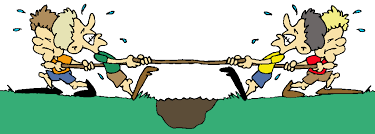

What will cause an object to accelerate?

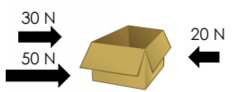
A ball that has rolled down a hill and come to rest.


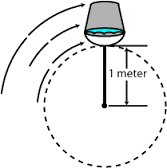


Which of Newton's laws is best described by inertia?


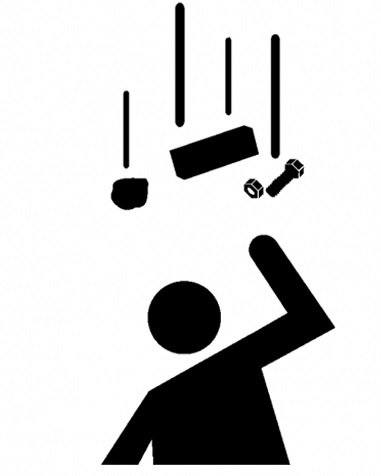
An object is falling downward through Earth's atmosphere. In which direction is the air resistance force?
Down
Up
Around the object
Through the object
Look at the pictures of the cars. Which car will have the most air resistance force acting upon it? They will be moving at the same speed.
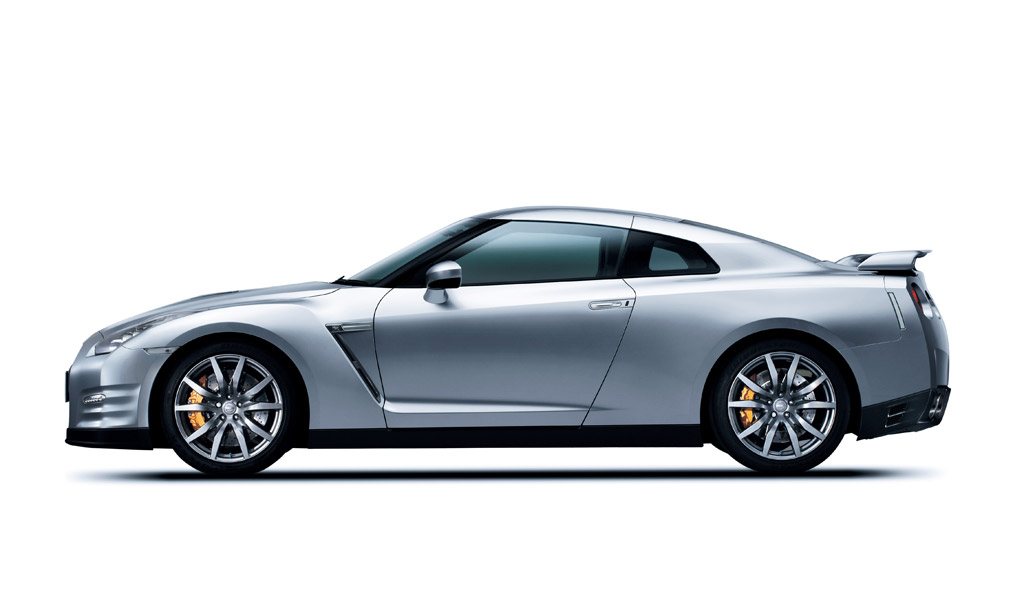
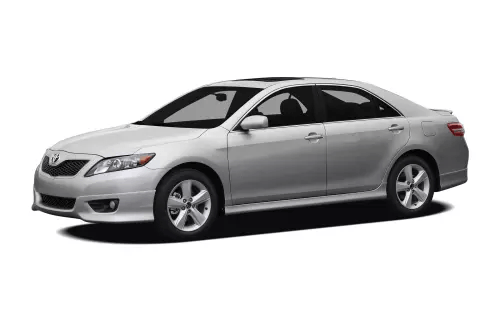
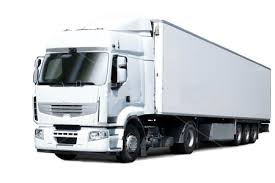
All will have equal air resistance force.

The acceleration of objects falling on Earth due to gravity is
9.8 m/s
9.8 m/s2
9.8 g/mL
9.8 g/m/m
A girl drops a 7 gram bowling ball and a 1gram rock from a cliff. If we ignore air resistance, which will hit the ground first?
Bowling Ball
Rock
Both will hit at the same time.
The cliff
What does it mean for an object to be in free fall?
Only air resistance acting on the object.
Gravity is the only force acting on the obejct.
Any object that is in downward motion.

At point P, the car hits an area of ice and loses all frictional force on it tires. Which path does the car follow on the ice?
A
B
C
D

A curved groove is place on the top of a level table as shown in the diagram. A ball is pushed in the groove at P so that it leaves at Q. Which picture shows how the ball will move when it leaves the groove at Q?


At the instant shown in the diagram, the car's centripetal acceleration is directed-
toward E
toward N
toward W
clockwise

The centripetal acceleration of the car at the position shown is directed toward point...
A
B
C
D

Magnets A and B are of equal magnetic strength. In which position will magnets A and B be attractive but have the least attractive force toward one another?


Magnets A and B are of equal magnetic strength. In which position will magnets A and B have the greatest force of repulsion away from one another.
A teacher demonstrates a chemical reaction of a hand warmer. Hand warmers are used by people to warm their hands in cold weather. When opened, the iron in the warmer reacts with the air, producing heat and a reddish-brown substance.Select all statements that apply to the hand warmer reaction.
The reactants and products have equal potential energy.
The products have more potential energy than the reactants.
The reactants have more potential energy than the products.
Heat is released to the surroundings.
Heat is absorbed from the surroundings

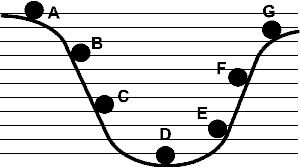
The diagram below shows a boulder rolling down a hill into a valley and then up the opposite hill. At which position does the boulder have the least gravitational potential energy?
A
B
C
D

Students examine a spring (A)at rest, and then hang different masses from the spring (B & C). How much elastic potential energy does Spring A have compared to the others?
Zero Elastic Potential Energy
More Elastic Potential Energy than both B and C
More Elastic Potential Energy than B and less than C
Less Elastic Potential Energy than both B and C, but it does have some elastic potential energy.
Students examine a spring (A)at rest, and then hang different masses from the spring (B & C). How much elastic potential energy does Spring B have compared to the others?
Zero Elastic Potential Energy
More Elastic Potential Energy than both A and C
More Elastic Potential Energy than A and less than C
Less Elastic Potential Energy than both A and C, but it does have some elastic potential energy.
Students examine a spring (A)at rest, and then hang different masses from the spring (B & C). How much elastic potential energy does Spring C have compared to the others?
Zero Elastic Potential Energy
More Elastic Potential Energy than both A and B
More Elastic Potential Energy than A and less than B
Less Elastic Potential Energy than both A and B, but it does have some elastic potential energy.

One bar magnet sits on a table, and a rubber band suspends another magnet above it. In the view on the left, the upper magnet is held in place and cannot move. In the view on the right, the upper magnet has been released. How did the potential energy change when the upper magnet was released?
Magnetic, elastic and gravitational potential energy increased.
Magnetic, elastic and gravitational potential energy decreased.
Magnetic and elastic potential energy increased, and gravitational potential energy decreased.
Magnetic and gravitational potential energy decreased, and elastic potential energy increased.

A negatively charged particle is lifted 30 cm above a positively charged sphere.How did the potential energy of the negatively charged particle change as it was lifted?
Electric potential energy increased, gravitational potential energy decreased.
Electric potential energy decreased, gravitational potential energy increased.
Electric and gravitational potential energy decreased.
Electric and gravitational potential energy increased

When an archer fires an arrow from a traditional bow, the string of the bow does not change in length. As shown in the diagram, the archer pulls back on the string (Step 1), changing the curve of the bow (Step 2). When the archer releases the string, the bow returns to its original shape (Step 3). How does the elastic potential energy in the bow change as the archer fires an arrow?
It decreases from Step 1 to Step 2, then increases to Step 3.
It increases from Step 1 to Step 2, then decreases to Step 3.
It remains constant from Step 1 to Step 2, then increases to Step 3.
It remains constant from Step 1 to Step 2, then decreases to Step 3.
Four people return home from work and walk up the stairs to their own apartments in the same building.Which person has gained the most gravitational potential energy upon arriving at the door of his or her apartment?
a 50 kg person who lives on the second floor
a 50 kg person who lives on the third floor
a 100 kg person who lives on the second floor
a 100 kg person who lives on the third floor

A gymnast performs on a trampoline. Figure 1 shows the gymnast at her lowest point. Figure 2 shows the gymnast at her highest point.Which table shows how gravitational and elastic potential energy change between Figure 1 and Figure 2?


Two positively charged particles are attached to a spring. A metal sphere is placed near each charged particle, as shown in the diagram. Positive charge is slowly added to Sphere A. An equal amount of negative charge is slowly added to Sphere B. Assume the two systems are isolated from each other. How does the elastic potential energy change for each of the springs?
The elastic potential energy of both springs will increase equally.
The elastic potential energy of both springs will decrease equally.
The elastic potential energy of the spring in set-up A will decrease and the elastic potential energy of the spring in set-up B will increase.
The elastic potential energy of the spring in set-up A will increase and the elastic potential energy of the spring in set-up B will decrease.
Which of the following conversions is illustrated with a solar powered car?
radiant (light) to electrical
radiant (light) to mechanical
mechanical to radiant (light)
electrical to mechanical
As a soccer ball is kicked high into the air, it
loses kinetic energy and loses potential energy.
loses kinetic energy and gains potential energy.
gains kinetic energy and gains potential energy.
gains kinetic energy and loses potential energy.
The maximum kinetic energy of a box sliding from the top of a ramp to the bottom is
at the top.
at the bottom.
at the exact middle of the ramp
stored equally within the box at all locations.
Our bodies convert chemical energy into
light energy.
radiant energy.
mechanical energy.
thermal energy.
Which statement is an inference that could be made about a swinging pendulum?
The pendulum will swing for a minute before it stops.
The pendulum swings slowly because the string is long.
The pendulum string is 30 cm long.
The pendulum string is thick.
Which of the following shows the best examples of the energy conversion in a battery powered flashlight?
Chemical >>> Electrical >>> Radiant
Electrical >>> Mechanical >>> Chemical
Mechanical >>> Radiant >>> Electrical
Radiant >>> Electrical >>> Chemical
A wind turbine makes use of which type of energy to generate electricity?
chemical energy
mechanical energy
electric energy
thermal energy
A television converts electricity into
light.
sound.
light and sound.
light, sound, and heat.
An example of electrical energy transforming to thermal energy is
a fire burning.
using a toaster.
burning coal.
lighting a candle.
Before burning logs in a fireplace, they were a source of
elastic potential energy.
chemical potential energy.
electrical potential energy
gravitational potential energy.
Batteries and food are an example of
potential chemical energy.
potential elastic energy.
potential light energy.
potential electrical energy.
Which best describes what happens when a ball is thrown off mountain top?
The kinetic energy increases and so does the total amount of energy.
The kinetic energy decreases and the total amount of energy increases.
The potential energy decreases and the total amount of energy also decreases.
Both the kinetic and potential energy change, but the total energy remains constant.
An object with kinetic energy must be
at rest.
stopped
in motion.
at an elevated position.
The energy of electromagnetic waves is also known as ________ energy.
chemical
thermal
radiant
chemical
What energy is given off by the sun?
thermal and mechanical
thermal and radiant
radiant and electrical
electrical and chemical
Which kitchen appliance converts radiant energy into thermal energy?
Dishwasher
Microwave
Coffee Maker
Refrigerator
Right before a ball starts to fall, it has
kinetic energy only.
potential energy only.
both kinetic and potential energy.
neither kinetic or potential energy.
We played Jenga the other night. The wooden piece at the top has the greatest amount of ____ potential energy.
falling
elastic
chemical
gravitational
Steve slammed on his brakes when a ball rolled out in front of his bike. During this quick stop, some of the mechanical energy (his motion) was changed into
heat energy.
light energy.
kinetic energy.
potential energy.
Which is a characteristic of both kinetic and potential energy?
Increase with mass
Increase with velocity or speed
Increase with height
Increase with temperature
What is law of conservation of energy?
energy is universal
energy can neither be created nor be destroyed
energy has electrical mass
Electrical → Mechanical → Sound
Which device were the students most likely observing?


Energy is the ability to do work or cause changes.
True
False
We receive ________ and heat energy from the Sun.
sound
mechanical
light
kinetic
Vibrations produce _______ energy.
chemical
sound
potential
light
Which of the following is an example of kinetic energy?
A rock at the top of a hill.
Water falling down a waterfall.
A pencil sitting on a desk.
A backpack on the ground.


W=5000 Joules
t=???
What force is applied to an object if 500 J is applied over a distance of 10 m? (Just write the number you calculate)
(a)
What force is applied to an object if 150 J is applied over a distance of 75 m? (Just write the number you calculate)
(a)
What distance does an object travel if 300 J is applied with a force of 50 N? (Just write the number you calculate)
(a)
What distance does an object travel if 10 J is applied with a force of 20 N? (Just write the number you calculate)
(a)
What work is done on an object if 200 W of power is consumed within 25 s? (Record just the number as your answer)
(a)
How much work is done on an object if 70 W of power is consumed within 10 s? (Record just the number as your answer)
(a)
How long would it take a machine to use 100 W of power if 200 J of work is done? (Record just the number as your answer)
(a)
How long would it take a machine to use 50 W of power if 1000 J of work is done? (Record just the number as your answer)
(a)

Calculate the potential energy of a car with a mass of 2,500 kg that is on a hill 100 meters above sea level.
250,000 J
2,450,000 J
2,451,663 J
248 J

Lilly's cat ran through your yard. The cat has a mass of 5 kg. He is running at a speed of 3 m/s. What is the kinetic energy of the cat as he runs?
8.5 J
45 J
7.5 J
22.5 J

Alice kicks a soccer ball with a mass of 2.1 kg. The ball leaves the ground moving 30 meters per second. What is the kinetic energy of the soccer ball?
567 J
900 J
945 J
30 J

Ty lifts a set of 1250kg weights a vertical distance of 2m in a weight lifting contest. What Potential Energy do the weights now possess?
12,789 Joules
24,500 Joules
4,500 Joules

A 5 Kg body is having a Kinetic energy of 250 J. What is the velocity of the body?
10 m/s
15 m/s
20 m/s
40 m/s
What is the mass of a ball that has a kinetic energy of 115 J and is traveling at 9 m/s?
1035 kg
23.5 kg
12.8 kg
2.84 kg
A exercise ball is on a table 2.5 m above the ground. What is the mass of the ball if it has a GPE of 56.8 J?
71 kg
22.72 kg
142 kg
2.32 kg
Is it possible for an object to have no gravitational potential energy and have no kinetic energy?
no
yes
not if it is on the planet earth

Heat will always transfer from the ___________ object to the ________ object.
The hottest object to the coolest object.
The coolest object to the hottest object.
The solid object to the liquid object.
The liquid object to the solid object.


Automobile engines and steam engines are examples of .
steam engines
internal combustion engine
external combustion engine
solar collector
Wind and ocean currents are formed by .
radiation
convection
condusction
condensation
A material that reduces the transfer of thermal energy is a(n) .
conductor
insulator
solar collector
radiator
Which answer best represents what a fluid is?
liquid and gases
liquids
gases and solids
solids and liquids
Solar collectors are parts of _________.
passive solar heating systems
active solar heating systems
internal combustion engines
external combustion engines
A device that converts thermal energy into mechanical energy is a .
heat mover
radiator
heat engine
conductor
The ______________ of an object is a measure of the average kinetic energy of the particles in
the object.
heat
temperature
conductivity
charge
system of pipes carries hot water to radiators
active solar heating
passive solar heating
electrical heating
radiator heating
large windows on south side of building
active solar heating
passive solar heating
electrical heating
radiator heating
use of solar collectors to absorb radiant energy
active solar heating
passive solar heating
electrical heating
radiator heating
The First Law of Thermodynamics describes the conservation of energy
True
False
In the formula of The First Law of Thermodynamics, the ''Q'' represent:
Change in internal energy
Energy transferred as heat
Work done on or by the system
Which of the following is equivalent to the principle of energy conservation?
Newton’s first law
The first law of thermodynamics
Newton’s second law
The second law of thermodynamics
In the formula of The First Law of Thermodynamics, the ''W'' represent:
Work done on or by the system
Change in internal energy
Energy transferred as heat

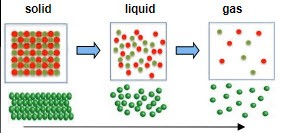
Automobile engines and steam engines are examples of .
steam engines
internal combustion engine
external combustion engine
solar collector
a machine that converts thermal energy into mechanical energy
heating appliance
thermostat
refrigerator
heat engine
Internal combustion engines use ___ energy to produce thermal energy.
Electrical
Chemical
Mechanical
Collects heat as the sun shines through south-facing windows and retains it in materials that store heat (thermal mass)
Passive solar heating
Active solar heating
Partial solar heating
Using solar thermal panels to heat a home or office
Active Solar Heating
Passive Solar Heating
Partial Solar Heating
Which has a greater amount of thermal energy - one liter of water at 50 degrees Celsius or 2 liters of water at 50 degrees Celsius?
One liter of water
Two liters of water
They have the same thermal energy since they are at the same temperature
There is no way to determine the answer without more information
Protons have a (a) charge and electrons have a (b) charge.
Two particles with opposite charges (a) each other.
Two particles with the same charge (b) each other.
The force between electric charges depends on...
the mass of the charges
the distance between charges
the amount of charge
the velocity of the charges
A(n) (a) is a material through which electrons (and therefore charge) move easily.
A(n) (b) is a material through which electrons (and therefore charge) do not move easily.
Copper is an example of a(n) (a)
Rubber is an example of a(n) (b)
I touched a negatively charged rod to a neutral object, and some negative charge was transferred to the object. This is an example of...
charging by induction
charging by friction
charging by contact
charging by polarization
I bring a positively charged rod near a neutral metal sphere, which causes the negative charge within the sphere to move toward the rod, and the positive charge to move away from the rod. This is an example of...
charging by induction
charging by polarization
charging by contact
charging by friction
During a storm, convection currents cause a separation of charges in storm clouds, and then lightening strikes the ground due to...
the force of the convection currents
the attraction between negative and positive charges between the cloud and the ground
the negative and positive charges in the cloud repelling each other
the high potential energy in the cloud flowing to the low potential energy in the ground
How many types of electric charges are there?
0
1
2
3

How will these charges interact?
Repel
Attract
No interaction

How will these charges interact?
Repel
Attract
No interaction

How will these charges interact?
Repel
Attract
No interaction
Field
Outlet
Socket
Domain
Which type of charged particle moves from one object to another to cause static electricity?
Atom
Proton
Electron
Neutron


A negatively charged rod is brought near a neutral electroscope, what happens in the electroscope?
Electrons move from the plate to the vein to make the vein negatively charged.
Protons move from the plate to the vein to make the vein positively charged.
Electrons move from the vein to the plate to make the vein positively charged.
Protons move from the vein to the plate to make the vein negatively charged.
A 9.0-V battery is connected to a 3.5-Ω resistor and a 2.5-Ω resistor connected in series. Which statement is true?
The total electric potential and the electric potential for each resistor is the same.
The total current out of the battery and the current through each resistor is the same.
The total current out of the battery gets split up among the resistors.
Each resistor outputs the same power.

The current going through the 8.0-Ω resistor is ___ A.
Since there are multiple pathways the current can take from the positive side of the battery to the negative side, in a (a) circuit, the (b) is divided up among the pathways, but the potential is the same for each pathway. In (c) circuits with only one pathway for the current, the (d) is divided up among the different elements.

Suppose light bulb and socket C was removed from the circuit shown. Wire is used to connect the switch to light bulb and socket B instead. What will happen to the total voltage of the battery when this happens?
It will stay the same.
It will increase so the bulbs A and B burn brighter.
It will decrease so the bulbs A and B will dim.
The circuit cannot work without light bulb and socket C where it is.
A potential difference of 24 V is applied to a 150-Ω resistor. How much current flows through the resistor?
0.15 A
3600 A
6.25 A
0.16 A

A 200-W light bulb is connected across a 100-V dc power supply. What current will flow through this bulb?
0.90 A
0.36 A
0.60 A
2.0 A
The current through the starter motor of a car is 210 A. If the battery maintains 12 V across the motor, how much electrical energy is delivered to the starter in 10.0 s?
2500 J
25200 J
17.5 J
175 J
To measure electric potential, use a (a) and attach it in (b) . To measure current, use a (c) and attach it in (d) ,
How many kilowatt-hours does a 550-W microwave use if it is run for 32 minutes per day for 30 days?
8800 kW·hr
293 kW·hr
17600 kW·hr
8.8 kW·hr
0.293 kW·hr
A(n) (a) is used to provide voltage for a circuit. A(n) (b) is used to either complete or disconnect a branch in a circuit. A(n) (c) is used to control the flow of current in a circuit. A(n) (d) is used to prevent the current from going over some maximum value.
Match the Unit to its quantity
Ampere
Current
Watt
Power
Volt
Voltage
Joule
Energy
Ω
Resistance
What is the mathematical symbol for current in Ohm's Law Equation?
q
V
R
I
What happens to the total resistance of a parallel circuit as you add resistors?
Increases
Decreases
Stays the Same
Goes to Zero
What happens to the total current of a circuit as you place more and more resistors in parallel?
Increases
Decreases
Stays the Same
Becomes zero somehow
What happens to the total voltage of a circuit as you place more and more resistors in parallel?
Increases
Decreases
Stays the Same
Becomes zero somehow
How do you connect an voltmeter's leads to a circuit to determine voltage?
In series with the rest of the circuit
In parallel with the rest of the circuit
One lead goes to the circuit, the other to ground
Goes between the battery and the first resistor
A resistor has a voltage drop of 18 volts and a current through it of 3 amps. What is its resistance?
54 Ω
0.167 Ω
6 Ω
21 Ω
A resistor with 10 Ω has 2 amps flowing through it. How many volts of potential difference?
20 V
5 V
0.2 V
10 V
Which of the following is a unit of power consumption that the electricity utility places on bills to charge customers?
Joule
Amp
Watt
kilowatt ∘ hour
Match the following circuits to their pictures

Series Circuit

Parallel Circuit

Short Circuit

Combo Circuit

Open Circuit

What kind of circuit would we find in a cheap strand of holiday lights, if one bulb goes out on the line they ALL go out?
Parallel Circuit
Series Circuit
Simple Circuit
Short Circuit

Which kind of circuit would we find in a household circuit?
Parallel Circuit
Short Circuit
Series Circuit
Complex Circuit
How can you identify a parallel circuit?
It has constant current
Everything is on a common line
It has constant resistance
It has junctions somewhere on the circuit

From this image how could you determine the Resistance that caused this graphical relationship?
x2−x1y2−y1
Determine the y-intercept
riserun
ΔyΔx


If electrical power costs $0.12/kwh, and I use 250 kwh of electrical energy, what will I be charged?
$10
$20
$30
$40
What do electric charges have in common with magnetic poles? Choose all that apply.
These forces can attract and repel without touching.
These forces can only attract.
As the distance of seperation increases the strength of the force decreases.
Electric charges are not similar to magnetic poles.
What is a major difference between electric charges and magnetic poles?
Electric charges can exist on their own.
Magnetic poles can exist on their own.
There are no differences.
What is a magnetic field?
A force field
a magnetic field does not exist
stationary electric charge
What is the source of a magnetic field?
Moving electric charge
Stationary Electric Charge
There is no source.
Why are not all atoms tiny magnets?
Because, the spins must be in the same direction.
Every spinning electron is not a tiny magnet.
Because, the spins must be in opposite direction.
A north pole of the magnet is brought near a south pole
they will repel
they will attract
so? nothing will happen
A magnetic domain is
a cluster of aligned atoms
a singular aligned atom
a cluster of non-aligned atoms
In order to make an electromagnet, you need
a magnet, a nail, some wires
a battery, a nail, and a magnet
a battery, a coil of wire, and a nail
a loop of wire, contacts, and a battery
The source of all magnetism is
tiny pieces of iron
ferromagnetic materials
moving electric charge
stationary charge
How can you destroy a magnet? Choose all that apply.
Drop It
Heat It
Cover it with paper
You can't destroy it
The shape of the magnetic field in a current carrying wire is?
concentric circles
concentric ovals
concentric squares
if you break a bar magnet in half
the poles will seperate
You will have two complete magnets
it becomes unmagnetized
Which pole of the compass needed points to a south pole of a magnet?
South pole
North Pole
Both poles
magnetic fields run from _________ pole to ___________ pole
North, South
South, North
They do not exist
Magnetic domains are..
regions of atoms magnetically aligned
blocks of materials
regions that may or may not be magnetized
cluster of atoms randomly aligned
The reason a magnet can attract an magnetized nails is that
nails become temporarily magnetized in a magnetic field
nails become permanently in a magnetic field
nails really are magnetized
a magnet can attract any metal object
Earth' magnetic field is most likely due to
convection currents in the molten part of Earth's interior
millions of small magnets buried in the Earth
a magnetized solid inner core of Earth
the rotation of Earth acting on all of Earth's electrons
none of the above
If a compass is moved from the Northern Hemisphere to the Southern Hemisphere, its magnetic needle will change direction
by 90 degrees
not at all
by 180 degrees
none of the above
An iron rod becomes magnetic when
its electrons stop moving and point in the same direction
positive ions gather at one end and negative ions at the other end
the magnetic domains of its electrons point in the same direction
positive charges line up on one side and negative charges on the other side
none of the above
If you break a bar magnet in half, each half
becomes a bar magnet with two poles
becomes unmagnetized
contains one magnetic pole
none of the above
Surrounding every moving electron is
a magnetic field
electricity
neutrons
all of the above
A wire carrying a current is bent into a loop. The magnetic field is strongest
at the center of the loop
where the loop is located
at the edges of the loop
If you put a small compass in a magnetic field, the compass will
line up in a direction perpendicular to the magnetic field lines
seek electrical charge concentrations
line up in a direction parallel to the magnetic field lines
swing randomly
Which pole of a compass needle points to a south pole of a magnet
south pole
north pole
both A and B
When current passes through a wire, a magnetic field is created around the wire only if the
current makes a complete loop
wire is curved in a loop
wire is absolutely straight
current comes from a battery
A magnetic field is always created around the wire
Magnetic fields are produced by
charges at rest
moving particles
moving particles of Earth
moving charged particles
none of the above


They will repel each other, spin and align

If the North Pole of a permanent magnet is placed next to a compass as seen in the picture. (Red arrow is a N Pole). Which direction will the needle move?
Right (Repel)
Left (Attract)
A device that uses a low friction magnetic needle to align to Earth's Magnetic field and show direction is a:

Which best completes the sentence?
Ferromagnetic material...
a grouping of atoms that have their magnetic fields lined up in the same direction
a visual tool used to represent magnetic fields
the region around a magnet where the magnetic force is exerted
includes iron, nickel, and cobalt which are attracted to magnets.

If this magnet where placed on a raft and alowed to free spin, which direction would the N pole point??
North
South
East
West

Why does a compass needle point north?
The Earth's geographic N pole is magnetic N Pole.
Because the N Pole is attracted to the N pole.
Because The S Pole Repels the N pole.
It aligns with the Earth's magnetic field. Geo N pole is a magnetic S pole.

Is this material a magnet or just magnetic?
just magnetic
a magnet
both
neither

Which statement below best describes these pictures?
Only A is a magnet
Only C is a magnet
Both A and B are magnets

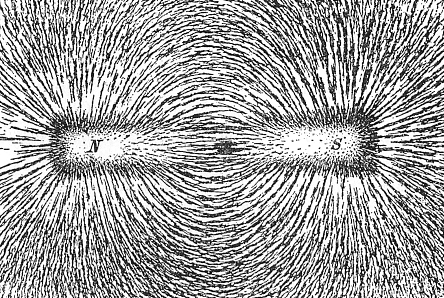
By sprinkling iron filings in a magnetic field on a flat surface, it is possible to see the __________ of a magnetic field.
shape
distance
mass
temperature

The image above shows how iron filings respond to magnetic fields generated by two magnets with ____________ poles facing each other.
opposite
like
positive
negative

If you cut a magnet in half, what happens to the poles?
One half gets the North Pole, the other half gets the South Pole
The pieces no longer are magnetic.
Both halves will get a South Pole
Both halves will still have a North pole and a South Pole
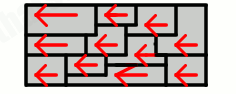


What will the magnets in the picture do?
Attract each other
Repel each other
Both attract and repel
Neither attract nor repel
When an iron nail attracts to a magnet, what do its magnetic domains look like?


The picture is an example of an:
Electric generator
Electromagnet
Electric nail
Electric power cell
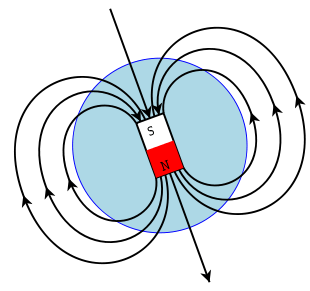
The area of magnetic force around a magnet is known as its _____________.
magnetic field
magnetic declination
magnetic fan lines
magnetic tan lines

The microscopic regions in a strongly magnetic material that have all the atoms' magnetic fields line up are called ---.
electrolytes
nodes
orbitals
domains
poles

If a current is running through a straight wire, where is the magnetic field created by that current strongest?
Close to the wire
Far from the wire
Where the wire is connected to the battery
Everywhere has the same magnetic field

An electric motor is connected to a battery. Which of the following will not make the motor output more kinetic energy?
Stronger magnetic field from the permanent magnets
More loops of wire in the spinning coil
Higher voltage for the battery
Lower resistance in the coil
Pulling the spinning coil away from the permanent magnets
What energy transformation takes place in an electric fan's motor?
electrical energy into kinetic mechanical energy
kinetic mechanical energy into electrical energy
alternating current to direct current
electrical energy to electric power

Making an electromagnet stronger would not involve which of the following?
More current in the wire
Making the loops wider
Packing the loops tighter together
Having more loops

What effect will changing the number of loops in the coil from 4 loops to 2 loops have when using the coil to induce current with the bar magnet, as shown?
The voltage will double, the current will be cut in half
The voltage will be cut in half, the current will be cut in half
The voltage will double, the current will double
There will be no effect
In order to magnetize an object for electromagnetism, it needs to have iron or steel (ex. a rod or nail).
True
False
Electromagnets can be turned on and off.
True
False
Electric currents produce _____________
electron clouds
magnetic fields
sound waves
How can the strength of an electromagnet be increased? (mark all that apply)
increase the current flowing through the coil
increase the number of coils
add an amplifier to it
put iron core inside the coil
An electric motor uses an electric current to turn a(n)
pointer
brush
axle
wheel
A galvanometer uses an electric current to turn a(n)
pointer
brush
axle
wheel
A galvanometer is used to measure small (a)
An electric motor transforms (a) energy into (b) energy.
What is one difference between a galvanometer and an electric motor?
An electric motor causes something to move.
A galvanometer uses an electric current.
In an electric motor, the armature spins continuously.
An electric motor uses electrical energy.

According to the diagram, which way will the wire move in the magnetic field?
up
down
left
right

If the current in this picture was reversed, which way would the wire move?
up
down
left
right

Choose 2 ways of causing the loop to rotate in the opposite direction.
reverse the current
turn off the current
reverse the magnetic field
turn off the magnetic field

What common electrical device is shown in this diagram?
electric motor
electric generator
electromagnet
galvanometer
Label the parts of an electric motor.
Commutator
Armature
Permanent Magnet
Brushes
A(n) ___ converts electricity into magnetism.
electric transformer
electric generator
electromagnet
electric motor
A(n) ___ converts magnetism into electricity.
electric transformer
electric generator
electromagnet
electric motor
A(n) ___ converts electricity into magnetism, and back to electricity.
electric transformer
electric generator
electromagnet
electric motor
Electric charges must ___ in order to create an observable magnetic field.
exist
be moving
be stationary
disappear
Which of the following will increase the strength of an electromagnet?
Use a Bigger Battery (More Current)
Wrap More Coils
Insert an Iron Core
Use a Bigger Magnet
A(n) ___ electric current will create a changing magnetic field.
existing
direct
alternating
stable
The ___ coils a wire has the ___ current is able to be generated.
more; more
less; more
more; less
less; less
kinetic -> electrical
light-> electricity
The function of a transformer is to ...
raise and lower the apparent power levels
transfer DC voltage from the primary winding to the secondary winding
increase or decrease A.C voltage or A.C current levels
transform mechanical energy into electrical energy
A step up transformer has its primary winding to secondary winding ratio
Greater than 1
Equal to 1
Less than 1
Unknown
Assume primary has 240 turns and secondary has 60 turns. Primary is connected with 120V AC power supply. What is the voltage on the secondary?
30 V
0.333 V
2 V
120V

For increasing the voltage ___________ is used.
Step up transformer
Step down transformer
Current transformer
A transformer has primary voltage 200V and secondary voltage 100V , the transformer is called _______ .
Step up
Step Down
None
Transformer transforms _________ from primary to secondary.
Only Current
Only Voltage
Both Voltage and Current
The winding of wire around a core which is connected to a source of energy is called the ....... coil.
primary
secondary
tertiary
Calculate potential difference in the secondary coil based on the information given below.
Vp = 240 V
Np = 20
Ns = 125
Vs ?
1500
500
1000
2000
Why transformers work with A.C. current but not D.C.
A.C current produces changing magnetic field.
D.C current produces changing magnetic field.
D.C current is weak
A.C current is powerful
A transformer has 100 turns in the primary coil and 25 turns in the secondary coil. When a 120 V is applied to the primary coil, what is the voltage in the secondary coil?
480V
30V
20V
450V
Waves transfer _______.
particles
matter
energy
_____ waves have vibrations that run parallel to the direction the wave travels, and _____ waves have vibrations that run perpendicular to the direction the wave travels.
transverse, longitudinal
longitudinal, transverse
Examples of this type of waves include water waves, waves on a string/jump rope, and light waves.
transverse
longitudinal
Examples of _____ waves include sound waves and earthquake P-waves.
transverse
longitudinal
_______ is the distance between waves, measured from one crest to the next crest.
Wavelength
Frequency
Amplitude
The _______ is the highest point on a transverse wave, and the ____ is the lowest point.
Trough, Crest
Crest, Trough
Compression, Rarefaction
Rarefaction, Compression
The _______ is the size or height of a wave, measured from the equilibrium to the crest or trough.
Amplitude
Wavelength
Frequency
The _______ is the size or height of a wave, measured from the equilibrium to the crest or trough.
Amplitude
Wavelength
Frequency

The _______ of a wave is how many waves pass a given point every second.
Frequency
Wavelength
Amplitude
Frequency is measured in _______.
Hertz (Hz)
Meters per second
Meters
Newtons
Frequency is how many waves pass a point in 1 second. If 100 waves pass a given point in 4 seconds, what is the wave's frequency?
25 Hz
100 Hz
4 Hz
400 Hz
Frequency is how many waves pass a point in 1 second. If 100 waves pass a given point in 4 seconds, what is the wave's frequency?
25 Hz
100 Hz
4 Hz
400 Hz

In a longitudinal wave, a ____ is an area where the particles are spread apart and a ____ is an area where the particles are close together.
crest, trough
compression, rarefaction
rarefaction, compression
trough, crest

Examples of ________ waves include visible light, xrays, ultraviolet, and radio waves.
transverse
longitudinal
Waves that can travel through empty space are called _____ waves. Waves that require a medium to travel, such as air or water, are called _____ waves.
mechanical, electromagnetic
electromagnetic, mechanical
crest, trough
compressional, rarefactional

In the diagram of a compressional wave, A is showing a ___ while B is showing a ___.
compression, rarefaction
trough, crest
rarefaction, compression
crest, trough

In this diagram of a transverse wave, A is showing the wave's _____ and B is showing the wave's _____.
amplitude, trough
amplitude, crest
wavelength, trough
wavelength, crest

In this diagram of a transverse wave, C is showing the wave's _____ and D is showing the wave's _____.
crest, amplitude
trough, amplitude
crest, wavelength
trough, wavelength
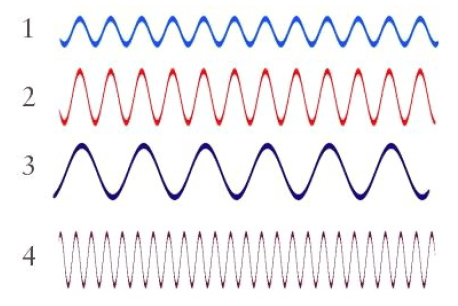
1
2`
3
4
What types of waves carry energy at a right angle or perpendicular to the direction of the energy flow? (a)
A wave has frequency of 50 Hz and a wavelength of 10 m. What is the speed of the wave? (a)
In this diagram of a transverse wave, C is showing the wave's _____ and D is showing the wave's _____.
crest, amplitude
trough, amplitude
crest, wavelength
trough, wavelength
1
2`
3
4
What types of waves carry energy at a right angle or perpendicular to the direction of the energy flow? (a)
A wave has frequency of 50 Hz and a wavelength of 10 m. What is the speed of the wave? (a)
A wave with a wavelength of 2 cm has a frequency of 3 Hz. What is the wave speed?
1.5 m/s
2 m/s
5 m/s
6 m/s
We classify sound as a mechanical wave because it requires a medium to travel through. We can also classify sound waves based on how they move through the air. Sound waves vibrate (a)
To their direction of travel making them (b) waves.


absorption
diffraction
reflection
refraction
transmission

absorption
diffraction
reflection
refraction
transmission

What is the definition reflection?
The bending of waves as they enter a new medium
Bouncing back of waves from a surface that it can’t pass through
The bending of waves as they pass through openings or around corners
When two interfering waves have a displacement in the same direction, two crests and two troughs overlap. Increased amplitude.

The image depicts which of the following wave behaviors?
Resonance
Doppler Effect
Interference
Polarization

The two blue and purple waves will undergo _________________ when they meet.
Constructive interference
Destructive interference

The image of the two waves depicts
Constructive interference
Destructive interference
Two waves that undergo constructive interference must be...
In phase
Out of phase
Two waves that undergo destructive interference must be...
In phase
Out of phase
Light waves and sound waves are similar in that...
They are both longitudinal waves
They are both transverse waves
They both transmit energy
They both can travel through space.

