
 Worksheets
Year 8
Total questions: 118
Worksheet time: 3hrs 36mins


Which example below is a chemical reaction?
ice melting
water boiling
lighting a match
grape juice freezing

At what part of the atom is the arrow pointing?
nucleus
energy level
electron
proton

At what part of the atom is the arrow pointing?
electron
neutron
proton
nucleus

At what part of the atom is the arrow pointing?
cloud
nucleus
atom
electron

At what part of the atom is the arrow pointing?
Cloud
energy level
electron
neutron

At what part of the atom is the arrow pointing?
proton
neutron
electron
nucleus

At what part of the atom is the arrow pointing?
proton
neutron
electron
nucleus
The mass of an atom is
equal to the number of protons
the protons + electrons
the protons + neutrons
the protons + neutrons + electrons
In a neutral atom,
protons = electrons
protons = neutrons
neutrons = electrons
protons = neutrons = electrons
Which particle identifies the identity of the atom
protons
neutrons
electrons
protons and electrons
all the mass of an atom is located in
the energy level
the cloud
the nucleus
atom

Which number shows the atomic number?
2
4.0026
4
HE

The short or abbreviated way to write an element:
Address
Nickname
Symbol
Code

The sum of protons and neutrons around the nucleus
atomic number
mass number
average atomic mass
mass amount

Atoms that have a different amount of electrons than protons
covalent bonds
isotopes
ionic bonds
ions

Atoms with the same number of protons but different number of neutrons.
covalent bonds
isotopes
ionic bonds
ions

What charge does the nucleus have?
Negative
Postitive
Neutral
Visa/Amex

Which subatomic particles have the least mass?
Neutrons
Protons
Electrons
Atoms


12 protons, 10 electrons, 12 neutrons
24Mg−2
24Cr+2
24Cr−2
24Mg+2
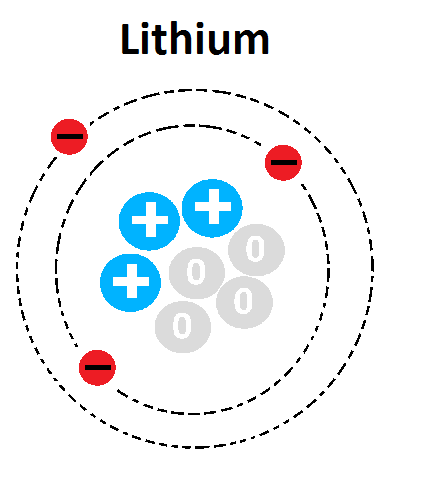
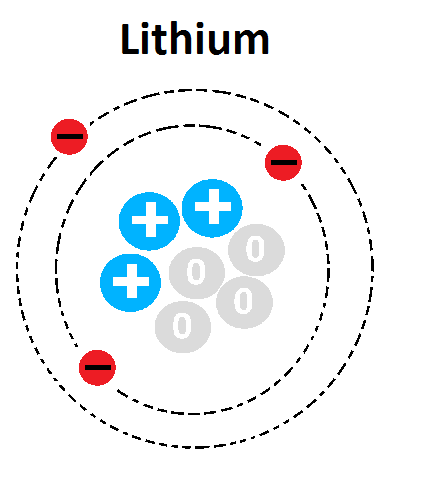
What is the mass number of this atom?
1
3
4
7
An element has the mass number 12 and atomic number 6. The number of neutrons in it is:
6
10
4
8
Atoms of the same element which have a different number of neutrons are called _________________.
ions
isotopes
quarks
molecules
Isotopes have different numbers of
protons
neutrons
electron
properties
If an atom has 10 electrons, how many protons does it have?
0
1
10
5
How many electrons are in an atom with an atomic number of 50?
5
8
50
2
Tiny particles that make up matter
atoms
ions
molecules
Atoms are composed of __________ particles.
subatomic
positive
matter
neutral
Which subatomic particle has no charge?
neutron
proton
electron
Which subatomic particle has a positive charge?
proton
neutron
electron
Which subatomic particle has a negative charge?
proton
neutron
electron
Which subatomic particles are found in the nucleus?
protons and electrons
neutrons and electrons
protons and neutrons
Which subatomic particles are included in the atomic mass?
protons only
protons and neutrons
protons and electrons
Which subatomic particle does not have a significant affect on the atom's mass?
protons
neutrons
electrons
The center of the atom
nucleus
neutron
electron cloud
orbitals
The Group 1 elements are considered............................
metal
metalloids
nonmetals
The boiling points of the Group 1 elements decrease from top to bottom of the group.
true
false
The Group 1 elements have low densities compared to most other metals.
true
false
The Group 1 elements reacts with water.
to produce ................... and .................
hydrogen gas
alkaline solution
oxygen gas
acidic solution
sodium + water ==>
sodium hydrgen + hydrogen
sodium hydroxide + hydrogen
sodium hydroxide + oxygen
sodium hydroxide + oxide
potassium + water ==>
potassium + hydrogen
potassium + oxygen
potassium hydroxide + hydrogen
potassium hydroxide + oxygen
Group 1 metals are shiny when freshly cut.
False
True
potassium + …………………………….. ==>
potassium hydroxide + hydrogen
water
oxygen
nitrogen
hydroxide
Which element in Group1 has the highest melting point?
Cesium
Francium
Lithium
Sodium
Among Group 1 element, it has the lowest density?
Gold
Francium
Lithium
Sodium
Group 1 elements are also known as
Noble gas
Halogen
Alkaline earth metals
Alkali metals
Arrange the elements in group 1 from the top to bottom of the group.
Li, Na, K, Fr, Rb, Cs
Li, Na, K, Rb, Fr, Cs
Li, Na, K, Rb, Cs, Fr
Fr, Cs, Rb, K, Na, Li
What gas is given off when group 1 elements reacts with water?
Hydrogen
Oxygen
Carbon dioxide
Helium
How many electrons are in the outer shell of group 1 elements?
0
1
2
3
Used as a coolant in nuclear power stations.
Francium
Sodium
Cesium
The gas killed 5000 people in the First World War.
chlorine
iodine
bromine
fluorine
.................. poisons all living things.
chlorine
iodine
bromine
fluorine
destroy viruses and bacteria in water, making it safe to drink.
chlorine
iodine
bromine
fluorine
destroys bacteria around cuts.
chlorine
iodine
bromine
fluorine
Iron + chlorine ==> ...........................
iron chloride
iron chlorine
iron + chlore
all are wring
Going down this group, the number of protons in atoms of the elements increases.
Group 1
Group 7
Both are true
Both are false
Atoms of the elements in this group form molecules made up of two atoms.
Group 1
Group 7
Both are true
Both are false
Going up this group, the colours of the elements get lighter.
Group 1
Group 7
Both are true
Both are false
The elements at the top of this group are gases.
Group 1
Group 7
Both are true
Both are false
The elements in this group conduct electricity.
Group 1
Group 7
Both are true
Both are false
All the atoms of the elements in this group have the same number of electrons in the outermost shell.
Group 1
Group 7
Both are true
Both are false
What name is given to elements in Group 7 on the periodic table?
Alkali metals
Halogens
Alkali Earth Metals
Metalloids
Which of the "Halogens" is found in liquid state at room temperature?
Flourine
Astatine
Iodine
Bromine
Which of these is a use for chlorine?
in cosmetics
in foods
in cleaning equipment
in clothing
What colour is bromine?
red-brown
purple
yellow-green
yellow
True or false? Halogens are metals.
True
False
As you move down the group, halogens' reactivity...
increases
decreases
doesn't change
shows no trend.
Which is the most reactive element in Group 7?
Flourine
Chlorine
Bromine
Astatine

A displacement reaction involves...
a solution turning brown or yellow.
a less reactive element taking the place of a more reactive element.
a dislocated hip.
a more reactive element taking the place of a less reactive element.
Would a displacement reaction occur for Bromine + Potassium Iodide?
Yes
No
Maybe
Which of the "Halogens" has yellowish green color?
Chlorine
Bromine
Flourine
Iodine
Which halogen would be able to replace chlorine in sodium chloride?
Flourine
Bromine
Iodine
Astatine

The melting and boiling point increases as you go down group 7
true
false
Iron + copper oxide =
Iron + copper oxide
Iron oxide + copper oxide
Iron oxide + copper
Magic

Which of the following is more reactive?
Calcium
Magnesium
Zinc
Magnesium

Will the following reaction take place?
Ni + NaCl ->
NO
YES
Which one of the following combinations result in a displacement reaction?
Iron with magnesium chloride
magnesium with iron chloride
Iron with Zinc Sulphate
gold with silver nitrate
What will the products of this reaction be?
calcium + zinc nitrate --------->
Calcium + zinc nitrate
Zinc + calcium nitrate
there will be no reaction
Zinc + calcium chloride
True or false? Chemical reactions are easily reversible
True
False
True or false: A change in state is a chemical reaction
True - something melting would be an example of a chemical reaction
False - a change in state is a physical change
In a word equation, the starting chemicals are called...
reactants
products
ingredients
When energy is transferred from the substances to the surroundings during a chemical reaction, what type of reaction is this?
endothermic
exothermic
decomposition
combustion
Which is NOT an example of something you could observe that would suggest a chemical reaction is taking place?
melting
fizzing
smells
temperature change

