
Font size
 Worksheets
8-H7-[Part 1] Women, Caste and Reform
Total questions: 20
Worksheet time: 36mins
What do you mean by 'Caste'? (Choose 2)
It is a type of religion
It is a sub-division within a community
It is a community
It is a sub-division within a religion
.... was seen as evidence of the barbarism of the East.
..इसे पूर्व (भारत इत्यादि) की असभ्यता के सबूत / प्रमाण के रूप में देखा गया था
Widow Remarriage
Women not having property Rights
Women Not getting Education
Widows getting burned
Choose the incorrect statement about Indian women before 19th century.
They did not get education
They could marry more than one husband
They had limited rights to property
They were married off at an early age
Conservative Hindus believed that if women are educated, they will be---
Corrupted
Benefitted
Widowed
Married
Those who were against social change were called- (choose 2)
Conservatists
Liberals
Radicals
Orthodox
Those who were in favour of social change were called-
Conservatists
Liberals
Traditionalists
Nationalists
Those who wanted a complete transformation of society, can be called-
Conservatists
Liberals
Orthodox
Radicals
Those who made efforts for social change were called-
Conservatists
Orthodox
Reformers
Freedom Fighters
In Ancient India, the Hindu religion was divided into various sub-groups, in a system called
Caste Discrimination
Jati-Varna System
Scheduled Castes and Scheduled Tribes
Brahmanical Priesthood
Choose the 2 'upper castes'
Shudra
Kshatriya
Vaishya
Brahman
In the Jati-Varna hierarchy, the lowest castes were called-
(a)
Another word for ati-shudra
(a)
Why were the lower castes called 'untouchables'?
They worked at jobs that upper castes considered “polluting”
They did not bathe regularly, so they were untidy
They lived poorly, and their ill-manners could harm the upper caste
They were seen as equal human beings
One development that helped create a culture of debate and discussion on social customs and practices, in the early 19th century was-
Theatre and Drama
Religious Preachers
Television and Radio
Printed Communication
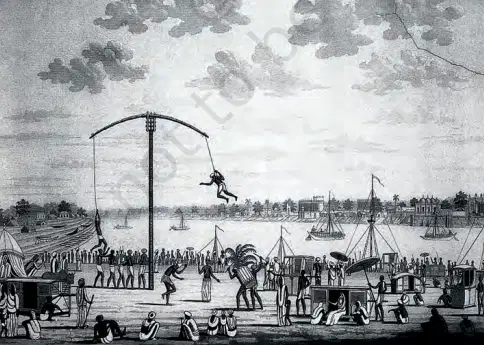
This picture shows a ritual that was banned later-
Hook-swimming festival
Hook-swinging festival
Skin-piercing festival
Hook-piercing festival
"Women are by nature of inferior understanding, without resolution, unworthy of trust … Many of them, on the death of their husbands, become desirous of accompanying them; but to remove every chance of their trying to escape from the blazing fire, in burning them we first tie them down to the pile." Choose an argument that can be used against this statement-
Husbands should also be burnt after death of their wives.
It is true that women are inferior to men, but they have the right to live.
Women should not be tied to the pile. They should die with their own wish.
If you do not educate women how can you see them as inferior?
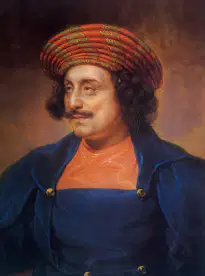
Choose the CORRECT statement about this person. (Choose 2)
He set up an organisation called 'Arya Samaj'
He set up an organisation called 'Brahmo Sabha'
He set up an organisation called 'Brahmo Samaj'
He set up an organisation called 'Satyashodhak Samaj'
Brahmo Samaj- (choose multiple)
Criticised Widow Remarriage
Supported Widow Remarriage
Criticised Idolatory
Criticised Sacrifice
To persuade people for giving up old practices, Raja Rammohun Roy argued that-
Ancient texts and religion were misleading
'Gurus' were false and they were corrupt
Practices like Sati had no sanction in ancient texts
Indians needed to convert into Christianity because it was a better religion
Choose the incorrect statement about 'REFORMERS'
They tried to find a verse or sentence in the ancient sacred texts that supported their point of view
They criticised some texts that supported wrong practices
They wanted to persuade people to give up all of their customs and adopt a new religion
They wanted to persuade people to give up old customs and adopt a new way of life

