
Font size
 Worksheets
World History Unit 1 Final Review
Total questions: 89
Worksheet time: 1hrs 4mins
What was the way most people in around the year 1750 interacted with the economy?
through their local communities and families
through large corporations and businesses
through the government run stores and shops
through barter and trade as hunter-gatherers.
What were most people in 1750 engaged in as a means of livelihood (how they made a living)?
Factory Jobs
Farming
Hunting, Fishing, and Gathering
Education and Business
Who were the primary producers of luxury goods in 1750?
Farmers
Artisans
Corporations
Merchants
What was the most valuable stuff for Asians (China, Japan, Korea, Southeast Asia...) in the world in the 1700s? (i.e., what did they want most?)
Platinum
Diamonds
Silver
Gold
Which of these European colony locations produced the largest amounts of silver in the 1700s?
West Africa
Central and South America
North America and Canada
South East Asia and the Spice Islands
What did Europeans mainly transport from their colonies in the Americas to trade in Asia for fine cloth, silk, porcelain, and other goods?
Enslaved People
Furs, Timber, & Honey
Silver, Tobacco, & Sugar
Ivory, Gold, & Diamonds
What was the dominant (main) mode of transportation for global trade in 1750?
Railways
Airplanes
Ships
Trucks
Where did Europeans get much of their wood to build their ships for global trade? [select 2]
wood from Africa, primarily the Congo
wood from South East Asia, primarily Vietnam, Laos, and Thailand
wood from Eastern Europe, primarily Russia
wood from their American colonies, such as in North America
wood from the forests in Western Europe, such as in Germany and France
What financial system was beginning to develop in Europe and the Americas as Europeans grew their global trade?
Feudalism
Capitalism
Communism
Socialism
What major transformation was about to occur in the way everyone worked and made stuff after 1750?
Modernization
Globalization
Digitalization
Industrialization
What does the term 'agrarian' mean?
Devoted to agriculture
A member of a titled or privileged class
A person skilled in making things
A system of administration characterized by excessive routine
What is the definition of 'aristocrat'?
Devoted to agriculture
A member of a titled or privileged class
A person skilled in making things
A system of administration characterized by excessive routine
What is an 'artisan'?
Devoted to agriculture
A member of a titled or privileged class
A person skilled in making things
A system of administration characterized by excessive routine
What is a 'bureaucracy'?
Devoted to agriculture
A member of a titled or privileged class
A person skilled in making things
A system of administration characterized by excessive routine
What does 'causation' refer to?
The act or process of causing
A territory governed by a distant country
A group of people living close together
The act or process of distributing
What is a 'colony'?
The act or process of causing
A territory governed by a distant country
A group of people living close together
The act or process of distributing
What is a 'community'?
The act or process of causing
A territory governed by a distant country
A group of people living close together
The act or process of distributing
What does it mean to 'compare'?
The act or process of causing
A territory governed by a distant country
A group of people living close together
To note the likenesses and differences of
What is a 'consequence'?
The act or process of causing
A territory governed by a distant country
A group of people living close together
That which follows; result
What does it mean to 'contextualize'?
The act or process of causing
A territory governed by a distant country
A group of people living close together
To put into a context or provide a context for
a territory governed by a distant country, often occupied by numbers of citizens of that country
A group of people living close together or having shared experience(s) and identity
A cohort
to note the likeness and differences of
that which follows; result
Consequence
Method
to explain the background to or provide the set of circumstances or events in which a particular event occurs; to situate
things that are constant over time; something in an uninterrupted state
continuity
contrast
change
context
to compare (two people or things) in order to make their differences clear
the act or process of spreading out over an area or amongst different people
Distribution
territory controlled by a central government, with one supreme ruler, who governs a diverse population
to cause to be a slave or to be in a condition of bondage
Enslaved
Liberated
Educated
Empowerd
the condition of being a member of a group who share a distinctive culture, language, or religion, or who are of the same race or national heritage
Commonality
a particular lens or perspective that information is perceived through
Frame
a body of persons or entities graded according to rank or level of authority
having origin in a country or locality; native
a sole, often hereditary ruler such as a king, queen, or emperor
an account, description, or story, or the oral or written work containing such material
the act or process of creating or manufacturing
a system of stratification that focuses on the belief that some racial groups are either superior or inferior to other racial groups
Racial hierarchy
Economic classes
Political alliances
the act of buying and selling commodities, or all such acts collectively
chronology
adapt
secular
Relating to science or technology, particularly the advanced sort
What historical perspective has traditionally dominated the narratives of the world at c. 1750?
The Rise of the East
The Fall of the West
The Decline of the East
The Rise of the West
In the "Rise of the West" narrative, who is still in the dominant position today?
The "West"
The "East"
The United States
China
Russia
We test things using...
(a)
Most of what was made or grown in the world c. 1750 was still produced by families or small groups of people and consumed by them or their neighbors. [select 2]
families
small groups of people
large corporations
factories
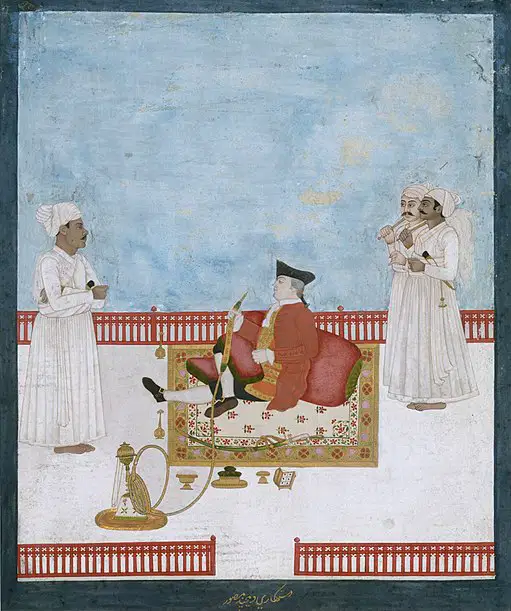
This portrait of East India Company official, made in 1744, most likely would support / not support the argument of the "Rise of the West."
support
not support
Economic patterns (the way people trade & move money around) often mirrors the networks of ideas, (a) , and language that connected people across regions.
Who led the government in Japan during the 1750s?
Emperor
Shogun
Daimyō
Samurai
What was the name of the government in Japan during the 1750s?
Tokugawa Shogunate
Meiji Restoration
Edo Period
Sengoku Period
What was the role of the shogun in the government?
Military ruler
Religious leader
Economic advisor
Educational reformer
What was the class of military lords who ruled over different areas called in Japan during the 1750s?
Samurai
Ninja
Daimyō
Ronin
Which city was the capital of Japan during the 1750s?
Kyoto
Osaka
Nara
Edo (now Tokyo)
What is a frame, and how is it like a map?

What are the three frames we use in this course?
Frames of communities, frames of networks, and frames of production and distribution
Why is it useful to have more than one frame?
Each frame leaves out some information that might be useful, so using more than one frame can help build a more complete picture.
To confuse the reader and make history more difficult to understand, therefor leaving the subject of history to the exclusive realm of scholars.
What does it mean to “test a claim”?
How do frames help in understanding historical events?
Frames help by providing a lens through which to view and interpret events, allowing for a more nuanced understanding.
Frames are not useful in understanding historical events as they can be biased.
Frames help by providing a chronological order of events, but do not offer any interpretation.
Frames are only useful for creating timelines, not for understanding events.
In what way do frames influence our perception of historical figures?
Frames have no influence on our perception of historical figures.
Frames can cast historical figures in a positive or negative light, affecting our judgment of their actions and legacy.
Frames only influence our perception of historical figures if we are not knowledgeable about history.
Frames influence our perception by providing irrelevant information about historical figures.
Correctly label this frame.
Communities
Networks
Production & Distribution
Correctly label this frame.
Communities
Networks
Production & Distribution
Correctly label this frame.
Communities
Networks
Production & Distribution
Match the following frames with relevant examples:
networks
a state highway system
production and distribution
a factory that makes iPhones
communities
a town hall
Match the following frames with relevant examples:
networks
the internet
production and distribution
a bakery
communities
a skate park
Match the following frames with relevant examples:
networks
the telephone
production and distribution
trucks transporting items
communities
a church, mosque, or synagogue
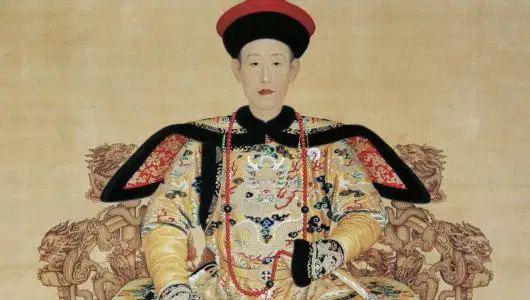
The Manchu overthrew the Ming Dynasty and established what dynasty?
Tokugawa
Qing
Han
Roman
Song
Starting during the late Tang Dynasty and continuing through into the Qing Dynasty, this cultural and social practice was pressed upon many Chinese women in order to meet the standard of beauty at the time, and to make them "marriageable".
wear brass rings around their necks and get piercings
keep their hair long into a queue like the men
bind their feet from a young age so that they have smaller feet as adults
wear heavy makeup to enhance their features
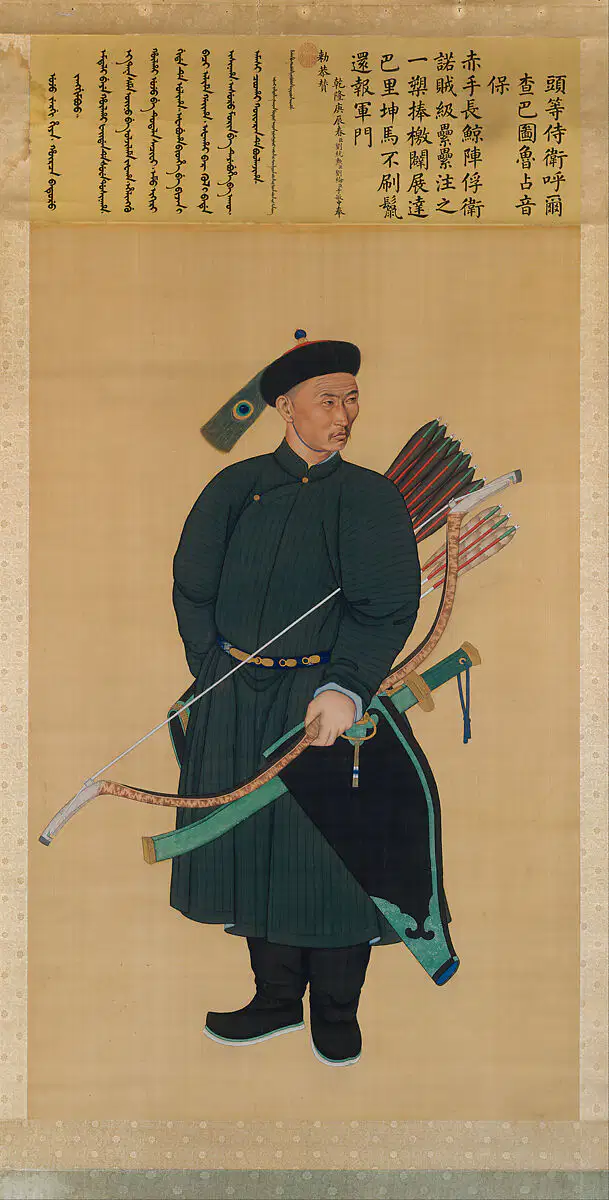
As a sign of submission, what did the Manchus (Qing Dynasty) demand of all Chinese men?
Convert to Buddhism
Pay a tax
Shave the front of their heads and grow a queue
Wear a tattoo on their wrist

Read the source attached.
Question: What does it reveal about the foreign policy of Japan during this period?
Answer: It reveals that Japan at this time was...
isolationist.
expansionist.
deterministic.
deist.
liberal.

What is an isolationist society?
It is a society that does not get involved politically or economically with other places.
It is a society that conducts aggressive foreign expansion through war, as well as diplomacy.
It is a society that persecutes religious minorities within its boundaries.
It is a society that aims to open up trade to the outside world and bring in foreign ideas and technologies.
What was the queue?
the braided pigtail that was traditionally worn by Chinese males during the Qing dynasty
a tax levied upon foreigners living in Qing China during the 16th-18th centuries
the topknot hairstyle that was popular among Japanese samurai
the long hair style that is used by those of the Sikh faith

a ceramic material made of fine clay baked at very high temperatures
porcelain
adobe
steel
concrete
graphite

meaning "great names" or "large privately held land"; heads of noble families in Japan who controlled vast landed estates and relied on samurai for protection
shogun
daimyo
janissary
zamnidar
banner man
Align the various classes of Edo (Tokugawa) Era Japan into their appropriate place in the hierarchy of society at the time.

an interrelated or interconnected group or system
network
fiber
regulation
workforce
an administrative organization that relies on nonelective officials and regular procedures
bureaucracy
domain
network
superstructure

For most of the Ottoman Empire's reign, the empire was ruled from ___________________.
Baghdad
Moscow
Istanbul (formerly Constantinople).
Rome

At the height of its power in 1683, what area(s) did the Ottoman Empire control or have pieces of?
Europe
North Africa
Asia
All of the above


The Byzantine church named the Hagia Sofia was, for almost 1000 years, the largest cathedral in the world. What did the Ottoman's do to it when they conquered Constantinople in 1453?
burned it to the ground
turned it into a mosque
made it into the sultan's throne room
turned it into a hotel
What religion did the Ottoman Empire help spread throughout their empire?
Islam
Christianity
Zoroastrianism
Buddhism

The ______________ were an elite guard of Ottoman soldiers.
janissaries
ulema
pashas
sinans

Who served in the Janissary army?
Sons of Christian vassal rulers who were offered as tribute to the Ottoman Sultan.
Males from the lowest class of the Ottoman peasantry.
Captured Russian and Slavic slaves.
Mercenaries.
Which of the following is NOT true about Christians and Jews in the Ottoman Empire?
They were allowed to practice their religion.
They formed their own communities called millets.
They were forced to convert to Islam.
They were allowed to speak their own languages and run their own schools.

A first-hand account of someone who experienced the event at the time it happened is a...
Secondary Source
Primary Source

A document created about an event, but not experienced by the person themselves is a...
Primary Source
Secondary Source

A history textbook is an example of a
Primary Source
Secondary Source
Which of these sources is probably more reliable?
A movie made about the Declaration of Independence in 2001
A book written by a famous historian who is an expert on the American Revolution, published in 1999.
Placing the event in time and place of when it happened in order to understand what circumstances may have influenced the document is...
Sourcing
Contextualization
Corroboration
Close Reading

A map illustrating the voyages of Christopher Columbus by Lorenzo Gambara (1500s) is a
Primary Source
Secondary Source

A letter sent by an Ottoman official to the Sultan describing how he thinks the empire should have more railroads is an example of a
Primary Source
Secondary Source
When writing a social sciences essay, what is the claim?
Facts from primary and secondary sources that are historically accurate and relevant.
Considering the historical situation surrounding an event or process.
The main idea of an argument
Identifying the causes and effects of historical events or processes.
When writing a social sciences essay, what is the evidence?
Facts from primary and secondary sources that are historically accurate and relevant.
Considering the historical situation surrounding an event or process.
The main idea of an argument
Identifying the causes and effects of historical events or processes.
When writing a social sciences essay, what is causation?
Facts from primary and secondary sources that are historically accurate and relevant.
Considering the historical situation surrounding an event or process.
The main idea of an argument
Identifying the causes and effects of historical events or processes.

What was the name of China's last dynasty?
Qing
Qin
Ming
Tang

A system of government employees selected for their skills and knowledge who collected taxes and enforced laws is called the...
Governor
Official
Philosophy
Civil Service

Who invaded China and eventually defeated the weakened Ming Empire?
The British
The Japanese
The Manchus
The Mongols (Yuan)
The first direct and sustained link between the Americas and Asia was the trade in
fur
spices
silk
silver

The following map (you can click on it) shows that the most common destination(s) in the Americas for West African slaves were...
British North America.
the Caribbean and Brazil.
Mexico.
Peru and Argentina.
Desire for the colonies cash crops led to an increase in
treaties between Europeans
the slave trade
urbanization
desertification
What are the colonies supposed to provide the mother country under a mercantile system?
coerced labor and manufactured goods
A market, precious metals and raw materials
coerced labor and gold
raw materials only
The majority of slaves went to __________ to work on _______.
The Caribbean; sugar plantations
Mexico; gold mines
The US; cotton plantations
Chile; silver mines

