
 Worksheets
States of matter - Chapter 4
Total questions: 87
Worksheet time: 57mins



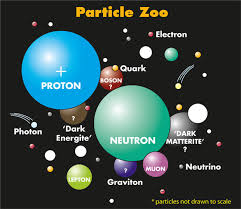

What are the states of matter that we have talked about?
solid, liquid, gas and plasma
liquid, mass, solid and plasma
solids, matter, weight and variable
atoms. molecules, mass and matter

Particles are
tiny bits of matter
flakes that are in my hair
a sample that is unchanged
a force of gravity

What is the amount of matter in an object?
hypothesis
variable
mass
experiment

Solid, liquid gas and plasm are
Capitals or States of Matter
States or Phases of Matter
Atoms and Molecules of Matter
Articles and Nouns

In a liquid the particles are
tighgtly packed, shivering, slow, low energy, fixed shape and volume
HOT! HOT! HOT! crazy fast, spaced far apart, electrically charged, no shape or measurable volume.
connected, sliding, gliding, groovy, medium movement, takes the shape of the container from the bottom up
Fast, far aparts, energetic, no shape or volume
It refers to the space that matter occupies.
volume
mass
weight
density
Condensation occurs when water vapour....
loses heat
gains heat
Condensation involves a change of state from ___ to ___
Liquid to Solid
Liquid to Gaseous
Solid to Liquid
Gaseous to Liquid
Boiling occurs when water ...
loses heat
gains heat
Boiling involves a change of state from ___ to ___.
Solid to Liquid
Liquid to Gaseous
Gaseous to Liquid
Liquid to Solid
Evaporate involves a change of state from ___ to ___.
Solid to Liquid
Gaseous to Liquid
Liquid to Gaseous
Liquid to Solid
What factors affect the rate of evaporation?
Temperature only
Temperature and Wind only
Temperature, Wind and Exposed Surface Area
None of the above
Ice melts at what temperature?
100o
10o
5o
0o
Melting involves a change of state from ___ to ___
Gaseous to Liquid
Solid to Liquid
Liquid to Gaseous
Liquid to Solid
Evaporation is the change of phase from _____________ to _____________.
gas to liquid
liquid to gas
liquid to solid
When the water boils, it has reached its __________________.
freezing point
boiling point
none of the choices
The boiling point of water is ____________________.
0 degrees celcius
100 degrees celcius
-100 degrees celcius
The smoke that comes from the boiling water is called_______________.
water vapor
liquid water
freezing water
Clothes dry easily when exposed to sunlight is an example of _____________________.
condensation
evaporation
melting
Condensation occurs when ______________________.
gas changes to liquid
liquid changes to gas
solid changes to gas
Water droplets from the cold iced tea is an example of ______________________________.
melting
evaporation
condensation
Condensation occurs when water vapour....
loses heat
gains heat
Condensation involves a change of state from ___ to ___
Liquid to Solid
Liquid to Gaseous
Solid to Liquid
Gaseous to Liquid
Boiling involves a change of state from ___ to ___.
Solid to Liquid
Liquid to Gaseous
Gaseous to Liquid
Liquid to Solid

The drops of water that appear on the outside of a glass of cold juice on a warm day are an example of?
melting
condensation
evaporation
boiling
Boiling occurs when water _______________
loses heat
gains heat
either gains or loses heat
________________ is NOT the example of condensation.
mist on the spectacles
dew on the leaves in the morning
sweating
mist on the mirror in bathroom

Steam rising from wet clothes while ironing them. This is an example of__________.
Evaporation
Condensation

Which container will evaporate the fastest?
A
B
C
Boiling occurs when water _______________
loses heat
gains heat
The larger the surface area, the faster the evaporation.
True
False
You leave a cold glass of lemonade on the table outside. A few minutes later, the outside of the glass is wet.
Evaporation
Condensation
Sam kept some water out side in the sun next day he saw nothing in the glass what happen to the water?
It disappeared
It evaporated
Magic


Drops appearing on a cold pitcher of lemonade...
Precipitation
Evaporation
Condensation

A shirt drying quickly on a windy day...
Precipitation
Evaporation
Condensation

Rain pouring down from a thundercloud...
Precipitation
Evaporation
Condensation

Water dripping from the lid of a pot of boiling water...
Precipitation
Evaporation
Condensation

Glue drying inside a notebook...
Precipitation
Evaporation
Condensation

Snowflakes drifting to the ground...
Precipitation
Evaporation
Condensation

Fog inside the windows of a school bus...
Precipitation
Evaporation
Condensation

A springtime rain shower...
Precipitation
Evaporation
Condensation

Steam from a hot teakettle...
Precipitation
Evaporation
Condensation

Safety goggles fogging up...
Precipitation
Evaporation
Condensation

A beach towel drying in the sun...
Precipitation
Evaporation
Condensation

Freezing rain and snow during a snowstorm...
Precipitation
Evaporation
Condensation

A pond shrinking during a drought...
Precipitation
Evaporation
Condensation

Dewdrops on a spider web in the morning...
Precipitation
Evaporation
Condensation

Morning drizzle on a cool, overcast day...
Precipitation
Evaporation
Condensation

Sweat disappearing from your skin...
Precipitation
Evaporation
Condensation
What is a fair test?
Where we test variables that are fair.
An investigation where only one thing changes.
An experiment where we see what is happening.
An investigation that involves materials
What is an independent variable (I.V.) of an investigation?
What we are testing.
The things we are measuring.
The one thing that is changing in the investigation.
The things that are staying the same.
What is a CONTROL variable of an investigation?
What we are testing.
The things we are measuring.
The one thing that is changing in the investigation.
The thing(s) that are staying the same.

In an experiment, one chicken is injected with growth hormone while another chicken is not injected.
This continues for one year.
After one year the chickens are weighed.
Choose the correct combination.
(Hint:
INDEPENDENT VARIABLE IS WHAT YOU CHANGE
DEPENDENT VARIABLE IS WHAT YOU MEASURE
independent = growth hormone; dependent = weight of chicken
independent = weight of chicken; dependent = growth hormone

Mosquito repellent is sprayed on one arm.
The other arm is not sprayed.
The number of bites on each arm is recorded after 2 hours.
Choose the correct combination.
(Hint:
INDEPENDENT VARIABLE IS WHAT YOU CHANGE
DEPENDENT VARIABLE IS WHAT YOU MEASURE
independent = mosquito bites; dependent = mosquito repellent
independent = mosquito repellent; dependent = mosquito bites

Group A exercises every day for one month.
Group B does NO exercise for one month.
Everyone's weight is measured at the end of the month.
Choose the correct combination.
(Hint:
INDEPENDENT VARIABLE IS WHAT YOU CHANGE
DEPENDENT VARIABLE IS WHAT YOU MEASURE
independent = exercise; dependent = weight of people
independent = weight of people; dependent = exercise

Class A reviews for the Science exam.
Class B does not.
Their results are recorded the next day.
Choose the correct combination.
(Hint:
INDEPENDENT VARIABLE IS WHAT YOU CHANGE
DEPENDENT VARIABLE IS WHAT YOU MEASURE
independent = exam results; dependent = studying
independent = studying; dependent = exam results

Two different types of cars are travelling at 60 km/h.
Both drivers slam on their brakes at the same time.
The distance it travels until it stops is recorded.
Choose the correct combination.
(Hint:
INDEPENDENT VARIABLE IS WHAT YOU CHANGE
DEPENDENT VARIABLE IS WHAT YOU MEASURE
independent = car; dependent = distance until it stops
independent = distance until it stops; dependent = car

One group of rats is given a superfood fortified with vitamins.
Another group of rats is given regular food.
The rats are weighed after 6 months.
Choose the correct combination.
(Hint:
INDEPENDENT VARIABLE IS WHAT YOU CHANGE
DEPENDENT VARIABLE IS WHAT YOU MEASURE
independent = food; dependent = weight
independent = weight; dependent = food

One group of 20 cockroaches are sprayed with 50ml of pesticide 1.
Another group of 20 cockroaches are sprayed with 50 ml of pesticide 2.
You count the number of dead cockroaches after 30 minutes.
Choose the correct combination.
(Hint:
INDEPENDENT VARIABLE IS WHAT YOU CHANGE
DEPENDENT VARIABLE IS WHAT YOU MEASURE
independent = dead cockroaches; dependent = type of pesticide
independent = type of pesticide; dependent = dead cockroaches
An independent variable is..
Something that is always measured
Something that has to stay the same
Something that can be changed
A dependent variable is...
Something that is measured
Something that can be changed
Something that has to stay the same

This is an example of the particles of...
Gases
Liquids
Solids

This is an example of the particles of...
Gases
Liquids
Solids
Mrs Tan conducts an experiment to find out whether exposed surface area of the water affects the rate of evaporation of water. Which should be the variable measured in this experiment?
exposed surface area
exposed surface area of water
rate of evaporation
rate of evaporation of water
An experiment was conducted to study the effect of temperature of water on the rate of evaporation of water. Which should be the variable measured in this experiment?
temperature
temperature of water
rate of evaporation
rate of evaporation of water
An experiment was conducted to study the effect of the presence of heating lamp on the rate of evaporation of water. Which should be the variable changed in this experiment?
temperature
presence of heating lamp
rate of evaporation
rate of evaporation of water
An experiment was conducted to study the how is the water left in the cup affected by the presence of wind. Which should be the variable changed in this experiment?
amount of wind
presence of wind
water left in the cup
water evaporated
An experiment was conducted to determine if the magnetic force of a magnet is affected by the size of the magnet. Which should be the variable measured in this experiment?
size of magnet
length of magnet
number of steel pins attracted by magnet
distance between magnet and the steel pins
What makes an experiment fair?
It is fun and exciting
It proves your prediction correct
Only one variable is changed at a time and a control is present
Many variables are changed and only one factor is kept constant.
In a fair test, how will you decide which factor should be the variable?
It depends on what we are trying to find out.
It depends on the constant factors.
Any factor can be the variable.
None of the above.

