wayground logo

Free Printable Worksheets

Font size

S
M
L
XL
Worksheets

Enriched Chemistry Mid-Term Study Guide

Total questions: 164

Worksheet time: 12hrs 59mins

Name
Class
Date
1.
a)

beaker

b)

graduated cylinder

c)

Erlenmeyer flask

d)

test tube

2.
a)

evaporating dish

b)

watch glass

c)

mortar and pestle

d)

funnel

3.
a)

evaporation

b)

watch glass

c)

mortar and pestle

d)

funnel

4.
a)

wire gauze

b)

Bunsen burner

c)

thermometer

d)

utility clamp

5.
a)

wire gauze

b)

Bunsen burner

c)

thermometer

d)

utility clamp

6.
a)

ring stand

b)

ring clamp

c)

test tube rack

d)

test tube holder

7.
a)

ring stand

b)

ring clamp

c)

test tube rack

d)

test tube holder

8.
a)

evaporating dish

b)

watch glass

c)

mortar and pestle

d)

funnel

9.
a)

scoopula

b)

dropper

c)

crucible tongs

d)

glassware tongs

10.
a)

evaporating dish

b)

watch glass

c)

mortar and pestle

d)

funnel

11.
a)

ring stand

b)

ring clamp

c)

test tube rack

d)

test tube holder

12.
a)

beaker

b)

graduated cylinder

c)

Erlenmeyer flask

d)

test tube

13.
a)

ring stand

b)

ring clamp

c)

test tube rack

d)

test tube holder

14.
a)

scoopula

b)

dropper

c)

crucible tongs

d)

glassware tongs

15.
a)

beaker

b)

graduated cylinder

c)

Erlenmeyer flask

d)

test tube

16.
a)

scoopula

b)

dropper

c)

crucible tongs

d)

glassware tongs

17.
a)

beaker

b)

graduated cylinder

c)

Erlenmeyer flask

d)

test tube

18.
a)

scoopula

b)

dropper

c)

crucible tongs

d)

glassware tongs

19.
Convert 8 kilometers to meters
a)
800 m
b)
80,000 m
c)
8,000 m
d)
.008 m
20.
648 g = ____ mg
a)
6,480
b)
64,800
c)
648,000
d)
64.8
21.
Convert 17 m to cm:
a)
0.17 cm
b)
0.017 cm
c)
1,700 cm
d)
170 cm
22.

What is the basic unit of measurement for liquid capacity?

a)

meters

b)

liters

c)

gram

d)

none

23.

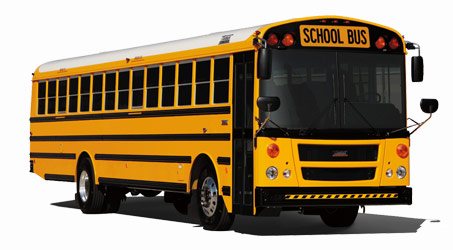
I would measure this bus in

a)

centimeters

b)

milimeters

c)

kilometers

d)

meters

24.

Select the largest unit.

a)

kilogram

b)

centigram

c)

decigram

d)

decagram

25.
How many significant figures does the following number have?
0.00345
a)
6
b)
5
c)
3
d)
Ambiguous: 3,4,5, or 6
26.
How many significant figures does the following number have: 0.00204
a)
6
b)
4
c)
3
d)
2
27.

How many significant figures does the following number have?1.2500 x 10310^3  

a)
5
b)
3
c)

Ambiguous: 3 or 5

d)

7

28.
How many significant figures does the following number have: 100.00210
a)
7
b)
8
c)
10
d)
Ambiguous: 7 or 8
29.
Round 1289 to three significant figures
a)
1290
b)
130
c)
1300
d)
1.29x10³
30.
What is 98.907 rounded to 1 significant figure?
a)
98.9
b)
90
c)
100
d)
1x10²
31.
Solve and give your answer with the correct number of significant figures
(12.470)(271)
a)
3366.9
b)
3.37x10³
c)
3400
d)
3370
32.
Solve and give your answer with the correct number of significant figures
129.6/3
a)
43.0
b)
43
c)
 4x101
d)
40
33.
Solve and give your answer with the correct number of significant figures
24.28 + 12.5
a)
3.687 x 101
b)
36.8
c)
37
d)
3.70x101
34.
Solve and give your answer with the correct number of significant figures
1421-34
a)
1.39x10³
b)
1387
c)
1390
d)

1400

35.

How would you write 4.3756 x 10⁴ in standard form?

(a)  

36.

How would you write 0.0005 in scientific notation?

a)

50 x 10-5

b)

5 x 10⁻⁴

c)

5 x 10³

d)

.5 x 103

37.

How would you write -5.6 x 10⁻³ in standard form?

(a)  

38.

Which of the following numbers is written in scientific notation?

a)

20.35 x 10⁴

b)

.2035 x 104

c)

2035 4

d)

2.035 x10⁴

39.

Convert to scientific notation:


520,000,000

a)

52 x 107

b)

5.2 x 10⁻⁷

c)

5.2 x 10⁸

d)

0.52 x 10⁹

40.
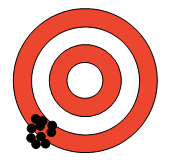
This bullseye demonstrates...
a)
High Accuracy & High Precision
b)
High Accuracy & Low Precision
c)
Low Accuracy & High Precision
d)
Low Accuracy & Low Precision
41.

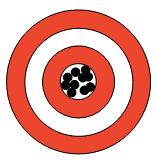
This bullseye demonstrates...

a)

High Accuracy & High Precision

b)

High Accuracy & Low Precision

c)

Low Accuracy & High Precision

d)

Low Accuracy & Low Precision

42.

Which is the more precise measurement?

a)

4 mL

b)

4.3 mL

c)

4.30 mL

d)

4.300 mL

43.

A set of data are all close in value to each other, but they are not close to the actual value. This set of data can be described as _________________.

a)

precise

b)

accurate

44.
The attendance for the basketball game was estimated to be 15,000 people but 12,500 people attended. What was the percent error?
a)
16.67%
b)
20%
c)
2500%
d)
80%
45.
Zed went to the store and bought a bag of chips.  He estimated there would be 350 chips in the package, but realized there were only 210 chips in that package.  What was his percent error?
a)
35%
b)
67%
c)
85%
d)
92%
46.

A block of aluminum occupies a volume of 15.0 mL and weighs 45.0 g. What is its density?

a)

3 g/mL

b)

0.3333 g/mL

c)

675 g/mL

d)

I have no idea

47.
An object with which of the following densities will float on water?
a)
0.7 g/cm3
b)
1.2 g/cm3
c)
3.5 g/cm3
d)
11.4 g/cm3
48.

What is the volume of 150 grams of lead if it has a density of 11.3 g/cm3?

a)

13.3 g

b)

13.3 cm3

c)

.075 g

d)

1695 cm3

49.

Ethanol has a density of 0.789 g/cm 3 .

What is the mass of 225 cm 3 of ethanol?

a)

178g

b)

285g

c)

0.004 g

d)

225.789g

50.

Convert 62 miles/hour to feet/second

a)

5,456 feet/second

b)

0.003 feet/second

c)

90.9 feet/second

d)

909 feet/second

51.

Convert 50 decimeters/week to kilometers/year

a)

0.026 kilometers/year

b)

2.6 kilometers/year

c)

0.26 kilometers/year

d)

26 kilometers/year

52.

Convert 40 ounces to pounds. (16oz = 1lb)

a)

2.5 pounds

b)

0.4 pounds

c)

2/5 pounds

d)

5 pounds

53.

Convert 26.2 m/s to km/hr

a)

94.32 km/hr

b)

3.41 km/hr

c)

2.64 km/hr

d)

0.98 km/hr

54.

Convert 4.2 seconds to hours

a)

0.00117 hours

b)

252.0 hours

c)

0.05 hours

d)

1.2 hours

55.
Subatomic particle with a charge of 0
a)
neutron
b)
proton
c)
electron
d)
quark
56.
Subatomic particles with a positive charge
a)
neutrons
b)
atomic mass
c)
protons
d)
isotopes
57.
These will determine what element an atom is. 
a)
number of neutrons
b)
number of electrons
c)
number of atoms 
d)
number of protons 
58.

The number 16 for the atomic element sulfur is the

a)

ionic number

b)

isotope

c)

atomic mass

d)

atomic number

59.

How many protons does sulfur have?

a)

32

b)

16

c)

48

d)

12

60.

How many electrons does sulfur have

a)

16

b)

32

c)

48

d)

12

61.

In an atom, the number of protons is equal to the number of ____________.

a)

energy levels

b)

neutrons

c)

neurons

d)

electrons

62.
What is the atomic mass of "F"
a)
9
b)
18
c)
17
d)
19
63.
An atom of the element with atomic number 6 always has _____.
a)
six protons in its nucleus
b)
an atomic mass of six
c)
more than six neutrons
d)
six electron clouds
64.
How many neutrons does the isotope of lithium have?
a)
8
b)
3
c)
4
d)
5
65.
How many neutrons in C-14?
a)
6
b)
7
c)
14
d)
8
66.

Isotopes of an element have a different number of...

a)

Protons

b)

Neutrons

c)

Electrons

d)

Mass

67.

12 protons and 13 neutrons

a)

Mg-12

b)

Mg-13

c)

Mg-25

d)

Mg-24.305

68.
In a correctly written symbol what would be located in the "A" position?
a)
number of neutrons
b)
atomic number
c)
number of electrons 
d)
mass number
69.
Four isotopes of lead include lead-204, lead-206, lead-207, and lead-208.  The average atomic mass of lead is 207.2.  Which isotope of lead is likely to be the most abundant.
a)
204
b)
206
c)
207
d)
208
70.
An element has two naturally occurring isotopes. One is 10.013 amu and is 19.9% abundant. The other is 11.01 amu and is 80.1% abundant. What is the average atomic mass? What element is it?
a)
9.012, Beryllium
b)
12.011, Carbon
c)
6.941, Lithium
d)
10.812, Boron
71.

Magnesium exists as the three isotopes shown. What is the average atomic mass of magnesium?

a)

20.74 amu

b)

22.56 amu

c)

18.39 amu

d)

24.31

72.
What is the molar mass of table salt (NaCl)?
a)
116.886 g/mol
b)
35.453 g/mol
c)
22.990 g/mol
d)
58.443 g/mol
73.
How many molecules are there in 31.8 moles of water?
a)
5.28 x 10⁻²³ molecules
b)
1.91 x 1025 molecules
c)
5.28x 10⁻²⁵
d)
1.91 x 10²²
74.

Determine the mass of 4.20 moles of C6H12

a)

353 g

b)

0.0499 g

c)

337 g

d)

2.53 x 1024 g

75.

What is the mass of 1.2 x 1024 atoms of C?

a)

2.0 grams

b)

24 grams

c)

0.17 grams

d)

1.4 x 1025 grams

76.

How many grams are in 1.2 moles of neon?

a)

0.059 grams

b)

7.2 x 10²³ grams

c)

2.0 x 10⁻²⁴ grams

d)

24 grams

77.

How many moles are in 98.3 grams of aluminum hydroxide, Al(OH)3?

a)

1.26 moles

b)

0.8 moles

c)

7,670 moles

d)

1.63 x 10⁻²² moles

78.
Which electron configuration belongs to Chlorine (Cl)?
a)
1s2s2p3s3p5
b)
1s2s2p3s3p6
c)
1s2s2p3s3p7
79.
What atom matches this electron configuration?
1s22s22p63s23p64s23d10
a)

Zinc (Zn)

b)

Copper (Cu)

c)

Nickel (Ni)

d)

Germanium (Ge)

80.
What atom matches this electron configuration?
1s22s22p63s23p64s23d10
a)

Zinc (Zn)

b)

Copper (Cu)

c)

Nickel (Ni)

d)

Germanium (Ge)

81.

What element has this electron configuration?

a)

hydrogen

b)

helium

c)

lithium

d)

beryllium

82.

What element has this orbital notation?

a)

lithium

b)

beryllium

c)

boron

d)

carbon

83.

Which element is represented by this orbital notation?

a)

carbon

b)

nitrogen

c)

oxygen

d)

fluorine

84.

Which element is represented by this orbital notation?

a)

neon

b)

sodium

c)

magnesium

d)

aluminum

85.
This could be the dot diagram of 
a)
Ne
b)
Si
c)
Al
d)
Be
86.

This could be the dot diagram of

a)

Mg

b)

Cl

c)

C

d)

O

87.

Which element has properties most similar to those of Lithium?

a)

Carbon (C)

b)

Magnesium (Mg)

c)

Sodium (Na)

d)

Oxygen (O)

88.

Which element is the most reactive?

a)

Beryllium

b)

Calcium

c)

Strontium

d)

Radium

89.

Elements on the modern periodic table are arranged by

a)

atomic number

b)

atomic mass

c)

alphabetical order

d)

first two letters

90.

Elements that have similar properties are found in the same

a)

group

b)

period

c)

table

d)

energy level

91.

Rows on the modern periodic table are called

a)

groups

b)

periods

c)

families

d)

gases

92.

The number of each period represents the number of

a)

energy levels

b)

neutrons

c)

electrons

d)

nuclei

93.

Which family are Mg, Ca, and Ba members?

a)

Alkali Metals

b)

Alkali Earth Metals

c)

Transition Metals

d)

Halogens

94.

Which family do the elements F, Cl, Br, and I belong to?

a)

Alkali Metals

b)

Alkali Earth Metals

c)

Transition Metals

d)

Halogens

95.

Groups 3 - 12 are called

a)

alkali metals

b)

transition metals

c)

alkali earth metals

d)

halogens

96.

Which element has a larger radius?

a)

Oxygen (O)

b)

Sulfur (S)

c)

Tellurium (Te)

d)

Polonium (Po)

97.

Which element has a larger radius?

a)

Bromine (Br)

b)

Potassium (K)

c)

Gallium (Ga)

d)

Arsenic (As)

98.

Which has a higher ionization energy?

a)

Hydrogen (H)

b)

Lithium (Li)

c)

Potassium (K)

d)

Cesium (Cs)

99.

Which has a higher ionization energy?

a)

Xenon (Xe)

b)

Rubidium (Rb)

c)

Strontium (Sr)

d)

Iodine (I)

100.

Which element has the highest electronegativity?

a)

Fluorine (F)

b)

Iodine (I)

c)

Bromine (Br)

d)

Chlorine (Cl)

101.

Which element has the highest electronegativity?

a)

Potassium (K)

b)

Titanium (Ti)

c)

Bromine (Br)

d)

Krypton (Kr)

102.
As you move down a group, atomic radius increases because - 
a)
you add more and more neutrons
b)
you add more and more protons
c)
you add more and more shells (energy levels)
d)
you add more atomic mass
103.
As you move across the periodic table from left to right, the atomic radius decreases.  This is because - 
a)
the number of protons increases, so attraction to electrons increases
b)
the number of energy levels increases
c)
the number of electrons increases
d)
the atomic mass increases
104.
Francium (Fr) has the lowest ionization energy in Group 1 because - 
a)
it has the smallest number of valence electrons
b)
it has the greatest atomic mass
c)
it has the greatest number of protons, so it attracts its electrons the strongest
d)
its 1 valence electron is very far from the nucleus, so little energy is needed to remove it
105.
The energy required to remove electrons is the definition of: 
a)
Electronegativity
b)
Atomic Number
c)
Atomic Radius
d)
Ionization
106.
Electronegativity is...
a)
the ability of an atom to attract/ accept electrons
b)
the ability of an atom to lose electrons
c)
the energy required to remove an electron from a specific atom
d)
how easy it is to make friends. 
107.
Electronegativity __________ from left to right within a period and __________ from top to bottom within a group.
a)
decreases, increases 
b)
increases, increases
c)
increases, decreases 
d)
stays the same, increases
108.
Atoms that have a high electronegativity, _______________.
a)
give up their electrons more easily.
b)
hold on to their electrons more tightly.
c)
have more electron shells.
109.
If my charge becomes 2+ what does that say about me?
a)
I am stealing 2 electrons
b)
I am losing 2 electrons
c)
I am in period 2
d)
I have an atomic # of 2
110.
When metals bond with non-metals they form what type of bonds
a)
covalent
b)
ionic
c)
cooperative
d)
lewis
111.
How do the following two elements bond together?
Na1+  F1-         
a)
NaF
b)
NaF3
c)
Na3F
d)
Na1F2
112.

What is the overall charge of the ionic compound NaCl

a)

+1

b)

+2

c)

+3

d)

0

113.
What formula results when Ca+2  and  Br- ions bond?
a)
Ca2Br2
b)
CaBr
c)
Ca(br)2
d)
CaBr2
114.

What kind of Ion does Aluminum form?

a)

Al+3Al^{+3}  

b)

Al3Al^{-3}  

c)

Al1Al^{-1}  

d)

Al+2Al^{+2}  

115.

Anions gain...

a)

Their onions

b)

respect

c)

electrons

d)

binaries

116.

Properties of metals are

a)

Thermal conductivity

b)

softness

c)

durability

d)

low boiling point

117.

Cations lose

a)

their cats

b)

Their electrons

c)

Their anions

d)

their bonds

118.

For an ionic compound formula, write

a)

Metal first

b)

Non-Metal first

c)

Cation first

d)

Anion first

119.

Which two elements would NOT form an ionic bond?

a)

calcium and lithium

b)

calcium and oxygen

c)

lithium and oxygen

d)

calcium and carbon

120.
How do the following two elements bond together?
Cr3+  O2-         
a)
CrO
b)
Cr3O2
c)
Cr2O3
d)
CrO3
121.
How do the following two elements bond together?
Al3+  O2-         
a)
AlO
b)
Al2O3
c)
Al3O6
d)
Al3O2
122.
AgF
a)
silver fluoride
b)
silver fluorine
c)
monosilver monofluoride
d)
silver monofluorine
123.
What is the correct name for MgI₂?
a)
Manganese IV iodide
b)
Manganese diiodide
c)
Magnesium iodide
d)
Magnesium diiodide
124.

Name for NaH

a)

sodium hydrogen

b)

potassium hydride

c)

sodium hydride

d)

potassium hydrogen

125.

Name for SrBr2

a)

strontium bromine

b)

strontium bromide

c)

strontium dibromide

d)

strontium dibromine

126.
Name the following ionic compound: LiNO3
a)
lithium nitrate
b)
lithium III nitrate
c)
lithium nitride
d)
lithium oxide
127.
The proper formula for magnesium hydroxide:
a)
MgOH
b)
Mg2OH
c)
Mg(OH)2
d)
Mg2OH2
128.
What is the formula for copper(I) sulfate?
a)
CuSO3
b)
CuSO4
c)
Cu2SO3
d)
Cu2SO4
129.
What is the formula for iron(II) carbonate?
a)
Fe2CO3
b)
FeCO3
c)
Fe2CO2
d)
FeCO4
130.
Name this compound: 
Ca2CO3
a)
Calcium carbon oxide
b)
Calcium (II) carbonate
c)
Calcium carbonate
d)
Carbonate (I) calcide
131.
What is the name of Al(NO3)3?
a)
Aluminum trinitrate
b)
Monoaluminum nitrate
c)
Aluminum (III) nitrate
d)
Aluminum Nitrate
132.

Choose the properties describe ionic compounds. (Hint there are 3 three correct answers)

a)

high melting point

b)

low melting point

c)

solids

d)

dissolve in water

e)

bond between 2 nonmetals

133.

Covalent bonds can be found as _______?

a)

only solids

b)

solids and liquids

c)

solids, liquids and gases

134.

Which of the following is NOT TRUE about covalent compounds?

a)

They have low melting and boiling points.

b)

They are formed from 2 nonmetals.

c)

They can conduct electricity when dissolved in water (aqueous).

135.

Which element is most likely to form 2 bonds?

a)

Carbon

b)

Sulfur

c)

Nitrogen

d)

Fluorine

136.

A single covalent bond is made up of _____ electrons.

a)

one

b)

two

c)

three

d)

four

137.
Ionic Bonding involves...
a)
The transfer of protons
b)
The transfer of nuetrons 
c)
The transfer of electrons
d)
None Of the above
138.

usually hard but brittle

a)

ionic compounds

b)

molecular compounds

139.

The following properties are all characteristics of ionic compounds EXCEPT

a)

solid at room temperature

b)

soft

c)

crystal lattice structure

d)

conduct electricity when dissolved in water

140.
phosphorus trichloride
a)
KCl3
b)
PCl3
c)
K3Cl
d)
P3Cl
141.
silicon dioxide
a)
SO2
b)
NaO2
c)
SiO2
d)
SiO
142.
The chemical formula of sulfur hexabromide is
a)
SBr₆
b)
S₆Br
c)
S(VI)Br
d)
S6Br
143.
The name of P₄S₁₀ is
a)
phosphorous sulfide
b)
phosphorus sulfide
c)
tetraphosphorus decasulfide
d)
phosphorus (X) sulfide
144.
What's the formula for chlorine dioxide
a)
ClO2
b)
CLO
c)
ClO3
d)
HClO2
145.
There are more metals than non metals in the periodic table.
a)
True
b)
False
146.
What is the ability of a substance to allow heat, sound, or electricity to flow through it?
a)
Malleability
b)
Ductility
c)
Solubility
d)
Conductivity
147.
At room temperature, most metals are
a)
liquid
b)
solid
c)
gas
d)
an alloy
148.

Metals are hard because metals have a

a)

sea of electrons that tightly hold the nuclei together

b)

they form triple bonds

c)

low melting point

d)

high luster

149.

Why are metals malleable?

a)

The metal ions can easily slide past one another

b)

The metal ions cannot easily slide past one another

c)

The metal ions repel one another

d)

The metal ions attract one another

150.
Type of intermolecular force present in I2, Br2, and Cl2.
a)
dipole dipole
b)
H-bond
c)
dispersion
d)
metallic
151.
Intermolecular forces are the forces
a)
within molecules
b)
between molecules
152.

Which force is only found between polar covalent molecules?

a)

Ionic bond

b)

Dipole Dipole

c)

London Dispersion Force

d)

Covalent bond

153.

In this force, electron movement cause a slight charge at a single instant. This charge is temporary.

a)

Hydrogen bonding

b)

Dipole Dipole

c)

London Dispersion Forces

d)

Ionic Bonds

154.

Which is not a bond, but is an intermolecular force?

a)

Covalent Bond

b)

Ionic Bond

c)

Hydrogen Bond

d)

These are all bonds

155.

All polar covalent molecules contain:

(Check all that apply)

a)

Hydrogen bonds

b)

Dipole Dipole

c)

London Dispersion Forces

d)

Ionic Bonds

156.

H2O, NH3, and HF all contain:

(Check all that apply)

a)

Hydrogen Bonds

b)

Dipole Dipole

c)

London Dispersion Forces

d)

Ionic Bonds

157.

Nonpolar molecules all contain

(Check all that apply)

a)

Hydrogen Bonding

b)

Dipole Dipole

c)

London Dispersion Forces

d)

Ionic Bonds

158.
What geometry will this molecular structure have?: H2S
a)
bent
b)
tetrahedral
c)
linear
d)
trigonal pyramidal
159.
Choose the correct shape for this molecule:
a)
Trigonal planar
b)
Trigonal pyramidal
c)
Tetrahedral
d)
Linear
160.
Choose the correct shape for this molecule:
a)
linear
b)
Trigonal pyramidal
c)
Bent
d)
Tetrahedral
161.
Choose the correct shape for this molecule:
a)
Bent
b)
Linear
c)
Tetrahedral
d)
Trigonal pyramidal
162.
According to the octet rule most elements need _______ valence electrons.
a)
2
b)
8
c)
6
d)
18
163.
Which of the following is the correct Lewis dot structure for the molecule fluorine (F2)?
a)
A
b)
B
c)
C
d)
D
164.
What is the correct structure for BF3?
a)
Option A.
b)
Option B. 
c)
Option C.
d)
Option D.