wayground logo

Free Printable Worksheets

Font size

S
M
L
XL
Worksheets

Semester 1 Exam Review

Total questions: 185

Worksheet time: 4hrs 18mins

Name
Class
Date
1.

Enzymes are an example of

a)

Lipids

b)

Carbohydrate

c)

Protein

d)

Nucleic Acid

2.
What is the purpose  of an enzyme?
a)
give permission for the reaction
b)
raise activation energy
c)
speed up reactions
d)
control how many reactions occur
3.
Enzymes are capable of increasing the rate of a chemical reaction within a living cell.  Enzymes accomplish this through which of the following means?
a)
reducing the number of products   
b)
reducing the activation energy
c)
increasing the temperature of the cell
d)
increasing the concentration of reactants 
4.
Each enzyme only has 1 substrate that will fit its active site.  What is this called?
a)
reusable
b)
catalyst
c)
specific
d)
fragile
5.
What 3 letters do enzymes typically end in?
a)
-ose
b)
-ase
c)
-ese
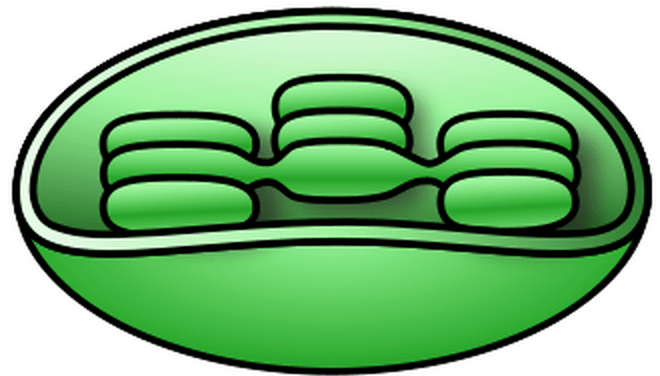
d)
-tic
6.
Any substance that is acted upon by an enzyme is called a(n)?
a)
Coenzyme
b)
Substrate
c)
Vitamin
d)
Polypeptide
7.
After the enzyme and substrate bind together and perform the reaction, what does the substrate become?
a)
a substrate
b)
an enzyme
c)
a product
d)
an active site
8.
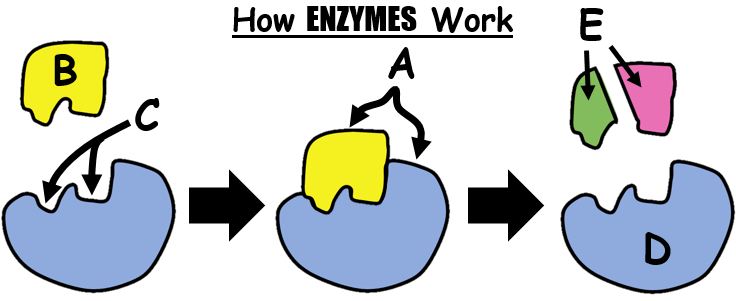
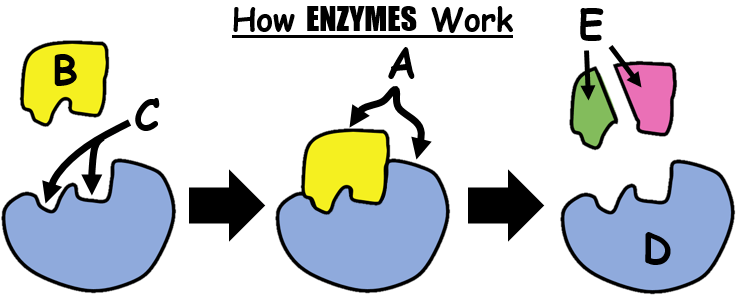
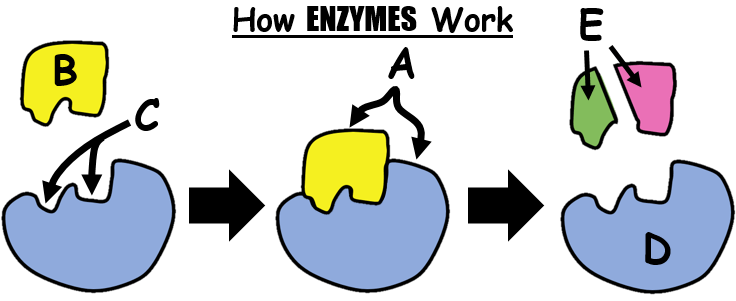
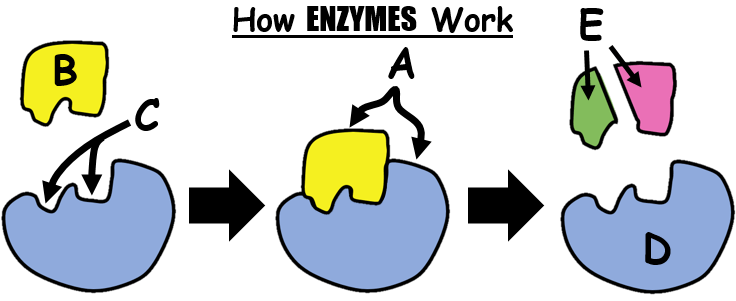
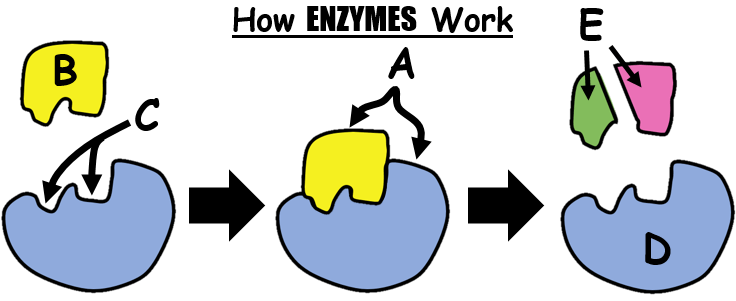
In the diagram, what is letter A? 
a)
product
b)
substrate
c)
enzyme-substrate complex
d)
active site
9.
Letter D...
a)
active site
b)
enzyme
c)
substrate
d)
products
10.
Letter B...
a)
active site
b)
enzyme
c)
substrate
d)
products
11.
Letter C...
a)
active site
b)
enzymes
c)
substrate
d)
products
12.
Letter E...
a)
active site
b)
enzyme
c)
substrate
d)
products
13.

In a chemical reaction, ________ are what you have at the end

a)

Products

b)

Molecules

c)

Reactants

d)

Substances

14.
Enzymes provide a site where reactants called substrates can be brought together in an enzyme-catalyzed reaction. The site is called the
a)
enzyme substrate complex.
b)
reaction site.
c)
active site.
d)
lock and key.
15.
An enzyme speeds up a reaction by
a)
lowering the activation energy.
b)
raising the activation energy.
c)
releasing energy.
d)
absorbing energy.
16.
Each enzyme only has 1 substrate that will fit its active site.  What is this called?
a)
reusablility
b)
denaturation
c)
specificity
d)
fragility
17.
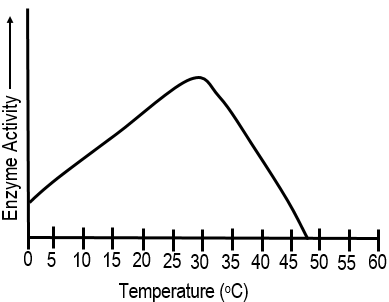
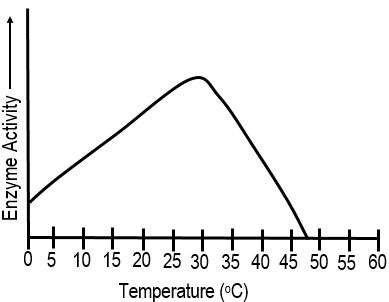
Based on the graph, what is the optimal temperature for this enzyme? 
a)
15oC
b)
40oC
c)
30oC
d)
35oC
18.
An enzyme speeds up a chemical reaction in the cell but can only be used once.  True or False? 
a)
true
b)
false
19.
Which of the following statements is not part of the cell theory?
a)
Cells are the basic unit of structure and function in all living things.
b)
All cells are produced from other cells.
c)
Only animal cells are composed of cells.
d)
All living things are composed of cells.
20.
All living things are made up of...
a)
cells
b)
cell tissues
c)
organ
d)
organ systems
21.
All cells come from___________ cells.
a)
pregnant
b)
pre-existing
c)
paternal
d)
pin size
22.
All eukaryotes and prokaryotes are surrounded by a _____.
a)
cell wall
b)
cell membrane
c)
cell envelope
d)
loving, supportive family
23.
What type of cell has a nucleus? 
a)
eukaryotic
b)
prokaryotic 
24.
Plants and animal cells are examples of ___ cells 
a)
prokaryotic cells 
b)
eukaryotic cells 
25.
He discovered cells while looking at a thin slice of cork.
a)
Jansen
b)
Leeuwenhoek
c)
Hooke
d)
Brown
26.
I make proteins for the cell. What am I?
a)
ribosome
b)
mitochondria
c)
chloroplast
d)
lysosome
27.
I am a protein packaging and shipping machine! Who am I?
a)
vacuole
b)
ribosome
c)
endoplasmic reticulum
d)
golgi apparatus
28.
I store water in both plant and animal cells. What am I?
a)
cytoplasm
b)
ribosomes
c)
vacuole
d)
lysosomes
29.
I am only found in a plant cell. What am I?
a)
cell wall
b)
mitochondria
c)
cytoplasm
d)
chloroplast
30.
What am I?
a)
mitochondria
b)
lysosomes
c)
chloroplast
d)
endoplasmic reticulum
31.
The powerhouse of the cell is the...
a)
Mitochondrion
b)
Golgi body
c)
Nucleus
d)
Ribosomes
32.
Where are proteins made?
a)
Golgi body
b)
Mitoichondrion
c)
Chromosomes
d)
Ribosomes
33.
The ______________ is the brain of the cell.
a)
Vacuole
b)
Nucleus
c)
Chromosomes
d)
60 W light bulb
34.
Directs all cell activities through the DNA located there.
a)
Lysosomes
b)
Nucleus
c)
ribosomes
d)
Mitochondria
35.
Which of the following is directly involved in the transportation of materials inside/within the cell?
a)
Endoplasmic Reticulum
b)
Vacuole
c)
Lysosome
d)
Mitochondria
36.
What is the name of the genetic material that is inside the nucleus?
a)
ER
b)
ATP
c)
YOLO
d)
DNA
37.
A rigid layer that lies outside the cell's  membrane is...
a)
Cytoskeleton
b)
Cilia
c)
Cell Wall
d)
Flagella
38.
What is the gel-like substance inside of cells called?

a)
photoplasm
b)
photosynthesis
c)
cytoskeleton
d)
cytoplasm
39.
"Storage tanks" Can hold food, water or waste for the cell
a)
Ribosomes
b)
Vacuole
c)
Chloroplast
d)
Nucleolus
40.
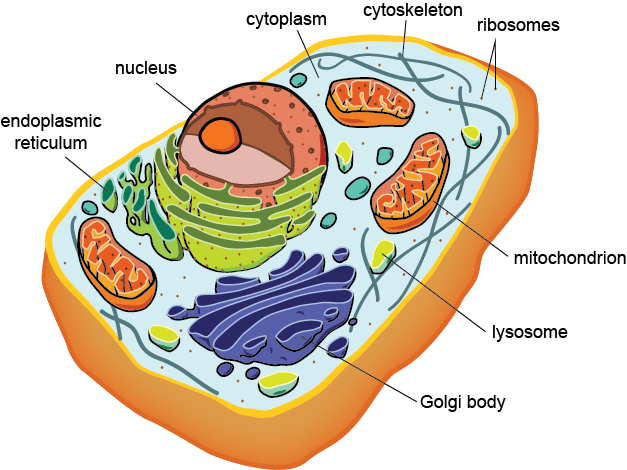
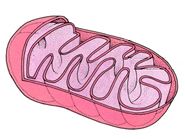
What is the name of the structure shown in the diagram where cellular respiration takes place?
a)
Chloroplast
b)
Mitochondrion
c)
Nucleus
d)
Vacuole
41.
Nucleotides are made up of a sugar, phosphate, and..?
a)
nitrogenous base
b)
nucleic acid
c)
cholesterol
d)
fatty acid
42.
Based on the graph, what temperature does this enzyme work best? 
a)
15 C
b)
40 C
c)
30 C
43.
Which of the following best describes a DNA molecule?
a)
double helix
b)
contains ribose
c)
made of amino acids
d)
contains Uracil
44.
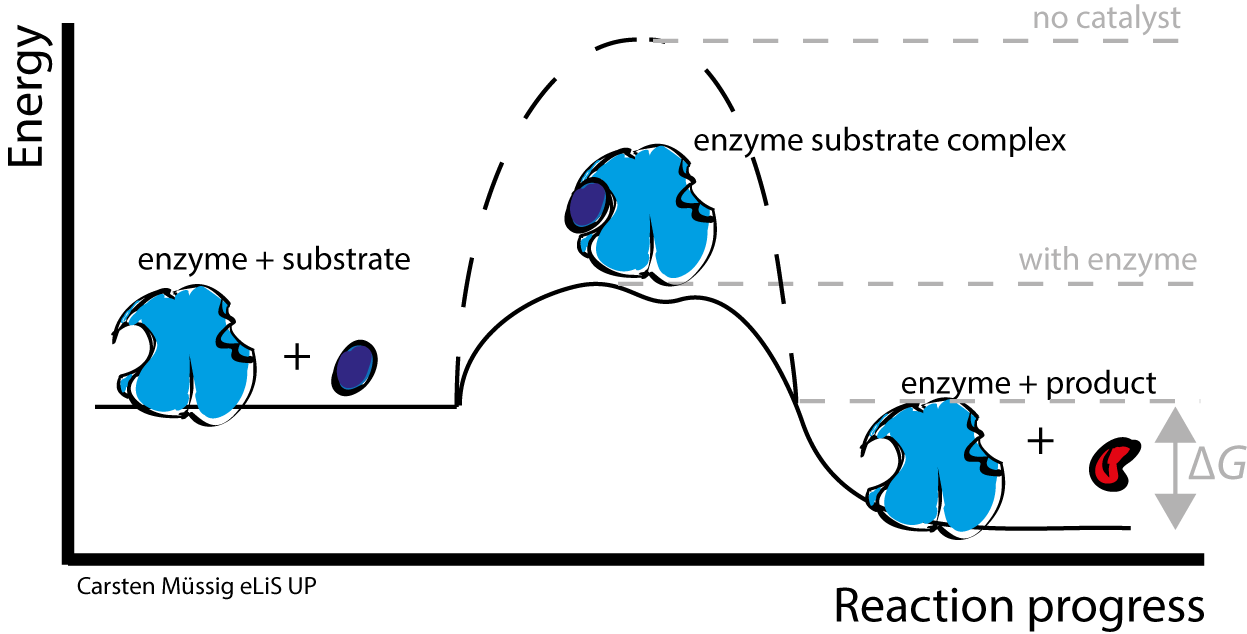
The graph shows how enzymes affect reactions in cells. Which statement best summarizes the information shown in the graph?
a)
Enzymes increase the energy of the reactants.
b)
Enzymes decrease the energy level of the products.
c)
Enzyme decrease the activation energy of the reaction.
d)
Enzymes reverse the direction of the reaction.
45.
What is structure E, F, G?
a)
Substrate
b)
Active site
c)
Enzyme
d)
Products
46.

Which of the following elements is present in Nucleic acid but not in other biomolecules?

a)

Carbon

b)

Phosphorus

c)

Nitrogen

d)

Hydrogen

47.

What type of biomolecule contains carbon, hydrogen, oxygen, and nitrogen?

a)

carbohydrate

b)

lipid

c)

nucleic acid

d)

protein

48.

Enzyme is a/an...

a)

carbohydrate

b)

lipid

c)

protein

d)

nucleic acid

49.

The sugar in RNA is _____________while the sugar in DNA is ________.

a)

deoxyribose, ribose

b)

ribose, deoxyribose

c)

c. ribose, phosphate

d)

ribose, uracil

50.

Which of the following is the correct equation for PHOTOSYNTHESIS?

a)

6CO2 + light + 6H2O --> 6O2 + Sugar

b)

6CO2 + sugar + 6H2O --> 6O2 + light

c)

6O2 + light + 6H2O --> 6CO2 + Sugar

d)

6CO2 + 6O2 + 6H2O --> Light+ Sugar

51.
What process occurs when light energy is captured in autotrophs and converted into sugar?
a)
Photosynthesis
b)
Cellular Respiration
52.
What are the products of photosynthesis?
a)
water and carbon dioxide
b)
oxygen and glucose
c)
oxygen and carbon dioxide
d)
oxygen and water
53.
What is the pigment in chloroplasts that performs photosynthesis?
a)
Chlorosynthesis
b)
Chlorophyll
c)
ADP
d)
Electron Transport
54.
Most plants appear green because chlorophyll
a)
absorbs green light.
b)
absorbs violet light.
c)
does not absorb green light.
d)
does not absorb violet light.
55.
Plants need carbon dioxide from their environment to produce glucose during which stage of photosynthesis? 
a)
The light-dependent stage
b)
The light-independent stage (The Calvin Cycle)
c)
The electron transport chain
d)
ATP formation
56.
The light independent reactions of photosynthesis happen where?
a)
stroma of chloroplast
b)
mitochondrial matrix
c)
stem
d)
thylakoid membrane
57.
Does the Calvin Cycle require light?
a)
yes
b)
no
c)
depends on the amount of carbon dioxide
58.

Which of the following would have an affect on the rate of photosynthesis?

a)

amount of water

b)

carbon dioxide concentration

c)

temperature

d)

all of these

59.
Which product is produced by the splitting of water during the light-dependent reactions of photosynthesis?
a)
NADPH
b)
oxygen
c)
glucose
d)
carbon dioxide
60.

Where do the light-dependent reactions occur?

a)

thylakoids

b)

stroma

c)

mesophyll

d)

mitochondria

61.

What is the function of ATP in photosynthesis?

a)

It absorbs light

b)

It powers the light-dependent reactions

c)

It is a light-reflecting pigment

d)

It is a short term energy carrier

62.
#4 is pointing to an individual "pancake" in this stack.  What is this called?
a)
Stroma
b)
Thylakoid
c)
Granum
d)
Stomata
63.
Which is not one of the 6 characteristics of all living things?
a)
Needs oxygen 
b)
Grows and Develops
c)
Reproduces
d)
Made of Cells
64.
Is a virus considered living or non-living?
a)
Living
b)
Non-Living
c)
Neither
65.

Which of the following conditions are NOT caused by a virus?

a)

AIDS

b)

Herpes

c)

Tuberculosis

d)

Warts

66.
What is a host?
a)
Organism that lives on the cell and causes it harm 
b)
Something that causes harm to the cell 
c)
Cell that the virus invades and takes over
67.
Why do scientists classify viruses as non-living?
a)
They DO respond to a stimulus
b)
They need a host's energy because they do not have their own energy 
c)
They produce wastes
d)
They are really small 
68.
What is the first step of the virus reproduction cycle?
a)
The viruses genetic material (DNA) starts to take over the functions of the cell
b)
The host cell bursts open, releasing the new viruses
c)
The virus injects its genetic material into the cell
d)
A virus attaches to the surface of a host cell
69.
Which of the following is an example of how living things are classified?
a)
Differences
b)
Similarities
c)
Movement Method
d)
Habitat Location
70.
What is the last step in the viral reproduction cycle?
a)
A virus attaches to the surface of a host cell
b)
The proteins and genetic material start to assemble in the cell
c)
The host cell bursts open, releasing the new viruses
d)
The virus injects its genetic material into the cell
71.
Which is bigger, a bacteria or a virus?
a)
Bacteria
b)
Virus
72.
Where do viruses reproduce?
a)
Outside of a cell
b)
Inside of a cell
c)
They do not reproduce
73.
Which of the following helps prevent the spread of infectious diseases?
a)
Surgery
b)
Medication
c)
Vaccines
74.
What do viruses need to reproduce?
a)
they need genetic material
b)
They need a host cell
c)
They need  bacteria
d)
They need insulin
75.

HIV is a dangerous virus because it attacks the ________ system; which leaves the individual vulnerable to other infections.

a)

Circulatory

b)

Endocrine

c)

Immune

d)

Nervous

76.
Antibiotics kill viruses
a)
True
b)
False
77.

Viruses are considered NON-LIVING because

a)

they are not cellular

b)

they cannot reproduce on their own

c)

they cannot make proteins

d)
all of the above
78.

What is a way to develop immunity to a disease without first having the disease?

a)
antibiotics
b)
Anti-retroviral drugs
c)
Vaccinations
d)
Exposure Therapies
79.
Which can be treated with antibiotics?
a)
Virus
b)
Bacteria
c)
Mutagen
d)
Parasite
80.

Which type of viral life cycle is depicted here

a)

Genotypic

b)

Homeomorphic

c)

Lysogenic

d)

Lytic

81.

What part of the cell cycle is considered interphase? Select all that apply.

a)

G1

b)

G2

c)

S

d)

M

82.

Which statement is NOT true about interphase?

a)

It's the longest phase of the cell cycle

b)

During interphase organelles duplicate

c)

During interphase, DNA replicates

d)

During interphase, the chromatin condenses into chromosomes.

83.
Put the following stages of mitosis in order: anaphase, prophase, metaphase, and telophase. 
a)
prophase, metaphase, telophase, anaphase
b)
prophase, anaphase, metaphase, telophase
c)
prophase, metaphase, anaphase, telophase
d)
prophase, telophase, metaphase, anaphase
84.
What phase is this cell in?
a)
Mitosis
b)
Interphase
c)
Anaphase
d)
Telophase
85.
What part of the cell cycle is this cell in?
a)
Mitosis
b)
Interphase
c)
Telophase
d)
Cytokinesis
86.
What phase is this cell in?
a)
Mitosis
b)
Cytokinesis
c)
Prophase
d)
Telophase
87.
What phase is this cell in?
a)
Mitosis
b)
Interphase
c)
Prophase
d)
Telophase
88.
In what phase does chromatin condense to form chromosomes?
a)
Mitosis
b)
Interphase
c)
Prophase
d)
Anaphase
89.
In what phase do the chromosomes get pulled apart into sister chromatid to opposite sides of the cell?
a)
Prophase
b)
Interphase
c)
Metaphase
d)
Anaphase
90.
In mitosis, the two resulting cells are
a)
different from the starting cell and identical to each other.
b)
different from the starting cell and different from each other.
c)
identical to the starting cell and different from each other.
d)
identical to the starting cell and identical to each other.
91.
Which of these lists presents the stages of the cell cycle in the correct order?
a)
interphase, mitosis, cytokinesis
b)
cytokinesis, mitosis, interphase
c)
mitosis, interphase, cytokinesis
d)
interphase, cytokinesis, mitosis
92.

During what phase of the cell cycle is DNA replicated?

a)

G1 phase

b)

G2 phase

c)

S phase

d)

M phase

93.
What stage is this?
a)
Prophase
b)
Metaphase
c)
Anaphase
d)
Telophase
94.
What stage is this?
a)
Prophase
b)
Metaphase
c)
Anaphase
d)
Telophase
95.
What stage is this?
a)
Prophase
b)
Metaphase
c)
Anaphase
d)
Telophase
96.
Which of the following describes cancer?
a)
Nondisjunction of gamete cells
b)
Cell division without replication of DNA
c)
Mitosis without cytokinesis
d)
Uncontrolled cell division
97.

In general, the purpose of a checkpoint in the cell cycle is:

a)

To allow the cell to rest

b)

To check for any errors

c)

To signal cell replication

d)

To signal DNA replication

98.
Fruit fly body cells have 8 chromosomes. After mitosis, you would expect a resulting fruit fly daughter cell to have -
a)
16 chromosomes.
b)
46 chromosomes.
c)
8 chromosomes.
d)
4 chromosomes.
99.

This term means "programmed cell death". It is when a cell is "told" to die, rather than death by disease or wearing out.

a)

senescence

b)

apoptosis

c)

planned obsolescence

d)

die, just die, darn you liver cell!

100.

Cancer-causing agents are known as...

a)

carcinomas

b)

carcinogens

c)

hyperplasias

d)

dysplasias

101.

The shortening of telomeres each time DNA in a chromosome is copied results in ...

a)

cell immortality

b)

cell aging

c)

cell death

d)

cell regeneration

102.

In prokaryotes cell division is called...

a)

apoptosis

b)

binary fission

c)

meiosis

d)

prokaryosis

103.

A human body (somatic) cell has (a)   chromosomes.

104.

When cells do longer divide and enter G0 it is called ...

a)

apoptosis

b)

cell cycle arrest

c)

death

d)

meiosis

105.

Which type of cells would permanently enter cell cycle arrest (G0)? Choose all that apply.

a)

Heart cells

b)

Macrophages

(White blood cells)

c)

Neurons

(nerve cells)

d)

Skin cells

106.
G = green, g = yellow
The genotype for a yellow plant is...
a)
GG
b)
Gg
c)
gg
d)
all of the choices result in yellow
107.
Which of the following is homozygous dominant?
a)
Yy
b)
Y
c)
yy
d)
YY
108.

Who is considered the "father" of modern genetics?

a)

Einstein

b)

Mendel

c)

Disney

d)

Washington

109.

Which of the following alleles is homozygous (purebred) recessive?

a)

TT

b)

Tt

c)

tt

d)

ts

110.
Genotype refers to the ...
a)
physical expression of the genes
b)
the possible combination of alleles in a gene
c)
whether an allele is dominant or recessive
d)
how an organism will appear
111.
The exact genetic makeup of an organism, such as RR, Tt, PP is its?
a)
phenotype
b)
dominance
c)
genotype
d)
trait
112.
Tt is-
a)
homozygous dominant
b)
homozygous recessive
c)
heterozygous
d)
none of these
113.

Genotype or Phenotype: Black hair

a)

Phenotype

b)

Genotype

114.
The hidden form of an inherited trait
a)
dominant trait
b)
recessive trait
c)
purebred
d)
hybrid
115.
If "T" is the allele for tall and "t" is the allele for short, then Tt would produce?
a)
tall
b)
short
c)
medium
d)
not enough info
116.
T - tall and t = short
In the punnett square below, what belongs in the missing square
a)
tt
b)
Tt
c)
Bb
d)
TT
117.
What is the yellow seed genotype?
a)
aa
b)
Aa
c)
AA
d)
AA or Aa
118.
In a heterozygous genotype, the ___________ allele takes over in the phenotype.
a)
recessive
b)
dominant
c)
lower case letter
d)
both 
119.
Two brown eyed parents (Bb) have a baby. What is the chance the baby is blue eyed?
a)
0 %
b)
25%
c)
50%
d)
75%
120.

What is the probability that the offspring will express the dominant trait?

a)

25%

b)

50%

c)

75%

d)

100%

121.

Which equation represents Cellular Respiration

a)

b)

c)

d)

122.

Which of the following is a reactant Cellular Respiration?

a)

Oxygen

b)

Carbon Dioxide

c)

Water

d)

Sunlight

123.

Which of the following is a reactant Cellular Respiration?

a)

Sunlight

b)

CO2

c)

H20

d)

C6 H12 O6

124.

Which of the following is the symbol for Glucose?

a)

O2

b)

CO2

c)

H20

d)

C6 H12 O6

125.

Cellular Respiration is an aerobic process which means it requires Oxygen.

a)

True

b)

False

126.

What organelle does cellular respiration take place?

a)

Chloroplast

b)

Cell Wall

c)

Mitochondria

d)

Central Vacuole

127.

What type of organism makes it's own food?

a)

Autotroph

b)

Heterotroph

c)

Consumer

d)

Omnivore

128.

What type of organism has to consume energy?

a)

Producers

b)

Plant

c)

Autotroph

d)

Heterotroph

129.

Which kind of organism undergoes Cellular Respiration?

a)

Autotroph

b)

Heterotroph

c)

Plant

d)

Producers

130.

What is the best definition for cellular respiration?

a)

A process in which glucose is broken down to be used for energy.

b)

A process in which Carbon Dioxide is used to break down Glucose.

c)

The process in which animals make their own energy.

131.

Click on the two products of Cellular Respiration?

a)

H2O

b)

O2

c)

CO2

d)

C6 H12 O6

132.

According to the graph, what happens when the temperature increases?

a)

respiration rate decreases

b)

respiration rate increases

c)

respiration rate levels off

d)

respiration rate increases then decreases

133.

Based of the information in the graph, what inference can be made?

a)

There were 10 measurements taken.

b)

Average respiration rate is measured in beats per minute.

c)

As the respiration rate increases the amount of oxygen produced increases.

d)

As the temperature increases more carbon dioxide is produced.

134.

What do photosynthesis and cellular respiration have in common?

a)

They both require Sun light.

b)

Both are carried on by heterotrophs

c)

They both create energy for an organism to use.

d)

They both transform energy for an organism to use.

135.

What phase is shown here? Hint: you are starting to see the nuclear membrane again!

a)

Metaphase II

b)

Telophase I

c)

Telophase II

d)

Metaphase I

136.

What phase is this?


Hint: nuclear membrane is disappearing

a)

Interphase II

b)

Prophase I

c)

Metaphase I

d)

Anaphase II

137.
What phase is shown here?
a)
Prophase II
b)
Metaphase I
c)
Metaphase II
d)
Anaphase I
138.
What phase is shown here?
a)
Anaphase II
b)
Metaphase I
c)
Anaphase I
d)
Telophase II
139.
What phase is shown here?
a)
Telophase II
b)
Anaphase II
c)
Metaphase I
d)
Interphase I
140.
What phase is shown here?
a)
Anaphase I
b)
Prophase I
c)
Metaphase II
d)
 Metaphase I
141.
What phases is shown here?
a)
Prophase II
b)
Prophase I
c)
Anaphase II
d)
Interphase I
142.
What phase is shown here?
a)
Telophase I
b)
Metaphase II
c)
Telophase II
d)
Anaphase I
143.
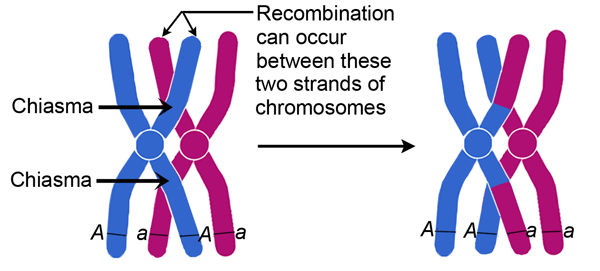
What process is shown here?
a)
Genetic Randomization
b)
Cross Over
c)
Allele Switching
d)
Cross Pollination
144.
When does the process shown here happen?
a)
Prophase I
b)
Anaphase II
c)
Interphase II
d)
Telophase I
145.

CROSSING OVER INCREASES

a)

LIFE SPAN

b)

GENETIC VARIATION

c)

THE NUMBER OF OFF-SPRING

d)

ALL ARE TRUE

146.
What phase is represented?
a)
metaphase 1
b)
metaphase 2
c)
anaphase 1
d)
anaphase 2
147.

What phase of Meiosis is this?

a)

Telophase I

b)

Anaphase I

c)

Anaphase II

d)

Telophase II

148.

What phase of Meiosis is this?

a)

Telophase I

b)

Anaphase I

c)

Anaphase II

d)

Telophase II

149.
This image shows chromosomes during Prophase 1. Which of the following correctly describes the process shown?
a)
segregation of sister chromatids
b)
condensation and segregation of alleles
c)
mutationin which the DNA content of the gene is altered
d)
crossing - over in which alleles are exchanged
150.
The correct order of the phases of mitosis and meiosis could be abbreviated as:
a)
MAPT
b)
PAMT
c)
TPAM
d)
PMAT
151.

How many alleles does a person carry for a trait?

a)

1

b)

2

c)

3

d)

4

152.

How many alleles does a child get from each parent for a trait?

a)

1

b)

2

c)

3

d)

4

153.
What do we use pedigrees for?
a)
To look at families
b)
To make determinations about the offspring
c)
To track traits in families
d)
Nothing
154.

In a pedigree, which shape represents a male?

a)

circle

b)

square

155.

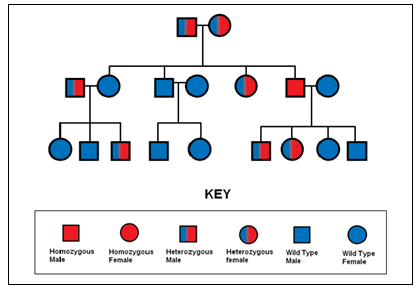
On a pedigree, this symbol represents a ---

a)

not affected female.

b)

not affected male.

c)

affected male.

d)

affected female.

156.

On a pedigree, this symbol represents a ----

a)

not affected male.

b)

not affected female.

c)

affected male.

d)

affected female.

157.

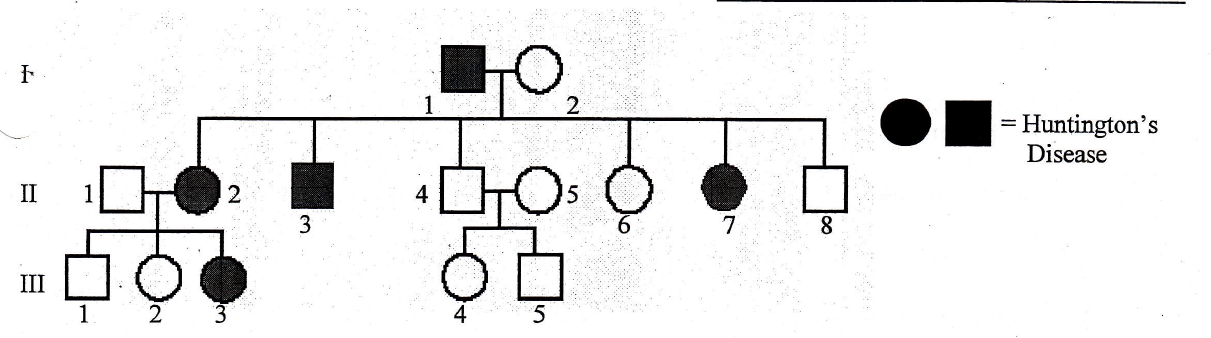
How many individuals are there in the 3rd generation?

a)

1

b)

2

c)

4

d)

6

158.

How are individuals III-2 and II-4 related?

a)

Brother and sister

b)

Dad and daughter

c)

Uncle and niece

d)

Grandfather and granddaughter

159.

The trait this pedigree traces is recessive because it skips a generation and individuals can be carriers. What is the most likely genotype for person III-3?

a)

GG

b)

Gg

c)

gg

160.
If this pedigree shows an autosomal recessive disorder, what MUST the genotype of individual II-3 be?
a)
HH
b)
Hh
c)
hh
d)
None of the above
161.
How many kids did the mother and father from the first generation have?
a)
2
b)
4
c)
5
d)
6
162.
There are no carriers for Huntington's Disease- you either have it or you don't. Is Huntington's disease caused by a dominant or recessive trait?
a)
Dominant
b)
Recessive
163.
How are individuals I-2 and III-5 related?
a)
Grandpa and grandson
b)
Mom and son
c)
Uncle and nephew
d)
Grandma and grandson
164.
Huntington's Disease is a dominant trait.
What is the correct genotype for individual I-2?
a)
HH
b)
Hh
c)
hh
d)
H_
165.
Does this pedigree show a dominant or recessive trait?
a)
Dominant
b)
Recessive
166.
What is the genotype of the mother?
a)
BB
b)
bb
c)
Bb
d)
BB or Bb
167.
What is the genotype of the father?
a)
AA
b)
aa
c)
Aa
d)
AA or aa
168.

Which of the following structures lets particles/molecules in and out of the cell?

a)

Mitochondrion

b)

Cell Membrane

c)

Chloroplast

d)

Channel Protein

169.

The cell membrane contains channels and pumps that help move materials from one side to the other. What are these channels and pumps made of?

a)

Carbohydrates

b)

Lipids

c)

Bilipids

d)

Proteins

170.

The diffusion of WATER across a selectively permeably membrane is called

a)

Osmotic pressure

b)

Osmosis

c)

Pinocytosis

d)

Active Transport

171.

Which means of particle transport requires input of energy from the cell?

a)

Diffusion

b)

Osmosis

c)

Facilitated diffusion

d)

Active Transport

172.

Molecules moves from high to low concentration in ______.

a)

down hill racing

b)

up hill racing

c)

passive transport

d)

active transport

173.

Which is used in an active transport?

a)

ATP

b)

CAR

c)

CART

d)

ARTS

174.

Which type of transport does NOT require energy?

a)

osmosis

b)

passive transport

c)

diffusion

d)

All are correct

175.

Facilitated diffusion is the movement of molecules that_____

a)

does not require energy

b)

move with concentration gradient

c)

move through the membrane protein

d)

All of the above

176.
A state of biological balance
a)
homeostasis
b)
hypertonic
c)
hypotonic
d)
hippocampus
177.
The picture is an example of...
a)

active transport

b)
passive transport
c)
diffusion
d)
osmosis
178.

What is this an example of?

a)

Active Transport

b)

Exocytosis

c)

Passive Transport

d)

Easy Transport

179.

In a hypertonic solution, where is most of the water?

a)

inside the cell

b)

outside of the cell

180.

In a hypertonic solution, where are most of the solutes?

a)

inside the cell

b)

outside of the cell

181.

In a hypertonic solution, which direction does water want to move to create equilibrium?

a)

into the cell

b)

outside of the cell

182.

What happens to a cell in a hypertonic solution?

a)

it shrinks

b)

it swells and gets bigger

c)

it stays the same

183.

In which osmotic state does the cell look normal?

a)

hypertonic

b)

isotonic

c)

hypotonic

184.

In which osmotic state does the cell shrink?

a)

hypertonic

b)

isotonic

c)

hypotonic

185.

Tonicity deals with the presence of solutes that cannot easily pass the cell membrane. Is water a solute?

a)

yes

b)

no