wayground logo

Free Printable Worksheets

Font size

S
M
L
XL
Worksheets

Fall Final Exam 2023

Total questions: 100

Worksheet time: 3hrs 18mins

Name
Class
Date
1.
Where was Mongolia in relation to China?
a)
north of China
b)
south of China
c)
near Tibet
d)
on the islands 
2.
What advantage did the Mongols have over surrounding peoples?
a)
They were mostly literate, unlike China who mostly was illiterate
b)
They had more equality than surrounding peoples
c)
Their calvary, fighting from horseback, unlike the Chinese who were not as well trained
d)
They didn't care about religion, where as the Chinese made Confucianism the official religion 
3.
Who was the fiercest Mongol leader?
a)
Empress Wu
b)
Genghis Khan 
c)
Confucius
d)
Marco Polo
4.
What was one reason why Genghis Khan was so fierce? 
a)
He was really mean
b)
He was well trained in combat
c)
He led the capture of China, Central Asia, & Persia
d)
He killed many of his followers who did not listen
5.
How was Kublai Khan related to Genghis? 
a)
his son
b)
his grandson
c)
his brother
d)
his wife
6.
Kublai continued his grandfather's quest for land by capturing all but
a)
Japan
b)
Tibet
c)
the rest of China
d)
Southeast Asia
7.
In Europe, the Mongols led by Batu became known as the
a)
"savage beasts"
b)
"Golden Horde"
c)
"Horsemen"
d)
"vikings"
8.
Trade increased between Europe and Asia and there was a period of regional stability and safe trade along the Silk Road.  This characterizes
a)
Chaos and mayhem of battle
b)
Results of Pax Mongolica
c)
A period of good luck.
d)
Development of canal system.
9.
Which of the following was a result of the peace in Asia in the 13th and 14th centuries under Mongol rule?
a)
Trade along the Silk Road increased.
b)
Islam's influence expanded into China.
c)
The four khanates rejoined to form one empire.
d)
Vietnam and Japan were annexed as part of China.
10.
Kublai Kahn united with the Chinese to create the ________ Dynasty. 
a)
Ming 
b)
Song
c)
Qin
d)
Yuan 
11.
Only the strong survived in Ancient Mongolia, because of the harsh geography of the ______.
a)
Rivers
b)
Mountains
c)
Plains
d)
Steppes
12.
How do we know that diversity was an important part of the Mongol Empire? (1200-1350)
a)
The Mongols made everyone follow the religion of Genghis Khan.
b)
The Mongol Empire ruled peoples from China, Russia, Eastern Europe, and India
c)
They conquered and slaughtered many men.
d)
They practiced psychological warfare.
13.
An estimated ____ of Europe's population died due to the plague.
a)
1/4
b)
2/3
c)
1/3
d)
80%
14.
Because the plague killed so much of Europe's population, it helped bring about the end of _________________.
a)
bureaucracies
b)
militarism
c)
feudalism
d)
Catholicism
15.
Which of the following did not carry the Bubonic Plague?
a)
Fleas
b)
Flies
c)
Rats
d)
Humans
16.
How did the plague affect the Feudal economy of Europe?
a)
Feudalism remained unchanged
b)
Feudalism was made stronger
c)
Labor shortages ended feudalism, serfs and peasants demand higher pay
d)
Feudalism ended because all peasants died
17.
What is the first sign of the plague?
a)
Cough up blood
b)
Black spots
c)
Die
d)
Throw up
18.

According to the document, How did Genghis Khan use to control of his empire?

a)

strict laws

b)

strong military

c)

Strict social class system

d)

religious tolerance (religious freedom)

19.

Based on the document, which of the following was a long term effect of the Mongolian form of rule?

a)

The decentralization of Western Europe

b)

The Crusades in the Middle East

c)

A period of peace called The Pax Mongolica

d)

Increase of trade between the Americas and Eurpope

20.

Based on the image, what was the long-term impact of the Battle of Liegnitz?

a)

The Mongol Empire fell apart

b)

The Mongol Empire gained more territory

c)

The Mongol Empire lost it's power in Europe

d)

The Mongol Empire became smaller

21.

Based on the document, what was the long term impact of Genghis Khan's strong military?

a)

Stability in the Mongol Empire

b)

Increased trade in the Mongol Empire

c)

A powerful military

d)

all answers are correct

22.
After the fall of Rome, what did the Church offer to the people of Europe?
a)
Shirts and Pants
b)
Stability and Security
c)
Polytheistic Religions
d)
Nuns and Pastors
23.
What did Serf's rely on from the Nobles in the manorial system?
a)
Food
b)
Shelter
c)
Protection
d)
Cost of Living
24.
Christian views were the reason that the Western and Eastern churches were divided.  What did they rename themselves to be?
a)
Roman Catholics/Eastern Orthodox 
b)
Haji and Flow
c)
Jewish and Orthodox Jews
d)
Holy Shirts and Pants
25.
A ________ is a warrior in medieval Europe who fought on horseback.
a)
serf
b)
lord
c)
knight
d)
manor
26.
A ________ is a large estate owned by a knight or lord.
a)
knight
b)
manor
c)
vassal
d)
feudalism
27.
________ is a political system in which nobles are granted lands in exchange for their loyalty, military service, and protection.
a)
feudalism
b)
manor
c)
vassal
d)
knight
28.
This person is the leader of the Roman Catholic Church
a)
Pope
b)
President
c)
Priest
d)
peasant
29.
_________ were a series of wars between Christians and Muslims over control of the Holy Land
a)
The Crusades
b)
Six Day War
c)
100 Years War
d)
WWI
30.
________ means to exclude (someone) from participation in the sacraments and services of the Christian Church
a)
monk
b)
excommunicate
c)
catholic
d)
clergy
31.
________ are all people ordained for religious duties, especially in the Christian Church
a)
clergy
b)
priests
c)
pope
d)
peasants
32.
The crusades were wars between Christians and 
a)
Hindus
b)
Buddhists
c)
Muslims
d)
Catholics
33.
In Europe, a long-term effect of the Crusades was
a)
the strengthening of the feudal system 
b)
the adoption of Islamic religious practices 
c)
an increased demand for goods from the East 
d)
increased European isolation 
34.
What were two indirect results of the Crusades?
a)
trade and commerce increased and the feudal system was strengthened 
b)
trade and commerce declined and the feudal system was strengthened 
c)
trade and commerce increased and the feudal system was weakened 
d)
trade and commerce declined and the feudal system was weakened 
35.

The goal of the Crusades was to reclaim

a)

the Holy Land

b)

Palestine

c)

Syria

d)

Persia

36.

Body of water at #8

a)

Black Sea

b)

North Sea

c)

Baltic Sea

d)

Mediterranean Sea

37.

Body of water at #6

a)

Black Sea

b)

North Sea

c)

Baltic Sea

d)

Mediterranean Sea

38.

country at #5

a)

Holy Roman Empire

b)

France

c)

Spain

d)

Britain

39.

country at #12

a)

Scandinavia

b)

France

c)

Spain

d)

Britain

40.

country at #13

a)

Scandinavia

b)

France

c)

Spain

d)

Britain

41.

country at #11

a)

Scandinavia

b)

France

c)

Spain

d)

Britain

42.

country at #9

a)

Scandinavia

b)

France

c)

Spain

d)

Britain

43.

City at #3

a)

Venice

b)

Moscow

c)

London

d)

Paris

44.

City at #1

a)

Venice

b)

Moscow

c)

London

d)

Paris

45.

City at #7

a)

Venice

b)

Moscow

c)

London

d)

Paris

46.

City at #2

a)

Venice

b)

Moscow

c)

London

d)

Paris

47.

What religion did King Ezana of Axum help bring to Africa?

a)

Buddhism

b)

Judaism

c)

Islam

d)

Christianity

48.

Who used his pilgrimage to showcase his empire of Mali?

a)

Mansa Musa

b)

King Ezana

c)

Nefertiti

d)

Sundiata

49.

What led to the growth of centralized government in West Africa?

a)

the emergence of large empires

b)

large farms

c)

strong trade

d)

crime

50.

What religion spread from Arabia into Africa beginning in the A.D. 600's?

a)

Judaism

b)

Islam

c)

Daoism

d)

Christianity

51.

What does the word Renaissance mean?

a)

Resurrection

b)

Rebirth

c)

Rejuvenation

d)

Reformation

52.

In what country did the Renaissance start?

a)

Italy

b)

Greece

c)

France

d)

Germany

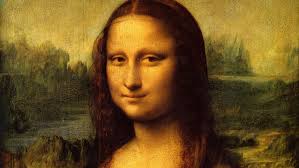
53.

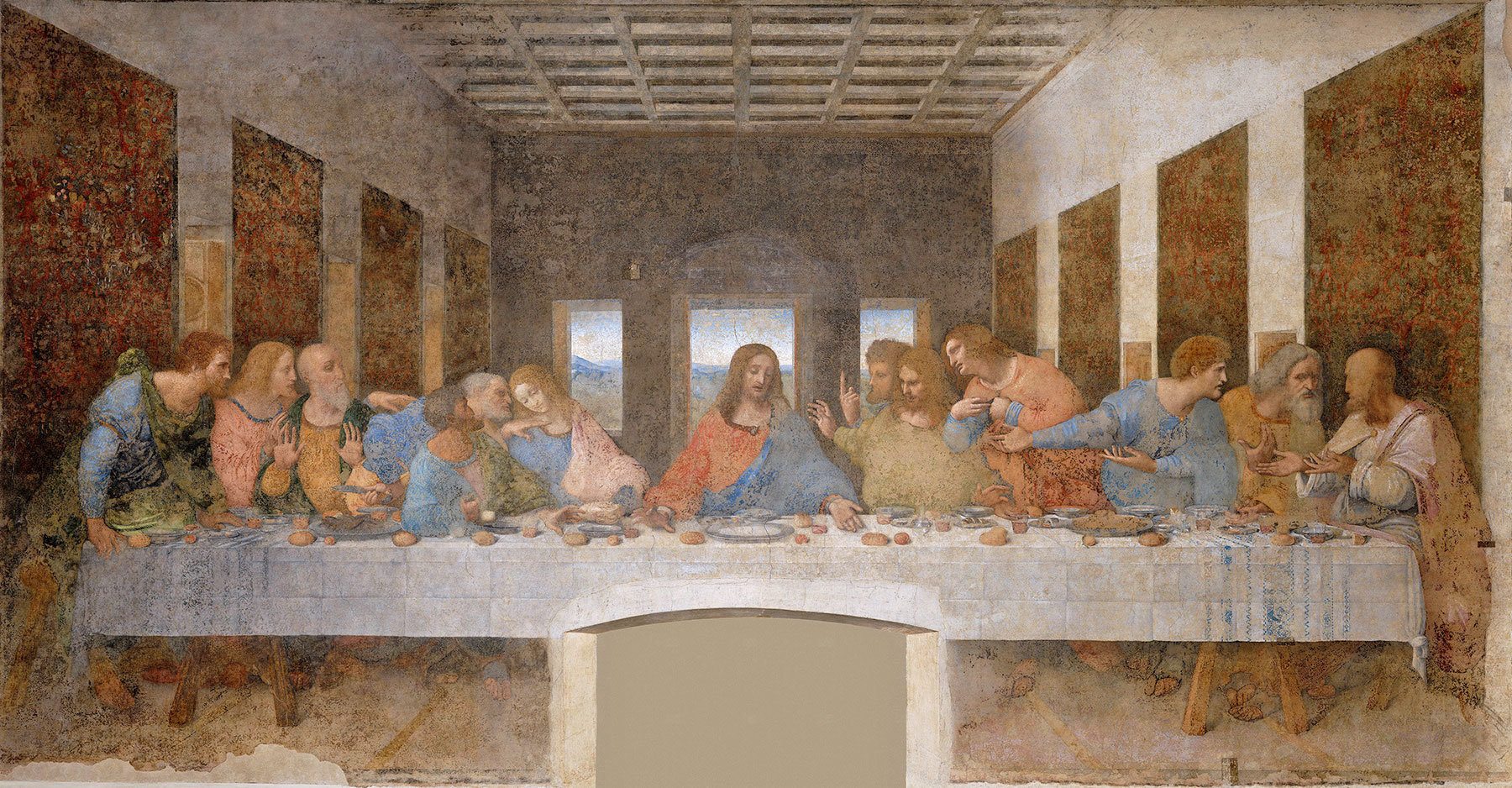
This famous painting was done by

a)

Leonardo da Vinci

b)

Raphael

c)

Michelangelo

d)

Picasso

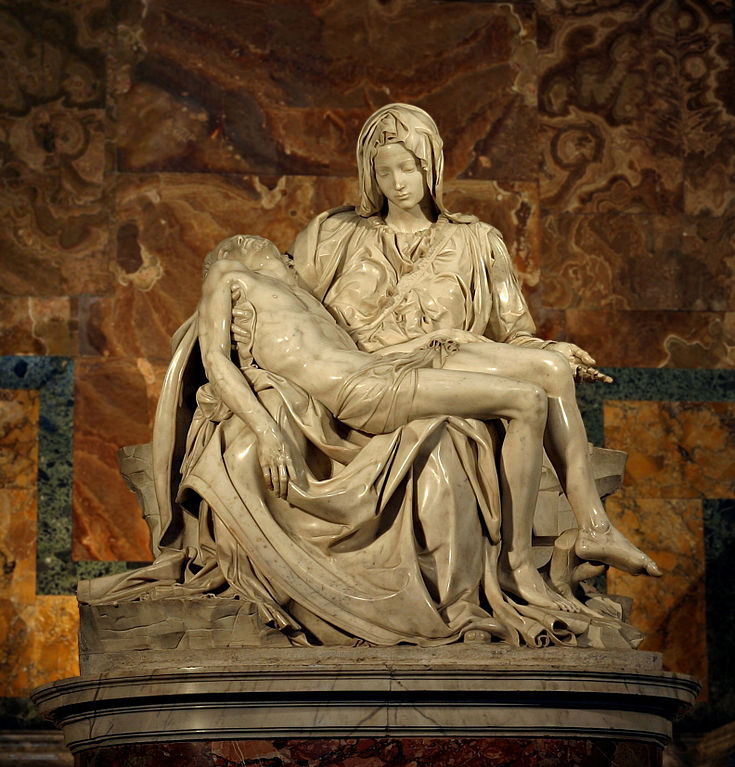
54.

Who created this?

a)

Leonardo da Vinci

b)

Theodore Mancini

c)

Michelangelo

d)

Donatello

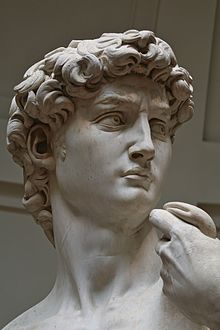
55.

This work by Michelangelo is called what?

a)

Michael

b)

Noah

c)

David

d)

Vitruvius

56.

In the painting School of Athens, the great thinkers of ancient Greece and Rome are featured, as well as architecture from those ancient cultures. This is an example of

a)

Humanism

b)

Classicism

c)

Totalitarianism

d)

Sectarianism

57.

Who said "The end justifies the means"?

a)

Medici

b)

Donatello

c)

Machiavelli

d)

Castiglone

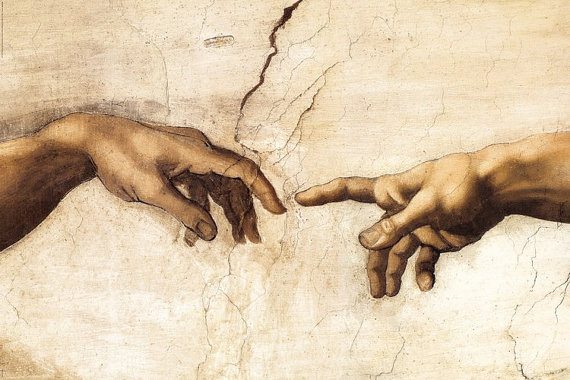
58.

You would find this painting by Michelangelo on the ceiling of what building?

a)

The Metropolitan Museum of Art

b)

The Louvre

c)

The Smithsonian

d)

Sistine Chapel

59.

In this painting, the large area in the foreground (front) shrinks down to the smaller area in the back, giving it dimension. This is an example of....

a)

Secularism

b)

Perspective

c)

Water color techniques

d)

Pointilism

60.
What provided the major economic support for the Renaissance?
a)
wealthy patrons
b)
church officials
c)
government grants
d)
kings competing for prestige
61.

Which of these famous structures did Michelangelo paint?

a)

the Louvre

b)

the Coliseum

c)

the Sistine Chapel

d)

the Eiffel Tower

62.

Who invented the Printing Press?

a)

Gutenberg

b)

Erasmus

c)

More

63.

Who wrote the essay "The Prince?"

a)

Michelangelo

b)

Machiavelli

c)

Erasmus

d)

Sir Thomas More

64.

Which was not an important city state in Italy during the Renaissance?

a)

Florence

b)

Venice

c)

Genoa

d)

Constantinople

65.

Celebrate the individual

a)

Humanism

b)

Dogism

c)

sonnets

d)

Protestant

66.

Who painted The School of Athens?

a)

Leonardo da Vinci

b)

Michelangelo

c)

Donatello

d)

Raphael

67.
Which German priest started the Reformation?
a)
John Calvin
b)
Henry VIII
c)
Pope Paul III
d)
Martin Luther
68.
Luther was ___________ by Pope Leo III because of his criticisms.
a)
Promoted
b)
Excommunicated
c)
Killed
d)
Banished
69.
Luther's criticism of the Catholic Church was called what?
a)
Criticism of the Catholic Church
b)
95 Theses
c)
101 Problems with Catholics
d)
Chicken Soup for the Catholic Soul
70.
Who created a Christian society in Geneva, Switzerland?
a)
Henry VIII
b)
Martin Luther
c)
John Calvin
d)
Pope Clement VII
71.
John Calvin believed in ________________.
a)
Free Will
b)
Pre-Destination
c)
Purgatory
d)
Indulgences
72.
Why did Henry VIII create the Church of England?
a)
Divorce his wife
b)
Start war with Pope
c)
Religious differences with Catholics
d)
Liked Lutheranism
73.
Why did Henry VIII wanted to divorce Catherine of Aragon?
a)
Didn't bear son
b)
She cheated on him
c)
They were different religions
d)
War with Spain
74.
Which of Henry VIII'a daughters became a successful English queen?
a)
Elizabeth I
b)
Mary I
c)
Joanna I
d)
Victoria I
75.
What did the Catholic Church sell to forgive sins?
a)
Forgiveness
b)
Sacraments
c)
Indulgences
d)
Confession
76.
What is excommunication?
a)
You are kicked out of the church for life and won't go to heaven.
b)
You are put on trial, tortured, and given a choice to convert or die.
c)
You can pay money to have your sins forgiven: ticket to heaven.
d)
You are brought up on criminal charges, accusing you of going against approved teachings/beliefs.
77.
All Church activities were in this language.
a)
Latin
b)
French
c)
Spanish
d)
Pig Latin
78.

Who proposed a heliocentric model?

a)

Nicolaus Copernicus

b)

Leonardo da Vinci

c)

Isaac Newton

d)

Niccolo Machiavelli

79.

The calculations of Johannes Kepler showed that

a)

Earth spins alone at the center of the universe

b)

the planets move around the sun in oval orbits or in ellipses

c)

the four moons of Venus move slowly around that planet

d)

the heavens are in a fixed position in relation to Earth

80.

In the scientific method, a hypothesis is a...

a)

possible explanation to be tested

b)

conclusion that should not be questioned

c)

truth that leads to understanding

d)

truth known at the start of an inquiry

81.

Some scientists were thought to be heretics by the Catholic Church. Heresy means:

a)

hairy tics

b)

crimes committed on behalf of the church

c)

crimes against the church

d)

a chocolate bar

82.

This scientist did not care about being a heretic because he was a protestant from Germany.

a)

Robert Boyle

b)

Kepler

c)

Copernicus

d)

Galileo

83.

This house arrested scientist that wrote the heliocentric astronomy book Starry Messenger was forced to recant...

a)

Gilbert Brokeo

b)

Phat Noseo

c)

Michelangelo

d)

Galileo

84.

This scientist wrote Principia Mathematica y Natura Philosphe, a book that gave us the laws of gravity and calculus.

a)

James Neutron

b)

Tom Ford

c)

Isaac Newton

d)

Rene Descartes

85.

This person was a supporter of the geocentric universe and is noted as the first European to write the first book on astronomy

a)

Shakespeare

b)

Robert Boyle

c)

Ptolemy

d)

Kepler

86.

After the Renaissance, science used...

a)

observation and experimentation

b)

observation and calculation

c)

experimentation and heart

d)

dedication and motivation

87.

Who discovered the laws of gravity?

a)

Harvey

b)

Galileo

c)

Copernicus

d)

Newton

88.

How did the Catholic Church influence the Scientific Revolution?

a)

They preserved ancient Greek and Roman texts

b)

They invented algebra

c)

They charged scientists with heresy

d)

They debated Muslim scientific ideas leading to the creation of scientific method

89.

Which statement about the Scientific Revolution in Europe is accurate?

a)

The existence of natural laws was rejected

b)

Scientists questioned traditional beliefs about the universe

c)

New ideas supported the geocentric theory of Ptolemy

d)

The Bible was used to justify new scientific findings

90.

Which scientist came up with the 3 Laws of Motion?

a)

Harvey

b)

Newton

c)

Galileo

d)

Copernicus

91.

_____ was the first to turn the telescope to the sky and examine the moon’s surface

a)

Galileo

b)

Copernicus

c)

Kepler

d)

Newton

92.

What is the word that matches: "six steps to solving a problem?"

a)

Cultural Institutions

b)

Credibility

c)

Scientific Method

d)

Perception

93.

What is the word that matches: "something that works to promote an areas culture?"

a)

Cultural Institutions

b)

Credibility

c)

Scientific Method

d)

Perception

94.

What is the word that matches: "something that has been proven to be true?"

a)

Cultural Institutions

b)

Credibility

c)

Scientific Method

d)

Fact

95.

What is the word that matches: "someone's point of view on a topic?"

a)

Opinion

b)

Credibility

c)

Scientific Method

d)

Fact

96.

What is the word that matches: "beliefs that have been passed down through time?"

a)

Opinion

b)

Credibility

c)

Traditional Belief

d)

Fact

97.

What is the word that matches: "Trustworthy?"

a)

Opinion

b)

Credibility

c)

Traditional Belief

d)

Fact

98.

What is the word that matches: "To further describe something?"

a)

Opinion

b)

Credibility

c)

Explain

d)

Fact

99.

What is the word that matches: "Your own personal way of understanding something?"

a)

Challenge

b)

Perception

c)

Explain

d)

Fact

100.

What is the word that matches: "To go against something or someone's perception/ideas?"

a)

Challenge

b)

Perception

c)

Explain

d)

Fact