
 Worksheets
PHS Semester Review
Total questions: 72
Worksheet time: 36mins
Closer to the head.
Anterior
Proximal
Superior
Medial
Away from the head.
Inferior
Lateral
Deep
Distal
Toward the front of the body.
Superficial
Anterior
Inferior
Proximal
Toward the back of the body.
Superficial
Distal
Superior
Posterior
Another term for superior.
Cranial
Caudal
Ventral
Dorsal
Another term for inferior.
Ventral
Superior
Caudal
Dorsal
Another term for anterior.
Dorsal
Distal
Lateral
Ventral
Another term for posterior.
Medial
Deep
Dorsal
Anterior
Toward the midline of the body
Inferior
Superficial
Proximal
Medial
Away from the midline of the body
Inferior
Distal
Lateral
Posterior
Closer to the trunk.
Proximal
Medial
Superior
Deep
Away from the trunk.
Superior
Distal
Lateral
Anterior
Toward the surface of the body.
Deep
Superficial
Inferior
Distal
Away from the surface of the body.
Medial
Inferior
Proximal
Deep
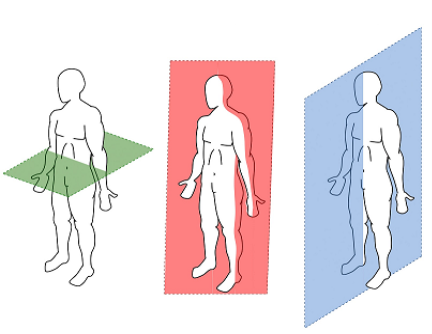
Divides the body into left and right portions.
Frontal
Transverse
Sagittal.
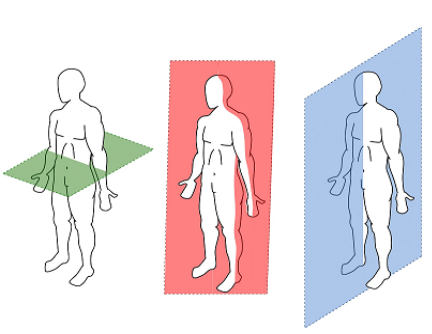
Divides the body into front and back portions.
Sagittal
Frontal
Transverse
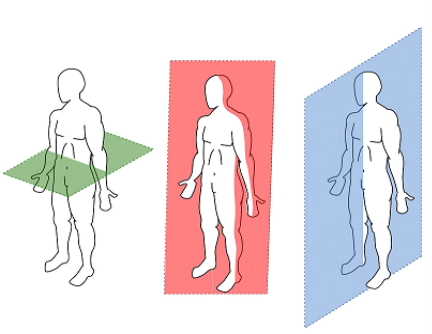
Divides the body into top and bottom portions.
Sagittal
Frontal
Transverse
The father of medicine
Egyptians
hippocrates
caduceus
christians
Earliest people known to maintain accurate health records.
Greeks
Egyptians
Chines
Romans
Science began to replace people’s beliefs in religious or superstitious causes for illness in the _____
Prehistoric ages
Historical ages
Middle Ages
Egyptian ages
discovered that microorganisms were everywhere and that they caused disease, he created pasteurization, he developed a vaccine for rabies
Ernst von Bergmann
Joseph Lister
Louis Pasteur
Edward Jenner
the founder of modern nursing, she began professional education for nurses.
Marie Curie
Clara Barton
Robert Koch
Florence Nightingale
Dark Ages
•Many lived in filth, with little or no personal hygiene
•Medical universities were created in the 9th Century to train physicians how to use knowledge to treat illness
•Medicines were mainly herbal mixtures
•Prayer and divine intervention were used to fight illness and disease
This is the founder of the American Red Cross
Anton van Leewenhoek
Clara Barton
Rene Laennec
Florence Nightingale
These people were the first to keep medical records
Russians
Egyptians
Romans
Greeks
How are most Americans insured?
through their employer
government
private insurance
workers compensation
Medicare is funded by the ...
state and federal government
federal government only
state government only
employer
The amount that must be paid by the patient for medical serves before the policy begins to pay...
premium
co-pay
deductible
co-insurance
Low income individuals are covered by...
medicare
HMO
medicaid
TRICARE
Insurance for individuals injured on the job.
TRICARE
Worker's Compensation
PPO
HMO
Insurance for military personnel.
HMO
medicaid
TRICARE
medicare
A specific amount of money a patient pays for a particular service.
premium
deductible
co-pay (copayment)
co-insurance
Operates equipment that produce images of tissues and bones within the body
CT technician
Radiologist
Medical Lab Technician
Radiology technician
This insurance model requires you to select from a list of "approved providers" before you can see a specialist. You have to get a referral.
HMO
PPO
Point of Service Plans
COBRA

OBSTETRICIAN
Doctors who deliver babies.
A doctor who specializes in conditions involving the skin, hair, and nails.
Doctors who help patients keep their teeth, gums, and mouth healthy.
Health Care involves promoting health and preventing disease. Therefore, a health care worker should present a healthy appearance
True
False
First impressions are based on appearances and form quickly, usually within the first
30 seconds
5 minutes
20 seconds
10 minutes
A _________ leader believes in total rule and makes all decisions.
Autocratic
Democratic
Laissez-Faire
Charismatic
A man is found lying unconscious outside the medical unit you work in. You alert your co-worker who intern notifies the physician. It is clear that the person will not be able to sign a consent form for treatment. How should the physician handle this situation?
The physician should wait for the friend or family member of the person to arrive so they can sign the consent form.
Implied consent should be used until the person can give consent.
The building administration should evaluate the situation and obtain consent.
The healthcare surrogate should be solicited to provide informed consent
HIPAA applies to
All health information
Protected medical data only
Written information only
Verbal and electronic information only
Which branch of law covers injuries suffered because of another person's wrongdoings resulting from breach of legal duty?
Common Law
Administrative Law
Private Law
Tort Law
HIPAA stands for
Health Information Privacy Accountability and Affordability Act
Health Insurance Privacy and Accommodation Acceptance
Health Insurance Portability and Accountability Act
Health Inaccuracy Proetection and Accessibility Act
Which of the following is the best professional response to a patient who tells you that she believes that "white health professionals are smarter than those of color," and asks you to agree?
"You're right!" (The patient/customer is always right.)
"What I think doesn't matter. What is important is whatever you believe."
"I don't believe being smart is related to race or ethnicity."
"Are you crazy? This is the 21st century and you are still thinking like that. "
Information documented on the medical record should be:
Subjective
Objective
Based on the EKG Technician's opinion
Arbitrary
A living will and a durable power of attorney are examples of...
advanced directives
covered entities
malpractice
criminal law
A patient suffering with gastritis would experience...
Inflammation of the liver
Inflammation of the stomach
muscular pain
all of the above
A graph showing the heart would be called a(n):
Cardioscope
Electrocardiogram
Cardiology
Endogram
Which prefix would be used to describe outside of the area
sub
epi
ecto
endo
appendectomy is the surgical _____ of the appendix.
cutting
crushing
repair
removal
Pathology is the ________ of disease
treatment
study
record
examination
Osteoporosis is the abnormal porous structure of the ________.
bone
skin
heart
kidney
The patient saw her doctor for ____________, or low blood sugar.
hyperglycemia
eupnea
hypoglycemia
dyspepsia
Mr. Wallace was rushed to the ER for the surgical removal of a kidney, or ___________.
Cephalectomy
Nephrectomy
Hepatectomy
Gastrectomy
An individual suffering from hypothermia, _____ body temperature, may begin to turn blue, or experience ________.
high, cyanosis
high, jaundosis
low, cyanosis
low, jaundosis
If a patient is experiencing something painful or difficult, the prefix ______ may be used.
ambi
dys
eu
mal

When both the skeletal and muscular system work together they can provide
Form
Communication
Stability
Movement
Where is the diaphragm positioned in the body?
Above the lungs
Below the lungs
What is the job of the Larynx
Allows people to talk
Allows people to move the muscles
Allows people to swallow


7. An anatomical section that separates the body into right and left portions is a __________ section.
frontal
transverse
coronal
sagittal
Which organ is responsible for carrying messages from all parts of the body to and from the brain and spinal cord?
Capillaries
Skin
Joints
Nerves
Which type of tissue covers the internal and external body surfaces?
Connective Tissue
Muscle Tissue
Nervous Tissue
Epithelial Tissue
Which disease causes bones to become weak and brittle?
Osteoporosis
Arthritis
Sprains
Herniated disk
What is the term for moving toward the midline?
Flexion
Adduction
Extension
Abduction
Which disorder is characterized by chronic pain in muscles?
Fibromyalgia
Bursitis
Tendonitis
Strain
Which division of the nervous system acts as a control center?
Central Nervous System
Peripheral Nervous System
Somatic Nervous System
Autonomic Nervous System

