
 Worksheets
American Government District Final Study Guide
Total questions: 141
Worksheet time: 2hrs 35mins

Who is known for his theory of natural rights?
John Locke
Montesquieu
Jean-Jacques Rousseau
James Madison
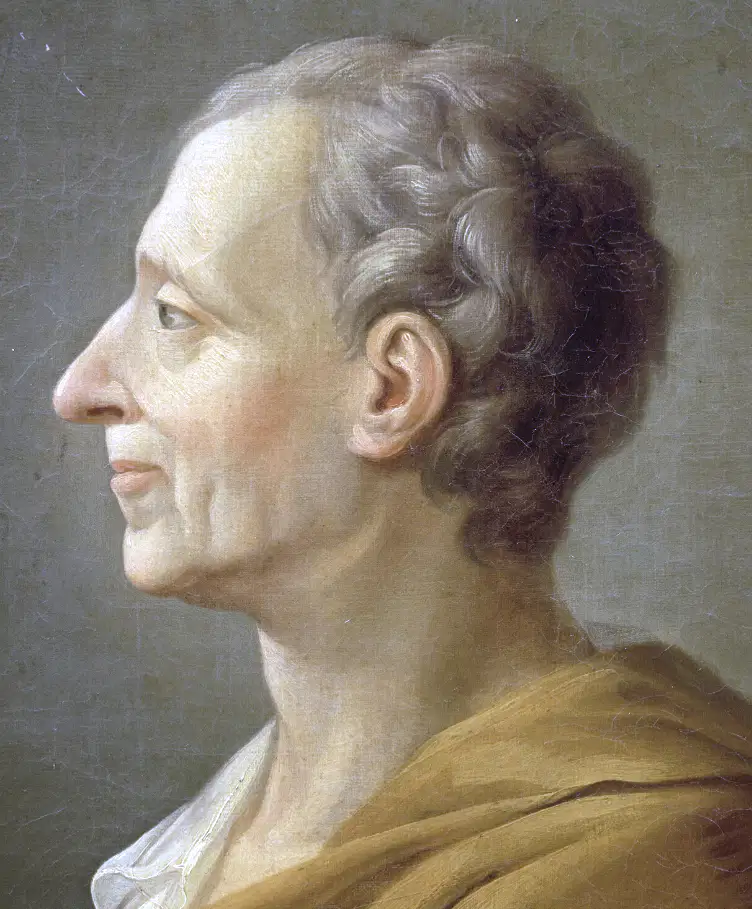
Who proposed the idea of separation of powers?
John Locke
Montesquieu
Jean-Jacques Rousseau
James Madison

Who is considered the 'Father of the Constitution'?
John Locke
Montesquieu
Jean-Jacques Rousseau
James Madison

Which thinker's writings helped lay the foundation for American independence and democracy?
John Locke
Thomas Jefferson
Jean-Jacques Rousseau
James Madison
What are the three branches of the U.S. government and their respective functions?
Agricultural, Environmental, and Educational branches
Military, Economic, and Social branches
Executive, Legislative, and Judicial branches
Healthcare, Transportation, and Energy branches
What is the significance of the Declaration of Independence in the foundation of American government?
It established a monarchy and absolute rule in America
It laid out the principles of individual rights, government by consent, and the right to revolution, which became the foundation of American government.
It emphasized the importance of socialism and communal ownership
It had no impact on the foundation of American government
What is the role of the Bill of Rights in the U.S. Constitution?
It defines the responsibilities of the Supreme Court
It outlines the rights and freedoms of the American people.
It regulates the taxation system
It establishes the powers of the President
What is the significance of the Supreme Court in the American government system?
The Supreme Court is responsible for creating new laws in the United States
The Supreme Court is the highest court in the United States and has the power to interpret and apply the law, as well as to review and overturn laws and decisions that are found to be unconstitutional.
The Supreme Court only has the power to enforce laws, not interpret them
The Supreme Court has no authority to review or overturn laws
What is the purpose of the system of checks and balances in the U.S. government?
To ensure that each branch has no influence over the other branches
To create a dictatorship with no balance of power
To prevent any one branch of government from becoming too powerful and to ensure that each branch has some measure of influence over the other branches.
To give all power to one branch of government
How does the electoral college function in the election of the U.S. President?
The electoral college functions by appointing the President and Vice President directly.
The electoral college functions by casting votes for the President and Vice President based on the popular vote in each state.
The electoral college functions by selecting the President and Vice President through a national popular vote.
The electoral college functions by choosing the President and Vice President based on the number of senators in each state.
Checks and balances
A system that allows each branch of a government to amend or veto acts of another branch so as to prevent any one branch from having too much power.
Describes a government that has a two-house legislative system, such as the House of Representatives and the Senate that make up the U.S. Congress. The word bicameral is derived from the Latin: "bi" (meaning two) and "camera" (meaning chamber).
The agreement made by the original 13 states in 1777 establishing a confederacy to be known as the United States of America; replaced by the Constitution of 1788.
a slow-moving reptile, enclosed in a scaly or leathery domed shell into which it can retract its head and thick legs.
Federalism
The Elastic Clause is a constitutional clause that allows Congress to pass the legislation needed to carry out its powers, both those expressly mentioned in the Constitution and also those implied by the Constitution.
were a series of eighty-five essays urging the citizens of New York to ratify the new United States Constitution.
All the people in a country or area who are entitled to vote in an election.
Is a system of government in which the same territory is controlled by two levels of government.
Bicameral legislation
Someone who is opposed to a system of government in which power is divided between a single central government and several regional ones
The agreement made by the original 13 states in 1777 establishing a confederacy to be known as the United States of America; replaced by the Constitution of 1788.
a small domesticated carnivorous mammal with soft fur, a short snout, and retractable claws. It is widely kept as a pet or for catching mice, and many breeds have been developed.
Describes a government that has a two-house legislative system, such as the House of Representatives and the Senate that make up the U.S. Congress. The word bicameral is derived from the Latin: "bi" (meaning two) and "camera" (meaning chamber).
Articles of Confederation
a domesticated carnivorous mammal that typically has a long snout, an acute sense of smell, nonretractable claws, and a barking, howling, or whining voice.
A system that allows each branch of a government to amend or veto acts of another branch so as to prevent any one branch from having too much power.
The agreement made by the original 13 states in 1777 establishing a confederacy to be known as the United States of America; replaced by the Constitution of 1788.
Describes a government that has a two-house legislative system, such as the House of Representatives and the Senate that make up the U.S. Congress. The word bicameral is derived from the Latin: "bi" (meaning two) and "camera" (meaning chamber).
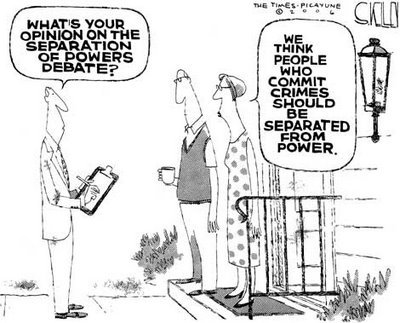
The Great Compromise was a compromise between--
Mass. Plan and New Jersey Plan
Virginia Plan and New Jersey Plan
Virginia Plan and New York Plan
Virginia Plan and Delaware Plan
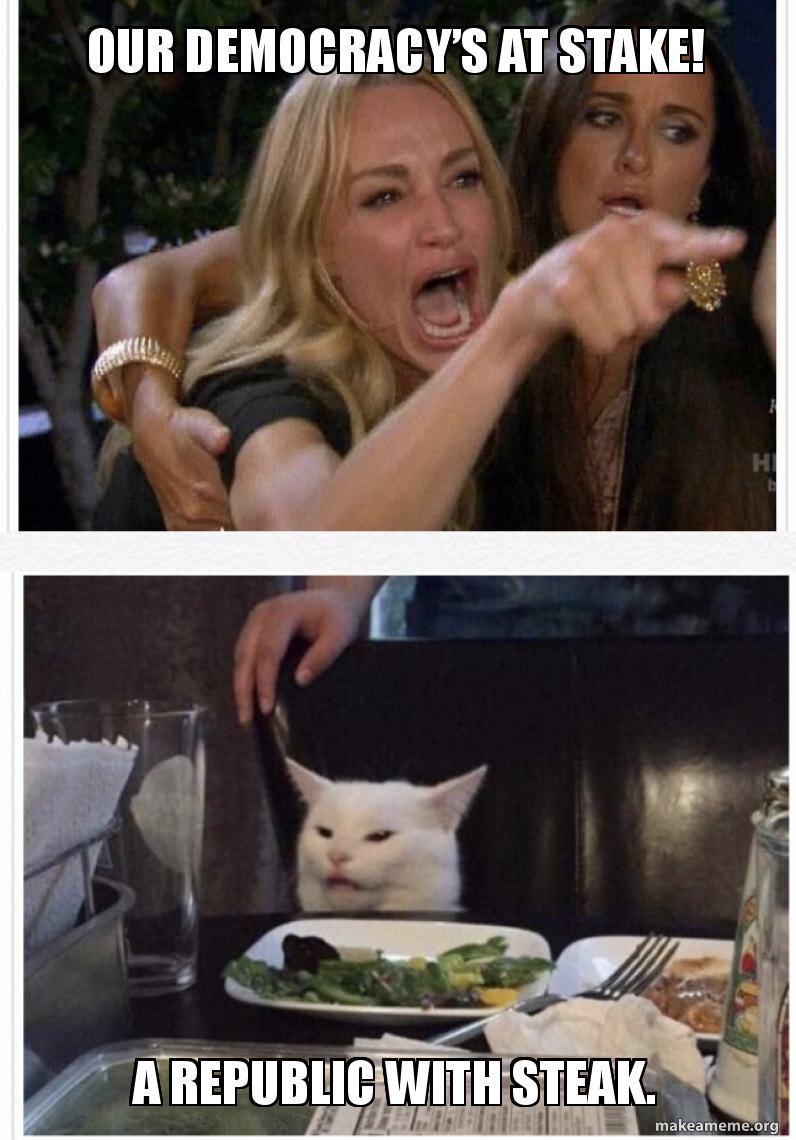
What is the difference between a democracy and a republic?
In a Democracy, people are represented by someone else. In a Republic, people get a direct say in government.
In a Republic, people are represented by someone else. In a Democracy, people get a direct say in government.
In a Democracy, people get a direct say in government. In a Republic, people are ruled by a King.
In a Republic, people are represented by someone else. In a Democracy, the government is based around religious law.
Who makes up the legislative branch?
The President
+ Vice President
+ the President's Cabinet
Congress (Senate & House of Representatives)
Supreme Court
+ Other Federal Courts
What does the legislative branch do?
Makes and passes laws.
Can override the President's veto.
Enforces laws.
Signs laws.
Vetoes laws.
Interprets and defines laws.
Decides if laws are constitutional.
Makes rulings in court cases.
Who makes up the judicial branch?
The President
+ Vice President
+ the President's Cabinet
Congress (Senate & House of Representatives)
Supreme Court
+ Other Federal Courts
What does the judicial branch do?
Makes and passes laws.
Can override the President's veto.
Enforces laws.
Signs laws.
Vetoes laws.
Interprets and defines laws.
Decides if laws are constitutional.
Makes rulings in court cases.
Who makes up the executive branch?
The President
+ Vice President
+ the President's Cabinet
Congress (Senate & House of Representatives)
Supreme Court
+ Other Federal Courts
What does the executive branch do?
Makes and passes laws.
Can override the President's veto.
Enforces laws.
Signs laws.
Vetoes laws.
Interprets and defines laws.
Decides if laws are constitutional.
Makes rulings in court cases.
Which amendement defines citizenship in the US?
13th
14th
15th
16th
In his service at the Constitutional Convention, Alexander Hamilton argued that the Founders should establish a government characterized by
a powerful aristocracy
a growing merchant class
a strong central authority
a loose confederation of states
The compromise that created popular representation in the House of Representatives created a debate about —
voting rights for women
counting enslaved people
protection of individual rights
citizenship for American Indians
How does the Ninth Amendment protect individual rights?
Citizens receive due process during a criminal proceedings
Citizens can petition legislators for the redress of grievances
Citizens have rights that may not be listed in the Constitution
Citizens have the right to appeal a jury verdict to the Supreme Court
Which of the following amendments prohibits unreasonable searches and seizures by the government?
First Amendment
Second Amendment
Fourth Amendment
Fifth Amendment
What natural rights are listed in the Declaration of Independence?
Justice, freedom, equality
Liberty, equality, fraternity
Life, liberty, pursuit of happiness
Freedoms of speech, the press, assembly, and petition

A system in which the limits are placed on the branches of government, so no one branch becomes too powerful; also known as separation of powers
Ratification
Federal system
Amendment
Checks and Balances

This agreement determined how slaves would be counted for representation and placed a ban on asking for an end to the slave trade.
Two-Fifths Compromise
Three-Fifths Compromise
One-Third Compromise
One-Fifth Compromise
Which branch of the national government has the power to impeach and remove the President?
Legislative branch
Executive branch
Judicial branch
None of the above
What power does the President have in relation to Congress' laws?
Veto them
Pass them
Interpret them
None of the above
What is the purpose of checks and balances in the American government?
To protect citizens' rights
To concentrate power in one branch
To limit the power of the judiciary
None of the above
Which article of the U.S. Constitution address address the issue of making laws in the United States?
Article III
Article II
Article IV
Article I
Which article of the U.S. Constitution address address the issue of enforcing the laws of the United States?
Article III
Article II
Article IV
Article I
Which article of the U.S. Constitution address address the issue of interpreting the laws of the United States?
Article III
Article IIl
Article IV
Article I
Which of these is a power that the President of the United States can exercise?
Vote for a bill that is being discussed in Congress
Overturn an unconstitutional state law
Veto a bill passed by Congress
Declare a federal law unconstitutional
The "elastic clause" in the US Constitution
Created a federal system for the United States.
Expanded voting in the United States.
Expands the powers of Congress.
Lists the powers of the executive branch.
Legislative, Judicial, and Executive powers are essentially held by different groups and people in the American Government. What principle of government is this?
Reserved powers
Checks and balances
Expressed powers
Separation of Powers

Why would the Founders have structured the government to force the individual branches to work together?
So no branch abuses its power
So the Americans could use their votes for Congressmen to influence the other branches
So the leadership of each branch would never meet and work together.
To avoid going back to a dictatorship.
The Senate confirms presidential appointments/nominations to the Supreme Court. What principle of American government is this?
Executive Privilege
Judicial Review
Checks and balances
Popular Sovereignty
The reserved powers belong to the
National Government.
States.
Congress.
President.
What part of the Constitution stops each State from discriminating against residents of other States?
the Privileges and Immunities Clause
the Full Faith and Credit Clause
the First Amendment
the Preamble
The powers given to the national government by the "necessary and proper" clause of Article 1 are known as
concurrent powers.
reserved powers.
expressed powers.
implied powers.
The power to admit a new state into the Union is given to
Congress
Supreme Court
the President
the States
According to the supremacy clause,
the executive branch has more power
states may refuse to obey federal laws
the Constitution is the highest law in the land
the president may override decisions made by the Supreme Court
Before a proposed amendment is sent to the states, the proposal must pass by a ________ vote in both the House and Senate.
simple majority
2/3's
3/4's
unanimous
A proposed amendment must receive approval from _____ of the states to be ratified.
a majority
2/3's
3/4's
all
Which level of government deals with foreign affairs?
Federal
State
Local
Which service is provided by both the State and Local Government?
controlling Uber drivers
issuing driver's licenses
creating a police force
controlling banks

Which Amendment gives citizens the right to bear arms?
4th
5th
2nd
3rd

Which Amendment is about excessive bail and protects against cruel and unusual punishment?
8th Amendment
6th Amendment
3rd Amendment
10th Amendment

Which Amendment protects people's right to speak out against the government?
1st
3rd
5th
10th

Which Amendment protects against self-incrimination, double jeopardy and includes eminent domain, indictments, and due process?
4th
3rd
5th
10th

Which Amendment guarantees a speed trial, jury, and a right to a lawyer?
6th
10th
1st
7th
The Constitution gives the President complete control of the nation's armed forces
Chief Executive
Chief of State
Commander in Chief
Chief Diplomat
Who is 2nd in Presidential succession?
President pro tempore of the Senate
Secretary of State
Speaker of the House
Secretary of the Treasury
How many electors are needed in the electoral college to win the Presidency?
260
270
280
290
At the polls, voters would vote directly for the President and Vice President instead of electors.
Direct popular election
Proportional plan
District plan
National bonus plan
How many total electors are there in the Electoral College?
435
538
541
100
The Federal Election Campaign Act (1971) aimed to reform campaign financing by
forbidding banks to contribute to campaigns.
banning unions from making campaign contributions.
requiring campaigns to report all individual contributions over a certain amount of money.
allowing soft-money contributions for political party ads.
What is the chief purpose of a political action committee?
to set limits on campaign contributions
to finance party-building activities, such as voter registration drives
to create a system for the public funding of elections
to raise and donate money to candidates and political parties
A _______ is research method that involves getting a response from a small number of people to predict responses of a larger population.
focus group
sound bite
negative campaign
demographic
The individual that oversees all aspects of a campaign and a campaign staff is called the ______.
issue adviser
media coordinator
campaign manager
press secretary
In presidential elections, a swing state is a state
that has been “written off” by the campaign organization.
in which one side has taken a large lead.
where a third party has made a major push.
where either candidate has a chance to win.
The ____ is a regulatory agency to which campaigns must report detailed information.
political action committees (PACs)
527 groups
Federal Election Commission (FEC)
campaign unions
Supporting a candidate with money and volunteers is often the agenda of a —
WTA
NTE
PAC
SAAD
The increasing influence of ______________________________ , organizations which will donate money to candidates who vote favorably on issue(s) they believe to be important, have led to calls to limit the amount of money that can be donated to political campaigns.
Political Parties
Special interest groups
Third Party
Media

Looking at this political cartoon, what message is the author's opinion about the impact of Political Action Committees on elections?
PACS focus and drive a specific issue
PACS impact elections by raising and donating large amounts of money to candidates they support. Whichever candidate has the most support from PACS has the advantage in an election.
PACS help voters focus on specific issues
PACS are groups of people who have similar ideas about how government should run and give people the opportunity to participate in elections
The main purpose of a Political Action Committee (PAC) is to —
raise money for candidates who support the same views
publicize a presidential candidate's ideas through the use of the media
develop the party platform for the candidate's party
see that money is distributed equally among presidential candidates
Which is the primary function of Political Action Committees (PACs) and Super PACs?
To nominate federal candidates
To influence elections and legislation
To prosecute federal law breakers
To count absentee ballots
What is the main difference between PACs and Super PACs?
The amount of money they can contribute
What they are allowed to name themselves
How many people are allowed to be a part of the organization
Where their headquarters can be located
Which court case allowed for the creation of Super PACs?
Citizens United vs. Federal Election Commission
Brown vs. Board of Education
Roe vs. Wade
Plessy vs. Ferguson
What is the one limitation placed on Super PACs?
Corporations cannot donate
They cannot donate more than 100 million dollars per year
They can only operate in Presidential elections
They have to be independent of any candidate
What word refers to mass communication intended for large audiences?
Media
Interest Groups
Political Parties
Lobbying
Which of these is an example of traditional media?
Newspaper
Radio
TV
All of the above
What has caused media to change drastically in the last 20 years?
The influx of fake news
Biased news sources
The decline of radio
The invention of the internet and social media
What is "gerrymandering"?
Reapportioning the number of representatives each state gets
Redrawing congressional district lines to favor a political party
Processing census data to redraw state lines
A President who has lost re-election or is at the end of his second term
Reapportionment is:
When district boundaries are drawn in order to benefit the party in power and help it stay in power
When seats in the House of Representatives are redistributed among states because of changes in population
When district boundaries are redrawn to reflect changes in population.
A measurement of the US population that occurs every ten years
How often does the census occur?
Every 4 years
Every 8 years
Every 10 years
Every 25 years
Swing districts are...
Districts that are highly-contested in most elections
Districts that almost always support Republican candidates
Districts that almost always support Democratic candidates
Districts that have low voter participation
This group of elected officials is tasked with drawing congressional district lines.
U.S. House of Representatives
U.S. Senate
Electoral College
State Legislatures
The inability of the government to act because rival parties control different parts of the government.
Gridlock
Trustee Model
Lame-Duck President
Gerrymandering
Which of the following best describes gerrymandering?
The party in power wins four or five surrounding districts by very small margins
The Supreme Court requires that state legislatures must adopt the doctrine of one person, one vote
The party in control of the state legislature draws district boundaries in such a way as to favor its own candidates in subsequent elections
By polling voters, party officials are able to determine how citizens will vote
The public decides which issues are most important and tells the elected officials how to vote on specific bills
Which amendment abolished slavery?
5
10
13
15
Which amendment gave African Americans the right to vote?
5
10
15
19
What was created to fund a Civil Rights Commission to monitor Civil Rights violations?
voting rights act of 1965
civil rights act of 1968
civil rights act of 1964
Civil liberties of 1964
What term states that no state can deny basic rights to its people and must act fairly according to the law, per the 14th amendment?
establishment
due process
enurmerated
supremacy
In Miranda v. Arizona, the United States Supreme Court declared that
evidence seized during an illegal search cannot be used in court
police must inform criminal suspects of their constitutional rights before questioning suspects after arrest
How does political parties choose nominees
Select candidates- Primaries Caucuses Present them to voters- National Conventions
Relay information to potential voters- Educate voters on what the party stands forParty platforms Get-out-to-vote campaign
Ensure candidates are qualified and have good moral character
What kind of lobbying is when a lobbyist had direct contact with lawmakers?
Outside
Inside
What is an in-house lobbyist
When a lobbyist has direct contact with lawmakers
individuals who work for firms that represent a multitude of clients and are often hired because of their resources and their ability to contact and lobby lawmakers
who work for one interest group or firm and represent their organization in a lobbying capacity
Who formally initiates the impeachment process?
the House of Representatives
any citizen of the United States
the President
The Senate
Where does the impeachment trial take place?
The White House
The Senate
The Supreme Court
The House of Representatives
How many votes are required for conviction of a President or Vice President?
a simple majority (51%)
a unanimous vote
a supermajority (2/3)
More than half of each political party
What does "acquitted" mean?
Found not guilty
Found guilty
Pardoned
Which part of the legislative branch acts as the prosecution?
House of Representatives
Senate
The entire Supreme Court
Chief Justice of the Supreme Court
Which part of the legislative branch acts as the judge and jury?
House of Representatives
Senate
The entire Supreme Court
The Chief Justice of the Supreme Court
In case the President of the United States cannot serve the rest of their term who becomes the President?
Speaker of the House
Vice President
Chief of Staff
Major General
Which of these options are real Cabinet positions
Secretary of Labor
Secretary of internet
Secretary of Media
Secretary of Religion
What are the qualifications to become President?
must be 35 years old
All the above
Natural born citizen
Must have live in America for 14 years
First Tuesday after first Monday in November is the...
Primary Election
General Election
Electoral College
National Convention
The first step in the election process where candidates from the same party compete for their parties nomination?
electoral college
general election
primaries/ caucuses
national convention
Which is in correct order in the line of succession?
President, Speaker of the House, Vice President, President Pro Tempore
President, Vice President, Speaker of the House, President Pro Tempore
Vice President, President, Speaker of the House, President Pro Tempore
President Pro Tempore, Vice President, Speaker of the House, President
The Secretaries of the 15 Executive Departments and Attorney General that advise the President are called?
The Cabinet
Chiefs of Staff
the Chamber
Advisory Committee
Chief Legislator hat is...
selecting their cabinet of advisors
crafting a budget plan for their party to introduce to Congress
ordering the military to deploy
negotiates a trade or peace treaty with another nation
Chief Executive hat is...
selecting their cabinet of advisors
crafting a budget plan for their party to introduce to Congress
ordering the military to deploy
negotiates a trade or peace treaty with another nation
Chief Diplomat hat is...
selecting their cabinet of advisors
crafting a budget plan for their party to introduce to Congress
ordering the military to deploy
negotiates a trade or peace treaty with another nation
After the President nominates a Justice, they must go through hearings conducted by
Congress
The Senate
Other Supreme Court Justices
If there is a tie about whether a Justice should be appointed, who breaks the tie?
The President
The Vice President
The people
Congress
The job of Supreme Court Justice is for ________
2 terms
4 years
a decade
life
The main role of a Supreme Court Justice is to protect
The rights of their political parties
The fundamental rights of only some people
The fundamental rights of all Americans
The rights of all minors
Which courts hear the most cases?
bankruptcy
state
special
constitutional
How many justices are on the Supreme Court?
6
9
12
15
The Supreme Court's power of judicial review came from which court case?
Gibbons v Odgen
Marbury v Madison
Citizens United v U.S.
Miranda v Arizona
The Supreme Court ruling a State law unconstitutional is an example of what?
Judicial Review
Judicial Restraint
Judicial Activism
Jurisdiction
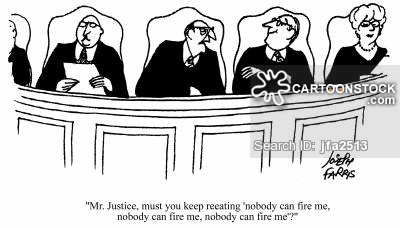
The Rule of 4 states that:
Attorney's are only allotted 4 minutes per witness for questioning
If there are ever less than 4 Supreme Court Justices, the role of the Judicial Branch is taken over by the President
There must be at least 4 members of a jury in order to try a case
4 or more Justices must agree to hear a case for it to go to the Supreme Court
Most cases reach the Supreme Court through the issuance of a _______________.
certificate
majority opinion
writ of certiorari
judicial order
The Federal Court of Appeals have ____________ jurisdiction.
exclusive
concurrent
original
appellate
The two types of federal courts are _________________.
Responses
family and criminal courts
civil and military courts
tennis and basketball courts
Constitutional and special courts
Brown v. Board of Education was a major part of the ___________________ movement of the 1950s and 1960s.
Civil Rights
Slavery
Voting Rights
Brown v. Board of Education and Tinker v. Des Moines greatly ___________________ student rights.
Increased
Decreased
Why is Mapp v Ohio important?
It allowed the police to serve no-knock warrants
It granted the states the right to tax
It invalidated the 1st amendment
Police must have a search warrant to adhere to the 4th amendment
Which of the following involved a man being arrested without knowing his constitutional rights
New Jersey v. T.L.O.
Mapp v. Ohio
Gideon v. Wainwright
Miranda v. Arizona
Which of the following involved searching a student's bag in a public school?
Miranda v. Arizona
Mapp v. Ohio
Tinker v. Des Moines
New Jersey v. T.L.O.
Which case involved the 4th Amendment right against illegal searches and seizures
Miranda v. Arizona
Gideon v. Wainwright
New Jersey v. T.L.O.
Abington v. Schempp
The decision to not allow illegally obtained material into a trial was decided by which case
Miranda v. Arizona
Mapp v. Ohio
New Jersey v. T.L.O
Abington v. Schempp
Which amendment was violated in the Miranda case
5th self incrimination
6th speedy public trial
5th right to a grand jury
6th right to witnesses
What was the importance of the T.L.O. case
rights must be read upon arresting/questioning of suspects
prayer/Bible reading are not allowed in public schools
students can be searched with reasonable suspicion
illegally seized evidence cannot be used in court
Which of the following involved a man being arrested and not granted the right to an attorney by the state, he also was indigent and could not afford his own attorney?
Miranda v. Arizona
Mapp v. Ohio
Gideon v. Wainwright
Texas v. Johnson
In the Gideon case, the U.S. Supreme Court ruled...
we are guaranteed an attorney at the state and federal level even if we can not afford one
we do not have to incriminate ourselves during police questioning
we have the right to free speech including symbolic speech like burning the American flag
we nor our property can be searched without a search warrant

