
 Worksheets
Chemistry Science District Assessment
Total questions: 100
Worksheet time: 4hrs 30mins
What is the correct name for the following compound? Li 2 S
Dilithium monosulfide
Lithium disulfide
Sulfuric lithate
Lithium sulfide
What is the name of the compound NiSO 4?
Nickel (II) sulfate
Nickel (II) sulfite
Nickel (II) sulfide
Nickel (II) sulfuroxide
What is the correct name for the following compound? Al(NO 3 ) 3
Aluminum trinitrate
Aluminum nitrate
Aluminum dinitrate
none of the above
What is the average atomic mass of neon? Isotope Mass number (grams) Percent Abundance (%) Ne- 20 90.48 Ne- 21 10.27 Ne- 22 29.25
10.50 amu
20.19 amu
21.00 amu
18.77 amu
Which of the following showed electrons in specific, fixed orbits?
Rutherford Model
Planck Model
Bohr Model
Quantum Model
Which of the following equations is an exothermic reaction?
H 2(g) + ½ O 2(g) → H 2 O (l) ΔH = -285.8 kJ
HgO (s) → Hg (l) + ½ O 2(g) ΔH = +90.7 kJ
4CO 2(g) +6H 2 O (l) →2C 2 H 6 (g) +7O 2(g) ΔH =+3120 kJ
SO 2 (g) → S (s) + O 2 (g) ΔH = +296 kJ
Some physical properties of elements in a group of the Periodic Table are described below. The elements described above belong to which group?
Alkaline earth metals
Noble gases
Alkali metals
Halogens
Which family correctly represents the elements in Group 1 on the Periodic Table?
Transition metals
Alkali metals
Lanthanide elements
Actinide series
Charles' law says that if a certain quantity of gas is held at constant pressure, then its volume is directly proportional to the absolute temperature. Which of the following does this law help explain? Select TWO correct answers.
Some gases only react at high temperatures.
A basketball outside will shrink some as the temperature goes down.
A gas-filled balloon expands upon heating.
Solids require high heat in order to change into gases.
The pressure of a gas increases when volume increases.
The volume of a gas is 50.0 mL at 20.0 K. What will be the new temperature if the gas is compressed to 10.0 mL under constant pressure?
100 K
10.0 K
4.00 K
5.00 K
Which element in Period 2 has the greatest tendency to form a negative ion?
lithium
carbon
neon
fluorine
The electron configuration of potassium is -
1s 2 2s 2 2p 6 3s 2 3p 2 4s 1
1s 2 2s 2 2p 10 3s 2 3p 2 3p 3
1s 2 2s 2 3s 2 2p 6 3d 1
1s 2 2s 2 2p 6 3s 2 3p 6 4s 1
What is the formula for iron (III) oxide?
FeO 3
Fe 3 O
Fe 2 O 3
FeO
The chemical formula for the ionic compound formed when the elements of Ca and N react is -
CaN
Ca 2 N 3
Ca 3 N 2
Ca 5 N 2
What is the correct formula for sodium phosphate?
Na 2 P 2 O 4
Na 2 PO 3
Na 2 P 3 O 4
Na 3 PO 4
Which of the following is the correct electron dot formula for magnesium chloride?
The data table below shows elements Xx, Yy, and Zz from the same group on the periodic table. What is the most likely atomic radius of element Yy?
103 pm
127 pm
166 pm
185 pm
Conductivity in metal results from metal atoms having -
high electronegativity
high ionization energy
highly mobile protons in the nucleus
highly mobile electrons in the valence shell
What is the shape of a molecule which has two shared pairs of electrons and no unshared pairs?
tetrahedral
bent
trigonal planar
linear
Which of the following correctly matches a compound with its molecular geometry? Select TWO correct answers.
Borane (BH 3): trigonal planar
water (H 2 O): linear
carbon dioxide (CO 2): tetrahedral
methane (CH 4): tetrahedral
carbon tetrachloride (CCl 4): linear
The Lewis dot structure determines the molecular geometry based on bonded and unbonded electrons. What is the expected molecular geometry for CO 2 ?
Bent
Linear
Tetrahedral
Trigonal planar
Visible light has a higher frequency than radio waves on the electromagnetic spectrum. How does the wavelength of visible light compare to radio waves?
Visible light has a longer wavelength than radio waves.
Visible light has a shorter wavelength than radio waves.
Visible light has the same wavelength as radio waves.
Visible light does not have a wavelength while radio waves do have a wavelength.
Energy is measured in........
Wavelength
Meters
Joules
Frequency
On a wave, the distance between crest to crest is called?
amplitude
wavelength
frequency
trough
Which color in the visible spectrum of light has the longest wavelength?
Indigo
Red
Blue
Violet
Gamma rays can cause damage to living tissues because...
They have medium wavelengths that can interfere with cell replication.
They have very long wavelengths that can interfere with cell replication.
They have very short wavelengths that can interfere with cell replication.
None of these
What does "h" stand for?
Speed of Light
Plank's Constant
Speed of Sound
Constant Energy
The number of cycles in a given amount of time is ...
longitudinal wave
frequency
diffraction
reflection
What does energy have to do with wavelength and frequency?
The higher the frequency the less energy the wave has.
The lower the frequency the more energy the wave has.
The shorter the wavelength the more energy the wave has.
The longer the wavelength the more energy the wave has.
Cl or Al?
N or C?
H or F?
The element with the lowest electronegativity in Period 3 is -
Na
Cl
Ar
Mg

What is the name of this group?
alkali metals
alkaline earth metals
transition metals
halogens
noble gases

What is the name of this group?
alkali metals
alkaline earth metals
transition metals
halogens
noble gases

How many valence electrons does this group have?
1
2
7
8

What charge do ions of this group have?
+1
+2
-2
-1
0

What is the charge of this group?
+1
+2
-2
-1
0
Which element has an atomic radius that is LARGER than sodium?
Lithium (Li)
Hydrogen (H)
Magnesium (Mg)
Potassium (K)
Which element has an atomic radius that is SMALLER than boron?
beryllium (Be)
aluminum (Al)
carbon (C)
Gallium (Ga)
When oxygen becomes an ion, does it get larger or smaller?
larger
smaller
depends on which isotope of oxygen it is
oxygen forms several ions so it's impossible to tell
The ionic radius of metals is
larger than the metal atom
smaller than the metal atom
the same size as the metal atom
trick question, metals don't form ions
The ionic radius of noble gases is
larger than the atom
smaller than the atom
the same size as the atom
trick question, noble gases don't form ions
Based on the trends we learned, which has the highest electronegativity?
phosphorus (P)
sulfur (S)
arsenic (As)
selenium (Se)
Based on the trends we learned, which has the lowest ionization energy?
phosphorus (P)
sulfur (S)
arsenic (As)
selenium (Se)
Which element has only two electron shells ?
Helium (He)
Neon (Ne)
Argon (Ar)
Krypton (Kr)
Which element has two valence electrons?
Helium (He)
Neon (Ne)
Argon (Ar)
Krypton (Kr)
You discover a new element, Osbornium. It has an atomic number of 434 and an atomic mass of 2451.434. How many protons does it have?
434
2451
2451.434
2017
You discover a new element, Osbornium. It has an atomic number of 434 and an atomic mass of 2451.434. How many neutrons does it have?
434
2451
2451.434
2017
Which is the most electronegative element of the ones given?
lithium (3)
cesium (55)
oxygen (8)
oganesson (118)
Of the elements given, which one has the highest ionization energy?
lithium (3)
cesium (55)
oxygen (8)
oganesson (118)
Of the elements given, which one is the smallest?
lithium (3)
cesium (55)
oxygen (8)
oganesson (118)
What is the average mass of this element?

The atomic mass of an element is the ___.
average of the mass number and the atomic number for the element
weighted average of the masses of the isotopes of the element
total mass of the isotopes of the element
total number of subatomic particles in the nucleus
Calculate the average atomic mass of the element iron (Fe) using the following data:
[Isotope / % abundance]
[Iron 54 / 6% ] [Iron 56 / 92% ] [ Iron 57 / 2% ]
53.7 amu
54.9 amu
5592.0 amu
55.9 amu


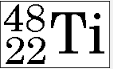
How do you calculate Enthalpy of a reaction?
ΔH = ΔHproducts - ΔHreactants
ΔT = q / mC
ΔG = ΔH -TΔS
E = mc2
Name the type of enthalpy for the following reaction:
Na+ (g) --> Na+ (aq) ΔH = -364 kJmol-1
Standard enthalpy of neutralisation, ΔHneuto
Standard enthalpy of solution, ΔHsolno
Standard enthalpy of hydration, ΔHhydo
lattice energy, ΔHlatticeo

What type of reaction is shown in the graph?
endothermic reaction
exothermic reaction
C+ O2 --> CO2 + 60kJ
what is the ΔH for the reaction?
+60
-60
there is no way to know
You are given these two equations:
2H2 + O2 → 2H2O ∆H = -572 kJ
H2 + O2 → H2O2 ∆H = -188 kJ
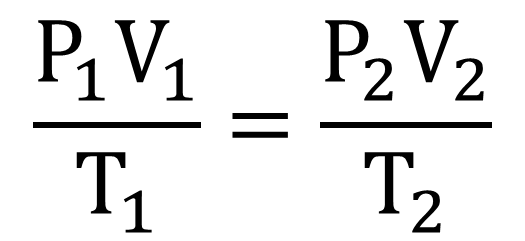
A gas is heated from 263K to 298K. The volume is increased from 24.0L to 35.0L. If the original pressure was 1.00 atm, what is the new pressure?
0.777 atm
1.65 atm
1.28 atm
0.61 atm


Which of the following is a TRUE statement based on the Kinetic Molecular Theory?
How many moles of oxygen must be placed in a 3.00 liter container in order to exert a pressure of 2.00 atmospheres at 25.0 °C?
146.8 moles
0.245 moles
21778 moles
4.08 moles
When 0.250 moles of a gas is placed in a container at 25.0 °C, it exerts a pressure of 700.0 mm Hg. What is the volume of the container?
0.557 Liters
6.64 Liters
8.74 Liters
0.0087 Liters

Which of the following statements about the particles of a gas is true?
Three gases are mixed together in a container with a total pressure of 4.8 atm. If two of the gases have pressures of 1.2 atm and 1.5 atm, what is the pressure of the third gas?
2.5 atm
1.8 atm
2.1 atm
1.3 atm
A sample of helium gas occupies 2.65 L at 1.20 atm. What pressure would this sample of gas exert in a 1.50 L container at a constant temperature?
This is Open-Ended Question A. Show your work on the answer sheet in the appropriate box on the paper, then type the answer in the box here. Do not include anything other than numbers and decimal points in this box.
(a)
A sample of oxygen gas (O2) has a volume of 7.51 L at a temperature of 19.0°C and a pressure of 1.38 atm. Calculate the number of moles of O2 present in this gas sample. (Answer to 3 decimal places)
This is Open-Ended Question C. Show your work on the answer sheet in the appropriate box on the paper, then type the answer in the box here. Do not include anything other than numbers and decimal points in this box.
(a)

