wayground logo

Free Printable Worksheets

Font size

S
M
L
XL
Worksheets

Final Exam Review

Total questions: 95

Worksheet time: 5hrs 45mins
Name
Class
Date
1.
Jack has a rock. The rock has a mass of 14g and a volume of 2cm3. What is the density of the rock?
a)
7 mL
b)
7 g/cm3
c)
28 g/cm3
d)
1/7 g/cm3
2.
What two types of measurements make up DENSITY
a)
Mass and Volume
b)
Temperature and Mass
c)
Grams and Centimeters
d)
Volume and Weight
3.
Frank has a paper clip. It has a mass of 9g and a volume of 3cm3. What is its density?
a)
3 g/cm3
b)
1/3 g/cm3
c)
27 g/cm3
d)
39 g/cm3
4.
?
a)
High Accuracy & High Precision
b)
High Accuracy & Low Precision
c)
Low Accuracy & High Precision
d)
Low Accuracy & Low Precision
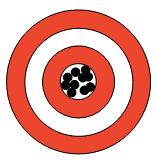
5.
This bullseye demonstrates...
a)
High Accuracy & High Precision
b)
High Accuracy & Low Precision
c)
Low Accuracy & High Precision
d)
Low Accuracy & Low Precision
6.

Which SI unit is used to measure length?

a)

mol

b)

m

c)

kg

d)

m2

7.

40 cm = ______ mm

a)

4000

b)

40

c)

400

d)

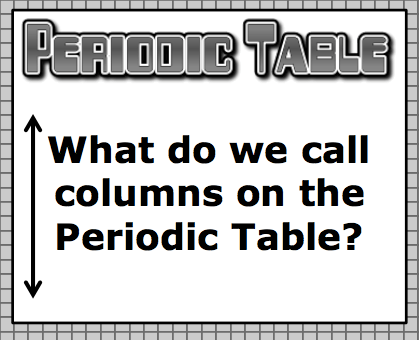
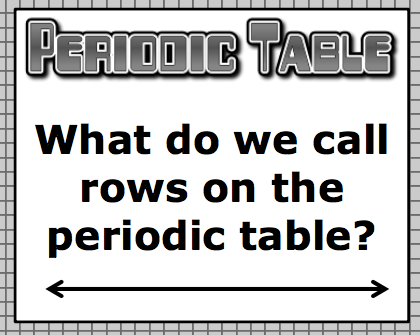
4

8.

6 kg = _____ g

a)

6

b)

6000

c)

600

d)

.006

9.

Convert 17 m to cm:

a)

0.17 cm

b)

0.017 cm

c)

1,700 cm

d)

170 cm

10.

900 cm ____ 9000 mm

a)

<

b)

=

c)

>

11.
198 g = _________ kg
a)
1,980
b)
1.98
c)
19.8
d)
0.198
12.
8 mm = _________cm
a)
0.8
b)
80
c)
800
d)
0.08
13.
What did I measure if I record that something was 56 mL?
a)
Volume
b)
Mass
c)
Time
d)
Distance
14.
What did I measure if I record that something was 25 kg?
a)
Volume
b)
Mass
c)
Distance
d)
Time
15.

What is the branch of chemistry called that is defined as the study of all chemicals containing carbon?

a)

Biochemistry

b)

Analytical Chemistry

c)

Organic Chemistry

d)

Physical Chemistry

16.

What is the area of chemistry that is the study of chemical processes that take place in organism called?

a)

Inorganic Chemistry

b)

Biochemistry

c)

Analytical Chemistry

d)

Physical Chemistry

17.

What is the area of chemistry called that is the area of study that focuses of the composition of matter?

a)

Analytical Chemistry

b)

Inorganic Chemistry

c)

Organic Chemsitry

d)

Biochemistry

18.

Which of the following is the form of matter that has definite shape and volume?

a)

liquid

b)

gas

c)

solid

19.

Which of the following is the state of matter that has an indefinite shape, flows, and yet has a fixed volume?

a)

liquid

b)

solid

c)

gas

20.
How would you write 564,000,000 in scientific notation?
a)
5.64 x 10⁻⁷
b)
5.64 x 10⁶
c)
5.64 x 10⁸
d)
56.4 x 10⁷
21.
Express the following in scientific notation:
.000457
a)
457 x 106
b)
457 x 10-6
c)
4.57 x10⁴
d)
4.57 x 10⁻⁴
22.
UNDERSTANDING
If the exponent is a positive number...
a)
you will get a large number
b)
you will get a smaller number
23.
UNDERSTANDING
If the exponent is a negative number...
a)
you will get a large number
b)
you will get a small number
24.

The period for Bromine (Br) is ___________.

a)

3

b)

2

c)

4

25.

Beryllium (Be) is in group number______.

a)

Group 2

b)

Group 3

c)

Group 4

d)

Group 7

26.
Elements in the same ________ are more chemically similar.
a)
group
b)
period
c)
club
d)
table
27.
The majority of elements on the periodic table are
a)
man made.
b)
nonmetals.
c)
metals.
d)
gases.
28.
Name group 1A on the periodic table.
a)
alkali metals
b)
alkaline earth metals
c)
noble gases
noble gases
d)
halogens
29.
Name group 2A on the periodic table.
a)
alkali metals
b)
alkaline earth metals
c)
noble gases
d)
transition metals
30.
Name group 8A on the periodic table.
a)
alkali metals
b)
alkaline earth metals
c)
transition metals
d)
noble gases
31.
Name groups 3B - 12B on the periodic table.
a)
noble gases
b)
halogens
c)
metalloids
d)
transition metals
32.
Name group 7A on the periodic table.
a)
transition metals
b)
metalloids
c)
halogens
d)
alkali metals
33.
The atoms along the staircase are called 
a)
metals
b)
nonmetals
c)
metalloids
d)
noble gases
34.
Where are the nonmetals located on the periodic table?
a)
top left corner
b)
bottom left corner
c)
top right corner
d)
bottom left corner
35.
The modern periodic table is arranged by the
a)
atomic mass
b)
alphabetically
c)
element name
d)
atomic number
36.
a)
Periods
b)
Groups
37.
a)
Periods
b)
Groups
38.

What group does the element sodium (Na) belong to?

a)

Alkali metals

b)

Halogens

c)

Nonmetals

d)

Noble gases

39.

Which group does magnesium belong to?

a)

Halogens

b)

Metalloids

c)

Alkaline Earth Metals

d)

Nonmetals

40.

What group does Neon (Ne) belong to?

a)

Halogens

b)

Alkali Metals

c)

Metalloids

d)

Noble Gases

41.

Which group does Silicone (Si) belong to?

a)

Halogens

b)

Metalloids

c)

Alkaline Earth Metals

d)

Noble Gases

42.

Which period is fluorine in?

a)

1

b)

2

c)

3

d)

4

43.

Which period is hydrogen (H) in?

a)

1

b)

2

c)

3

d)

4

44.

What is the chemical symbol for an atom with 29 protons?

a)

Si

b)

P

c)

Cu

d)

Zn

45.

How many protons does this element have?

a)

22

b)

26

c)

48

d)

you can not tell without a periodic table

46.
What charge does a proton have?
a)
positive
b)
negative
c)
no charge
d)
neutral
47.
What charge does an electron have?
a)
positive
b)
negative
c)
neutral
d)
no charge
48.
How many neutrons does the isotope of lithium have?
a)
8
b)
3
c)
4
d)
5
49.
In a correctly written symbol what would be located in the "A" position?
a)
number of neutrons
b)
atomic number
c)
number of electrons 
d)
mass number
50.
How many neutrons in C-14?
a)
6
b)
7
c)
14
d)
8
51.

What are the neutral subatomic particles in atoms called?

a)

Protons

b)

Electrons

c)

Neutrons

52.

True or False, electrons are located in the nucleus of the atom.

a)

True

b)

False

53.

How many protons does the following isotope have?


S-32

a)

16

b)

32

c)

14

d)

18

54.

What is the mass number of the following isotope?


Fe-56

a)

26

b)

30

c)

56

d)

24

55.

How many neutrons does the following isotope have?


Ca- 42

a)

20

b)

22

c)

24

d)

26

56.

How many electrons does the following isotope have?


B-11

a)

5

b)

6

c)

11

57.

What is the mass number of the following isotope?


Ar-40

a)

18

b)

22

c)

40

58.

How many protons does the following isotope have?


Al-28

a)

13

b)

15

c)

28

59.

Look at this picture of Argon off the periodic table. Which of the following is true for this element?

a)

18 protons

b)

40 protons

c)

22 protons

d)

21.9 protons

60.
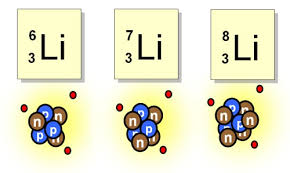
which atom has  4 neutrons?
a)
Li-6
b)
Li-7
c)
Li-8
d)
they have the same # of neutrons
61.
How many neutrons does the isotope below have?     89 36Kr
a)
53
b)
36
c)
89
d)
125
62.
How many neutrons does the isotope below have?     89 36Kr
a)
53
b)
36
c)
89
d)
125
63.
How many neutrons does an atom of the isotope Neon-22 have?
a)
12
b)
10
c)
22
d)
20
64.
What atom matches this electron configuration?
1s22s22p63s23p64s23d10
a)
Zinc
b)
Copper
c)
Nickel
d)
Germanium
65.
What atom matches this electron configuration?
1s22s22p63s2
a)
Neon
b)
Magnesium
c)
Aluminum
d)
Potassium
66.
How many electrons can the first energy level hold?
a)
1
b)
2
c)
8
d)
0
67.
Which electron configuration belongs to Chlorine (Cl)?
a)
1s2s2p3s3p5
b)
1s2s2p3s3p6
c)
1s2s2p3s3p7
68.
Which orbital has the least amount of energy? 
a)
p orbital
b)
d orbital
c)
s orbital 
d)
What is an orbital?
69.
What is the electron configuration for this atom?
a)
1s22s22p6
b)
1s22s22p5
c)
1s22s22p3
d)
2s22p3
70.
What atom matches this electron configuration?
1s22s22p63s2
a)
Neon
b)
Magnesium
c)
Aluminum
d)
Potassium
71.

What is the electronic configuration of sodium?

a)

1s22s22p63s1

b)

1s22s22p7

c)

1s22s22p63s2

72.
The electron configuration of an atom is 1s22s22p6.  The number of electrons in the atom is 
a)
3
b)
6
c)
8
d)
10
73.
What is the name of this element?
a)
Helium
b)
Hydrogen
c)
Argon
d)
Silver
74.

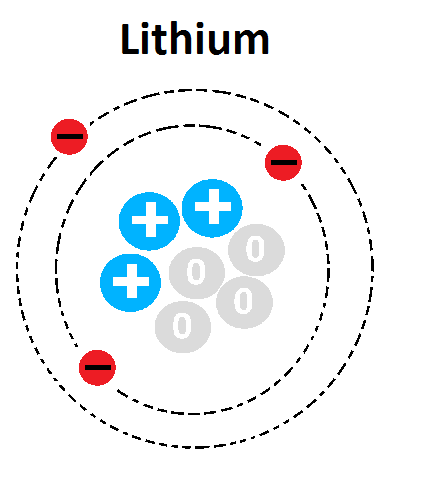
What element is represented in this Bohr Model?

a)

Carbon

b)

Hydrogen

c)

Aluminum

d)

Lithium

75.
What is the name of this element?
a)
Lithium
b)
Boron
c)
Carbon
d)
Neon
76.
What is the name of this element?
a)
Beryllium
b)
Boron
c)
Barium
d)
Bromine
77.
What is the mass number of this atom?
a)
1
b)
3
c)
4
d)
7
78.
What is the atomic number of this atom?
a)
2
b)
4
c)
6
d)
none of the above
79.
What group does this element belong to?
a)
Group 1: Alkali metals
b)
Group 18: Noble Gases
c)
Group 2: Alkaline-Earth Metals
d)
Group 17: Halogens
80.
Identify this atom.
a)
Lithium
b)
Boron
c)
Carbon
d)
Neon
81.
How many valence electrons?
a)
2
b)
3
c)
5
d)
10
82.
What's a valence electron?
a)
electrons in the second energy level
b)
electrons in the outermost energy level
c)
the atomic number
d)
electrons in the first level
83.

On the periodic table, Groups are

a)

Horizontal rows

b)

Vertical columns

84.

On the periodic table, Periods are

a)

Horizontal rows

b)

Vertical columns

85.

What does the Bohr Model represent?

a)

The structure of molecules

b)

The structure of the Solar System

c)

The structure of an atom

d)

The structure of East Hills

86.

Name this element.

a)

Neon

b)

Magnesium

c)

Sodium

d)

Manganese

87.

How many valence electrons?

a)

2

b)

3

c)

4

d)

5

88.

How many valence electrons?

a)

2

b)

3

c)

4

d)

5

89.

How many valence electrons?

a)

2

b)

4

c)

6

d)

8

90.

How many valence electrons?

a)

2

b)

5

c)

6

d)

8

91.

Elements in Group number 17 are known as

a)

Alkai Metals

b)

Alkaline Metals

c)

Halogens

d)

Noble Gases

92.
Isotopes are elements with a different amount of
a)
protons
b)
neutrons
c)
electrons
d)
atoms
93.
How are electrons arranged in an atom?
a)
In groups of five
b)
In energy levels
c)
By color
d)
By shape
94.
The period for Bromine is ___________.
a)
3
b)
2
c)
4
95.
Remember to use your Periodic Table of Elements to help you identify which Bohr Model is pictured...
a)
carbon
b)
nickel
c)
neon
d)
zinc