
 Worksheets
Weathering, Erosion, Deposition
Total questions: 15
Worksheet time: 30mins

How does acid rain cause weathering?
through abrasion
through oxidation
by dissolving rock
by carrying rock away
Mechanical weathering breaks some limestone into pieces. What effect would this have on chemical weathering of limestone?
chemical weathering would stop occurring
chemical weathering would remain the same
chemical weathering would occur at a slower rate
chemical weathering would occur at a faster rate
The process of ______________ is an example of ______________ weathering in which rock splits through repeated freezing and thawing.
plant roots, chemical
frost wedging, chemical
plant roots, mechanical
frost wedging, mechanical
Which change occurs as a result of wind slowing down?
erosion
deposition
mechanical weathering
chemical weathering
How are erosion and deposition alike?
Both change Earth's surface over time
Both build up Earth's surface quickly
Both wear down Earth's surface slowly
Neither changes Earth's surface
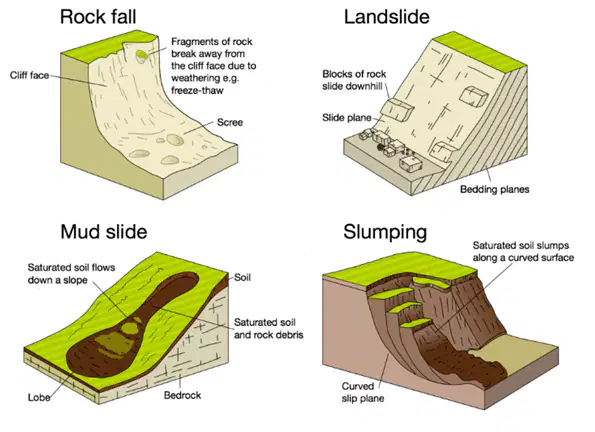
Which type of mass movement occurs rapidly when a single ,mass of soil and rock suddenly slip downhill.
creep
landslide
mudslide
slump
Deposition by __________ causes sand _______ to form.
water, pits
wind, dunes
glaciers(ice), bars
gravity, storms
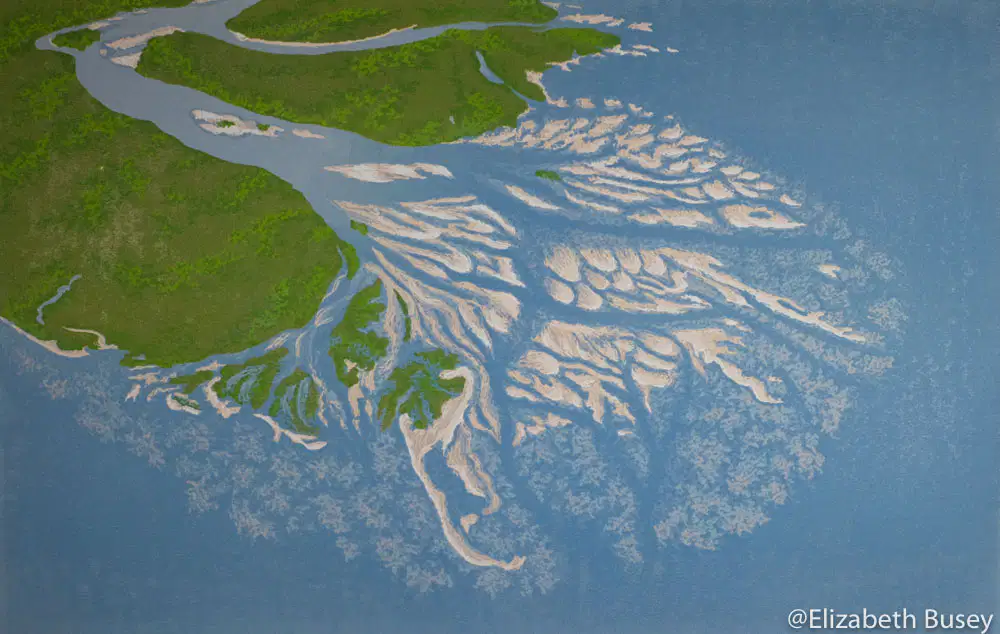
Which landform develops as a result of river deposition?
cave
delta
stalactite
waterfall
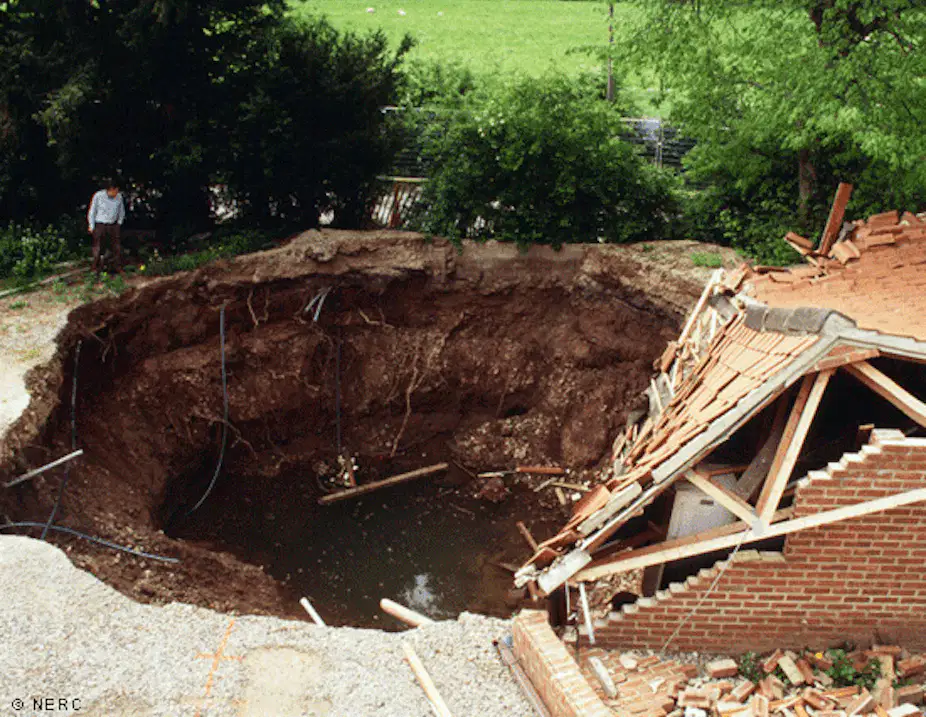
WHich of the following processes causes sinkholes to form?
Erosion of sediment by runoff
Erosion of limestone by groundwater
Deposition of sediment by a river
Which term describes sediment of mixed sizes deposited directly by a glacier?
Loess
Kettle
Glacial till
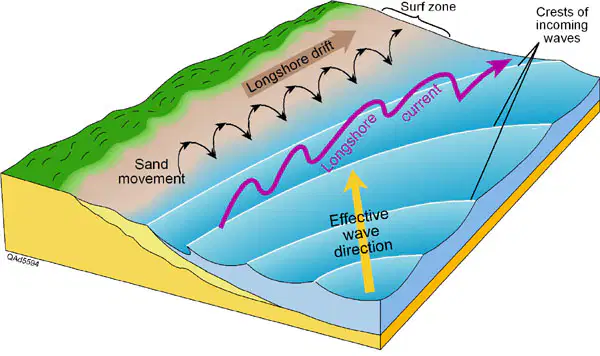
How does longshore drift affect Earth's surface?
rivers carry sediment to the ocean
rock cliffs break apart from impact
Sediment moves down a beach with the current
Waves concentrate their energy on headlands
Glaciers erode Earth's surface through the processes of
abrasion and scraping
frost wedging and breaking
What is the process by which wind, water, ice, or gravity transports soil and sediment from one location to another?
Weathering
Erosion
Deposition
Compaction
Which of the following is a result of chemical weathering?
Formation of sand dunes
Formation of caves in limestone regions
Formation of river deltas
Formation of mountain ranges
What is the term for the process by which material is laid down or deposited by wind, water, or ice?
Erosion
Weathering
Deposition
Compaction

