
 Worksheets
sisjslsnlls
Total questions: 105
Worksheet time: 3585secs


A push or pull that can change the position and/or motion of an object
Friction
Force
Gravity
Magnetism
The act of applying force to move something away
Push
Pull
Motion
Friction
The act of applying force to move something toward with you
Friction
Push
Pull
Gravity
The place where something is located; where something has been put.
Force
Push
Pull
Position
A change in the position of an object
Push
Pull
Position
Motion
A force that acts in an opposite direction to movement between two surfaces that are in contact with one another
Force
Friction
Gravity
Magnetism
The force that attracts an object or mass towards the center of the Earth or towards any other physical object having mass
Force
Position
Friction
Gravity
A force of attraction that causes magnetic material to move
Magnetism
Friction
Force
Gravity
The act of using one or more of your senses to gather information and taking note of what occurs
Prediction
Observation
Variable
Control
An idea that can be tested by an experiment or observation
Valid Conclusion
Variable
Testable Hypothesis
Control
A statement of what will happen next in a sequence of events
Prediction
Control
Variable
Observation
The substance, object, or group in an experiment that is not changed
Observation
Prediction
Control
Variable
An experiment in which all the variables are kept the same except the one being test
Testable Hypothesis
Valid Conclusion
Reliability
Controlled Experiment
A condition in an experiment that is changed in order to determine the effect of that change
Observation
Prediction
Control
Variable
The extent to which an experiment, test, or investigation provides the same results on repeated trials
Reliability
Prediction
Control
Variable
Information describing what was learned from an investigation based on observations and collected data
Testable Hypothesis
Control Experiment
Reliability
Valid Conclusion
What is force?
Push or Pull
Lift or Drop
The phenomenon in which an object changes its position over time.
None of the above
All of the above
Describe motion........
When an object is in movement
An object in movement
Mobility

Who created the three laws of motion?
Alexander the great
Albert Einstein
Alexander Graham Bell
Sir Isaac Newton
A change in an object's position, direction or location.Which word does this describe?
Position
Force
Inertia
Motion
The measurement of distance over time. What word does this describe?
Speed
Velocity
Acceleration
Force
Distance

When you leave a ball on the field and come back after sometime,it has moved. Which law of motion happened to that ball?
Newton's first law
Newton's second law
Newton's third law
All laws
None of the laws

What is Newton's second law of motion?
Force= mass x acceleration
Acceleration=mass x force
Mass=Acceleration x force
None of the above. These are not any of Newton's laws

When you let go of a blown balloon,which law has occurred?
Newton's first law
Newton's second law
Newton's third law
None
All
The measurement of speed and direction of an object
Inertia
Speed
Velocity
Acceleration

A change in an objects speed or direction
Speed
Acceleration
Force
Gravity
Friction

A force that attracts objects to the center of the Earth
Gravity
Friction
Sun
Earth's core

A force that resists the movement of one surface past another surface
Friction
Acceleration
Lubricant
Inertia
The tendency of an object to resist any change in motion.
Momentum
Inertia
Net force
Motion

the path of an object as it moves
Direction
Push
Pull
Inertia
How far an object moves
Distance
Direction
Both
None
What is stored energy?
Net force
Potential energy
Kinetic energy
None of the above

Which energy is shown in the picture?
(a)

What type of force is this man using to move his grocery cart forward?
pull
push
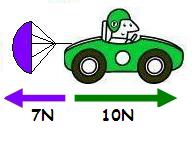
What will happen?
The car will slow down
The car will speed up
Who wins the tug of war?
The person on the left will win
The people on the right will win
What is the unit used when measuring force?
Kilogram
Meter
Pounds
Newton

A ____________ is a push or a pull on an object.
friction
force
magnet
gravity
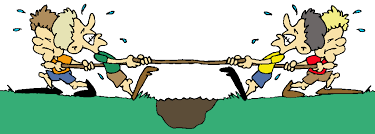
If these teams are pulling with the same amount of force, what will happen?

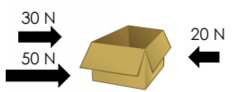
Which direction will the box move?
To the left
To the right


This type of force between 2 surfaces rubbing on each other is _________.
magnetism
Damon was testing the amount of time leaves take to fall to the ground after being tossed up into the air. What force made the leaves fall to the ground?
Seasons
Friction
Magnetism
Gravity
How could you reduce the friction on the floor?
Add dirt
Put carpet down
Pour water on it
Don’t sweep
Sarah and Sara were tossing the softball back and forth. Which 2 forces act on the softball when Sara missed catching it?
Magnetism and friction
Gravity and friction
Friction and air
Friction and grass
An icy sidewalk will have ______ friction.
More
Less
Which option would make the best reference point?
A train passing by
A person walking to you
A moving car
A stop sign
TRUE OR FALSE: Unbalanced forces result in a change of motion.
True
False
What is the speed of a turtle that travels 10 miles in 5 hours?
50 miles/hour
2 miles/hour
5 miles/hour
15 miles/hour
What formula can we use to find speed?
Speed = distance/time
Speed = distance X time
Speed = mass X acceleration
Speed = mass/acceleration
What is convection?
Hot, less dense material rises, while cool more dense material falls
Allows for the movement of tectonic plates across the world
Helps in the creation of new land forms
All of the above
What are the two factors that FRICTION depends upon?
Mass and Strength of the force pushing the two surfaces together
Mass and Distance
Type of surface and Strength of the force pushing the two surfaces together
Type of surface and Distance apart
What are the two factors that gravity depends on?
Mass and Type of surface
Distance and Width
Mass and Distance
Distance and Type of surface
What is the difference between Weight and Mass?
Weight stays the same; Mass depends upon gravity
Mass and Weight both stay the same
Mass and Weight both change due to gravity
Mass stays the same; Weight depends upon gravity
TRUE OR FALSE: Inertia can be described as, " the tendency of an object to resist any change in its motion."
True
False
TRUE OR FALSE: Inertia only applies to objects that are moving
True
False
What is the formula to find the force of an object?
Force = Mass X Acceleration
Force = Mass / Acceleration
Force = Distance / Time
Force = Distance X Time
Static Friction is ?
Two surfaces slide over each other
When a solid moves through a liquid
Occurs on objects that are not moving
An object rolling across a surface
Sliding Friction is ?
Two surfaces slide over each other
When a solid moves through a liquid
Occurs on objects that are not moving
An object rolling across a surface
Fluid Friction is ?
Two surfaces slide over each other
When a solid moves through a liquid
Occurs on objects that are not moving
An object rolling across a surface
Rolling Friction
Two surfaces slide over each other
When a solid moves through a liquid
Occurs on objects that are not moving
An object rolling across a surface
What is Friction ?
The distance an object travels per unit of time
Speed in a given direction
Force that opposes motion
Force that pulls objects towards each other
What is Gravity ?
The distance an object travels per unit of time
Speed in a given direction
Force that opposes motion
Force that pulls objects towards each other
What is speed ?
The distance an object travels per unit of time
Speed in a given direction
Force that opposes motion
Force that pulls objects towards each other
What is Velocity ?
The distance an object travels per unit of time
Speed in a given direction
Force that opposes motion
Force that pulls objects towards each other.

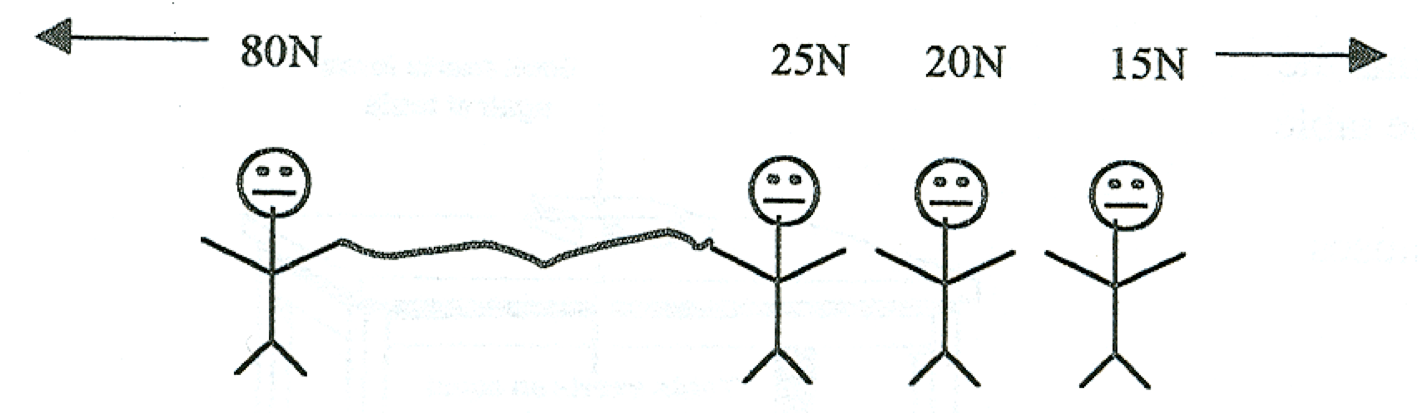
What is the net force acting on the object? (Just write the number)
(a)

Which two of these forces act on parachutes?
Air Resistance
Gravity
Thrust
Kinetic Energy
Another name for air resistance is...
Buoyancy
Streamline
Gravity
Drag

The larger the surface area of the moving object, the ___________ air resistance there is.
Less
More
Longer
Quicker
What happens if the weight of an object is equal to or less than the upthrust?
It floats
It sinks
It spins
It explodes!
When two or more metals are mixed together, it is called an
(a)

