
 Worksheets
Lesson 5: Procedures and Airport Ops
Total questions: 81
Worksheet time: 41mins
Name
Class
Date
1.
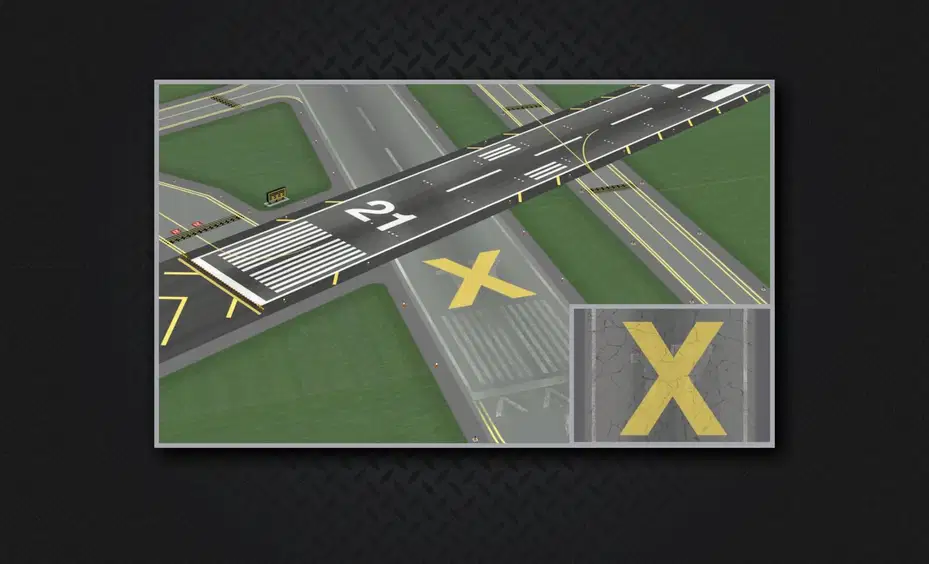
This airport marking would indicate a (an)
a)
Closed Runway
b)
Blast pad/Over run
c)
Mandatory Instruction Sign
d)
Distance to the End of the Runway
e)
Runway Hold Line
2.
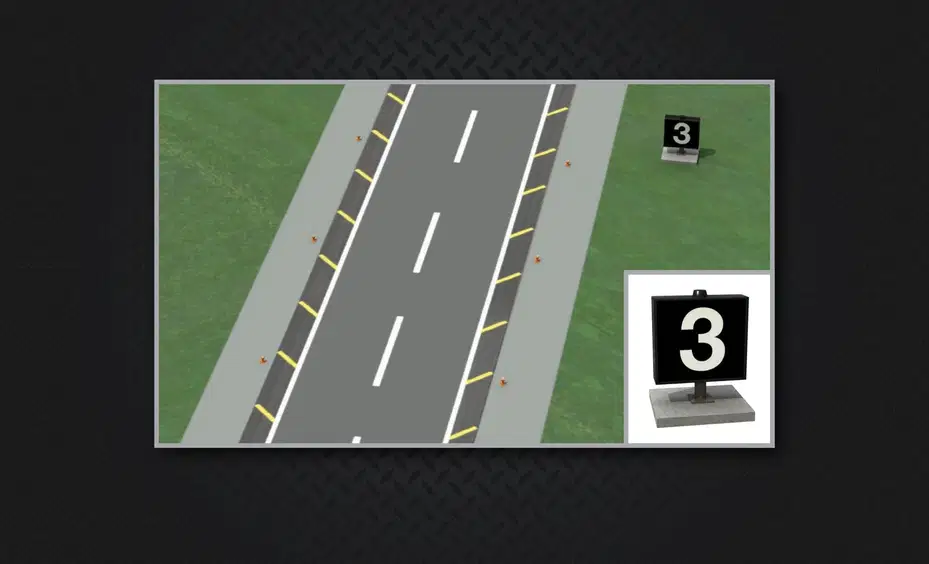
This airport marking would indicate a (an)
a)
Distance to the End of the Runway
b)
Blast pad/Over run
c)
Mandatory Instruction Sign
d)
Runway Hold Line
e)
Destination Sign
3.
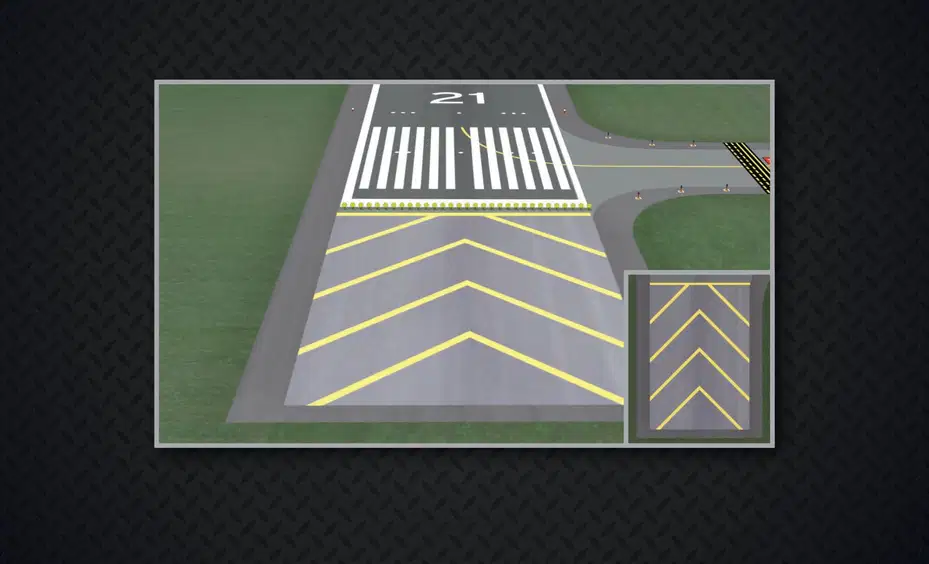
This airport marking would indicate a (an)
a)
Blast pad/Over run
b)
Mandatory Instruction Sign
c)
Distance to the End of the Runway
d)
Runway Hold Line
e)
Destination Sign
4.
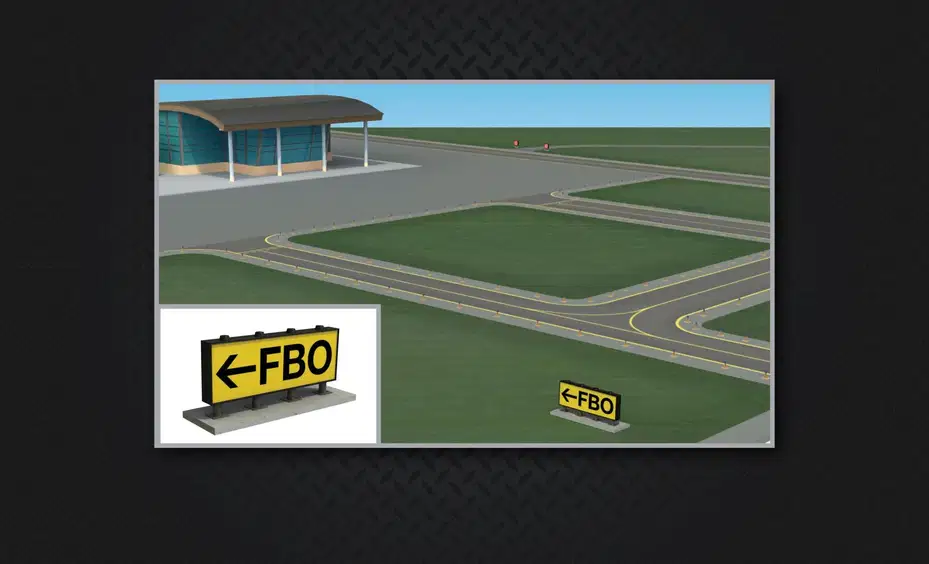
This airport marking would indicate a (an)
a)
Destination Sign
b)
Blast pad/Over run
c)
Mandatory Instruction Sign
d)
Distance to the End of the Runway
e)
Runway Hold Line
5.
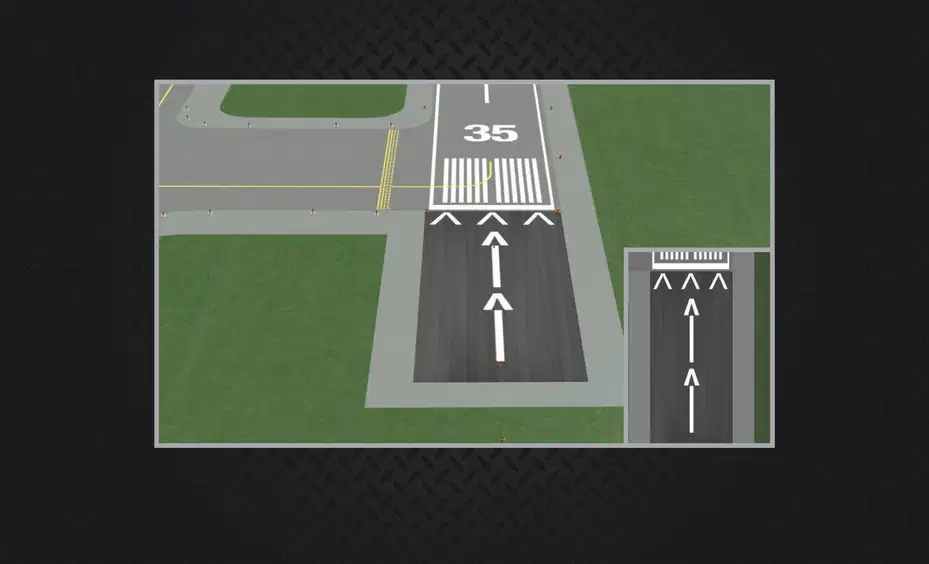
This airport marking would indicate a (an)
a)
Displaced Threshold
b)
Blast pad/Over run
c)
Mandatory Instruction Sign
d)
Distance to the End of the Runway
e)
Runway Hold Line
6.
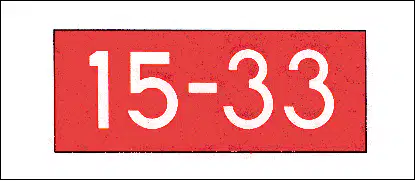
This airport marking would indicate a (an)
a)
Mandatory Instruction Sign
b)
Blast pad/Over run
c)
Distance to the End of the Runway
d)
Runway Hold Line
e)
Destination Sign
7.

This airport marking would be considered a (an)
a)
Information Sign
b)
Blast pad/Over run
c)
Mandatory Instruction Sign
d)
Distance to the End of the Runway
e)
Runway Hold Line
8.
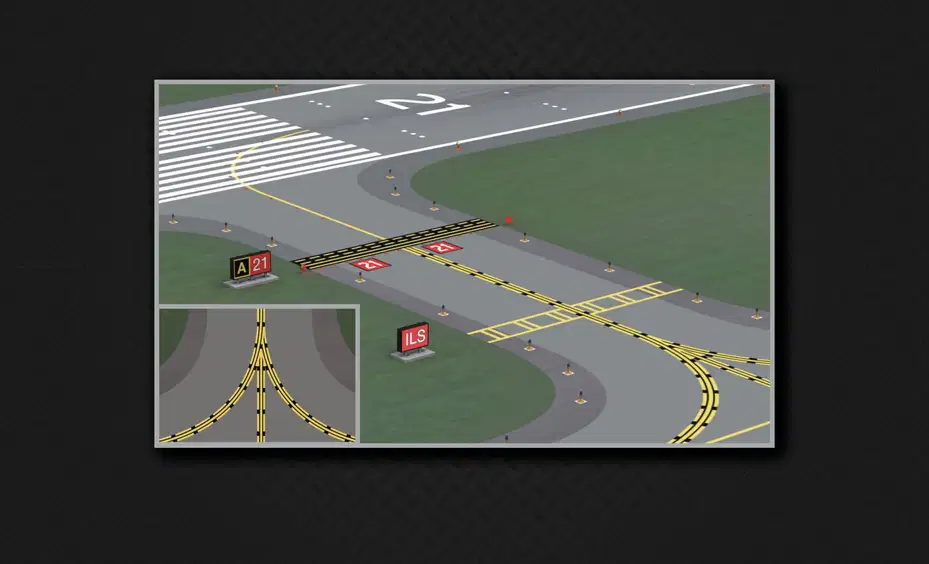
Identify the following
a)
Enhanced Taxiway Centerline
b)
Runway Edge Lights
c)
REIL Approach Lighting System
d)
Threshold Lighting System
e)
Taxiway Edge Lights
9.
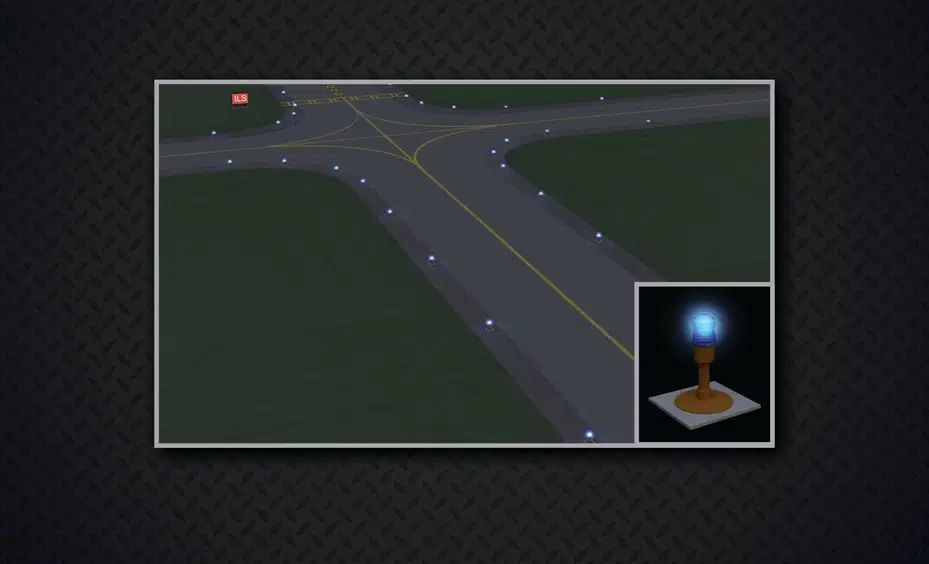
Identify the following
a)
Taxiway Edge Lights
b)
Runway Edge Lights
c)
REIL Approach Lighting System
d)
Threshold Lighting System
e)
ILS Hold Line
10.

Identify the image
a)
Runway Hold Line
b)
Runway Edge Lights
c)
REIL Approach Lighting System
d)
Threshold Lighting System
e)
Taxiway Edge Lights
11.
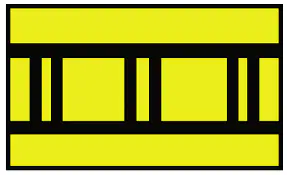
Identify the image
a)
ILS Hold Line
b)
Runway Edge Lights
c)
REIL Approach Lighting System
d)
Threshold Lighting System
e)
Taxiway Edge Lights
12.
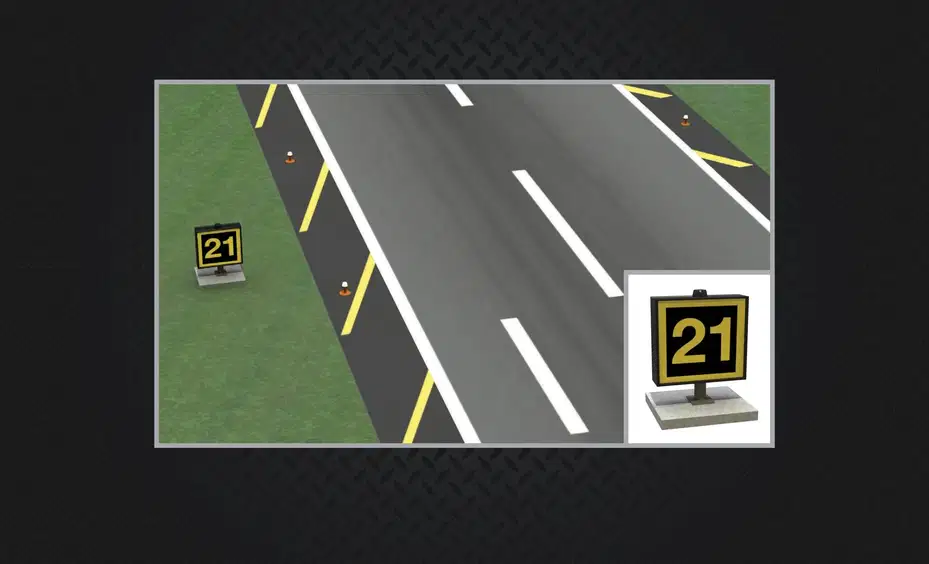
Identify the image
a)
Runway Location Sign
b)
Runway Edge Lights
c)
REIL Approach Lighting System
d)
Threshold Lighting System
e)
Taxiway Edge Lights
13.
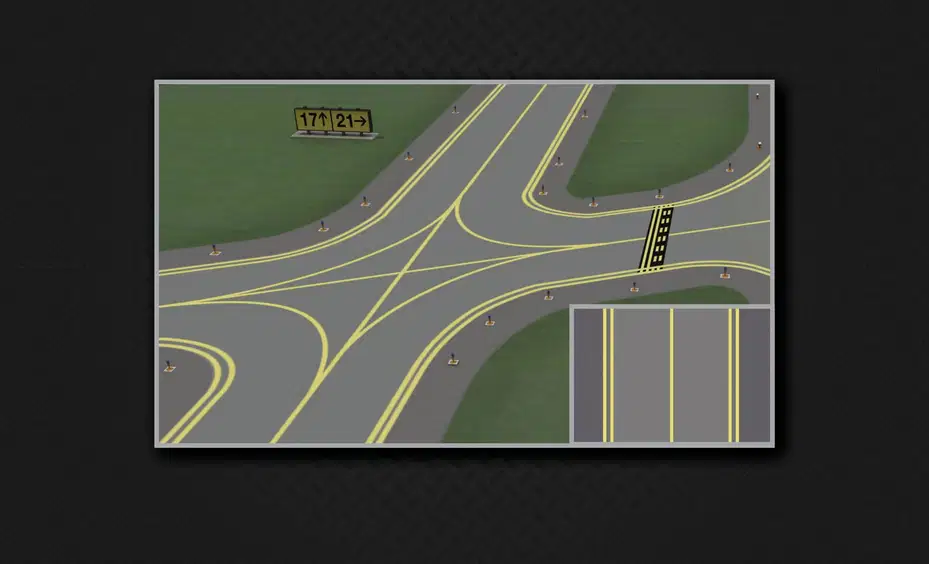
Identify the image
a)
Taxiway
b)
Runway Edge Lights
c)
REIL Approach Lighting System
d)
Threshold Lighting System
e)
Taxiway Edge Lights
14.
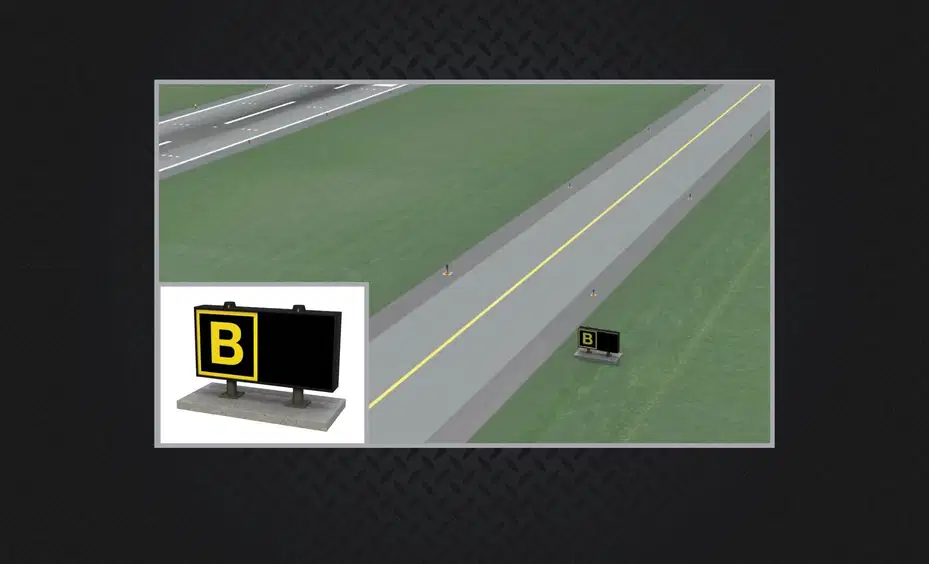
Identify the image
a)
Taxiway Location Sign
b)
Runway Edge Lights
c)
REIL Approach Lighting System
d)
Threshold Lighting System
e)
Taxiway Edge Lights
15.

This signal is telling you to:
a)
Come to a Stop
b)
Line Up On Me
c)
Pull Forward
d)
Slow Down
e)
All Clear
16.
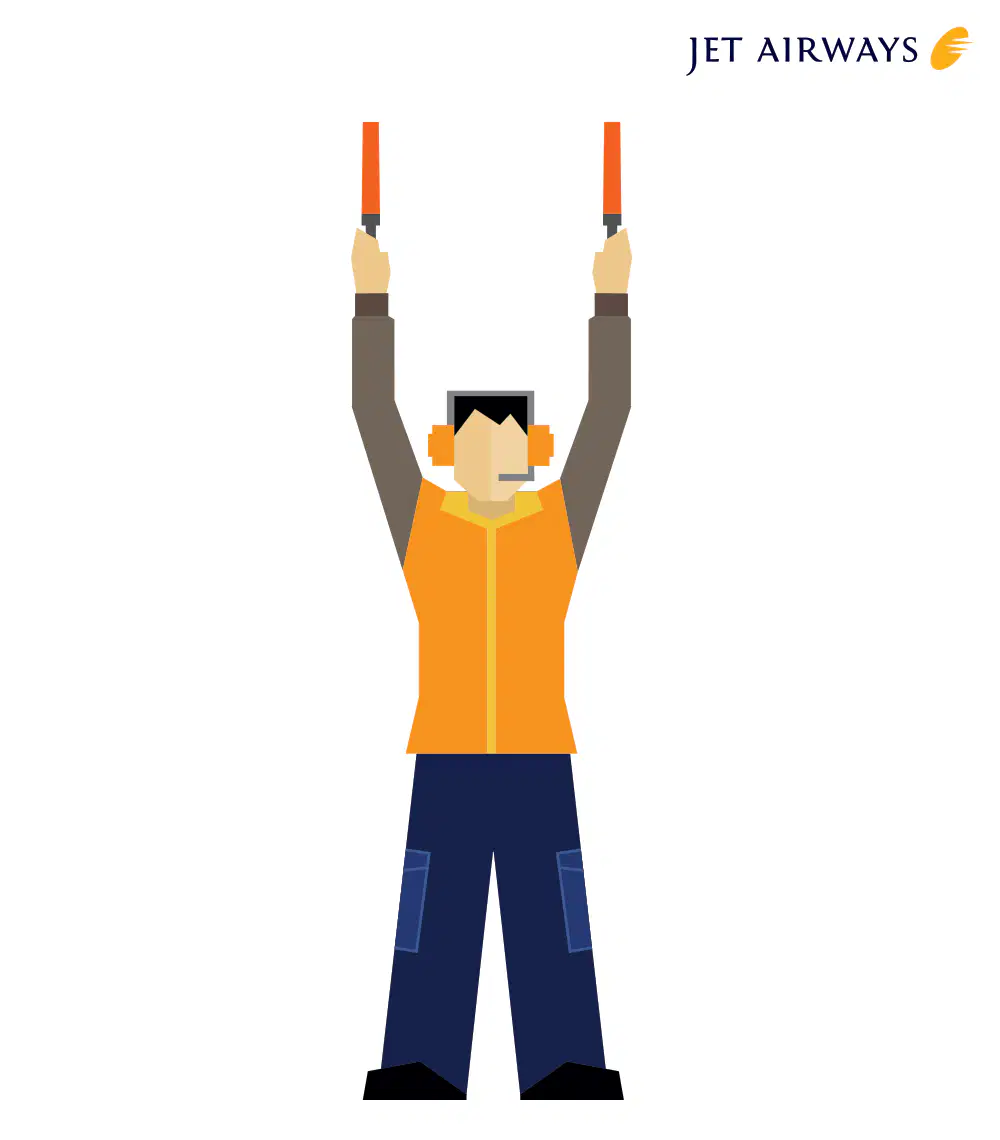
This signal is telling you to:
a)
Line Up On Me
b)
Pull Forward
c)
Slow Down
d)
Come to a Stop
e)
All Clear
17.
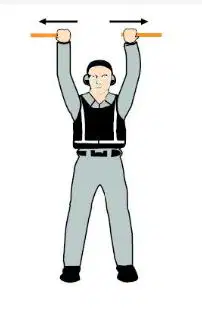
This signal is telling you:
a)
Chocks Out
b)
Line Up On Me
c)
Pull Forward
d)
Slow Down
e)
Come to a Stop
18.

This signal is telling you to:
a)
Turn Right
b)
Line Up On Me
c)
Pull Forward
d)
Slow Down
e)
Come to a Stop
19.

This signal is telling you to:
a)
Pull Forward
b)
Line Up On Me
c)
Slow Down
d)
Come to a Stop
e)
All Clear
20.
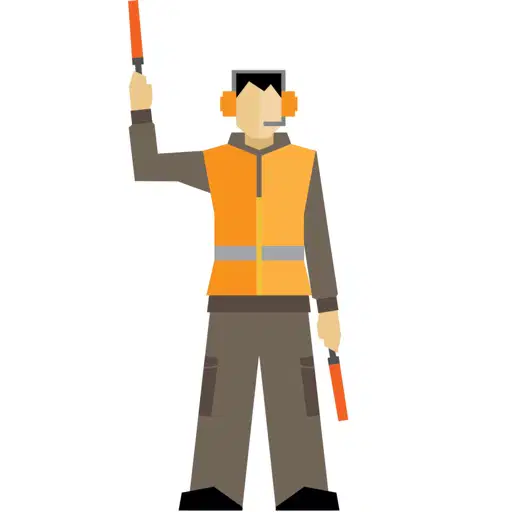
This signal is telling you:
a)
All Clear
b)
Line Up On Me
c)
Pull Forward
d)
Slow Down
e)
Come to a Stop
21.
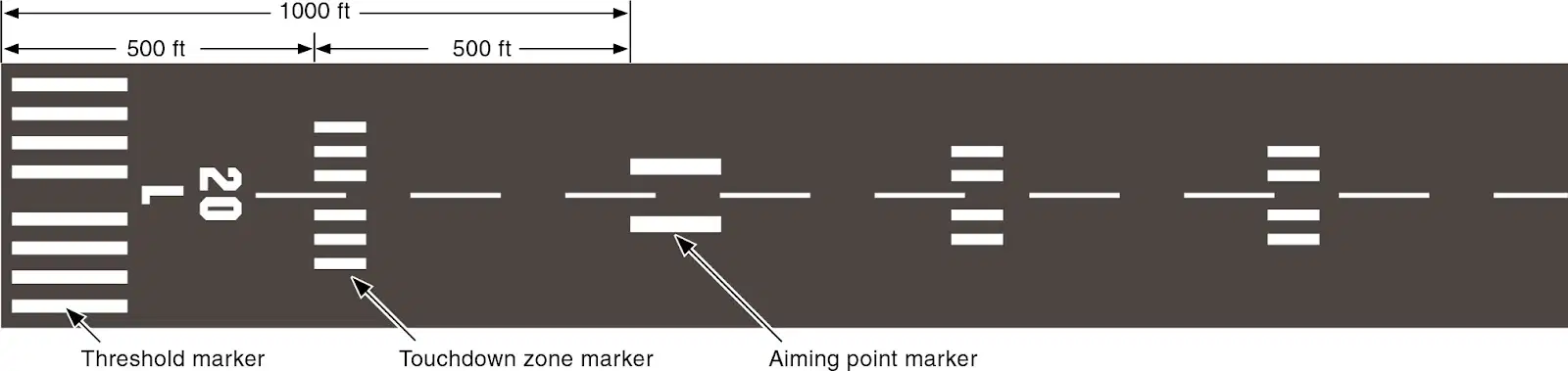
What type of runway would this be considered?
a)
VFR Visual Runway
b)
Non-Precision Approach Runway
c)
Precision Approach Runway
22.

What type of runway would this be considered?
a)
VFR Visual Runway
b)
Non-Precision Approach Runway
c)
Precision Approach Runway
23.

What is the magnetic compass bearing of this runway?
a)
35 degrees
b)
18 degrees
c)
170 degrees
d)
350 degrees
24.
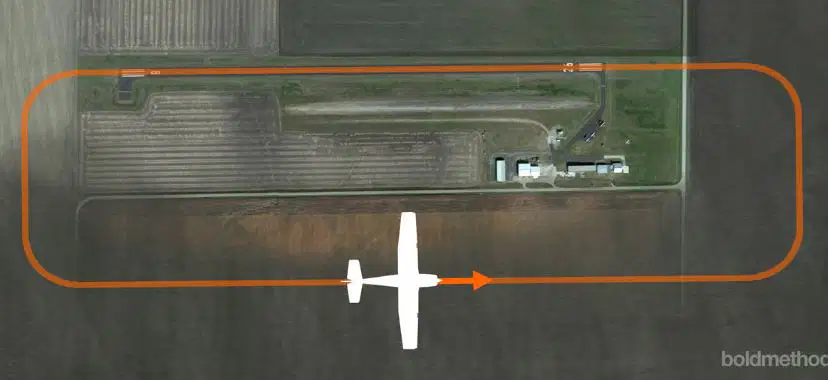
Which leg of the traffic pattern is this plane flying?
a)
Departure Leg
b)
Crosswind Leg
c)
Downwind Leg
d)
Base Leg
e)
Final Approach Leg
25.
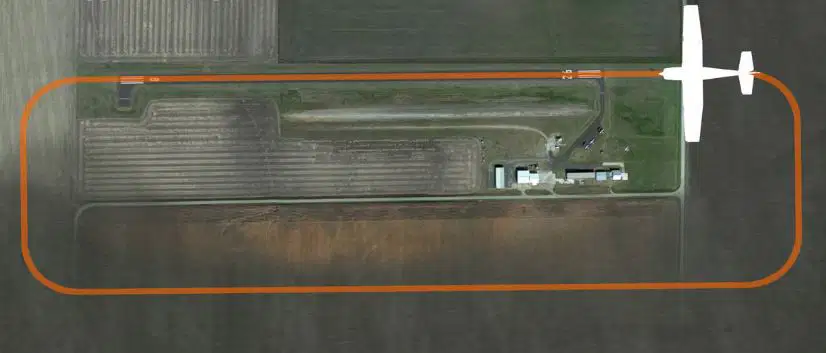
Which leg of the traffic pattern is this plane flying?
a)
Departure Leg
b)
Crosswind Leg
c)
Downwind Leg
d)
Base Leg
e)
Final Approach Leg
26.
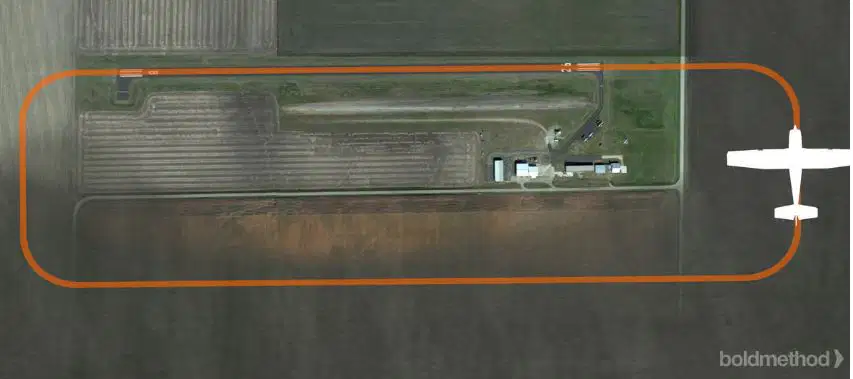
Which leg of the traffic pattern is this plane flying?
a)
Departure Leg
b)
Crosswind Leg
c)
Downwind Leg
d)
Base Leg
e)
Final Approach Leg
27.
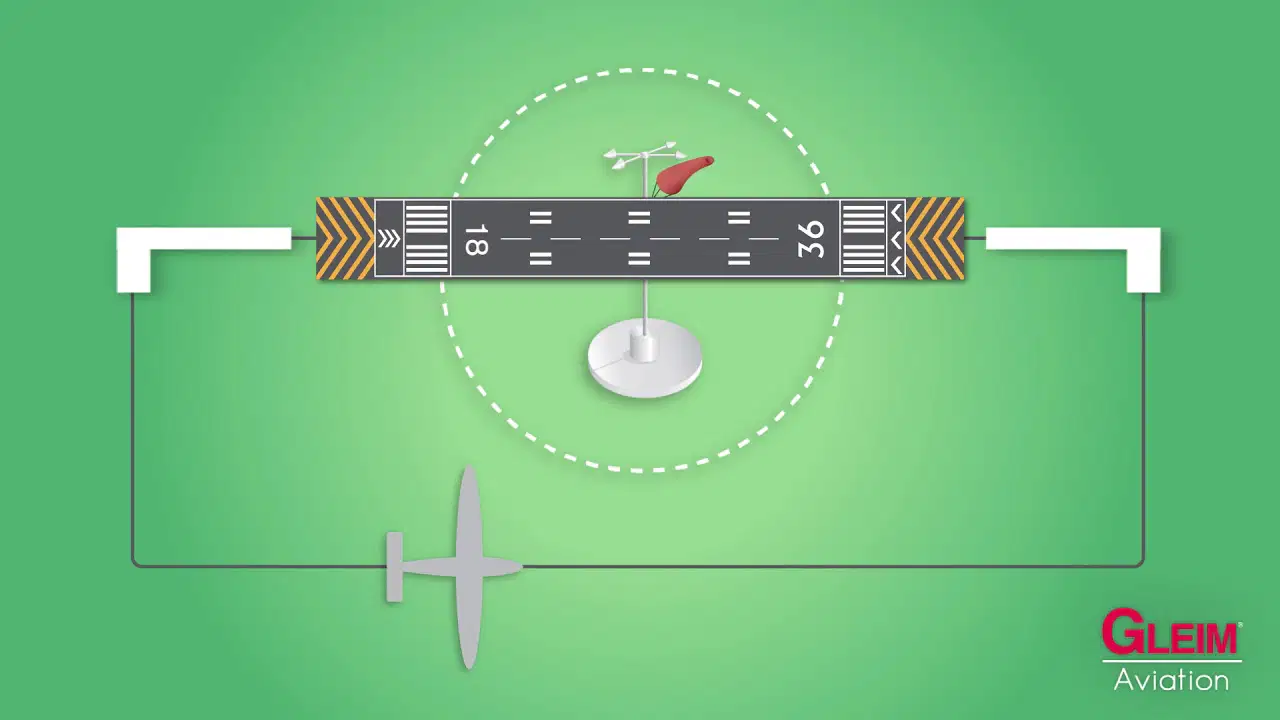
Which Runway(s) are designated right traffic? (non-standard)
a)
Runway 18
b)
Runway 36
c)
Both Runways 18 & 36
d)
Neither Runway is Right Traffic
28.

Check all the boxes of runway(s) that are designated right traffic?
a)
Runway 9
b)
Runway 31
c)
Runway 27
d)
Runway 13
29.

Given the wind & runway markings, which would be the preferred runway to land on?
a)
Runway 9
b)
Runway 31
c)
Runway 27
d)
Runway 13
30.
Which is the correct traffic pattern departure procedure to use at a uncontrolled airport?
a)
Depart in any direction consistent with safety after crossing the airport boundary
b)
Make all turns to the left
c)
Comply with any FAA traffic pattern established for the airport
31.
Airport taxiway edge lights are identified at night by
a)
white directional lights
b)
blue directional lights
c)
alternate red and green lights
32.
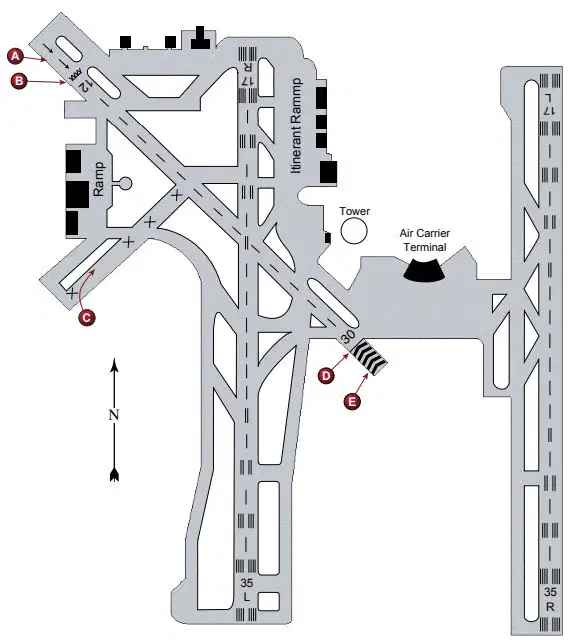
The portion of the runway identified by the letter A may be used for
a)
landing
b)
taxiing and takeoff
c)
taxiing and landing
33.
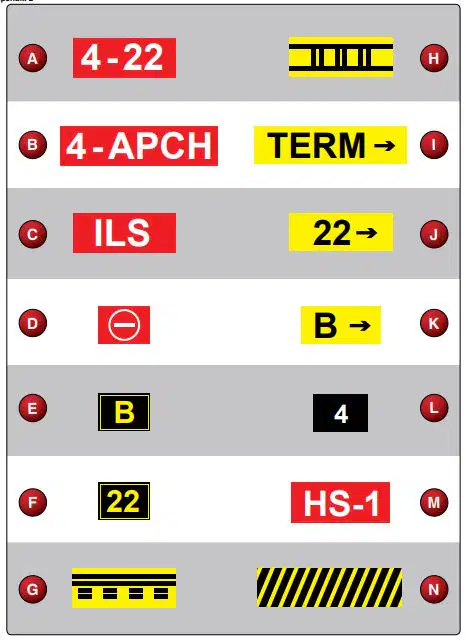
Refer to item E in the diagram. This sign is a visual clue that
a)
confirms the aircraft's location to be on the taxiway "B"
b)
warns the pilot of approaching taxiway "B"
c)
indicates "B" holding area is ahead
34.
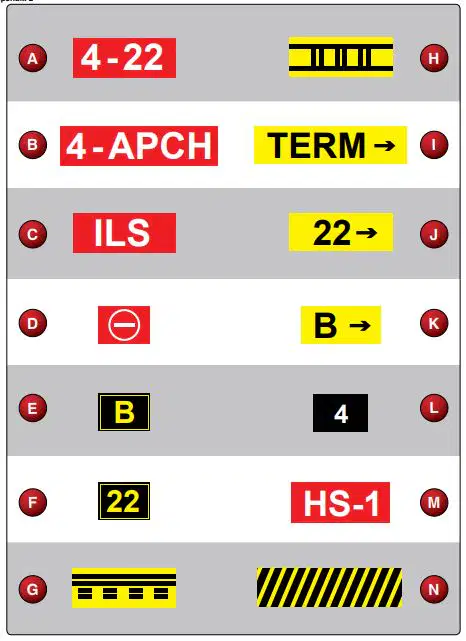
Refer to item F. This sign confirms your position on
a)
runway 22
b)
routing to runway 22
c)
taxiway 22
35.
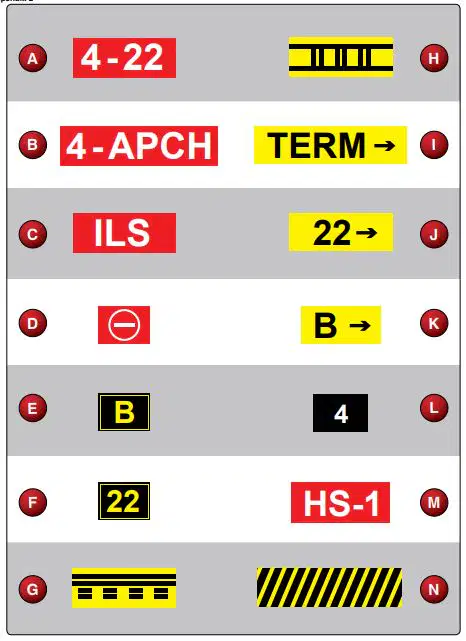
Refer to item G. From the cockpit, this marking confirms the aircraft to be
a)
on a taxiway, about to enter runway zone
b)
on a runway, about to clear
c)
near an instrument approach clearance zone
36.
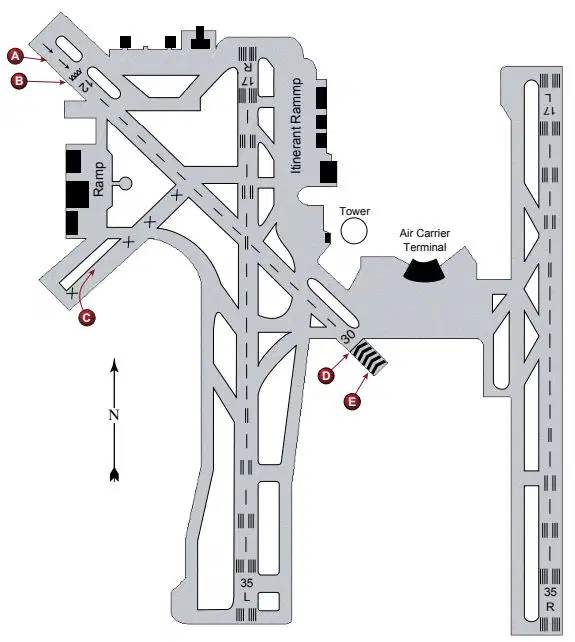
According to the airport diagram, which statement is true?
a)
Takeoffs may be started at position D on Runway 30, but the landing portion of this runway begins at position E
b)
Takeoffs may be started at position A on Runway 12, and the landing portion of this runway begins at position B
c)
The takeoff and landing portion of Runway 12 begins at position B
37.
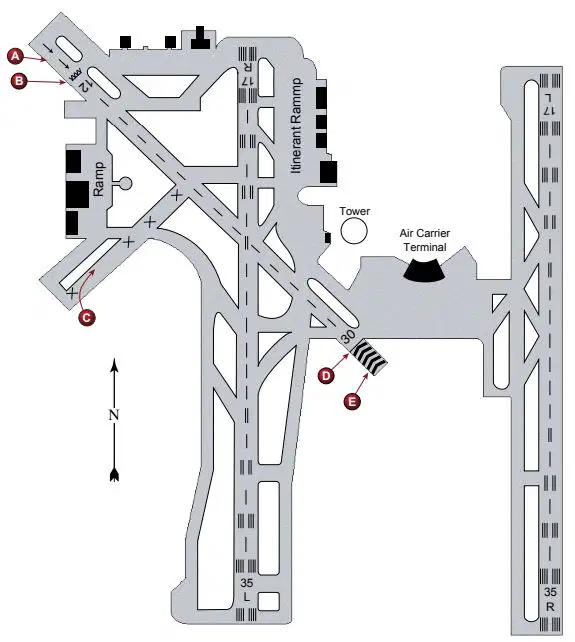
What is the difference between area A and area E on the airport depicted?
a)
"A" may be used for taxi and takeoff; "E" may be used only as an overrun
b)
"A" may be used for all operations except heavy aircraft landings; "E" may be used only as an overrun
c)
"A" may be used only for taxiing; "E"may be used for all operations except landings
38.
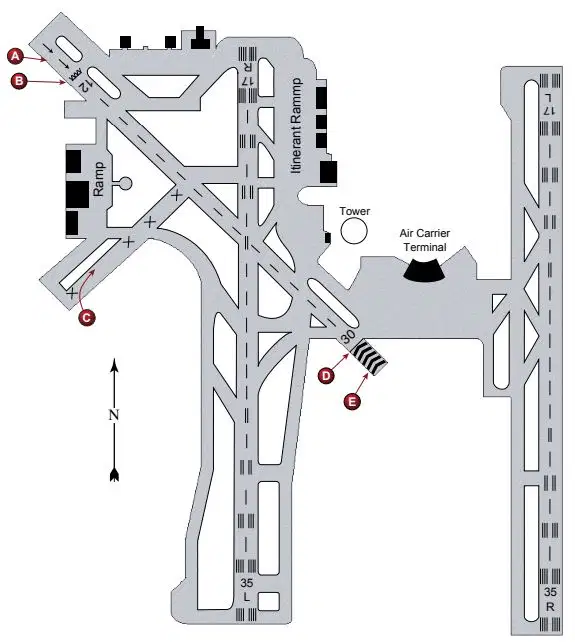
Area C on the airport depicted is a
a)
stabilized area
b)
multiple heliport
c)
closed runway
39.
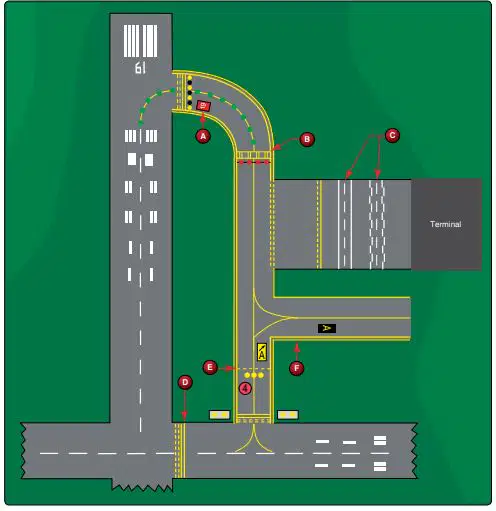
Which marking indicates a vehicle lane?
a)
A
b)
C
c)
E
40.
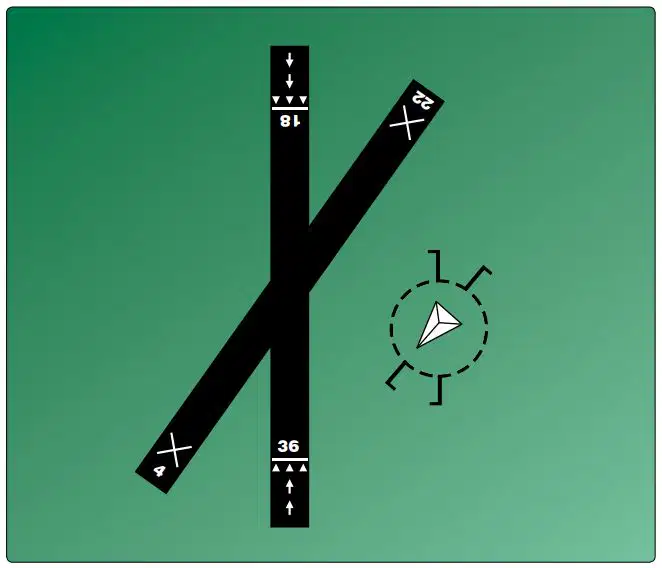
The arrows that appear on the ends of the north/south runway indicate that these areas
a)
may be used only for taxiing
b)
is usable for taxiing, takeoff, and landing
c)
cannot be used for landing, but may be used for taxiing and takeoff
41.
The numbers 9 and 27 on a runway indicate that the runway is oriented approximately
a)
009 degrees and 027 degrees true
b)
090 degrees and 270 degrees true
c)
090 degrees and 270 degrees magnetic
42.
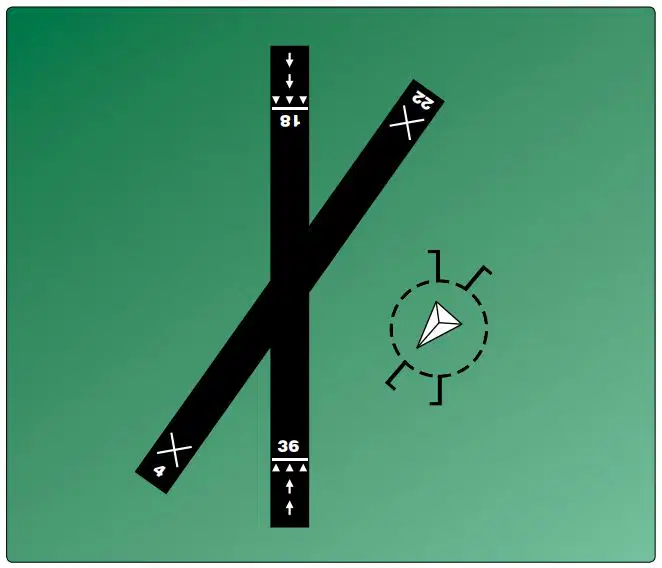
Select the proper traffic pattern and runway for landing
a)
Left hand traffic on runway 18
b)
Right hand traffic on runway 18
c)
Left hand traffic on runway 22
43.
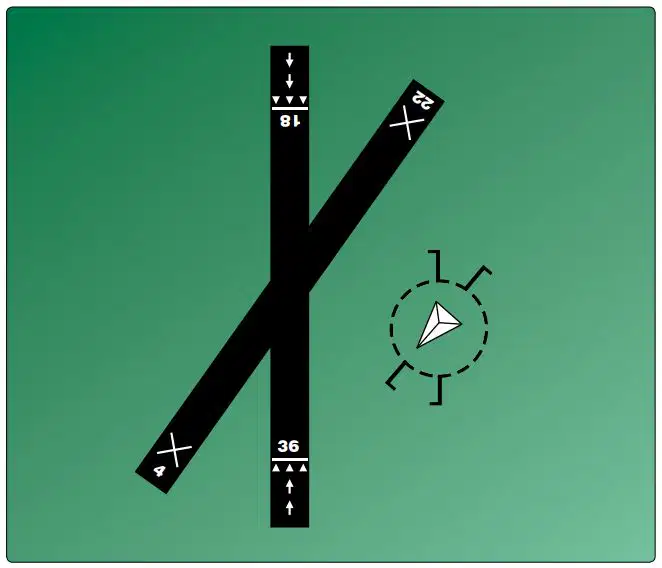
If the wind is as shown by the landing direction indicator, the pilot should land on
a)
Runway 18 and expect a crosswind from the right
b)
Runway 22 directly in the wind
c)
Runway 36 and expect a crosswind from the right
44.
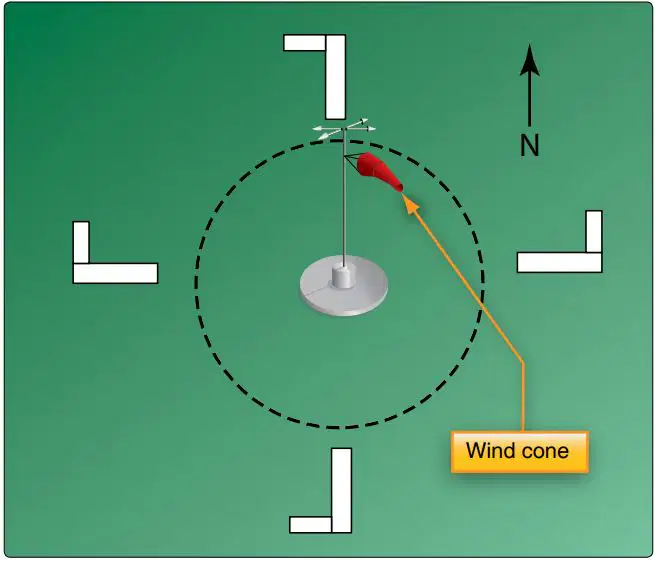
The segmented circle indicates that the airport traffic is
a)
left hand for runway 18 and right hand for runway 36
b)
right hand for runway 9 and left hand for runway 27
c)
left hand for runway 36 and right hand for runway 18
45.
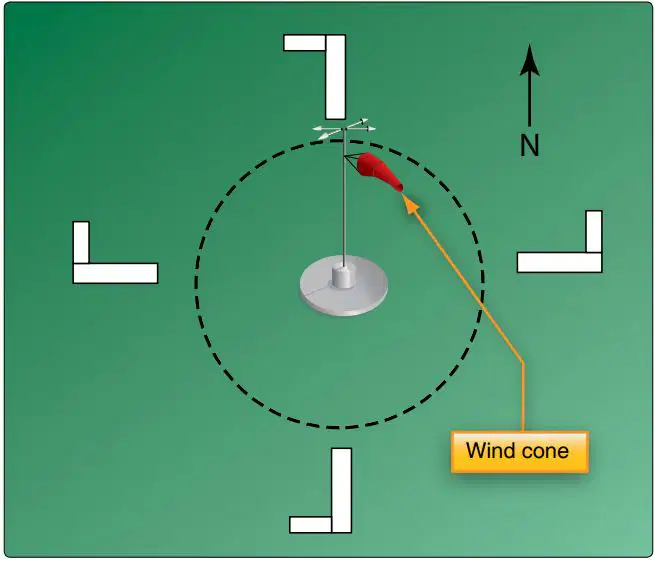
The traffic patterns indicated in the segmented circle have been arranged to avoid flights over an area to the
a)
south of th eairport
b)
north of the airport
c)
southeast of the airport
46.
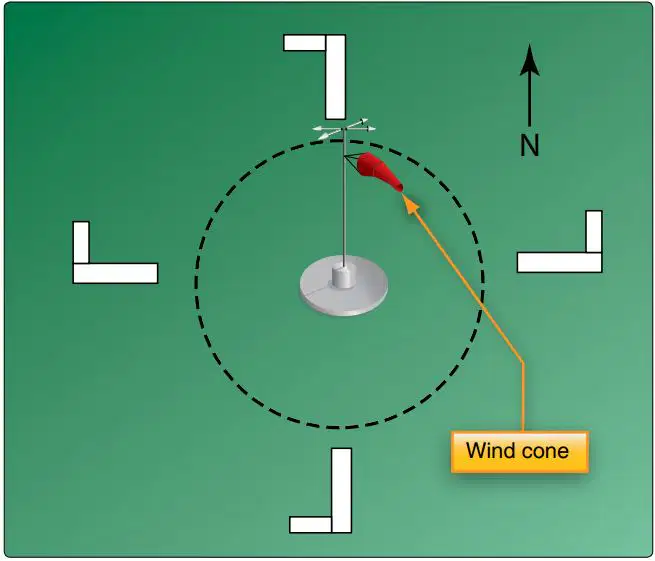
The segmented circle indicates that a landing on runway 26 is with a
a)
right quartering headwind
b)
left quartering headwind
c)
right quartering tailwind
47.
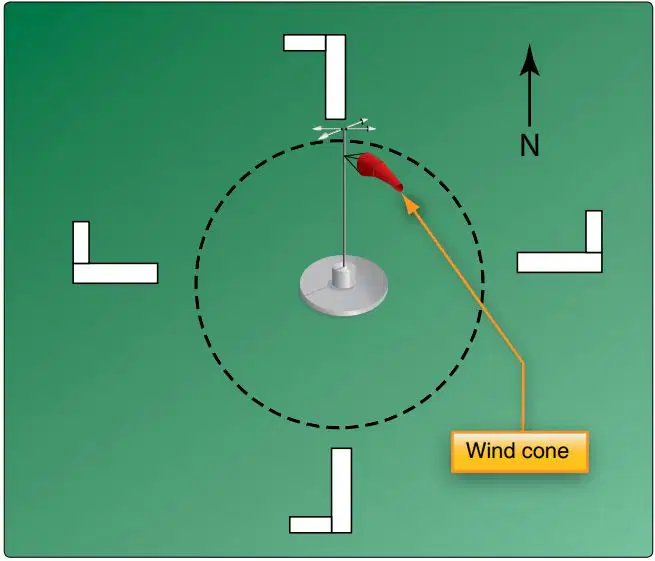
Which runway and traffic pattern should be used as indicated by the wind cone in the segmented circle?
a)
right hand traffic on runway 18
b)
left hand traffic on runway 36
c)
right hand traffic on runway 9
48.
At a towered airport, when approaching taxiway holding lines from the side with the continuous lines, you
a)
may continue taxiing
b)
should not cross the lines without an ATC clearance
c)
Should continue taxiing until all parts of the aircraft have crossed the lines
49.
The numbers 8 and 26 on the approach ends of a runway indicate that the runway is orientated approximately
a)
008 degrees and 026 degrees true
b)
080 degrees and 260 degrees true
c)
080 degrees and 260 degrees magnetic
50.
The recommended entry position to an airport traffic pattern is
a)
45 degrees to the base leg just below traffic pattern altitude
b)
45 degrees at the midpoint of the downwind leg at traffic pattern altitude
c)
to cross directly over the airport at traffic pattern altitude, and then join the downwind leg
51.
What action is required when two aircraft on the same category converge, but not head on?
a)
The faster aircraft shall give way
b)
The aircraft on the left shall give way
c)
Each aircraft shall give way to the right
52.
Which aircraft has the right of way over the other aircraft listed
a)
Glider
b)
Airship
c)
Aircraft refueling other aircraft
53.
An airplane and an airship are converging. If the airship is left of the airplane's position which aircraft has the right of way?
a)
The airship
b)
The airplane
c)
Each pilot should alter course to the right
54.
Which aircraft has the right of way over the other aircraft listed?
a)
Airship
b)
Aircraft towing other aircraft
c)
Gyroplane
55.
What action should the pilots of a glider and an airplane take if on a head on collision course?
a)
The airplane pilot should give way to the left
b)
The glider pilot should give way to the right
c)
Both pilots should give way to right
56.
When two or more aircraft are approaching an airport for landing, the right of way belongs to the aircraft
a)
that has the other to its right
b)
that is the least maneuverable
c)
at the lower altitude, bit it shall not take advantage of this rule to curt in front of or to overtake another
57.
What collision avoidance procedure is recommended when climbing or descending VFR on an airway?
a)
Execute gentle banks, left and right for continuous visual scanning of the airspace
b)
Advise the nearest FSS of the altitude changes
c)
Fly away from the centerline of the airway before changing altitude
58.
Eye movements during daytime collision avoidance scanning should
a)
not exceed 10 degrees and view each sector at least 1 second
b)
be 30 degrees and view each sector at least 3 seconds
c)
use peripheral vision by scanning small sectors and utilizing off center viewing
59.
Which technique should you use to scan for traffic to the right and left during straight and level flight
a)
Systematically focus on different segments of the sky for short intervals
b)
Concentrate on relative movement detected in the peripheral vision area
c)
Continuous sweeping of the windshield from right to left
60.
What is an effective way to scan for traffic in front of your airplane during climb?
a)
Perform 90 degree turns every 1-2 miles to check for traffic along your flight path
b)
Use your cockpit display of traffic information (CDTI) to avoid aircraft that cannot be seen in a nose high attitude
c)
Lower the nose periodically and clear the area, and then transition to cruise climb when altitude permits
61.
How can you determine if another aircraft is on a collision course with your aircraft?
a)
The other aircraft always appears to get larger and closer at a rapid rate
b)
The nose of each aircraft is pointed at the same point in space
c)
No relative motion is apparent between your aircraft and the other aircraft
62.
Most midair collision accidents occur during
a)
foggy days
b)
clear days
c)
cloudy nights
63.
How do hazy days effect a pilot’s vision
a)
Objects will appear closer than they really are
b)
Objects will appear farther away than they really are
c)
Objects will be out of focus and therefore harder to see
64.
What is the most effective collision avoidance tool?
a)
ATC
b)
ADS-B
c)
Using exterior lights
d)
Radio transmissions
e)
Visual scanning
65.
What can you do to offset Empty Field & Night Myopia
a)
Continually stare at a blank point in the sky
b)
Look at flight instruments inside the cockpit approximately 90% of the time
c)
Periodically refocus your eyes on an object in the distance or on a flight instrument
66.
Where are the biggest blind spots in a high wing aircraft?
a)
Above the wing & below the fuselage
b)
Below the wing & above the fuselage
c)
Above the wing & directly behind the aircraft
67.
Where is the blind spot in a high wing aircraft when initiating a turn?
a)
In the direction of the turn
b)
In the opposite direction of the turn
c)
neither is true
68.
The red navigation light is located
a)
On the right wing
b)
On the left wing
c)
on the tail
69.

If you see the following lights in this configuration while flying at night, it means...
a)
An aircraft is crossing your path from right to left
b)
An aircraft is crossing your path from left to right
c)
An aircraft is flying directly away from you
d)
An aircraft is heading right toward you
70.
Which approach and landing objective is assured when the pilot remains on the proper glidepath of the VASI?
a)
Runway identification and course guidance
b)
Safe obstruction clearance in the approach area
c)
Lateral course guidance to the runway
71.
Airport taxiway edge lights are identified at night by
a)
white directional lights
b)
blue omnidirectional lights
c)
alternate red and green lights
72.
A slightly high glide slope indication from a precision approach path indicator is
a)
four white lights
b)
three white lights and one red light
c)
two white lights and two red lights
73.
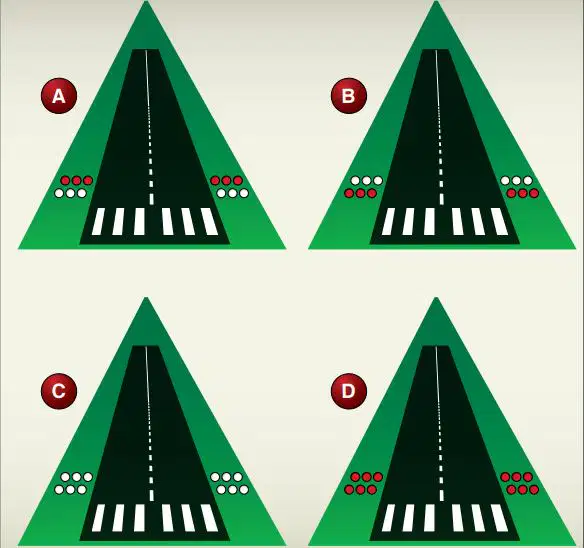
Illustration A indicates that the aircraft is
a)
above the glide slope
b)
on the glide slope
c)
below the glide slope
74.
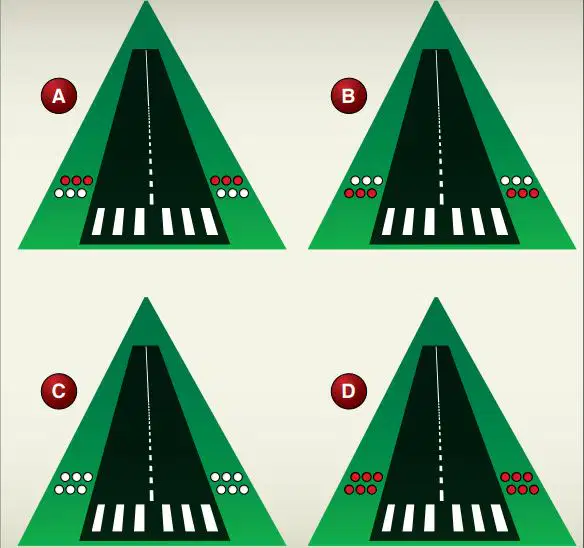
VASI lights as shown by illustration C indicate that the airplane is
a)
above the glide slope
b)
on the glide slope
c)
below the glide slope
75.
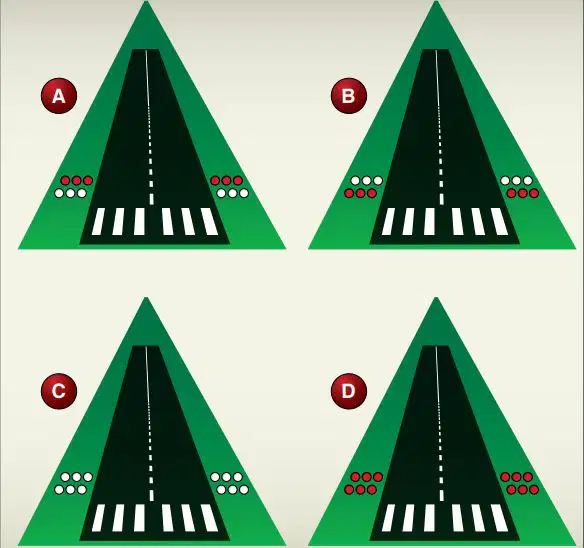
While on final approach to a runway equipped with a standard two bar VASI, the lights appear to as shown by illustration D. This means that the aircraft is
a)
above the glide path
b)
below the glide path
c)
on the glide path
76.
The "yellow demarcation bar" marking indicates
a)
runway with a displaced threshold from a blast pad, stopway, or taxiway that precedes the runway
b)
a hold line from a taxiway to a runway
c)
the beginning of available runway fr landing on the approach side
77.
The numbers 9 and 27 on a runway indicate that the runway is oriented approximately
a)
009 degrees and 027 degrees true
b)
090 degrees and 270 degrees true
c)
090 degrees and 270 degrees magnetic
78.
How can you determine whether your destination airport uses land and hold short operations (LAHSO)?
a)
The notation "L" preceding the runway length on a VFR chart
b)
LAHSO information published in the Airport/Facility Directory listing in the Chart Supplement
c)
NOTAMs from Flight Service during your preflight weather briefing
79.
Who has final authority to accept or decline any land and hold short (LAHSO) clearance?
a)
Pilot in command
b)
Air traffic controller
c)
Second in command
80.
When should pilots decline a land and hold short (LAHSO) clearance?
a)
When it compromises safety
b)
Only when the tower operator concurs
c)
Pilots may not decline a LAHSO clearance
81.
Where is the "available landing distance" (ALD) data published for an airport that utilizes land and hold short operations (LAHSO) published?
a)
Airport/Facility Directory (A/FD) listings in the Chart Supplement
b)
14 CFR Part 91, General Operating and Flight Rules
c)
Aeronautical Information Manual (AIM)
100 %

