
 Worksheets
Nitrogen Ice Cream Demo Questions & TP #1 Review
Total questions: 119
Worksheet time: 59mins
How does rapid freezing with liquid nitrogen affect ice cream texture?
Makes it harder
Creates a creamier texture
Makes it grainy
Has no effect
Phosphorus in ice cream is essential for:
Sweetness
Bone and teeth formation
Reducing freezing point
Aroma
What is nitrogen's state at -196 degrees Celsius?
Gas
Liquid
Solid
Plasma
The process of matter changing from one state to another is called:
Chemical reaction
Phase change
Fusion
Evaporation
At room temperature, the molecules in a liquid:
Are tightly packed
Move freely but are still relatively close
Do not move
Are in a fixed position
When exposed to room temperature, liquid nitrogen:
Freezes
Vaporizes
Becomes denser
Reacts chemically
The primary states of matter are:
Solid, liquid, gas, and plasma
Solid, liquid, and gas
Solid, liquid, gas, and light
Solid, gas, and plasma
*Choose all that apply* The behavior of molecules is greatly influenced by what?
Temperature
Gravity
Pressure
Humidity
The extreme cold of liquid nitrogen affects molecular behavior by:
Making them move faster
Slowing them down significantly
No change
Making them expand
The atomic mass of an element on the periodic table is usually found:
On the top
Under the element symbol
On the left side
Outside the element's box
In the periodic table, metals are generally located:
On the right side
On the left side
In the center
On the top rows
Non-metals on the periodic table are typically found: a) On the left side b) On the right side c) In the center d) On the bottom rows
On the left side
On the right side
In the center
On the bottom rows
Elements with larger atomic numbers than Iron (Fe) are generally located: a) To the left of Iron b) To the right of Iron c) Directly above Iron d) Directly below Iron
To the left of Iron
To the right of Iron
Directly above Iron
Directly below Iron
In terms of atomic mass, the heavier elements compared to Carbon (C) are usually found: a) To the left of Carbon b) Below and to the right of Carbon c) Directly above Carbon d) In the same column as Carbon
To the left of Carbon
Below and to the right of Carbon
Directly above Carbon
In the same column as Carbon
The transition between metals and non-metals on the periodic table is indicated by: a) A straight vertical line b) A colored background c) A stair-step line d) No specific indication
A straight vertical line
A colored background
A stair-step line
No specific indication
The boiling point of liquid nitrogen is: a) 100 degrees Celsius b) 0 degrees Celsius c) Lower than -196 degrees Celsius d) 196 degrees Celsius
100 degrees Celsius
0 degrees Celsius
Lower than -196 degrees Celsius
196 degrees Celsius
Ice cream made with liquid nitrogen is: a) Less flavorful b) Rich in taste c) Bitter d) Sour
Less flavorful
Rich in taste
Bitter
Sour
Liquid nitrogen demonstrates its phase change by: a) Freezing upon exposure to air b) Melting quickly c) Vaporizing quickly at room temperature d) Remaining stable
Freezing upon exposure to air
Melting quickly
Vaporizing quickly at room temperature
Remaining stable
In cryogenics, liquid nitrogen is used to: a) Generate heat b) Freeze substances rapidly c) Create light d) Produce electricity
Generate heat
Freeze substances rapidly
Create light
Produce electricity
The primary components in ice cream are: a) Carbon, Hydrogen, Oxygen b) Nitrogen, Calcium, Potassium c) Both a and b d) None of the above
Carbon, Hydrogen, Oxygen
Nitrogen, Calcium, Potassium
Both a and b
None of the above
The reason for using gloves while handling liquid nitrogen is to: a) Improve grip b) Prevent frostbite and burns c) Keep hands warm d) For aesthetic purposes
Improve grip
Prevent frostbite and burns
Keep hands warm
For aesthetic purposes
When liquid nitrogen turns into gas, it expands by approximately: a) 50 times its volume b) 100 times its volume c) 694 times its volume d) 1000 times its volume
50 times its volume
100 times its volume
694 times its volume
1000 times its volume
What happens to molecules in heavy cream at room temperature? a) They freeze b) They evaporate c) They move slowly d) They move freely but are relatively close
They freeze
They evaporate
They move slowly
They move freely but are relatively close
What is the effect of the extreme cold of liquid nitrogen on heavy cream molecules? a) They move faster b) They change shape c) They slow down significantly d) They bond chemically
They move faster
They change shape
They slow down significantly
They bond chemically
Sodium in ice cream is: a) The main flavoring agent b) Likely present in small amounts c) Absent d) The main component
The main flavoring agent
Likely present in small amounts
Absent
The main component
Magnesium in ice cream:
Causes freezing
Is vital for biochemical reactions in the body
Adds color
Enhances creaminess
Which element found in ice cream is a non-metal with the symbol O?
Sodium (Na)
Oxygen (O)
Calcium (Ca)
Magnesium (Mg)
Which element has a higher atomic number, Nitrogen (N) or Phosphorus (P), both found in ice cream?
Phosphorus (P)
Nitrogen (N)
Both have the same atomic number
Atomic number is not relevant
Among the elements in ice cream, which is a metal with the symbol Ca?
Calcium (Ca)
Carbon (C)
Oxygen (O)
Nitrogen (N)
Sodium (Na), found in ice cream, is classified as a: a) Non-metal b) Metal c) Noble gas d) Halogen
Non-metal
Metal
Noble gas
Halogen
Is Carbon (C), an element in ice cream, a metal or non-metal?
Metal
Non-metal
Metalloid
Noble gas
Comparing the atomic mass, which is greater, Nitrogen (N) or Oxygen (O)?
Nitrogen (N)
Oxygen (O)
Both have the same atomic mass
Atomic mass is not relevant
Phosphorus (P) in ice cream is a: a) Non-metal b) Metal c) Metalloid d) Noble gas
Non-metal
Metal
Metalloid
Noble gas
Between Calcium (Ca) and Magnesium (Mg), which has a larger atomic mass?
Calcium (Ca)
Magnesium (Mg)
Both have the same atomic mass
Atomic mass is not relevant
On the periodic table, where do atomic numbers increase?
From right to left
From bottom to top
From left to right
They do not increase in a specific direction
Atomic mass on the periodic table generally increases in which direction?
Left to right and top to bottom
Top to bottom and left to right
Right to left and bottom to top
Atomic mass does not increase in a specific direction
The stair-step line on the periodic table separates:
Gases from liquids
Metals from non-metals
Solids from gases
Reactive from non-reactive elements
Where is the atomic number typically located in an element's box on the periodic table?
Bottom
Right side
Top
Left side

What is circled in the image?
atom
mixture
molecule
compound

What does the process show? (the substance after the equal sign) Choose all that apply.
formation of a molecule
formation of an element
formation of a new atom
formation of a compound
Which MUST happen for elements to become a compound?
elements must be heated
atoms must bond with other atoms of the same element
elements must dissolve in water
atoms must bond with atoms of a different element.
Water (H2O), is not found on the periodic table because water is a...
atom
liquid
mixture
compound

what does this represent? Choose all that apply.
Compound
Element
Mixture
molecule

This picture is a model of a...
element
compound
mixture of elements
mixture of compounds
mixture of elements and compounds

Your lab assistant gave you a substance to identify. They told you it was classified as a non-metal and the atomic mass was 80 something. What element did the assistant give you?
Krypton
Rubidium
Strontium
Yttrium
What is the difference between a molecule and a compound?
One is radioactive.
Molecules are made of the same atoms, while compounds are made up of two or more different types of atoms.
They are both made of only a single atom.
One makes you up and the other makes the thing that make you up.

What is the example in the image?
An element
A mixture
An extended structure
A simple structure
Molecules can ONLY be made of one type of atom - True or False?
True
False

The building blocks of all matter are...
atoms.
molecules.

This is an example of a(n)...
simple molecule.
extended structure.

What is the example in the image?
An impure substance
A simple molecule
An extended structure
A simple structure

What is the example in the image?
An impure substance
A simple molecule
An extended structure
A simple structure
When you take a molecule and break it up into its, parts what are you left with?
Atoms
Compounds
Mixture of compounds
Pure substance of molecules

What does the blue square represent? Choose ALL that apply.
Compound
Metal
Non Metal
Element

Which letter has the greatest atomic mass?
A
B
C
D
Which letter has the lowest atomic mass?
A
B
C
D

Which has a greater atomic number?
A
C
E
Which element has a lower atomic mass?
E
C
When two of the same type of atoms bond together they form a __________
Element
Compound
Mixture
Impure Substance

Each of the purple circles represent what?
A compound
A molecule
An atom
A mixture

What does each colored sphere represent?
An atom
A compound
A molecule
A mixture

What is this a picture of?
A compound
An element
A mixture of compounds
A pure Substance

This picture represents which of the following? (Choose all that apply)
Element
Compound
Molecule

This picture represents which of the following?
Element
Compound
Molecule
The smallest particle that makes up matter.
Atoms
Elements
Molecules
Compounds

H2O is most accurately described as a ___________________.
Three molecule
One compound
element
atom

Which of the following is the most accurate statement?
everything is both a molecule and a compound
nothing can be both a molecule and a compound
all compounds are also molecules
All molecules are also compounds

Which vocabulary words can be used to describe this image? (Check all that apply.)
Molecule
Compound
Element
Atom
Molecules and compounds are created when multiple atoms bond together, but how are they different?
Compounds have to have atoms from different elements bonded together
Molecules have to have atoms from different elements bonded together
They are the same and there is no difference
Molecules are building blocks of compounds

Which of these is only a molecule and not a compound?
a
b
c
d

Which of these models can be described as a compound?
water
carbon dioxide
amonia
methane
All of them are compounds

The circles represent atoms. Each color is a different type of atom. This image represents:
An element
A mixture
A compound
An atom

In this diagram, W represents...
An element
A molecule
A compound
A mixture

This diagram represents...
An element
A molecule
A compound
A mixture of elements and compounds
The smallest part of an element that retains the properties of the element is the
nucleus.
electron
atom
neutron

Are these molecules also compounds?
YES
NO

How many molecules are in this picture?
1
2
3
4
How many elements are in this picture?
1
2
3
4
How many compounds are in this picture?
1
2
3
4
Atoms combine to form _______.
electrons
molecules
nuclei
neutrons
What do we call a substance composed of atoms of a singular type?
cell
proton
element
atom
Which term represents the particle that is formed when 2 or more atoms come together as one?
atoms
elements
molecules
compounds

What does this diagram represent? (Choose all that apply.)
An element
A molecule
A compound
A mixture

Which vocabulary words can be used to describe this image? (Check all that apply.)
An element
A molecule
A compound
A mixture

What does this diagram represent?
Five atoms
One molecule
Two compounds
One mixture

Click ALL boxes that contain molecules.
A
B
C
D

Click ALL boxes that show compounds.
A
B
C
D

Click ALL the boxes that show elements.
A
B
C
D
What needs to happen to allow a compound to form?
Two atoms of the same element chemically combine.
Two atoms of different elements chemically combine
Two atoms of the same element physically combine
Two atoms of different elements physically combine

Each ball shown in the diagram represents a type of atom. Balls of the same shade and size represent the same kind of atom. Which diagram shows a mixture?
1
2
3
4
Each ball shown in the diagram represents a type of atom. Balls of the same shade and size represent the same kind of atom. Which diagram shows a compound?
1
2
3
4
Each ball in the diagram represents a type of atom. Balls of the same shade and size represent the same kind of atom. Which two diagrams represent elements?
1
2
3
4
Substances that are made up of ONLY one type of atom (element) or compound.
Heterogeneous mixture
Pure substance
Suspension
Homogeneous mixture
Which of the following is classified as a pure substance?
Lemonade
Fruit punch
ketchup
Hydrogen
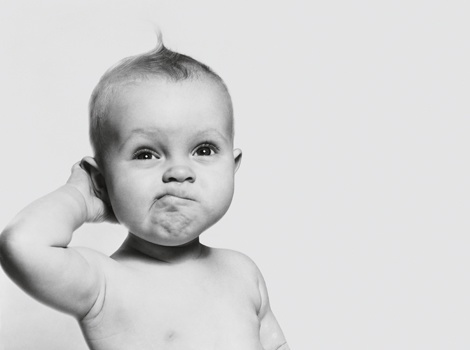
What is matter?
Anything that has mass and occupies space
Anything that has mass
Anything that is made of air
ALL of them
Gold
Which of the following is NOT a mixture?
milk
lemonade
vegetable salad
carbon
Which of these is an element?
Salt (NaCl)
Water (H20)
Oxygen (O)
Carbon Dioxide (CO2)
Which of these is a compound?
Aluminium (Al)
Carbon Dioxide (CO2)
Nitrogen (N)
Sand
True or False: Elements and compounds are pure substances.
True
False
Identify which images are HETEROGENEOUS MIXTURES! (Check all that apply)


Max is hungry and he prepares cereal with milk. This is an example of a:
Homogeneous mixture
Heterogeneous mixture

What are the two types of Mixtures
Elements and Subatomic Particles
Protons and Electrons
Atoms and Compounds
Homogenous and Heterogeneous

Two substances physically combined and that appears the same throughout is classified as
A homogeneous mixture
A heterogeneous mixture
An element
A compound

What type of mixture does this diagram represent?
Homogeneous
Heterogeneous
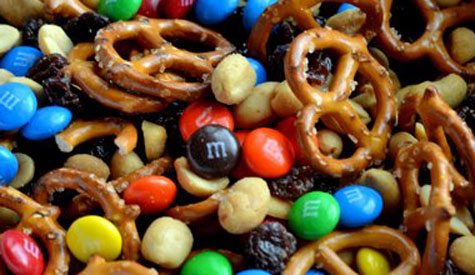
What type of mixture is this?
homogenous mixture
chemical
heterogeneous mixture
solid mix
A mixture that contains two or more substances uniformly combined
heterogeneous mixture
homogeneous mixture
suspension
colloid

Matter is classified in...
Elements & Compounds
Homogeneous & Heterogeneous
Colloids & Suspensions
Pure substances & Mixtures

Both elements and compounds are pure substances.
AGREE
DISAGREE

This is a
Pure Substance
Molecule
Compound
Mixture
Which is a pure substance?


What is this?
Atoms of an element
Compounds
Molecules of an element
Mixture

