
 Worksheets
ILS - Fall Semester Review
Total questions: 161
Worksheet time: 6hrs 39mins
Who is considered the "father" of modern genetics?
Einstein
Mendel
Disney
Washington

In the punnett square below, what belongs in the missing square


When one allele is not dominant over the other, resulting in both traits expressed in a heterozygous individual.....
Incomplete Dominance
Codominance

Check all the blood types that exist in humans.
A
B
AB
O
Which blood type is the Universal Donor?
A
B
AB
O
What happens if a person receives blood from a blood type that is incompatible to them?
They could die
Nothing, no harm done
Mendel's law of dominance means
genes from parents are dominant in the offspring
one allele of a gene is dominant over the other
two genes are both showing up in the offspring
blending of traits results in a new phenotype
blood type AA x blood type BB= type AB in offspring blood type
codominance
incomplete dominance
dominant and recessive genes

What is the gender of this person?
Male
Female
What is a karyotype?
An image that shows all of the DNA within an organism
An image that shows the chromosomes from a single cell within a single organism
The entire genetic sequence of humans

How many CHROMOSOME PAIRS does this karyotype have?
10
13
16


A genetic disorder in which the body produces abnormally thick mucus in the lungs and intestines.
down syndrome
sickle-cell disease
cystic fibrosis
hemophilia
A genetic disorder that causes the red blood cells of people with the disease to have an unusual sickle shape.
sickle-cell disease
hemophilia
down syndrome
cystic fibrosis
A genetic disorder in which a person's blood clots very slowly or not at all.
cystic fibrosis
sickle-cell disease
hemophilia
down syndrome
Which of the following questions CANNOT be answered by science?
How do birds fly?
B) Is this a good song?
C) What is an atom?
D) How does a clock work?
Which of the following is an example of an SI unit?
foot
pound
second
gallon
One one-thousandth is expressed by which prefix?
kilo–
centi–
nano–
milli–
On which of the following is SI based?
inches
English units
powers of five
powers of ten
What is the symbol for deciliter?
dL
dkL
dcL
Ld
Which type of graph is most useful for showing how the relationship between the independent and dependent variables changes over time?
circle graph
bar graph
pictograph
line graph
What quantity does the kilogram measure?
time
distance
force
mass
A testable prediction is a(n) _____.
hypothesis
experiment
exercise
variable
Of the following, the unit that cannot be used to express volume is _____.
kg
L
cm3
mL
of the following, the most correct way to express density is _____.
g/m
g/cm3
c/cm
kg/cm3
a beaker contains 0.32L of water. The beaker's volume is ______ milliliters
3.2
0.032
32
320
What is the dependent variable?
The variable measured
The variable changed
The variable kept the same
The variable that determines results
1. Students look out a window for 5 minutes. They record the number, the type, and the color of the vehicles that pass. What are the students doing?
concluding
experimenting
hypothesizing
observing

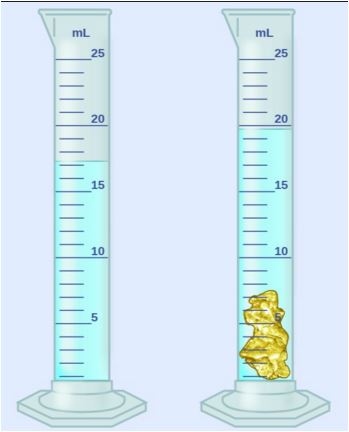
What are graphs used for?
To show data in an understandable way
To keep track of things so you don't forget
To catch the eye and look colorful
To draw pictures on

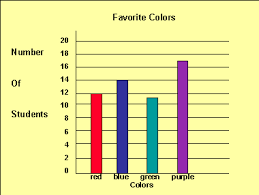
What would make the best title for this graph?
Colors I like best
Candy colors
Comparison Graph
# of Colors in Smarties Candies
What is the final step in the scientific method?
Write a conclusion about your results
Record and analyze the data
Form a hypothesis
Research your topic
What is the purpose of the scientific method?
To solve problems and create experiments
To research new information
To practice safety
To become a scientist
Jennifer wants to know if students do better on their homework if they listen to classical music or hip hop music. What is the independent variable in this experiment?
Students' grades on homework
The age of the students
The volume of the music
The type of music
When graphing data, where do you place your independent variable?
y-axis
x-axis
in the title
it does not need to go on the graph
What is the main reason scientists have constants?
So scientists know their results came only from the independent variable and nothing else
So scientists stay safe
So scientists can record data easier
So the experiment is clear and easy to understand

7,000 g = ____ kg
70
700
7
0.07

648 g = ____ mg
6,480
64,800
648,000
64.8

240 cm = ___________ m
2400
24
2.4
0.24

3 km = ___________ mm
30
300
3,000
3,000,000
Which of the following questions CANNOT be answered by science?
How do birds fly?
B) Is this a good song?
C) What is an atom?
D) How does a clock work?
Which of the following is an example of an SI unit?
foot
pound
second
gallon
One one-thousandth is expressed by which prefix?
kilo–
centi–
nano–
milli–
On which of the following is SI based?
inches
English units
powers of five
powers of ten
What is the symbol for deciliter?
dL
dkL
dcL
Ld
Which type of graph is most useful for showing how the relationship between the independent and dependent variables changes over time?
circle graph
bar graph
pictograph
line graph
What quantity does the kilogram measure?
time
distance
force
mass
A testable prediction is a(n) _____.
hypothesis
experiment
exercise
variable
Of the following, the unit that cannot be used to express volume is _____.
kg
L
cm3
mL
of the following, the most correct way to express density is _____.
g/m
g/cm3
c/cm
kg/cm3
a beaker contains 0.32L of water. The beaker's volume is ______ milliliters
3.2
0.032
32
320
What is the dependent variable?
The variable measured
The variable changed
The variable kept the same
The variable that determines results
1. Students look out a window for 5 minutes. They record the number, the type, and the color of the vehicles that pass. What are the students doing?
concluding
experimenting
hypothesizing
observing
What are graphs used for?
To show data in an understandable way
To keep track of things so you don't forget
To catch the eye and look colorful
To draw pictures on
What would make the best title for this graph?
Colors I like best
Candy colors
Comparison Graph
# of Colors in Smarties Candies
What is the final step in the scientific method?
Write a conclusion about your results
Record and analyze the data
Form a hypothesis
Research your topic
What is the purpose of the scientific method?
To solve problems and create experiments
To research new information
To practice safety
To become a scientist
Jennifer wants to know if students do better on their homework if they listen to classical music or hip hop music. What is the independent variable in this experiment?
Students' grades on homework
The age of the students
The volume of the music
The type of music
When graphing data, where do you place your independent variable?
y-axis
x-axis
in the title
it does not need to go on the graph
What is the main reason scientists have constants?
So scientists know their results came only from the independent variable and nothing else
So scientists stay safe
So scientists can record data easier
So the experiment is clear and easy to understand
7,000 g = ____ kg
70
700
7
0.07
648 g = ____ mg
6,480
64,800
648,000
64.8
240 cm = ___________ m
2400
24
2.4
0.24
3 km = ___________ mm
30
300
3,000
3,000,000
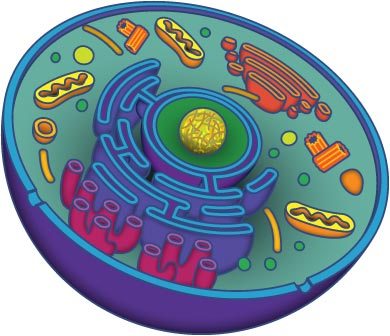
What is the basic structural and functional unit of all living things?
atom
cell
bacteria
animalcules


The 3 parts of the Cell Theory are...?
All living things are composed of cells
Cells are the basic units of structure and function in living things
All cells are produced from other cells
All living things are composed of cells
Cells are the basic units of dance and vibes in living things
All cells are destroyed from other aliens
All living things are composed of Jell-O
Cells are the basic units of structure and function in living things
All cells are produced from factories in Canada
All living things are composed of cells
Cells do karate and practice eating whole pies in their free time
All cells are produced from other cells
What does it mean to say that a cell membrane is semipermeable?
it allows some materials to pass through
it allows nothing to enter the cell, only to leave
It only allows things into the cell and not out
it allows all materials to pass through
What is the function of an organelle?
to take up space
to carry out a specific function in the cell
to carry out all the functions of a cell
to create new cells
What organelle do many ribosomes connect themselves to?
lysosome
mitochondria
endoplasmic reticulum
golgi apparatus
Which organelle uses enzymes to break down waste in a cell?
Lysosome
Ribosome
Chloroplast
Golgi Apparatus
What is the function of the mitochondria?
to capture energy from the sun and turn it to sugar
to release usable energy for the cell
to store energy for when the cell needs it
to remove waste from the cell
What organelle allows plants to create their glucose?
Mitochondira
Lysosome
Ribosome
Chloroplast
Which of the following is not one of the 5 things all cells have?
cell membrane
cytoplasm
DNA
nucleus
What is the difference the key difference between prokaryotic and eukaryotic cells?
Prokaryotes have a nucleus, Eukaryotes do not
Eukaryotes have a nucleus, Prokaryotes do not
Prokaryotes have a cell membrane, Eukaryotes do not
Eukaryotes have ribosomes, Prokaryotes do not
Which of the following organelles do plants have that animals to not? (Select all that apply)
Cell wall
Golgi Apparatus
Endoplasmic Reticulum
Chloroplasts
Ribosomes
Which organelle provides structure and protection to plant cells?
cell membrane
ribosome
golgi apparatus
cell wall
What is the name of the "packages" the golgi body creates?
Vacuoles
Lysosomes
Vesicles
Ribosomes
Which of the following is not part of the nucleus?
Chromatin
Centrioles
Nuclear Envelope
Nuclear Pores
Nucleolus

What type of cell is this?
Plant
Animal
Prokaryote

What type of cell is this?
Plant
Animal
Prokaryote

What type of cell is this?
Plant
Animal
Prokaryote


The diffusion of water molecules through a selectively permeable membrane is:
Homeostasis
Osmosis
Active Transport
Equilibrium
All matter is composed of very small particles called:
Molecules
Ions
Solutes
Isotopes
The movement of molecules from a place where there is a greater/higher concentration to an area where there is lesser/lower concentration is:
Homeostasis
Diffusion
Endocytosis
Active Transport
A selectively permeable membrane
allows all substances to enter and leave
prevents all substances from entering or leaving
allows certain size substances to enter and leave
allows only waste materials to leave
A solution in which the concentration of solutes is the same inside and outside of a cell is a _____________________ solution.
hypertonic
hypotonic
isotonic
homeotonic
If a red blood cell is placed in a solution that has a concentration gradient higher than the red blood cell, this type of solution is called:
Isotonic
Hypotonic
Hypertonic
Homeotonic
If a red blood cell is placed in a hypotonic solution, it will eventually
shrink up
swell and burst
no change will occur
swell and not burst
When substances move in and out of cells using only their own kinetic energy this is called:
Active Transport
Passive Transport
Activation Energy
Selective Transport
Osmosis is a type of
turgor pressure
homeostasis
active transport
facilitated diffusion
An example of diffusion is
water molecules moving into a plant cell after rain
red food coloring moving through water until the water is pink
water molecules leaving the cells of a freshwater fish, when placed in a saltwater tank
none of the above
Which way will water molecules move if a red blood cell is placed in distilled water?
Out of the red blood cell
Into the red blood cell
Water molecules will move in and out at the same rate
No water molecules will move
Because the human body is 60% water, an important process which helps humans and all living things maintain a “normal” internal cellular environment even when external surroundings are constantly changing is:
diffusion
osmosis
active transport
carrier transport
Molecular movement continues even when there is no overall change in concentration. This is referred to as:
active transport
passive transport
homeostasis
equilibrium
The difference in the concentration of a substance across a space is called:
kinetic energy gradient
solvent gradient
concentration gradient
dynamic equilibrium
Cell "eating" is referred to as which of the following?
phagocytosis
exocytosis
pinocytosis
passive transport
Cell "drinking" is referred to as which of the following?
phagocytosis
pinocytosis
exocytosis
passive transport
A cell that is 90% water and 10% solute is placed in a solution that is 90% water and 10% solute. Which of the following is correct?
it is hypertonic because water is exiting the cell.
it is isotonic because the concentration is the same inside and outside the cell.
it is hypotonic because water is entering the cell.
it is hypertonic because water is entering the cell.
A cell that is 80% water and 20% solute is placed in a solution that is 60% water and 40% solute. Which of the following is correct?
It is isotonic because the concentration is the same inside and outside the cell.
It is hypertonic because water is exiting the cell.
It is hypotonic because water is entering the cell.
It is hypertonic because water is entering the cell.
A cell that is 70% water and 30% solute is placed in a solution that is 75% water and 25% solute. Which of the following is correct?
It is isotonic because the concentration is the same inside and outside the cell.
It is hypertonic because water is exiting the cell.
It is hypotonic because water is entering the cell.
It is hypertonic because water is entering the cell.
What can happen to a cell in a hypotonic solution?
It can shrink and shrivel up.
It can swell and burst.
Nothing will happen.
All of these are correct.
The D in DNA stands for
double stranded
deoxyribo
denature
dicarbo
DNA is copied during
During cell division
All the time
During protein production
Which of the following is NOT part of a nucleotide
sugar
phosphate
nitrogen base
amino acid
Adenine pairs with
Thymine
Thyme
Guanine
Glutamine
The backbone of DNA is made of
base pairs
sugars and phosphates
only sugars
only phosphates
The first step in DNA replication is
to unwind and unzip the two strands
to break the backbone in half so the sequence can be copies
to attach new nucleotides
to proof read the sequence

Which is this picture showing?
Protein synthesis
DNA replication
Gene editing
The DNA sequence is TTA CCG What is the complementary sequence?
TTA CCG
AAT GGC
GGC AAT
During transcription, this type of ribonucleic acid is responsible for copying the DNA and brining it out of the nucleus.
tRNA
mRNA
rRNA
dRNA
These building blocks consist of a sugar, phosphate, and nitrogen base.
Ribose
Nucleotide
Gene
Protein

