wayground logo

Free Printable Worksheets

Font size

S
M
L
XL
Worksheets

Pre-AP Chemistry - Fall Semester Exam Review

Total questions: 158

Worksheet time: 40hrs 30mins

Name
Class
Date
1.
What should you do before you start lab?
a)
Read all the procedures
b)
Make sure your work area is neat
c)
Get teachers permission
d)
All of the above
2.
If your lab partner gets chemicals in his/her eyes, the first thing you should do is
a)
Clean up spilled chemical
b)
Call 9-11
c)
Take them to eye wash and tell the teacher immediately
d)
Make the person sit down to calm their nerves
3.
If you break glassware during a lab you should
a)
tell the teacher immediately
b)
Clear people out of the area and leave broken glass for a janitor
c)
Tell the teacher on the way out of class at the end of the period
d)
Try to clean it up yourself quickly so you won�t bother anyone
4.
When heating a substance in a test tube, the test tube should be pointed
a)
Towards you
b)
Away from you and others
c)
Away from others
d)
Towards others and away from you
5.
During the lab it is okay to
a)
Have a snack
b)
Drink in lab
c)
Taste chemicals
d)
None of the above
6.
Why are safety symbols important?
a)
So you know wha to do
b)
They are cool
c)
They tell you specific dangers
d)
They tell you how to do an experiment
7.
When should you wear safety goggles?
a)
When you look in the sun
b)
When working with chemicals, acids and bases and heating devices
c)
Anytime your in lab
d)
None of the above
8.
When you are smelling a chemical you should
a)
Smell it directly
b)
Waft the odor
c)
Never smell
d)
Take a big sniff
9.
You should know the location of
a)
Fire Extinguisher
b)
Fire Alarms
c)
Eye Wash
d)
All of the above
10.
Running in the lab is ok if you are not using chemicals
a)
TRUE
b)
FALSE
11.
Examine all glassware before use
a)
TRUE
b)
FALSE
12.
If you are not using chemicals you do not need goggles or gloves
a)
TRUE
b)
FALSE
13.
Broken glassware should be thrown away in the trash can immediately
a)
TRUE
b)
FALSE
14.
To avoid burns wear heat resistant gloves whenever instructed to do so
a)
TRUE
b)
FALSE
15.
Keep your work area free of all unnecessary books and papers
a)
TRUE
b)
FALSE
16.
It is okay to use damage cords if they�re still working
a)
TRUE
b)
FALSE
17.
If something gets in your eye, rub it out
a)
TRUE
b)
FALSE
18.
Before you begin a lab, you must get teachers permission
a)
TRUE
b)
FALSE
19.
A series of steps used by scientists to solve a problem or answer a question. 
a)
scientific method
b)
recipe
c)
data collection
d)
metric system
20.
Which is NOT a step in the scientific method?
a)
Make observation
b)
Form a theory
c)
Collect data
d)
Form a hypothesis
21.
A testable explanation to a problem that has not yet been tested. 
a)
data
b)
theory
c)
hypothesis
d)
fact
22.
Testing a hypothesis often involves a(n):
a)
answer
b)
experiment
c)
problem
d)
safety check
23.
This variable in an experiment is the one being changed by the scientist. 
a)
dependent variable
b)
independent variable
c)
data
d)
control group
24.
The summary at the end of an experiment that explains the results. 
a)
conclusion
b)
procedures
c)
materials
d)
responding variable
25.
The name of the information that you get from your experiment (you organize it into charts and graphs).
a)
observations
conclusion
b)
data
c)
variables
d)
hypothesis
26.
An experiment is performed on plants to see how different liquids affect plant growth. Each plant in the experiment is given a different liquid; water, apple juice, or milk. Each plant has the same amount of soil, sunlight, and listens to the same music. In this investigation, the independent variable is ...
a)
The type of plant
b)
The amount of sunlight
c)
The type of music
d)
The type of liquid
27.
Dependent variable means
a)
the scientist controls what to test
b)
educated guess
c)
ask a question
d)
what is being measured
28.
If you increase the amount of spinach you eat, then you will increase the iron in your blood. 
What's the dependent variable?
a)
increase the amount of iron in your blood
b)
spinach you eat
29.
Will a construction paper air plane fly faster than an airplane made from notebook paper? Choose the best hypothesis.
a)
If I make a paper airplane from notebook paper, then it will fly faster than construction paper.
b)
Yes.
c)
No.
d)
I think the construction paper air plane will fly faster.
30.
If I study for my scientific method test, then I will have a better test score. What is the dependent variable?
a)
Scientific Method
b)
Studying
c)
Independent variable
d)
Test score
31.
If I read this question carefully, then I will answer it correctly. What is the independent variable?
a)
I hope so
b)
Yes
c)
Reading or not reading carefully
d)
Likelihood of a correct answer
32.
You use the scientific method all the time to solve everyday problems.
a)
True
b)
False
33.
This is the group that we will compare our experimental group to. This group stays "normal."
a)
Control Group
b)
Experimental Group
c)
 Normal Group
d)
Weird Group
34.
This is the group that is affected by the independent variable or the group that is changed.
a)
Control Group
b)
Experimental Group
c)
Changed Group
d)
Cool Group
35.
After you write your conclusion, it is important to share your results with others. 
a)
True
b)
False 
36.
True or False: Your hypothesis can never be wrong.
a)
True
b)
False
37.
In a controlled experiment, how many variables can be worked with at a time? 
a)
one
b)
none
c)
two or more
d)
how ever many makes sense.
38.
Kalinda was trying to explain to her friend the difference between a theory and a law in science.  She used the theory of plate tectonics and the law of superposition as examples.  Kalinda explained the difference by using nonscientific language.  Which statement did Kalinda use to correctly describe the difference between a theory and a law in science?
a)
A theory describes a natural event, while a law explains it.
b)
A theory explains a natural event, while a law predicts it.
c)
A theory explains a natural event, while a law describes it.
d)
A theory predicts a natural event, while a law explains it.
39.
Laws are usually mathematically defined.
a)
True
b)
False
40.
A scientific ____________ is a statement that describes what always happens under certain conditions in nature.
a)
law
b)
theory
c)
method
d)
variable
41.
A scientific ____________ is a broad explanation for events that is widely accepted as true.
a)
law
b)
theory
c)
observation
d)
method
42.
A set of principles that explains and predicts a phenomena is called a _____. 
a)
scientific law
b)
scientific method
c)
scientific theory
d)
scientific instructor
43.
New cells are formed from other existing cells, and that the cell is a fundamental unit of structure, function and organization in all living organisms.
a)
Fact
b)
Theory
c)
Law
44.
A possible explanation to a problem that has not yet been tested. 
a)
data
b)
theory
c)
hypothesis
d)
fact
45.
An explanation a scientist makes that IS 100% proven based off multiple investigations is called a ___________.
a)
hypothesis
b)
theory
c)
law
d)
question
46.

If I increase the amount of fertilizer a bean plant receives, the plant will grow taller.

a)

Hypothesis

b)

Theory

c)

Law

47.

Species on earth have changed over time because some organisms are more likely to survive and to reproduce, passing favorable traits to their offspring.

a)

hypothesis

b)

theory

c)

law

48.

e=mc2

a)

hypothesis

b)

theory

c)

law

49.

If you study for your quiz tomorrow, your score will be higher.

a)

hypothesis

b)

theory

c)

law

50.
Evolution is the widely held notion that all life is related and has descended from a common ancestor: the birds and the bananas, the fishes and the flowers
 -- all related That is, complex creatures evolve from more simplistic ancestors naturally over time.
a)
Fact
b)
Theory
c)
Law
51.
Once a theory has been tested and confirmed it cannot be changed.
a)
True
b)
False
52.
Martha is curious as to what happened to the dinosaurs.  She is convinced that a virus spread across the earth and killed all the dinosaurs.  Martha’s idea is called a ________.
a)
hypothesis
b)
theory
c)
law
d)
question
53.

Before a scientific theory is accepted and supported, it has

a)

been tested by only one scientist.

b)

been published in scientific journals.

c)

been tested many times by different scientists.

d)

been approved by the International Committee of Scientists.

54.

The study of the composition, structure, and properties of matter and the changes it undergoes.

a)

Chemistry

b)

Physics

c)

Biology

d)

Social Science

55.

The study of carbon containing compounds.

a)

Organic Chemistry

b)

Inorganic Chemistry

c)

Physical Chemistry

d)

Biochemistry

56.

The study of compounds that do not contain carbon.

a)

Organic Chemistry

b)

Inorganic Chemistry

c)

Biochemistry

d)

Analytical Chemistry

57.

The study of the properties and changes in matter and their relation to energy.

a)

Physical Chemistry

b)

Biochemistry

c)

Organic Chemistry

d)

Inorganic Chemistry

58.

The identification of the components and composition of materials refers to___________________________

a)

Biochemistry

b)

Physical Chemistry

c)

Organic Chemistry

d)

Analytical Chemistry

59.

The study of substances and processes occurring in living things.

a)

Biochemistry

b)

organic Chemistry

c)

inorganic Chemistry

d)

Applied Chemistry

60.

The smallest unit of an element that retains the properties of that element is called a(n)

a)

Element

b)

Compound

c)

Atom

d)

Molecule

61.

Which of the following is NOT a pure substance?

a)

Element

b)

Compound

c)

Mixture

d)

Molecule

62.

Which property of a substance is not affected by a physical change?

a)

Reactivity

b)

Size

c)

Position

d)

Shape

63.

Which of the following is NOT a potential sign of chemical change?

a)

Change in odor

b)

Boiling

c)

Fizzing

d)

Change in color

64.

Which of the following causes a chemical change?

a)

Moving

b)

Melting

c)

Burning

d)

Shattering

65.

Which of the following is an element?

a)

Steel

b)

Brass

c)

Bronze

d)

Iron

66.

Unlike a mixture, a pure substance has

a)

Atoms

b)

Molecules

c)

A specific size

d)

A fixed composition

67.

Which of the following is an example of a chemical change?

a)

Ice melting

b)

Paint fading

c)

Pounding gold into a coin

d)

A puddle evaporating

68.

Which of the following is a homogeneous mixture?

a)

Diamond

b)

Milk

c)

Sulfuric Acid

d)

Iron

69.

Which of the following is a heterogeneous mixture?

a)

Ammonia

b)

A dog

c)

Bronze

d)

Carbon dioxide

70.

Which of the following is an example of a compound?

a)

Titanium

b)

Dry Ice

c)

Radium

d)

Helium

71.

The law of conservation of mass states that ________

a)

the total mass of reactants is more than the total mass of products

b)

the mass of a chemical reaction is not constant

c)

the mass of a chemical reaction remains constant

d)

the total mass of reactants is less than the total mass of products

72.
Which scientist developed the atomic theory?
a)
JJ Thomson
b)
Ernest Rutherford
c)
John Dalton
d)
James Chadwick
73.
He developed the planetary model of the atom.
a)
Rutherford
b)
Bohr
c)
Chadwick
d)
Dalton
74.
James Chadwick discovered the ________.
a)
proton
b)
neutron
c)
electron
d)
nucleus
75.
What did Thomson discover?
a)
electron
b)
proton
c)
neutron
d)
electron cloud
76.

Subatomic particles with a negative charge

a)

Electrons

b)

Neutrons

c)

Protons

d)

Quarks

77.
Subatomic particles with a positive charge
a)
neutrons
b)
atomic mass
c)
protons
d)
isotopes
78.
Subatomic particles that are neutral in charge
a)
Neutrons
b)
Protons
c)
Nucleus 
d)
Electrons
79.

He claimed that matter was made of small, hard particles that he called “atomos.”

a)

Democritis

b)

Dalton

c)

Moseley

d)

Einstein

80.
The scientist responsible for "discovering" the nucleus is:
a)
Bohr
b)
Rutherford
c)
Schroedinger
d)
Einstein
81.

John Dalton stated:

a)

Atoms are tiny, invisible particles.

b)

Atoms of one element are all the same.

c)

Atoms of different elements are different.

d)

Compounds form by combining atoms.

e)

All of the statements listed.

82.
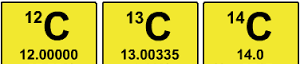
What do these isotopes of carbon all have in common?
a)
neutrons & mass number
b)
atomic number and neutrons
c)
atomic number and electrons
d)
protons, atomic number, and mass number
83.
How many neutrons does the isotope of lithium have?
a)
8
b)
3
c)
4
d)
5
84.
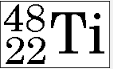
How many protons does this isotope of titanium have?
a)
48
b)
22
c)
26
d)
70
85.
In a correctly written symbol what would be located in the "A" position?
a)
number of neutrons
b)
atomic number
c)
number of electrons 
d)
mass number
86.
What quantities vary between isotopes of an element?
a)
protons, electrons, and atomic mass
b)
protons, electrons, and atomic number
c)
neutrons and electrons
d)
neutrons and atomic mass
87.

who discovered the first scientific and systematic periodic table

a)

Henry Mosley

b)

Dmitri Mendeleev

c)

John Dalton

d)

sir Isaac Newton

88.

Which one is correct about mendeleev's periodic law

a)

Properties of elements are periodic function of their atomic mass

b)

the physical and chemical properties of elements are periodic function of their atomic number.

c)

physical properties of elements are periodic function of their atomic weight.

d)

chemical properties of elements are periodic function of their atomic number.

89.

choose the correct statement

a)

the vertical column in the periodic table is called period

b)

the vertical column in the periodic table is called group

c)

the horizontal row in the periodic table is not called period

d)

none of the above

90.

how many groups are there in modern periodic table

a)

8

b)

9

c)

18

d)

17

91.

Number of valence electrons in halogens is ..........

a)

1

b)

4

c)

3

d)

7

92.

D block elements are known as .............

a)

Actinides

b)

Transition elements

c)

Lanthanides

d)

Noble gases

93.

how many electrons can d orbital accommodate? (keep)

a)

2

b)

6

c)

10

d)

14

94.

Electronic configuration of phosphorus is ........

a)

1s22s22p53s23p4

b)

1s22s22p53s23p3

c)

1s22s22p63s23p3

d)

1s22s22p63s23p4

95.

Which element has following electronic configuration. 1s22s22p63s23p5

a)

Sulphur

b)

Chlorine

c)

Argon

d)

Potassium

96.

choose the metalloid element

a)

Alumunium

b)

Germanium

c)

Silver

d)

Helium

97.

Sulphur is........

a)

Non metal

b)

Metal

c)

Metalloid

d)

Inert gases

98.

what happens when we move from top to bottom in group

a)

valency decreases

b)

atomic radius increases

c)

atomic radius decreases

d)

valence electrons increases

99.

which element is this ?

a)

Neon

b)

Potassium

c)

Calcium

d)

Argon

100.
Which electromagnetic waves have the highest frequencies and the shortest wavelengths?
a)
microwaves
b)
visible light
c)
gamma rays
101.
For waves in any medium, as the wavelength decreases, what happens to the frequency?
a)
It also decrease
b)
It stays the same
c)
It increases
102.
Which of the following has wavelengths longer than microwaves?
a)
Infrared waves
b)
Radio waves
c)
Visible light
103.
Which of the following lists the electromagnetic waves in order of increasing wavelength?
a)
X-rays, visible light, radio waves
b)
gamma rays, microwaves, UV rays
c)
infrared rays, radio waves, x-rays
104.
A wave with a large wavelength will have a ______ frequency and _____ energy
a)
high, low
b)
high, high
c)
low, high
d)
low, low
105.
Select the correct order of waves on the EMS from the longest wavelength to the shortest wavelength
a)
Radio, Micro, Infra, Visible, Ultra, X-ray, Gamma
b)
Gamma, X-ray, Ultra, Vis, Infra, Micro, Radio
c)
Vis, Micro, Infra, Ultra, X-ray, Gamma, Radio
d)
Micro, Radio, Vis, Infra, Ultra, X-ray, Gamma
106.
a)
Amplitude
b)
Crest
c)
Trough
d)
Wavelength
107.
a)
Frequency
b)
Amplitude
c)
Wavelength
d)
Trough
108.
a)
Trough
b)
Crest
c)
Amplitude
d)
Wavelength
109.
a)
Crest
b)
Trough
c)
Height
d)
Frequency
110.
24.1% of all the isotopes of a an element have a mass of 75.23 amu, 48.7% have a mass of 74.61 amu, and 27.2% have a mass of 75.20 amu.
What is the average mass of this element?
a)
74.92 amu
b)
24.97 amu
c)
75.01 amu
d)
74.51 amu
111.
What does the 1.00794 stand for?
a)
Hydrogen
b)
atomic number
c)
atomic mass
d)
atomic explosion
112.

The atomic mass of an element is the ___.

a)

average of the mass number and the atomic number for the element

b)

weighted average of the masses of the isotopes of the element

c)

total mass of the isotopes of the element

d)

total number of subatomic particles in the nucleus

113.

What is the speed of light?

a)

3.0x10⁸ ms

b)

3.0x10⁸ m/s

c)

6.626x10⁻³⁴ Js

d)

6.626x10⁻³⁴ J/s

114.

The frequency of violet light is 7.5x10¹⁴ Hz. What is its wavelength?

a)

4.0x10⁻⁷ m

b)

4.0x10⁷ m

c)

2.25x10²³m

d)

2.25x10²³ Hz

115.

If short wavelength has more ENERGY than long wavelength, which color Lightsaber is the most dangerous, or powerful?

a)

Red

b)

Orange

c)

Blue

d)

Green

116.

The number of waves that pass a fixed point in a given amount of time is...

a)

frequency

b)

wave speed

c)

amplitude

d)

wavelength

117.
Violet light has a wavelength of
4.10 x 10⁻¹²  m. What is the frequency?
a)
1.23 x 10^ -3 Hz
b)
7.31 x 10^ 19 Hz
c)
1.37 x 10^12 Hz
d)
3.0 x 10^ 8 Hz
118.
Electrons occupy orbitals of lowest energy first is part of what electron configuration rule?
a)
Hund’s Rule
b)
Aufbau Principle
c)
Pauli Exclusion Principle
119.
What is incorrect about this orbital diagram?
a)
Both arrows in the 2p box should be pointing up
b)
There is nothing incorrect with this diagram
c)
In the 2p box there should only be 1 electron in the first 2p box and one in the 2nd 2p box
d)
All the arrows should be pointing up.
120.
Which element is pictured?
a)
neon
b)
fluorine
c)
magnesium
d)
argon
121.
Electrons are paired based on their spin directions, clockwise and counterclockwise, is what electron configuration rule?
a)
Hund’s Rule
b)
Aufbau Principle
c)
Pauli Exclusion Principle
122.
Which guideline, Hund’s rule or the Pauli exclusion principle, is violated in the following orbital diagrams?
a)
Hund's
b)
Aufbau's
c)
Pauli's Exclusive
123.
What is the Pauli Exclusion Principle?
a)
An atomic orbital can only hold a maximum of 2 electrons, each with opposite spins
b)
An atomic orbital can hold a minimum of 6 electrons, each with opposite spins
c)
An atomic orbital can hold a maximum of 6 electrons, each with the same spin
d)
An atomic orbital can hold a minimum of 2 electrons, each with opposite spins
124.
How many electrons can the first energy level hold?
a)
1
b)
2
c)
8
d)
0
125.

How many electrons can a d sublevel hold?

a)

14

b)

10

c)

2

d)

6

126.

How many orbitals does an s sublevel have?

a)

1

b)

3

c)

5

d)

7

127.

How many orbitals does a d sublevel have?

a)

1

b)

3

c)

5

d)

7

128.

How many orbitals does an f sublevel have?

a)

1

b)

3

c)

5

d)

7

129.

What are the orbitals for n=4

a)

s

b)

s, p

c)

s, p, d

d)

s, p, d, f

130.

Electrons fill energy levels and sublevels _____ in energy first.

a)

lower

b)

higher

131.
The second energy level (n=2) contains a total of 5 electrons...how many more electrons can fit in the 2nd energy level?
a)
0
b)
3
c)
5
d)
7
132.
Which of the following statements is true about the 3s and the 4s sublevels?
a)
These sublevels have the same energy
b)
These sublevels are the same distance from the nucleus
c)
These sublevels hold different amounts of electrons
d)
These sublevels have the same shape
133.

Theoretically, the fifth energy level of an atom can hold a maximum of ________ sublevels?

a)

2

b)

4

c)

5

d)

6

134.
What is the shape of a p orbital?
a)
sphere
b)
it's just too complex to thing about it
c)
dumbbell
d)
I don't know this stuff.
135.

Which orbital does the image represent?

a)

s

b)

p

c)

d

d)

f

136.

Which sublevel is filled first?

a)

4s

b)

3d

c)

4p

d)

4f

137.

A bond between a metal and a nonmetal is called a(n)

a)

covalent bond

b)

ionic bond

c)

metallic bond

d)

transfer bond

138.

A bond between a nonmetal and a nonmetal is called a(n)

a)

covalent bond

b)

ionic bond

c)

metallic bond

d)

transfer bond

139.

What type of bond involves the sharing of electrons between atoms?

a)

covalent bond

b)

ionic bond

c)

metallic bond

d)

transfer bond

140.

Identify the following compound as ionic or covalent: MgO

a)

ionic

b)

covalent

141.

Identify the following compound as ionic or covalent: CF4

a)

ionic

b)

covalent

142.
Ionic compounds are formed when one or more valence electrons are transferred from _____
a)
a nonmetal atom to a metal atom
b)
a nonmetal atom to a nonmetal atom
c)
a metal atom to a nonmetal atom
d)
a metal atom to a metal atom
143.
What is the basis of a metallic bond?
a)
the attraction of neutral metal atoms.
b)
the attraction between protons and neutrons.
c)
the attraction between positive metal ions and interlocking electrons.
d)
the attraction between positive metal ions and free floating electrons.
144.
There are more metals than non metals in the periodic table.
a)
True
b)
False
145.
What does malleable mean?
a)
able to be shaped
b)
will break easily
c)
can be used for wire
d)
is shiny
146.
Why do metals conduct
a)
They are shiny
b)
The electrons are held tightly within the lattice
c)
The electrons are delocalised and able to move
d)
The electrons are shared between two metal ions
147.

Which of these are considered properties of metals? (choose ALL that apply)

a)

brittleness

b)

low melting point

c)

luster (shininess)

d)

malleability

e)

ductility

148.

How many dots would you put around carbon, a group 14 element?

a)

4

b)

6

c)

8

d)

18

149.

This could be the dot diagram of

a)

Mg

b)

Cl

c)

C

d)

O

150.
 A lone pair is defined as
a)
A pair of bonding electrons
b)
One non-bonding electron
c)
A pair of non-bonding electrons
d)
A pair of electrons on the central atom
151.
What is the VSEPR theory used to predict?
a)
Bond Strength
b)
Polarity
c)
Molecular Shape
d)
Electronegativity
152.
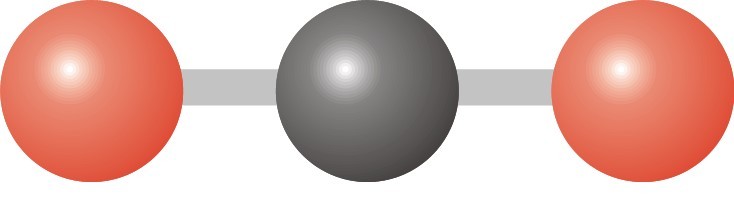
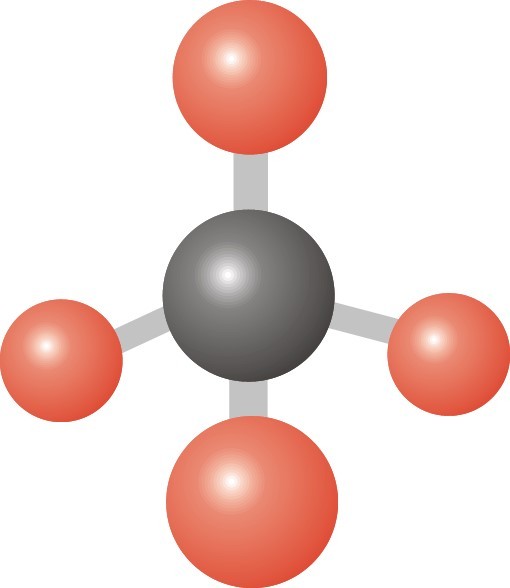
Which molecule would have this molecular geometry?
a)
BF3
b)
CH4
c)
PCl5
d)
CO2
153.
Which of the following shapes has an unshared pairs of electrons on the central atom? 
a)
Bipyramidal
b)
Bent
c)
Trigonal Planar
d)
Tetrahedral
154.
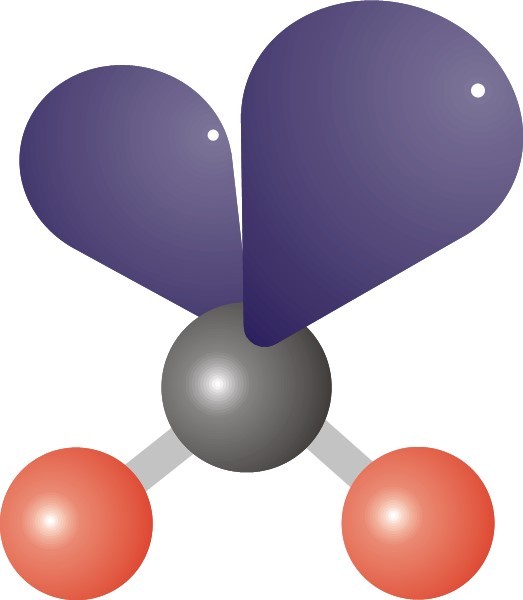
What molecule could this be? 
a)
BF3
b)
CH4
c)
H2O
d)
CO2
155.
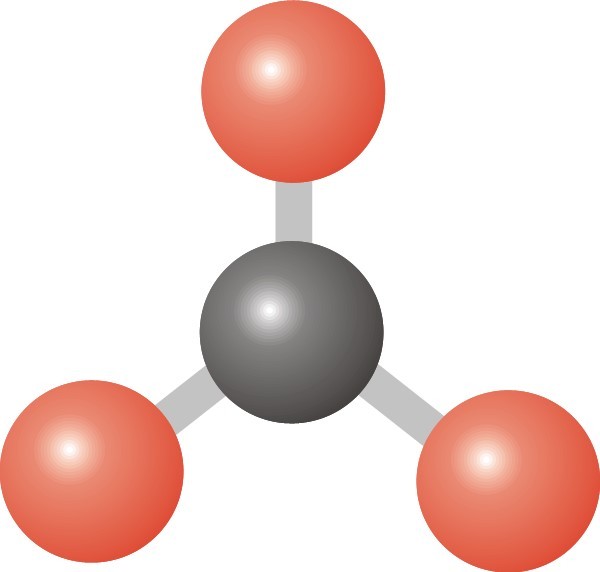
Who could this molecule be?
a)
CH4
b)
CO2
c)
PCl5
d)
BF3
156.
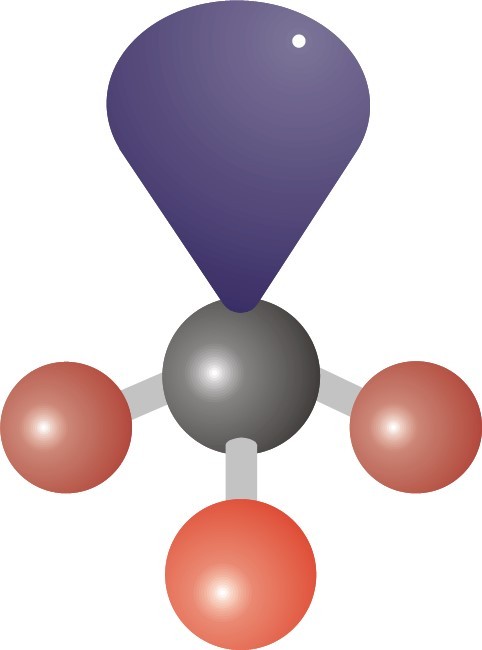
Who could this be? 
a)
CO2
b)
NH3
c)
H2S
d)
CH4
157.
Who could this be?
a)
H2O
b)
NH3
c)
CO2
d)
CH4
158.

Is this molecule polar?

a)

Yes

b)

No