
 Worksheets
CHEM REGENTS PREP 2018
Total questions: 159
Worksheet time: 4hrs 53mins
Name
Class
Date
1.

Which subatomic particles are paired with their charges?
a)
electron: positive ... neutron: negative... proton: neutral...
b)
electron: negative... neutron: neutral... proton: positive...
c)
electron: negative... neutron: positive... proton: neutral...
d)
electron: neutral... neutron: positive... proton: negative...
2.

The mass of a proton is approximately equal to...
a)
1 atomic mass unit.
b)
12 atomic mass units.
c)
the mass of 1 mole of carbon atoms.
d)
the mass of 12 moles of electron.
3.

Which property decreases when the elements in Group 17 are considered in order of increasing atomic number?
a)
atomic mass
b)
melting point
c)
atomic radius
d)
electronegativity
4.

A substance composed of two or more elements that are chemically combined in a fixed proportion is called...
a)
an isomer
b)
a solution
c)
an isotope
d)
a compound
5.

Which term refers to how strongly an atom of an element attracts electrons in a chemical bond with an atom of a different element?
a)
entropy
b)
electronegativity
c)
activation energy
d)
first ionization energy
6.

What is the number of electrons shared between the carbon atoms in a molecule of ethyne?
a)
8
b)
6
c)
4
d)
2
7.

Which atom in the ground state has a stable valence electron configuration?
a)
Ar
b)
Si
c)
Al
d)
Na
8.

Which of the following occurs when two fluorine atoms react to produce a fluorine molecule?
a)
Energy is absorbed as a bond is broken.
b)
Energy is absorbed as a bond is formed.
c)
Energy is released as a bond is broken.
d)
Energy is released as a bond is formed.
9.
Which gas sample at STP has the same number of molecules as a 2.0-liter sample of Cl2(g) at STP? (1)
a)
1.0 L of NH3(g)
b)
3.0 L of CO2(g)
c)
2.0 L of CH4(g)
d)
4.0 L of NO(g)
10.
All atoms of uranium have the same...
a)
mass number
b)
atomic number
c)
number of neutrons plus protons
d)
number of neutrons plus electrons
11.
At STP, which substance has metallic bonding?
a)
ammonium chloride
b)
iodine
c)
barium oxide
d)
silver
12.
The concentration of a solution can be expressed in...
a)
kelvins
b)
milliliters
c)
joules per kilogram
d)
moles per liter
13.
Compared to the boiling point and the freezing point of water at 1 atmosphere, a 1.0 M CaCl2(aq) solution at 1 atmosphere has a...
a)
lower boiling point and lower freezing point
b)
lower boiling point and higher freezing point
c)
higher boiling point and lower freezing point
d)
higher boiling point and higher freezing point
14.
Two types of organic reactions are...
a)
addition and sublimation
b)
deposition and saponification
c)
decomposition and evaporation
d)
esterification and polymerization
15.
The isomers butane and methylpropane have...
a)
the same molecular formula, and same properties
b)
same molecular formula and different properties
c)
different molecular formulas and same properties
d)
different molecular formulas and different properties
16.
According to the kinetic molecular theory, which statement describes an ideal gas?
a)
The particles are diatomic
b)
Energy is created when the gas particles collide
c)
There are no attractive forces between the gas particles.
d)
The distance between the gas particles is small, compared to their size.
17.
In a redox reaction, which particles are lost and gained in equal numbers?
a)
electrons
b)
hydroxide ions
c)
neutrons
d)
hydronium ions
18.
Which physical change is endothermic?
a)
CO2(s) → CO2(g)
b)
CO2(g) → CO2(ℓ)
c)
CO2(ℓ) → CO2(s)
d)
CO2(g) → CO2(s)
19.
What is the oxidation state for a Mn atom?
a)
0
b)
3
c)
7
d)
2
20.
Which Group 16 element combines with hydrogen to form a compound that has the strongest hydrogen bonding between its molecules?
a)
oxygen
b)
sulfur
c)
selenium
d)
tellurium
21.
Which compounds are classified as electrolytes?
a)
KNO3 and H2SO4
b)
KNO3 and CH3OH
c)
CH3OCH3 and H2SO4
d)
CH3OCH3 and CH3OH
22.
Hydrocarbons are composed of the elements...
a)
carbon and hydrogen, only
b)
carbon and oxygen, only
c)
carbon, hydrogen, and oxygen
d)
carbon, nitrogen, and oxygen
23.
Which compound is an Arrhenius base?
a)
CO2
b)
Ca(OH)2
c)
CaSO4
d)
C2H5OH
24.
Which atom is bonded to the carbon atom in the functional group of a ketone?
a)
fluorine
b)
nitrogen
c)
hydrogen
d)
oxygen
25.
According to one acid-base theory, a water molecule acts as a base when it accepts ...
a)
an H+ ion
b)
a neutron
c)
an OH- ion
d)
an electron
26.
Given the equation representing a system at equilibrium: N2 (g) + 3H2(g) ⇋ 2NH3(g) Which statement describes this reaction at equilibrium?
a)
The concentration of N2 (g) decreases
b)
The concentration of N2 (g) is constant.
c)
The rate of the reverse reaction decreases.
d)
The rate of the reverse reaction increases.
27.

Which list of nuclear emissions is arranged in order from the greatest penetrating power to the least penetrating power?
a)
alpha particle, beta particle, gamma ray
b)
alpha particle, gamma ray, beta particle
c)
gamma ray, alpha particle, beta particle
d)
gamma ray, beta particle, alpha particle
28.

A group on a periodic table (18 groups) means the elements have?
a)
similar reactions (properties)
b)
different reactions (properties)
c)
doesn't matter
29.

The periodic table is organized going across left to right <---> by?
a)
increasing Atomic #
b)
Increasing Mass #
c)
None of the above
30.

What two particles are inside the nucleus of an atom?
a)
Protons and Neutrons
b)
Electrons and Protons
c)
Electrons and Neutrons
d)
all of them
31.

Which one is not an example of a chemical reaction?
a)
Bubbles forming
b)
New odor
c)
Gass produced
d)
Breaking glass
32.

The periodic table is made mostly of?
a)
Metals
b)
Gasses
c)
Non metals
33.
Which sample of matter has a indefinite volume and indefinite shape?
a)
Hg(l)
b)
NaCl(s)
c)
H2O(l)
d)
CH4(g)
34.
Which change occurs during a nuclear fission reaction?
a)
Nuclei are split into two new nuclei
b)
Isotopes are converted to isomers.
c)
Temperature is converted to mass.
d)
Nuclei are combined to form one new nuclei
35.
The valence electrons in an atom of oxygen in the ground state are all found in
a)
1st shell
b)
2nd shell
c)
3rd shell
d)
4th shell
36.
Which substance can not be broken down by a chemical change?
a)
propanol
b)
copper
c)
benzene
d)
ammonia
37.
Which subatomic particles are found in orbitals of an atom of beryllium?
a)
electrons and protons
b)
electrons and positrons
c)
electrons only
d)
neutrons and protons
38.
Which conclusion was drawn from the results of the gold foil experiment?
a)
An atom is electrically neutral
b)
The electrons in an atom are located in specific shells
c)
The nucleus of an atom is negatively charged
d)
An atom is mostly empty space
39.
Which electron configuration represents an excited state for an atom of calcium?
a)
2-8-7-1
2-8-7-1
b)
2-8-7-2
2-8-7-2
c)
2-8-7-3
2-8-7-3
d)
2-8-8-2
40.
What is the number of electrons in an atom of scandium?
a)
21
b)
24
c)
45
d)
66
41.
Which ion has NO electrons?
a)
H+
b)
Li+
c)
Na+
d)
Rb+
42.
Which type of reaction converts one element to another element?
a)
neutralization
b)
polymerization
c)
synthesis
d)
transmutation
43.
Which nuclear emission has no charge and no mass?
a)
alpha particle
b)
beta particle
c)
gamma ray
d)
positron
44.
The amount of energy released from a fission reaction is much greater than the energy released from a chemical reaction because in a fission reaction
a)
mass is converted into energy
b)
energy is converted into mass
c)
ionic bonds are broken
d)
covalent bonds are broken
45.
Which sample of matter sublimes at room temperature and standard pressure?
a)
Br2(l)
b)
Cl2(g)
c)
CO2(s)
d)
SO2(aq)
46.
At STP, which physical property of aluminum always remains the same from sample to sample?
a)
mass
b)
density
c)
length
d)
volume
47.
Which statement describes a chemical property of silicon?
a)
Silicon is blue-gray
b)
Silicon is a brittle solid
c)
Silicon melts at 1414 C
d)
Silicon reacts with fluorine.
48.
A compound is a substance composed of two or more elements that are
a)
physically mixed in a fixed proportion
b)
physically mixed in a variable proportion
c)
chemically combined in a fixed proportion
d)
chemically combined in a variable proportion
49.
Which substance can be decomposed by chemical means?
a)
carbon
b)
vanadium
c)
germanium
d)
methane
50.
The temperature of a sample of matter is a measure of the
a)
average potential energy of the particles of the sample
average potential energy of the particles of the sample
b)
average kinetic energy of the particles of the sample
c)
total nuclear energy of the sample
d)
total thermal energy of the sample
total thermal energy of the sample
51.
Which unit is used to express an amount of thermal energy?
a)
gram
b)
mole
c)
joule
d)
pascal
52.
Which physical change is endothermic?
a)
CO2(s) --> CO2(g)
b)
CO2(l) --> CO2(s)
c)
CO2(g) --> CO2(l)
d)
CO2(g) --> CO2(s)
53.

The graph above represents the relationship between time and temperature as heat is added at a constant rate to a sample of a substance.
During interval AB which energy change occurs for the particles in this sample?
a)
The potential energy of the particles increases.
b)
The potential energy of the particles decreases.
c)
The average kinetic energy of the particles increases.
The average kinetic energy of the particles increases.
d)
The average kinetic energy of the particles decreases.
54.
A beaker with water and the surrounding air are all at 24°C. After ice cubes are placed in the water, heat is transferred from
a)
the ice cubes to the air
b)
the beaker to the air
c)
the water to the ice cubes
d)
the water to the beaker
55.
Under which conditions of temperature and pressure does a real gas behave most like an ideal gas?
a)
low temperature and low pressure
b)
low temperature and high pressure
c)
high temperature and low pressure
d)
high temperature and high pressure
56.
When a sample of gas is cooled in a sealed, rigid container, the pressure the gas exerts on the walls of the container will decrease because the gas particles hit the walls of the container
a)
less often and with less force
b)
less often with more force
c)
more often with less force
d)
more often with more force
57.
Which list of elements consists of a metal, a metalloid, and a nonmetal?
a)
Li, Na, Rb
b)
Cr, Mo, W
c)
C, Si, Sn
d)
O, S, P
58.
Why does the ion Na+ have a smaller radius than the atom Na?
a)
Na+ has one less electron shell than Na
b)
Na+ has one more electron shell than Na
c)
Na+ has more electrons than Na
d)
Na+ has more protons than Na
59.
Which formula represents sodium sulfate?
a)
NaSO4
b)
NaSO3
c)
Na2SO4
d)
Na2SO3
60.
The correct formula for calcium phosphate
a)
Ca3PO4
b)
Ca6PO4
c)
Ca3(PO4)2
d)
Ca2 (PO4)3
61.
On the periodic chart, Ge and Sb are
a)
metals
b)
non-metals
c)
metalloids
d)
transition metals
62.
How much Iodine-125 will remain after 100 years if the original sample had a mass of 80 grams and the half-life of I-125 is 25 years?
a)
20 grams
b)
2.5 grams
c)
5 grams
d)
10 grams
63.
An atom's mass number equals the number of...
a)
protons plus the number of electrons
b)
protons plus the number of neutrons
c)
protons
d)
neutrons
64.
Which of the following is a chemical property?
a)
how something tastes
b)
ability to explode
c)
ability to float in water
d)
size of an object
65.
As you move down the periodic table atoms get bigger. This is because ____________.
a)
The atoms have more mass.
b)
The atoms have more protons.
c)
The atoms have more energy levels
d)
The atoms have more nuetrons
66.
Two naturally occurring isotopes of an element have masses and abundance as follows: 54.00 amu (20.0%) and 56.00 amu ( 80.0%). What is the relative atomic mass of the element?
a)
54.20
b)
54.40
c)
54.80
d)
55.60
67.
Atoms of 38 Ca and 40 Ca differ with respect to number of
a)
protons
b)
electrons
c)
neutrons
d)
orbitals
68.

Arrange in order of increasing ability to penetrate matter.
a)
Beta, gamma, alpha
b)
Alpha, gamma, beta
c)
Gamma, beta, alpha
d)
Alpha, beta, gamma
69.

Classify this process.
a)
Nuclear fission
b)
Nuclear fusion
c)
Alpha decay
d)
Beta decay
70.

Which process involves the splitting of large nuclei?
a)
Beta decay
b)
Alpha decay
c)
Nuclear fission
d)
Nuclear fusion
71.
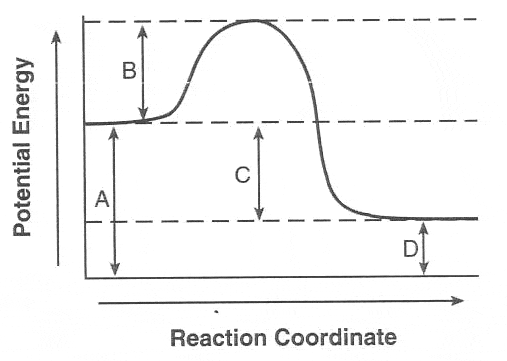
What type of reaction is this?
a)
Endothermic
b)
Exothermic
72.
How many moles of Na2SO4 is needed to make 2.5 L of 2.0 M solution?
a)
5 moles
b)
1 moles
c)
1.25 moles
d)
0.80 moles
73.
N2 + 3H2 → 2NH3
How many moles of hydrogen are needed to react with 5 moles of nitrogen?
How many moles of hydrogen are needed to react with 5 moles of nitrogen?
a)
6 mol H2
b)
2 mol H2
c)
3 mol H2
d)
15 mol H2
74.
How many neutrons would Potassium-41 (K) have?
a)
22
b)
19
c)
41
d)
1
75.
What bonds to make an ionic bonds?
a)
metals and metals
b)
metals and nonmetals
c)
nonmetals and metalloids
d)
nonmetals and nonmetals
76.
The general formula for a synthesis reaction
a)
A + B--> AB
b)
AB--> A + B
c)
A + BX--> AX + B
d)
AX + BY --> AY+ BX
77.
Elements in the same group have the same ____.
a)
number of protons
b)
number number of neutrons
c)
# valence electrons
d)
color
78.
In the formation of a covalent bond, electrons are _____.
a)
transferred
b)
shared
c)
exchanged
d)
lost
79.
All atoms of the same element have the same ____.
a)
number of neutrons
b)
number of protons
c)
number of electrons
d)
mom and dad
80.
Isotopes of the same element have different ____.
a)
hair
b)
protons
c)
neutrons
d)
electrons
81.
When the solution is holding more solute than its maximum (by raising the temperature saturating the solution and then lowering the temperature) it is said to be
a)
Supersaturated
b)
Saturated
c)
Unsaturated
d)
Undefined
82.
What is the empirical formula of the following molecular formula: C3H6
a)
C3H6
b)
CH2
c)
C2H4
d)
CH3
83.
Name this reaction, Cl2 + 2KI --> I2 + 2KCl
a)
Synthesis
b)
Single Replacement
c)
Double Replacement
d)
Decomposition
84.
Balance this equation: H2 + N2 → NH3
a)
H2 + 4N2 → NH3
b)
H2 + 3N2 → 2NH3
c)
3H2 + N2 → 2NH3
d)
2H2 + 2N2 → 2NH3
85.
What is the equation for the positron emission by oxygen-16?
a)
168O + 0+1e --> 169F
b)
168O --> 42He + 126C
c)
168O --> 0-1e + 169F
d)
168O --> 0+1e + 167N
86.
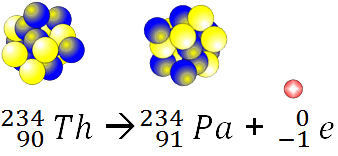
Which type of nuclear radiation is being emitted here?
a)
Alpha
b)
beta
c)
gamma
d)
none
87.
2NH3+22kJ↔N2+3H2
Which direction does the reaction shift if N2 was removed?
Which direction does the reaction shift if N2 was removed?
a)
Shift right
b)
Shift left
c)
No shift
d)
Shift both directions
88.
The idea that when a system at equilibrium is stressed, it will react to relieve that stress and return to equilibrium is known as:
a)
Boyle's Law
b)
Le Chatelier's Principle
c)
Charles Law
d)
Denninger's Law
89.

At what time the reaction reached equilibrium?
a)
t1
b)
t2
c)
t3
d)
t4
90.
2NH3+22kJ↔N2+3H2
Which direction does the reaction shift if NH3 was added?
Which direction does the reaction shift if NH3 was added?
a)
Shift right
b)
Shift left
c)
No shift
d)
Shift both directions
91.
What would the charges be on the ions that make up Al2O3?
a)
Al2+ and O3-
b)
Al2- and O3+
c)
Al3+ and O2-
d)
Al3- and O2+
92.
A 2.7L sample of nitrogen is collected at 1.19 atm and 288 K. If the volume decreases to 1.70L and the temperature lowers to 197 K, what will the pressure be?
a)
4.3 atm
b)
1.3 atm
c)
131 atm
d)
141 atm
93.
Gases have...
a)
A definite shape and volume
b)
A definite shape but no definite volume
c)
No definite shape but a definite volume
d)
No definite shape or volume
94.
Name this compound:
CuS
CuS
a)
Copper (IV) sulfate
b)
Copper (II) sulfite
c)
Copper (III) sulfide
d)
Copper (II) sulfide
95.
Name this compound:
NiPO4
NiPO4
a)
Nickel (I) phosphate
b)
Nickel (II) phosphate
c)
Nickel (IV) phosphate
d)
Nickel (III) phosphate
96.
Write the formula for copper (I) phosphide
a)
Cu3P
b)
CuP
c)
Cu1P
d)
CuP3
97.
Polyatomic ions are
a)
ions formed from one atom
b)
ions formed from more than one atom
c)
ions formed in compounds
98.
Disulfur trioxide
a)
S3O2
b)
SO
c)
S2O3
d)
S2O
99.
How many significant figures are in this measurement? 420 g
a)
1
b)
4
c)
3
d)
2
100.
HOw many sig figs are in the following measurement? 0.410 m
a)
2
b)
3
c)
1
d)
4
101.
Calculate the number of moles in 85.3g of water.
a)
.211 g
b)
.211 moles
c)
4.73 moles
d)
4.73 g
102.
What is the percentage by mass of calcium in CaCl2?
a)
32%
b)
34%
c)
36%
d)
38%
103.
The strongest acid would have a pH of _______.
a)
1
b)
5
c)
8
d)
14
104.

Attractions between water molecules are called
a)
Covalent bonds
b)
Ionic bonds
c)
Polar bonds
d)
Hydrogen bonds
105.
What is 0*C in Kelvin?
a)
110 *K
b)
100 *K
c)
273 *K
d)
210 *K
106.

What is happening in section C-D?
a)
A. There is an increase in the kinetic energy of the molecules
b)
B. There is an increase in the electrical potential energy of the molecules
c)
There is a decrease in the electrical potential energy of the molecules
d)
A and B
107.
The minimum amount of energy required by reacting particles in order to react.
a)
Kinetic Energy
b)
Enthalpy
c)
Activation Energy
d)
Chemical Potential Energy
108.

What type of reaction is this?
a)
Exothermic
b)
Endothermic
109.
Acid + Base ₋-->
a)
salt + hydrogen
b)
salt + water
c)
salt + carbon dioxide + water
d)
salt
110.
If it takes 50 mL of 0.5 M Ca(OH)2 to neutralize 125 mL of sulfuric acid, what is the concentration of the acid?
a)
0.2 M
b)
5 M
c)
0.5 M
111.
3KOH + H3PO4 --> K3PO4 + 3H2O
a)
Synthesis
b)
Decomposition
c)
Single displacement
d)
Double displacement
112.
What is the ground state electron configuration of Bromine?
a)
2-8-18-7
b)
2-8-18-8
c)
2-3
d)
2-8-17-8
113.
Which is a possible excited state electron configuration for Silicon?
a)
2-8-4
b)
1-9-4
c)
2-8-8
d)
2-8-3-1
114.
Light is emitted when an electron moves from the ________ state to the _________ state
a)
excited, ground
b)
ground, excited
115.

Rutherford's gold foil experiment provided evidence that...
a)
Negative and positive charges are spread evenly throughout the atom.
b)
Alpha particles have a positive charge.
c)
Gold is not a dense as previously thought.
d)
There is a dense positively charged nucleus at the center of an atom.
116.

What scientist is best known for his "Plum Pudding" model of the atom?
a)
J.J. Tomson
b)
Ernest Rutherford
c)
John Dalton
d)
Democritus
117.

This picture represents which of the following?
a)
Element
b)
Compound
c)
Mixture
118.
Two or more substances mingled together, but not chemically combined are known as a
a)
residue
b)
solution
c)
distillate
d)
mixture
119.

Elements and compounds are always ___.
a)
pure
b)
mixed
120.
The higher the average kinetic energy the __________________
a)
the higher the volume
b)
the higher the mass
c)
the higher the temperature
d)
the higher the density
121.
The model of the atom that scientists use today is?
a)
Billiard Ball Model
b)
Plum Pudding Model
c)
Quantum mechanical model
d)
Planetary model
122.
In the gold foil experiment, most of the positively charged alpha particles passed through the gold foil, but some were deflected or bounced back. What did this prove?
a)
Atoms are small indivisible spheres
b)
Atoms are mostly empty space with a small, dense, positive center
c)
Atoms have negatively charged particles which orbit the nucleus
d)
Light is a wave, not a particle
123.

Where are the metalloids / semimetals located on the periodic table?
a)
Blue
b)
Red
c)
Green
124.

Where are metals located on the periodic table?
a)
Blue
b)
Green
c)
Red
125.
What is the oxidation number of Fe in FeO?
a)
+1
b)
-1
c)
+2
d)
-2
126.
Is calcium oxidized or reduced in the following reaction?
2CaO--> 2Ca + O2
2CaO--> 2Ca + O2
a)
Oxidized
b)
Reduced
127.
In a voltaic cell involving zinc metal and one of its salts and copper metal and one of its salts, which metal would be used as the anode?
a)
zinc
b)
copper
128.
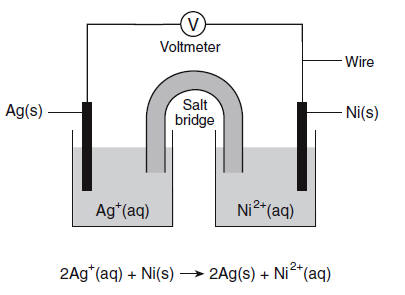
What reaction occurs at the anode?
a)
Ag+ + e- →Ag
b)
Ag → Ag+ + e-
c)
Ni2+ + 2e- → Ni
d)
Ni → Ni2+ + 2e-
129.
Which of the following is the balanced half -reaction for the oxidation of Cu to Cu+2?
a)
Cu --> Cu+2
b)
Cu + 2 e- --> Cu+2
c)
Cu --> Cu+2 + 2 e-
d)
Cu - 2e- --> Cu+2
130.
Which of the following equations represents an endothermic reaction?
a)
N2O4(g) + 59 kJ → 2NO2(g)
b)
2H2(g) + O2(g) → 2H2O(l) + 572 kJ
c)
2BrCl(g) -29.3 kJ →Br2(g) + Cl2(g
d)
2H2(g) + O2(g) → 2H2O(l) ΔH = -572 kJ
131.
Collision theory states that
a)
particles that collide will always undergo a reaction
b)
collisions between particles may result in a reaction if the temperature is low enough
c)
collision between molecules are sometimes needed before a reaction occurs, but not always
d)
reacting particles must collide with enough energy and at the proper angle in order to react
132.
An electrolyte is...
a)
The rapid, random movement of particles in colloidal dispersion.
b)
A substance that dissolves in water and conducts electric current.
c)
A substance that dissolves in water and does not conduct electric current.
d)
The solution process when water is the solvent.
133.
Which substance on Table H has the strongest intermolecular forces of attraction?
a)
propanone
b)
ethanol
c)
water
d)
ethanoic acid
134.
Which substance on Table H has the lowest normal boiling point?
a)
propanone
b)
ethanol
c)
water
d)
ethanoic acid
135.
Which substance on Table G has the lowest solubility at 70oC?
a)
NaNO3
b)
HCl
c)
NH4Cl
d)
KClO3
136.
Which substance on Table G is not a gas?
a)
HCl
b)
KCl
c)
NH3
d)
SO2
137.
If 0.002 g of PbCl2 are dissolved in 2000.0g of water, how many parts per million are dissolved? (Assume density of water is 1 g/mL)
a)
10ppm
b)
1ppm
c)
2ppm
d)
20ppm
138.
Which of the following solutions will have the highest boiling point?
a)
1M NaCl (aq)
b)
2M C6H12O6 (aq)
c)
2M CaCl2
d)
1M NaNO3
139.
Colligative properties depend on the _____ of solute particles in solution.
a)
type
b)
number
c)
pH
d)
nature
140.
Which term refers to how strongly an atom of an element attracts electrons in a chemical bond with an atom of a different element?
a)
entropy
b)
electronegativity
c)
activation energy
d)
first ionization energy
141.
What is the density of an object having a mass of 8.0 g and a volume of 25 cm3?
a)
0.32 g/cm3
b)
2.0 g/cm3
c)
3.1 g/cm3
d)
200 g/cm3
142.
All organic compounds must contain the element...
a)
hydrogen
b)
nitrogen
c)
carbon
d)
oxygen
143.

Name this organic compound
a)
propanoic acid
b)
propane
c)
propanol
d)
propanone
144.
When the name of an alcohol is derived from the corresponding alkane, the final -e of the name should be replaced by the suffix
a)
-al
b)
-ol
c)
-one
d)
-ole
145.
Esterification is the reaction of an acid with...
a)
water
b)
an alcohol
c)
a base
d)
a salt
146.
Which general formula represents a ketone?
a)
b)
c)
d)
147.
How many bonds C needs to become stable?
a)
1
b)
2
c)
3
d)
4
148.
Carbon can form double bonds with hydrogen
a)
True
b)
False
149.

Is this hydrocarbon saturated or unsaturated?
a)
saturated
b)
unsaturated
150.

What is Propane's chemical formula?
a)
C3H8
b)
O3H8
c)
C2H6
d)
C4H16
151.

What is Ethylene's chemical formula?
a)
C2H4
b)
CH
c)
C3H8
d)
C3H4
152.

what kind of molecule is this?
a)
alkane
b)
alkene
c)
alkyne
d)
cycloalkane
153.
How many carbon atoms are in propane
a)
1
b)
2
c)
3
d)
4
154.
How many hydrogen atoms are in butane
a)
4
b)
6
c)
8
d)
10
155.
Give the name of this compound...
C3H8
C3H8
a)
Propene
b)
Butane
c)
Butene
d)
Propane
156.
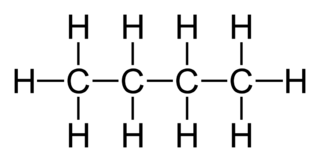
Name this alkane
a)
Methane
b)
Ethane
c)
Propane
d)
Butane
157.

a)
addition
b)
combustion
c)
double replacement
d)
substitution
158.

a)
substitution
b)
addition
c)
polymerization
d)
fermentation
159.
The energy absorbed and the energy released during a chemical reaction are best represented by a
a)
cooling curve
b)
heating curve
c)
kinetic energy diagram
d)
potential energy diagram
100 %

