wayground logo

Free Printable Worksheets

Font size

S
M
L
XL
Worksheets

periodic table

Total questions: 163

Worksheet time: 2hrs 16mins

Name
Class
Date
1.
Each column in the periodic table is called a 
a)
period
b)
group
c)
cluster
d)
unit
2.
The atomic number tells you what?
a)
number of electrons
b)
number of protons
c)
number of neutrons
d)
both electrons and protons in an atom.
3.
Which group of the periodic table is composed of inert (not reactive)  gases?
a)
alkali metals
b)
alkaline earth metals
c)
halogens
d)
noble gases
4.
Elements which are shiny, conduct electricity and heat are called
a)
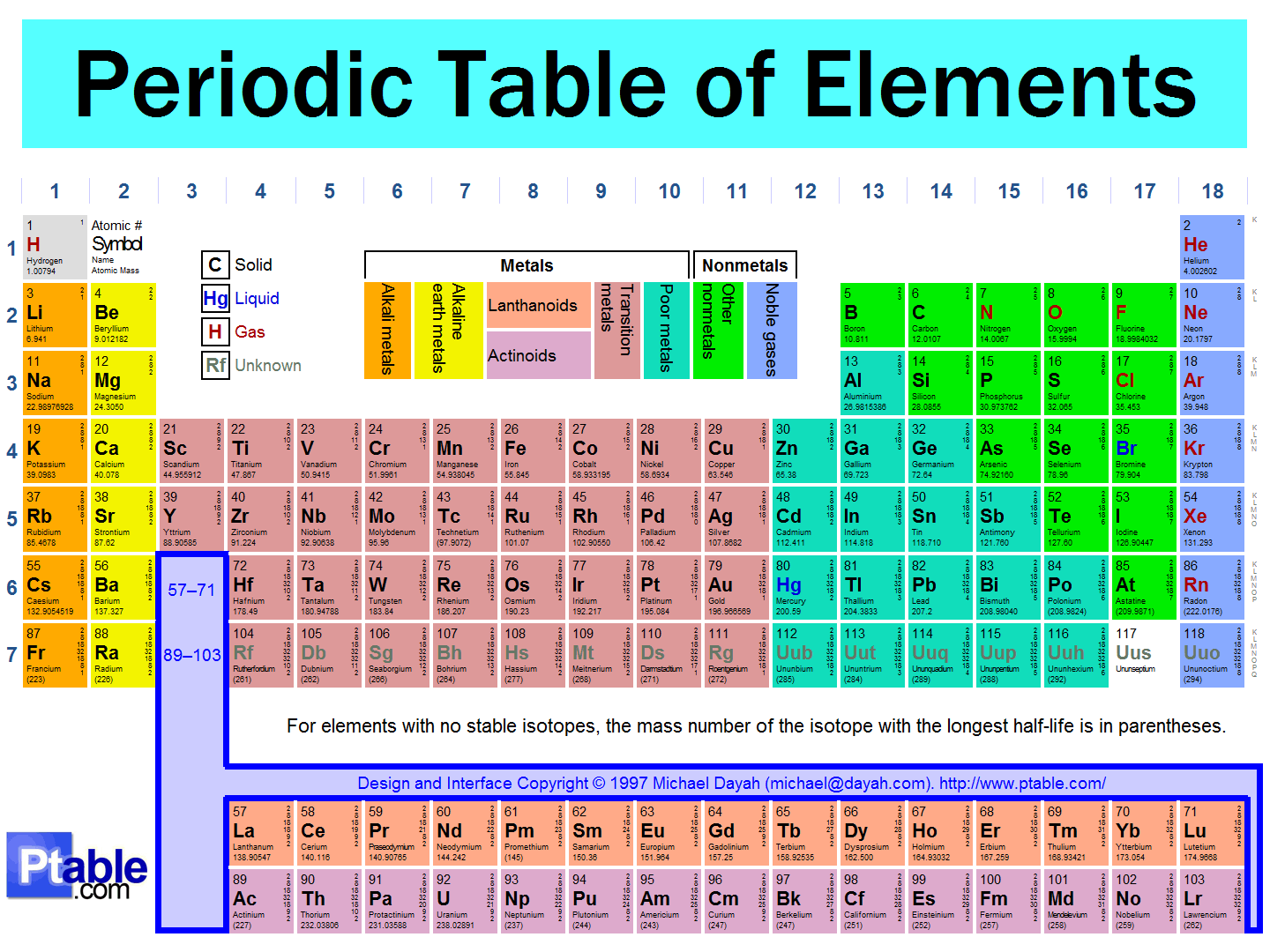
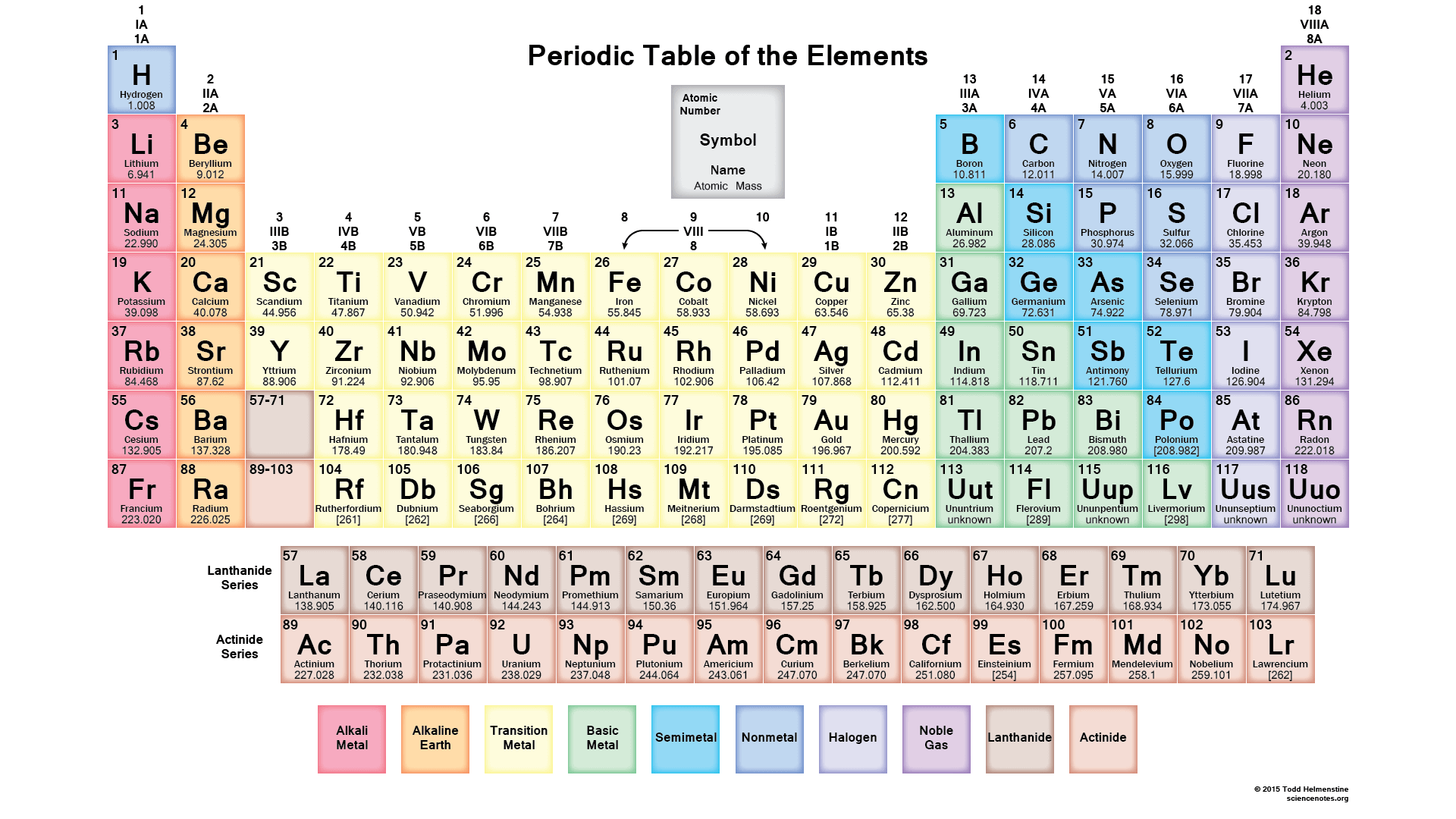
metal
b)
nonmetal
c)
metalloid
d)
nonexistent
5.
The atoms along the staircase are called 
a)
metals
b)
nonmetals
c)
metalloids
d)
noble gases
6.
How many neutrons are in a Gold atom?
a)
79
b)
196
c)
118
d)
275
7.
How many electrons does a Copper atom have?
a)
63
b)
29
c)
92
d)
34
8.
What's a valence electron?
a)
electrons in the second energy level
b)
electrons in the outermost energy level
c)
the atomic number
d)
electrons in the first level
9.
What does the 1.00794 stand for?
a)
Hydrogen
b)
atomic number
c)
atomic mass
d)
atomic explosion
10.
The positive particles of an atom are 
a)
electrons 
b)
positrons 
c)
neutrons 
d)
protons 
11.
Particles in an atom that are neutral and have no charge are 
a)
negatrons 
b)
electrons 
c)
neutrons 
d)
protons 
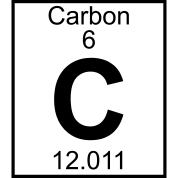
12.
The electrons of an atom are found...
a)
in the outer "cloud" surrounding the atom.
b)
in the nucleus of the atom.
c)
in the cloud and in the nucleus.
13.
The subatomic particle with a negative charge is the
a)
electron
b)
proton
c)
neutron
d)
nucleus 
14.
What is the atomic mass equal to?
a)
the number of protons
b)
the number of protons and neutrons
c)
the number of neutrons
d)
the number of protons and electrons
15.
In the modern periodic table elements are arranged by:
a)
atomic mass
b)
atomic number
c)
valence electrons
d)
number of isotopes
16.
A ___________ is an arrangement of elements in columns
a)
columns
b)
rows
c)
periodic table
d)
electron shell
17.
Each column in the periodic table is called a 
a)
period
b)
group
c)
cluster
d)
unit
18.
The atomic number tells you what?
a)
number of electrons
b)
number of protons
c)
number of neutrons
d)
both electrons and protons in an atom.
19.
Which group of the periodic table is composed of inert (not reactive)  gases?
a)
alkali metals
b)
alkaline earth metals
c)
halogens
d)
noble gases
20.
Elements which are shiny, conduct electricity and heat are called
a)
metal
b)
nonmetal
c)
metalloid
d)
nonexistent
21.
Which element is not a metal?
a)
H
b)
Re
c)
Al
d)
B
22.
The atoms along the staircase are called 
a)
metals
b)
nonmetals
c)
metalloids
d)
noble gases
23.
Which is a halogen?
a)
Helium
b)
Chlorine
c)
Oxygen
d)
Neptune
24.
Which is an alkali metal?
a)
Magnesium
b)
Iron
c)
Sodium
d)
Europium
25.
A horizontal row of elements in the periodic table.
a)
column
b)
group
c)
period
26.
A vertical column in the periodic table.  Elements share similar properties.
a)
row
b)
group
c)
period
27.
Elements in a ..................have similar chemical properties.  
a)
period
b)
group
c)
row
28.
The simplest substance is..?
a)
Carbon
b)
An element
c)
Water
d)
A simple compound 
29.
A proton is....
a)
A negatively charged subatomic particle
b)
A positively charged subatomic particle
c)
A neutrally charged subatomic particle
d)
The only subatomic particle located in the nucleus
30.
A neutron has a charge of
a)
+2
b)
No charge
c)
-1
d)
+1
31.

A substance that cannot be broken down any further without losing its properties.

a)

Compound

b)

Mixture

c)

Element

d)

Suspension

32.

Subatomic particle with a positive charge

a)

Proton

b)

Neutron

c)

Electron

33.

The subatomic particle(s) found in the nucleus of an atom

a)

Proton

b)

Neutron

c)

Electron

34.

Subatomic particle with a negative charge

a)

Proton

b)

Neutron

c)

Electron

35.

Subatomic particle(s) located in the shells outside the nucleus

a)

Proton

b)

Neutron

c)

Electron

36.

Atoms are mostly...

a)

Tightly packed

b)

Empty space

37.

The mass of an atom is found by adding which subatomic particles?

a)

Protons

b)

Neutrons

c)

Electrons

38.

The number of _______________ in an atom is represented by its atomic number.

a)

Protons

b)

Neutrons

c)

Electrons

39.

If an atom has 12 neutrons and 11 protons, what is its atomic mass?

(a)  

40.

In an electrically-neutral atom, what two subatomic particles are equal in number?

a)

Protons

b)

Neutrons

c)

Electrons

41.

How many protons does Helium (He) have?

a)

1

b)

2

c)

3

d)

4

42.

What is the atomic symbol for Carbon?

(a)  

43.

What is the atomic number for Hydrogen (H)?

a)

1

b)

2

c)

3

d)

4

44.

What is the atomic symbol of the given element?

(a)  

45.

How many neutrons does Hydrogen (H) have?

(a)  

46.

What is your favorite quiz game (so far)?

a)

Kahoot

b)

Gimkit

c)

Quizizz

47.

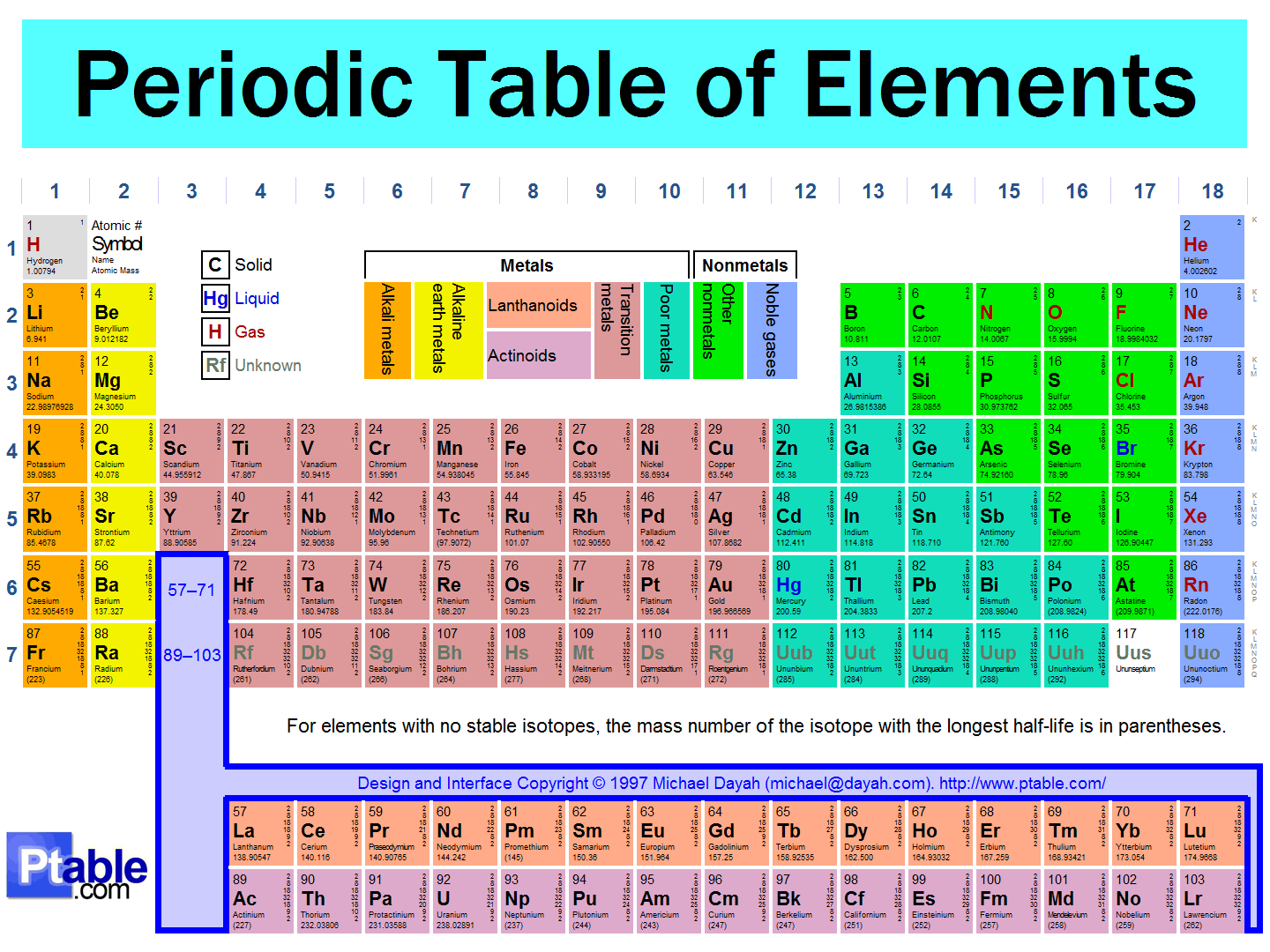
Which color on the image of the periodic table corresponds with the halogens.

a)

red

b)

black

c)

blue

d)

orange

48.

Which color on the image of the periodic table corresponds with the lanthanides.

a)

red

b)

black

c)

blue

d)

orange

49.

Which color on the image of the periodic table corresponds with the noble gases.

a)

red

b)

black

c)

blue

d)

orange

50.

Which color on the image of the periodic table corresponds with the transition metals.

a)

red

b)

black

c)

blue

d)

orange

51.

Which color on the image of the periodic table corresponds with the metalloids.

a)

bright yellow

b)

gold

c)

teal

d)

light blue

52.

Which color on the image of the periodic table corresponds with the alkaline earth metals.

a)

yellow

b)

dark yellow

c)

blue/green

d)

teal

53.

Mendeleev first ordered the periodic table of elements by increasing

a)

atomic number

b)

atomic mass

c)

atomic symbol

d)

atomic weight

54.

Horizontal rows on the periodic table are called ___?

a)

groups

b)

periods

c)

rows

d)

families

55.

Most metals share four common physical characteristics. Which of the options is not one of the four?

a)

Luster

b)

Conductivity

c)

Ductility

d)

Malleability

e)

Reactivity

56.

Which family of elements reacts violently with water and exposure to oxygen?

a)

alkali metals

b)

alkaline earth metals

c)

lanthanides

d)

actanides

e)

transition metals

57.

Which two families of elements are soft and silvery and have low densities? Choose two.

a)

alkali metals

b)

alkaline earth metals

c)

lanthanides

d)

actanides

e)

transition metals

58.

The periodic table is mostly comprised of what type of element?

a)

Metals

b)

Nonmetals

c)

Metalloids

59.

What are the four most common nonmetals in the human body?

a)

Oxygen

b)

Hydrogen

c)

Nitrogen

d)

Phosphorus

e)

Carbon

60.

What is the most reactive nonmetal?

a)

Fluorine

b)

Iodine

c)

Chlorine

d)

Bromine

61.

When a halogen such as Chlorine, combines with an alkali metal to produce a what?

a)

compound

b)

salt

c)

mineral

d)

acid

62.

Which of the following is not true of metalloids?

a)

Silicon and Germanium are common metalloids used in computers.

b)

Metalloids contain properties similar to both metals and nonmetals.

c)

Metalloids are found in a stair step line between metals and nonmetals on the periodic table.

d)

Metalloids are the first choice in building materials.

63.

Which family of elements does not combine with other elements unless under special conditions in a laboratory?

a)

Noble gases

b)

Halogens

c)

Metalloids

d)

Alkaline earth metals

e)

Actinides

64.

An engineer is building a sun reflector which must withstand storms, large winds, and reflect sunlight well, what would suggest they use?

a)

Alkali metal

b)

Alkaline earth metal

c)

Transition metal

d)

Metalloid

e)

Lanthanide

65.

Which of the following is most reactive?

a)

Lithium

b)

Potassium

c)

Sodium

d)

Cesium

66.
How are elements on the periodic table arranged by?
a)
in alphabetic order
b)
simular physical & chemical properties
c)
their symbols
d)
Just simular physical properties
67.
Each column in the periodic table is called a _________ .
a)
period
b)
group
c)
cluster
d)
unit
68.
Two elements chemically bonded form
a)
element
b)
compound
c)
mixture
d)
solutions
69.
What element is will have the most similar physical and chemical properties to the element Sulfur (S)?
a)
Carbon (C)
b)
Phosphorous (P)
c)
Oxygen (O)
d)
Neon (Ne
70.
What element is will have the most similar physical and chemical properties to the element Lithium (Li)?
a)
Sodium (Na)
b)
Magnesium (Mg)
c)
Beryllium (Be)
d)
Calcium (Ca)
71.
What element is will have the most similar physical and chemical properties to the element Bromine (Br)?
a)
Fluorine (F)
b)
Carbon (C)
c)
Krypton (Kr)
d)
Selenium (Se)
72.
What element is will have the most similar physical and chemical properties to the element Nitrogen (N)?
a)
Phosphorous (P)
b)
Carbon (C)
c)
Oxygen (O)
d)
Sulfur (S)
73.
Elements that are arranged in __________ have the most similar physical and chemical properties to each other.
a)
periods
b)
groups
74.
All matter is composed of (contains) at least one element on the periodic table
a)
True
b)
False
75.
Groups on the periodic table are __________.
a)
Horizontal Rows
b)
Vertical Columns
76.

who discovered the first scientific and systematic periodic table

a)

Henry Mosley

b)

Dmitri Mendeleev

c)

John Dalton

d)

sir Isaac Newton

77.

Which one is correct about mendeleev's periodic law

a)

Properties of elements are periodic function of their atomic mass

b)

the physical and chemical properties of elements are periodic function of their atomic number.

c)

physical properties of elements are periodic function of their atomic weight.

d)

chemical properties of elements are periodic function of their atomic number.

78.

choose the correct statement

a)

the vertical column in the periodic table is called period

b)

the vertical column in the periodic table is called group

c)

the horizontal row in the periodic table is not called period

d)

none of the above

79.

how many groups are there in modern periodic table

a)

8

b)

9

c)

18

d)

17

80.

alkali metals are kept in ........

a)

IIA

b)

IIIA

c)

IA

d)

0

81.

Number of valence electrons in halogens is ..........

a)

1

b)

4

c)

3

d)

7

82.

D block elements are known as .............

a)

Actinides

b)

Transition elements

c)

Lanthanides

d)

Noble gases

83.

In which block, does the element Iron stand?

a)

d block

b)

p block

c)

s block

d)

f block

84.

how many electrons can d orbital accommodate? (keep)

a)

2

b)

6

c)

10

d)

14

85.

which group has the strong electronegative character

a)

alkali metal

b)

lanthanides

c)

inert gases

d)

halogens

86.

Electronic configuration of phosphorus is ........

a)

1s22s22p53s23p4

b)

1s22s22p53s23p3

c)

1s22s22p63s23p3

d)

1s22s22p63s23p4

87.

Which element has following electronic configuration. 1s22s22p63s23p5

a)

Sulphur

b)

Chlorine

c)

Argon

d)

Potassium

88.

choose the metalloid element

a)

Alumunium

b)

Germanium

c)

Silver

d)

Helium

89.

Sulphur is........

a)

Non metal

b)

Metal

c)

Metalloid

d)

Inert gases

90.

choose the wrong statement

a)

Na is more active than Li

b)

O is more active than S

c)

Mg is more active than Al

d)

Cl is more active than F

91.

What is the valency of Krypton

a)

0

b)

1

c)

2

d)

3

92.

Fluorine is more active than chlorine because ...........

a)

fluorine has valency 1 but chlorine has 2

b)

atomic number of fluorine is less than chlorine

c)

atomic size of fluorine is less than chlorine

d)

atomic size of fluorine is more than chlorine

93.

Which one is correct ?

a)

for electronegative elements, reactivity increases with decrease in atomic size in same group

b)

for electropositive elements, reactivity decreases with decrease in atomic size in same group

c)

for non metals, reactivity increases with decrease in atomic size

d)

all of the above

94.

which element is this ?

a)

Neon

b)

Potassium

c)

Calcium

d)

Argon

95.
In the modern periodic table elements are arranged by:
a)
atomic mass
b)
atomic number
c)
valence electrons
d)
number of isotopes
96.
An element's identity is determined by the number of
a)
electrons.
b)
protons.
c)
neutrons.
d)
valence.
97.
All matter is made of .....
a)
energy 
b)
atoms 
c)
air
d)
chemistry
98.
The atomic number of an element tells the number of _____ in the nucleus of an atom of that element.
a)
protons
b)
neutrons
c)
electrons
d)
isotopes
99.
Most of the mass of an atom is found it its _____.
a)
electron cloud
b)
nucleus
c)
atomic number
d)
empty space
100.
Each is an example of matter except _____.
a)
a cloud
b)
air
c)
a dust particle
d)
a beam of light
101.
An element is made up of only one kind of _____.
a)
isotope
b)
plastic
c)
atom
d)
metal
102.
Rutherford's experiment showed that most of an atom is made up of _____.
a)
a nucleus
b)
an electron cloud
c)
empty space
d)
alpha particles
103.
An element is made up of only one kind of _____.
a)
isotope
b)
plastic
c)
atom
d)
metal
104.
An element is made up of only one kind of _____.
a)
isotope
b)
plastic
c)
atom
d)
metal
105.
What subatomic particles are located in the electron cloud?
a)
quarks
b)
protons
c)
electrons
d)
neutrons
106.
Which subatomic particle has a negative charge in the atom?
a)
proton
b)
neutron
c)
electron
d)
quark
107.
Which is an electron?
a)
A
b)
B
c)
C
108.
Which is a proton?
a)
A
b)
B
c)
C
109.
Which is a neutron?
a)
A
b)
B
c)
C
110.
Which item on this element square is the chemical symbol?
a)
Copper
b)
29
c)
Cu
d)
63.546
111.
Which item on this element square represents the atomic number?
a)
13
b)
Al
c)
Aluminum
d)
26.981538
112.
What is the number of protons that the element in this image contain?
a)
14
b)
7
c)
15
d)
18
113.
What is the atomic mass of "F"
a)
9
b)
18
c)
17
d)
19
114.
An atom of the element with atomic number 6 always has _____.
a)
six protons in its nucleus
b)
an atomic mass of six
c)
more than six neutrons
d)
six electron clouds
115.
What are subatomic particles? 
a)
the nucleus 
b)
electron cloud
c)
positive charge
d)
electrons, protons, and neutrons
116.

The vertical (up and down) columns in the Periodic Table are called

a)

groups

b)

towers

c)

periods

d)

atomic numbers

117.
The Modern Periodic Table of Elements is arranged by
a)
atomic mass
b)
atomic number
c)
valence electrons
d)
number of isotopes
118.
Sodium (Na) is found in period 
a)
3
b)
2
c)
4
d)
1
119.
Sodium (Na) is found in group 
a)
1
b)
2
c)
3
d)
4
120.
The phases of the moon are __________ because they repeat in a pattern.
a)
periodic
b)
group
c)
awesome
d)
halogens
121.
The atomic number tells you what?  READ THE ANSWERS CAREFULLY
a)
only the number of electrons
b)
 only the number of protons
c)
only the number of neutrons
d)
the number of both electrons and protons in an atom.
122.
What does the atomic mass tell you? 
a)
Basically,the number of electrons and protons
b)
The number of neutrons
c)
Basically, the number of protons and neutrons
d)
The number of protons.
123.
The atoms we study in 6th grade are neutral, which means they have the same number of
a)
protons and electrons
b)
protons and neutrons
c)
electrons and neutrons
124.
What does the 6 represent?
a)
atomic mass
b)
atomic number
c)
element name
d)
chemical symbol 
125.
What does 12.011 represent?
a)
atomic mass
b)
atomic number
c)
element name
d)
chemical symbol 
126.
What does the C represent?
a)
atomic mass
b)
atomic number
c)
element name
d)
chemical symbol 
127.
These are found on the Periodic Table.
a)
Compounds
b)
Elements
c)
Mixtures
128.

The horizontal (side to side) rows in the Periodic Table are called

a)

groups

b)

families

c)

periods

d)

atomic numbers

129.

The number of protons in the nucleus of an atom is the same as the ________ number.

a)

neutron

b)

Periodic Table

c)

atomic

d)

quark

130.

All elements can be classified as _______________, _________, or ________________.

a)

protons, neutrons, electrons

b)

metals, non-metals, metalloids

c)

natural, synthetic, man-made

d)

periods, rows, columns

131.

Which of the following correctly lists the particles of an atom and their charges?

a)

protons (-), neutrons (neutral), electrons (+)

b)

protons (neutral), neutrons (+), electrons (-)

c)

protons (+), neutrons (-), electrons (+)

d)

protons (+), neutrons (neutral), electrons (-)

132.

Most of the elements on the Periodic Table are ______,

a)

metals

b)

non-metals

c)

man-made

d)

metalloids

133.

Most of the elements on the Periodic Table are ______,

a)

metals

b)

non-metals

c)

man-made

d)

metalloids

134.

Which of the following shows the correct symbol for helium?

a)

He

b)

he

c)

HE

d)

Hel

135.

Which of the following shows the correct symbol for helium?

a)

He

b)

he

c)

HE

d)

Hel

136.

The 18 vertical columns on the Periodic Table are known as ______________.

a)

periods

b)

rows

c)

families

d)

metals

137.

The 7 horizontal rows on the Periodic Table are called ___________.

a)

families

b)

periods

c)

metals

d)

metalloids

138.

The Russian scientist that constructed the first Periodic Table was ____________.

a)

Vladimir Lenin

b)

Mikhail Baryshnikov

c)

Anton Chekhov

d)

Dmitri Mendeleev

139.

The atomic number for this element is _________.

a)

26

b)

55.845

c)

Fe

d)

iron

140.

The atomic number for this element is _________.

a)

26

b)

55.845

c)

Fe

d)

iron

141.

The atomic mass for this element is __________.

a)

26

b)

Fe

c)

55.845

d)

iron

142.

Radium has _________ neutrons.

a)

128

b)

138

c)

139

d)

129

143.
Which of the following is an Alkali Metal? 
a)
Magnesium
b)
Chromium
c)
Sodium
d)
Fluorine 
144.
Which of the following is an Alkaline Earth Metal? 
a)
Calcium
b)
Lithium
c)
Phosphorus
d)
Copper 
145.
Which of the following is an Alkaline Earth Metal? 
a)
Calcium
b)
Lithium
c)
Phosphorus
d)
Copper 
146.
Which of the following is a transition metal? 
a)
Iron
b)
Oxygen
c)
Neon
d)
Barium
147.
Which of the following is a Halogen? 
a)
Bromine
b)
Rubidium
c)
Argon
d)
Beryllium
148.
Which of the following is a Noble Gas? 
a)
Krypton
b)
Chlorine
c)
Radium
d)
Gallium
149.
Which of the following is the most reactive group of metals? 
a)
Alkali
b)
Alkaline Earth
c)
Halogen
d)
Transition Metals
150.
Which of the following is the most reactive group of non-metals? 
a)
Alkali
b)
Alkali Earth
c)
Halogen
d)
Noble Gas
151.
Which of the following groups is inert? 
a)
Alkali
b)
Transition Metals
c)
Halogens
d)
Noble Gas
152.
How many valence electrons does an alkaline earth metal have? 
a)
1
b)
2
c)
7
d)
8
153.
How many valence electrons does a halogen have? 
a)
1
b)
2
c)
7
d)
8
154.
What does the 1.00794 stand for?
a)
Hydrogen
b)
atomic number
c)
atomic mass
d)
atomic explosion
155.
The blue atoms are called 
a)
metals
b)
nonmetals
c)
metalloids
d)
noble gases
156.
Each column in the periodic table is called a 
a)
period
b)
group
c)
cluster
d)
unit
157.
The atomic number tells you what?
a)
number of electrons
b)
number of protons
c)
number of neutrons
d)
both electrons and protons in an atom.
158.
Elements which are shiny, conduct electricity and heat are called
a)
metal
b)
nonmetal
c)
metalloid
d)
nonexistent
159.
The atoms along the staircase are called 
a)
metals
b)
nonmetals
c)
metalloids
d)
noble gases
160.
Which is a halogen?
a)
Helium
b)
Chlorine
c)
Oxygen
d)
Neptune
161.
Which is an alkali metal?
a)
Magnesium
b)
Iron
c)
Sodium
d)
Europium
162.
In the modern periodic table elements are arranged by:
a)
atomic mass
b)
atomic number
c)
valence electrons
d)
number of isotopes
163.

Which element is a metalloid?

a)

H

b)

Re

c)

Ne

d)

B