wayground logo

Free Printable Worksheets

Font size

S
M
L
XL
Worksheets

Chemistry Final Review

Total questions: 162

Worksheet time: 4hrs 36mins

Name
Class
Date
1.
When a solution is saturated:
a)
No additional material will dissolve in it
b)
You need to stir it more 
c)
Two materials have combined to create a clear liquid
d)
Crystals form 
2.
what a solute dissolves in
a)
solvent
b)
mixture
c)
solute
3.
dissolves in the solvent
a)
solute
b)
solvent
c)
mixtures
4.
When solute dissolves into a solvent it is called a _____________.
a)
mixture
b)
solution
c)
element
5.

A solute is........

a)

any substance that will dissolve in a solvent

b)

anysubstance that will not dissolve in a solvent

c)

the same as a solvent

d)

is always a solid

6.
Neutrons have a ________ charge.
a)
positive
b)
negative
c)
neutral
7.
What kind of charge do protons have?
a)
positive
b)
negative
c)
neutral
8.
What type of substance is shown in the picture below? 
a)
compound 
b)
mixture 
c)
element 
9.
What type of substance is shown in the picture? 
a)
element
b)
compound
c)
mixture 
10.
Boiling an egg is an example of what type of change? 
a)
chemical change
b)
physical change 
11.
Which substance in the picture has the highest density? 
a)
cork 
b)
rock 
12.
Which substance has the least density? 
a)
oil 
b)
dish soap
c)
honey 
d)
corn syrup 
13.
Which is an example of a  physical change? 
a)
chopping wood 
b)
baking bread 
c)
striking a  match 
d)
exploding fireworks 
14.
Which process occurs when a solid changes to a liquid?
a)
condensation
b)
evaporation
c)
freezing
d)
melting 
15.
What two properties do you need to calculate the density of an object? 
a)
mass and volume
b)
width and length
c)
mass and width
d)
volume and temperature 
16.
Texture, color, mass, and volume are ways you can measure _____________. 
a)
chemical properties 
b)
physical properties 
17.
What is an ion?
a)
A Charged Atom
b)
A Large Atom
c)
A Small Atom
d)
A Cute Atom
18.
an atom with atomic number 6 would have how many protons 
a)
6
b)
12
c)
3
d)
cannot be determined 
19.
Nonmetals are
a)
usually cations
b)
likely to lose electrons
c)
usually negative ions
d)
all of these
20.
A +2 ion will
a)
likely be a nonmetal
b)
add 2 electrons
c)
gain electrons
d)
subtract 2 electrons
21.
How many electrons are in a Li+ ion?
a)
1
b)
2
c)
3
d)
4
22.
How many electrons are in an S2- ion?
a)
10
b)
14
c)
16
d)
18
23.
How does a Br atom form a Br- ion?
a)
A bromine atom loses an electron.
b)
A bromine atom gains and electron.
c)
A bromine atom loses a proton.
d)
A bromine atom gains a proton.
24.
Which is the correct symbol for the element with 8 protons and 10 electrons?
a)
N3-
b)
O2-
c)
O3-
d)
F-
25.
Potassium ion
a)
Na⁺
b)
K⁺
c)
K²⁺
d)
K⁻
26.

Which atom has the largest atomic radius?

a)

potassium

b)

rubidium

c)

francium

d)

cesium

27.

Which statement correctly and completely identifies a trend?

a)

Atomic radius decreases across a period and increases down a group.

b)

Electronegativity decreases across a period and decreases down a group.

c)

Ionization energy increases across a period and increases down a group.

d)

Ionic radius increases across a period and increases down a group.

28.
Atomic radius generally increases as we move __________.  
a)
down a group and from right to left across a period 
b)
up a group and from left to right across a period 
c)
down a group and from left to right across a period 
d)
up a group and from right to left across a period 
29.
Order the following in increasing atomic radii: 
Ra, Be, Ca, Rb, H
a)
Ra, Be, Rb, H, Ca
b)
Rb, H, Ca, Be, Ra
c)
Ra, Rb, Ca, Be, H
d)
H, Be, Ca, Rb, Ra
30.
The more protons there are, the  ____ .
a)
Weaker the pull
b)
Smaller the electrons
c)
Stronger the pull
d)
The bigger the electrons
31.
The graph above shows the ionization energy values as the elements are arranged on the periodic table. Which conclusion cannot be drawn from the graph?
a)
The ionization energy drops significantly as you move down a group because the valence electrons are in a shell further from the nucleus.
b)
The ionization energy increases gradually as you move right across a period because the valence electrons are in a shell further from the nucleus.
c)
The ionization energy increases gradually as you move right across a period because you are adding more protons.
d)
The ionization energy increases when the valence electrons are more attracted to the nucleus.
32.
What is ionization energy?
a)
Energy needed to destroy an atom
b)
Energy required to remove an electron
c)
Energy needed to split an electron
d)
Energy required to add an electron
33.

As you look from left to right across a period, ionization energy and electronegativity both

a)

increase

b)

decrease

34.

As you look down a group, ionization energy and electronegativity

a)

increases

b)

decreases

35.
When two atoms share electrons, a chemical bond is formed.  This type of bond is called:
a)
covalent bond
b)
ionic bond
c)
crystal bond
d)
polyatomic bond
36.
Which of these is covalent?
a)
NaCl
b)
Pb(NO3)2
c)
CO2
d)
AlCl3
37.
What is a double bond?
a)
a bond between two atoms
b)
one pair of electrons shared between two atoms
c)
two pairs of electrons shared between two atoms
d)
James Bond's brother
38.
What is the ionic compound formed between Ba and P?
a)
Ba2P3
b)
Ba3P2
c)
BaP
d)
Ba2P2
39.
Which of the following is NOT an ionic compound:
a)
CaO
b)
NaOH
c)
BaCl2
d)
Br2
40.
In an ionic bond, electrons are?
a)
shared
b)
transferred
c)
misplaced
d)
cancelled
41.
In a covalent bond, electrons are?
a)
lost
b)
transferred
c)
shared
d)
cancelled
42.
Which is the charge that results when oxygen becomes an ion?
a)
+3
b)
+2
c)
-2
d)
-3
43.
Covalent bonds are formed by sharing an electron from a _______ to a ________.
a)
Metal to a metalloid
b)
Metalloid to a nonmetal
c)
Nonmetal to a nonmetal
d)
Metal to a nonmetal
44.
Ionic bonds are formed by transferring an electron from a _______ to a ________.
a)
Metal to a metalloid
b)
Metalloid to a nonmetal
c)
Nonmetal to a nonmetal
d)
Metal to a nonmetal
45.
Ionic bonding always takes place between 
a)
ions of opposite electrical charge
b)
ions of the same electrical charge
c)
ions of the same size
d)
ions of the same size and opposite charge
46.
What type of reaction occurs between an element and a compound?
Zn + 2HCl --> ZnCl2 + H2
a)
Synthesis
b)
Decomposition
c)
Single Replacement
d)
Double Replacement
47.
What kind of reaction is this:
2C3H7OH +9O2 -> 6CO2 + 8H2O
a)
Double Replacement
b)
Combustion
c)
Single Replacement
d)
Decomposition
48.
In a reaction A + B ----> C,  reactant A has 5g and product  C has 9g. How many grams does reactant B should have? 
a)
4g
b)
5g
c)
9g
d)
14g
49.
What kind of reaction is this:
2H2 + O2 --> 2H2O
a)
Synthesis
b)
Decomposition
c)
Single Replacement
d)
Double Replacement
50.
At the end of chemical reactions, what is the total mass of the reactants compared to the total mass of the products?
a)
the product is doubled
b)
the product is half the mass of the reactants
c)
the mass is the same
d)
the mass changes depending on the reaction
51.
The Law of Conservation of matter states that the total amount of matter ______________ after it undergoes change.
a)
disappears
b)
stays the same
c)
weighs less
d)
explodes
52.

Balance the chemical equation

a)

4Na + O2 → 2Na2O

b)

3Na + 2O2 → 2NaO

c)

Na + 4O2 → 8Na2O

d)

It is already balance

53.

Balance the chemical equation

a)

2H2 + O2 → 2H2O

b)

2H + O → 2H2O

c)

H + O→ 2H2O

d)

It is already balanced

54.

What does the Law of Conservation of Matter state?

a)

Matter cannot be gained or lost in a chemical reaction.

b)

Matter can only be lost in a chemical reaction.

c)

Matter can only be gained in a chemical reaction.

d)

Matter can be gained and lost in a chemical reaction.

55.

How many different elements are in C6H12O6?

a)

1

b)

2

c)

3

d)

4

56.

How many TOTAL atoms are there in:

H2SO4

a)

6

b)

5

c)

7

d)

3

57.

The blue numbers in the image below represent ________

a)

none of the answers are correct

b)

coefficients

c)

subscripts

58.

The red numbers in the image below represent ________

a)

subscripts

b)

coefficients

c)

None of the answers are correct

59.

Is the following equation balanced or unbalanced?

Fe + S2 → FeS2

a)

balanced

b)

unbalanced

60.
How many sig figs are there?
100.00
a)
1
b)
3
c)
4
d)
5
61.
How many sig figs are there?
100000000
a)
1
b)
9
c)
10
62.
How many sig figs are there?
4004
a)
1
b)
2
c)
3
d)
4
63.
How many sig figs are there?
0.000008
a)
1
b)
2
c)
6
d)
7
64.
How many sig figs are there?
0.00400
a)
1
b)
3
c)
5
d)
6
65.
How many sig figs are there?
9009.00
a)
2
b)
4
c)
5
d)
6
66.
How many sig figs are there?
0.0009009090000
a)
3
b)
10
c)
14
67.
How many sig figs are there?
4000.
a)
1
b)
3
c)
4
68.
How many sig figs are there?
27000000
a)
2
b)
5
c)
8
69.
How many sig figs are there?
5.00000008
a)
2
b)
6
c)
9
70.
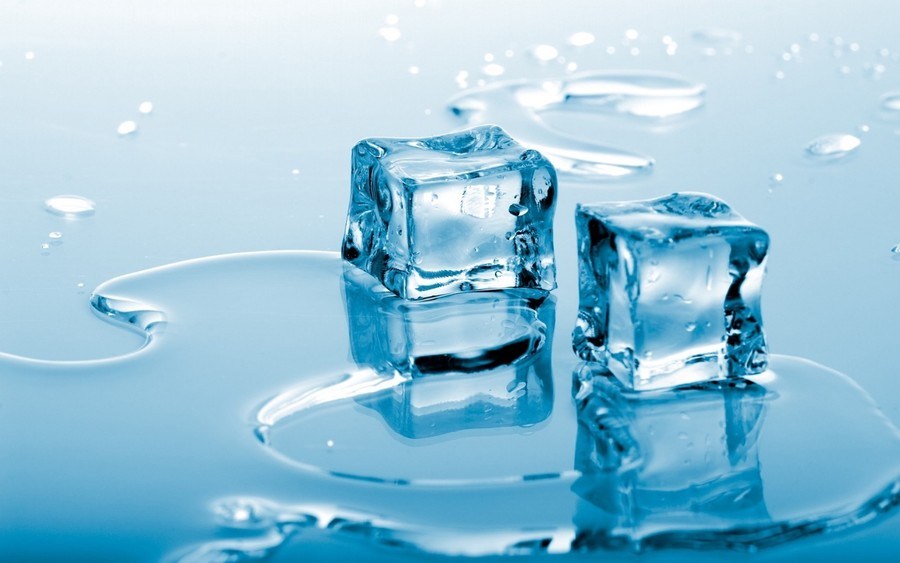
Water freezing into ice is an example of a...
a)
Physical Change
b)
Chemical Change
71.
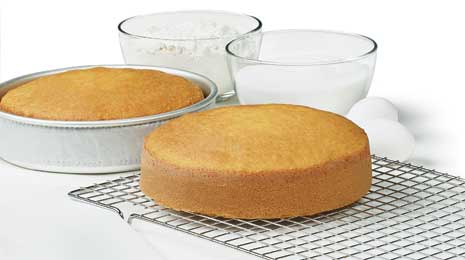
Physical or Chemical Change?  Baking a cake.
a)
Chemical Change
b)
Physical Change
72.
Physical or Chemical Change?  Logs burning in a campfire.
a)
Physical Change
b)
Chemical Change
73.
Mass, relative density, solubility, color, texture, state of matter, conductivity, etc.
a)
Physical state
b)
Insulators
c)
Physical Properties 
d)
Inferences
74.
Molecules spread out and move FAST!
a)
solid
b)
gas
c)
liquid
75.
Molecules are tightly packed together
a)
solid
b)
liquid
c)
gas
76.
Which is the electron configuration for an oxygen atom?
a)
1s22s22p63s23p64s2
b)
1s22s22p4
c)
1s22s22p6
d)
1s22s22p63s23p6
77.
What atom matches this electron configuration?
1s2s2p3s2
a)
Neon
b)
Magnesium
c)
Aluminum
d)
Potassium
78.
What is this element? 
1s22s22p63s23p6
4s23d104p6
a)
Argon
b)
Krypton
c)
Selenium
d)
Bromide
79.
What atom matches this electron configuration?
[Xe] 6s2 4f14 5d9
a)
Mercury
b)
Gold
c)
Platinum
d)
Thallium
80.
What is the shorthand electron configuration for Sulfur atom?
a)
[Ar] 3p4
b)
[He] 3s23p4
c)
[Ne] 3s23p4
d)
[Na] 3s23p3
81.
3KOH + H3PO4 --> K3PO4 + 3H2O
a)
Synthesis 
b)
Decomposition
c)
Single displacement
d)
Double displacement
82.
Which reaction type is the following: C5H10O4 + O2 --> CO2 + H2O
a)
Decomposition
b)
Single Replacement
c)
Combustion
d)
Double Replacement
83.
C4H12 + O2 --> CO2 + H2O
a)
Synthesis
b)
Combustion
c)
Single Replacement
d)
Double Replacement
84.
PbCl2 + AgNO3 ---> Pb(NO3)2 + AgCl 
a)
Synthesis
b)
Decomposition
c)
Single Replacement
d)
Double Replacement
85.
The word equation for combustion is: fuel + oxygen + heat --> water + ________ __________
a)
Carbon dioxide
b)
Limewater
86.
What creates a SHIELDING EFFECT by interfering with the attractive forces between the protons and the electrons.
a)
nucleus
b)
valence electrons
c)
core electrons
d)
protons
87.
As you move down a group, shielding 
a)
increases because there are more  orbitals
b)
increases because there are more protons
c)
decreases because the atomic radius increases
d)
stays constant because the number of valence electrons stays the same
88.
As you move across a period (row), the shielding effect
a)
increases by a factor of 2
b)
decreases by a factor of 2
c)
stays constant
d)
alternates for metals an nonmetals
89.
The concept of shielding happens because of
a)
attraction between nucleus and valence electrons
b)
attraction between nucleus and core electrons
c)
repulsion between valence electrons and other valence electrons
d)
repulsion between core electrons and valence electrons
90.
What is the formula of calcium oxide?
a)
CaO2
b)
CaO
c)
Ca2O
d)
CO
91.
What is the formula of Sodium oxide?
a)
Na2O
b)
NaO2
c)
Na2O2
d)
Na2O
92.

Which of these reactions would be a neutralization reaction?

a)

H2CO3 (aq) → CO2 (g) + H2O (l)

b)

H2SO4 (aq) + NaOH (aq) → Na2SO4 (aq) + 2H2O (l)

c)

2H2 (g) + O2 (g) → 2H2O (l)

d)

AgNO3 (aq) + NaOH (aq) → AgOH (s) + NaNO3 (aq)

93.
Balance this equation:
 2Li + Cl2 -> LiCl
a)
2Li + Cl2 -> 4LiCl2
b)
2Li + Cl2 -> LiCl2
c)
2Li + Cl2 -> 2LiCl
94.
What does the Law of Conservation of Mass state?
a)
Matter cannot be gained or lost in a chemical reaction.
b)
Matter can only be lost in a chemical reaction.
c)
Matter can only be gained in a chemical reaction.
d)
Matter can be gained and lost in a chemical reaction. 
95.

Magnesium bromide is an ionic compound with the chemical formula MgBr2. What does the "2" tell you?

a)

Bromide has a 2- charge

b)

There are two magnesium ions to every bromide ion

c)

There are two bromide ions for every magnesium ion

d)

Bromide has a 2+ charge

96.
What is the atomic number?
a)
the number of protons
b)
the number of protons and neutrons
c)
the number of neutrons
d)
the number of protons and electrons
97.
What is the mass number defined as?
a)
the number of protons
b)
the number of protons and neutrons
c)
the number of neutrons
d)
the number of protons and electrons
98.
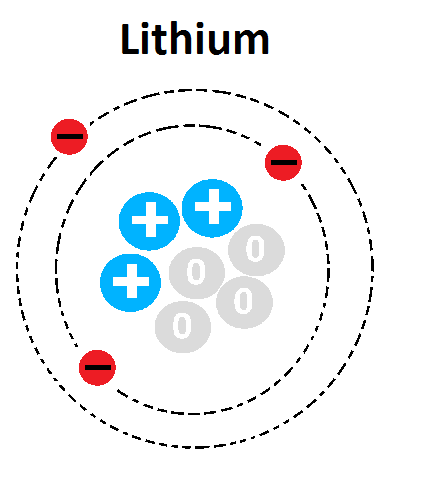
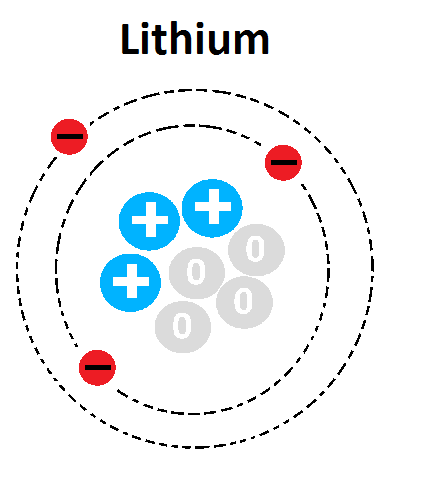
What is the atomic number of this atom?
a)
1
b)
3
c)
4
d)
7
99.

What is the mass number of this atom?

a)

1

b)

3

c)

4

d)

7

100.

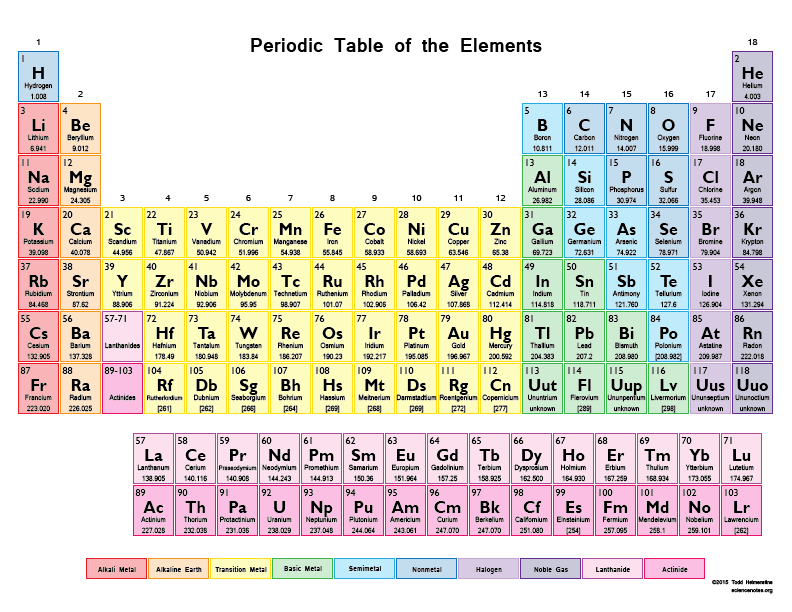
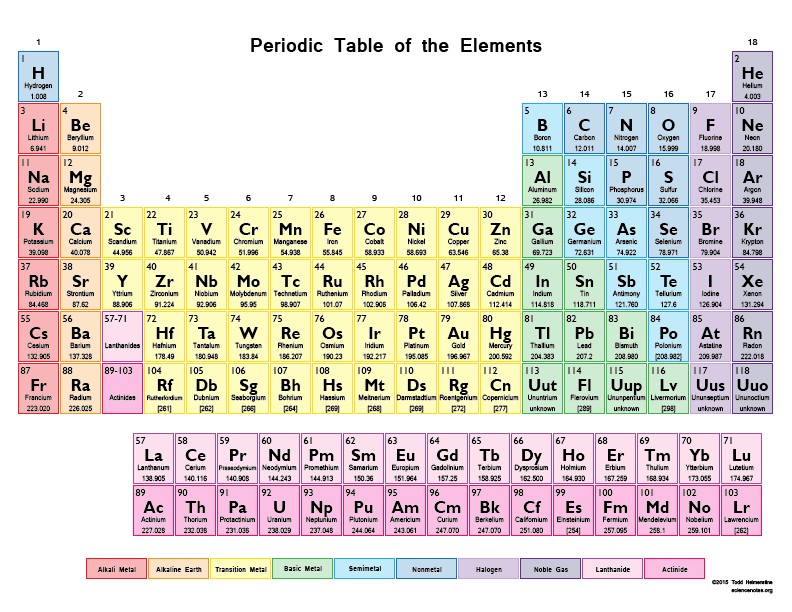
What is the atomic number of Barium, Ba? (enlarge the periodic table)

a)

20

b)

38

c)

56

d)

88

101.

How many protons are in a sodium atom, Na? (tap to enlarge the periodic table)

a)

Sodium has 1 proton.

b)

Sodium has 3 protons.

c)

Sodium has 11 protons

102.

An element has the mass number 12 and atomic number 6. The number of neutrons in it is:

a)

6

b)

10

c)

4

d)

8

103.

Atoms of the same element which have a different number of neutrons are called _________________.

a)

ions

b)

isotopes

c)

quarks

d)

molecules

104.

Atoms of the same element which have a different number of neutrons are called _________________.

a)

ions

b)

isotopes

c)

quarks

d)

molecules

105.

Isotopes have different numbers of

a)

protons

b)

neutrons

c)

electron

d)

properties

106.

If an atom has 10 electrons, how many protons does it have?

a)

0

b)

1

c)

10

d)

5

107.

Given the equation:

2NaClO3 (s) → 2NaCl (s) + 3O2 (g)

2.00 moles of NaClO3 will produce how many grams of O2? (mass of O2 = 32g/mol)

a)

56 g of O2

b)

96 g of O2

c)

64 g O2

d)

32 g O2

108.
KNO3 --> KNO2 + O2
What coefficients are needed to balance the reaction?
a)
2, 2, 1
b)
2, 3, 2
c)
1, 2, 2
d)
1, 3, 1
109.
Using the following equation:
Fe2O3(s) + 3H2(g) → 2Fe(s) + 3H2O(l)
How many moles of iron can be made from  6 moles H2
a)
4 moles Fe
b)
6 moles Fe
c)
9 moles Fe
d)
2 moles Fe
110.

2 NaClO3 (s) --> 2NaCl (s) +3 O2 (g)

12.00 moles of NaClO3 will produce how many grams of O2?

a)

256 g of O2

b)

576 g of O2

c)

288 g O2

d)

32 g O2

111.
2Na + 2H2O → 2NaOH+ H2
How many grams of hydrogen are produced if 120 g of Na are available?
a)
5.27 g
b)
2.6 g
c)
690 g
d)
45 g
112.
2H2  +   O2    −−〉 2H2O
How many grams of H2O can be produced from 3.91 g of O2
a)
1.905
b)
4.4
c)
2.2
d)
1.1
113.
What is the molar mass of (NH4)2CO3 ?
a)
144 g
b)
138 g
c)
96 g
d)
78 g
114.
2H2  +   O2    −−〉 2H2O
How many grams of H2O can be produced from 3.91 g of O2
a)
1.905
b)
4.4
c)
2.2
d)
1.1
115.
2Al + 3H2SO4 -> Al2(SO4)3 + 3H2
How many grams of aluminum sulfate would be formed if 250g H2SO4 completely reacted with aluminum?
a)
0.85 g
b)
290 g
c)
450 g
d)
870 g
116.
Using the following equation:
Fe2O3(s) + 3H2(g) → 2Fe(s) + 3H2O(l)
How many moles of iron can be made from  6 moles H2
a)
4 moles Fe
b)
6 moles Fe
c)
9 moles Fe
d)
2 moles Fe
117.
In the equation 2 Al2O3 --> 4 Al + 3 O2, what is the mole ratio of aluminum to oxygen?
a)
10:6 
b)
3:4
c)
4:3
d)
2:3
118.

How do you know when you have a saturated solution?

a)

You don't see anymore material in the solution. It has dissolved.

b)

The material dissolves and no more will dissolve because you see it collect at the bottom.

c)

The solution is bubbling and cloudy.

d)

The solution is clear and there is nothing at the bottom.

119.

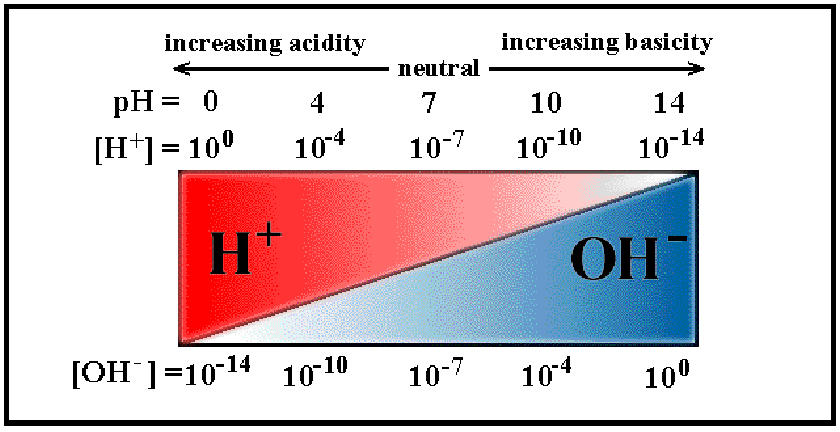
Neutral solutions have a pH of:

a)

0

b)

1

c)

7

d)

14

120.

True or false: a neutral solution has equal amounts of H+ and OH-.

a)

True

b)

False

121.
This substance releases OH- into solution
a)
Acid
b)
Base
c)
Neutral
122.
Which solution releases H+ in solution?
a)
Base
b)
Acid
c)
Buffer
d)
Water
123.
A solution with a pH of 3.6 would be...
a)
Acid
b)
Base
c)
Neutral
d)
Acid and Base
124.
A solution with a pH of 8.6 would be...
a)
Acid
b)
Base
c)
Neutral
d)
Acid and Base
125.
The lower the pH, the greater the concentration of :
a)
OH-
b)
H+
126.

The greater the [OH-], the smaller the concentration of

a)

OH-

b)

H+

127.

What is the [H+] if the pH is 4.0?

a)

1.0 x 10⁻¹⁰ M

b)

1.0 x 10⁻⁴ M

c)

1.0 x 10⁻¹⁴ M

d)

1.0 x 10⁻⁷ M

128.

What is the pH of a solution where the [H+] is 1.0 x 10⁻¹¹?

a)

11

b)

13

c)

14

d)

1

129.

Which is most basic?

a)

pH of 12

b)

[OH-] = 1.0 x 10⁻¹³

c)

[OH-] = 1.0 x 10⁻¹¹

d)

[H+] = 1.0 x 10⁻¹⁴

130.
acid + base ₋>
a)
salt + hydrogen
b)
salt + water
c)
salt + carbon dioxide + water
d)
salt
131.

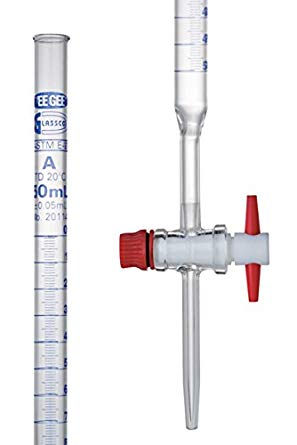
What is this piece of apparatus called

a)

Pipette

b)

Burette

c)

Janette

d)

Cuvette

132.
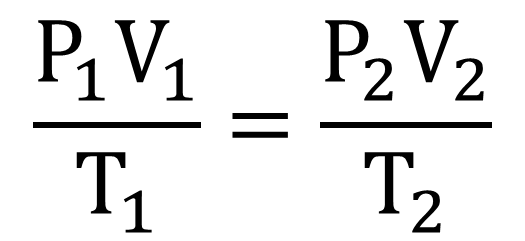
A gas is heated from 263K to 298K. The volume is increased from 24.0L to 35.0L. If the original pressure was 1.00 atm, what is the new pressure?
a)
0.78 atm
b)
1.65 atm
c)
1.28 atm
d)
0.61 atm
133.
Which of the following is an electrolyte?
a)
sodium chloride
b)
sugar
c)
water
134.
An example of a nonelectrolyte is
a)
sugar water
b)
salt water
c)
sodium chloride
d)
hydrogen chloride
135.
Which of the following is a non-electrolyte?
a)
CaO
b)
NaOH
c)
BaCl2
d)
Br2
136.

C6H12O6

a)

strong electrolyte

b)

weak electrolyte

c)

non - electrolyte

137.

PbCl2

a)

strong electrolyte

b)

weak electrolyte

c)

non electrolyte

138.
How many grams of SOcan dissolve at 50 ⁰C?
a)
5 g
b)
10 g
c)
20 g
d)
39 g
139.
How many more grams of KNOdissolve at 50 ⁰C compared to 0 ⁰C?
a)
85 g
b)
15 g
c)
70 g
d)
100 g
140.
What is the minimum temperature needed to dissolve at least 10 g of KClO3?
a)
25 ⁰C
b)
10 ⁰C
c)
5 ⁰C
d)
100 ⁰C
141.
When 20 grams of KNO3 is dissolved in 100 grams of water at 80 ºC, the solution can be correctly described as:
a)
supersaturated
b)
saturated
c)
unsaturated
142.

Find the molarity of 186.55 g of sucrose, C12H22O11 (MM = 342) in 250 mL of water.

a)

2.18 M

b)

0.746 M

c)

1.18 M

d)

0.545 M

143.

What is the molarity of a solution of nitric acid that contains 12.6 grams nitric acid in 1.2 L of solution?

a)

0.167 M

b)

0.538 M

c)

0.378 M

d)

0.812 M

144.

Molarity is measured in _____.

a)

moles per g.

b)

mols per L.

c)

moles per mm.

d)

moles per mL.

145.
The limiting reactant
a)
slows the reaction down
b)
is used up first
c)
is the reactant that is left over
d)
controls the speed of the reaction
146.
Use the equation 2 Al + 3 Cl2 ---> 2 AlCl3.  If 2 moles of aluminum and 2 moles of chlorine are reacted, identify the limiting reactant.
a)
AlCl3
b)
Cl2
c)
Al
147.
When does a chemical reaction stop?
a)
When the lab is finished
b)
When the excess reactant is used up
c)
When the limiting reactant is used up
d)
Chemical reactions never stop
148.
What is the limiting reactant if 10 moles of NH3  react  with 30.0 moles of NO?
4NH3+6NO --> 5N2 + 6H2O
a)
NH3
b)
NO
c)
N2
d)
water
149.
Theoretical yield = 73g
Actual yield = 62g
Calculate the percent yield.
a)
1.16%
b)
116%
c)
85%
d)
76%
150.
When 12 moles of O2 reacts with 1.1 mole of C10H8 what is the limiting reactant?  C10H8 + 12 O2 --> 10 CO2 + 4 H2O
a)
Oxygen
b)
C10H8
c)
Water
d)
Carbon Dioxide
151.
In order to convert to Kelvin, you add ______ to the Celsius measurement.
a)
372
b)
273
c)
237
d)
732
152.
What is 50 C in Kelvin?
a)
223
b)
323
c)
100
d)
50
153.
a)
Gas particles are elastic and do not attract each other.
b)
The kinetic energy of gas is dependent on temperature 
c)
Energy is not lost when gas particles collide with each other or with the walls of the container.
d)
All of the above
154.
Pressure is caused by ______.
a)
gravity.
b)
gas molecules colliding with each other.
c)
gas molecules colliding with surfaces of the container.
d)
gas molecules reacting with each other.
155.
As the temperature increases so does the.. 
a)
Potential Energy 
b)
Kinetic Energy  
156.
What is Diffusion?
a)
The movement of a substance from higher concentration to a lower concentration
b)
The passage of a gas through a tiny hole into an evacuated chamber
157.
Gas particles have the ________ kinetic energy because they move the fastest.
a)
least
b)
most
158.
What state of matter is segment 5?
a)
Solid
b)
Liquid
c)
Gas
d)
Plasma
159.
What line segment represents only the solid state?
a)
A-B
b)
B-C
c)
C-D
d)
D-E
160.
At higher temperatures
a)
particles in an object have less energy
b)
particles in an object move faster
c)
a gas contracts
161.
Which liquid has the highest density? 
a)
corn syrup
b)
lamp oil
c)
rubbing alcohol
d)
honey
162.
Put the liquids in order from most dense to least dense?
a)
4, 3, 2, 1
b)
1, 2, 3, 4
c)
3, 4, 2, 1, 
d)
4, 3, 1, 2