
 Worksheets
Semester One Chemistry Review
Total questions: 157
Worksheet time: 5hrs 40mins
Name
Class
Date
1.

What is the atomic mass of "F"
a)
9
b)
18
c)
17
d)
19
2.
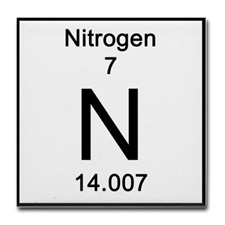
What is the number of protons that the element in this image contain?
a)
14
b)
7
c)
15
d)
18
3.
all matter is made of what
a)
energy
b)
atoms
c)
electrons
d)
compounds
4.
The positive particles of an atom are
a)
electrons
b)
positrons
c)
neutrons
d)
protons
5.
the central region of an atom where its neutrons and protons are is its
a)
nucleus
b)
electron cloud
c)
core
d)
center
6.
an atom with atomic number 6 would have how many protons
a)
6
b)
12
c)
3
d)
cannot be determined
7.
Which of the following is a positively charged subatomic particle found in the nucleus of an atom?
a)
Electron
b)
Proton
c)
Neutron
d)
Quark
8.
Which of the following is a subatomic particle with no charge that is found in the nucleus of an atom?
a)
Electron
b)
Proton
c)
Neutron
d)
Quark
9.
Where are electrons of an atom found?
a)
Nucleus
b)
Electron Cloud
c)
Some are in the nucleus and some in the electron cloud.
d)
They are moving everywhere.
10.
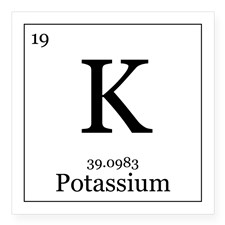
How many neutron are in the atom "K"?
a)
7
b)
2
c)
39
d)
12
11.

What is the number of protons that the element in this image contain?
a)
14
b)
7
c)
15
d)
18
12.

In which region would the nonmentals be found?
a)
1
b)
4
c)
3
d)
5
13.

In which region would the least reactive elements be found?
a)
1
b)
4
c)
3
d)
5
14.
The three main regions on the periodic table are ____________.
a)
solid, liquid, gas
b)
metals, nonmetals, meatlloids
c)
radioactive, man-made, poisonous
15.
Atoms can be seen with the naked eye.
a)
True
b)
False
16.
Something that is made up of only one kind of atom is known as _________________.
a)
a molecule
b)
a compound
c)
an element
d)
a proton
17.
What determines where an element is located on the periodic table?
a)
its atomic mass
b)
its atomic number
c)
its number of electrons
d)
they're arranged alphabeticaly
18.
A "group" is a ____________ on the periodic table.
a)
column
b)
row
19.
A "period" is a ____________ on the periodic table.
a)
column
b)
row
20.
Elements on the periodic table that are usually shiny, easily hammered into thin sheets or pulled into wires, and are good conductors of electricity are called _____________.
a)
metals
b)
nonmetals
c)
metalloids
d)
transition elements
21.
Elements on the periodic table that are often gases at room temperature, are poor conductors of electricity, and are good insulators are called _____________.
a)
metals
b)
nonmetals
c)
metalloids
d)
transition elements
22.
Elements on the periodic table that have physical and chemical properties of both metals and nonmetals are called _____________.
a)
metals
b)
nonmetals
c)
metalloids
d)
transition elements
23.
Helium, neon, argon, krypton, xenon, and radon are known as _____________.
a)
halogens
b)
noble gases
c)
metalloids
d)
transition elements
24.
How many elements are represented in the compound?
Na2CO3
Na2CO3
a)
1
b)
2
c)
3
d)
4
25.
Is salt (NaCI) a compound or a element
a)
Compound
b)
element
26.
what is digestion?
a)
body function
b)
chemical change
c)
physical change
27.
Kim puts an ice cube in a beaker and it melts. This is a good example of:
a)
a physical change.
b)
a chemical change.
c)
an experiment.
d)
an analysis.
28.
Which is an example of a chemical change?
a)
coloring a paper
b)
rusting steel wool
c)
bending steel wool
d)
freezing water
29.
Which of the following is a physical characteristic of a metal?
a)
texture
b)
malleable
c)
brittle
d)
semi-conductor
30.
Which of the following is a physical characteristic of a nonmetal?
a)
texture
b)
malleable
c)
brittle
d)
semi-conductor
31.

Look at the periodic table that is provided. Where would metals be located?
a)
to the left of the table in blue
b)
to the right of the table in pink
c)
in the zigzag line in yellow
32.

How would this element be classified?
a)
Metal
b)
Nonmetal
c)
Metalloid
d)
Metamorphic
33.

Ability to rust is this type of property:
a)
Physical property
b)
Chemical property
34.
Which of the following represents an element?
a)
H2O
b)
H2
c)
NaCl
d)
CaCO3
35.
A combination of substances that are not chemically combined is called a(n)____________.
a)
mixture
b)
compound
c)
physical
36.
Which of the following is an extensive property?
a)
boiling point
b)
volume
c)
density
d)
melting point
37.
Which of the following is an intensive property of matter?
a)
density
b)
energy content
c)
volume
d)
mass
38.
Which of the following changes is a physical change of matter?
a)
nail rusting
b)
water evaporating
c)
paper burning
d)
silver tarnishing
39.
Which of the following changes is a chemical change of matter?
a)
ice melting
b)
vinegar combining with baking soda
c)
water boiling
d)
liquid silica solidifying
40.
Noble gases are generally
a)
semiconductors.
b)
malleable.
c)
brittle.
d)
unreactive.
41.
Neutral atoms contain equal numbers of
a)
electrons and neutrons
b)
protons and electrons
c)
protons and neutrons
d)
protons, electrons, and neutrons
42.
Which subatomic particle has the least mass?
a)
proton
b)
electron
c)
neutron
d)
all are equal
43.
In an orbital diagram, the opposite pointing arrows indicate two electrons with
a)
opposite spin states.
b)
the same spin states.
c)
different energies.
d)
the same energy.
44.
the noble gas configuration for chlorine
a)
[Ar] 3s23p5
b)
[Ne]3s23p4
c)
[Ar]3s23p4
d)
[Ne]3s23p5
45.
What is the atomic number for the element with this noble gas configuration? [Kr]5s1
a)
35
b)
36
c)
37
d)
38
46.
Which family is not correctly matched with its common family name?
a)
Group 2: alkaline earth metals
b)
group 3: alkali metals
c)
group 17: halogens
d)
group 16: chalcogens
47.
Which of the following has the greatest atomic radius?
a)
Al
b)
S
c)
Si
d)
C
48.
A covalent bond is formed when 2 atoms
a)
share an electron with each other.
b)
share one or more pairs of electrons with each other.
c)
gain electrons.
d)
gain and lose electrons.
49.
Which of the following is a ionic?
a)
CCl4
b)
CO2
c)
NH3
d)
CH4
50.
In what block do you find platinum?
a)
s
b)
p
c)
d
d)
f
51.
A neutral atom has 14 protons and 16 neutrons. How many electrons does it have?
a)
14
b)
16
c)
30
d)
2
52.
Element or compound?
H2O
H2O
a)
element
b)
compound
53.
How many atoms are there TOTAL in:
H2SO4
H2SO4
a)
6
b)
5
c)
7
d)
3
54.

The red numbers in the image below represent ________
a)
subscripts
b)
coefficients
c)
I don't know, and don't want to try
d)
None of the answers are correct
55.

The blue numbers in the image below represent ________
a)
I don't know, and don't want to try
b)
coefficients
c)
subscripts
d)
none of the answers are correct
56.
The substances at the beginning of a chemical equation are called the ____
a)
product
b)
yield
c)
chemical symbol
d)
reactants
57.
In the equation, 2Mg + O2 ---> 2MgO, which are the reactants?
a)
Mg and O
b)
MgO
c)
Mg and MgO
d)
O and MgO
58.
In a chemical reaction, everything to the rightof the arrow is called ______________.
a)
Products
b)
Yields
c)
Molecules
d)
Reactants
59.
Is the following equation balanced or unbalanced?
Fe + S --> FeS
Fe + S --> FeS
a)
balanced
b)
unbalanced
60.
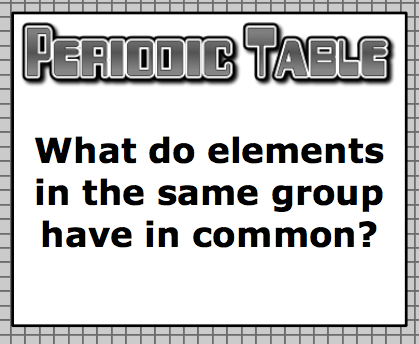
a)
energy levels
b)
valence electrons
c)
protons
d)
neutrons
61.

What element is represented in this Bohr Model?
a)
Carbon
b)
Hydrogen
c)
Aluminum
d)
Lithium
62.
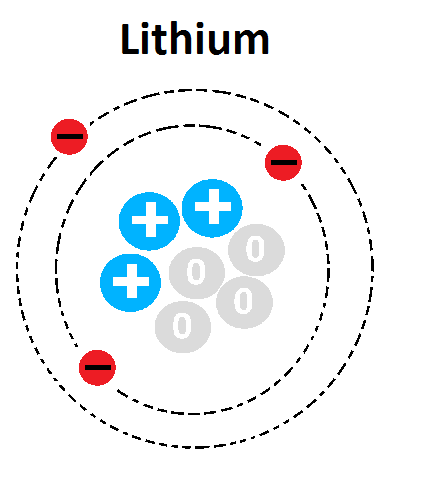
What is the mass number of this atom?
a)
1
b)
3
c)
4
d)
7
63.
The law of conservation of mass states that
a)
matter is created
b)
matter is destroyed
c)
matter is neither created nor destroyed
d)
matter does not change
64.
Signs that a chemical change has occurred include
a)
a change in color
b)
the release of bubbles
c)
the production of an odor
d)
all of the above
65.
Signs that a chemical change has occurred include
a)
a change in color
b)
the release of bubbles
c)
the production of an odor
d)
all of the above
66.
Burning a piece of paper
a)
Chemical Change
b)
Physical Change
67.
Which of these elements has a symbol which DOES NOT include a letter from its name?
a)
iron
b)
helium
c)
magnesium
d)
zinc
68.
A mixture can be separated by ________ means.
a)
physical
b)
chemical
69.
Milk turning sour
a)
Chemical Change
b)
Physical Change
70.
What is an alpha particle?
a)
2 protons
b)
2 neutrons
c)
2 protons & 2 neutrons
d)
hydrogen
71.
What is a beta particle?
a)
proton
b)
positron
c)
electron
d)
neutrino
72.
Uranium-238 emits an alpha particle. What is the daughter isotope produced?
a)
Thorium-234
b)
Protactinium-234
c)
Thorium-232
d)
Neptunium-234
73.
What is the symbol for an alpha particle?
a)
42He
b)
0-1e
c)
0+1 e
d)
10n
74.
In the symbol 20682Pb what does 206 stand for?
a)
Mass number
b)
Atomic number
c)
Atomic mass
d)
Number of protons
75.
Balance the following equation:
146C --> 0-1e + ________
146C --> 0-1e + ________
a)
145B
b)
146C
c)
147N
d)
42He
76.
Which type of radiation has the greatest penetrating power?
a)
Alpha
b)
Beta
c)
Gamma
d)
Microwaves
77.
In the symbol 167N what the 7 stand for?
a)
Mass number
b)
Atomic number
c)
Atomic mass
d)
Number of neutrons
78.
In fission neutron is often used to start the reaction and it is also a product of the reaction. This is called a ____
a)
neutron emission
b)
nuclear fusion
c)
domino effect
d)
chain reaction
79.
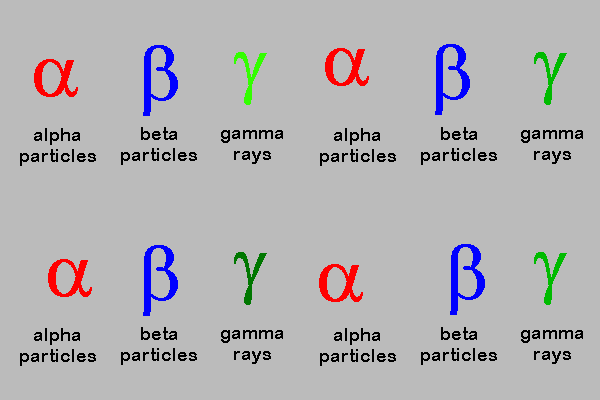
In order of most to least penetrating radiation we have
a)
Alpha , Beta, Gamma
b)
Beta , Gamma , Alpha
c)
Gamma, Beta, Alpha
d)
Gamma, Alpha, Beta
80.
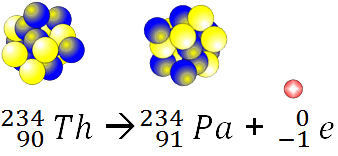
Which type of nuclear radiation is being emitted here?
a)
Alpha
b)
beta
c)
gamma
d)
none
81.
Takes two small nuclei and combines them into a larger nucleus
a)
fission
b)
fusion
82.
The time taken for half of an amount of radioactive atoms to decay.
a)
Nuclear fusion
b)
Full-life
c)
Dead time
d)
Half-life
83.
If we start off with element 24X50 after an alpha decay we get another element Y that looks like
a)
22Y50
b)
22Y46
c)
20Y48
d)
26Y54
84.

If we start off with element 24X50 after an beta decay we get another element Y that looks like
a)
23Y50
b)
22Y46
c)
25Y50
d)
24Y50
85.
The splitting of a nucleus into smaller nuclei is
a)
fusion
b)
fission
c)
half-life
d)
gamma radiation
86.
What type of decay is this?
7534Se + 0-1e --> 7533As
7534Se + 0-1e --> 7533As
a)
Electron Capture
b)
Positron Emission
c)
Alpha Decay
d)
Beta Decay
87.
The technetium-99 isotope has a half-life of 6.0 hours. If 100.0 mg were injected into a patient how much remains after 18 hours?
a)
33.0 mg
b)
12.5 mg
c)
.33 mg
d)
15.8 mg
88.
What is this reaction?
Zn + HCl --> ZnCl2 + H2
Zn + HCl --> ZnCl2 + H2
a)
decomposition
b)
single replacement
c)
synthesis
d)
double replacement
89.
What is this reaction?
N2 + O2 + H2O --> HNO3
N2 + O2 + H2O --> HNO3
a)
single replacement
b)
double replacement
c)
synthesis
d)
combustion
90.
What is this reaction?
NaCl+AgNO3>NaNO3+AgCl
NaCl+AgNO3>NaNO3+AgCl
a)
single replacement
b)
double replacement
c)
synthesis
d)
decomposition
91.
What is this reaction?
Zn + CuCl2--> ZnCl2 + Cu
Zn + CuCl2--> ZnCl2 + Cu
a)
synthesis
b)
single replacement
c)
double replacement
d)
decomposition
92.
What reaction is this?
H2CO3--> H2O + CO2
H2CO3--> H2O + CO2
a)
synthesis
b)
decomposition
c)
single replacement
d)
combustion
93.
What is this reaction?
H2SO3--> H2O + SO3
H2SO3--> H2O + SO3
a)
synthesis
b)
decomposition
c)
single replacement
d)
combustion
94.
What reaction is this?
Na + Cl --> NaCl
Na + Cl --> NaCl
a)
single replacement
b)
decomposition
c)
synthesis
d)
double replacement
95.
What reaction is this?
Zn + I2 --> ZnI2
Zn + I2 --> ZnI2
a)
synthesis
b)
decomposition
c)
single replacement
d)
combustion
96.
How many O's are in Al₂(SO₄)₃
a)
4
b)
12
c)
7
d)
24
97.
Name this reaction, Cl2 + 2KI --> I2 + 2KCl
a)
Synthesis
b)
Single Replacement
c)
Double Replacement
d)
Decomposition
98.

How many oxygen atoms are in this chemical formula?
a)
6 oxygen atoms
b)
2 oxygen atoms
c)
3 oxygen atoms
d)
4 oxygen atoms
99.
Balance this equation...
H2 + Cl2 --> HCl
H2 + Cl2 --> HCl
a)
It is balanced
b)
3H2 + Cl2 --> 6H2Cl
c)
H2 + Cl2 --> 2HCl
100.
Which of the following shows the correct way to balance the chemical equation?
Fe + O2 -> Fe2O3
Fe + O2 -> Fe2O3
a)
4Fe + 3O2 -> 2Fe2O3
b)
2 Fe + 3O2 -> Fe2O6
c)
4 Fe + O6 -> 2Fe2O3
d)
None of the options are correctly balanced.
101.
Covalent bonds occur between _________ and _________
a)
metals; non-metals
b)
metals; metals
c)
non-metals; non-metals
d)
metalloid; metalloid
102.
How many Mn atoms are found in the following compound?
3Cr(MnO4)6
3Cr(MnO4)6
a)
3
b)
6
c)
18
d)
72
103.
Which of the following symbols is not a correct indication of the phase of a substance in a reaction?
a)
(s)=solid
b)
(g)=grams
c)
(l)=liquid
d)
(aq)= aqueous
104.
Which of the following reactions is balanced?
a)
2CH4 + O2 -> CO2 + H2O
b)
CH4 + 2O2 -> CO2 + H2O
c)
CH4 + 2O2 -> CO2 + 2H2O
d)
None of the chemical equations are balanced.
105.
In this equation,
CuCl2 + NaOH → Cu(OH)2 + NaCl
Which product is insoluble?
CuCl2 + NaOH → Cu(OH)2 + NaCl
Which product is insoluble?
a)
copper(II) hydroxide
b)
sodium chloride
c)
sodium hydroxide
d)
copper(II) chloride
106.
What coefficients are needed to correctly balance the equation?
_Bi + _O2 → _Bi2O3
_Bi + _O2 → _Bi2O3
a)
3,2,3
b)
2,3,2
c)
4,3,2
d)
none of these
107.
K2CO3
a)
soluble
b)
insoluble
108.
BaSO4
a)
soluble
b)
insoluble
109.
FeSO4
a)
iron(IV) sulfate
b)
iron sulfate
c)
iron (II) sulfate
d)
iron sulfite
110.
Ionic bonds can be formed between two nonmetals.
a)
True
b)
False
111.
Ionic Bonding involves...
a)
The transfer of protons
b)
The transfer of neutrons
c)
The transfer of electrons
d)
None of the above
112.
If an atom loses two electrons what charge will it have?
a)
+ 2
b)
- 2
c)
+1
d)
-1
113.
In the chemical formula for an ionic compound, which item is written first?
a)
positive ion
b)
negative ion
c)
subscript
d)
the female
114.
What is the chemical name for the compound with the formula Na₂S?
a)
sodium sulfide
b)
sodium fluoride
c)
magnesium sulfide
d)
lithium oxide
115.
Ca(OH)2
a)
soluble
b)
insoluble
116.
FeS
a)
soluble
b)
insoluble
117.
magnesium nitride
a)
MgNO3
b)
Mg3N2
c)
MgN
d)
Mg2N3
118.
Which of the following metals DO NOT need roman numerals?
a)
Aluminum
b)
Iron
c)
Lead
d)
Copper
119.
SeF4
a)
Tetraselenium fluoride
b)
Selenium Fluoride
c)
Selenium tetraflouride
d)
Selenium (IV) Fluoride
120.
Phosphorous trichloride
a)
PCl3
b)
P3Cl
c)
P3Cl3
d)
PCL
121.
P2O5
a)
Phosphorus Oxide
b)
Pentaphosphorus Dioxide
c)
Diphosphorous pentoxide
d)
Phosphoric Oxygen
122.
Name the following compound:
BF3
BF3
a)
boron fluoride
b)
boron difluoride
c)
monoboron trifluoride
d)
boron trifluoride
123.
diphosphorus pentoxide
a)
P2O5
b)
PO5
c)
P5O2
d)
P2O6
124.
The chemical formula of dinitrogen textroxide is
a)
Ni₂O₄
b)
NiO
c)
N₂O₄
d)
NiO₂
125.
The name of P₄S₁₀ is
a)
phosphorous sulfide
b)
phosphorus sulfide
c)
tetraphosphorus decasulfide
d)
phosphorus (X) sulfide
126.
What's the formula for chlorine dioxide
a)
ClO2
b)
CLO
c)
ClO3
d)
HClO2
127.
silicon dioxide
a)
SO2
b)
NaO2
c)
SiO2
d)
SiO
128.
phosphorus trichloride
a)
KCl3
b)
PCl3
c)
K3Cl
d)
P3Cl
129.
What is the correct name for NO?
a)
Mononitrogen Monoxide
b)
Nitrogen Monoxide
c)
Mononitrogen Dioxide
d)
Nitrogen Oxide
130.
What is the name of S2I4 ?
a)
Sulfur iodide
b)
Disulfur iodide
c)
Sulfur tetraiodide
d)
none of the above
131.
What is the name of C3Cl8 ?
a)
Carbon octachloride
b)
Tricarbon octachloride
c)
Carbon trichloride
d)
Octacarbon trichloride
132.
What is the chemical formula for Tetrasulfur pentoxide?
a)
SO
b)
S4O
c)
S4O5
d)
S5O4
133.
What is the chemicalname for NI3 ?
a)
Nitrogen hydroxide
b)
Nitrogen trinitride
c)
Mononitrogen triiodide
d)
Triiodide mononitrogen
134.

Which of these is covalent?
a)
NaCl
b)
Pb(NO3)2
c)
CO2
d)
AlCl3
135.
Which of the following is an ionic compound:
a)
CH4
b)
I2
c)
LiBr2
d)
CO
136.
Which of the following is NOT an ionic compound:
a)
CaO
b)
NaOH
c)
BaCl2
d)
Br2
137.
What would be the proper chemical formula for combining Al3+ and Cl- :
a)
AlCl3
b)
Al3Cl
c)
AlCl
d)
Al3Cl3
138.
name the following ionic compound: NaF
a)
nitrogen fluorine
b)
sodium fluoride
c)
nitrogen fluoride
d)
sodium fluorine
139.
Name the following ionic compound: MgSO4
a)
magnesium sulfoxide
b)
magnesium sulfide
c)
magnesium sulfate
d)
magnesium oxide
140.
Name the following ionic compound: LiNO3
a)
lithium nitrate
b)
lithium III nitrate
c)
lithium nitride
d)
lithium oxide
141.
Name the following ionic compound: Cr(NO2)3
a)
chromium nitrite
b)
chromium nitride
c)
chromium III nitride
d)
chromium III nitrite
142.
Name the following compound: FeCl3
a)
iron chloride
b)
iron III chloride
c)
iron chlorate
d)
iron III chlorate
143.
What is the charge on the hydroxide ion?
a)
0
b)
-1
c)
-2
d)
-3
144.
The proper formula for magnesium hydroxide:
a)
MgOH
b)
Mg2OH
c)
Mg(OH)2
d)
Mg2OH2
145.
What is the name of this polyatomic ion: MnO42-
a)
permanganate
b)
manganate
c)
manganese oxide
d)
manganese (IV) oxide
146.
When naming ionic compounds with transition metals you need to include roman numerals to show the _____ of the metal..
a)
atomic number
b)
mass number
c)
charge
d)
ionization energy
147.
Ionic compounds are written with
a)
cation (+ ion) first then anion (- ion)
b)
anion (- ion) first then cation (+ ion)
c)
either way is fine
148.
When adding a subscript to a polyatomic ion, you should...
a)
multiply any subscripts on the polyatomic ion by the subscript you are adding
b)
put parentheses around the polyatomic ion before adding a subscript
c)
write the new subscript next to any subscripts on the polyatomic ion
d)
put the polyatomic ion in square brackets before adding the subscript
149.
How do the following two elements bond together?
Pb4+ O2-
Pb4+ O2-
a)
PbO
b)
Pb4O2
c)
PbO2
d)
Pb2O4
150.
What is the FORMULA for....
beryllium iodide
beryllium iodide
a)
Be2I
b)
BeI
c)
BeI2
d)
BI2
151.
What is the FORMULA for...
copper (II) oxide
copper (II) oxide
a)
Cu2O
b)
CuO2
c)
CuO
d)
Cu(II)O
152.
What is the FORMULA for....
Lead (II) iodide
Lead (II) iodide
a)
PbI
b)
PbI2
c)
Pb2I
d)
LbI2
153.
What is the formula for magnesium phosphide?
a)
Mg3P2
b)
Mg2P3
c)
Mg2PO3
d)
Mg3(PO3)2
154.
What is the formula for sodium phosphate?
a)
Na3PO4
b)
Na3PO3
c)
Na3P
d)
Na3PO
155.
What is the formula for calcium carbonate?
a)
CaCO
b)
CaCO2
c)
CaCO3
d)
Ca3CO3
156.
What is the FORMULA for
ammonium dichromate
ammonium dichromate
a)
(NH4)2Cr2O7
b)
NH4Cr2O7
c)
(NH4)2CrO4
d)
NH4CrO4
157.
What is the FORMULA for
calcium permanganate
calcium permanganate
a)
Ca(Mn2O7)2
b)
CaMnO4
c)
Ca(MnO4)2
d)
Ca(MnO4)3
100 %

