wayground logo

Free Printable Worksheets

Font size

S
M
L
XL
Worksheets

Covalent Bonding and Naming

Total questions: 159

Worksheet time: 5hrs 43mins

Name
Class
Date
1.

Name the type of bonding in which the electrons are shared.

a)

Ionic bonding

b)

Covalent bonding

c)

Metallic bonding

2.

Name the type of bonding in which the electrons are shared.

a)

Ionic bonding

b)

Covalent bonding

c)

Metallic bonding

3.

The covalent bond forms between

a)

a metal and nonmetal

b)

a nonmetal and nonmetal

c)

a metal and metal

4.

The number of electron pairs shared in double bond.

a)

One

b)

Two

c)

Three

5.

Name the bond in which the orbitals overlap head to head

a)

Ionic bond

b)

sigma bond

c)

pi bond

6.

Number of covalent bonds can form in group 16

a)

three

b)

two

c)

four

7.

As bond length increase the strength...

a)

increases

b)

decreases

c)

no change

8.

The energy required to break the bonds between two covalently bonded atoms

a)

bond dissociation energy

b)

activation energy

c)

none of these

9.

The reaction in which the energy released.

a)

endothermic

b)

exothermic

c)

none of these

10.

The number of covalent bonds form in group 17

a)

One

b)

Two

c)

Three

11.

The number of pairs of electrons shared in triple covalent bond

a)

Two

b)

Three

c)

One

12.
In an electron dot diagram, two pairs of shared electrons represents a ...
a)
single bond
b)
double bond
c)
triple bond
d)
quadruple bond
13.
A Nitrogen molecule (N2) has one triple bond. How many electrons do the nitrogen atoms share?
a)
1
1
b)
3
c)
4
d)
6
14.
Compared to ionic compounds, molecular compounds generally have...
a)
good conductivity
b)
greater densities
c)
more chemical bonds
d)
a low boiling point
15.
Compared to ionic compounds, molecular compounds generally have...
a)
stronger chemical bonds
b)
poor conductivity
c)
a high melting point
d)
lower densities
16.
The chemical bond formed when two atoms share electrons  is called a(an) IONIC bond. 
a)
True
b)
False
17.
Covalent bonds usually form when a nonmetal combines with a(an) METAL.
a)
True
b)
False
18.
A(n) ION is a neutral group of atoms joined by covalent bonds.
a)
True
b)
False
19.
If a molecule contains polar bonds, the molecule MAY OR MAY NOT be polar overall. 
a)
True 
b)
False
20.
In a(an) POLAR bond, one atom pulls on the shared electrons more than the other atom. 
a)
True
b)
False
21.
The forces between molecules are much STRONGER than the forces between ions. 
a)
True
b)
False
22.

What is the reason why Noble gases are so stable?

a)

They have an even number of electrons

b)

They have no electrons

c)

They have a full outer shell of electrons

d)

They bond with other atoms

23.

How many electrons can be held in the first shell?

a)

1

b)

2

c)

4

d)

8

24.

How many electrons make a full outer shell in the 2nd or 3rd shells?

a)

1

b)

2

c)

4

d)

8

25.

A covalent bond...

a)

is when electrons are transferred between atoms

b)

is when an electron is lost from an atom

c)

is when an electron is shared by 2 atoms

d)

is a shared pair of electrons between 2 atoms

26.

Covalent bonds are formed between...

a)

2 non-metals

b)

a metal and a non-metal

c)

2 metals

d)

2 ions

27.

How many electrons are involved in a double bond?

a)

One pair of electrons

b)

Two pairs of electrons

c)

6 electrons

d)

8 electrons

28.

Which of these is not a covalent molecule?

a)

MgO

b)

CO2

c)

HCl

d)

CH4

29.

Chlorine has 7 electrons in it's outer shell. How many covalent bonds does it need to make to complete it's outer shell electrons?

a)

1

b)

2

c)

3

d)

4

30.

Oxygen has 6 electrons in it's outer shell. How many covalent bonds does it need to make to complete it's outer shell electrons?

a)

1

b)

2

c)

3

d)

4

31.

Carbon has 4 electrons in it's outer shell. How many covalent bonds does it need to make to complete it's outer shell electrons?

a)

1

b)

2

c)

3

d)

4

32.

What is the VALENCY of an element?

a)

The total number of electrons in the atom

b)

The number of electrons the atom needs to lose

c)

The number of electrons needed to obtain a complete outer shell

d)

The number of electrons closest to the nucleus

33.

Why do atoms have an overall neutral charge?

a)

So that they can't react

b)

Because they have neutrons in their nucleus

c)

Because they have electrons arranged in shells

d)

Because they have the same number of protons and neutrons

34.

How many ATOMS are in one molecule of CH4?

a)

2

b)

4

c)

5

d)

3

35.

Why is this diagram of bonding in carbon dioxide (CO2) incorrect?

a)

There should be 2 carbon atoms and one oxygen

b)

2 more electrons should be added to the carbon atom

c)

there should be a double bond not a single bond

d)

2 more electrons should be added to the oxygen atoms

36.

What is the correct formula for this molecule?

a)

CH

b)

C1H4

c)

CH4

d)

C4H

37.

Why are dots and crosses used to show the electrons in the bonds?

a)

To show which atoms the electrons belong to

b)

Because this is what electrons looks like

c)

To show if the electron came from a metal

d)

To show if the electrons are gained or lost

38.
Carbon dioxide
a)
C2O2
b)
C20
c)
CO
d)
CO2
39.
Phosphorous trichloride
a)
PCl3
b)
P3Cl
c)
P3Cl3
d)
PCL
40.
Bromine monoflouride
a)
Br1F1
b)
BrF
c)
Br2F
d)
BrF2
41.
Disulfur trioxide
a)
S3O2
b)
SO
c)
S2O3
d)
S2O
42.
P2O5
a)
Phosphorus Oxide
b)
Pentaphosphorus Dioxide
c)
Diphosphorous pentoxide
d)
Phosphoric Oxygen
43.
SeF4
a)
Tetraselenium fluoride
b)
Selenium Fluoride
c)
Selenium tetraflouride
d)
Selenium (IV) Fluoride
44.
CO
a)
Carbon Oxide
b)
Carbon Oxygen
c)
Dicarbon dioxide
d)
Carbon Monoxide
45.
PBr5
a)
Phosphorus Bromide
b)
Phosphorus Pentabromide
c)
Pentaphosphorus bromide
d)
Phosphorus Bromine
46.
Name the following compound:
  BF3
a)
boron fluoride
b)
boron difluoride
c)
monoboron trifluoride
d)
boron trifluoride
47.
BrO3
a)
bromine oxide
b)
monobromine trioxide
c)
bromine trioxide
d)
bromine (III) oxide
48.
As4O10
a)
arsenic oxide
b)
quadarsenic decoxide
c)
tetraarsenic decoxide
d)
arsenic decoxide
49.
chlorine monoxide
a)
ClO
b)
ClO-
c)
ClO2
d)
CO
50.
Which of these is covalent?
a)
NaCl
b)
Pb(NO3)2
c)
CO2
d)
AlCl3
51.
What is the correct name for C4H6?
a)
Carbon Hexahydride
b)
Pentacarbon Pentahydride
c)
Hexacarbon Tetrahydride
d)
Tetracarbon Hexahydride
52.
What is the correct name for NO?
a)
Mononitrogen Monoxide
b)
Nitrogen Monoxide
c)
Mononitrogen Dioxide
d)
Nitrogen Oxide
53.
What is the formula for Tricarbon Octahydride?
a)
Ca3O
b)
C2H8
c)
C3H8
d)
Ca3H8
54.
What is Sulfur Trichloride?
a)
SCl3
b)
SiCl3
c)
SCl4
d)
Si3Cl
55.
Phosphorous trichloride
a)
PCl3
b)
P3Cl
c)
P3Cl3
d)
PCL
56.
The covalent compound N2O5 would be named
a)
nitrogen oxide.
b)
dinitrogen oxide.
c)
nitrogen pentoxide.
d)
dinitrogen pentoxide.
57.
SeF4
a)
Tetraselenium fluoride
b)
Selenium Fluoride
c)
Selenium tetraflouride
d)
Selenium (IV) Fluoride
58.

What is the formula for trioxygen dichloride

a)

O3Cl

b)

OCl2

c)

OCl

d)

O3Cl2

59.

CCl4

a)

carbon chloride

b)

carbon tetrachloride

c)

monocarbon tetrachloride

d)

monocarbon chloride

60.

P4O10

a)

tetraphosphorus decoxide

b)

phosphorus decoxide

c)

phosphorus oxide

d)

tetraphosphorus oxide

61.
What is the name of N2O3
a)
Nitrogen trioxide
b)
Dinitrogen oxide
c)
Dinitrogen trioxide
d)
Nitrogen oxide
62.
What is the name of C3Cl?
a)
Carbon octachloride
b)
Tricarbon octachloride
c)
Carbon trichloride
d)
Octacarbon trichloride
63.
How do covalent bonds form?
a)
Donating & receiving valence e- between atoms.
b)
Opposite slight charges attract each other between compounds.
c)
Scientists are still not sure how they form.
d)
Sharing valence e- between atoms.
64.
What two types of atoms make a covalent bond?
a)
2 Nonmetals
b)
1 Nonmetal and 1 Metal
c)
2 Metals
d)
2 Noble Gases
65.
What is the correct name for C4H6?
a)
Carbon Hexahydride
b)
Pentacarbon Pentahydride
c)
Hexacarbon Tetrahydride
d)
Tetracarbon Hexahydride
66.
What is the correct name for NO?
a)
Mononitrogen Monoxide
b)
Nitrogen Monoxide
c)
Mononitrogen Dioxide
d)
Nitrogen Oxide
67.
What is Sulfur Trichloride?
a)
SCl3
b)
SiCl3
c)
SCl4
d)
Si3Cl
68.
Phosphorous trichloride
a)
PCl3
b)
P3Cl
c)
P3Cl3
d)
PCL
69.
PBr5
a)
Phosphorus Bromide
b)
Phosphorus Pentabromide
c)
Pentaphosphorus bromide
d)
Phosphorus Bromine
70.
As4O10
a)
arsenic oxide
b)
quadarsenic decoxide
c)
tetraarsenic decoxide
d)
arsenic decoxide
71.
A covalent compound made of one sulfur and two oxygen atoms would be named
a)
sulfur dioxide.
b)
sulfur oxide.
c)
disulfur oxide.
d)
sulfide oxygen.
72.
The chemical formula of tetraphosphorus heptaoxide is
a)
F₄O₁₀
b)
P₄O7
c)
PO
d)
P₁₀O₄
73.
What is the OFFICIAL name for H2O
a)
Hydrogen Oxide
b)
Oxygen Dinitride
c)
Agua
d)
Dihydrogen Monoxide
74.
What's the formula for chlorine dioxide
a)
ClO2
b)
CLO
c)
ClO3
d)
HClO2
75.

Valence electrons are found

a)

in the innermost energy level of an atom

b)

in the middle energy levels of an atom

c)

in the outermost energy levels of an atom

76.
What is the correct term for "atom with a full valence shell"?
a)
positive ion (cation)
b)
negative ion (anion)
c)
neutral atom
d)
stable atom
77.
Protons are positively charges, electrons are negatively charged, and neutrons are neutral. Using the diagram, determine the overall charge.
a)
positive
b)
negative
c)
neutral
d)
static
78.
P3F4
a)
Phosphorous fluoride
b)
Triphosphorous tetrafluoride
c)
Phosphate Fluoride
d)
Trifluoride hexafluoride
79.
NO
a)
Mononitrogen monoxide
b)
nitrogen oxide
c)
nitrogen monoxide
d)
nitrate monoxide
80.
BrP
a)
Bromide phosphide
b)
Bromide phosphate
c)
Monobromide monophosphide
d)
Bromide monophosphide
81.
SiCl6
a)
Monosilicon hexachloride
b)
Silicon hexachloride
c)
Silicon heptachloride
d)
Monosilicon heptachloride
82.
SO3
a)
Monosilicon Trioxide
b)
Sulfate trioxide
c)
Sulfur trioxide
d)
Monosulfate oxide
83.
N2O5
a)
Nitrogen Oxide
b)
Dinitrogen pentaoxide
c)
Nitrate pentaoxide
d)
Dinitrate pentaoxide
84.
Tribromine nonoxide
a)
Br3O9
b)
Br3O10
c)
Br3O6
d)
Br3O4
85.
Dihydrogen monoxide
a)
H3O2
b)
H8O3
c)
H2O
d)
HO2
86.
Nitrogen dioxide
a)
NO
b)
N2O2
c)
NO4
d)
NO2
87.
Octanitrogen tetraoxide
a)
N8O3
b)
N7O3
c)
N8O3
d)
N8O4
88.
Sulfur hexafluoride
a)
SF6
b)
S6F5
c)
S6F8
d)
SF9
89.
Phosphorus tribromide
a)
PBr
b)
PBr7
c)
P4Br4
d)
PBr3
90.
phosphorus trichloride
a)
KCl3
b)
PCl3
c)
K3Cl
d)
P3Cl
91.
silicon dioxide
a)
SO2
b)
NaO2
c)
SiO2
d)
SiO
92.

dinitrogen pentoxide

a)

N2O5

b)

NO5

c)

N5O2

d)

N2O6

93.
SiCl4
a)
silicon tetrachloride
b)
silicon quadchloride
c)
monosilicon tetrachloride
d)
silicon chloride
94.

P₄S₁₀

a)

tetrapotassium decasulfide

b)

phosphorus decasulfide

c)

tetraphosphorus decasulfide

d)

phosphorus (X) sulfide

95.

SO₃

a)

sulfate

b)

sulfur oxide

c)

sulfur trioxide

d)

monosulfur trioxide

96.

tetraphosphorus heptoxide

a)

K₄O₁₀

b)

P₄O7

c)

KO

d)

P₁₀O₄

97.

chlorine dioxide

a)

ClO2

b)

ClO

c)

ClO3

d)

HClO2

98.

hexaboron monosilicide

a)

B6Si

b)

BSi

c)

BSi6

d)

B6Si6

99.

What two types of atoms make a covalent bond?

a)

2 non-metals

b)

1 metal and 1 non-metal

c)

2 metals

100.

What type of bond involves the sharing of electrons between atoms?

a)

covalent bond

b)

ionic bond

c)

metallic bond

d)

transfer bond

101.
In chemical compounds, covalent bonds form when
a)
the electronegativity difference between two atoms is very large.
b)
electrons are completely transferred between two metals.
c)

pairs of electrons are shared between two non-metal atoms.

d)

two non-metal atoms are attracted to each other by opposite charges.

102.

Identify the following compound as ionic or covalent: SO2

a)

ionic

b)

covalent

103.

Identify the following compound as ionic or covalent: Ca(OH)2

a)

ionic

b)

covalent

104.
Is Hydrogen considered a metal or a non-metal?
a)
Metal
b)
Non-metal
105.
What two types of atoms make a covalent bond?
a)
2 Nonmetals
b)
1 Nonmetal and 1 Metal
c)
2 Metals
d)
2 Noble Gases
106.
How are covalent bonds explained?
a)
When one atom takes the other atom's electron
b)
When the atom shares an electron with an another atom
c)
When the two nucleus merge
d)
When the neutrons leave the nucleus
107.
In chemical compounds, covalent bonds form when
a)
the electronegativity difference between two atoms is very large.
b)
electrons are completely transferred between two metals.
c)
pairs of electrons are shared between two nonmetal atoms.
d)
two nonmetal atoms are attracted to each other by opposite charges.
108.
What region of the periodic table contains atoms that form covalent bonds?
a)
the left side
b)
the middle
c)
the right side
d)
top left
109.
Is carbon considered a metal or a non-metal?
a)
metal
b)
nonmetal
c)
other
110.
How are ionic bonds formed?
a)
When atoms share an electron
b)
When opposite charged atoms attract
c)
When one atom takes a proton
d)
When one atom takes a neutron
111.
Are the atoms more stable when they are bonded together or when they are apart? 
a)
Bonded Together
b)
Apart
112.
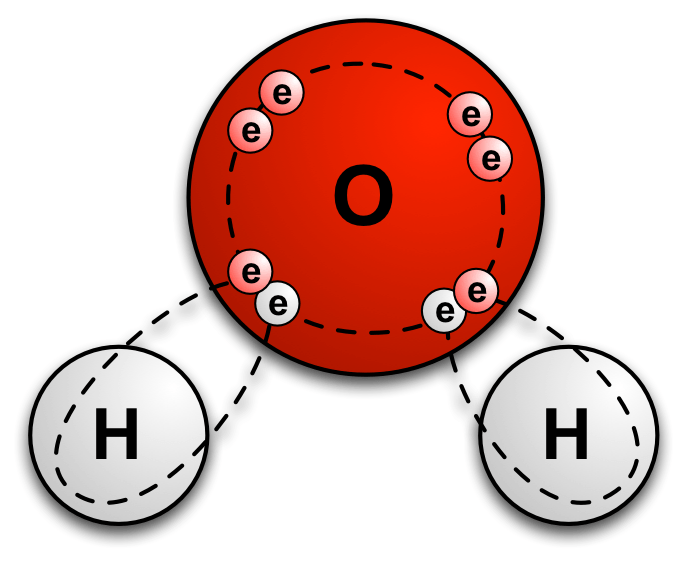
What would you name this molecule?
a)
SNa3
b)
H3O
c)
NaCl
d)
H2O
113.
What molecule is this?
a)
CO
b)
CO2
c)
C2O
d)
C2O2
114.
The desire for an element to have 8 atoms around it is called 
a)
Octet Rule
b)
Resonance
c)
Ionization energy
d)
Electronegativity
115.
How many Valence Electrons are on Oxygen
a)
2
b)
7
c)
6
d)
1
116.
Which of the following elements wants to bond 3 times
a)
Oxygen
b)
Phosphorous
c)
Fluorine
d)
Germanium
117.
Which of the following is a Diatomic Molecule 
a)
K2
b)
C2
c)
S2
d)
N2
118.
What is the name of this Compound
a)
P2O5
b)
Phosphorous PentaOxide
c)
Diphosphorous pentaoxide
d)
Phosphourous Oxide
119.
What is the formula for this Compound
a)
PCl
b)
PCL5
c)
PCl5
d)
Phosphorous Penta Chloride
120.
What is the name of this Molecule shape
a)
Tetrahedral
b)
Trigonal Pyramidal 
c)
Trigonal bipyramidal
d)
Bent
121.
A polar bond is one that
a)
Has an electronegativity difference greater than 0.7
b)
Has an electronegativity difference greater than 0.5
c)
Has an electronegativity difference less that 0.5
d)
Has an electronegativity difference less than 0.7
122.
Which of these forces applies to all molecules
a)
London Dispersion
b)
Dipole dipole
c)
Hydrogen Bonding
d)
Covalent bonding
123.
Which of these would be covalently bonded
a)
Fr and K
b)
Sc and O 
c)
F and Cl
d)
He and Pt
124.
Which of the following describes covalent bonds?
a)
Bonds form because of opposite charges
b)
Bonds form to fill outer electron shells
c)
Electrons are transferred between atoms
d)
Covalent bonds are magical
125.
Protons have a charge of:
a)
-1
b)
+1
c)
-2
d)
+2
126.
Electrons have a charge of:
a)
-1
b)
-2
c)
+1
d)
+2
127.
Most atoms have no net charge because they have....
a)
an equal number of charged and non-charged particles
b)
neutrons in their nuclei
c)
an equal number of electrons and protons
d)
an equal number of neutrons and protons
128.
What would you name this molecule?
a)
SNa3
b)
H3O
c)
NaCl
d)
H2O
129.
What molecule is this?
a)
CO
b)
CO2
c)
C2O
d)
C2O2
130.
If a you saw the following, K+; what does it tell you about the  the ion.
a)
it has lost one electron 
b)
it has lost one proton 
c)
it has lost two electrons 
d)
it is a negative ion 
131.
In a covalent bond, one or more electrons are? 
a)
shared 
b)
lost 
c)
gained 
d)
transferred 
132.
What does a sodium atom become when it loses its only valence electron?
a)
sodium compound
b)
sodium atom
c)
ionic compound
d)
sodium ion
133.
What is the charge of a sodium ion with 11 protons and 10 electrons?
a)
1+
b)
1-
c)
2+
d)
2-
134.

If an atom has no charge, which of the following must be true?

a)

It has more neutrons than protons or electrons.

b)

There are only neutrons inside the atom.

c)

Its number of protons is equal to its number of electrons.

d)

The neutrons in the atom outnumber the electrons and protons.

135.

Which of these are an ion?

a)

3 protons, 3 neutrons, 3 electrons.

b)

8 protons, 8 neutrons, 8 electrons

c)

2 protons, 3 neutrons, 2 electrons

d)

6 protons, 6 neutrons, 7 electrons

136.
Covalent compounds
a)
Share electrons
b)
transfer electrons
c)
None
d)
conduct electricity
137.
If a potassium atom loses one electron, a positive ion results.
a)
TRUE
b)
FALSE
138.
What is an atom or group of atoms that has an electric charge?
a)
ion
b)
metal
c)
nonmetal
d)
ionic compound
139.
If an atom of nitrogen gains 3 electrons, what is its overall charge?
a)
Neutral - No charge
b)
+3
c)
-3
d)
-1
140.
Name the following compound: 
N2O4
a)
dinitrogren tetraoxide
b)
tetranitrogen dioxide
c)
nitrogen oxide
d)
dinitrogen tetraoxygen
141.
Name the following compound: 
CO2
a)
monocarbon dioxide
b)
carbon oxide
c)
carbon dioxide
d)
oxygen carbonide
142.
Name the following compound: 
CCl4
a)
monocarbon quadchloride
b)
carbon tetrachloride
c)
carbon chloride
d)
monocarbon quadchloide
143.
Name the following compound:
NF3
a)
nitrogen triflouride
b)
mononitrogen triflouride
c)
nitrogen flouride
d)
tetranitroflouide
144.
Name the following compound:
H2O
a)
hydrogen oxide
b)
dihydrogen oxide
c)
trihydroxide
d)
dihydrogen monoxide
145.
Write the formula for:
dinitrogen tetroxide
a)
N2O4
b)
NO2
c)
NO
d)
N4O8
146.
Write the formula for:
dinitrogen pentoxide
a)
NO
b)
N2O5
c)
2NO5
d)
O5N
147.
Write the formula for:
disulfur decafluoride
a)
2SF10
b)
SF5
c)
S2F10
d)
F10S2
148.
Write the formula for:
chlorine trifluoride
a)
ClF3
b)
ClF
c)
Cl3F
d)
3ClF
149.
Write the formula for:
trilithium mononitride
a)
Li2N1
b)
Li3N3
c)
LiN3
d)
Li3N
150.

What two types of atoms make a covalent bond?

a)

2 non-metals

b)

1 metal and 1 non-metal

c)

2 metals

151.

What type of bond involves the sharing of electrons between atoms?

a)

covalent bond

b)

ionic bond

c)

metallic bond

d)

transfer bond

152.
In chemical compounds, covalent bonds form when
a)
the electronegativity difference between two atoms is very large.
b)
electrons are completely transferred between two metals.
c)

pairs of electrons are shared between two non-metal atoms.

d)

two non-metal atoms are attracted to each other by opposite charges.

153.
What is it called when atoms share one pair of electrons?
a)
A double bond
b)
A triple bond
c)
A quadruple bond
d)
A single bond
154.
What is it called when atoms share two pairs of electrons?
a)
A double bond
b)
A single bond
c)
A triple bond
d)
A quadruple bond
155.

What is it called if there are three pairs of electrons being shared?

a)
Triple bond
b)
Bond length
c)
Tribond
d)
Chocolate Mousse
156.

Identify the following compound as ionic or covalent: SO2

a)

ionic

b)

covalent

157.

Identify the following compound as ionic or covalent: Ca(OH)2

a)

ionic

b)

covalent

158.

Identify the following compound as ionic or covalent: CH3COOH

a)

ionic

b)

covalent

159.

When naming covalent compounds,

a)

roman numerals are needed but no prefixes required

b)

both roman numerals or prefixes are not required

c)

both roman numerals and prefixes must be included

d)

prefixes are needed but roman numerals are not required