
 Worksheets
M5 Chemistry Mid-year Exam Revision JB
Total questions: 166
Worksheet time: 1hrs 23mins
Which charge is POSITIVE?
Proton
Neutron
Electron
Cell
Which charge is NEGATIVE?
Proton
Neutron
Electron
Cell
Which particle is NEUTRAL?
Proton
Neutron
Electron
Cell
All of the COLUMNS on the Periodic Table are called?
Periods
Rows
Groups
Lines
All of the ROWS on the Periodic Table are called what?
Periods
Groups
Columns
Lines
What is the ATOMIC # of Oxygen - O?
6
7
8
9
What is the Atomic MASS of Lithium - Li?
9.012
6.94
4.002
1.008
Carbon - C has an atomic MASS of what?
12.011
6
7
14.007
Group 2 on the Periodic Table has what name?
Alkali Metals
Halogens
Noble Gases
The NOBLE GASES (Group 8) are considered...
Metals
Nonmetals
Metalloids
None

How many NEUTRONS does Nitrogen - N have?
6
7
8
9

How many NEUTRONS does Magnesium - Mg have?
10
11
12
13
Which type of particle would you find floating around the nucleus, outside of the atom, with its negative charge?
Proton
Neutron
Electron
Nucleus
Which TWO particles are found housed in the nucleus of the atom?
Protons and Electrons
Protons and Neutrons
Electrons and Neutrons
Protons, Neutrons, and Electrons
What are the building blocks of matter?
atoms
cells
neutrons
protons
The nucleus of an atom is made up of ___________________.
protons and neutrons.
neutrons and electrons
protons and electrons
neutrinos and antineutrinos
Which subatomic particle has a negative charge in the atom?
neutron
proton
electron
quark
ALL atoms of the same element have...
the same number of protons
the same number of nucleons
a different number of nucleons
a different number of electrons
Which of the following does not have an electrical charge?
neutron
neuron
electron
proton
What charge does an atom have when it GAINS electrons?
positive
negative
neutral
What charge does an atom have when it LOSES electrons?
positive
negative
neutral
What subatomic particle changes in an ion?
the number of electrons
the number of protons
the number of neutrons
The smallest unit of matter is called...
an atom
a molecule
a compound
an ion
an element
How many electrons can the first energy level hold?
1
2
8
0
What is the charge of an atom that has gained one electron?

How many electrons does Si contain?
14
28
2
4
Each row on the periodic table represents:
an energy level
a sublevel
an electron
an orbital


How many valence electrons?
2
3
4
5

What is the electron configuration of this atom?
2 6 10
2 8 18
2 8 8 4
2 8 8

How many valence electrons does this element have?
2
8
12
4
If an atom loses electrons during a chemical reaction, the atom was...
oxidised
reduced
neutralised
stabilised
What is oxidation number of Mn in MnO2?
0
+2
-2
+4
What is the oxidation number of S in SO4 2-?
-2
+2
+6
-4
What is the oxidation number of Cr in Cr2O72-?
-2
+2
+6
+12
What is the oxidation number of P in K3PO4?
+1
+5
-2
0
What is the oxidation number of O in the compound H2O2?
0
-1
-2
+2
What is the oxidation number of Fe in Fe2O3?
0
-2
+2
+3
What is the oxidation number of H in NaH?
0
+1
-1
+2
What is the oxidation state of vanadium in V(H2O)63+?
1+
3+
5+
7+
What is the oxidation state of phosphorous in Mg3(PO4)2?
+2
+3
+4
+5
What is the oxidation state of H in H2?
+2
+1
0
None of the above
What is the oxidation number of N in NO2-?
+4
+3
+2
+1

What is the oxidation number Fe in FeCl3?
+1
+2
+3
+4

What is the oxidation number Cr in K2CrO4?
+6
+5
+4
+3

What is the oxidation number N in NH4+?
-1
-2
-3
-4

What is the oxidation number of Mg?
0
+1
+2
+3

What is the oxidation number of Cu2+?
-1
0
+1
+2

What is the oxidation number of Na+?
0
+1
+2
+3

+2
-1
+4
-2

-3
+4
-2
+3
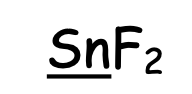
Calculate the oxidation number for the underlined atom.
+4
-4
+2
-2
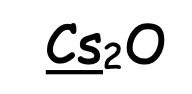
Calculate the oxidation number for the underlined atom.
-2
+2
+1
-1
Calculate the oxidation number of the red underlined element: NaCl.
+1
-1
-2
0
Calculate the oxidation number of the red underlined element: NH4+
+3
-1
-3
0
Calculate the oxidation number of the red underlined element: HSO4-1
+6
-2
+5
-1
oxidation number Cu2+ is ...
-1
0
+1
+2
oxidation number Na+ is ...
0
+1
+2
+3
oxidation number Mg is ...
0
+1
+2
+3
What is the oxidation state of Cl in ClO- ?
0
+1
-1
+2
...................................................is a positive or negative number assigned to an atom to indicate its degree of oxidation or reduction.
An oxidation number
A reduction number
A valance number
The oxidation number of a monatomic ion is equal in magnitude and sign to its ionic charge.
True
False
For any neutral compound, the sum of the oxidation numbers of the atoms in the compound must equal ..........
-1
+2
0
What is the charge, or oxidation number, for elements in Group 7?
+ 1
-7
-1
What is the charge, or oxidation number, for elements in Group 2?
-2
+2
-3
What is the oxidation state of S in SO3 ?
-3
-2
+4
+6
What is the oxidation state of N in NO2- ?
+2
+3
-1
-4
What is the oxidation number of O in Li2O ?
-1
-2
+1
+2
Determine the oxidation number of the red underlined element.
NaCl
+1
-1
-2
0
Determine the oxidation number of the red underlined element.
NaClO4
+7
-1
+6
0
Determine the oxidation number of the red underlined element.
CaN2
+1
-3
-1
0
For any neutral compound, the sum of the oxidation numbers of the atoms in the compound must equal ..........
-1
+2
0
Oxidation number of O in the compound H2O:
0
-1
-2
+2
Oxidation number of Fe in its elemental form:
0
-2
+2
+3
Oxidation number of H in NaH:
0
+1
-1
+2
Oxidation number of H in H2O:
0
+1
-1
+2
Give the oxidation number of Nitrogen and Oxygen in N2O molecule.
Nitrogen +1, Oxygen -2
Nitrogen -1, Oxygen -2
Nitrogen +2, Oxygen -2
Nitrogen -3, Oxygen -2
Give the oxidation number of all elements in sulfur dioxide, SO2 molecule.
S-2 and O-2
S+4 and O-2
S-4 and O-2
S-2 and O-1
If an atom LOSES electrons during a chemical reaction, the atom was...
Oxidized
Reduced
Neutralized
Precipitated
Reduction is the ___________ of electrons.
loss
gain
transfer
share
Determine the oxidation number of chromium in CrO42-.
5
6
4
2
Which statement is true?
Mg → Mg2+ + 2e–
Mg gains 2 electrons
Mg gains 1 electron
Mg loses 1 electron
Mg loses 2 electrons
A decrease in oxidation number.
oxidation
combination
reduction
Which is a substance that oxidizes another substance by accepting its electrons?
an oxidising agent
a reducing agent
combustion
Which of the following is the balanced half -reaction for the oxidation of Cu to Cu+2?
Cu --> Cu+2
Cu + 2e- --> Cu+2
Cu - 2e- --> Cu+2
Cu --> Cu+2 + 2e-
In a redox reaction, the species reduced
gains electrons and is the oxidizing agent
loses electrons and is the oxidizing agent
gains electrons and is the reducing agen
loses electrons and is the reducing agent
Which is a substance that oxidizes another substance by accepting its electrons?
an oxidation number
a reducing agent
an oxidizing agent
In which substance does sulfur have a negative oxidation number?
Na2S
SO2
S
What is the oxidation number of chlorine in ClO3- ?
5
1
0
2
When an atom gains a valence electron, it becomes a(n) _____________ ion.
positive
negative
neutral
When an atom loses a valence electron, it becomes a(n) _____________ ion.
positive
negative
neutral


What is the charge of a sodium ion?
+2
+1
-1
-2

What is the charge of a Lithium ion?
-2
-1
+1
+2

What is the charge of a Beryllium (Be) ion?
-2
-1
+1
+2

What is the correct name of the compound CaCl2?
Calcium dichloride
Calcium dichlorine
Calcium chlorine
Calcium chloride
What is the correct name for the compound LiF?
Lithium fluoride
Lithium fluorine
monolithium monofluoride
lithium monofluoride
How many atoms of oxygen are in a molecule of Ca3(PO4)2
1
2
4
8
A _______ is an ion that contains more than one ion.
monatomic ion
complex ion
polyatomic ion
diatomic ion

How many atoms are present in CaCO3?
5
2
4
6
How many atoms are present in (NH4)2SO4?
3
10
15
12
polyatomic ions
Which is most likely to form a NEGATIVE ion?
an element from Group 7
a metal
an element from Group 1
an element with atoms that have eight valence electrons
ion
electron
molecule
compound
When an atom loses a valence electron, it becomes a ____________ ion.
positive
negative
neutral
Is this an example of a covalent or ionic bond: Calcium Oxide (CaO)?
Covalent Bond
Ionic Bond
Why do ionic bonds form?
so the number of protons equals the number of electrons
to fill the outermost energy level to make the atom stable
so an atom can become unstable
if NONMETALS are more likely to GAIN electrons, they will form...
anions
neutral atoms
cations
molecules
If an aluminum atom has 13 protons (+) and 10 electrons (-), what is it's charge?
Al+3
Al+13
Al+10
Al-10
In the chemical formula for an ionic compound, which item is written first?
positive ion (cation)
negative ion (anion)
subscript
it's alphabetical

The transfer of valence electrons from a metal to a non metal is known as __________.
covalent bonding
metallic bonding
molecular bonding
ionic bonding
A(n) _________ is an ion with a positive (+) charge.
anion
cation
ion
solute

Hydrogen's ion is...
H+
H2+
H3+
He+

Lithium's ion is...
L-
Li+
Li2+
L+

Sodium's ion is...
S+
S-
Na+
Na-

Calcium's ion is...
Ca+
Ca2+
Ca-
Ca2-

Potassium's ion is...
P+
P-
K-
K+

Aluminum's ion is...
Al3+
A2+
Al3-
A3+

Magnesium's ion is...
Mn+
Mg+
Mg2+
Mn2+

Oxygen's ion is...
Ox2+
Ox2-
O2+
O2-

Nitrogen's ion is...
Ni3+
Ni3-
N3-
N3+

Chlorine's ion is...
Cl+
Cl-
C+
C-

Phosphorus' ion is...
Ph3+
Ph3-
P3+
P3-

Fluorine's ion is...
Fl1+
F1-
Fl2+
F2-

Sulfur's ion is...
S2-
Su2-
S1-
Su1-
A positive ion forms when ________.
an atom loses one or more valence electrons
an atom gains one or more valence electrons
electrons are pulled into the nucleus
electrons are pushed out of the nucleus
Why is the calcium ion Ca2+ more stable than the calcium atom (Ca)?
Twenty electrons are more stable than eighteen electrons.
Eighteen electrons are less stable than twenty electrons.
The two electrons more than the noble gas configuration is more stable.
The noble gas configuration is more stable.
In the ionic solid sodium chloride (NaCl), there is a ________ ratio of sodium ions to chlorine ions.
one to two
two to one
one to one
one and a half to one
A negatively charged atom is called a(n) ________.
cation
anion
Binary ionic compounds always consist of _______ .
a cation and an anion
two cations
two anions
Ionic bonds form due to _______.
attraction between opposite charges
attraction between two nuclei
attraction between a nucleus and another atom's electrons, as well as the overall opposite charges of two ions
attraction between electrons and a cation
Metals ______ electrons when they become ions.
lose
gain
neither
Non-metals ______ electrons when they become ions.
lose
gain
neither

How many electrons are in a Li+ ion?
1
2
3
4

What is an ion?
a small atom
a charged atom
a large atom
a cute atom
TRUE or FALSE?
OIL RIG =
Oxidation is Loss of Electrons and Reduction is Gain of Electrons.
True
False
TRUE or FALSE?
LEO the lion says GER =
Loss of Electrons is Oxidation & Gain of Electrons is Reduction.
True
False
The two same charges will _________ each other.
attract
repel
opposite
The two different charges will ___________ each other.
repel
attract
opposite
When an object gains electrons it becomes __________.
neutral
positively charged
negatively charged
When distance increases, electrostatic force ____________; we call this relationship ____________ proportional.
decreases; directly
decreases; inversely
increases; inversely
increases; directly
Which of the following does not react with water?
Copper
Lithium
Sodium
Potassium
Which of the following metals easily get rusted to form brown deposits on it?
Lead
Gold
Aluminium
Iron

Which metal is MORE reactive than calcium?
magnesium
potassium
silver
aluminum
Which of the following is NOT a clue that a chemical change has occurred?
change in color
production of gas
change in termperature
change in shape

