
 Worksheets
Honors Fall Semester Review 25-26
Total questions: 167
Worksheet time: 13hrs 24mins
How can mixtures be separated?
Through chemical reactions
By heating to high temperatures
Through physical means
By adding more substances
What is a homogeneous mixture?
A mixture with varying composition
A mixture with uniform structure throughout
A mixture with visibly different parts
A mixture that separates over time
Instant coffee is made by dissolving a powder in hot water. Instant coffee is a ___________________.
pure substance
mixture
Cake batter is a substance that may contain flour, eggs, and sugar mixed by hand or with an electric mixer. Cake batter is a ___________________ .
pure substance
mixture
What is an element?
A substance that can't be broken down into other substances
The trio: Fire, Water, Ice
Who knows?
A mixture of two substances
Chalk is a mineral found in rocks. It contains carbon, oxygen, and calcium atoms. Chalk is a ___________________ .
element
compound
What is the mass number defined as?
the number of protons
the number of protons and neutrons
the number of neutrons
the number of protons and electrons
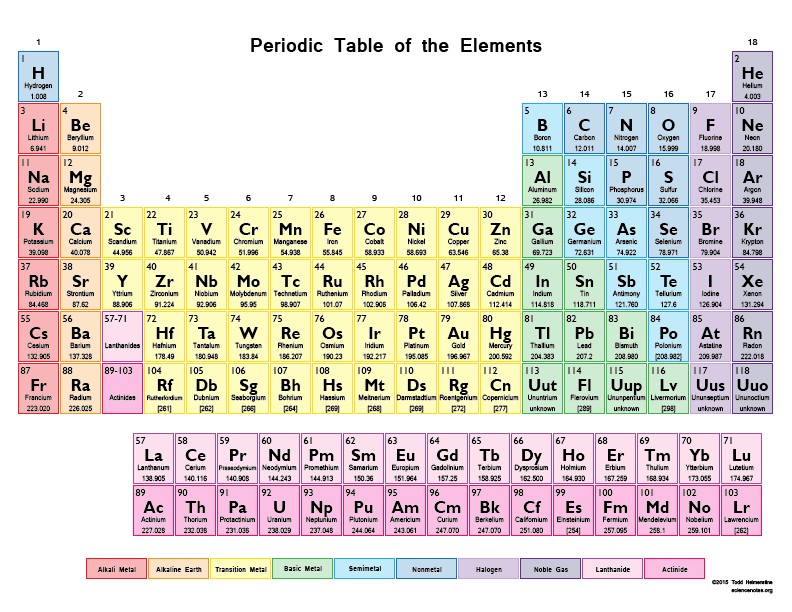
How many protons are in a sodium atom (Na)? (Tap to enlarge the periodic table.)
Sodium has 1 proton.
Sodium has 3 protons.
Sodium has 11 protons.
What is a characteristic property of alkali metals?
Non-reactivity with halogens.
Formation of acidic oxides when reacting with oxygen.
High reactivity with water and formation of alkaline hydroxides.
Low melting points compared to other metals.
How does the atomic radius change as you move down the alkali metal group?
The atomic radius decreases as you move down the alkali metal group.
The atomic radius increases as you move down the alkali metal group.
The atomic radius remains constant as you move down the alkali metal group.
The atomic radius first decreases and then increases as you move down the alkali metal group.
Which alkali metal is the most reactive?
Cesium
Potassium
Sodium
Lithium
What are the common uses of noble gases?
Common uses of noble gases include lighting, welding, cryogenics, and lasers.
Batteries and power storage
Air purification systems
Water treatment processes
How do noble gases differ from other groups in terms of reactivity?
Noble gases tend to lose electrons easily.
Noble gases readily form compounds with other elements.
Noble gases are much less reactive than other groups due to their full valence electron shells.
Noble gases are highly reactive due to their incomplete electron shells.
What is a key property of transition metals?
They can form different ions
They cannot form complex ions.
They have a fixed oxidation state.
They are all nonmetals.
What is the trend of ionization energy across a period?
Ionization energy fluctuates randomly across a period.
Ionization energy increases across a period.
Ionization energy remains constant across a period.
Ionization energy decreases across a period.
How does electronegativity change as you move from left to right across a period?
Electronegativity decreases from left to right across a period.
Electronegativity remains constant across a period.
Electronegativity fluctuates randomly across a period.
Electronegativity increases from left to right across a period.
Which element is the most electronegative on the periodic table?
Oxygen
Fluorine
Nitrogen
Chlorine
How does the atomic radius change across a period?
The atomic radius increases across a period.
The atomic radius fluctuates randomly across a period.
The atomic radius remains constant across a period.
The atomic radius decreases across a period.
Which group of elements has a full valence shell?
Transition metals
Noble gases
Halogens
Alkali metals
What is the general trend of atomic radius as you move down a group?
The atomic radius first increases and then decreases as you move down a group.
The atomic radius decreases as you move down a group.
The atomic radius increases as you move down a group.
The atomic radius remains constant as you move down a group.
Which of the following elements is a transition element?
Zinc (Zn)
Argon (Ar)
Silicon (Si)
Phosphorus (P)
Which of the following elements is an alkaline earth metal?
Potassium (K)
Strontium (Sr)
Iron (Fe)
Copper (Cu)
Identify the element located in Group 16 and Period 3 of the periodic table.
Oxygen (O)
Sulfur (S)
Selenium (Se)
Tellurium (Te)
Identify the element located in Group 2, Period 4 of the periodic table.
Calcium (Ca)
Magnesium (Mg)
Beryllium (Be)
Strontium (Sr)
Elements that belong to the same group have the same number of
valence electrons
neutral electrons
inner electrons
total electrons
An atom has 10 protons, 15 neutrons, and 10 electrons. What is its mass number?
20
10
35
25
An aluminum isotope consists of 13 protons, 13 electrons, and 14 neutrons. Its mass number is
13
14
27
40

How many neutrons does an atom of Au (gold) have?
79 neutrons
118 neutrons
196 neutrons
197 neutrons

Is this the correct Bohr model for carbon (C), given that carbon has 6 protons?
Yes
No
According to the Bohr model, what is the maximum number of electrons that the FIRST shell can hold?
2
6
16
8


Which element is represented in this Bohr model?
Boron
Carbon
Nitrogen
Lithium

Which element is represented in this Bohr model?
Carbon
Hydrogen
Aluminum
Lithium
Which of the following statements is true about nuclear reactions?
The identity of the atom does not change.
Only the arrangement of molecules changes.
The nucleus is affected, and the identity of the atom changes.
The atoms remain unchanged.
Why do chemical reactions not result in the formation of new elements?
Because only the nucleus is affected.
Because the atoms maintain their identity and only molecules are rearranged.
Because atoms are destroyed.
Because protons are added to the nucleus.
If an atom is written as Radium-228, what does the number 228 represent?
Atomic number
Number of protons
Mass number
Number of electrons
Given the nuclide notation for Radium-228, how do you determine the number of neutrons in the nucleus?
Subtract the atomic number from the mass number
Add the atomic number and mass number
Subtract the mass number from the atomic number
Multiply the atomic number by the mass number
What type of force holds protons and neutrons together in the nucleus of an atom?
Gravitational force
Nuclear force
Magnetic force
Frictional force
Why do protons in the nucleus not fly apart, despite their electric repulsion?
Because of gravity
Because of the strong nuclear force
Because of magnetic attraction
Because of chemical bonds
What is an alpha particle (α) in terms of its composition?
A hydrogen nucleus
A helium nucleus
A neutron
An electron
Why do alpha particles have weak penetrating ability?
They are very small
They are electrically neutral
They are relatively large and interact easily with matter
They move at the speed of light
What is a beta particle (β) in the context of nuclear reactions?
A proton emitted from a nuclear reaction
A neutron emitted from a nuclear reaction
An electron emitted from a nuclear reaction
A photon emitted from a nuclear reaction
Which material can stop beta particles from passing through?
Paper
Water
Foil
Plastic
Which of the following correctly represents the symbol for a beta particle?
24α
11p
−10e
00γ
Which of the following statements is true about gamma emission?
It changes the identity of the atom.
It does not change the identity of the atom.
It always produces a new element.
It only occurs in living organisms.
Which material is required to effectively stop gamma radiation?
Tissue
Aluminum
Concrete wall or lead
Plastic
What happens to the atomic number during positron emission?
It increases by 1.
It stays the same.
It decreases by 2.
It decreases by 1.
Which of the following best describes the charge of a positron?
Negative
Neutral
Positive
Double positive
Which of the following best describes electron capture?
An inner orbital electron is captured by its own atom.
An atom emits an alpha particle.
An atom loses a neutron.
An atom gains a proton from another atom.


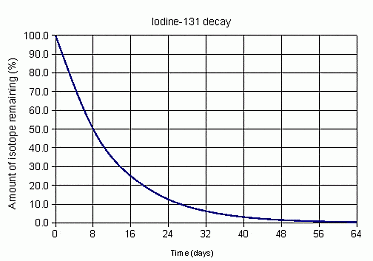
The maximum distance from the equilibrium/origin line to the top of the crest or the bottom of the trough is called the __________ of the wave.
amplitude
wavelength
frequency
speed
The distance from one point to the next identical point(from crest to crest) on a wave is called the ________________.
waveform
peak
amplitude
wavelength
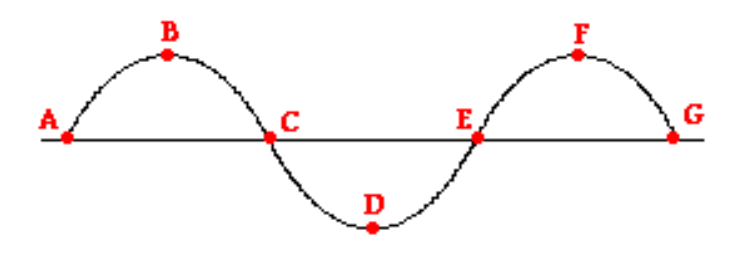

Low frequency waves have _________ wavelengths.
varying
long
the same
short

High frequency waves have _________ wavelength.
varying
long
the same
short
The number of waves that occur in one second is...
frequency
wave speed
amplitude
wavelength
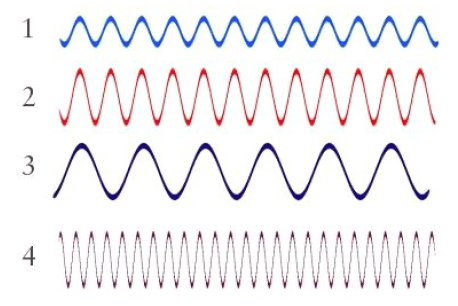
Which wave in the diagram has the longest wavelength?
1
2
3
4
The greater the frequency, the ________ energy carried by the wave.
more
less
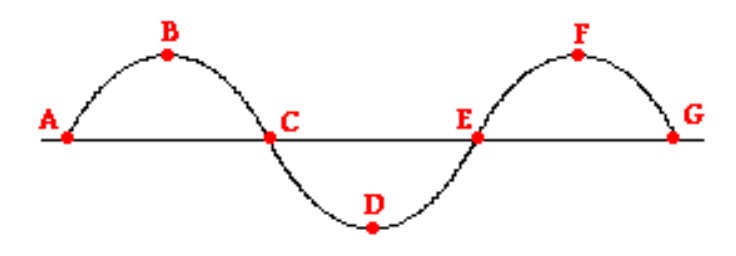


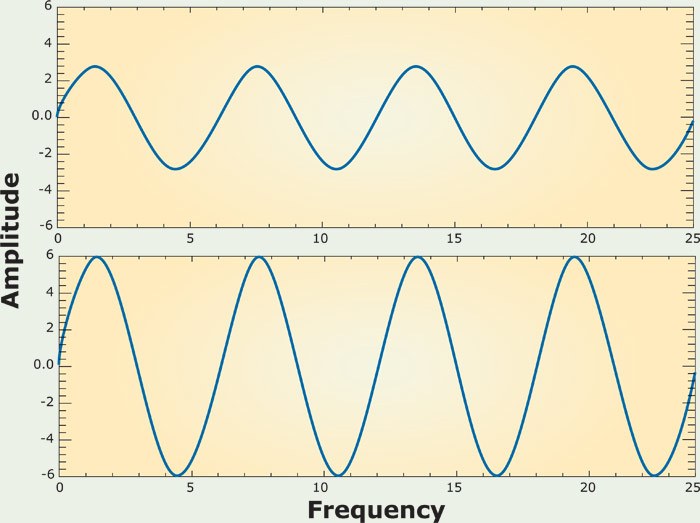
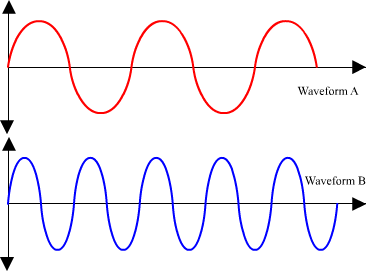
What atom matches this electron configuration?
1s2 2s2 2p6 3s2
Neon
Magnesium
Aluminum
Potassium

What is the energy of a photon of blue light that has a frequency of 6.31 x 10¹⁴ Hz? (h=6.626x10⁻³⁴ J sec)
4.75 x 10⁻⁷ J
4.18 x 10⁻¹⁹ J
6.31 x 10¹⁴ J
9.44 x 10⁻³² J
2.39 x 10⁻³² J
The relationship between wavelength and frequency is λ=c/f. Calculate the wavelength of light that has a frequency of 5.2 x 10¹² Hz. The speed of of light is 3.0x 10⁸ m/s.
5.8 x 10 -5 m
5.8 x 10 -7 m
5.19 x 10 14 m
1.56 x 10 23 m
What is the wavelength (λ) of electromagnetic radiation with a frequency (ν) of 9.01 x 10¹⁵ s-1 ?
3.32 x 10⁻⁸ m
6.66 x 10⁻⁷ m
4.13 x 10⁻⁹ m
1.88 x 10¹⁵ m
What is a characteristic property of alkali metals?
Non-reactivity with halogens.
Formation of acidic oxides when reacting with oxygen.
High reactivity with water and formation of alkaline hydroxides.
Low melting points compared to other metals.
How does the atomic radius change as you move down the alkali metal group?
The atomic radius decreases as you move down the alkali metal group.
The atomic radius increases as you move down the alkali metal group.
The atomic radius remains constant as you move down the alkali metal group.
The atomic radius first decreases and then increases down the alkali metal group.
Which alkali metal is the most reactive?
Cesium
Potassium
Sodium
Lithium
What are the common uses of noble gases?
Common uses of noble gases include lighting, welding, cryogenics, and lasers.
Batteries and power storage
Air purification systems
Water treatment processes
How do noble gases differ from other groups in terms of reactivity?
Noble gases have a tendency to lose electrons easily.
Noble gases readily form compounds with other elements.
Noble gases are much less reactive than other groups due to their full valence electron shells.
Noble gases are highly reactive due to their incomplete electron shells.
What is a key property of transition metals?
They can form different ions
They cannot form complex ions.
They have a fixed oxidation state.
They are all nonmetals.
What is the trend in ionization energy across a period?
Ionization energy fluctuates randomly across a period.
Ionization energy increases across a period.
Ionization energy remains constant across a period.
Ionization energy decreases across a period.
How does electronegativity change as you move from left to right across a period?
Electronegativity decreases from left to right across a period.
Electronegativity remains constant across a period.
Electronegativity fluctuates randomly across a period.
Electronegativity increases from left to right across a period.
What is the most electronegative element on the periodic table?
Oxygen
Fluorine
Nitrogen
Chlorine
How does the atomic radius change across a period?
The atomic radius increases across a period.
The atomic radius fluctuates randomly across a period.
The atomic radius remains constant across a period.
The atomic radius decreases across a period.
Which group of elements has a full valence shell?
Transition metals
Noble gases
Halogens
Alkali metals
What is the general trend of atomic radius as you move down a group?
The atomic radius first increases and then decreases as you move down a group.
The atomic radius decreases as you move down a group.
The atomic radius increases as you move down a group.
The atomic radius remains constant as you move down a group.
Which of the following elements is a transition element?
Zinc (Zn)
Argon (Ar)
Silicon (Si)
Phosphorus (P)
Which of the following elements is an alkaline earth metal?
Potassium (K)
Strontium (Sr)
Iron (Fe)
Copper (Cu)
Identify the element located in Group 16 and Period 3 of the periodic table.
Oxygen (O)
Sulfur (S)
Selenium (Se)
Tellurium (Te)
Identify the element located in Group 2 and Period 4 of the periodic table.
Calcium (Ca)
Magnesium (Mg)
Beryllium (Be)
Strontium (Sr)
Elements that belong to the same group have the same number of
valence electrons
neutral electrons
inner electrons
total electrons
What is the correct name for the ionic compound with the formula NaCl ?
Sodium chloride
Sodium chlorate
Sodium(I) chloride
Sodium chlorite
How do you write the formula for calcium chloride?
CaCl
CaCl2
Ca2Cl
CaCl3
What is the correct name for CuO ?
Copper oxide
Copper(I) oxide
Copper(II) oxide
Copper(III) oxide
Write the formula for Iron(III) oxide.
FeO
Fe2O3
Fe3O4
FeO2
What is the correct name for KBr ?
Potassium bromide
Potassium(I) bromide
Potassium bromate
Potassium(I) bromate
How do you write the formula for magnesium nitrate?
Mg(NO3)2
MgN
Mg2(NO3)3
Mg(NO2)2
What is the correct name for Al2O3 ?
Aluminum oxide
Aluminum(I) oxide
Aluminum(II) oxide
Aluminum(III) oxide
Write the formula for sodium sulfate.
NaSO4
Na2SO4
NaS
Na2S2O3
What is the correct name for SnCl4 ?
Tin(IV) chloride
Tin(II) chloride
Tin chloride
Tin chlorate
How do you write the formula for copper(I) sulfide?
CuS
Cu2S
CuS2
Cu2S3
What is the correct name for CaCO3 ?
Calcium carbonate
Calcium carbide
Calcium(II) carbonate
Calcium carbonite
Write the formula for potassium permanganate.
KMnO4
K2MnO4
KMn2O7
K2Mn2O7
What is the correct name for FeCl3 ?
Iron(III) chloride
Iron(II) chloride
Iron chloride
Iron chlorate
How do you write the formula for calcium phosphate?
Ca3(PO4)2
CaPO4
Ca2PO4
Ca(PO3)2
What is the correct name for AgNO3 ?
Silver nitrate
Silver(I) nitrate
Silver nitrite
Silver(I) nitrite
What is the correct name for the covalent compound CO2 ?
Carbon monoxide
Carbon dioxide
Carbon trioxide
Dicarbon monoxide
Which of the following is the correct name for the compound N2O5 ?
Dinitrogen pentoxide
Nitrogen pentoxide
Nitrogen dioxide
Dinitrogen dioxide
Name the covalent compound PCl3 .
Phosphorus trichloride
Phosphorus chloride
Phosphorus dichloride
Phosphorus tetrachloride
What is the correct name for the compound SF6 ?
Sulfur hexafluoride
Sulfur fluoride
Sulfur pentafluoride
Sulfur tetrafluoride
Which of the following is the correct name for CCl4 ?
Carbon tetrachloride
Carbon chloride
Carbon trichloride
Carbon dichloride
Name the covalent compound NO2 .
Nitrogen dioxide
Nitrogen oxide
Dinitrogen oxide
Nitrogen trioxide
What is the correct name for the compound H2O2 ?
Dihydrogen dioxide
Hydrogen pentoxide
Hydrogen dioxide
Dihydrogen oxide
Which of the following is the correct name for P4O10 ?
Tetraphosphorus decoxide
Phosphorus oxide
Phosphorus pentoxide
Tetraphosphorus pentoxide
Name the covalent compound SO3 .
Sulfur trioxide
Sulfur dioxide
Sulfur oxide
Sulfur tetroxide
What is the correct name for the compound N2H4 ?
Dinitrogen tetrahydride
Nitrogen hydride
Dinitrogen hydride
Nitrogen tetrahydride
Draw the Lewis structure for H2O . Which of the following correctly represents the number of lone pairs on the oxygen atom?
0 lone pairs
1 lone pair
2 lone pairs
3 lone pairs
For the molecule CH4 , how many total valence electrons are present in the Lewis structure?
6
8
10
12
Draw the Lewis structure for NH3 . How many bonding pairs and lone pairs are present in the structure?
3 bonding pairs, 1 lone pair
2 bonding pairs, 2 lone pairs
4 bonding pairs, 0 lone pairs
3 bonding pairs, 0 lone pairs
Which of the following molecules has a double bond in its Lewis structure?
O2
H2
F2
N2
Draw the Lewis structure for CO2 . How many double bonds are present in the structure?
0
1
2
3


What two types of atoms make a covalent bond?
2 Nonmetals
1 Nonmetal and 1 Metal
2 Metals
2 Noble Gases

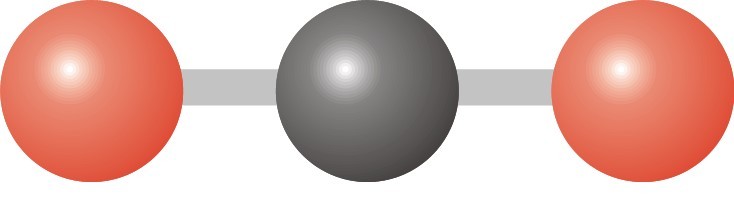


What is the correct Lewis Dot Structure for ammonia NH3


Which is the correct Lewis structure for carbon dioxide?


Valid Lewis dot diagram?
True
False
Which of the following is the correct Lewis dot structure for a molecule of fluorine, F2?


Is this a valid Lewis structure for CH2O?
Yes
No

This is a correct dot diagram for magnesium (Mg)
true
false
Which Lewis Dot Model drawing correctly shows an O2 molecule?


Convert 45000 to scientific notation.
4.5×10³
4.5×10⁴
4.5×10⁵
45×103
Convert 3.2×10⁻³ to standard notation.
0.0032
0.032
0.00032
32
How many significant figures are in the number 0.004560 ?
3
4
5
6
Convert 7.89×10² to standard notation.
0.789
7.89
78.9
789
Convert 0.00052 to scientific notation.
5.2×10⁻⁴
5.2×10⁻⁵
5.2×10⁻⁶
5.2×10⁻³
Convert 5.67×10³ to standard notation.
0.567
5.67
56.7
5670
Convert 2.5×10⁻² to standard notation.
0.025
0.25
2.5
25
What is a pure substance?
A mixture of different elements
A sample of matter that can be broken into simpler substances
A sample of matter that cannot be broken into simpler substances
A combination of gases
What kind of properties do pure substances have?
Variable chemical and physical properties
Definite chemical and physical properties
Only chemical properties
Only physical properties
Which of the following is a pure substance?
Saltwater
Copper wire
Soil
Air
Which element has the symbol 'Na'?
Nitrogen
Neon
Sodium
Nickel
Which element has the symbol 'Pb'?
Palladium
Platinum
Lead
Lithium
Which of the following is a pure substance?
Air
Saltwater
H2O
Sand
Which of the following is NOT a characteristic of compounds?
Composed of more than one kind of atom
Can be separated into simpler substances
Have a fixed composition
Composed of only one kind of atom
How can mixtures be separated?
Through chemical reactions
By heating to high temperatures
Through physical means
By adding more substances
Which type of mixture is represented by a non-uniform composition?
Homogeneous
Heterogeneous
Solution
Colloidal
What is a homogeneous mixture?
A mixture with varying composition
A mixture with uniform structure throughout
A mixture with visible different parts
A mixture that separates over time
Which of the following best describes a homogeneous mixture?
A mixture with different phases
A mixture with uniform composition
A mixture with visible particles
A mixture that settles over time
Instant coffee is made by dissolving a powder in hot water. Instant coffee is a ___________________ .
pure substance
mixture
Cake batter is a substance that may contain flour, eggs and sugars mixed by hand or with an electric mixer. Cake batter is a ___________________ .
pure substance
mixture
What is an Element?
A substance that can't be broken down into other substances
The trio: Fire, Water, Ice
Who knows?
A mixture of two substances
Chalk is a mineral found in rocks. It contains carbon, oxygen and calcium atoms. Chalk is a ___________________ .
element
compound

