wayground logo

Free Printable Worksheets

Font size

S
M
L
XL
Worksheets

Honors Midterm Review 24

Total questions: 166

Worksheet time: 6hrs 43mins

Name
Class
Date
1.

An observation made with your senses

a)

Qualitative observation

b)

Quantitative observation

c)

temperature

d)

conclusion

2.

What is an hypothesis?

a)

a guess

b)

a testable, tentative explanation

c)

a theory

d)

data

3.

Which of the following is an example of quantitative data?

a)

grey

b)

oily

c)

44.2oC

d)

Copper

4.

Which is NOT an SI base unit?

a)

second

b)

kilogram

c)

degree Celsius

d)

meter

5.

What is the correct representation of 702.2g in scientific notation?

a)

7.02 x 10³g

b)

70.22 x 101 g

c)

7.022 x 10² g

d)

70.22 x 10² g

6.

A piece of metal has a mass of 61.3g and a volume of 5.84cm3. What is the the metal? Hint: density!

a)

copper (8.96 g/cm3)

b)

molybdenum (10.2 g/cm3)

c)

silver (10.5 g/cm3)

d)

technetium (11.5 g/cm3)

7.

Which of the following shows 229.613 correctly rounded to four significant figures and in scientific notation?

a)

0.2296 x 10⁻³

b)

2.29 x 10³

c)

2.296 x 10⁻²

d)

2.296 x 10²

8.

How many significant figures (digits) are in the number 0.0034051?

a)

4

b)

5

c)

7

d)

3

9.

What is chemistry?

a)

the study of matter

b)

the study of the universe

c)

the study of science

d)

the study of numbers

10.
What is the volume of Object X?
a)
10.0 cm3
b)
15.0 cm3
c)
20.0 cm3
d)
25.0 cm3
11.
Which piece of equipment is shown in the picture?
a)
Graduated Cylinder
b)
Meter Stick
c)
Triple-Beam Balance
d)
Beaker
12.
What is the measurement using the correct number of sig. figs.?
a)
8.5mL
b)
8.50mL
c)
8.45mL
d)
8.4mL
13.
What is the measurement using the correct number of sig. figs.?
a)
89cm
b)
88.9cm
c)
88.90cm
d)
88cm
14.

Which of the following is an example of a physical change?

a)

Baking a birthday cake

b)

A glass falling and shattering on the floor

c)

Burning a piece of paper

d)

Baking soda and vinegar mixing together

15.

Why is the below picture an example of a physical change?

a)

The pencil can no longer be used.

b)

The pencil is a different size.

c)

The materials making up the pencil did not change.

d)

The materials making up the pencil are different.

16.

Which of the following would NOT affect an object's chemical properties?

a)

The object is exposed to great heat.

b)

The object is exposed to great pressure.

c)

The object is cut into tiny pieces

d)

The object undergoes radioactive decay.

17.

Which of the following involves a change in physical properties only?

a)

baking a loaf of bread

b)

freezing water into ice cubes

c)

burning a match

d)

mixing an acid and a base

18.

Acids have the ability to react with bases to become salts. This is a statement about the acids'

a)

chemical properties

b)

physical properties

c)

chemical and physical properties

d)

visual properties

19.

Aluminum, Iodine, and water mixed together indicates a ????

a)

physical change

b)

physical challenge

c)

chemical corrosion

d)

chemical change

20.

NH3 is a:

a)

Mixture

b)

Element

c)

Compound

d)

Particle

21.

Water and sugar dissolved is an example of:

a)

Compound

b)

Homogeneous mixture

c)

Substance

d)

Heterogeneous mixture

22.

A chocolate chip cookie is an example of:

a)

Substance

b)

Compound

c)

Homogeneous mixture

d)

Heterogeneous mixture

23.

The mixtures where the components can be distinguished at simple sight

a)

Homogeneous

b)

Heterogeneous

c)

Homogeneous and heterogeneous

d)

None

24.

The atmosphere is:

a)

Mixture

b)

Substance

c)

Element

d)

Compound

25.
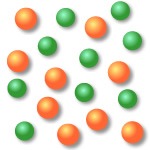
This picture represents: 
a)
Element
b)
Compound
c)
Mixture of Elements
d)
Mixture of Compounds
26.
A substance in which all the atoms are the same
a)
colloid
b)
homogeneous mixture
c)
solution
d)
element
27.
This picture represents which of the following?
a)
element
b)
compound
c)
mixture
28.
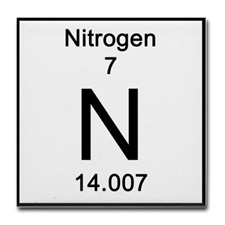
What is the number of protons that the element in this image contain?
a)
14
b)
7
c)
15
d)
18
29.
What is the atomic mass of "F"
a)
9
b)
18
c)
17
d)
19
30.
the central region of an atom where its neutrons and protons are is its 
a)
nucleus 
b)
electron cloud
c)
core 
d)
center 
31.
All matter is made of what?
a)
energy 
b)
atoms 
c)
electrons 
d)
compounds 
32.
electrons have this type of charge?
a)
negative
b)
positive
c)
neutral
33.
What is the mass of an atom if it has 11 protons, 12 neutrons, and 11 electrons?
a)
22
b)
11
c)
34
d)
23
34.

Who discovered the electron?

a)

Rutherford

b)

Thomson

c)

Milikan

d)

Dalton

35.

What does the number -12 and -14 represent after Carbon-12 and Carbon-14

a)

number of protons plus neutrons

b)

electrons

c)

proton

d)

neutrons

36.

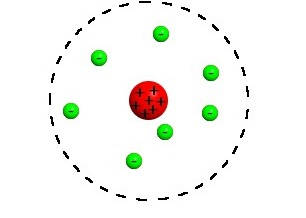
This model this model was the first to show a nucleus, consisting of protons and neutron. Electrons surround the nucleus but are not shown in distinct energy levels.

a)

The "Rutherford Model" of the atom

b)

The "Plum Pudding Model" of the atom

c)

The "Quantum Mechanical Model" of the atom
37.

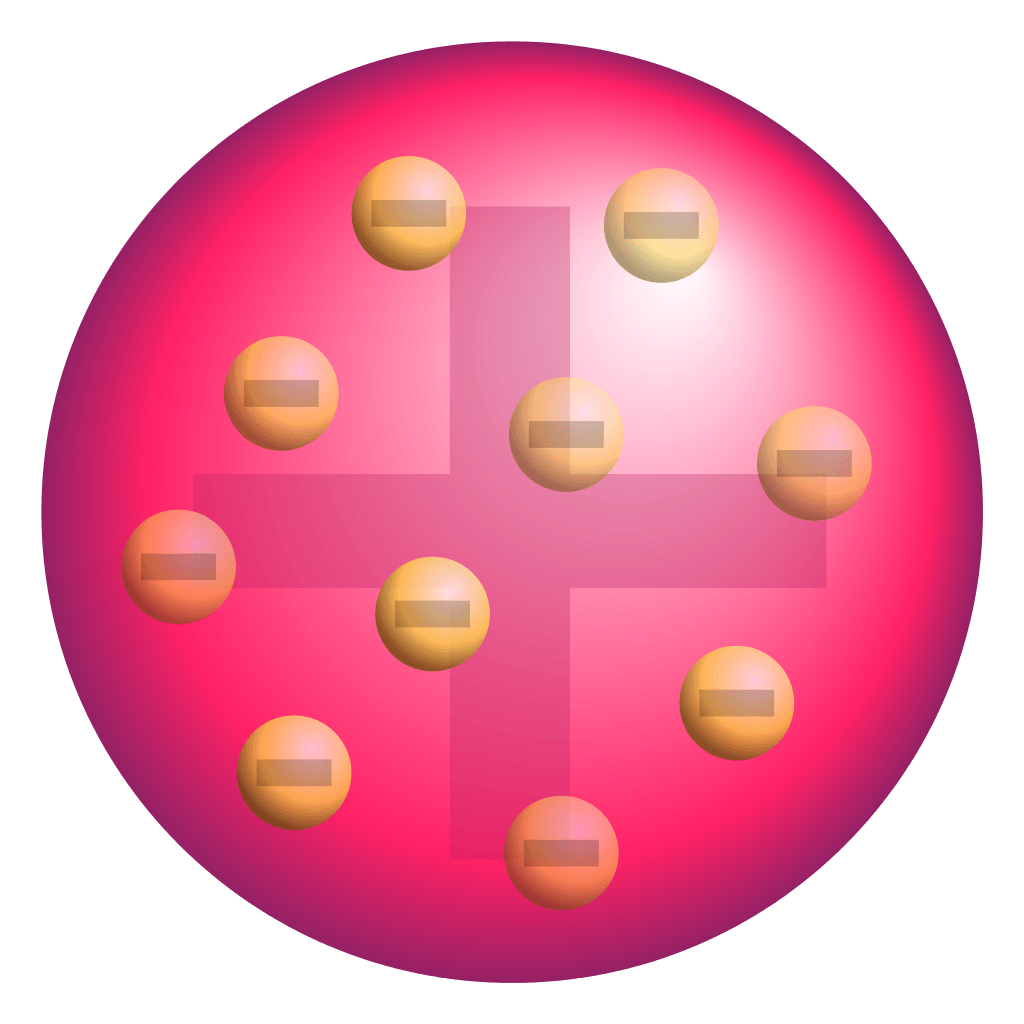
This model was developed after J.J. Thompson discovered electrons, a particle smaller than an atom. It shows electrons floating freely in a positive region.

a)

The "Plum Pudding Model" of the atom

b)

The "Rutherford Model" of the atom

c)

Democritus's model of the atom

d)

The "Quantum Mechanical Model" of the atom

38.
Ernest Rutherford discovered that atoms were mostly _________________. 
a)
negatively charged
b)
positively charged
c)
electrons
d)
empty space. 
39.
In the gold foil experiment, most of the positively charged alpha particles passed through the gold foil, but some were deflected or bounced back.  What did we conclude because of this?  
a)
Atoms are small indivisible spheres
b)
Atoms are mostly empty space with a small, dense, positive center
c)
Atoms have negatively charged particles which orbit the nucleus
d)
Light is a wave, not a particle
40.

Who was the first to propose that matter consist of indivisible particle of matter called atoms?

a)

John Dalton

b)

Aristotle

c)

Democritus

d)

Plato

41.

The cathode-ray tube was used to discover the ____ by ____.

a)

electron by Thomson

b)

electron by Dalton

c)

proton by Thomson

d)

proton by Dalton

e)

electron by Rutherford

42.

In Rutherford's famous "Gold Foil" experiment, some particles passed through the foil, some were deflected, and some were bounced straight back. This observation made Rutherford conclude

a)

gold atoms have a solid nucleus

b)

gold atoms can conduct electricity

c)

gold atoms are denser than other metals

d)

gold's elections orbit the nucleus at definite distances from the center

43.

Isotopes of an element have a different number of...

a)

Protons

b)

Neutrons

c)

Electrons

d)

Mass

44.
How many neutrons does the isotope of lithium have?
a)
8
b)
3
c)
4
d)
5
45.
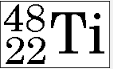
How many protons does this isotope of titanium have?
a)
48
b)
22
c)
26
d)
70
46.
What is the name of the pictured isotope?
a)
Copper-29
b)
Copper-63
c)
Copper-34
d)
CopperWopperHopperBopper
47.

Which elements have properties in common?

a)

elements in a group

b)

elements in a period

48.

These elements are in a:

a)

group

b)

period

49.

These elements are in a:

a)

group

b)

period

50.

Do these elements have properties in common?

a)

yes

b)

no

51.

What does malleable mean?

a)

able to be hammered or rolled into sheets

b)

will break easily

c)

able to be pulled into a wire

d)

is shiny

52.

Which is a property of metals?

a)

Malleable

b)

Good insulator

c)

Used in food

d)

Brittle

53.

Vanadium (V) is a good conductor, malleable and ductile. What type of element is vanadium?

a)

Metal

b)

Nonmetal

c)

Metalloid

d)

Superconductor

54.

Silicon is a semiconductor and has properties of both metals and nonmetals. What type of element is Silicon?

a)

Metal

b)

Nonmetal

c)

Metalloid

d)

Superconductor

55.

Which elements are found along the zig-zag line?

a)

metals

b)

nonmetals

c)

metalloids

d)

superconductors

56.

What is the name of this ion?

a)

oxide

b)

oxygen

57.

How many protons, neutrons, and electrons?

a)

proton = 6, neutron = 4, electron = 1

b)

proton = 4, neutron = 4, electron = 5

c)

proton = 1, neutron = 6, electron = 10

d)

proton = 4, neutron = 2, electron = 3

58.
What is Half-life?
a)
The amount of time it takes for some of the nuclei in a sample of the isotope to decay
b)
The amount of time it takes for half the electrons in a sample of the isotope to decay
c)
The amount of time it takes for half the nuclei in a sample of the isotope to decay
d)
the amount of time it takes to double the nuclei in a sample of the isotope to decay
59.

What type of decay is shown here

23892U ---> 23490Th + 42He.

a)

alpha

b)

beta

c)

gamma

60.
After 4 half-lives, 1g of a sample of Krypton-85 remains unchanged.  What was the original mass of the sample?
a)
16g
b)
32g
c)
0.0625g
d)
4g
61.

Identify the type of nuclear decay shown here

21483Bi 0-1e + 21484Po

a)

alpha

b)

beta

c)

gamma

62.
When a nucleus undergoes nuclear decay by gamma rays, the atomic number of the element....
a)
remains the same
b)
  decreases by one.
c)
increases by one.
d)
increases by two.
63.
The half-life of strontium-90 is 25 years. How much strontium-90 will remain after 100 years if the initial amount is 4.0 g?
a)
3.0g
b)
0.25mg
c)
0.3g
d)
0.25g
64.

Finish this equation

20983Bi--> _______ + 20581Tl

a)

42He

b)

0-1e

c)

y

65.
Solve this equation for alpha decay.
85209At = ___ + 24He
a)
83205Bi
b)
86209Rn
c)
81207Tl
d)
85208At
66.

Identify the missing substance in each of the following nuclear reaction.

_____→13756 Ba + 0−1 e

a)

13755Ba

b)

13757La

c)

13856Ba

d)

13755Cs

67.
What is the symbol for an alpha particle?
a)
42He
b)
0-1e
c)
0+1 e
d)
10n
68.
Solve this equation for beta decay.
2760Co = ___ + -10e
a)
2556Mn
b)
2860Ni
c)
2358V
d)
2759Co
69.

NaBr

a)

Bromide sodide

b)

Sodium bromide

c)

Sodium bromate

d)

Sodium bromite

70.
Write the formula for copper (I) phosphide?
a)
Cu3P
b)
CuP
c)
Cu1P
d)
CuP3
71.
Write the formula for vanadium (IV) carbonate
a)
V(CO3)2
b)
V4C
c)
V(CO3)4
d)
V4(CO3)
72.
Name this compound:
Li2SO3
a)
Lithium sulfate
b)
Lithium sulfite
c)
Lithite sulfide
d)
Sulfur lithite
73.
What is the formula for copper (II) sulfate?
a)
Cu2SO4
b)
CuSO3
c)
CuS
d)
CuSO4
74.
What is the formula for silver nitrate?
a)
Ag3NO
b)
AgNO3
c)
Ag(NO3)2
d)
Ag2NO3
75.
What is the formula for iron (III) chloride
a)
FeCl
b)
FeCl3
c)
FeClO3
d)
Fe3Cl
76.
What is the formula for ammonium sulfate
a)
NH4SO4
b)
(NH4)2SO4
c)
NH4S
d)
(NH4)2S
77.

What is the formula for potassium sulfite?

a)

K2SO4

b)

KSO3

c)

KSO4

d)

K2SO3

78.
What is the name of BaO?
a)
barium (II) oxide
b)
barium oxide
c)
barium oxygen
d)
barium (I) oxide
79.
Name the following:
Mg3P2
a)
Magnesium Phosphide
b)
Magnesium Phosphorus
c)
Magnamide Phosphide
d)
Magnamide Phosphorus
80.
Bromine monoflouride
a)
Br1F1
b)
BrF
c)
Br2F
d)
BrF2
81.
Disulfur trioxide
a)
S3O2
b)
SO
c)
S2O3
d)
S2O
82.
P2O5
a)
Phosphorus Oxide
b)
Pentaphosphorus Dioxide
c)
Diphosphorous pentoxide
d)
Phosphoric Oxygen
83.
SeF4
a)
Tetraselenium fluoride
b)
Selenium Fluoride
c)
Selenium tetraflouride
d)
Selenium (IV) Fluoride
84.

What is the chemical formula for dinitrogen heptachloride?

a)

N2Cl7

b)

2N7Cl

c)

2NCl7

d)

N2Cl5

85.
Octanitrogen tetraoxide
a)
N8O3
b)
N7O3
c)
N8O3
d)
N8O4
86.
As4O10
a)
arsenic oxide
b)
quadarsenic decoxide
c)
tetraarsenic decoxide
d)
arsenic decoxide
87.
Tribromine nonoxide
a)
Br3O9
b)
Br3O10
c)
Br3O6
d)
Br3O4
88.
BrP
a)
Bromide phosphide
b)
Bromide phosphate
c)
Monobromide monophosphide
d)
Bromide monophosphide
89.

What is the fomula of carbonic acid?

a)

H2CO3

b)

H2CrO4

c)

H2C2O4

d)

HCO3

90.

What is the formula of chlorous acid?

a)

HClO3

b)

HClO2

c)

HClO

d)

HCl

91.

The correct name of the acid with the chemical formula HI is ___.

a)

iodic acid

b)

hydroiodic acid

c)

iodous acid

d)

hypoiodous acid

92.

The correct name of the acid with the formula H2SO3 is ____;

a)

sulfuric acid

b)

hydrosulfuric acid

c)

sulfurous acid

d)

persulfuric acid

93.

What is the name of the acid with the formula HClO?

a)

hydrochloric acid

b)

chloric acid

c)

chlorous acid

d)

hypochlorous acid

94.

The name of the acid with the formula H3PO4 is ____.

a)

hydrophsophorus acid

b)

phosphoric acid

c)

hydrogen phosphorous

d)

phosphori hydroxide

95.

State the name of the acid with the formula HC2H3O2

a)

acetic acid

b)

acetous acid

c)

hydrogen acetate

d)

hydrogen dicarbon trihydrogen dioxygen

96.

What are the seven diatomic elements?

a)

H2, Cl2, Br2, O2, N2, I2, F2

b)

H2, Cl2, I2, F2, Hg2, Br2, Fe2

c)

H2, Cu2, Ni2, B2, O2, I2, Fe2

97.

Is K2 a diatomic element?

a)

Yes

b)

No

98.

How do we know a chemical reaction has taken place?

a)

Substances change in appearance

b)

Substances change in size

c)

Substances change in states, like from a liquid into a solid.

d)

New substances are formed

99.

Which of the following is a reactant in the following equation?


O2 + C6H12O6 > CO2 + H2O

a)

CO2

b)

H2O

c)

O2

100.

Which of the following describes the basic structure of single replacement reactions?

a)

A + B --> C

b)

A + B --> AB

c)

A + BC --> AC + B

d)

AB + CD --> AD + CB

101.

What are the products of ALL combustion reactions?

a)

Carbon Dioxide and Water

b)

Smoke and Ash

c)

Fire and Carbon Dioxide

d)

Water and Ash

102.

What type of reaction is this?


2NaHCO3 --> Na2CO3 + H2O + CO2

a)

Single Replacement

b)

Combustion

c)

Decomposition

d)

Synthesis

103.

What type of reaction is this?


2Na + 2H2O --> 2NaOH + H2

a)

Single Replacement

b)

Double Replacement

c)

Synthesis

d)

Decomposition

104.

What does the symbol (aq) stand for?

a)

Aquatic

b)

Aqueous

c)

Aqua

d)

Aquarium

105.

Use the activity series, seen in the image, to determine if the reaction will occur.

Ca + Fe2S3 --> ?

a)

Yes, the reaction will occur

b)

No, the reaction will not occur

c)

Cannot be determined

106.

Which coefficient should be placed in front of NH3 to balance this equation?


NH3 + H2SO4 --> (NH4)2SO4

a)

1

b)

2

c)

3

d)

1,000,000,000

107.

Which coefficient should be placed in front of Lithium to balance this equation?


AlCl3 + Li --> LiCl + Al

a)

1

b)

2

c)

3

d)

0.00000000000001

108.

Which coefficient should be placed in front of O2 to balance this equation?


C2H6 + O2 --> H2O + CO2

a)

3.5

b)

7

c)

9

d)

14

109.

What type of reaction is this?


CH4 + 2O2 --> 2H2O + CO2

a)

Combustion

b)

Synthesis

c)

Double Replacement

d)

Single Replacement

110.

What type of reaction is this?


Pb(NO3)2 + 2KI --> 2KNO3 + PbI2

a)

Double Replacement

b)

Single Replacement

c)

Synthesis

d)

Decomposition

111.

What coefficient should be placed in front of Oxygen (O2) to balance this equation?


Al + O2 --> Al2O3

a)

3

b)

2

c)

6

d)

1

112.

Which of the following could be an indication that a chemical reaction has occurred?

SELECT ALL THAT APPLY!!!

a)

Bubbles

b)

Precipitate Formation

c)

Change in Mass

d)

Change in Shape

e)

Change in Temperature

113.

What type of reaction is this?

4 Fe + 3 O2 --> 2 Fe2O3

a)

Synthesis

b)

Combustion

c)

Single Replacement

d)

Decomposition

114.
What precipitate forms when you mix lead (II) nitrate with sodium chloride?
a)
sodium nitrate 
b)
lead (II) chloride 
c)
sodium lead
d)
chloride nitrate 
115.
Which is the correct net ionic equation for the reaction of AgNO3 and CaCl2?
a)
Ca2+(aq) +  2Cl- (aq) → CaCl(s)
b)
Ag+(aq)  +  Cl- (aq) → AgCl(s)
c)
Ag +  Cl  →  AgCl
d)
Ag+  +  Ca2+   →Ag2Ca (s)
116.
Which of the following does NOT form a precipitate?
a)
Pb(NO3)2(aq) + 2KI(aq) 
b)
Sr(NO3)2 (aq) + K2SO4(aq) →
c)
AgNO3(aq) + Na2S(aq) →
d)
 Pb(NO3)2(aq) + AgNO3(aq) →
117.
What are the spectator ions in the reaction of sodium chloride with silver nitrate?
a)
silver and nitrate
b)
sodium and chloride
c)
sodium and nitrate
d)
silver and chloride
118.
In this equation,
CuCl2 + NaOH  → Cu(OH)2 + NaCl
Which product is insoluble?
a)
copper(II) hydroxide
b)
sodium chloride
c)
sodium hydroxide
d)
copper(II) chloride
119.
Which of these results in the formation of a precipitate?
a)
AgNO3(aq)  +  NaOH(aq)→
b)
BaNO3(aq)  +  CaCl2(aq)→
c)
NaNO3(aq)  +  KOH(aq)→
d)
More than one of these form precipitates
120.
What are the spectator ions in this reaction?
CuCl2(aq) + NaOH(aq) → Cu(OH)2(s) + NaCl(aq)
 
a)
Cu2+ and OH1-
b)
Na2+ and Cl2-
c)
Na1+ and Cl1-
d)
Na1+ and OH1-
121.
What is the result of the reaction between potassium bromide and ammonium sulfide?
a)
potassium sulfide precipitates
b)
ammonium bromide precipitates
c)
potassium ammonium precipitates
d)
no precipitate is formed
122.
What precipitate forms when you mix lead (II) nitrate with sodium chloride?
a)
sodium nitrate 
b)
lead (II) chloride 
c)
sodium lead
d)
chloride nitrate 
123.
Which is the correct net ionic equation for the reaction of AgNO3 and CaCl2?
a)
Ca2+(aq) +  2Cl- (aq) → CaCl(s)
b)
Ag+(aq)  +  Cl- (aq) → AgCl(s)
c)
Ag +  Cl  →  AgCl
d)
Ag+  +  Ca2+   →Ag2Ca (s)
124.
Which of the following does NOT form a precipitate?
a)
Pb(NO3)2(aq) + 2KI(aq) 
b)
Sr(NO3)2 (aq) + K2SO4(aq) →
c)
AgNO3(aq) + Na2S(aq) →
d)
 Pb(NO3)2(aq) + AgNO3(aq) →
125.
What are the spectator ions in the reaction of sodium chloride with silver nitrate?
a)
silver and nitrate
b)
sodium and chloride
c)
sodium and nitrate
d)
silver and chloride
126.
How many atoms are in 1 mole of NaCl? 
a)
6.02 x 10²³
b)
58 
c)
11
d)
17
127.
How are the mole and atomic masses of elements related?  
a)
The atomic mass of any substance is always equal to 1 mole of that substance 
b)
The atomic mass added up with itself by 6.02 x 10²³ equals the amount of atoms
c)
The atomic mass is the amount of protons plus number of atoms
d)
Atoms combined make up molecules, which are the measurement of atomic masses 
128.
Which has more molecules?
a)
1 mole H2O
b)
1 mole Al(OH)3
c)
1 mole NaCl
d)
There are all the same
129.

How many molecules are in 2.5 mol of NaCl?

a)

1.51x10²³

b)

146

c)

4.15

d)

1.51x1024

130.

What is the molar mass of Calcium Oxide (CaO)?

a)

56.1

b)

112.2

c)

24.0

d)

40.1

131.

How many moles are equal to 89.23 g of calcium oxide, CaO?

a)

1.59 mol

b)

2.03 mol

c)

1.77 mol

d)

3.21 mol

132.

At STP, 1 mol of gas has a volume of

a)

34L

b)

22.4L

c)

60L

d)

0.6L

133.

Determine the volume, in liters, of 1.2 mole SO2 gas at STP.

a)

13 L

b)

26 L

c)

6.5 L

134.
How many atoms of carbon are in 6.00g of carbon?
a)
1.20x1024atoms C
b)
6.02x10²³atoms C
c)
3.01x10²³atoms C
d)
1.50x10²³atoms C
135.
How many grams are in 1.2 x 1024 molecules of CO?
a)
28 grams
b)
56 grams
c)
6.02 grams
d)
1.2 grams
136.

What is the mass of 4.98 x 1024 atoms of Zn?

a)

541 g

b)

8.27 g

c)

.122 g

d)

4.59 x 1046 g

137.

A sample of AlCl3 contains a total of 4.515 x 1027 atoms of chlorine. What must be the mass of this sample?

a)

2.500 x 10⁵ g

b)

1.000 x 10⁶ g

c)

18.75 g

d)

3.333 x 10⁵ g

138.
What is the percent by mass of oxygen in MgO?
a)
20%
b)
40%
c)
50%
d)
60%
139.
What is the percent by mass of sodium in NaCl?
a)
39%
b)
61%
c)
35%
d)
65%
140.
Which pair has the same empirical formula?
a)
NaCrO4 and Na2Cr2O7
b)
C2H4O2 and C6H12O6
c)
C3H6Oand C2H6O2
d)
CH4 and C2H6
141.
A compound consists of 72.2% magnesium(Mg) and 27.8% nitrogen(N) by mass. What is the empirical formula?
a)
Mg4N3
b)
MgN2
c)
Mg3N
d)
MgN
142.
You are given the following percentages: 40.05% S and 59.95% O. Find the empirical formula for these elements.
a)
SO
b)
SO2
c)
SO3
d)
SO4
143.
A formula with the lowest whole # ratio of elements in a compound is called
a)
Molecular Formula
b)
Chemical Formula
c)
Empirical Formula 
d)
Distance Formula
144.
What is the molecular formula if the empirical formula is CH2O and the molecular molar mass is 180.18?
a)
CH2O
b)
C2H4O2
c)
C4H8O4
d)
C6H12O6
145.
Given the following: 42.07% Na, 18.89% P, and 39.04% O, determine the empirical formula.
a)
 NaPO2
b)
Na2PO3
c)
Na3PO4
d)
NaPO4
146.
What is the molecular formula for a compound with the empirical formula: K2SOand a molecular mass of 696g.
a)
K2SO
b)
K8SO16
c)
K8S4O
d)
K8S4O16 
147.
A chemical formula that shows the actual # and kinds of atoms present in one molecule of a compound is called_________
a)
ionic formula
b)
covalent formula
c)
empirical formula
d)
molecular formula
148.
Which pair has the same empirical formula?
a)
NaCrO4 and Na2Cr2O7
b)
C2H4O2 and C6H12O6
c)
C3H6Oand C2H6O2
d)
CH4 and C2H6
149.
An empirical formula:
a)
is a formula that calculates the coefficients of a compound in a balanced equation.
b)
is the simplest whole-number ratio of moles of elements in the compound.
150.
If an atom of Fluorine has an atomic mass of 19 amu, it has a Molar mass of ____
a)
19 lbs.
b)
19 kg
c)
How am I supposed to know?
d)
19 g/mol
151.
Using the following equation:
Fe2O3(s) + 3H2(g) → 2Fe(s) + 3H2O(l)
How many moles of iron can be made from  6 moles H2
a)
4 moles Fe
b)
6 moles Fe
c)
9 moles Fe
d)
2 moles Fe
152.
N2 +  3H2 → 2NH3 
How many moles of hydrogen are needed to react with 2 moles of nitrogen?
a)

6 mol H

b)

2 mol H

c)

3 mol H

d)

1 mol H

153.
2 NaClO3 (s) --> 2NaCl (s) +3 O2 (g)  
12.00 moles of NaClO3 will produce how many grams of O2?
a)
256 g of O2
b)
576 g of O2
c)
288 g O2
154.
B2H6 + 3O2 -->2 HBO2 + 2 H2O
 What mass of O2 will be needed to burn 36.1 g of B2H6?
a)
13.8 g O2
b)
3.86 mol of O2
c)
124 g O2
155.
4 Al + 3 O2 –> 2 Al2O How much aluminum would be needed to completely react with 45 grams of O2?
a)
1.05 moles
b)
3.75 moles
c)
1.875 grams
d)
1.875 moles
156.
 CaC₂(s) + 2H₂O(l)   -->   C₂H₂(g)   + Ca(OH)₂(aq)
how many grams of Ca(OH)₂ would be formed with 3.20 moles of CaC₂?
a)
119 g
b)
21.2 g
c)
114 g
d)
237 g
157.
Using the following equation:
4NH3(g) + 5O2(g) --> 4NO(g) + 6H2O(l)
How many grams of oxygen gas are needed to react with 56.8 grams of ammonia?
a)
45.08 g O2
b)
133.33 g O2
c)
260.77 g O2
d)
75.92 g O2
158.
If a chemist calculates the maximum amount of product that could be obtained in a chemical reaction, he or she is calculating the
a)
theoretical yield
b)
mole ratio
c)
actual yield
d)
percentage yield
159.
2Na + 2H2O → 2NaOH+ H2
How many grams of hydrogen are produced if 120 g of Na are available?
a)
5.2 g
b)
2.6 g
c)
690 g
d)
45 g
160.
What is the measured amount of a product obtained from a chemical reaction?
a)
mole ratio
b)
theoretical yield
c)
percentage yield
d)
actual yield
161.
2 CO (g) + O2(g) → 2 CO2 (g)
In the formation of CO2 from CO and oxygen, how many Liters of CO2 are produced by the reaction of 8 mols of O2 with an excess of carbon monoxide?
a)
0.178 L
b)
358.4 Liters
c)
704 grams
d)
0.36 grams
162.
Cl2 + 2 KBr → Br2 + 2 KCl
How many grams of potassium chloride can be produced from 356 g of chlorine and 356 g of potassium bromide?
a)
749 g
b)
223 g
c)
479 g
d)
814 g
163.
A chemist interested in the efficiency of a chemical reaction would calculate the
a)
mole ratio
b)
rate of reaction
c)
percent yield
d)
energy released
164.
What is a Excess Reagent?
a)
amount you end with
b)
what you run out of first
c)
what you have left over
d)
what you start with
165.
Identify the limiting reagent when 6.00 g HCl combines with 5.00 g Mg to form MgCl2.
 
Mg +  2HCl --> MgCl2  +  H2   
 
a)
Mg
b)
H2
c)
MgCl2
d)
HCl
166.
When does a chemical reaction stop?
a)
When the lab is finished
b)
When the excess reactant is used up
c)
When the limiting reactant is used up
d)
Chemical reactions never stop