
 Worksheets
NGSS Chemistry Fall Final Review
Total questions: 170
Worksheet time: 7hrs 13mins
This electron configuration belongs to...

This symbol indicates a _______.
neutron
proton
electron

What is the atomic mass for this element?
6
12.0107
6.0107
18.0107
The center of an atom is called
a/an __________.
atomic mass
nucleus
proton center
energy shell

How many neutrons are in an Calcium atom?
20
40.08
60
The atomic number of an element is determined by the _________ of ________ in the nucleus.
protons, neutrons
number, electrons
electrons, protons
number, protons

Which image shows a Bohr model for Carbon.


If the protons and electrons do not match, the atom is ____.
neutral
ion
Sea-floor spreading begins here.
Continental shelf
Sea mounts
Trenches
Mid-ocean ridge
Why does subduction occur?
Old crust is more dense and gravity helps pull the crust back into the mantle.
Old crust is less dense and it sinks back into the mantle.
Old crust is warm and melts back into the mantle.
Old crust has no where else to go but through trenches.
Convection currents happen when
Rock/magma gets heated and sinks. It then cools down and rises.
Rock/magma doesn't move.
Rock/magma gets more dense and rises. It then cools down and sinks.
Rock/magma gets heated and rises. It then cools down and sinks.


New oceanic crust (sea floor) is created at this boundary.
Divergent Oceanic
Divergent Continental
Convergent Oceanic
Transform


What is energy?
moving energy
stored energy
renewable energy
The ability to do work.
What is potential energy?
moving energy
stored energy
renewable energy
non renewable energy
What is kinetic energy?
moving energy
potential energy
stored energy
renewable energy
Which of these energy sources come from inside the earth's crust?
oil
coal
solar
gas
What is given off from energy?
water
heat
smoke
ash
Which of these is an example of kinetic energy?
a bicycle
a battery
a solar panel
firewood
What type of heat transfer takes place in liquids and gasses?
Conduction
Convection
Radiation
Thermal Equilibrium

Why does warm fluid rise?
Particles lose energy, they move closer together, density increase
Particles become less dense
Particles gain energy, they move further apart, density decreases
Particles gain energy, and their density decreases
An electron is
positively charged
neutral
negatively charged
atomic number is
the number of protons
the number of electrons
the number of neutrons
the location of an atom on the periodic table
Atomic Mass is the number of
protons and neutrons in the nucleus of an atom
protons and electrons in the nucleus of an atom
neutrons and electrons in the nucleus of an atom
Conservation of mass means
all the atoms present before a chemical reaction are not present after
atoms present before chemical reactions are present after
new substances and new elements are formed in a chemical reaction
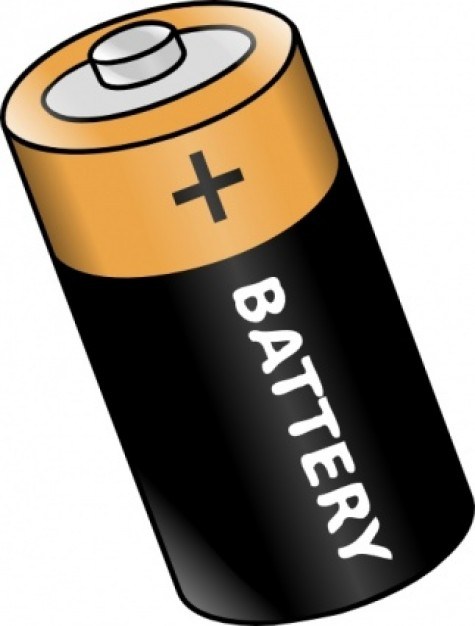
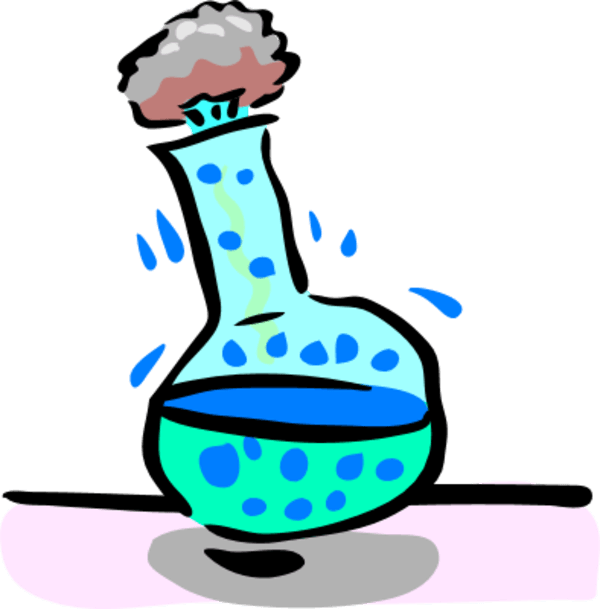
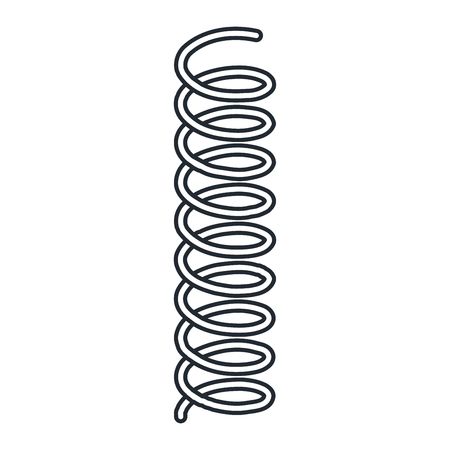
Which picture is NOT an example of Chemical PE?

Complete the following calculations. Round off your answers as needed.
52.6 g + 309.1 g +77.214 g
438.9
438.914
438.91
4.38914 x 10²
Complete the following calculations. Round off your answers as needed.
245.01 km x 2.1 km
5.14521 x 10²
510
514
514.521
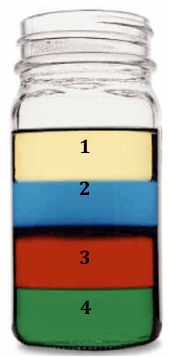
B. lead 11.3 g/ cm3
C. mercury 13.6 g/ cm3
D. Paraffin(wax) 0.87 g/ cm3
E. platinum 21.4 g/ cm3
Which will not sink in water?

What are the products of the chemical reaction pictured?
CH4 and CO2
CH4 and O2
CO2 and H2O
O2 and H2O

As the temperature of air increases, its volume ____.
increases
decreases
does not change
Subatomic particles with a negative charge
Electrons
Neutrons
Protons
Quarks

What is the atomic number?
35
18
17
52

How many protons and electrons does this element have?
35
18
17
52

What is the atomic mass of Neon?
10
20
30

How many neutrons does calcium have?
20
40
60
0
How many valence electrons are found in atoms of group 4?
4
3
14
16
How many valence electrons are found in atoms of group 5A?
4
5
2
3
All atoms are most stable with (or would "prefer") how many electrons in their valence shell?
1
2
8
18
What groups are the most reactive metals?
2
7A
1
17
What groups are the most reactive non metals?
1
7A
2
6A
Why are halogens so reactive?
They want to get rid of their only valance electron
They only need one more electron
They are non reactive, they have a full shell
How do electrons of an element determine that element's reactivity?
If the valence shell has missing electrons it is very reactive to attract or lose more electrons.
If the valence shell has a full ring of electrons it is very reactive because it needs more.
If the valence shell has a full shell of electrons it is very reactive because it is already full.
If the valence shell has missing electrons it is not reactive because it is missing electrons.
The atom with the largest atomic radius in Group 8A is -
Ar
He
Kr
Rn
N or C?

Which of the following would have the smallest ionization energy?
K
P
S
Ca
Mg
Which of the following would have the largest ionization energy?
Na
Al
Mn
N
Pd
Place the following elements in order of increasing ionization energy: Na, O, Mg, Ne, K
Ne, O, Mg, Na, K
Mg, Na, O, K, Ne
K, Mg, Na, O, Ne
K, Na, Mg, O, Ne
Place the following elements in order of decreasing ionization energy: N, Si, P, Mg, He
He, N, P, Si, Mg
Mg, Si, P, N, He
N, He, Si, P, Mg
Si, P, N, Mg, He
Which statement best describes the relative first ionization energies of Ca and Mg?
Calcium has a higher first ionization energy than magnesium because its radius is smaller.
Magnesium has a higher first ionization energy than calcium because its radius is smaller.
Calcium has a higher first ionization energy than magnesium because its highest occupied energy sub-level is full.
Magnesium has a higher first ionization energy than calcium because its highest occupied energy sub-level is full.
Calcium and magnesium will have the same first ionization energy because they have the same number of valence electrons.
Which statement best describes the relative first ionization energies of Be and B?
Beryllium has a higher first ionization energy than boron because its radius is smaller because it has fewer valence electrons than boron.
Boron has a higher first ionization energy than beryllium because its radius is smaller and its valence electrons are closer to the nucleus.
Beryllium has a higher first ionization energy than boron because its highest occupied energy level is full.
Boron has a higher first ionization energy than beryllium because its highest occupied energy level is full.
They will have the same first ionization energy because boron only has one extra valence electron.
Ionization Energy increases going down a group because the number of protons is increasing.
True
False
Which of the following elements has the lowest ionization energy?
cesium
sodium
lithium
rubidium
What is ionization energy?
The amount of energy to add an electron to an element
The amount of energy added to make a bond with a valence electron
The energy required to remove an electron
The energy added to promote an electron in a lower energy level to a higher energy level
Which of the following best describes how ionization energy changes down a group?
Ionization energy decreases because electrons are closer and require more energy to remove.
Ionization energy decreases because electrons are farther away and require less energy to remove.
Ionization energy increases because the valence electrons are closer to the nucleus.
Ionization energy increases because the valence electrons are farther away from the nucleus.
Which set of elements includes the element with the highest ionization energy?
N, O, C, Li, S
Al, Si, Ge, F, N, K
Mg, Ca, Be, B, N
N, I, Pb, Fr, W
Mg, Be, Ca, and Ba are all in the same ___.
group
period
energy level
orbital
In the periodic table, there are 18 periods and 7 groups.
True
False
Of the following metals, which will be the MOST reactive? (Hint: reactive metals have low ionization energies)
gold
cobalt
strontium
tungsten

