wayground logo

Free Printable Worksheets

Font size

S
M
L
XL
Worksheets

24S1 Final Exam Review

Total questions: 174

Worksheet time: 5hrs 12mins

Name
Class
Date
1.

Let's practice! Before reads 50 mL. After we drop in the object, the new water level goes up to 60 mL. What is the volume of the blocks?

a)

8 mL

b)

10 mL

c)

60 mL

d)

5 mL

2.

Jack has a rock. The rock has a density of 7 g/cm3 and a volume of 2cm3. What is the weight of the rock?

a)

7 grams

b)

14 grams

c)

0.29 grams

d)

3.5 grams

3.


What two types of measurements make up DENSITY

a)

Volume and Weight

b)

Temperature and Mass

c)

Mass and Volume

4.
Which box has a higher density?  
a)
Box A
b)
Box B
c)
cannot be determined
d)
they are the same
5.

What is the formula for density?

a)

D=V/M

b)

D=MxV

c)

D=M/V

d)

D=M+V

6.
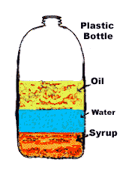
Which liquid is the least dense?
a)
oil
b)
water
c)
syrup 
d)
plastic bottle
7.

has mass and takes up space.

a)

gram

b)

volume

c)

displacement

d)

matter

8.
Which of the following would float on water? Remember, water has a density of 1.0g/cm3
a)
Honey 1.30 g/cm3
b)
Lamp Oil .80 g/cm3
c)
Pepsi 1.04 g/cm3 
9.
An object that floats in water is __________.
a)
more dense than water
b)
same density as water
c)
less dense than water
d)
must be in the shape of a cube
10.

A sample of seawater has a mass of 158 g and a volume of 156 mL. What is the density?

a)

1.01 g/mL

b)

0.99 g/mL

c)

24,648 g/mL

11.
In the picture, the mass of the block is 200 g, the dimensions of the block are 6 cm by 4 cm by 5 cm.  What is its density?
a)
1.67g/cm3
b)
13.33 g/cm3
c)
0.60 g/cm3
d)
 24000 g/cm3
12.
Flammability (burns): Chemical or Physical Property
a)
Chemical Property
b)
Physical Property
13.
Reacts with Acid: Chemical or Physical Property
a)
Chemical Property
b)
Physical Property
14.
Brittleness: Chemical or Physical Property
a)
Chemical Property
b)
Physical Property
15.
Reacts with Air: Chemical or Physical Property
a)
Chemical Property
b)
Physical Property
16.

______________________ can only be recognized when substances react or do not react chemically with one another.

a)

Physical properties

b)

Chemical properties

c)

Flammable properties

d)

Colorful properties

17.

What is the outcome of observing a chemical property?

a)

Nothing

b)

A new substance is formed with different properties

c)

NaCl

d)

A rise in thermal conductivity

18.
What is the definition of a chemical change?
a)
Characteristics that describe how a substance behaves under different conditions
b)
Alteration in the physical state of matter without changing its chemical composition
c)
Transformation that results in the creation of new substances
d)
Inherent characteristics that help us identify and describe matter
19.
What is the definition of a physical change?
a)
Alteration in the physical state of matter without changing its chemical composition
b)
Inherent characteristics that help us identify and describe matter
c)
Characteristics that describe how a substance behaves under different conditions
d)
Transformation that results in the creation of new substances
20.

Choose the one that is a chemical property

a)

Magnetism

b)

Size

c)

Color

d)

Reactivity with water

21.
What explains the very high melting and boiling point of water
a)
Strong dipole-dipole bonds between water molecules
b)
Strong hydrogen bonds between water molecules
c)
Dispersion forces which are present in all molecules
d)
Asymmetrical shape of the polar bonds.
22.
Does HCl have hydrogen bonding?
a)
yes
b)
no
23.

Strongest Intermolecular force for: NH3

a)

Dispersion Force

b)

Dipole dipole

c)

Hydrogen bonding

24.

Strongest Intermolecular force present in HCl?

a)
dipole dipole
b)

London dispersion

c)
H-bond
d)
ionic
25.

Which substance has the weakest intermolecular forces?

a)

Substance A, boiling point of 75 °C

b)

Substance B, boiling point of 105 °C

c)

Substance C, boiling point of 25 °C

d)

Substance d, boiling point of 45 °C

26.

The weaker the intermolecular forces of a substance the _____________ the boiling point

a)

higher

b)

lower

27.
London forces are stronger in heavier atoms or molecules, and weaker in lighter atoms or molecules.  Which of these has the strongest London forces?
a)
F2
b)
Br2
c)
I2
d)
Cl2
28.
What type of forces will the following molecule have?
a)
dispersion forces
b)
dipoles
c)
hydrogen bonding
29.
Which of the following statements correctly explains why hydrogen bonding is such a strong intermolecular force?
a)
There is an attraction between a small, weakly electronegative hydrogen atom and a large, strongly electronegative atom of fluorine, nitrogen, or oxygen
b)
There is an attraction between a small, highly electronegative hydrogen atom and a large, highly electronegative fluorine atom
c)
There is an attraction between the hydrogen and oxygen atoms, only
d)
There is an attraction between the hydrogen and nitrogen atoms, only
30.

In a polar covalent bond, the electrons gather around...

a)

Mostly the atom with the greatest electronegativity

b)

The atom with the lowest electronegativity

c)

Each atom equally

d)

Only the atom with the greatest electronegativity

31.

In a nonpolar covalent bond, the electrons gather around...

a)

Mostly the atom with the greatest electronegativity

b)

The atom with the lowest electronegativity

c)

Each atom Equally

d)

Only the atom with the greatest electronegativity

32.

The polarity of a bond is determined by...

a)

The sum of the electronegativities of the two atoms

b)

The difference in the electronegativities of the two atoms

c)

The charges of the atoms

d)

The number of electrons shared in the bond

33.

Rank these in order of strength:
London forces
hydrogen bond
dipole-dipole attraction

a)

dipole-dipole>

hydrogen bond>

London

b)

London>

dipole-diple>

hydrogen bond

c)

hydrogen bond>

dipole-dipole>

London

34.
Intermolecular forces are the forces
a)
within molecules
b)
between molecules
35.

What is the strongest intermolecular force present in this compound?

a)

Hydrogen Bonding

b)

ionic bond

c)

nonpolar covalent bond

d)

covalent bond

36.
When metals bond with non-metals they form what type of bonds
a)
covalent
b)
ionic
c)
cooperative
d)
lewis
37.
What elements generally make an ionic bond?
a)
metal and nonmetal
b)
2 or more nonmetals
c)
metal
d)
none of the above
38.
What elements generally make a covalent bond?
a)
metal and nonmetal
b)
2 or more nonmetals
c)
metal
d)
none of the above
39.

Covalent: What is the name of N2O3

a)

Nitrogen trioxide

b)

Dinitrogen oxide

c)

Dinitrogen trioxide

d)

Nitrogen oxide

40.

Covalent: What is the chemical formula for Tetrasulfur pentoxide?

a)

SO

b)

S4O

c)

S4O5

d)

S5O4

41.

Covalent: What is the name of C3Cl8 ?

a)

Carbon octachloride

b)

Tricarbon octachloride

c)

Carbon trichloride

d)

Octacarbon trichloride

42.

Covalent: What is the chemical formula for Nitrogen triiodide?

a)

NI

b)

N3I

c)

NI3

d)

None of these

43.

Covalent: What is the name of CO

a)

Carbon oxide

b)

Carbon dioxide

c)

Carbon monoxide

d)

Carbon II oxide

44.

Covalent: What is the chemical formula for Fluorine trisulfide ?

a)

S3F

b)

FS3

c)

FS

d)

none of the above

45.

Name the formula: LiBr

a)

lithium bromine

b)

lithium (I) bromine

c)

lithium bromide

d)

lithuim (I) bromide

46.

Name the following ionic compound: BeCl2

a)

beryllium chlorine

b)

beryllium II chloride

c)

beryllium chloride

d)

beryllium dichloride

47.

Which compound naming uses prefixes?

a)

Ionic

b)

Covalent

c)

Ionic and covalent both do

d)

Neither Ionic or covalent do

48.

Name the formula: Li2O

a)

Dilithium oxideDilithium oxide

b)

Lithium oxide

c)

Lithium dioxide

49.

Ionic: Na2S

a)

Disodium sulfide

Disodium sulfide

b)

Sodium sulfide

c)

Sodium monosulfide

50.

How do the following two elements bond together?

Cr3+ O2- (Hint: How many do I need of each to get a charge of zero?)

a)

CrO

b)

Cr3O2

c)

Cr2O3

d)

CrO3

51.

How do the following two elements bond together?

Al3+ O2- (Hint: How many do I need of each to get a charge of zero?)

a)

AlO

b)

Al2O3

c)

Al3O6

d)

Al3O2

52.
Where are the transition metals found on the periodic table?
a)
The first 5 elements
b)
The bottom two rows
c)
Group 3-12
d)
Row 3-12
53.
What is a transition metal?
a)
They are elements that charges vary and are represented by roman numerals during nomenclature.
b)
A type of squirrel.
c)
Elements that are not defined as metals or nonmetals.
d)
A metal with no charge.
54.
Name the compound using appropriate rules:
FeCl3
a)
Chloride Iron
b)
Iron III Chloride
c)
Chloride III Iron
d)
I have no clue
55.

The name of FeCl₂ is

a)

iron chloride

b)

iron (II) chloride

c)

iron (I) chloride

d)

iron dichloride

56.

What is the name of the following formula: Cu3N

a)

copper nitride

b)

copper (iii) nitride

c)

copper (i) nitride

d)

copper (iii) nitrogen (i)

57.
Because the overall charge in a compound must be ____________, the charge of iron in Fe2O3 can be calculated as 3+.
a)
2+
b)
1+
c)
0
d)
1-
58.

In the compound TiO2, titanium has a charge of ______. Hint: The charge on "O" is -2. Use the charge on oxygen to determine the charge on Ti.

a)

4+

b)

2+

c)

2-

d)

4-

59.
What is the name of Al(NO3)3?
a)
Aluminum trinitrate
b)
Monoaluminum nitrate
c)
Aluminum (III) nitrate
d)
Aluminum Nitrate
60.
What is the name of Mg(OH)2?
a)
Magnesium Hydride
b)
Magnesium Dihydride
c)
Magnesium Dihydroxide
d)
Magnesium Hydroxide
61.
What is the name of this polyatomic ion?  CO3-2
a)
Carbonate
b)
Chromate
c)
Carbonite
d)
Chlorate
62.

What is the formula for Calcium Chlorate?

a)

Ca(ClO3)2

b)

CaCl2

c)

CCl

63.
What is the name of NH4Cl?
a)
nitrogen tetrahydrogen chloride
b)
ammonium chlorine
c)
ammonium chloride
d)
ammonium chlorate
64.

Identify Gallium(III) Sulfate

a)

GaSO4

b)

Ga2(SO4)3

c)

Ga3(SO4)2

d)

Ga2SO4

65.
The formula of calcium phosphate is 
a)
CaPO4
b)
Ca2(PO4)3
c)
Ca3PO4
d)
Ca3(PO4)2
66.

Which type of bond is formed by the sharing of electrons?

a)

Ionic

b)

Covalent

c)

Metallic

67.

Which type of ion results from the gain of electrons and has a negative charge?

a)

Cation

b)

Anion

68.

Which type of bond is formed by the transfer of electrons?

a)

Ionic

b)

Covalent

c)

Metallic

69.

Which type of bond is formed between a metal and a nonmetal?

a)

Ionic

b)

Covalent

c)

Metallic

70.

__________ bonds involve an unequal sharing of electrons, while __________ bonds involve an equal sharing of electrons.

a)

Nonpolar, polar

b)

Polar, metallic

c)

Metallic, nonpolar

d)

Polar, nonpolar

71.

Which type of chemical reaction has the following configuration?


Substance + Substance --> Compound


A + B --> AB

a)

Composition/Synthesis

b)

Decomposition

c)

Single Replacement

d)

Double Replacement

e)

Combustion

72.

Which type of chemical reaction has the following configuration?


Element + Compound --> Element + Compound


A + BC --> B + AC

a)

Composition/Synthesis

b)

Decomposition

c)

Single Replacement

d)

Double Replacement

e)

Combustion

73.

Which type of chemical reaction has the following configuration?


Hydrocarbon + Oxygen --> Carbon Dioxide + Water


CxHy + O2 --> CO2 + H2O

a)

Composition/Synthesis

b)

Decomposition

c)

Single Replacement

d)

Double Replacement

e)

Combustion

74.

What type of chemical reaction has the following configuration?


Ionic Compound(aq) + Ionic Compound(aq) --> Compound + Compound


AB(aq) + CD(aq) --> AD + BC

a)

Composition/Synthesis

b)

Decomposition

c)

Single Replacement

d)

Double Replacement

e)

Combustion

75.

What type of chemical reaction has the following configuration?


Compound --> Substance + Substance


AB --> A + B

a)

Composition/Synthesis

b)

Decomposition

c)

Single Replacement

d)

Double Replacement

e)

Combustion

76.

Select each compound that can be produced by combustion reactions. (more than 1 answer)

a)

Oxygen

b)

Carbon Dioxide

c)

Water

d)

Glucose

e)

Carbon

77.

Classify the following chemical reaction


BaCl2(aq) + K2CrO4(aq) --> BaCrO4(s) + 2KCl(aq)


a)

Composition/Synthesis

b)

Decomposition

c)

Single Replacement

d)

Double Replacement

e)

Combustion

78.

Classify the following chemical reaction.


Si(s) + 2Cl2(g) --> SiCl4(l)

a)

Composition/Synthesis

b)

Decomposition

c)

Single Replacement

d)

Double Replacement

e)

Combustion

79.

Classify the follow chemical reaction.


2C6H6(l) + 15O2 --> 6H2O(l) + 12CO2(g)

a)

Composition/Synthesis

b)

Decomposition

c)

Single Replacement

d)

Double Replacement

e)

Combustion

80.

What type of chemical reaction is when a single compound is broken down into two or more products?

a)

Composition/Synthesis

b)

Decomposition

c)

Single Replacement

d)

Double Replacement

e)

Combustion

81.

Identify the type of reaction...

C + O2 > CO2C\ +\ O_2\ ->\ CO_2

a)

Synthesis

b)

Decomposition

c)

Single Replacement

d)

Double Replacement

e)

Combustion

82.

Identify the type of reaction...

SnCl2 + 2Li > 2LiCl + SnSnCl_2\ +\ 2Li\ ->\ 2LiCl\ +\ Sn

a)

Composition

b)

Decomposition

c)

Single Replacement

d)

Double Replacement

e)

Combustion

83.

Identify the type of reaction...

(NH4)2CrO4 +2 KOH > 2NH4OH + K2CrO4\left(NH_4\right)_2CrO_4\ +2\ KOH\ ->\ 2NH_4OH\ +\ K_2CrO_4

a)

Composition

b)

Decomposition

c)

Single Replalcement

d)

Double Replacement

e)

Combustion

84.
What is the right part of a chemical equation called...
2H2 + O2 --> 2H2O
a)
Reactants
b)
Products 
c)
Yields 
d)
Chemical Equation 
85.
What is the left part of a chemical equation called?
2H2 + O2 --> 2H2O
a)
Reactants
b)
Products 
c)
Yields 
d)
Chemical Equation 
86.
What does the Law of Conservation of Mass state?
a)
Matter cannot be gained or lost in a chemical reaction.
b)
Matter can only be lost in a chemical reaction.
c)
Matter can only be gained in a chemical reaction.
d)
Matter can be gained and lost in a chemical reaction. 
87.
How many HCl molecules do you need to balance this equation? 
Mg +  __HCl --->  MgCl2 + H2
a)
1
b)
2
c)
3
d)
4
88.
What is the little number after an element in a chemical equation called.
Example: H2
a)
Coefficient 
b)
Subscript
c)
Atom
d)
Equation
89.

In the equation, 2Mg + O2 ---> 2MgO, which are the reactants?

a)

Mg and O

b)

Mg and MgO

c)

MgO

d)

O and MgO

90.
What are the larger numbers that you CAN CHANGE in a chemical equation? 
a)
Coefficient 
b)
Products
c)
Reactants
d)
Subscripts
91.

Balance this equation

_Al +_HCl --> _H2 +_AlCl3

a)

2,6,3,2

b)

it's already balanced

c)

4,12,3,4

d)

2,1,4,5

92.

Balance the following equation:

___ Mg+ ___ O2→___ MgO

a)

1, 1, 3

b)

2, 1, 2

c)

1, 2, 1

d)

2, 2, 2

93.

Balance the following equation:

___ SeCl6+ ___ O2→___ SeO2+____Cl2

a)

1, 1, 1, 3

b)

2, 1, 2, 1

c)

1, 2, 1, 2

d)

2, 2, 2, 4

94.

What are the products of this reaction?

Cu+ AgNO3-->

a)

Cu(NO3)2+Ag

b)

CuNO3 + Ag

c)

CuAg+NO3

d)

Cu+ AgNO3

e)

No Reaction

95.

What are the products of this reaction?

Zn(s) + H2SO4(aq) -->

a)

Zn(SO4)2 + H

b)

ZnSO4 + H2

c)

ZnSO4 + H

d)

Zn2SO4 + H2

e)

No reaction

96.

What are the products of this reaction?

NaOH + Fe(NO3)3 -->

a)

NaFe + OH(NO3)3

b)

NaNO3 + FeOH3

c)

NaNO3 + FeOH

d)

NaNO3 + Fe(OH)3

e)

No Reaction

97.

Predict the products for the this reaction:

K + HCl -->

a)

KCl + H2

b)

KHCl

c)

KH + Cl2

d)

KCl + H

e)

No Reaction

98.
Evidence of a chemical reactions is anything that shows - 
a)
a new substance has formed
b)
a solid dissolved in a liquid
c)
interaction between 2 gases
d)
a change in the state of matter
99.

All of the following are indicators of a chemical reaction except one. Which one is NOT an indicator that a chemical reaction has taken place?

a)

the production of heat or light

b)

a color change

c)

the production of gas bubbles

d)

the dissolving of one substance in another

100.

A student places a piece of a potato into a container of hydrogen peroxide and observes bubbles forming around the potato. The presence of bubbles might indicate the formation of a new substance because bubbles -

a)

could show that a gas is forming

b)

always rise to the top of a liquid.

c)

are almost always perfectly spherical.

d)

usually burst after a few minutes.

101.

A clear liquid from a flask is poured into another clear liquid in a beaker. Which of the following results of this procedure would indicate a new substance was formed?

a)

The level of the substance in the beaker is higher after the other liquid is added.

b)

A yellow solid precipitate forms and then settles to the bottom of the beaker.

102.
Which of the following describes a precipitate?
a)
a liquid forms when a block of metal is heated
b)
a solid forms when one liquid is poured into another
c)
a gas forms when a solid is placed in a liquid
d)
bubbles form when an acid is poured on a rock
103.
A white baking soda solution was combined with white calcium chloride. Once combined the temperature increased, the substances bubbled, and were white in color. What indicators of a chemical change were shown?
a)
Temperature increase
b)
Color change
c)
Bubbling/fizzing
d)
Temperature increase and bubbling/fizzing
104.
Which of the following is an example that includes evidence of a chemical reaction?
a)
A sample of zinc is placed in water and it settles to the bottom
b)
A solid block of ice is heated and it completely melts into a liquid. 
c)
Sugar that is burned gives off an odor and turns brown and then black.
d)
A tomato is placed into a blender and chopped up into smaller pieces.
105.
You know you a chemical reaction has occurred if 
a)
there is a precipitate.
b)
there is a color change.
c)
there is a temperature change.
d)
All of these answers are evidence.
106.
Ba +3 and  Cl-
a)
Ba3Cl
b)
Ba3Cl3
c)
BaCl3
d)
BaCl
107.
What is the formula for magnesium phosphide?
a)
Mg3P2
b)
Mg2P3
c)
Mg2(PO4)3
d)
Mg3(PO4)2
108.
The chemical formula of iron (III)bromide is
a)
FeBr
b)
Fe(III)Br
c)
FeBr₃
d)
Fe₂Br₃
109.
What is the formula for calcium phosphide?
a)
CaP
b)
Ca2P3
c)
Ca3P2
d)
Ca2P
110.
Which has the greater EN: 
Cl or Al?
a)
Cl
b)
Al
111.
Which has the greater EN: 
N or C?
a)
C
b)
N
112.
Which has the greater EN: 
H or F?
a)
H
b)
F
113.
Which of the following will have a larger radius than Zinc?
a)
Gallium
b)
Aluminum
c)
Magnesium
d)
Strontium
114.
Which of the following will have a higher electronegativity than arsenic (As)?
a)
Carbon (C)
b)
Neon (Ne)
c)
Antimony (Sb)
d)
Germanium (Ge)
115.
Which of the following will have a lower ionization energy than Scandium (Sc)?
a)
Helium (He)
b)
Titanium (Ti)
c)
Calcium (Ca)
d)
Magnesium (Mg)
116.
As atoms of elements in group 16 are considered in order from top to bottom, the electronegativity of each successive element....
a)
decreases
b)
increases
c)
remains the same
d)
none of the above
117.
Which atom has the largest atomic radius?
a)
potassium
b)
rubidium 
c)
francium
d)
cesium
118.
As you move down the periodic table atoms get bigger.  This is because ____________.
a)
The atoms have more mass.
b)
The atoms have more protons.
c)
The atoms have more energy levels
d)
The atoms have more nuetrons
119.
As you move across the periodic table atoms tend to get smaller because, ______________.
a)
the atoms have more mass.
b)
the atoms have less mass
c)
the atoms have more protons.
d)
the atoms have less electrons.
120.
Atoms that have a high electronegativity, _______________.
a)
give up their electrons more easily.
b)
hold on to their electrons more tightly.
c)
have more electron shells.
121.
Electronegativity is...
a)
how good an atom is at attracting electrons
b)
the ability of an atom to lose electrons
c)
the energy required to remove an electron from a specific atom
d)
how easy it is to make friends. 
122.
Ionization energy is...
a)
the energy required to add an electron to a specific atom
b)
how much energy it takes to remove an electron from an atom
c)
the energy required to shield the outer electrons from the nucleus
d)
a measure of the ability of an atom to attract electrons
123.
The atom with the largest atomic radius in Group 18 is - 
a)
Ar
b)
He
c)
Kr
d)
Rn
124.
Which statement correctly and completely identifies a trend?
a)
Atomic radius decreases across a period and increases down a group.
b)
Electronegativity decreases across a period and decreases down a group.
c)
Ionization energy increases across a period and increases down a group.
d)
Ionic radius increases across a period and increases down a group.
125.
The element with the largest electronegativity in the halogens is - 
a)
At
b)
F
c)
Cl
d)
Br
126.

The element with the lowest electronegativity in Period 3 is -

a)

Na

b)

Cl

c)

Ar

d)

Mg

127.
Which periodic group has the smallest atomic radius?
a)
Alkali metals
b)
Halogens
c)
Noble Gases
d)
Transition metals
128.
Atomic radius generally increases as we move __________.  
a)
down a group and from right to left across a period 
b)
up a group and from left to right across a period 
c)
down a group and from left to right across a period 
d)
up a group and from right to left across a period 
129.
Electronegativity __________ from left to right within a period and __________ from top to bottom within a group.
a)
decreases, increases 
b)
increases, increases
c)
increases, decreases 
d)
stays the same, increases
130.
What determines the reactivity of an element?
a)
Size of its nucleus
b)
Number of total electrons
c)
Number of valence electrons
d)
Number of shells
131.
How do bonds tend to form between metals and nonmetals?
a)
Atoms gain or lose electrons
b)
Atoms share electrons
c)
Atoms gain or lose neutrons
d)
None of the above
132.
How do bonds tend to form between nonmetals?
a)
Atoms gain or lose electrons
b)
Atoms share electrons
c)
Atoms gain or lose neutrons
d)
None of the above
133.

Which elements are NOT chemically reactive?

a)

Group 18

b)

Groups 1-17

c)

Groups 3-12

d)

All groups

134.

Noble Gases

a)

group 1

b)

group 17

c)

group 18

d)

groups 3-12

135.

Halogens:

a)

group 1

b)

group 17

c)

group 18

d)

groups 3-12

136.

Alkali metals:

a)

group 1

b)

group 17

c)

group 18

d)

groups 3-12

137.

Transition metals:

a)

group 1

b)

group 17

c)

group 18

d)

groups 3-12

138.

All elements are generally trying to find how many valence electrons?

a)

2

b)

4

c)

6

d)

8

139.

Elements in the same group have the same

a)

mass

b)

energy levels

c)

protons

d)

chemically reactivity

140.

Elements in the same group have the same

a)

energy levels

b)

valence electrons

c)

protons

d)

atomic number

141.

Identify number 16 on the periodic table square below.

a)

atomic mass

b)

element name

c)

chemical symbol

d)

atomic number

142.
The outer most negatively charged particles of an atom are known as what?
a)
electrons
b)
protons
c)
neutrons
d)
valance electrons
143.

Subatomic particles with a negative charge

a)

Electrons

b)

Neutrons

c)

Protons

d)

Quarks

144.
Subatomic particles with a positive charge
a)
neutrons
b)
atomic mass
c)
protons
d)
isotopes
145.
Value representing the number of protons in an element
a)
Atomic Mass
b)
Mass Number
c)
Valence Electrons
d)
Atomic Number
146.
Subatomic particles that are neutral in charge
a)
Neutrons
b)
Protons
c)
Nucleus 
d)
Electrons
147.
Which two subatomic particles make up the nucleus of an atom?
a)
Protons and Electrons
b)
Neutrons and Electrons
c)
Electrons and Protons
d)
Protons and Neutrons
148.
Where are the Electrons found in the structure of an atom?
a)
In the nucleus
b)
In spaces around the nucleus
149.

What is the mass number?

a)

the number of protons in the nucleus

b)

the number of protons and neutrons in the nucleus

c)

the number of neutrons in the nucleus

d)

the number of protons and electrons in the atom
150.
In order for an atom to be neutral what has to be true?
a)
The atom has more protons than neutrons
b)
The atom has more neutrons than protons
c)
The atom has the same number of protons and neutrons
d)
The atom has the same number of protons and electrons
151.
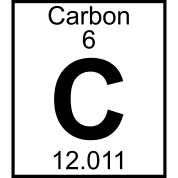
What does the C represent?
a)
atomic mass
b)
atomic number
c)
element name
d)
chemical symbol 
152.

What does the 6 represent?

a)

Atomic mass

b)

atomic number

c)

chemical symbol

d)

element name

153.
How is the number of neutrons in the nucleus of an atom calculated?
a)
Add the number of e- and p+ together
b)
Subtract the number of e- from p+
c)
Subtract the number of p+ from the mass number
d)
Add the mass number to the number of e-
154.
If an atom has 12 positively charged subatomic particles, which of the following must it also have to be considered a neutral atom?
a)
12 neutrons
b)
12 electrons
c)
12 protons
d)
24 protons and neutrons
155.

An atom has 10 protons, 15 neutrons and 10 electrons what is its mass number.

a)

20

b)

10

c)

35

d)

25

156.
The atomic number of an element that has 9 protons, 9 electrons, and 10 neutrons is _____.
a)
9
b)
10
c)
19
d)
28
157.
An element with a mass number of 11 and an atomic number of 5 has how many neutrons?
a)
11
b)
5
c)
6
d)
16
158.
Where is most of the mass in an atom located?
a)
in the nucleus
b)
in the protons
c)
in the neutrons
d)
in the electrons
159.

Which of the following determines the identity of an element?

a)

number of protons

b)

atomic mass

c)

number of neutrons

d)

number of shells

160.
4.35% of all X atoms have a mass of 39.946 amu. 83.79% have a mass of 41.941 amu, 9.50% have a mass of 42.941 amu, and 2.36% have a mass of 43.939 amu. What is the average atomic mass of atom X?
a)

41.996 amu

b)

42.194 amu

c)

10.432 amu

d)

40.048 amu

161.
An element has two naturally occurring isotopes. One is 10.013 amu and is 19.9% abundant. The other is 11.01 amu and is 80.1% abundant. What is the average atomic mass? What element is it?
a)
9.012, Beryllium
b)
12.011, Carbon
c)
6.941, Lithium
d)
10.812, Boron
162.
An isotope has three forms.  30% have a mass of 4 amu, 20% have a mass of 5 amu and 50% have a mass of 3 amu.  Average atomic mass will be closest to
a)
2 amu
b)
3 amu
c)
4 amu
d)
5 amu
163.
24.1% of all the isotopes of a an element have a mass of 75.23 amu, 48.7% have a mass of 74.61 amu, and 27.2% have a mass of 75.20 amu.
What is the average mass of this element?
a)
74.92 amu
b)
24.97 amu
c)
75.01 amu
d)
74.51 amu
164.
An element with 4.35% have a mass of 49.9461 amu, 83.79% have amass of 51.9405 amu, 9.50% have a mass of 52.9407 amu, and 2.36% have a mass of 53.9389amu.
a)
51.99 amu
b)
52.19 amu
c)
53.45 amu
d)
17.33 amu
165.

What is the configuration for Carbon?

a)

1s2 2p2

b)

1s2 2s2 2p2

c)

1s1 1s2 2s2 2p2

166.

1s2 2s2 is which element?

a)

Lithium

b)

Beryllium

c)

Helium

d)

Boron

167.

Write the configuration for Phosphorus

a)

2s2 2p6 3s2 3p3

b)

1s2 2s3 2p6 3p3

c)

1s2 2s2 2p6 3s2 3p3

d)

1s2 2s2 2p5 3s2 3p3

168.

Which element is 1s2 2s2 2p6 3s2 3p6 4s1?

a)

Sodium (Na)

b)

Lithium (Li)

c)

Potassium (K)

d)

Calcium (Ca)

169.

Choose the correct configuration for Neon (Ne).

a)

1s2 2s2 2p6 3s2 3p6

b)

1s2 2s2 2p6 3s2

c)

1s2 2s2 2p6

d)

1s2 2s1 2p6

170.
Which element is depicted from this orbital diagram
a)
Fluorine
b)
Neon
c)
Chlorine
d)
Argon
171.
Which element is depicted from this atomic orbital diagram?
a)
Carbon
b)
Nitrogen
c)
Oxygen
d)
Phosphorus
172.

Which orbital shows a violation of the Aufbau Principle?

a)

A

b)

B

c)

C

d)

D

e)

None of these

173.

Which orbital shows a violation of the Pauli Exclusion Principle?

a)

A

b)

B

c)

C

d)

D

e)

None of these

174.

Which orbital shows a violation of Hund's Rule?

a)

A

b)

B

c)

C

d)

D

e)

None of these