wayground logo

Free Printable Worksheets

Font size

S
M
L
XL
Worksheets

Periodic Trend Practice

Total questions: 158

Worksheet time: 5hrs 18mins

Name
Class
Date
1.
Which has the greater EN: 
Cl or Al?
a)
Cl
b)
Al
2.
Which has the greater EN: 
N or C?
a)
C
b)
N
3.
Which has the greater EN: 
H or F?
a)
H
b)
F
4.
Which of the following will have a larger radius than Zinc?
a)
Gallium
b)
Aluminum
c)
Magnesium
d)
Strontium
5.
Which of the following will have a higher electronegativity than arsenic (As)?
a)
Carbon (C)
b)
Neon (Ne)
c)
Antimony (Sb)
d)
Germanium (Ge)
6.
Which of the following will have a lower ionization energy than Scandium (Sc)?
a)
Helium (He)
b)
Titanium (Ti)
c)
Calcium (Ca)
d)
Magnesium (Mg)
7.
As atoms of elements in group 16 are considered in order from top to bottom, the electronegativity of each successive element....
a)
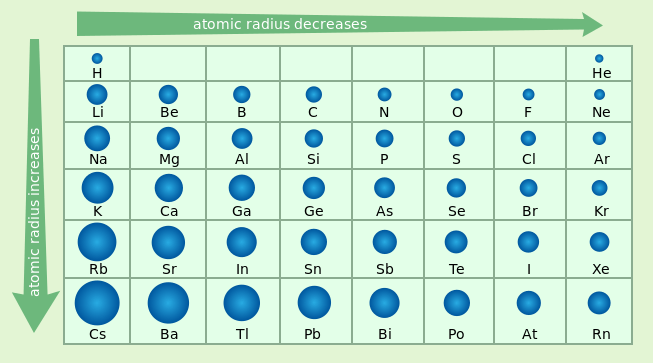
decreases
b)
increases
c)
remains the same
d)
none of the above
8.
Which atom has the largest atomic radius?
a)
potassium
b)
rubidium 
c)
francium
d)
cesium
9.
As you move down the periodic table atoms get bigger.  This is because ____________.
a)
The atoms have more mass.
b)
The atoms have more protons.
c)
The atoms have more energy levels
d)
The atoms have more nuetrons
10.
As you move across the periodic table atoms tend to get smaller because, ______________.
a)
the atoms have more mass.
b)
the atoms have less mass
c)
the atoms have more protons.
d)
the atoms have less electrons.
11.
Atoms that have a high electronegativity, _______________.
a)
give up their electrons more easily.
b)
hold on to their electrons more tightly.
c)
have more electron shells.
12.
Electronegativity is...
a)
how good an atom is at attracting electrons
b)
the ability of an atom to lose electrons
c)
the energy required to remove an electron from a specific atom
d)
how easy it is to make friends. 
13.
Ionization energy is...
a)
the energy required to add an electron to a specific atom
b)
how much energy it takes to remove an electron from an atom
c)
the energy required to shield the outer electrons from the nucleus
d)
a measure of the ability of an atom to attract electrons
14.
The atom with the largest atomic radius in Group 18 is - 
a)
Ar
b)
He
c)
Kr
d)
Rn
15.
Which statement correctly and completely identifies a trend?
a)
Atomic radius decreases across a period and increases down a group.
b)
Electronegativity decreases across a period and decreases down a group.
c)
Ionization energy increases across a period and increases down a group.
d)
Ionic radius increases across a period and increases down a group.
16.
The element with the largest electronegativity in the halogens is - 
a)
At
b)
F
c)
Cl
d)
Br
17.

The element with the lowest electronegativity in Period 3 is -

a)

Na

b)

Cl

c)

Ar

d)

Mg

18.
Which periodic group has the smallest atomic radius?
a)
Alkali metals
b)
Halogens
c)
Noble Gases
d)
Transition metals
19.
Atomic radius generally increases as we move __________.  
a)
down a group and from right to left across a period 
b)
up a group and from left to right across a period 
c)
down a group and from left to right across a period 
d)
up a group and from right to left across a period 
20.
Electronegativity __________ from left to right within a period and __________ from top to bottom within a group.
a)
decreases, increases 
b)
increases, increases
c)
increases, decreases 
d)
stays the same, increases
21.
The atom with the largest atomic radius in Group 18 is - 
a)
Ar
b)
He
c)
Kr
d)
Rn
22.
As you move down a group, atomic radius increases because - 
a)
you add more and more neutrons
b)
you add more and more protons
c)
you add more and more shells (energy levels)
d)
you add more atomic mass
23.
The atom with the largest atomic radius in Period 4 (row 4) is - 
a)
K
b)
Kr
c)
Fe
d)
Fe
24.
Francium (Fr) has the lowest ionization energy in Group 1 because - 
a)
it has the smallest number of valence electrons
b)
it has the greatest atomic mass
c)
it has the greatest number of protons, so it attracts its electrons the strongest
d)
its 1 valence electron is very far from the nucleus, so little energy is needed to remove it
25.
The element with the smallest ionization energy in Period 6 is - 
a)
Rn
b)
Cs
c)
Os
d)
Tm
26.

Of the halogens, which has the smallest radius?

a)

F

b)

Br

c)

He

d)

At

27.

Which of the following will have a lower ionization energy than Scandium (Sc)?

a)

Helium (He)

b)

Titanium (Ti)

c)

Calcium (Ca)

d)

Magnesium (Mg)

28.

Which of the following will have a higher electronegativity than arsenic (As)?

a)

Carbon (C)

b)

Neon (Ne)

c)

Antimony (Sb)

d)

Germanium (Ge)

29.

Which of the following halogens has the greatest electronegativity?

a)

Chlorine (Cl)

b)

Bromine (Br)

c)

Iodine (I)

d)

Astatine (At)

30.

Which group of elements has the lowest ionization energies?

a)

Alkali Metals (Group 1)

b)

Alkaline Earth Metals (Group 2)

c)

Halogens (Group 17)

d)

Noble Gases (Group 18)

31.

What is the amount of energy required to remove an electron from an atom?

a)

atomic energy

b)

ionization energy

c)

ionic energy

d)

electron energy

32.

What is one-half the distance between the nuclei of identical atoms that are bonded together?

a)

atomic radius

b)

atomic diameter

c)

atomic width

d)

atomic length

33.

What is a measure of the tendency of an atom to attract a bonding pair of electrons when the atom is in a compound?

a)

ionization energy

b)

electropositivity

c)

electronegativity

d)

electron energy

34.

What is a positively-charged ion which forms when an atom loses electrons?

a)

atom

b)

ion

c)

cation

d)

anion

35.

What is a negatively-charged ion which forms when an atom gains electrons?

a)

cation

b)

anion

c)

electron

d)

ion

36.

What is a vertical (up and down) column in the periodic table?

a)

group or family

b)

period

c)

periodic law

d)

octet rule

37.
Which atom has the largest atomic radius?
a)
potassium
b)
rubidium 
c)
francium
d)
cesium
38.
The atom with the largest atomic radius in Group 18 is - 
a)
Ar
b)
He
c)
Kr
d)
Rn
39.
As you move down a group, atomic radius increases because - 
a)
you add more and more neutrons
b)
you add more and more protons
c)
you add more and more shells (energy levels)
d)
you add more atomic mass
40.
The atom with the largest atomic radius in Period 4 (row 4) is - 
a)
K
b)
Kr
c)
Fe
d)
Fe
41.

Of the halogens, which has the smallest radius?

a)

F

b)

Br

c)

He

d)

At

42.

Which of the following will have a higher electronegativity than arsenic (As)?

a)

Carbon (C)

b)

Neon (Ne)

c)

Antimony (Sb)

d)

Germanium (Ge)

43.

Which of the following halogens has the greatest electronegativity?

a)

Chlorine (Cl)

b)

Bromine (Br)

c)

Iodine (I)

d)

Astatine (At)

44.

What is a positively-charged ion which forms when an atom loses electrons?

a)

atom

b)

ion

c)

cation

d)

anion

45.

What is a negatively-charged ion which forms when an atom gains electrons?

a)

cation

b)

anion

c)

electron

d)

ion

46.
Which atom has the largest atomic radius?
a)
potassium
b)
rubidium 
c)
francium
d)
cesium
47.

Atomic radius INCREASES when you go (a)   a group

48.

Put in order from biggest to smallest (decreasing size)

a)

Calcium

b)

Iron

c)

Zinc

d)

Bromine

e)

Krypton

1)
2)
3)
4)
5)
49.

Which of the following atoms would have the largest radius?

a)

chlorine

b)

silicon

c)

sodium

d)

argon

50.

Why does radius decrease as you move across a period?

a)

because electrons are being added

b)

because protons are being added

c)

because energy levels are being lost

d)

because energy levels are being added

51.

Which of the following has the largest electronegativity value?

a)

neon

b)

fluorine

c)

carbon

d)

lithium

52.

Which has the greater electronegativity Cl or Al?

a)
Cl
b)
Al
53.
How are elements on the periodic table arranged by?
a)
in alphabetic order
b)
simular physical & chemical properties
c)
their symbols
d)
Just simular physical properties
54.

What does electronegativity mean?

a)

ability to increase energy levels

b)

ability to react with elements

c)

ability to attract electrons

55.

In the alkali metals, which element has a larger atomic radius?

a)

lithium, Li

b)

sodium, Na

c)

potassium, K

d)

cesium, Cs

56.

In the halogen family, which element is the most electronegative?

a)

iodine, I

b)

fluorine, F

c)

chlorine, Cl

d)

helium, He

57.

Looking at period 3, which element has the smallest atomic radius?

a)

Mg

b)

Cl

c)

Al

58.

How do scientists measure the size of atoms?

a)

by counting energy levels

b)

measuring the distance between 2 nuclei

c)

measuring the nucleus

d)

using the atomic number

59.

As you move across a period, what happens to the nuclear charge in the atoms?

a)

It increases because more protons are added.

b)

It decreases because protons are taken away.

c)

It stays the same.

60.

What idea is this cartoon showing?

a)

chlorine is more electronegative than hydrogen

b)

chlorine has more energy levels than hydrogen

c)

hydrogen is more electronegative than chlorine

61.

In group 2, which of these elements has the largest atomic radius?

a)

Ba

b)

Mg

c)

Ca

d)

La

62.

Which of the following elements is the most electronegative?

a)

Hydrogen, H

b)

Aluminum, Al

c)

Oxygen, O

d)

Cesium, Cs

63.

Which of these halogens has the largest atomic radius?

a)

fluorine, F

b)

chlorine, Cl

c)

bromine, Br

d)

iodine, I

64.

Ions are formed when atoms gain or lose ___.

a)

electrons

b)

protons

c)

neutrons

d)

atomic mass

65.

Which statement is true?

a)

Cations are negatively charged ions.

b)

Anions are positively charged ions.

c)

Cations are positively charged electrons.

d)

Anions are negatively charged ions.

66.

As you move down a Group on the periodic table, what happens to the size of the atoms?

a)

they stay the same

b)

they get larger

c)

they get smaller

67.

As you move across a row on the periodic table, what generally happens to the atomic radius?

a)

it decreases

b)

it increases

c)

it stays the same

68.

What property is being measured in this diagram?

a)

Density

b)

Ionization Energy

c)

Atomic Radius

d)

Atomic Mass

69.

How does shielding affect atomic size?

a)

makes the nucleus stronger

b)

makes the atom larger

c)

makes the atom smaller

d)

makes the atom nuetral

70.

What causes the shielding effect inside an atom?

a)

the electrons between the nucleus and the valence shell

b)

the extra neutrons in the nucleus

c)

the extra protons in the nucleus

d)

the valence electrons only

71.

Which of the following atoms has the greatest atomic radius?

a)

nitrogen

b)

phosphorus

c)

potassium

d)

cesium

72.

Which of the following atoms has the greatest ionization energy?

a)

barium

b)

cesium

c)

fluorine

d)

carbon

73.

If a potassium atom lost one electron, what would be the symbol for that ion?

a)
b)
c)
d)
74.

Which would be a correct title for this graphic?

a)

Ionization trends

b)

Atomic Radius trends

c)

Atomic Mass trends

75.

What periodic trend is illustrated here?

a)

Atomic Radius

b)

Ionization Energy

76.
The MOST electronegative element is ____.
a)
Helium
b)
Hydrogen
c)
Fluorine
d)
Francium
77.
Which has the greater Electronegativity: 
N or C?
a)
C
b)
N
78.
Which of the following will have a larger radius than Zinc (Zn)?
a)
Gallium
b)
Aluminum
c)
Magnesium
d)
Strontium
79.
Which of the following will have a lower ionization energy than Scandium (Sc)?
a)
Helium (He)
b)
Titanium (Ti)
c)
Calcium (Ca)
d)
Magnesium (Mg)
80.
Which atom has the largest atomic radius?
a)
Potassium (K)
b)
Rubidium (Rb)
c)
Francium (Fr)
d)
Cesium (Cs)
81.
As you move down the periodic table atoms get bigger.  This is because ____________.
a)
The atoms have more mass.
b)
The atoms have more protons.
c)
The atoms have more energy levels
d)
The atoms have more neutrons
82.
Electronegativity is...
a)
the ability of an atom to attract/ accept electrons
b)
the ability of an atom to lose electrons
c)
the energy required to remove an electron from a specific atom
d)
how easy it is to make friends. 
83.
Ionization energy is...
a)
the energy required to add an electron to a specific atom
b)
how much energy it takes to remove an electron from an atom
c)
the energy required to shield the outer electrons from the nucleus
d)
a measure of the ability of an atom to attract electrons
84.
The element with the largest electronegativity in the halogens is - 
a)
At
b)
F
c)
Cl
d)
Br
85.
Electronegativity __________ from left to right within a period and __________ from top to bottom within a group.
a)
decreases, increases 
b)
increases, increases
c)
increases, decreases 
d)
stays the same, increases
86.
Atomic radius is ______.
a)
the distance from the center of the nucleus to the outermost electron.
b)
the distance from one outer electron to another outer electron.
c)
the distance from center of the nucleus to the first energy level.
d)
the distance from one proton to one electron.
87.
Which has the smaller atomic radius?
   Rb or Li ?
a)
 Rb
b)
Li
88.
Which has the highest ionization energy?
    Mg or S
a)
S
b)
Mg
89.
Which is the least electronegative?
   K or Fr
a)
K
b)
Fr
90.
Which is the most electronegative?
Cl or Ar
a)
Cl
b)
Ar
91.
As you move down a group, atomic radius increases because - 
a)
you add more and more neutrons
b)
you add more and more protons
c)
you add more and more shells (energy levels)
d)
you add more atomic mass
92.
The atom with the largest atomic radius in Group 18 is - 
a)
Ar
b)
He
c)
Kr
d)
Rn
93.
As you move across the periodic table from left to right, the atomic radius decreases.  This is because - 
a)
the number of protons increases, so attraction to electrons increases
b)
the number of energy levels increases
c)
the number of electrons increases
d)
the atomic mass increases
94.
The atom with the largest atomic radius in Period 4 (row 4) is - 
a)
K
b)
Kr
c)
Fe
d)
Fe
95.
Francium (Fr) has the lowest ionization energy in Group 1 because - 
a)
it has the smallest number of valence electrons
b)
it has the greatest atomic mass
c)
it has the greatest number of protons, so it attracts its electrons the strongest
d)
its 1 valence electron is very far from the nucleus, so little energy is needed to remove it
96.
The element with the smallest ionization energy in Period 6 is - 
a)
Rn
b)
Cs
c)
Os
d)
Tm
97.
As you move across the periodic table atoms tend to get smaller because, ______________.
a)
the atoms have more mass.
b)
the atoms have less mass
c)
the atoms have more protons.
d)
the atoms have less electrons.
98.
The energy required to remove electrons is the definition of: 
a)
Electronegativity
b)
Atomic Number
c)
Atomic Radius
d)
Ionization
99.
What is the name of family I
a)
Alkaline Earth Metals
b)
Boron Family
c)
Alkali Metals
d)
Halogen Family
100.
Group B is known as the:
a)
Inner Metals
b)
Transition Metals
c)
Weirdos
d)
Changelings 
101.
Families all have similar 
a)
Names
b)
atomic numbers
c)
atomic masses
d)
properties
102.
Electronegativity is...
a)
the ability of an atom to attract/ accept electrons
b)
the ability of an atom to lose electrons
c)
the energy required to remove an electron from a specific atom
d)
how easy it is to make friends. 
103.
Which has the greater Electronegativity: 
N or C?
a)
C
b)
N
104.
Electronegativity __________ from left to right within a period and __________ from top to bottom within a group.
a)
decreases, increases 
b)
increases, increases
c)
increases, decreases 
d)
stays the same, increases
105.

Which element is a metal

a)

Li

b)

Si

c)

S

106.

Which element has the smallest ionization energy?

a)

N

b)

P

c)

As

107.

Which element has the largest atomic mass?

a)

K

b)

Ca

c)

Sc

108.

Which element is a member of the halogen family?

a)

S

b)

Cl

c)

Ar

109.

Which element has the greatest electron affinity?

a)

Al

b)

Si

c)

P

110.

Which element has the largest atomic radius?

a)

Ga

b)

Al

c)

Si

111.

Which element has the largest atomic number?

a)

V

b)

Nb

c)

Tc

112.

Which element is a member of the noble gases

a)

Tc

b)

I

c)

Xe

113.

Which element has 4 energy levels?

a)

Si

b)

Ge

c)

Sn

114.

Which element is a member of the alkali metals?

a)

Li

b)

Be

c)

B

115.

Which element has 6 valence electrons?

a)

As

b)

Se

c)

Br

116.

Which element is a nonmetal?

a)

H

b)

Li

c)

Na

117.

Which element is a member of the transition metals?

a)

Hg

b)

Tl

c)

Pb

118.

Which element has an electron configuration ending in s2p1?

a)

Na

b)

Mg

c)

Al

119.

Which element is a metalloid?

a)

Al

b)

Si

c)

P

120.

Which element is a gas at room temperature?

a)

B

b)

C

c)

N

121.

Which element has an electron configuration ending in s2d2?

a)

Ca

b)

Sc

c)

Ti

122.
Atomic Radius is...
a)
the relative size of the atom's nucleus
b)
the relative size of the atom's electron cloud
c)
the energy required to shield the outer electrons from the nucleus
d)
a measure of the ability of an atom to attract electrons
123.
As you move down the periodic table atoms get bigger.  This is because ____________.
a)
The atoms have more mass.
b)
The atoms have more protons.
c)
The atoms have more energy levels
d)
The atoms have more nuetrons
124.
As you move across the periodic table atoms tend to get smaller because, ______________.
a)
the atoms have more mass.
b)
the atoms have less mass
c)
the atoms have more protons.
d)
the atoms have less electrons.
125.
Which atom has the largest atomic radius?
a)
potassium
b)
rubidium 
c)
francium
d)
cesium
126.
The atom with the largest atomic radius in Group 18 is - 
a)
Ar
b)
He
c)
Kr
d)
Rn
127.
Which periodic group has the smallest atomic radius?
a)
Alkali metals
b)
Halogens
c)
Noble Gases
d)
Transition metals
128.
Ionization energy is...
a)
the energy required to add an electron to a specific atom
b)
how much energy it takes to remove an electron from an atom
c)
the energy required to shield the outer electrons from the nucleus
d)
a measure of the ability of an atom to attract electrons
129.
Which of the following will have a lower ionization energy than Scandium (Sc)?
a)
Helium (He)
b)
Titanium (Ti)
c)
Calcium (Ca)
d)
Magnesium (Mg)
130.
Which of the following will have a higher ionization energy than arsenic (As)?
a)
Gallium (Ga)
b)
Neon (Ne)
c)
Antimony (Sb)
d)
Germanium (Ge)
131.
Electronegativity is...
a)
how good an atom is at attracting electrons
b)
the ability of an atom to lose electrons
c)
the energy required to remove an electron from a specific atom
d)
how easy it is to make friends. 
132.
Atoms that have a high electronegativity, _______________.
a)
give up their electrons more easily.
b)
hold on to their electrons more tightly.
c)
have more electron shells.
133.
Which of the following will have a higher electronegativity than arsenic (As)?
a)
Carbon (C)
b)
Neon (Ne)
c)
Antimony (Sb)
d)
Germanium (Ge)
134.
As atoms of elements in group 16 are considered in order from top to bottom, the electronegativity of each successive element....
a)
decreases
b)
increases
c)
remains the same
d)
none of the above
135.
The electronegativity of Cl is the highest in Period 2.  Why?
a)
Cl is the largest and has the greatest effective nuclear charge
b)
Cl is the smallest and has the lowest effective nuclear charge
c)
Cl is the largest and has the lowest effective nuclear charge
d)
Cl is the smallest and has the greatest effective nuclear charge
136.
What term is used to describe "an atom's tendency to attract electrons to itself when is is chemically combined with another element"
a)
electronation
b)
electron affinity
c)
electronegativity
d)
electrolysis
137.
What term is used to describe "The energy required to remove an electron from gaseous atoms"
a)
excitation energy
b)
ionization energy
c)
polarization energy
d)
electrolytic energy 
138.
What term is used to describe "A measure of the size of an atom"
a)
chemical reactivity
b)
atomic radius
c)
energy levels
d)
orbit
139.
Which of the following will have a lower ionization energy than Scandium (Sc)?
a)
Helium (He)
b)
Titanium (Ti)
c)
Calcium (Ca)
d)
Magnesium (Mg)
140.
Which atom has the largest atomic radius?
a)
potassium
b)
rubidium 
c)
francium
d)
cesium
141.
As you move down the periodic table atoms get bigger.  This is because ____________.
a)
The atoms have more mass.
b)
The atoms have more protons.
c)
The atoms have more energy levels
d)
The atoms have more nuetrons
142.
As you move across the periodic table atoms tend to get smaller because, ______________.
a)
the atoms have more mass.
b)
the atoms have less mass
c)
the atoms have more protons.
d)
the atoms have less electrons.
143.
Atoms that have a high electronegativity, _______________.
a)
give up their electrons more easily.
b)
hold on to their electrons more tightly.
c)
have more electron shells.
144.
Electronegativity is...
a)
how good an atom is at attracting electrons
b)
the ability of an atom to lose electrons
c)
the energy required to remove an electron from a specific atom
d)
how easy it is to make friends. 
145.
Ionization energy is...
a)
the energy required to add an electron to a specific atom
b)
how much energy it takes to remove an electron from an atom
c)
the energy required to shield the outer electrons from the nucleus
d)
a measure of the ability of an atom to attract electrons
146.
The atom with the largest atomic radius in Group 18 is - 
a)
Ar
b)
He
c)
Kr
d)
Rn
147.
The element with the largest electronegativity in the halogens is - 
a)
At
b)
F
c)
Cl
d)
Br
148.
The element with the lowest electronegativity in Period 3 is - 
a)
Na
b)
Cl
c)
Ar
d)
Mg
149.
Which periodic group has the smallest atomic radius?
a)
Alkali metals
b)
Halogens
c)
Noble Gases
d)
Transition metals
150.
Atomic radius generally increases as we move __________.  
a)
down a group and from right to left across a period 
b)
up a group and from left to right across a period 
c)
down a group and from left to right across a period 
d)
up a group and from right to left across a period 
151.
Electronegativity __________ from left to right within a period and __________ from top to bottom within a group.
a)
decreases, increases 
b)
increases, increases
c)
increases, decreases 
d)
stays the same, increases
152.
Which of the following pairs of elements have similar properties
a)
Barium and Calcium
b)
Sodium and Magnesium
c)
Nickel and Copper
d)
Lithium and Helium 
153.
Which of the following is true for Calcium
a)
Metal and Low electronegativity value 
b)
Metal and has 2 valence electrons
c)
Metal, Low electronegativity, has 2 valence electrons
d)
Metal and Semi conductor 
154.
Which of the following electron configurations represents the most chemically stable atom?
a)
[Ne] 3s1
b)
[Ne] 3s2 3p3
c)
[Ne] 3s2 3p6
d)
[Ar] 4s2 3d6
155.
The minimum energy required to remove an electron from the ground state of an atom
a)
electron configuration
b)
energy levels
c)
ionization energy
d)
ionic bond
156.
The tendency of an atom to attract electrons and acquire a negative charge
a)
electronegativity
b)
charge
c)
bonding ability
d)
electron configuration
157.
A group of elements that includes the most active of the elements is the -
a)
halogens.
b)
noble gases.
c)
nitrogen group.
d)
alkaline earth metals.
158.
Which is larger:
P or P-3
a)
P
b)
P-3
c)
both are same size