
 Worksheets
Drama & Poems Review
Total questions: 68
Worksheet time: 58mins
What is repetition in poetry?
When the line ends
Lines that end with the same sound
creating stanzas and lines
using the same word or phrase several times
A grouping of lines in poetry is traditionally called
Lyrics
Stanzas
Haiku
Paragraph
True or False: All poetry must include rhyme
True
False
When a line or two of poetry features at least three or more words starting with the same letter, this is know as...
Allusion
Alliteration
Aeration
Consonance
"Sally sells scarlet seals by the sea in her seasonal shop," is an example of...
Consonance
Alliteration
Internal Rhyme
Assonance
"His teeth were pearls hidden by his pink, coralish lips." This is an example of what type of figurative language?
Simile
Metaphor
Allusion
Symbolism
"Her breath was as garlic, her teeth like corn, I was as repulsed as if she were trying to stick two similar magnet ends together." This is an example of...
Similie
Metaphor
Allegory
Cringe
"Amy ate angrily again" is an example of what?
Onomatopeia
Rhyme
Alliteration
Refrain
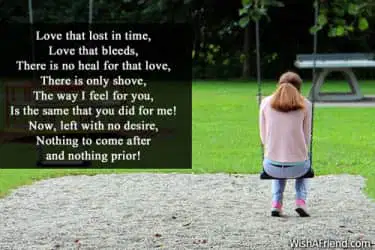
What is the tone of this poem?
Sad
Exciting
Fear
What is tone ?
The writers attitude toward feelings about the subject
How fast or slow it is
The readers feelings towards the subject
A comparison using "like" or "as"
Repetition
Metaphor
Simile
A comparison without using "like" or "as"
Metaphor
Meter
Simile
What is a poem?
A poem is a piece of writing that ONLY features rhyming
A poem is a piece of writing that features elements like meter, rhyme, and figurative language
What is a hyperbole?
It makes the sound repeat
It acts like a person
It exaggerates
What is a rhyme?
Repetition of end sounds
It imitates the sound
An extreme exaggeration or overstatement
What is personification?
Nonhuman things given human characteristics
Sensory language used to help readers create images in their minds
Figure of speech that compares two unlike things (not using "like" or "as")
Formal division of lines in a poem (like a paragraph in literature)
What is an Onomatopoeia?
Words that imitate a sound
Figure of speech that compares two unlike things (not using "like" or "as")
Comparing two things using "like" or "as"
Repetition of end sounds
What is a stanza?
Formal division of lines in a poem (like a paragraph in literature)
Sensory language used to help readers create images in their minds
A work of literature performed on stage for an audience.
Stage Directions
Props
Plot
Drama
The words written inside (parenthesis) that tell the actor what to do, think, and feel.
Theme
Stage Directions
Playwright
A small portion of drama...like a chapter book. Usually new characters are added or setting changes. You need to pay attention to what changes.
Scene
Dialogue
Act
Cast
A larger portion of the drama. Usually time has passed.
Scene
Act
Props
Drama
The characters in a drama
Props
Plot
Playwright
Cast
The items used on stage to make a drama come to life. Example: bike, couch, drums, etc.
Imagery
Props
Theme
Inferences
The author of a play
Author
Drama
Playwright
Characters
A conversational exchange between two or more characters is called --
Main Idea
Dialogue
Cast
Scene
Life lesson, moral, message or big idea.
Main Idea
Inference
Props
Theme
A person who reads a part in a play but is not a character is referred to as the --
Character
Protagonist
Antagonist
Narrator
The written form of the play
What is a difference between drama and fiction?
Drama is made up
The authors purpose in drama is to entertain
Drama is acted out
Drama has no plot
Why does drama have scenes?
The playwright likes them
To let the actors have a break
So the audience can go to the restroom
So the setting has time to change
What is the list of characters in a dramatic text ?
set
cast
props
True or False: Every scene has a different setting
True
False
What does the cast of characters tell the reader?
The setting
The theme
the characters in a play
how many acts and scenes are in a play
Read Poem below:
Fame is a bee.
It has a song —
It has a sting —
Ah, too, it has a wing.
Which of the following identifies the theme of the poem?
Nature is stronger than it appears.
The troubles of fame are not worth the gains
The rewards of fame are greater than the troubles.
Fame has its ups and downs.
What is being compared in this poem?
Fame is a bee.
It has a song —
It has a sting —
Ah, too, it has a wing.
bee to a song.
bee to a sting.
bee to fame.
bee to a wing.
Which type of figurative language is used in the line below:
"Life is a broken-winged bird that cannot fly."
simile
personification
metaphor
hyperbole

"The wind whined through the willows" is an example of:
Simile
Tone
Alliteration
Repetition

the overall FEELING of a poem is the:
Mood
Tone
Setting
Speaker
toasted the emerald grass
until it smelled of warmth
and green and life.
It was July, and my heart
soaked up the air warmth
until it sang of joy
and love and life.
How many stanzas in the poem above?
toasted the emerald grass
until it smelled of warmth
and green and life.
It was July, and my heart
soaked up the air warmth
until it sang of joy
and love and life.
How many lines in the poem above?
Jenny's dark eyes swam like fish behind her tinted glasses.
What is being compared in this simile?
eyes and glasses
eyes and fish
fish and glasses

What figurative language do you notice in this poem?
simile
metaphor
personification
alliteration

What is the author's purpose for this poem?
Share feelings
Send a message
Be humorous
Tell a story
Be descriptive

Who do you think is the speaker in this poem?
A baby
A child
An adult
A senior citizen
Check all elements of drama:
Alliteration
Dialogue
Stage Directions
Rhyme Scheme
Acts/Scenes
Which of the following is an example of dialogue in drama:
George sighed, "I'm so tired!"
GEORGE. [sighing] I'm so tired!
I'm so tired, said George
George said he was tired.

Which number indicates Stage Directions?


The car is a dinosaur, so we better buy a new one.
What is the meaning of the metaphor highlighted green?
The car is very old.
The car was truly made in prehistoric times.
The car is very new.
The car makes rude noises.

What onomatopoeia goes best with this picture?
Take-off!
Pow!
Blast!
Fly

What is the theme of this story?
Necessity is the mother of invention.
Don't steal.
Respect your elders.
Slow and steady wins the race.
What is the main difference between THEME and MAIN IDEA.
Theme is a universal lesson, and main idea is what a story is about.
Theme is what a story is about, and main idea is the universal lesson it teaches.

True or False: All plays ONLY have ONE scene.
True
False

What is the CONFLICT?
written instructions about how actors should move and behave.
the words or conversation of two or more characters.
a speech in which a character speaks to a silent listener in a moment of deep emotion.
A problem or struggle between characters or opposing forces.
Which of the following images BEST shows dialogue?


Which is a poem with 2 stanzas?
Would it be okay if I took some of your time?
Would it be okay if I wrote you a rhyme?
To tell you there's nothing that I'd rather do
Than spend my whole life loving only you...
Love can leave you empty,
Love can make you whole.
Love can make or break you,
Love is in your soul.
Love is in your heart,
Love is in your mind.
Love doesn't discriminate,
Love is always blind.
Free verse means that
there is no regular rhyme
all lines have rhyming
the verses feel free
Stage directions can explain all of the following except:
the setting
the meaning of a play
what the actors do
how the actors should speak or behave
Scenes are like
characters in a story
chapters in a book
speeches
images
In a play, an act is made up of __________.
actors
uniforms
stages
scenes

I am a famous actor who mostly performs in comedies. One of my most famous roles was Buddy the Elf. Who am I?
Johnny Depp
Eddie Murphy
Will Ferrell

Who is this famous actor?
Will Smith
Michael Vitiello
Johnny Depp
Mr. Frank: It’ll be hard, I know. But always remember this, Anneke. There are no walls, there are no bolts, no locks that anyone can put on your mind. Miep will bring us books. We will read history, poetry, mythology. (With his arm about her, they go over to the couch, sitting down side by side.) As a matter of fact, between us, Anne, being here has certain advantages for you. For instance, you remember the battle you had with your mother the other day on the subject of overshoes? You said you’d rather die than wear overshoes. But in the end you had to wear them? Well now, you see, for as long as we are here you will never have to wear overshoes! Isn’t that good? And the piano! You won’t have to practice on the piano. I tell you, this is going to be a fine life for you! (Anne’s panic is gone.)
Which stage directions show us that Mr. Frank has calmed Anne down?
“(She starts down the stairs.)”
“(. . . Anne realizes what ‘going into hiding’ means.)”
“(. . . Anne realizes what ‘going into hiding’ means.)”
“(Anne’s panic is gone.)”
Mr. Frank: It’ll be hard, I know. But always remember this, Anneke. There are no walls, there are no bolts, no locks that anyone can put on your mind. Miep will bring us books. We will read history, poetry, mythology. (With his arm about her, they go over to the couch, sitting down side by side.) As a matter of fact, between us, Anne, being here has certain advantages for you. For instance, you remember the battle you had with your mother the other day on the subject of overshoes? You said you’d rather die than wear overshoes. But in the end you had to wear them? Well now, you see, for as long as we are here you will never have to wear overshoes! Isn’t that good? And the piano! You won’t have to practice on the piano. I tell you, this is going to be a fine life for you! (Anne’s panic is gone.)
What can you tell about Anne’s relationship with her father from the dialogue and stage directions?
She is angry at her father for grabbing her arm.
She has a close relationship with her father.
She doesn’t respect her father’s decisions.
She wishes her father would treat her like an adult.

How does the author use stage directions in the play, The Anniversary, to add to the meaning of the text?
KHIRIN. [Rudely] As it’s an anniversary, Andrey...I’ll ask for a special favour. Please...don’t interfere in my family life.
to make sense of Khirin’s problem
to emphasize Khirin’s [the main character's] tone of voice
to speak secretly to the audience
to show the humor in Khirin’s statement
Why does a playwright include stage directions in a script?
to provide information about how the play should look to the audience
to provide information about the time period in a which a play is set
to provide information about how the dialogue in a play should be spoken
All of these options

Looking at the provided image, select the stage directions that would best describe the scene.
A school in Philadelphia. The students are milling about before class starts and MR. SMITH enters looking flustered.
A park in downtown Atlanta. The paths are empty except for SALLY and JIM, walking together in the gloomy rain.
A beach in sunny Florida. The sun has just started to rise and ETHAN and EMILY walk along the shore.
A street in downtown New York City. The paths are full of patrons bustling around with umbrellas and coats, including KIM, trying to get out the rain.

