
 Worksheets
Aircraft Components and Control
Total questions: 176
Worksheet time: 2hrs 38mins
Italy Capital?
Oslo
Rome
Agra
Paris
Which of these are in India?
Mumbai
Rome
Dhaka
Chennai
What forces are required for an aircraft to remain in flight
Lift
Drag
Weight
Thrust
What part of the aircraft adjusted the pitch?
Aileron
Elevator
Flap
Rudder
What part of the aircraft adjusts the roll?
Elevator
Flap
Aileron
Rudder
What part of the aircraft adjusts the yaw?
Rudder
Elevator
Slat
Aileron
What job does the Spoiler do?
Gives better aerodynamic properties
Slows the aircraft down
Keeps the aircraft flying
Just makes the wing looks good
For an aircraft to generate more lift at slower speeds what part of the aircraft is used
Flaps and Slats
Spoilers
Landing gear
Rudder
When the wing is generating more lift the air is travelling faster over the top.
True
False
"For every action, there is an equal and opposite reaction" This is what?
Newtons First Law
Newtons Second Law
Newtons Third Law
Daniel Bernoulli

What is this?
Yoke
Control Column
Side Stick
Steering wheel


CG is short for?
Computer graphics
Center grade
Center of gravity
Stability is achieved by balancing at the center of gravity (commonly known as the CG).
True
False

In the diagram above, what stability force is represented by #6?
A. Pitch
B. Roll
C. Yaw
D. Rudder
In the diagram above, what stability force is represented by #7?
A. Pitch
B. Roll
C. Yaw
D. Rudder
In the diagram above, what stability force is represented by #8?
A. Pitch
B. Roll
C. Yaw
D. Rudder
What does VOR stand for?
Very High Frequency Omnidirectional Range
Virtual Online Reality
Visual Orientation Recognition
Variable Output Ratio
What is the purpose of a VOR navigation instrument?
To measure airspeed
To calculate altitude
To determine ground speed
To determine radial position from a VOR station.
How does a VOR navigation instrument work?
By receiving signals from VOR ground stations and using the phase difference between the signals to determine the aircraft's radial position relative to the station.
By using GPS satellites to determine the aircraft's position.
By measuring the distance between the aircraft and the VOR ground station.
By analyzing the magnetic field around the aircraft to determine its heading.
What are the components of a VOR navigation instrument?
ADF, DME, GPS
Altimeter, Airspeed Indicator, Turn Coordinator
ILS, VHF, ATC
VOR receiver, CDI, OBS
What is the range of a VOR navigation instrument?
500 nautical miles
100 nautical miles
200 nautical miles
50 nautical miles
What is the significance of the OBS (Omni Bearing Selector) in a VOR navigation instrument?
The OBS is used to measure the airspeed of the aircraft.
The OBS is used to select and display the desired radial or course.
The OBS is used to control the altitude of the aircraft.
The OBS is used to adjust the volume of the VOR signal.
What is the difference between a VOR and a VOR/DME navigation instrument?
A VOR and a VOR/DME are the same thing.
A VOR provides only direction information, while a VOR/DME provides both direction and distance information.
A VOR provides both direction and distance information, while a VOR/DME provides only direction information.
A VOR is used for air navigation, while a VOR/DME is used for maritime navigation.
What are the limitations of a VOR navigation instrument?
line-of-sight range, interference susceptibility, accuracy limitations
limited coverage area, signal distortion, signal blockage
How can you identify a VOR station on a VOR navigation instrument?
By its Morse code identifier
By its altitude
By its frequency
By its GPS coordinates
What are the advantages of using a VOR navigation instrument?
Inaccurate and unreliable navigation, inability to navigate in poor visibility conditions, and incompatibility with other navigation systems.
Limited range and coverage, difficulty in interpreting the instrument readings, and high cost of installation.
Accurate and reliable navigation, ability to navigate in poor visibility conditions, and compatibility with other navigation systems.
Prone to interference and signal distortion, limited availability of VOR stations, and dependence on ground-based infrastructure.
As angle of attack increases
lift decreases and induced drag decreases
lift decreases and induced drag increases
lift increases and induced drag decreases
lift increases and induced drag increases
Parasite drag can be decreased by
using flaps instead of spoilers
polishing aircraft surfaces
making wings shorter and thicker
increasing induced drag
The Wright Brothers understood that they'd have to find three solutions (objectives) to three problems. Stated simply those solutions were:
Yaw, Pitch, Drag
Lift, Control, Thrust
Weight, Drag, Thrust
Parasite Drag, Induced Drag, Total Drag

The function of this control surface is to
yaw around the vertical axis
pitch around the vertical axis
yaw around the lateral axis
roll around the lateral axis

The purpose of this control surface is to
roll around the horizontal axis
yaw around the horizontal axis
roll around the lateral axis
pitch around the lateral axis

The purpose of this control surface is to
yaw around the lateral axis
pitch around the lateral axis
roll around the horizontal axis
yaw around the vertical axis

Airflow over a wing produces pressure differences due to changes in the velocity of the air. This explanation of lift is described by
Bernoulli's Principle
Wright's Theorem
Wilbur's Predicate
Orville's Postulate

The diagram illustrates the Four Forces Of Flight. Forces that oppose each other are
Lift and Drag
Lift and Thrust
Drag and Weight
Thrust and Drag

This illustration is actually a clever variation on the more aerodynamically correct:
Angle Of Attack vs Chord Line
Four Forces Of Flight
Bernoulli's Principle

This model airplane displays a pronounced dihedral which functions to
improve stability by producing more lift on the lower wing
neutralize the lift produced by induced drag
decrease the yaw of the aircraft around the vertical axis
increase thrust to match increased parasite drag

As the angle between the chord line and the relative wind increases
angle of attack decreases, lift decreases, drag decreases
angle of attack increases, lift decreases, drag increases
angle of attack decreases, lift increases, drag decreases
angle of attack increases, lift increases, drag increases
To maintain a balanced thrust force along a propeller blade the
tip of the blade has a higher angle of attack than the root (inside) of the blade
inside (root) of the blade has a higher angle of attack than the tip of the blade
inside (root) of the blade is designed with lower parasite drag to compensate for it's lower speed
outside (tip) of the blade is designed to stall when the tip reaches the speed of sound

The Wright Brothers used aluminum instead of cast iron for major engine components because
aluminum is lighter than cast iron
aluminum is stronger than cast iron
aluminum was in common use in automotive engines
each of the other answers is equally correct

The photo is of wing flaps
used to increase lift and decrease drag
which increase dihedral at the lateral axis
used to increase lift and increase drag
which increase airspeed at increased angles of attack

Extra Credit
In this photograph of the first flight
the aircraft is moving toward the camera, Wilbur is flying, and Orville is at the left wing tip
the aircraft is moving away from the camera, Orville is flying and Wilbur is at the right wing tip
the aircraft is moving toward the camera, Wilbur is flying, and Orville is operating the camera
The main purpose of empennage is to give stability to the aircraft.
True
False
A movable airfoil that controls the up-and-down motion of the aircraft's nose.
Trim Tabs
Stabilator
Elevator
Rudder
Attached to the back of the vertical stabilizer.
Stabilator
Trim Tabs
Rudder
Elevator
Used to move the airplane’s nose left and right
Rudder
Stabilator
Trim Tabs
Elevator
_____ are small, movable portions of the trailing edge of the control surface.
Trim Tabs
Rudder
Stabilator
Elevator
Used to prevent the aircraft from yawing back and forth.
Horizontal Stabilizer
Vertical Stabilizer
Elevator
Stabilator
Used to prevent the airplane from pitching up or down.
Horizontal Stabilizer
Vertical Stabilizer
Elevator
Stabilator
The powerplant usually includes both the engine and the propeller.
True
False
This engines is the first type of gas turbine engine invented.
Turbojet
Turboprop
Turbofan
Turboshaft
What is the main function of the ailerons?
Rolling left and right
Pitching up and down
Yawing left and right
Allows aircraft to hover
Where is the aircraft controlled from?
Cabin
Cockpit
Undercarridge
Cowling
Where is the winglet located?
At the wing tip
On the horizontal stabilizer
On the vertical stabilizer
In front of the wing
What is the most commonly used aircraft material?
Alluminium Alloy
Titanium
Carbon Fibre Reinforced Polymer
Stainless Steel
What is the principle behind lift in flight?
Bernoulli's principle
Einstein's theory of relativity
Newton's third law
Archimedes' principle
Explain Bernoulli's principle and its relation to flight.
Bernoulli's principle states that as the speed of a fluid (such as air) increases, its pressure increases. This principle is related to flight because it explains how the shape of an airplane wing creates lift.
Bernoulli's principle states that as the speed of a fluid (such as air) increases, its pressure remains constant. This principle is related to flight because it explains how the shape of an airplane wing creates lift.
Bernoulli's principle states that as the speed of a fluid (such as air) increases, its pressure increases. This principle is related to flight because it explains how the weight of an airplane affects its lift.
Bernoulli's principle states that as the speed of a fluid (such as air) increases, its pressure decreases. This principle is related to flight because it explains how the shape of an airplane wing creates lift.
What factors affect the amount of lift generated by an aircraft?
Pilot's experience, brand of the aircraft, time of day
Type of fuel used, altitude of the aircraft, length of the runway
Shape and size of wings, angle of attack, airspeed, air density, lift coefficient
Weight of the aircraft, color of the aircraft, number of passengers on board
How does drag affect the motion of an aircraft?
Drag opposes the forward motion of an aircraft.
Drag causes the aircraft to move sideways.
Drag has no effect on the motion of an aircraft.
Drag helps to propel the aircraft forward.
What is air resistance and how does it relate to drag?
Air resistance is the force that opposes the motion of an object through the air, while drag is a type of air resistance that acts in the opposite direction of the object's motion.
Air resistance is the force that attracts objects to the ground, while drag is a type of air resistance that acts in the opposite direction of the object's motion.
Air resistance is the force that propels an object through the air, while drag is a type of air resistance that acts in the same direction as the object's motion.
Air resistance is the force that causes objects to float in the air, while drag is a type of air resistance that acts in the same direction as the object's motion.
What are the different types of drag experienced by an aircraft?
thrust drag, lift drag, and form drag
friction drag, lift drag, and pressure drag
parasitic drag, induced lift, and vortex drag
parasite drag, induced drag, and wave drag. This one is the correct answer :)
What is thrust and how does it propel an aircraft forward?
Thrust is the force that propels an aircraft backward.
Thrust is the force that propels an aircraft upward.
Thrust is the force that propels an aircraft sideways.
Thrust is the force that propels an aircraft forward.
Explain the principle of propulsion in flight.
Propulsion in flight is achieved by reducing air resistance, creating a forward thrust.
Propulsion in flight is achieved by flapping wings rapidly, creating a forward thrust.
Propulsion in flight is achieved by expelling a high-speed jet of gases forward, creating a backward thrust.
Propulsion in flight is achieved by expelling a high-speed jet of gases backward, creating a forward thrust.
What are the main sources of thrust in aircraft?
jet engines or propellers
cockpit
wings
landing gear
How does weight affect the flight of an aircraft?
Weight has no effect on the flight of an aircraft.
Weight only affects the fuel efficiency of an aircraft.
Weight increases the maneuverability of an aircraft.
Weight affects the lift, drag, maneuverability, and fuel efficiency of an aircraft.
What is the role of gravity in flight?
Gravity has no role in flight.
Gravity causes the aircraft to float in the air.
Gravity keeps the aircraft grounded and counteracts the lift generated by the wings.
Gravity helps to propel the aircraft forward.
How is flight control achieved in an aircraft?
Through the use of magic spells.
By telepathically communicating with birds.
By harnessing the power of unicorns.
Through the use of aerodynamic surfaces controlled by the pilot.
What are the primary flight controls and their functions?
The primary flight controls are the ailerons, elevator, and rudder.
The primary flight controls are the landing gear, brakes, and reverse thrust.
The primary flight controls are the throttle, flaps, and spoilers.
The primary flight controls are the altimeter, airspeed indicator, and vertical speed indicator.
What is the pitch of a plane and how does it affect the flight?
Pitch is the vertical movement of the aircraft, it has no effect on the flight.
Pitch is the horizontal movement of the aircraft, it affects the direction of the flight.
Pitch is the vertical movement of the aircraft, it affects the altitude of the flight.
Pitch is the horizontal movement of the aircraft, it has no effect on the flight.
How does the pitch of a plane change during takeoff and landing?
The pitch decreases during takeoff and increases during landing.
The pitch increases during takeoff and decreases during landing.
The pitch remains constant during both takeoff and landing.
The pitch decreases during both takeoff and landing.
What controls are used to adjust the pitch of a plane?
The ailerons and rudder are used to adjust the pitch.
The elevators and ailerons are used to adjust the pitch.
The elevators are used to adjust the pitch.
The throttle and flaps are used to adjust the pitch.
What is the yaw of a plane and how does it affect the flight?
Yaw is the vertical movement of the aircraft, it has no effect on the flight.
Yaw is the horizontal movement of the aircraft, it affects the direction of the flight.
Yaw is the rotation of the aircraft around its vertical axis, it affects the direction of the flight.
Yaw is the rotation of the aircraft around its horizontal axis, it has no effect on the flight.
What controls are used to adjust the yaw of a plane?
The ailerons and rudder are used to adjust the yaw.
The elevator and ailerons are used to adjust the yaw.
The rudder is used to adjust the yaw.
The throttle and flaps are used to adjust the yaw.
How does the yaw of a plane change during takeoff and landing?
The yaw decreases during takeoff and increases during landing.
The yaw increases during takeoff and decreases during landing.
The yaw remains constant during both takeoff and landing.
The yaw decreases during both takeoff and landing.
Which wing or wings are airfoils?


Which wing or wings are airfoils? (pick all that apply)


When the glider is flying like this which will generate lift? (pick all that apply)

Which wing or wings will generate lift when flying like this?

Which wing or wings will generate lift when flying like this?

When the glider is flying like this which will generate lift? (pick all that apply)
Which will have air flowing over the top of the wing faster than the bottom of the wing?


All choices
None of the choices

Air strikes the airfoil wing below. Which is true?
Air will travel over the top of the wing slower than the bottom of the wing generating upward lift
Air will travel over the bottom of the wing slower than the top of the wing generating upward lift
Air will travel over the top & bottom of the wing at the same speed. No lift is generated. But, less drag.

Air strikes the airfoil wing below. Which is true?
Air will travel over the top of the wing slower than the bottom of the wing generating upward lift
Air will travel over the bottom of the wing slower than the top of the wing generating upward lift
Air will travel over the top & bottom of the wing at the same speed. No lift is generated.
Air gets deflected downward for which wing?


Both wings
Which wing or wings has an angle of attack? Pick all correct choices


Which 2 are true?
Lift is generated by this wing due to the angle of attack
Lift is NOT generated by this wing due to the angle of attack
Lift is generated due to the shape of the wing
Lift is NOT generated due to the shape of the wing

If this had a flat wing then which 2 would be true?
Lift is generated by this wing due to the angle of attack
Lift is NOT generated by this wing due to the angle of attack
Lift is generated due to the shape of the wing
Lift is NOT generated due to the shape of the wing

Which 2 are true?
Lift is generated by this wing due to the angle of attack
Lift is NOT generated by this wing due to the angle of attack
Lift is generated due to the shape of the wing
Lift is NOT generated due to the shape of the wing

Which 2 are true?
Lift is generated by this wing due to the angle of attack
Lift is NOT generated by this wing due to the angle of attack
Lift is generated due to the shape of the wing
Lift is NOT generated due to the shape of the wing

Which 2 are true?
The glider has lift due to the air moving over the top of the wing faster than the bottom of the wing
The glider has lift due to the air moving over the bottom of the wing faster than the top of the wing
The glider has lift due to air deflecting off the wing and going downward
The glider has lift due to air deflecting off the wing and going upward
The glider does not have lift due to the difference in speed of air over the top and bottom wing

Which 2 are true?
The glider has lift due to the air moving over the top of the wing faster than the bottom of the wing
The glider has lift due to the air moving over the bottom of the wing faster than the top of the wing
The glider has lift due to air deflecting off the wing and going downward
The glider has lift due to air deflecting off the wing and going upward
The glider does not have lift due to the difference in speed of air over the top and bottom wing

Which 2 are true?
The glider has lift due to the air moving over the top of the wing faster than the bottom of the wing
The glider has lift due to the air moving over the bottom of the wing faster than the top of the wing
The glider has lift due to air deflecting off the wing and going downward
The glider has lift due to air deflecting off the wing and going upward
The glider does not have lift due to the difference in speed of air over the top and bottom wing

Which 2 are true?
The glider has lift due to the air moving over the top of the wing faster than the bottom of the wing
The glider has no lift from air going off the wing downward
The glider has lift due to air deflecting off the wing and going downward
The glider has lift due to air deflecting off the wing and going upward
The glider does not have lift due to the difference in speed of air over the top and bottom wing

Which 2 are true?
The glider has lift due to the air moving over the top of the wing faster than the bottom of the wing
The glider has no lift from air going off the wing downward
The glider has lift due to air deflecting off the wing and going downward
The glider has lift due to air deflecting off the wing and going upward
The glider does not have lift due to the difference in speed of air over the top and bottom wing
What mechanism was used to aid a human being in successfully flying?
Hot air balloon
Kite
Glider
Propeller driven airplane
Where did flight by balloon first occur?
England
United States
France
China
What do aerodynamic characteristics affect?
speed
motion
type of aircraft
aircraft landings
What do you need for an object to fly?
an engine
a force to lift it
gasoline
wings
Which edge of an airfoil cuts through the air ahead?
chord
camber
leading
trailing
What did aircraft designers use to test models of new aircraft?
Wind Tunnels
Airfoils
Chords
Camber
What laws are fundamental to our understanding of flight today?
Questś laws of airlift
Newtonś laws of motion
Paineś laws of aerodynamics
Wrightś laws of flight
What is sometimes called the law of inertia?
Newtonś First Law of Motion
Newtonś Second Law of Motion
Newtonś Third Law of Motion
Bernoulliś Principle
When does an airplane take off and fly?
when the air traffic controller gives the okay and the pilot turns on the engine
when the outside force moves the aircraft fast enough to provide enough lifting force
when the engine is at full throttle and provides enough power for flight to occur
when all system checks are completed and the aircraft’s wings are in proper position
According to Newton’s second law of motion, an object’s acceleration is proportional to the sum of all forces exerted on it. How can you write this law?
force(f) = mass(m) + acceleration(a) or F=m+a
force(f) = acceleration(a) / mass(m) or F=a/m
force(f) = mass(m) x acceleration(a) or F=ma
force(f) = acceleration(a) – mass(m) or F=a–m
It took centuries of experimenting, of trying and failing, before people understood how things fly. They slowly had to develop a (a) of flight.
Relative wind has both a ____________and a ___________.
(a)
By changing the ________ ________ ________of an airplane, you change the amount of lift a wing produces.
(a)
The critical angle of attack is somewhere around (a) degrees in most aircraft.
Chinese Emperor Gao Yang forced prisoners to attach themselves to balloons and leap from a high tower.
True
False
While riding in a car, you would slam into the windshield if you weren’t wearing your seatbelt. This is sometimes called the law of inertia.
True
False
In general, when an aircraft is in flight, the relative wind blows in nearly the exact opposite direction to the plane’s direction.
True
False
Name the elements of an airfoil
Camber
Leading edge
Chord
All of the above
State Newtonś First Law of Motion.
(a)
A stall can occur at any airspeed or pitch attitude.
True
False
How can adding devices to a wing negatively affect the plane?
Could increase weight
Makes it look weird
Make it more mechanically complex
Could damage the plane
Aircrafts designed to fly slowly typically have ____ airfoils, while aircrafts designed to fly fast have ____ airfoils.
Thick, Thin
Thin, Thick
Weak, Strong
Strong, Weak
The very thin layer of air lying over the surface of the wing is called the ____
Laminar Layer
Boundary Layer
Chord
Turbulent layer
Conventional airfoils: generally are the thickest at __ percent of the chord
30%
50%
25%
10%
The most common high-lift device found on a wing is the ____.
Slat
Airfoil
Flap
Slot
This gas is found in the stratosphere where it helps protect us from UV radiation.
ozone
oxygen
nitrogen
carbon dioxide
The Earth's atmosphere is divided into five layers. In which layer does all life exist?
exosphere
mesosphere
stratosphere
troposphere

Almost 99% of Earth's atmosphere is made up of two gases. What are the two gases and the percents of each?
21% oxygen and 78% nitrogen
21% water vapor and 78% oxygen
21% nitrogen and 78% oxygen
21% carbon dioxide and 78% oxygen
Which gas makes up the largest component of the Earth’s atmosphere?
argon (Ar)
oxygen (O2)
nitrogen (N2)
carbon dioxide (CO2)
Normal atmospheric pressure at sea level
1013 millibar
1012 millibar
1000 millibar
Angle of attack is
Angle formed by camber line to the relative air flow
Angle formed by leading edge to the relative air flow
Angle formed by chord line to the relative air flow
Angle formed by camber to the leading edge
The maximum distance between the upper and lower surface of an airfoil is
Chord
Maximum Camber
Camber
Maximum thickness
Angle of incidence is
The angle formed by the leading edge and the relative airflow
The angle between the chord line and any of the reference axis along the airplane
The angle formed by the chord line and the relative airflow
None of the above

This is the angle of?
Angle Of Incidence
Angle Of Attack
Angle Of Inclination

A symmetrical airfoil has zero?
Chord
Lift
Camber
Angle of Attack
Which type of fluid flow is smooth, and predictable?
Turbulent
Viscous
Laminar
Inertial
What kind of flow can be described as disorganized and chaotic?
laminar
critical
turbulent
none of the above
Turbulent flow is characterized by _______
low flow rates
irregular and chaotic flow
regular streamlines
constant speed
what will happen to the aircraft if all forces are equal?
accelerate
change altitude
remain steady
lift can be explained using two principles. one of them is:
boyle's law
bernoulli's principle
charle's law
hooke's law
skin friction drag
surface texture
shape
where different parts of the aircraft join
When you throw a paper plane in the air, you are giving the plane a push to move forward. That push is a type of force called_____________?
Gravity
Force
Thrust
Drag

The slat and flap increase downwash and the ____ to increase lift.
simscale
upwash
pressure
wing area

To make a plane nosedive, pilots point the elevator ___.
up
down
sideways
everywhere
How do vortices produce induced drag?
Air Flows above the tip and comes back in a downwash behind the wing, pulling down and back on the aircraft
A greater air pressure is created on the wing tops than on the bottom
Air passes over an aircraft's parts, hits one of these objects, then rejoins when it gets to the other side
Airplane surfaces meet at sharp angles, creating different air currents that collide and create drag
Choose the odd word
EMPENNAGE
RUDDER
ELEVATOR
AILRON
The reduction of speed to the point where the wing stops producing lift
STALL
HAZARD
MULTI-ENGINE
THRUST
The ________ is the compartment where the pilot sits while flying the aircraft
COCKPIT
CABIN
WING
AISLE
According to Newton's second law of motion, an object's acceleration is proportional to the sum of all forces exerted on it. How can you write this law?
force (f) = mass(m) + acceleration (a) or F=m+a
force (f) = acceleration(a) / mass(m) or F=a/m
force(f) = mass(m) x acceleration(a) or F=ma
force(f) = acceleration(a) - mass(m) or F=a-m
What changes the angle of attack on a plane's wings?
knot
pitch
relative wind
air pressure
What 4 Forces must you understand in order to safely fly an aircraft?
lift, weight, thrust, and drag
lift, acceleration, mass, and drag
weight, acceleration, velocity, and drag
acceleration, lift, thrust, and velocity
What does the magnitude or size of an aircraft's weight depend on?
The aircraft's weight
The aircraft's mass
The aircraft's dimensions
The aircraft's thrust
What word best completes this sentence? "You can overcome weight with __________."
the angle of attack
lift
thrust
velocity
What does it mean to "trim" the aircraft?
streamline
decrease lift
increase velocity
balance
What does drag result from?
Pressure pushing on an aircraft
Air resisting an aircraft's forward motion
Gravity working to slow an aircraft
Equilibrium forces
What do you need to do to maintain a constant airspeed?
Decrease thrust
Decrease lift
Increase angle of attack
Maintain equal lift and weight
Maintain equal thrust and drag
Complete the saying: "A good landing is...., a great landing is...."
Any landing on a runway, any landing on time
Any landing the passengers clap, any landing you get compliments
Any landing you can walk away from, any landing u can use the airplane again
Any landing done by the pilot, any landing done by the autopilot
Complete the saying: ".... from bottle to throttle"
1 hour
30 minutes
8 hours
24 hours

This company is based in which country?
USA
Germany
France
Brazil
birds have...
hollow bones
feathers
wings shaped like airfoils
strong pectoral muscles
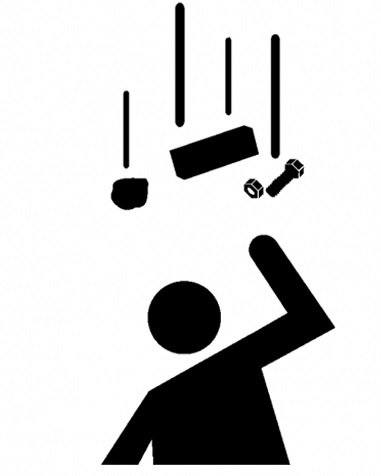
An object is falling downward through Earth's atmosphere. In which direction is the air resistance force?
Down
Up
Around the object
Through the object

An airplane flies east at 400 km/hr. In which direction is the air resistance force acting upon the airplane?
East
West
Up
Down
Which best describes why a falling object will reach its terminal velocity?
Gravity force is equal and opposite air resistance force.
Air resistance force is equal and opposite the freefall velocity.
Gravity force is equal and opposite the object's mass.
The object's mass is equal and opposite the gravity force.
Read the following passage from “To Fly.”
We did, however, ultimately learn to fly because of the technological ingenuity afforded by our human brains. And of course, while birds can fly, they are nonetheless stuck with bird brains. But this self-aggrandizing line of reasoning is somewhat flawed, because it ignores all the millennia that we were technologically flightless.
The author says that this line of reasoning is flawed because we may be smarter than birds, yet we failed to fly until very recently.
True
False

