Worksheets
5 3rd Term 2080
Total questions: 192
Worksheet time: 8hrs 6mins
A straight path of light is called a ________?
A laser
Sound waves
A ray
Sunshine
What else happens to light when it is not reflected? (Pick 2)
Transmitted
Disappeared
Reflected
Absorbed
Light is _______ important to our life.
Very
Kind of
Not really
Not
_____________ is light bouncing off an object?
Reflection
Absorption
Transmission
It becomes a rainbow
Light can be turned into what type of energy?
Thermal (heat) energy
Battery energy
Kinetic (motion) energy
Mechanical
How can the direction of light be changed?
Light hits an object and is absored
Light hits a different medium
Light hits an object and bounces off
All of the above
Light is what kind of energy?
Potential
Electromagnectic
Laser
Mechanical

Which of these shows what happens to light when it hits a classmate's face.
A
B
Neither - the light is absorbed.
Both - it depends on the person.
Light travels at the speed of _______________ meters per second.
100,000
300,000,000
1,000
300,000
Which one does light reflect off of better: dull objects like wood or shiny objects like metal?
Dull objects
Wood
Yellow
Shiny objects
Do light waves travel in straight lines?
Yes
No
Sometimes
Maybe so
What happens when light goes through water?
The light slows and bends
The light keeps going straight
The light turns dark
All of the above
What colors makes white light?
red, white, and purple
None of the colors
red, orange, yellow, green, blue, violet
white
Select all the examples for transparent materials?
Paper
Air
Boxes
Water
Glass

Refraction is _____________________________?
The bending of light
The bouncing back of light
The absorption of light
All of the above
What do we call a substance that energy can travel through?
Mirror
Medium
Wave
Density
What helps us remember The Colors of the Spectrum?
Roy G Bv
Roy G Bt
Roty G By
Roy S Bv
Transparent is able to be seen through with...
light
clarity (clearly)
material
can't see through transparent
How much light does something opaque let through?
all of it
a little of it
half of it
none of it
What color object absorbs the most light?
Black
White
Violet
Red
When light energy is absorbed by an object, it...
turns into thermal (heat) energy.
turns into sound energy.
turns into solar energy.
remains light energy.

This mirror is...
transparent.
translucent.
opaque.

Which light bulbs are transparent?
The red light bulbs
The clear light blubs
All of the light bulbs
Both the red and yellow light bulbs
Which light bulbs are translucent?
The red light bulbs
The yellow light bulb
All of the light bulbs
Both the red and yellow light bulbs
How does light energy move?
Longitudinal Waves
Wavelengths
Transverse Waves
Ocean Waves
What is the visible spectrum?
a. The part of light waves we can see
b. The part of light waves we cannot see
c. the whole electromagnetic spectrum
d. the energy spectrum
A Transverse Wave is a wave that goes up and down
True
False
What color has the shortest wavelength and highest frequency?
Violet
Orange
Red
Blue
What color has the longest wavelength?
Black
Green
Purple
Red
What is a wavelength?
(Hint: there is one correct answer)
a. The distance between a crest & a trough
b.The highest part of a transverse wave
c.The distance between two crests
d. Light doesn't have a wavelength
What is the lowest part of a transverse wave?
Trough
Crest
What is the highest point of a transverse wave?
Trough
Crest
Wavelength
Frequency
How long does it take for light to travel from the Sun to the Earth?
8 and 1/2 minutes
60 minutes
30 sec
About 15 minutes
Why do we see grass as green?
Green light is absorbed
Green light is reflected
What is the less dense part of a compression wave called?
Rarefaction
Compression
Sound
waves
Sound travels in a _______________ wave.
Tranverse
Longitudinal
Up & Down
Echo
Can sound travel without a medium?
yes
no
depends on the wave
sometimes
What did we use in class to show a sound wave and compression?
a slinky
water
silver chain
flashlight
Sound is made of ________________________________ .
Electromagnetic energy
Noises
Vibrating Matter
Echos
What is a Wavelength?
How big the sound wave is
The distance between two compressions
How loud the sound is
How tall the sound family is
What is a Compression
Part of the sound wave that has molecules bunched together
The push of something on the sound wave
How tight the sound waves are together
How wide the sound wave is
A longitudinal (sound) waves moves __________________ ?
By reflection
Up & Down
Back & Forth
By absorption
Can sound travel through a vacuum (space)?
No
Yes.
What medium is all around us that lets us hear people talk?
Solid
Liquid
Gas
Plasma
What is Vibration?
the sound of a whistle
rapid back & forth movement that creates sound
shoes tapping on the floor
movement of air
Which material does sound travel faster in?
water
metal
dry air
clouds
What is sound formed by?
Vibrating matter
ocean waves
color
gas
Sound waves travel through steel faster than through air.
True
False
Sound moves fastest through steel (metal) because ______________ .
The molecules are farther away.
The sound echoes back.
The molecules are very close together.
The sound is easier to hear
Sound waves are a _____________________ wave.
Compression (Longitudinal) wave
Up & Down wave
Transverse wave
Ocean wave
What happens when sound hits a hard surface?
The sound is absorbed
The sound just stops
The sound moves around it
The sound is reflected back
Sound must have a medium to travel through.
No
Yes
Sometimes
What is actually vibrating around you between your voice and someone's ear, so you can hear them?
Water molecules
Your lips
Air molecules
Solid molecules
What are some examples that we used in class to show or explain sound waves? Click all that apply.
Slinky
Inflated ballon
Prism
Tuning Fork
What is frequency?
Mrs. Lackey
The amount of heat in a wave.
The height of the waves in a given time. .
Number of vibrations in a given time.
How is pitch determined?
By amplitude.
By frequency.
By resonance
What are some examples of how sound waves travel?
(Select all that apply.)
Like a slinky.
Like a human.
Like ocean waves.
Like a compression wave
Sound waves can move through space.
True
False
What does amplitude determine?
Loudness
Voice
Vibrations
Pitch
What is resonance?
When one object vibrates at a frequency.
When two objects vibrate at the same frequency.
When two objects vibrate.
When two objects vibrate at different frequencies.
A longer and bigger stringed instrument makes a ___________ pitch than a short string.
louder
softer
higher
lower
The highest pitch is made by the __________ instrument.
biggest
wooden
smallest
shiniest
Which one of these answers are true?
Frequency determines pitch.
Fast frequency is equal to a high pitch
Slow frequency is equal to a low pitch
All of the above.
What is the scientific name for volume?
Amplitude
Frequency
Pitch
Echo

Are the notes on the music staff different pitches?
No
Yes
What are some examples that we used in class to show or explain sound waves? Click all that apply.
Slinky
Inflated ballon
Prism
Tuning Fork
Ultrasound travels farther than infrasound.
True
False
People hear echolocation.
True
False
Why do animals use echolocation? (Choose all that apply)
because they can't see
to know where they are going
to find prey
to communicate
What is the human hearing range?
200-500 Hz
20-20,000 Hz
20-2,000 Hz
200-20,000 Hz
What is Ultrasound?
Sounds below human hearing range
Sounds above human hearing range
What is Infrasound?
Sounds below human hearing range
Sounds above human hearing range
Which of the following use echolocation? (Click all that apply)
Cats
Bats
Dogs
Dolphins
What do submarines use to navigate and "see" underwater?
Windows
Echolocation
SONAR
GPS
What animal can hear lower than humans?
Elephants
Mice
Bats
Dolphins
What is Ultrasound sometimes used for?
Finding the moon in space
Finding your way, if your blind
Locating iphones
Looking inside a human body


What is a medium?
Solid
Liquid
Gas
All of the above
Sound needs a medium in order to travel.
True
False
Sound waves can travel through a vacuum.
True
False
A sound wave looks most like:
a long rope
a wave in the water
a coiled spring
a short rope
Sound waves
don't travel
travel in all directions
travel in only one direction
travel only north
An object that does not vibrate cannot produce
light
heat
electricity
sound
A place where no sound exists is
in the air
space
under water
all of the above
Sound is a form of energy produced by
vibrations
prisms
distances
wires
Sound does not travel in space because
space is too far away
space is the final frontier
space has planets
there is no matter in space
Which sentence BEST describes how sound moves?
Sound can move through solids, liquids, or gases.
Sounds can move through solids and liquids, but not gases.
Sound can move through an empty space and through matter.
Sound can move through liquids and gases, but not through solids.
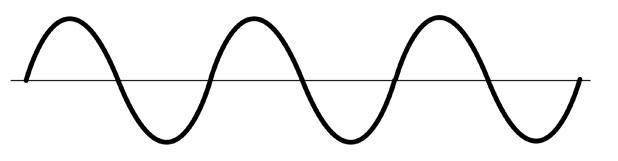

What affects the pitch of a stringed instrument?
The thickness of the string, tension on the string, length of the string
The shape of the instrument.
The shape of the hole.
How the strings are plucked.

What happens when a rubber band on a cup is plucked?
The cup changes shape.
The rubber band always breaks.
The cup will vibrate back and forth.
The rubber band will vibrate back and forth.

The farther away you are from the source of sound the softer the volume and the less clear the sound is.
True
False

What is the loudness of softness of a sound?
volume
pitch
vibrations
energy

What do you call how high or low a sound is?
Volume
Pitch
Vibrations
Sound

What kind of force do louder sounds need?
Harder and stronger
Vibrating forceful
Soft and rhythmic
Rough and mean
An object will produce a sound if it
is heavy
heats up
vibrates
grows

If you blow into these two whistles, the shorter one will produce a sound that is
higher
lower
softer
louder
Uses the motion of water to turn turbines, creating electricity.
Hydro
Wind
Biomass
Solar

The following picture is an example of what energy source?
Wind
Biomass
Coal
Hydropower

The following picture is an example of what energy source?
biomass
solar
coal
oil
What is an advantage of using hydropower as an energy source?
uses existing bodies of water.
may divert water and alter normal water flow.
might disrupt the movements of animals.
sometimes causes flooding in surrounding areas.

The following picture is an example of what energy source?
Hydro
Solar
Coal
Nuclear
A disadvantage of this energy source is that it pollutes the air with gases.
hydropwer
wind
coal
solar
One disadvantage to this source is that it's not effective in certain weather.
Sun
Coal
Nuclear
Biomass
An advantage of this energy source is that it won't run out and does not pollute.
Nuclear
Wind
Coal
Oil
Oil is made from
dead plant and animal remains
sedimentary rocks
magma and lava
water
Nonrenewable means
if it's used up, it's gone
we can always make more
Solar energy comes from
the sun
the moon
water
coal
movement of water through a dam in a river is converted to useable energy
hydropower
solar
nuclear
wind
What does reflection mean?
It is when the light changes the material and the direction of it changes as well.
It is when the material is rebounding the light.

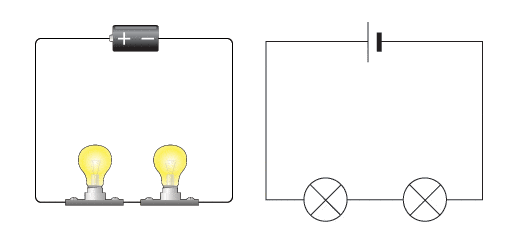
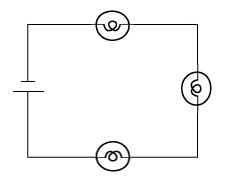

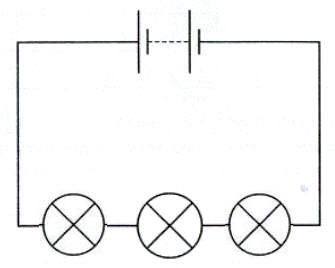

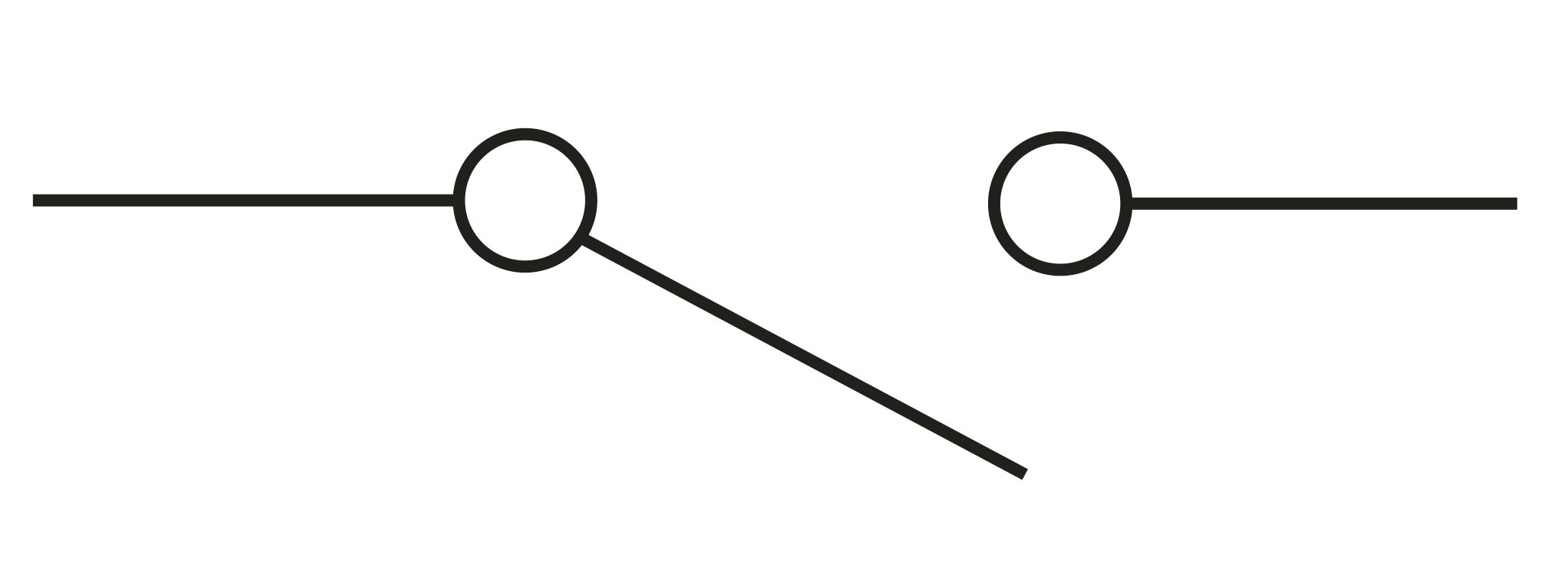

What needs to be done to this circuit so that the lamp lights up?
Close the switch
Add a source and close the switch
Add another lamp
Add another lamp and a switch
What is electricity?
an object that electrons do not flow through
energy created by moving charged particles
when two objects repel each other
a circuit that has only one path for electricity to flow

This picture shows a circuit that is
closed
open
an insulator
static electricity
A parallel circuit has more than one path for electricity to flow
true
false
Imagine you are creating a circuit. It works and the light bulb turns on. Then you add a piece of plastic to the circuit, and the light bulb does not turn on. We can infer that the plastic is
an insulator
a conductor
an electron
static electricity
If the light bulb turns ON in a circuit, that means the circuit is
open
closed


If you hear thunder, lightning is close enough to strike you.