
 Worksheets
Protists
Total questions: 153
Worksheet time: 2hrs 38mins


Which structures allow sacrodines, such as amoebas, to move?
Cilia
Psuedopods
Flagella

Like animals, animal-like protists are
autotrophs
unicellular
heterotrophs

What animal-like characteristic do euglenoids have?
They have a flagellum.
They can sometimes be heterotrophs.
They are autotrophs.

What characteristic do all algae share?
They are autotrophs.
They live in colonies.
They are unicellular.

How are fungus-like protists similar to fungi?
They do not have cell walls.
They are unable to move.
Most use spores to reproduce.

Animal-like protists are commonly called what?
Sacrodines
Ciliates
Protozoans

What structure collects water and expels it in protists?
Contractile Vacuoles
Cytoplasm
Food Vacuoles

Slime molds are one type of?
Animal-like protist
Fungus-like protist
Plant-like protist

What is the purpose of the eyespot on an euglena?
To detect a light source.
To see where the nearest light source is.
To help see where it is going.

What does the flagella do in a euglenoid?
It captures light for photosynthesis.
It controls the daily activities of the euglenoid.
It helps in the movement of the organism.

Protists are divided into which of the following categories? (select all that apply)
Plant-like
Fungi-like
Bacteria-like
Animal-like
Algae-like


Cilia, flagella, pseudopods are forms of motility in Protists.
A "false-foot".
a green, single-celled, freshwater organism with a flagellum, sometimes forming a green scum on stagnant water. This is a...
Euglena
Pseudopods
Food Vacule
Other
What is a food vacule
A cell that contains a nucleus
A type of protist characterized by great flexibility and the presence of pseudopodia.
Organelle that temporarily stores food
A whip-like structure used for movement
What is a Eukaryote
A type of protist characterized by great flexibility and the presence of pseudopodia.
A cell that contains a nucleus
A whip-like structure used for movement
Organelle that temporarily stores food
A type of protist characterized by great flexibility and the presence of pseudopodia. This is what.........
Food vacuole
Eukaryote
Flagella
Amoeba
Flagella
A whip-like structure used for movement
Organelle that temporarily stores food
A "false foot" or temporary bulge of cytoplasm used for feeding and movement in some protozoans.
Hairlike projections that are used for movement
A "false foot" or temporary bulge of cytoplasm used for feeding and movement in some protozoans. This is what.....
Cilia
Flagella
Pseudopods
Eyespot
Cilia
Hairlike projections that are used for movement
Euglena Use this to Detect Light
A whip-like structure used for movement
Organelle that temporarily stores food
Euglena Use this to Detect Light....
Other
Eyeball
Eyespot
None
A ciliated (it propels itself via cilia) protist that lives in fresh water and eats other tiny organisms for food.
Eukaryote
Euglena
locomotion
Paramecium
Locomotion
Euglena Use this to Detect Light
A cell that contains a nucleus
the ability to move from place to place
None of the Above

Identify #25.
Food vacuole
Nucleus
Ribosome
Identify #17.
Contractile Vacuole
Nucleus
Food Vacuole
Identify #19.
Food vacuole
Endoplasmic Reticulum
Ribosome
What is it called when something needs to eat to survive?
Heterotroph
Autotroph
Organism
Identify #21.
Lysosome
Oral Grove
Cell Membrane
What are the two parts of the "organism" definition?
makes its own food
any living thing
free-living individual
What is it called when something makes its own food?
Heterotroph
Autotroph
Organism
True or False: The contractile vacuole is used to store food.
True
False
Protists are members of which kingdom?
Plant
Animal
Protista
Fungus
True or False? Protists have only one way to get food, reproduce and move.
True
False
True or False? All protists are single-celled
True
False
True or False? Protists are very different from fungi, plants or animals
True
False
True or False? Protists are prokaryotic (which means they do not have a cell nucleus)
True
False
What do we call organisms that can make their own food?
consumers
producers
decomposers
What do we call the structures that help some protists capture energy from the sun?
chlorophyls
chloroplasts
photosynthesis
What do we call the process some protists use to capture energy from the sun?
chlorophyls
chloroplasts
photosynthesis
In addition to some protists, what other organisms use the sun to make their own food?
Plants
Animals
Fungi
Another word for "producers" is ...
heterotrophs
homotrophs
autotrophs
the name we give to free living protists and photosynthetic bacteria is
protists
archaeobacteria
phytoplankton
dinoflagellates
these are common characteristics of plant like protists
flagella
chlorophyll
prokaryotic cell
cell wall
stems
these protists cause red tides
dinoflagellates
diatoms
green algae
red algae
these protists are world champions in oxygen production
dinoflagellates
diatoms
green algae
red algae
these protists can grow up to 100 meters
dinoflagellates
diatoms
phaeophyta
red algae
these protists are thought to be the ancestors of plants
dinoflagellates
diatoms
phaeophyta
chlorophyta
these protists can grow in deeper waters
dinoflagellates
rhodophyta
phaeophyta
chlorophyta
these protists have a pellicle that allows them to change shape
euglenoids
rhodophyta
phaeophyta
chlorophyta
what is the best TV show in your opinion? why? you can leave this blank

1. (T/F) Most protists are unicellular, but a few are multicellular.
True
False

2. Protists contain a nucleus with their cell(s). For this reason, they are called
Heterotrophic
Prokaryotic
Eukaryotic
Autotrophic

3. Which one of these is not considered a type of Protist?
Animal-like
Plant-like
Fungus-like
Bacteria-like

4. Protozoans which have a true nucleus, can move to obtain food, and do not have cell walls are called?
Animal-like
Plant-like
Fungus-like
Bacteria-like

5. Protozoans that must get their energy from consuming other organisms are called _________________ ?
Heterotrophic
Unicellular
Eukaryotic
Autotrophic

6. Sarcodines are a type of protozoan protist. They have pseudopods for movement. What is an example of a sarcodine?
Amoeba
Paramecium
Euglena
Diatom

Pseudopodia is a Greek word which means ___________________?
Long, whip-like tail
False feet
Small, hair-like
Exoskeleton

A type of protist with tiny, hair-like projections that are used like oars for moving and feeding are called ________________ ?
Amoeba
Paramecium
Euglena
Diatom

A ______________ is a long, whip-like tail used for locomotion by Euglena and Peranema protozoans?
Paramecium
Cilia
Pseudopods
Flagella

Some protozoans feed host organisms. The host serves no benefit and may be harmed or even killed. This relationship is known as
Mutualism
Commensalism
Parasitism
Dichotomous

11. Plant-like protists are considered to be _____________________ because they use the Sun’s energy to obtain energy.
Heterotrophic
Unicellular
Eukaryotic
Autotrophic

Which of the following is a plant-like protist?
Protozoa
Plasmodium
Algae
Amoeba

In order to conduct photosynthesis, plant-like protists must contain a _______________.
Chloroplast
Mitochondria
Nucleus
None of the above

Algae can not live on damp surfaces or in water.
True
False

15. Which of the following is NOT a "true" plant-like protist?
Dinoflagellates
Euglena
Algae
Diatoms

Some species of protists, like slime molds and downy mildew have cell walls and produce spores in order to reproduce. These are known as
Bacteria-like
Plant-like
Fungus-like
Animal-like

Although protists are unique organisms, they are grouped in with the Kingdom Fungi.
True
False

Which category of protists are autotrophic, those that can make their own food?
Animal-like
Plant-like
Fungi-like

Which of the following helps the protist above move?
Flagella
Pseudopod
Cilia

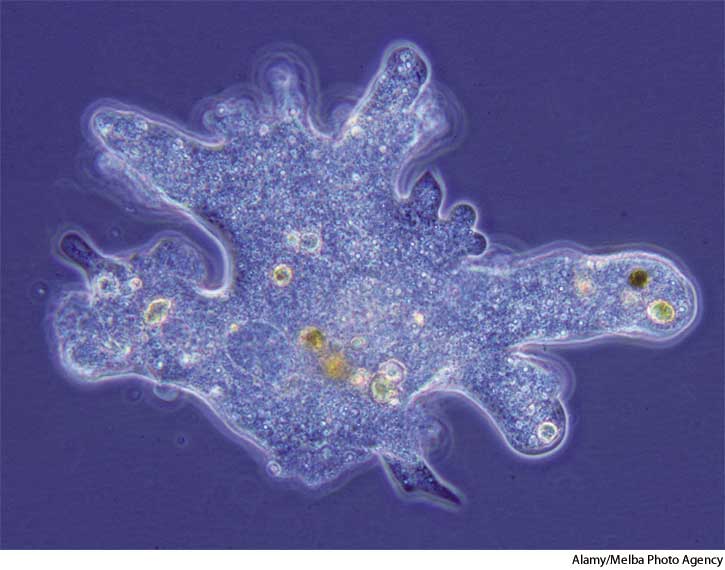
What is the name of the protist pictured above?
Amoeba
Paramecium
Euglena
Diatoms


Plant-like protists that uses photosynthesis to feed and obtain energy:
Protozoan
Amoeba
Algae
Paramecium

Eukaryotic cells that live in aquatic environments like algae and amoeba:
Protists
Fungi
Animals
Plants

"false foot" that extends to feed the amoeba
Eyespot
Cilia
Pseudopod
Flagella

Paramecium move with _____________________.
cilia
flagella
pseudopodia

Amoeba move with _______________________.
cilia
flagella
pseudopodia

Euglena move with ________________________.
cilia
flagella
amoeba
Protists classified by how they obtain energy are:
Cilia, Flagella, and Pseudopod
Fungi-like, Plant-like, and Animal-like
Photosynthesis, Mitochondria, Cytoplasm
Slime molds and water molds belong to which class of protists?
Animal like
Plant like
Fungus like
Sporozoans
In which environment are you most likely to find protists?
pond
desert
volcano
forest floor

What type of Protist has false feet?
Euglena
Amoeba
Paramecium

Which of the following moves using pseudopodia?
diatoms
paramecium
ameba
euglena

The word "pseudopodia" means:
small cell
false foot
fake eye
first animal

What is the single most important characteristic that separates protists from bacteria and viruses?
They are prokaryotic.
They are eukaryotic.
They eat in multiple different ways.

Hair-like fibers that help protists move are called
cilia
flagella
pseudopodia
hair

A whip-like tail that helps protists move is called
cilia
flagella
pseudopodia
feet

How do parameciums move?
cilia
psuedopod
flagella
feet

Amoeba and Paramecium are all examples of
animal-like protists
plant-like protists
fungus-like protists


What is the name for an organism that can produce its own food?
heterotroph
autotroph
amoeba
eukaryotic

What is the name of an organism that cannot produce its own food and must get it from another source?
prokaryotic
eukaryotic
autotroph
heterotroph

Which of the following is true ALL organisms in the protist kingdom?
They are multicellular
They live in moist environments
They move using cilia
They move using flagella

Which protist has an eyespot?
Amoeba
Volvox
Euglena
Paramecium

long and thin , tail-like appendage used by cell for movement
Cilia
Pseudopodia
Flagella

Which organelle do organisms that photosynthesize have?
mitochondria
nucleus
chloroplast
ribosome

Which two protists ingest their food to get energy?
amoeba, paramecium
volvox, euglena
euglena, amoeba
paramecium, volvox

What is a flagella?
tiny hairs
tail-like whip
false foot

What is cilia?
tiny hairs
tail-like whip
false foot

Which protist has an eyespot?
Amoeba
none of the above
Euglena
Paramecium

Which protist has an oral groove and a gullet?
Paramecium
Volvox
Amoeba
Euglena

What type of cells are protists?
Prokaryotic
Eukaryoitc

Protists that are heterotrophs are ______________.
fungus-like
animal-like
plant-like

Protists that are autotrophs are ______________.
fungus-like
animal-like
plant-like


Has chloroplast
Prokaryote
Eukaryote
both

