
Font size
 Worksheets
S10 Plants
Total questions: 30
Worksheet time: 10mins

What are the levels of organization in plants?
Plants have cells, but not tissues.
Plants are made up of cells, tissues, organs, and organ systems
Plants contain cells and tissues, but not organs.
Two main systems of a plant are the _________
fruits and stems
leaves and flowers
roots and shoots

Vegetables and taproots are part of the plants (a) system.
What anchors a plant to the ground and stores sugar made in photosynthesis?
leaves
stems
roots
Plants absorb and transport water and nutrients by their roots.
True
False

Everything above the ground in plants is called the ----------- system
(a)
What is the function of a plant's stem?
support the plant's body
carries nutrients throughout the plant
all of the above

Where is the main photosynthetic system located?
in the flower
in the soil
in the leaves
The green pigment in the leaves is called (a)
Check off the three tissues types found in plants.
Dermal
Vascular
Mesophyll
Circulatory
Muscular
Mesophyll
The waxy, waterproof layer that covers most leaves is called the what?
(a)
What is the function of a cuticle?
Water Transport
Sugar Transport
Reduce Water Loss
Increase Water Loss
Select all of the following conditions that would result in plant water loss.
High Temperatures
Low Temperatures
Light
No Light
This layer is found just below the waxy layer (if present) and is the "skin" of the leaf
Cuticle
Epidermis
Mesophyll
Stomata
The mesophyll tissue is responsible for
Which mesophyll layer can be described as "column-shaped?"
Palisade
Spongy
Which mesophyll layer can be described as "round-shaped?"
Palisade
Spongy
What process do plants go through to create glucose?
(a)
The most photosynthesis happens in the ___________ cells
epidermal
guard
spongy tissue
palisade tissue

What is the vascular tissue that carries water throughout a plant?
phloem
seedling
xylem
Check off any characteristics that describe the xylem.
Carries sugar
Carries water and minerals
Direction of transport is roots-to-shoots.
Direction of transport is leaves-to-whole plant
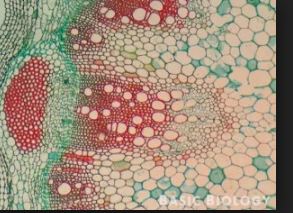
_____________________ is a vascular tissue that carries sugars and other foods throughout a plant.
stems
phloem
roots
xylem
Check off any characteristics that describe the phloem
Carries sugars
Carries water and minerals
Direction of transport is root-to-leaves
Direction of transport is leaves-to-whole plant
The cell responsible for opening and closing the stomata are called (a) cells.
_________________ diffuses through the spongy tissues cells and out through the stomata after it was produced by photosynthesis
carbon dioxide
oxygen
__________ goes in through the stomata and diffuses through the spongy tissue cells where it can be used in photosynthesis
carbon dioxide
oxygen

