
 Worksheets
Topic 4 - Matter Review
Total questions: 77
Worksheet time: 15mins
made up of atoms with the same number of protons joined together by chemical bonds
molecule
element
atom
compound
a subatomic particle that has a negative charge
neutron
proton
electron
nucleus
Colton and his brothers put some raisins, hazelnuts, almonds, and peanuts in a bowl to make a snack for their movie. What does this snack represent?
a solution
a new element
a new compound
a mixture
In a mixture, two or more things are mixed together and those parts _______________
can be easily separated
can not be easily separated
the smallest particle in an element that has the chemical properties of that element
atom
atomic mass
nucleus
molecule

Sherry wants to dissolve rock salt in a glass of water at room temperature.
Which process will speed up the time it takes for the salt to dissolve?
Add hot water to the glass
Add cold water to the glass
Pour the water into a larger container
Pour the water into a smaller container
Which is a solution
chocolate milk
sand and water
dinosaurs and cubes
salad

a subatomic particle that has no charge
neutron
proton
electron
nucleus
In a reaction A + B ----> C.
Reactant A has 5g and product C has 9g.
How many grams does reactant B should have?
4g
5g
9g
14g


the number of protons plus the number of neutrons in an atom
chemical bond
atomic mass
electrons
molecule

When a liquid is cooled, the liquid __________________.
evaporates
freezes
melts
turns into a gas
As temperature increases, the particles ___________________.
slow down and huddle closer together
speed up and spread out

A scientist uses an instrument to study the small particles in a piece of matter. The diagram shows what the scientist sees.
What state of matter is the scientist most likely observing?
gas
solid
liquid
plasma

anything that has mass and takes up space
energy
matter
bond
electron

A scientist uses an instrument to study the small particles in a piece of matter. The diagram shows what the scientist sees.
What state of matter is the scientist most likely observing?
gas
solid
liquid
vapor


Lisa was at the fair and noticed people walking around with these 8 differently shaped balloons filled with helium gas.
Which is the best conclusion Lisa could make about gases after she observed these balloons?
Gases take the shape and size of their containers
Gases have definite shapes and sizes
Gases have definite shapes and volumes
Gases' sizes and shapes do not change

The image shows a lake.
Why is the lake considered matter?
It is large
It is living
It has mass and volume
It has physical properties
David added 15 g of ice to a 55 g container. After the ice melted, what was the total weight of the container?
50 g
15 g
55 g
70 g
A chemical change is a change in
an item's properties such as size, shape, density
an item that creates a new substance, releases light or heat
an item's sound
an item's look or state of matter
a subatomic particle that has a positive charge
neutron
proton
electron
nucleus
Carrie and Amanda live on a farm and do lots of chores to help their parents.
Which chore is an example of a chemical change?
chopping wood
burning leaves
boiling water
cutting the grass
A physical property is a feature of an object that you can observe with your senses and measure with a tool.
Which is a physical property that you can measure?
the color of a ball
the freezing point of water
the texture of a sweater
the smell of something burning
Which of the following represent chemical changes?
chopping wood
milk turning sour
breaking a pencil
fruit ripening
roasting a marshmellow
Which of the following represent physical changes?
fruit ripening
milk turing sour
chopping wood
mixing food color and water
melting butter
Which is NOT a method used for separating mixtures?
sifting
flotation
filtration
dissolving

Sammy poured oil and water into a glass and mixed the liquids. He let the liquids sit in the glass for 8 hours and the 2 liquids separated as shown in the picture.
What happened to the 2 liquids?
The oil is more dense than water, and it dissolved in the water
The oil is less dense than water, and it dissolved in the water
The oil is more dense than water and cannot dissolve in water
The oil is less dense than water and cannot dissolve in water
A mixture of sand, salt, and iron fillings is stirred into a beaker of water. The mixture is then allowed to settle.
What will separate the iron fillings from the mixture?
Magnetism
Filtration
Flotation
Sifting
Sand and salt are placed in the bottom of a beaker filled with water. The beaker is heated, and the water is stirred.
What will happen to the salt and sand?
The sand and salt will settle to the bottom.
The sand and salt will dissolve in the water
The salt will dissolve, and the sand will settle
The sand will evaporate, and the salt will dissolve.
Tim has two beakers of liquid at room temperature. He places both beakers on a hot plate. The liquid in Beaker A boils before the liquid in Beaker B.
Which statement explains why the liquid in Beaker A boils before the liquid in Beaker B?
Beaker A has a lower boiling point
Beaker B has a higher freezing point
The liquid in Beaker A has less mass
The liquid in Beaker B has a lower density
How many elements are in H2O
1
2
3
4

This picture represents which of the following?
element
compound

This picture represents which of the following?
element
compound
When one or more substance is combined it is called __________________.
compound
element
mixture
solution
Which is an example of a different substance being formed?
glass breaking
metal melting
water freezing
wood burning
Which of the following statements describes an element?
It contains only one kind of atom.
It can be decomposed by ordinary chemical means.
It is composed of atoms of two or more elements that bond together.
It has unique properties that are different from the properties of its individual elements.
Carbon is considered an element, while carbon dioxide is considered a compound. This is because carbon dioxide is –
a gas at room temperature.
made of two different elements.
given off by green plants.
useful to human beings.
The _____________organizes all the elements and shows their symbols and atomic weights.
Periodic Table of the Elements
Elemental Table of the Periods
Element Table of the Atoms
Periodic Table of the Compounds

smallest unit of an element that cannot be broken down by any chemical means
molecule
element
atom
compound


Students observed a piece of iron change from shiny to rusty. What caused this change?
a chemical reaction
a heat reaction
a cold reaction
a physical reaction
Which is the best example of a new substance forming?
lighting a match
cutting a piece of paper
popping a balloon
hitting a nail with a hammer

Is this an example of a physical or chemical change?
physical
chemical
Which of the following is NOT an example of chemical change?
making pancakes
sugar dissolving into water
baking a cake
rotting an apple
Which of the following is NOT an example of a physical change?
crumpling paper
sharpening a pencil
clothes shrinking
sour milk
A chemical change can (a) be changed back.
How much mass is in the salad when the carrots are 90 grams, lettuce 100 grams, and cucumbers 75 grams?
275 grams
265 grams
100 grams
175 grams
What tool would you use to separate water and salt?
sieve
magnet
filter
bunsen burner

The bottom of a sieve has many small holes, all the same size. Which of the following mixtures could be separated using a sieve?
nuts and raisins
paper clips and beads
sand and gravel
aluminum nails and iron nails
This is a type of mixture where one substance dissolves into another substance evenly.
compound
solution
miscibility
solubility
What is the best way to get salt to dissolve into water?
stir the solution
pour out the solution
leave the solution alone
What can you do to separate salt from water?
add more water
let it stand in the sun for a while
take some water out
decrease the temperature of the water

solute
solvent

If you put Iced Tea mix in water, the Iced Tea mix is the______.
Solute
Solvent
Solution
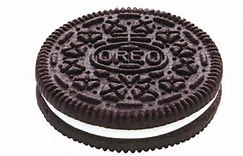
An oreo cookie has a mass of 20 grams. It gets crushed into crumbs for a recipe. What is the mass of the crumbs?
15 grams
25 grams
20 grams
What will have more mass when a chemical change is complete: the reactants before the chemical reaction or the product after the reaction is complete?
They both will have the same mass
The product always has more mass than the reactant
The reactant will have more mass than the product
They both will lose mass after the reaction
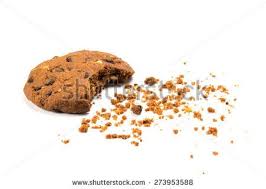
The Law of Conservation of Matter states that the total amount of matter _____ after it undergoes change.
disappears
stays the same
weighs less
explodes

