
 Worksheets
Meiosis Quiz 1 honors
Total questions: 10
Worksheet time: 12mins
Place the following in order based on how genetic information flows to result in visible characteristics such as eye color.
1. Trait
2. RNA
3. Protein
4. DNA
DNA > RNA > Protein > Trait
Trait > Protein > RNA > DNA
DNA > Protein > RNA Trait
Trait > RNA > Protein > DNA
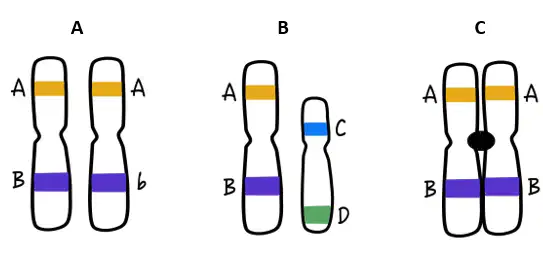
Match the following
Homologous Chromosomes
A
Sister Chromatids
C
Non-Homologous Chromosomes
B
What process occurs during meiosis that can result in chromosomal disorders where there are too few or too many chromosomes present?
crossing over
non-disjunction
anaphase I
prophase I
How many homologous pairs of chromosomes do humans have?
23
46
22
44
The first 22 pairs of chromosomes are called________________. These chromosomes do NOT determine an organisms sex.
Sister Chromosomes
Homologous Chromosomes
Gametes
Autosomes
Chromosomes that are the same length and same gene loci are known as _______________________ chromosomes.
BFF
Sisters
Homologous
identical
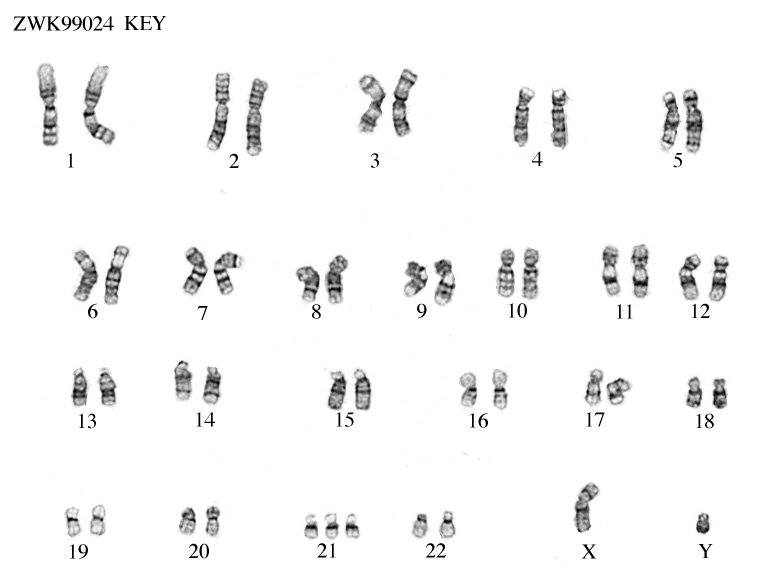
Examine the karyotype. What abnormalities do you notice?
Missing chromosome 23
Missing an X chromosome
Trisomy of chromosome 21
Misshaped chromosomes
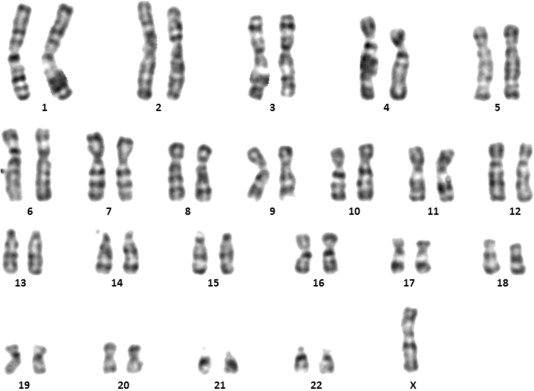
This is a karyotype of an individual with Turner's Syndrome. Can you identify the abnormality?
Trisomy of chromosome 21
Monosomy of chromosome 21
Monosomy of chromosome 23
Trisomy of chromosome 23
Which of the following statements about sexual reproduction is true.
Sexual reproduction results in genetically identical cells.
Sexual reproduction creates populations with very little variation.
Sexual reproduction results in genetically similar cells.
Sexual reproduction creates genetically diverse populations.
Genes passed on
Parent cell divides
Creates haploid cells
Results in genetic diversity
Slower process
High energy demand
Creates diploid cells
Gametes
Results in clones
Limited genetic diversity
Faster process
Low energy demand

