
Font size
 Worksheets
US History - Unit 4: Roaring Twenties, and Great Depression
Total questions: 77
Worksheet time: 40mins
Who was Vladimir Lenin and what did he do during the 1920s?
A Russian revolutionary who led the Bolsheviks and established a communist government
An American politician who advocated for civil rights
A British inventor who revolutionized the automobile industry
A German philosopher who wrote influential works on existentialism
How did Henry Ford change the auto industry for good during the 1920s?
By inventing the assembly line production method
By introducing the concept of welfare capitalism
By establishing a monopoly on automobile manufacturing
By promoting the use of credit for purchasing cars
Why did the KKK grow during the 1920s in the United States?
To support the civil rights movement
To advocate for labor rights
To promote racial equality
To oppose immigration and promote white supremacy
Why did African and Black Americans move away from the South during the 1920s?
To seek better economic opportunities and escape racial discrimination
To escape the influence of the Harlem Renaissance
To establish new agricultural communities in the Midwest
To join the military and fight in World War I
How were celebrities viewed as heroes during the 1920s?
For their philanthropic efforts and support of social causes
For their contributions to scientific research and technological advancements
For their involvement in political activism and advocacy
For their glamorous lifestyles and influence on popular culture
How were Americans affording to buy more stocks before the Great Depression?
By participating in stock market lotteries
By receiving government subsidies for stock purchases
By investing in foreign stock markets
By borrowing money to buy stocks on margin
What was the impact of the Great Depression on the American economy in the 1930s?
It led to a boom in the stock market
It caused a significant increase in employment
It resulted in widespread poverty and unemployment
It had no significant impact on the economy
What was the role of the United States in the League of Nations after World War I?
The U.S. was a founding member and played a significant role
The U.S. chose not to join the League of Nations
The U.S. joined but later withdrew its membership
The U.S. was barred from joining the League of Nations
What was the significance of the Harlem Renaissance in the 1920s?
It was a period of significant economic growth in Harlem
It was a cultural, social, and artistic explosion among African American community
It was a political movement advocating for the rights of African Americans
It was a period of decline in the African American community in Harlem
What was the impact of the Prohibition in the United States during the 1920s?
It led to a decrease in crime rates
It resulted in the rise of speakeasies and bootlegging
It caused a significant increase in alcohol consumption
It had no significant impact on society
What was the role of women in the United States during World War I?
They were not involved in the war effort
They served as soldiers on the front lines
They took on jobs left by men who went to war
They were discouraged from participating in the workforce
Why did the Stock Market Crash of 1929 lead to the Great Depression?
It caused a significant increase in the value of stocks
It led to widespread panic and withdrawal of money from banks
It resulted in an economic boom
It had no significant impact on the economy

A title given to the time of great artistic contributions by African-American musicians, writers, and artists.
The Great Migrations
The Great Depression
The Roaring 20's
The Harlem Renaissance

Select two (2) famous pilots who became very popular during the 1920's.
Amelia Earhart
Babe Ruth
Louis Armstrong
Charles Lindbergh
Secret organization that hated African Americans, Jews, Catholics, and immigrants.
Ku Klux Klan
Kool Kids Klub
Kit Kat Kandy
Anti-Defamation League
This increased because of the radio, advertisements, and use of credit.
consumerism
national debt
immigration
education
Change in the constitution which gave women the right to vote.
19th Amendment
18th Amedment
21st Amendment
1st Amedment
At its heart, the Scopes Trial was a clash between
Fundamentalism and Evolution
Biology and Science
Evolution and Science
A Teacher and Science
The ratification of the 21st Amendment marked the end of --
women's suffrage
segregated society
Progressive Movement
Prohibition Era
Which of the following was a result of Prohibition in the 1920s?
Fall of the stock market
More jobs on farms
Less unemployment in cities
Growth of organized crime
Which amendment resulted in prohibition becoming law?
Twenty-first
Twentieth
Nineteenth
Eighteenth

The African-Americans in this painting are leaving, taking part in the --
Great Migration
Progressive Movement
Great Depression
Suffrage Movement


When did the Stock Market Crash?
September 9th, 1972
October 29th, 1929
November 29th, 1929
August 29th, 1929
The Stock Market Crash was also known as
Black Friday
Black Puma
Black Male
Black Tuesday

Which of the following would MOST contribute to people living beyond their means?
Credit
Government Assistance
Rich People
Being a Robber Barron

What caused millions of people to lose their family wealth during the Great Depression?
Bank Closures
Stock Market Crash
Foreclosures on their homes and farms
All of the above

Which is NOT a cause of the Great Depression
Stock Market Speculation/Crash
Credit
Prohibition
Tariffs/Taxes

Taxes on foreign imports is called
Flappers
Credit
Tariffs
Muckrakers

The Great Depression only took place in large cities
TRUE
FALSE
What was the significance of the Harlem Renaissance in the 1920s?
It was a period of significant economic growth in Harlem
It was a cultural, social, and artistic explosion among African American community
It was a political movement advocating for the rights of African Americans
It was a period of decline in the African American community in Harlem
What was the role of the United States in the League of Nations after World War I?
The U.S. was a founding member and played a significant role
The U.S. chose not to join the League of Nations
The U.S. joined but later withdrew its membership
The U.S. was barred from joining the League of Nations
Why did the KKK grow during the 1920s in the United States?
To support the civil rights movement
To advocate for labor rights
To promote racial equality
To oppose immigration and promote white supremacy
Who was Vladimir Lenin and what did he do during the 1920s?
A Russian revolutionary who led the Bolsheviks and established a communist government
An American politician who advocated for civil rights
A British inventor who revolutionized the automobile industry
A German philosopher who wrote influential works on existentialism
The "Boom" of the 1920s refers to

What did Al Capone use to be a popular figure in the 1920s?
Radio. He was a famous deejay responsible for spreading Jazz music.
Baseball. He was an effective All-Star pitcher during the "Golden Age" of Baseball.
Crime. He was a famous gangster during Prohibition.
Politics. He became an important Senator in Washington.

The graph shows that Americans in the 1920s -
Americans bought more and more stuff on credit.
Americans did not have money to spend.
Americans invested heavily in the stock market.
Americans culture did not change very much.

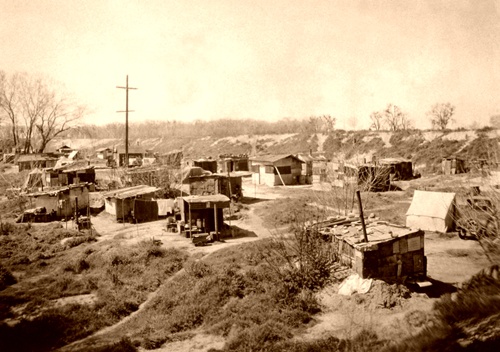

Poor land management and drought in the 1930s Midwest led to the
formation of the United States Department of Agriculture
creation of wheat surpluses
growth of the Populist movement
development of Dust Bowl conditions on the Great Plains

Which statement best describes how investment in the stock market during the mid-to-late 1920s contributed to the Great Depression?
People were unable to repay the loans used to purchase stocks.
Government taxes on stock transactions made it difficult to repay investors.
Financial institutions were not required to report earnings to stock investors.
Foreign countries were not required to immediately pay stockholder earnings.

Which reason correctly replaces the question mark on this list?
Decrease in interest rates
Failure of banks
Outsourcing of manufacturing jobs
Outbreak of a global war


(2017)Which of the following contributed most to the situation described in this excerpt?
The rise of corporate monopolies
Strict banking regulations and high income tax rates
The influx of immigrants into urban areas
High unemployment and widespread home foreclosures
What did anarchists believe in?
Strong central government
The abolition of all government and institutions
A classless society through peaceful reform
The rule of law and order
What were the Palmer Raids and what was their purpose?
A series of public awareness campaigns about the dangers of communism
Raids conducted to find and deport immigrant criminals
Law enforcement efforts to suppress and arrest anarchists and communists
Investigations into corporate malfeasance
How did the "Red Scare" influence American society?
Causing widespread fear of immigrants.
By creating fear of being labeled as a communist or even a sympathizer.
Both A and B
What was the outcome of the Palmer Raids for those arrested?
Most were found guilty of crimes and sentenced to prison
Many were deported without trial
Most were acquitted and released
They were given government positions
Which of the following is NOT a factor that led to the Great Migration?
Jim Crow Laws
Racial Prejudice
Beetles ruined the cotton crops
There were too many jobs in the South
Who promised the American people a "return to normalcy"?
Warren G. Harding
Calvin Coolidge
Herbert Hoover
Bob Jones
A person can purchase items on credit and pay it back in small ___________.
dividends
shares
installments
invests

People's fear of communists entering the United States
Great Migration
Prohibition
Haymarket Riot
Red Scare

Which of these resulted from the prohibition of alchohol during the 1920s?
a decline in immigration rates
a growing fear of communism
the expansion of the consumer economy
the rise of organized crime

Which inference about the 1920s is supported by this illustration?
Women suffragists confronted discrimination in employment and education.
Flappers challenged traditional attitudes and social norms.
Reform organizations targeted women's issues.
Mass media reflected trends popular in rural communities.

Why did nativists dislike immigrants?
They feared a civil war would start
They feared the loss of jobs and damage to America’s traditions
They feared that an illegal immigrant would be elected president.
They thought that native born citizens would have to move to another country
In 1919, after communist revolutionaries known as Bolsheviks overthrew the czar in Russia, established the Soviet Union, and called for a worldwide revolution to destroy capitalism, people in the United States began to fear communists. This fear of international communism was called __________________.
Socialism
The Red Scare
The Immigrant Scare
The Isolationism Movement
a set of regulations, enacted by Congress in 1922, that raised taxes on imports to record levels in order to protect American businesses against foreign competition
Installment Plan
Isolationism
Fordney-MCcumber Tariff
Communism
Anarchist
*The Red Scare
*Social Darwinism
*Growth of the Ku Klux Klan
*Convictions of Sacco and Vanzetti
The events of the 1920's listed above reflect the influence of?
prohibition
organized crime
growing nativism
civil rights leaders
The debate between Clarence Darrow and William Jennings Bryan in the Scopes Trial illustrated how society in the 1920's was characterized by -
clashes between ethnic minority groups
changing attitudes about the role of women
demands to reform the public education system
tension between traditional values and modern views

Which of the following created the Universal Negro Improvement Association & argued for black segregation in their own communities?
Marcus Garvey
Duke Ellington
WEB DuBois
Langston Hughes

Which of the following argued for immediate social equality for blacks in America during the 1920's?
Marcus Garvey
Duke Ellington
WEB DuBois
Langston Hughes
The Boom in Florida improved transportation. This cause brought people to Florida in the 1920s as they needed_____________ and _________________things.
1) food to eat
2) placed to live
1) places to live
2) places to buy
1) places to live
2) food to buy
1) food
2) fancy
In the summer of 1926, the weather was _____. A ________ hit Miami, destroying much of the city.
1) cold
2) tornado
1) hot
2) blizzard
1) hot
2) hurricane
1) cold
2) hurricane
What is the Teapot Dome Scandal?
A bribery scandal involving the illegal leasing of federal oil reserves
A corruption scandal involving the illegal import of tea
A political scandal involving the illegal sale of teapots
A financial scandal involving the illegal trading of teapot collectibles
Which government official was at the center of the Teapot Dome Scandal?
George Washington
Richard Nixon
Albert B. Fall
Thomas Jefferson
Where is the Teapot Dome located?
Wyoming
Montana
Colorado
Texas
What was the outcome of the legal proceedings related to the Teapot Dome Scandal?
Secretary of the Interior Albert B. Fall was acquitted and found innocent.
Secretary of the Interior Albert B. Fall was given a suspended sentence.
Secretary of the Interior Albert B. Fall was fined but not sentenced to prison.
Secretary of the Interior Albert B. Fall was found guilty and sentenced to prison.
What impact did the Teapot Dome Scandal have on public trust in the government?
It strengthened public trust in the government.
It had no impact on public trust in the government.
It increased public trust in the government.
It eroded public trust in the government.
What equals the number of unemployed workers divided by the labor force?
Unemployment rate
Labor force participation rate
employment rate
Discouraged worker rate
The loss of property because of mortgage default is known as
monopoly
capitalism
recession
foreclosure
A slow down in the economy for two consecutive quarters or 6 months in a row is known as a _____.
depression
recession
recovery
prosperity

