
 Worksheets
Taxonomy (dichotomous keys, classification, cladograms)
Total questions: 33
Worksheet time: 1hrs 4mins
You find a species that seems to be unicellular and is eating smaller cells around it. It has organelles and a nucleus. Which kingdom is it MOST likely a part of?
Fungi
Bacteria
Protists
Plants
Which of the following is NOT a unicellular kingdom?
Prokaryotes
Protists
Archaea
Fungi
Which one is NOT a difference between plants and fungi?
Plants use cellulose but fungi use chitin
Plants are autotrophs but fungi are heterotrophs
Plants have cell walls but fungi don't
Plants make their own food and fungi decompose their food
Which is NOT a eukaryote?
Plants
Animals
Archaea
Protists
Which of the following is the correct order for least related to most related?
Domain
Kingdom
Phylum
Class
Order
Family
Genus
Species
Species
Kingdom
Phylum
Class
Order
Family
Genus
Domain
Species
Genus
Family
Order
Class
Phylum
Kingdom
Domain
Domain
Kingdom
Class
Phylum
Order
Genus
Family
Species
Which of the following sets of animals would be the most closely related?
Animals in the same order
Animals in the same genus
Animals in the same class
Animals in the same family
Which of the following sets of insects would be the most closely related?
Insects in the same class
Insects in the same family
Insects in the same order
Insects in the same species
Which of the following taxonomic groups would contain plants with the greatest amount of variety and differences?
Kingdom
Phylum
Order
Family
Which of the following taxonomic groups would contain the most related set of animals?
Domain
Species
Family
Order
The American lobster (Homarus americanus) is most closely related to which of the following organisms?
Cape lobster (Homarinus capensis)
Common lobster (Homarus gammarus)
Patagonian lobsterette (Thymops birsteini)
Scarlett clawed lobster (Nephropsis atlantica)
Black panthers (Panthera onca) are a color variant of a species of large cats. Black panthers would be most closely related to what organism listed below?
Tiger (Panthera tigris)
Cheetah (Acinonyx jubatus)
Puma (Puma concolor)
Jaguar (Panthera onca)

An organism that LACK a NUCLEUS (NO NUCLEUS)
Eukaryote
Prokaryote
Heterotroph
Autotroph
The study of how things are classified is known as:
Binomial nomenclature
Taxonomy
A dichotomous key
The 2-part naming system developed by Linneus is known as:
Dichotomous key
Binomial nomenclature
Taxonomy
Classification
Which Domain/Kingdom is capable of living in EXTREME ENVIRONMENTS like hot springs, geysers, or very salty waters?
Bacteria
Eukarya
Archaea
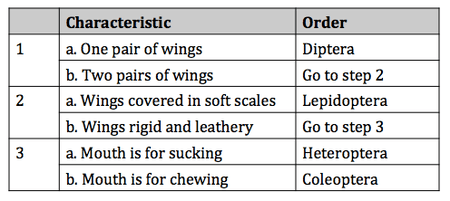
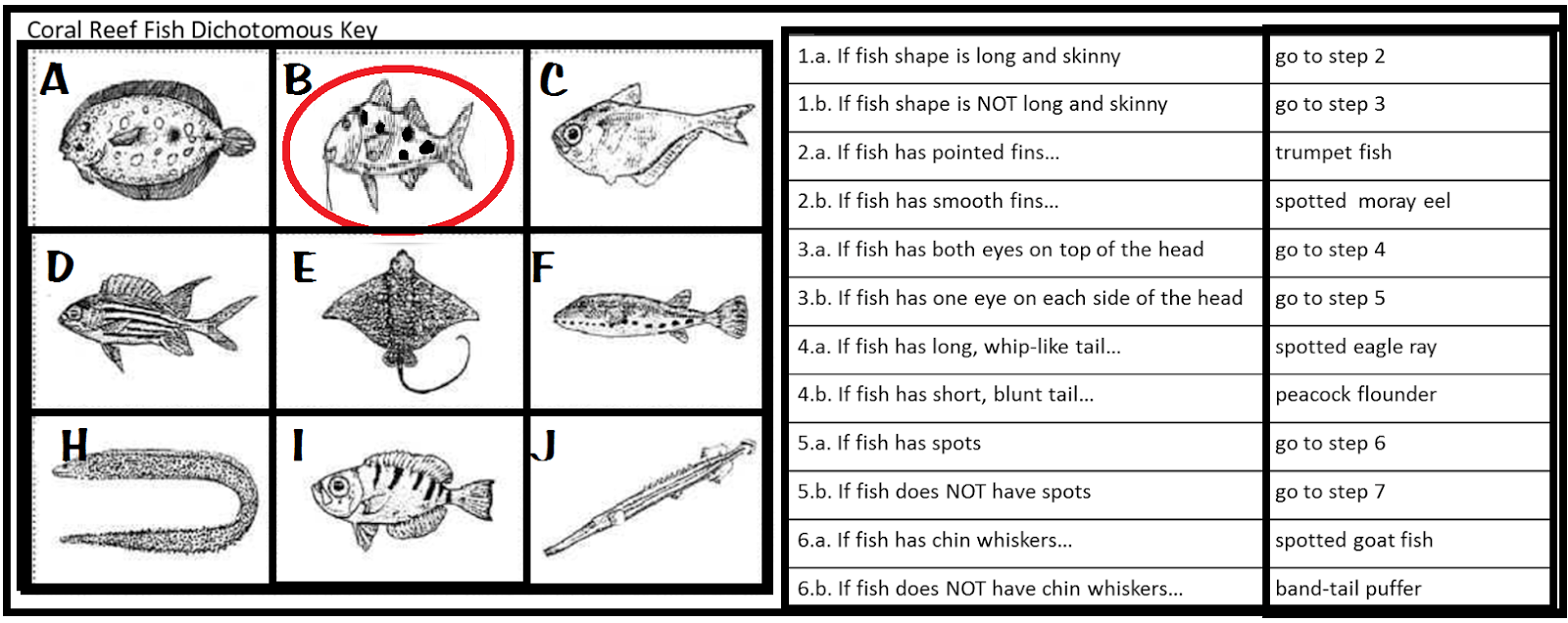
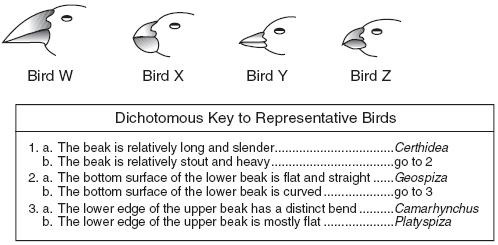


The largest grouping of organisms is ____________________ and the smallest is _________________________________.
Domain, species
Domain, kingdom
Species, domain
Kingdom, species

Where is the alligator and T. rex's common ancestor?
Point A
Point B
Point C
Point D
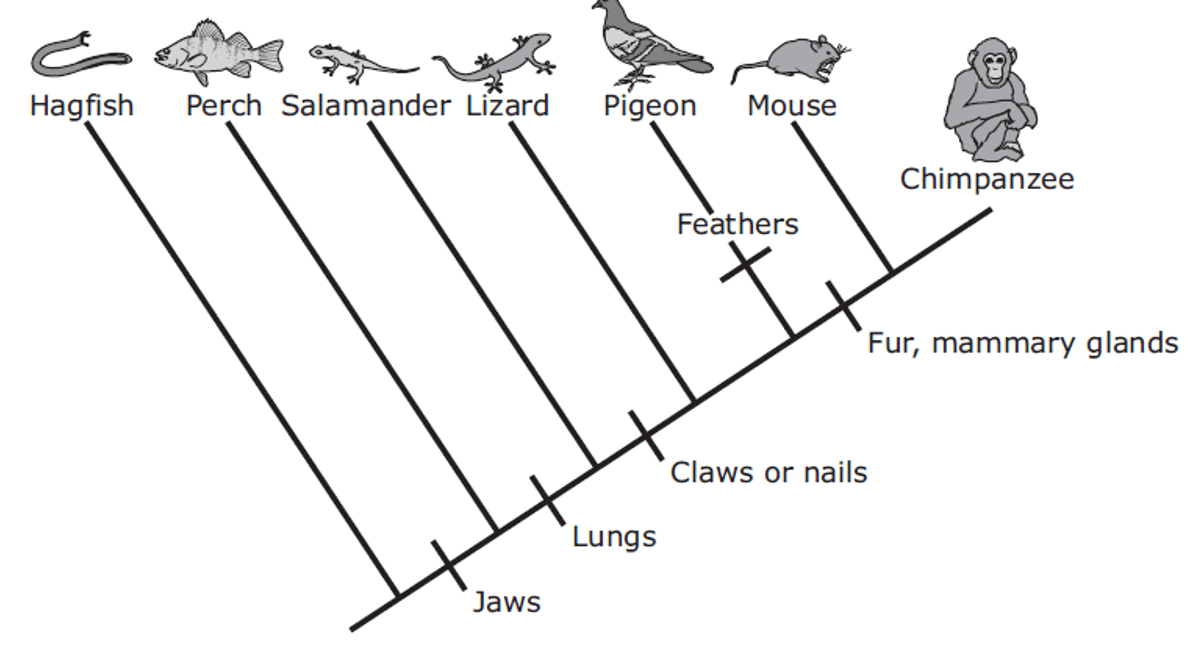
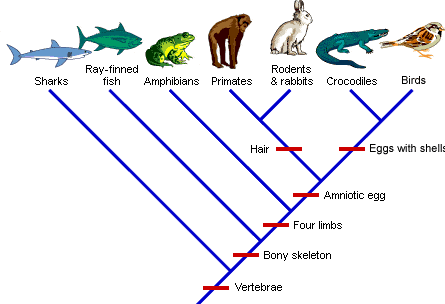
What is the purpose of a cladogram?
To map the ancestral relationships and shared traits of different organisms.
To trace the inherited traits of a single species over time.
To check the likelihood of an offspring having a particular trait.
To monitor mutations that arise among different populations.

What do both the squirrel and lion have in common that the other animals do not?
They are both vertebrates
They both have lungs
They are both mammals
They both lose their canine teeth.

Which letter represents the most recent common ancestor of sponges and mushrooms?
A
B
C
D
E

Which trait should go where A is on the cladogram?
eyes
feet
lips
hat

According to the diagram, what is the common ancestor of ALL organisms on the phylogenetic tree?
B
C
D
E

What is the common ancestor of Letters A, B, C, D, E?
1
2
3
4

