
 Worksheets
US History/Unit 5 Review- Government in Theory
Total questions: 90
Worksheet time: 45mins
True or False? The Articles of Confederation had a strong central government.
True
False
How many states did it require to pass any law through Congress?
5 out of 13
9 out of 13
10 out of 13
2 out of 13
In order to change (amend) the Articles of Confederation, __________ out of 13 states had to agree.
9
13
10
15
In the Articles of Confederation, where was most of the government power placed?
The States
Continental Congress
The National Government
The Legislative Branch
Who led the farmers against the government of Massachusetts?
Daniel Shays
the Government
all of the farmers were leaders
Thomas Hobbes
Shays' Rebellion represented...
a success of the Articles of Confederation
a failure of the Articles of Confederation
The main cause for many of the rules in the Articles of Confederation was that the delegates at the Continental Congress...
did not want to give the states too much power because they'd proven they were willing to rebel against a government.
wanted to create a government that was identical to England's government.
were concerned about giving the central government too much power because the King had used his power unfairly.
wanted to unify the states together, which included creating one army and one type of currency.
Who was the president under the articles?
George Washington
Each governor voted on a president
The most senior Senator
There wasn't one
Under the Articles of Confederation, the government could
sign treaties and create taxes
sign treaties and declare war
declare war and create taxes
none of the above
How many colonies were there in total?
12
11
15
13
One major problem with the Articles of Confederation is that Congress could not ______ the citizens to raise money.
tax
demand
ask
force
Americans were afraid that a ? would lead to tyranny, or oppressive rule.
strong state government
strong central government
weak government
legslature
Which branch of government existed when the Articles of Confederation was created?
Legislative (congress)
Executive (President)
Judicial (Supreme court)
Legislative, Executive, and Judicial
Which of the following GAVE LARGE AND SMALL STATES COMPLETELY EQUAL POWER?
Articles of Confederation
Constitution
Both
Articles established a “___________________” among the states
firm league of friendship
long history of violence
weak connection among countries
a brisk admiration for sovereignty
What did Shays' Rebellion help Americans realize they needed?
A common currency
A stronger militia
The ability to sign peace treaties
A strong national government
Ultimately, the weaknesses of the Articles of Confederation lead to the creation of -
the Treaty of Paris
the Affordable Care Act
the U.S. Constitution
the Declaration of Independence
What is the name of the first written plan of government in America?
Constitution
Declaration of Independence
Treaty of Paris
Articles of Confederation

Under the Articles of Confederation, how many votes did each state get when voting on a new law?
Zero
Two
One
Three
Where did the Constitutional Convention take place?
Philadelphia, Pennsylvania
Richmond, Virginia
Washington, DC
France
What was the original purpose of the Constitutional Convention?
To rewrite the Declaration of Independence
To write the Treaty of Paris
To rewrite the Articles of Confederation
To elect the first president
The three branches of government are ________________
Executive, Legislative, and Judicial
Executive, Principle, and Judicial
Legislative, Judicial, and National
Judicial, National, and Legislative
Which branch of government has two houses?
Executive
Legislative
Judicial
National
Which part of the legislative branch has representation based on population?
Senate
House of Congress
Judicial
House of
Representatives
Which part of the legislative branch has the same number of representatives for each state?
House of Representatives
Executive
Senate
Judicial
The __________ was the solution to the disagreement about how many representatives each state would have.
Great Compromise
Three-fifths Compromise
Great Dispute
Big Agreement
How were slaves counted as part of the population when deciding the number of representatives for a state?
All slaves were counted.
Three-fifths of the number of slaves was added to the population.
Slaves were not counted at all.
Slaves were allowed to vote and be elected to represent each state.
The Great Compromise accomplished which of the following?
Created a one house legislature
Postponed the conversation about slavery
Added the Bill of Rights
Created a two house legislature
What document replaced the Articles of Confederation and established a new national government?
The Declaration of Independence
The Magna Carta
The Constitution
The English Bill of Rights
Who was happy with the Virginia plan?
Small states
Large states
Which Plan was favored by small states?
New Jersey Plan
Virginia Plan
Before the U.S. Constitution was ratified, the United States was governed by which document?
Magna Carta
Mayflower Compact
Articles of Confederation
Declaration of Independence
A major weakness under the Articles of Confederation was-
Congress could not negotiate treaties
Congress did not have the power to raise money or enforce laws
Congress could print money
Congress established the Northwest Ordinance
What Constitutional Principle says "We the People"?
Popular Sovereignty
Limited Government
Judicial Review
Separation of Powers
What is the BEST definition for federalism?
The people vote for their leaders who then represent them.
There are three branches of government.
The people have individual rights.
The state and national government share power.
What is "checks and balances?"
Each branch of power has the ability to limit the power of the other branches.
The people elect their leaders.
The people are in charge.
The people have rights. (Bill of Rights)
Which proves that the USA uses separation of powers?
The people vote for their leaders.
There are three branches of government.
The people are in charge.
The people have individual rights. (bill of rights)

Name that principle.....
Federalism
Rule of lAw
Popular SOvereignty
Individual Rights
What does the Executive Branch do?
Congress- it makes the laws
The President- carries out the laws
Supreme Court it interprets the laws
What does the Judicial Branch do?
Congress- it makes the laws
The President- carries out the laws
Supreme Court it interprets the laws
What does the Legislative Branch do?
Congress- it makes the laws
The President- carries out the laws
Supreme Court it interprets the laws
If government officials break the law, they can be arrested like anyone else. This reflects...
Federalism
Popular Sovereignty
Republicanism
Rule of Law
What is the principle of republicanism?
Government should be split into three branches.
The power of government should be limited.
The people create the government.
The interest of Americans are represented by elected officials.
The fact that states can make their own laws is an example of which constitutional principle?
separation of power
federalism
Popular sovereignty, a principle set forth in the Constitution, means that--
People elect their political representatives.
power is divided between national and state government.
people are the source of the government's power.
Which idea was at the center of the Anti-Federalist position as expressed in the Anti-Federalist Papers?
Standing Army
Checks and Balances
Limited Government
Strong Central Government

The picture shows an example of....
Federalism
Checks and Balances
Separation of Powers
Limited Government
These are personal liberties (freedoms) and privileges that should be guaranteed to every citizen
Individual Rights
Limited Government
Separation of Powers
Popular Sovereignty

Individual Rights
Republicanism
Limited Government
Federalism

The Constitution outlines our government and restricts its powers
Separation of Powers
Limited Government
Checks and Balances
Individual Rights
The Bill of Rights was added to the Constitution to:
protect individual rights
have more parts to the Constitution
People voting on their elected representatives is an example of what constitutional principle?
Republicanism
Popular Sovereignty
Opposed the development of a strong federal government
Anti-Federalist
Federalist
Wanted a stronger national government
Anti-federatlist
Federalist
Mostly lived in rural areas
Anti-federalist
Federalist
Mostly lived in urban areas
Anti-federalist
Federalist
Opposed constitution until the Bill of Rights were included
Anti-federalist
Federalist
Proposed and supported the Constitution
Anti-federalist
Federalist
Economy dominated by farmers and smaller rural communities, believed in local power
Anti-federalist
Federalist
Economy dominated by big business interests and wanted government to help regulate the economy
Anti-federalist
Federalist
Felt that states were free agents that should manage their own revenue
Anti-federalist
Federalist
Felt that many individual and different fiscal and monetary policies led to economic struggles and national weakness.
Anti-federalist
Federalist
Favored central banking and central financial policies
Anti-federalist
Federalist
Felt states should spend their money as they saw fit
Anti-federalist
Federalist
What was the first plan of government in the U.S
Articles of Confederation
Northwest Ordinance
Declaration of Independence
Representative
What was good and bad about the Articles of Confederation
It lead to Shay's Rebellion
It had a weak central government
It had a weak federal government
It had the Northwest Ordinance to lead west
Federalists and Anti-Federalists presented their opinions to the public through
newspapers
Internet
TV
Ratification (approval) of the Constitution happened once /_ states agreed.
13/13
9/13
7/13
50/50
Which group believed - we must start with a fresh document, fixing the Articles of Confederation isn’t enough.
Federalists
Anti-Federalists
Who said this quote - “When the government fears the people, there is liberty. When the people fear the government, there is tyranny.”
A Federalist
An Anti-Federalist
This group wanted a Bill of Rights added to protect the rights of the people
Federalists
Anti-Federalists
Which of the following rights and freedoms is specifically guaranteed by the first 1st amendment?
Right to an education
Right to bear arms
Freedom of press
Right to privacy
The Fifth Amendment states that a person cannot be
tried for the same crime twice.
deprived of life, liberty, and property without due process of law.
forced to give evidence against himself or herself.
all of the above
According to the Fourth Amendment, the police can search and seize a person's property only if
the neighbors sign a petition.
a judge issues a warrant.
the chief of police gives permission.
the have a written note from your mother.
Which of these is not allowed, according to the Eighth Amendment?
reasonable bail
jail terms
reasonable fines
cruel punishments
Why was the Ninth Amendment added to the Constitution?
because the framers worried they might have forgotten an important right
because the Bill of Rights had to have ten parts
because the framers wanted to make clear that basic rights were guaranteed even if they were not stated specifically
because the English Bill of Rights listed nine rights
The Tenth Amendment states that
most powers belong to the national government.
the people are the source of all government powers.
powers not given to the national government or prohibited from the states belong to the states or the people.
the states are the most important part of our government system.
Which amendment gives a "well-regulated militia...the right of the people" to bear arms.
1st Amendment
5th Amendment
4th Amendment
2nd Amendment
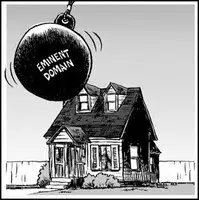
3rd Amendment
5th Amendment
4th Amendment
6th Amendment

1st Amendment
3rd Amendment
2nd Amendment
4th Amendment

5th Amendment
7th Amendment
6th Amendment
8th Amendment

7th Amendment
1st Amendment
2nd Amendment
4th Amendment

9th Amendment
11th Amendment
10th Amendment
12th Amendment
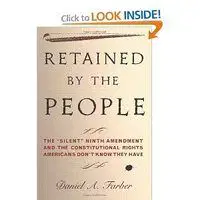
7th Amendment
9th Amendment
8th Amendment
10th Amendment

1st Amendment
4th Amendment
3rd Amendment
5th Amendment
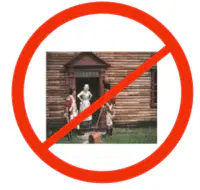
1st Amendment
3rd Amendment
2nd Amendment
4th Amendment
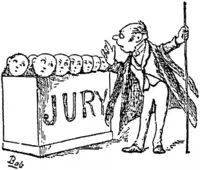
5th Amendment
7th Amendment
6th Amendment
8th Amendment

5th Amendment
7th Amendment
6th Amendment
8th Amendment
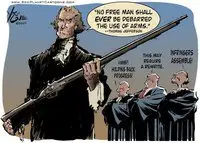
1st Amendment
3rd Amendment
2nd Amendment
4th Amendment
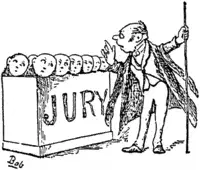
5th Amendment
9th Amendment
6th Amendment
8th Amendment

