
 Worksheets
Dichotomous Key Quiz
Total questions: 45
Worksheet time: 3hrs 58mins
What does the word 'dichotomous' mean?
Three parts
Two parts
Four parts
Five parts
What is the most important element of a good dichotomous key?
Gradual narrowing down
Random selection
Multiple choices
No correct answer
How many contrasting choices are offered in each set of clues in a dichotomous key?
Four
One
Two
Three
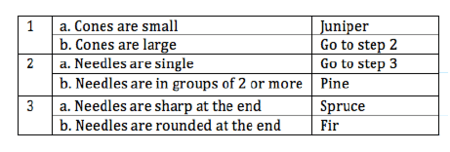

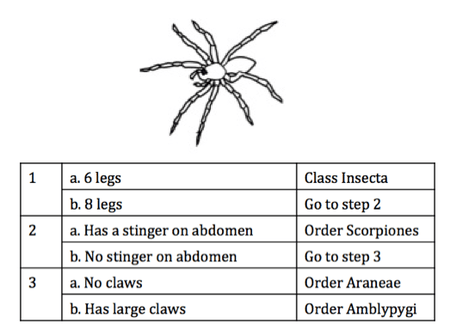

arachnids and insects?
following observations of the plant’s characteristics would be useful in determining its identity with a dichotomous key?

A student discovers an arachnid without a segmented abdomen, and legs longer than its body. The student uses the dichotomous key below to identify it. Which arachnid has the student found?
Whip Scorpion
Wind Scorpion
Daddy long legs
Scorpion

Which of the following is an accurate description of the fiddler crab?
3 Paris of walking legs on both sides
Two propodus
3 Chelipeds
A pair of eyes
A student discovers an arachnid with a segmented abdomen, long legs, and a tail with no stinger.
The student uses the dichotomous key below to identify it.
1. a) Abdomen segmented.............go to 2
b) Abdomen not segmented ......go to 4
2. a) Abdomen with tail....................go to 3
b) Abdomen without tail...............go to 5
3. a) Tail with stinger..........................Scorpion
b) Tail without stinger.....................Whip scorpion
4. a) Legs longer than body.............Daddy Long Legs
b) Legs not longer than body……….Wind scorpion
5. a) Covered with spines .......................Mite
b) Few spines.....................................Tick
Whip Scorpion
Daddy Long Legs
Mite
Tick

To what order does a two pairs of wings, rigid and leathery and mouth for sucking belong to?
Diptera
Lepidoptera
Heteroptera
Coleoptera
Which of the following characteristics will most likely be helpful in identifying a butterfly using a dichotomous key?
It migrates north in the summer
It has long tail
It likes only certain plants
Its wings beat very fast in hot weather

Which leaf is shown in the drawing?
Magnolia
Redbud
Sweetgum
None of the above

Which of the paired statements could be used to tell the difference between the two insects using a dichotomous key?
Has 6 legs
Has 8 legs
Large hind legs
Small hind legs
2 pairs of spots on wing cover
3 pairs of spots on wing cover
Antennae absent
Antennae present
Which of the following characteristics would be useful in determining the identify of a tree in a dichotomous key?
It provides shade
It has a nest
It has several birds in it
Its leaves are long and narrow

Which shark is the picture of?
Cow Shark
Great White Shark
Hammerhead Shark
Saw Shark
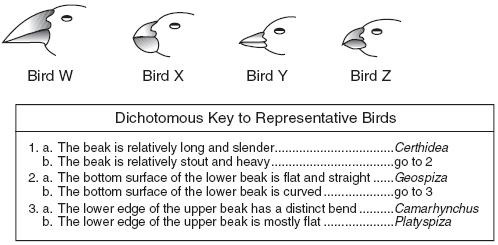
What is the name of bird X?
What is the name of bird Y?
What is the name of bird Z?

Leaf Q (1ST LEAF)
Eastern white pine
balsam poplar
sweet gum
ginko

Which characteristics are used to identify the American Robin?
Head color, Beak shape, and Beak Color
Head color and Beak Color
Beak Shape and Beak Color
Beak Color
Use the dichotomous key to correctly identify bird D
Scissor-tailed flycatcher
Red tailed hawk
Common loon
American robin
Use the dichotomous key to correctly identify bird C
Scissor-tailed flycatcher
Red tailed hawk
Common loon
American robin
Use the dichotomous key to correctly identify bird B
Scissor-tailed flycatcher
Red tailed hawk
Common loon
American robin
Use the dichotomous key to correctly identify bird A
Scissor-tailed flycatcher
Red tailed hawk
Common loon
American robin
What type of characteristics are used to make a dichotomous key?
Characteristics that make an organism different from any other organism. (type of beaks, claws, root systems)
Characteristics like age of an organism
Where the organism lives
How many organisms live in the environment
Leaf S (3RD LEAF)
Eastern white pine
balsam poplar
sweet gum
ginko

Use the listed characteristics to correctly identify the crying emoji
Click on the image to make it larger
Smilus piratus
Smilus valentinus
Smilus upsettus
Smilus dramticus
Use the listed characteristics to correctly identify the heart-eyed emoji
Click on the image to make it larger
Smilus piratus
Smilus valentinus
Smilus toothyus
Smilus mutates
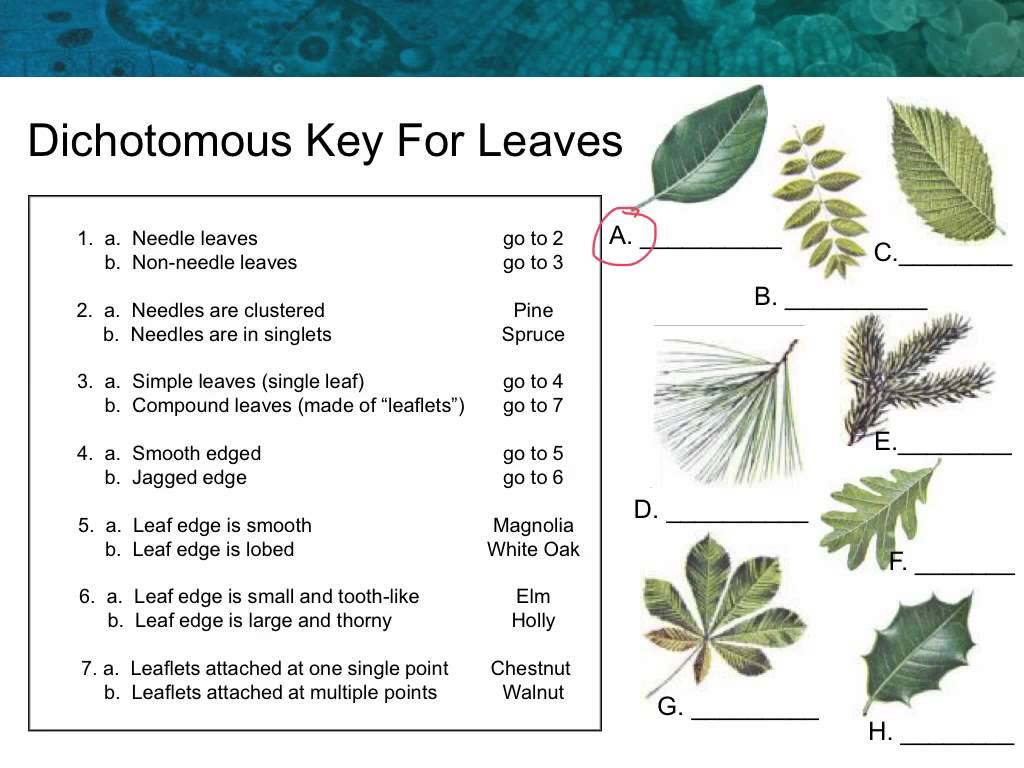
Use the listed characteristics to correctly identify leaf G
Click on the image to make it larger
Elm
White Oak
Chestnut
Magnolia
Use the listed characteristics to correctly identify leaf H
Click on the image to make it larger
Elm
Holly
Pine
Magnolia
Use the listed characteristics to correctly identify leaf D
Click on the image to make it larger
Elm
Spruce
Pine
Magnolia

What is insect A?
Bee
Ladybug
Firefly
Dragonfly

