
Font size
 Worksheets
udjdbhskj
Total questions: 105
Worksheet time: 55mins

What part of the plant is this?
stem
flower
roots
leaves

What part of the plant is this?
stem
flower
roots
leaves

In the Savannah grassland,
most large plants cannot grow due to...................
lack of water
lack of sunlight
lack of soil

true or false :
the african savannah has alot of water as it is rainy all the year
false
true

the plants can get ....................hardly in the Amazon rainforest .
sunlight
water
soil

Plants need air, soil, sunlight and water.
True
False

Panther chameleon and agama lizard can use one of their eyes for searching for food, and the other one to lookout for danger
false
true

Bodies of starred agama and panther chameleon are covered with scales.
true
false

plants and animals do behavioral and structural adaptation to adapt to the changes in the environment .
true
false

the leg of the chameleon is
L-shaped
V- shaped
N - shaped

Roots help a plant take in water and nutrients from this.
soil
air
sun
humans
What are the needs of plants?
Air
Sunlight
Water
Soil
All of the Above


This part of the plant holds the plant in the ground and gets water and nutrients from the soil.
stem
leaves
flower
roots
The ___________ absorb sunlight to help make food for the plant.
seed
stem
roots
leaves
The _________ helps hold the plant up and carries water and nutrients to the rest of the plant from the roots.
leaves
roots
stem
seed
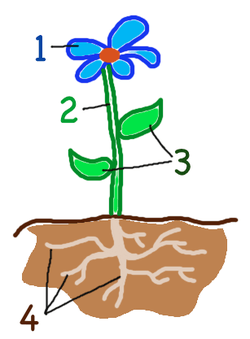
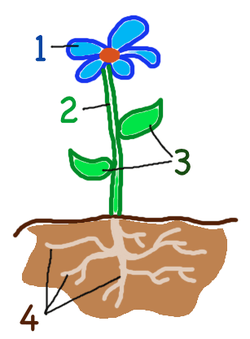
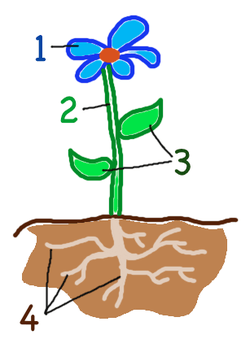
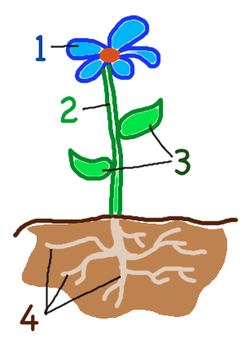
Which part of the plant absorbs water and nutrients into the plant?
Flower
Stem
Roots
Leaves
Plants need the following: select more than one
air
water
pizza
space
sunlight
What is the spreading of seeds in new areas called?
Scattering
Dispersal
Disposal
Pollination
What other job do the roots do for a plant?
make food
anchor the plant in the soil
attract insects
smell nice
What is germination?
when germs spread to different plants
when a plant begins to grow
when a bird takes a plant seed to another place
Roots grow...
up towards the sunlight
down into the soil
Stems grow...
up towards sunlight
down into the soil
What is the process that plants use to make food?
Globosynthesis
Photosynthesis
Picturesynthesis
Slowmosynthesis
What part of the plant is this?
stem
flower
roots
leaves
What part of the plant is this?
stem
flower
roots
leaves
In the Savannah grassland,
most large plants cannot grow due to...................
lack of water
lack of sunlight
lack of soil
true or false :
the african savannah has alot of water as it is rainy all the year
false
true
the plants can get ....................hardly in the Amazon rainforest .
sunlight
water
soil
Plants need air, soil, sunlight and water.
True
False
Panther chameleon and agama lizard can use one of their eyes for searching for food, and the other one to lookout for danger
false
true
Bodies of starred agama and panther chameleon are covered with scales.
true
false
plants and animals do behavioral and structural adaptation to adapt to the changes in the environment .
true
false
the leg of the chameleon is
L-shaped
V- shaped
N - shaped

It is the development of a seed into a plant.
seed dispersal
germination
habitat

Which germination stage describes the picture?
The dry bean absorbs water to begin the process of germination.
A white root tip appears.
The plants first bud pushes out of the seed coat.

Which germination stage describes the picture?
The dry bean absorbs water to begin the process of germination.
A white root tip called radicle appears.
The plant develops its roots and true leaves appear.
What do seeds need in order to grow into healthy plants?
right amount of water and air
right amount of water, sunlight and air
right amount of water, sunlight, air and a space to grow

Gertrude planted mung beans in a pot. After 5 days her pot looked like this. Why?
She watered the seeds but placed the pot in the dark.
She did not water the seeds.
She used yellow-coloured soil.

It is the spreading of seeds to other places.
germination
habitat
seed dispersal

How are dandelion seeds dispersed?
by animals
by explosion or bursting
by wind

How are coconuts dispersed?
by animals
by water
by wind
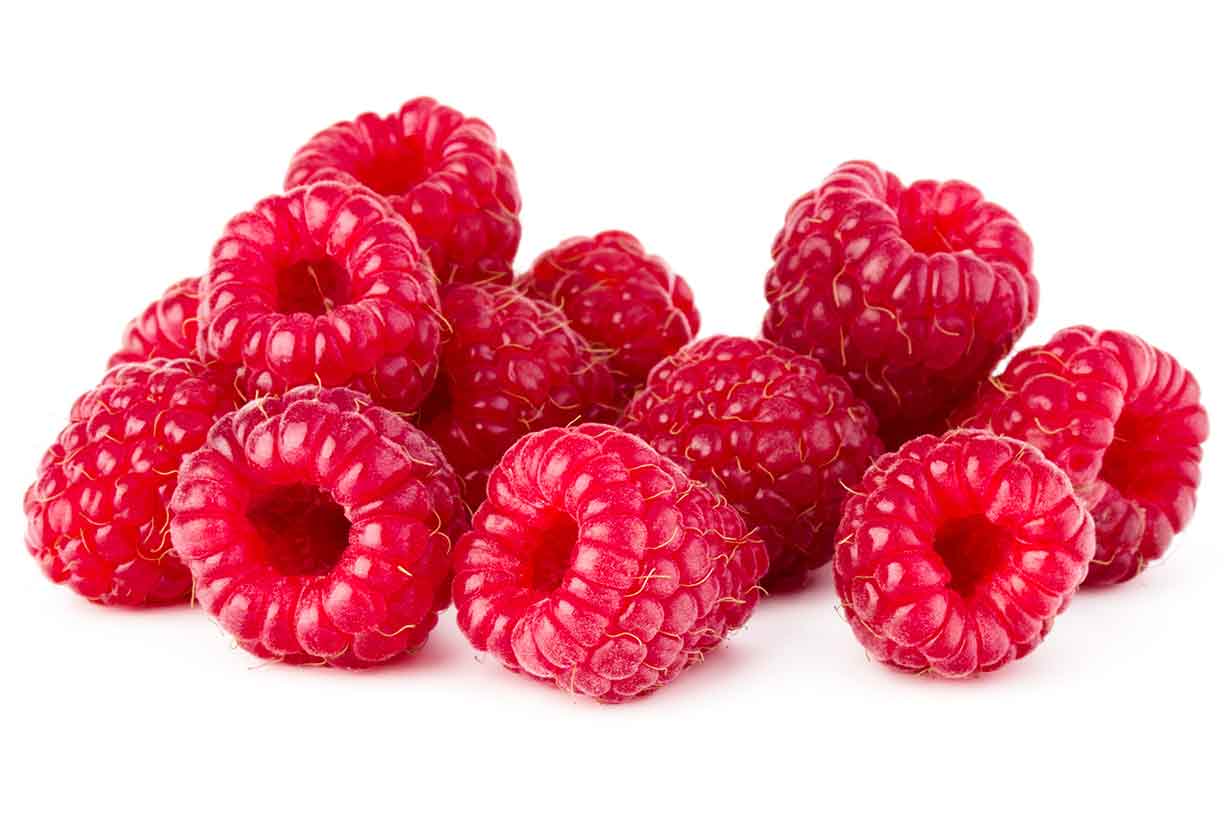
How are raspberries dispersed?
by animals
by explosion or bursting
by water
Why it is better for seeds to be scattered far and wide?
To provide shelter to other animals.
For farmers to see which soil is good for the plants.
For plants to have a better chance of growing healthier.
What happens when a seed starts to grow?
Pollination
Germination
Fruiting
Fertilisation

Which part of the plant is growing in this picture?
Root
Stem
Leaf
Flower
Leaves grow from the _______.
Root
Flower
Fruit
Stem
After the root, the _____ grows up to the light.
leaves
stem
roots
flower
TRUE or FALSE. Beans are seeds.
TRUE
FALSE
TRUE or FALSE. Stem grows down into the soil.
TRUE
FALSE
TRUE or FALSE. The order of the plant's growth is: roots -> stem -> leaves
TRUE
FALSE
Germination is _________________________________.
when a seed starts to grow
when an egg and pollen join together
when pollen moves stamen to stigma
when a plant makes its own food.
Seed structure that grows become roots
radicle
plumule
cotyledon
endosperm
Seed structure that stores nutrients
radicle
plumule
testa
endosperm
Monocots seed
corn
bean
wheat
sugarcane
Dicots seed
bean
peanut
cucumber
corn

Which of the following describes process no.2?
First leaves grow and carry out photosynthesis
Plumule becomes stem and leaves
Radicle becomes root
Seed coat is broken
Which of the following describes process no.3?
First leaves grow and carry out photosynthesis
Plumule becomes stem and leaves
Radicle becomes root
Seed coat is broken
Which of the following describes process no.1?
First leaves grow and carry out photosynthesis
Plumule becomes stem and leaves
Radicle becomes root
Seed coat is broken
Which one has the biggest seed?
apple
avocado
mango
banana
All seeds have
Seed Coat
Embryo
Food Store
All of the above
All seeds have
Seed coat
Supply of food
Embryo
All above
What keeps the seed from drying out?
Seed coat
Embryo
Cotyledon
A plant embryo in a case is called a
Seed
Nut
Suitcase
Plant
What does the word germinate mean?
It has germs
Life span
Begins to grow
Dies

Which word is letter B?
Cotyledon
Embryo
Seed coat

Which word is letter C
Embryo
Seed coat
Cotyledon
A seed can still grow into a plant, even after many months?
True
False
Maybe
Which one is not part of a seed?
Radicle
Embryo
Seed coat
Food supply

