wayground logo

Free Printable Worksheets

Font size

S
M
L
XL
Worksheets

Genetics Review

Total questions: 172

Worksheet time: 6hrs 22mins

Name
Class
Date
1.
If you have a parent who has GgBb as their genotype, what are the possible alleles they could donate to their gametes?
a)
GB, Gb, gB, gb
b)
GB, GB, gb, gb
c)
Gb, Gb, Gb, GB
d)
GG, BB, gg, bb
2.
T4 - What genotype is missing from this Punnett Square?
a)
RrYy
b)
RRYY
c)
rryy
d)
RrYY
3.
T4 - Based off this Punnett Square, what fraction of the offspring will have wrinkled, yellow seeds?
a)
9/16
b)
3/16
c)
1/16
d)
16/16
4.
Assume mom's gametes are on the left, what is her genotype?
a)
TTZz
b)
TtZz
c)
ttZZ
d)
TtZZ
5.
Assume dad's gametes are on top, what is his genotype?
a)
AAPP
b)
AaPp
c)
aaPP
d)
Aapp
6.
In watermelons, green rinds (G) are dominant to striped rinds (g).  What is the genotype of a heterozygous green watermelon?
a)
GG
b)
Gg
c)
gg
d)
green
7.
In cacti, long arms (A) are dominant to short arms (a).  Suppose 2 heterozygous cacti are crossed.  What percentage of their offspring are expected to have short arms?
a)
0%
b)
25%
c)
75%
d)
100%
8.
One of the two forms of a gene is called a(n)
a)
genotype
b)
allele
c)
hybrid
d)
trait
9.
A genotype is
a)
the listing of the alleles for the trait
b)
the physical appearance of the trait
c)
the separation of the chromosomes
d)
the letters seen on the outside of the Punnett square
10.
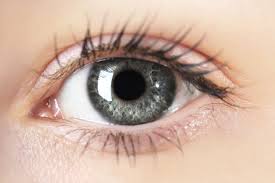
This is an example of a ______________.
a)
phenotype
b)
genotype
c)
xenotype
d)
base pairs
11.
The genetic make up of this flower is ________.
a)
homozygous recessive
b)
heterozygous
c)
homozygous dominant
d)
white
12.

What is the genotype for a pea plant homozygous for round seeds (R), and heterozygous for yellow seeds?

a)

RrYy

b)

RRyy

c)

RRYy

d)

rryy

13.
Which of the following genotypes is heterozygous?
a)
Bb
b)
BB
c)
bb
d)
B
14.
Aa, DD, bB, yy are all examples of
a)
genotypes
b)
phenotypes
15.
Which of the following genotypes is homozygous dominant?
a)
A
b)
Aa
c)
AA
d)
aa
16.
An organism’s genetic makeup, or allele combinations
a)
Recessive
b)
Genotype
c)
Phenotype
d)
Heterozygous
17.
In a certain species of plant, the color purple (P) is dominant to the color white (p).
According to the Punnett Square, what is the probability of an offspring being purple?
a)
25%
b)
0%
c)
100%
d)
50%
18.
In a certain species of plant, the color purple (P) is dominant to the color white (p).
According to the Punnett Square, what is the probability of an offspring being white?
a)
25%
b)
0%
c)
100%
d)
50%
19.
Round seeds (R) are dominant over wrinkled seeds (r). What percentage of the offspring will be round from the following cross?
Rr X Rr
a)
100%
b)
75%
c)
50%
d)
25%
20.
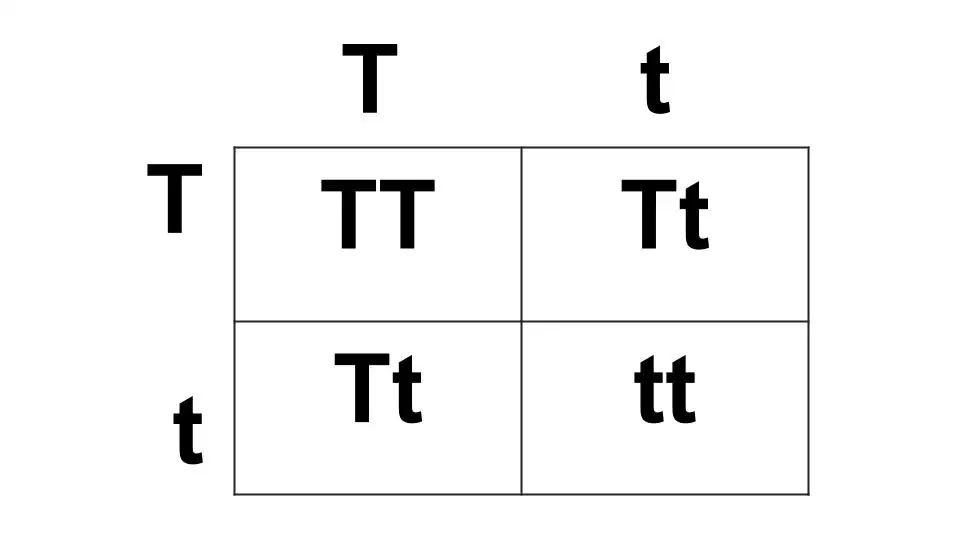
T - tall and t = short
In the punnett square below, what belongs in the missing square
a)
tt
b)
Tt
c)
Bb
d)
TT
21.
B = brown fur  b = white fur
In the punnett square, what is the probability for white fur? 
a)
0%
b)
25%
c)
50%
d)
75%
22.

What goes in box 15

a)

aabb

b)

AABB

c)

aaBB

d)

AAbb

23.
What goes in box 3
a)
Aabb
b)
AABB
c)
AAbb
d)
aaBb
24.
Using the dihybrid cross and key provided, what is the probability of the offspring being tall and white?
a)
9
b)
2
c)
3
d)
6
25.
What goes in box 6
a)
AaBB
b)
AABB
c)
aaBB
d)
AAbb
26.

In guinea pigs, short hair (H) is dominant to long hair (h). Also, black eyes (B) are dominant to red eyes (b).


Determine the genotype of a guinea pig with the phenotype: short hair with red eyes (select all possible genotypes)

a)

HHbb

b)

Hhbb

c)

hhBB

d)

HHBb

27.

A person with the genotype BBMm could produce which of the gametes below ...

a)

Bb

b)

BM

c)

bM

d)

Bm

28.

In horses, a straight mane (H) is dominant over a curly mane(h). Trotter horses (T) are dominant to pacer horses (t).


Determine the genotype of a horse with the phenotype: curly maned pacer horse

a)

HhTT

b)

hhTT

c)

hhtt

d)

HHtt

29.

In rabbits, grey hair (G) is dominant to white hair (g). Also, black eyes (B) are dominant to red eyes (b).


Determine the genotype of a rabbit with the phenotype: purebred for grey fur with black eyes (select all possible genotypes)

a)

GgBb

b)

GGBb

c)

GGBB

d)

GgBB

30.

What goes in box 15

a)

aabb

b)

AABB

c)

aaBB

d)

AAbb

31.

Match the following

a)

homozygous dominant

1.

GG

b)

heterozygous

2.

Gg

c)

homozygous recessive

3.

gg

32.
What is the dominant trait?
a)
yellow pea seeds
b)
green pea seeds
c)
there is no dominant seed
d)
Jolly green giant
33.

When asked to find a phenotypic ratio, we compare...

a)

all different letter combinations among offspring

b)

all the different combinations of "expressed" traits among offspring

34.

what is the genotypic ratio?

a)

1:2:1

b)

3:1

c)

1:1

35.

what is the phenotypic ratio?

a)

1:2:1

b)

3:1

c)

1:1

36.

Match the following

a)

phenotype examples

1.

green round, yellow wrinkled

b)

genotype examples

2.

GgRr, GGRr, ggrr

c)

phenotype definition

3.

physical or "expressed" traits

d)

genotype definition

4.

allele (letter) combinations

37.

If Green (G) peas are dominant to yellow peas (g) and Round peas (R) are dominant to wrinkled seeds (r), which of the following shows the genotype for a pea plant that is homozygous recessive for yellow, and heterozygous for round?

a)

GgRr

b)

GGRr

c)

GGrr

d)

ggRr

38.

If Green (G) peas are dominant to yellow peas (g) and Round peas (R) are dominant to wrinkled seeds (r), which of the following shows the genotype for a pea plant that is homozygous dominant for green, and homozygous recessive for wrinkled?

a)

GgRr

b)

GGRr

c)

GGrr

d)

ggRr

39.

what is the phenotypic ratio?

a)

1:2:1

b)

3:1

c)

1:1

40.
Which of the following identifies the phenotypes?
a)
A
b)
B
c)
C
d)
D
41.
Which of the following identifies the gametes?
a)
A
b)
B
c)
C
d)
D
42.
parent 1: GgBB
parent 2: ggBb
Find the gametes for parent 1.
a)
GB, GB, gB, gB
b)
gB, gb, gB, gb
c)
Gg, BB, GB, GB
d)
gg, Bb, gB, gb
43.
Aa is an example of
a)
homozygous dominant
b)
homozygous recessive
c)
heterozygous
d)
none of these
44.
bb is an example of
a)
homozygous dominant
b)
homozygous recessive
c)
heterozygous
d)
none of these
45.
Recessive alleles are written using
a)
capital
b)
lowercase
c)
both
d)
neither
46.
AA is an example of 
a)
homozygous dominant
b)
homozygous recessive
c)
heterozygous
d)
none of these
47.
Recessive alleles are written using
a)
capital
b)
lowercase
c)
both
d)
neither
48.
Which of the following is a genotype?
a)
long hair
b)
blue eyes
c)
Gg
d)
tall
49.
Dominant alleles are written using
a)
capital
b)
lowercase
c)
both
d)
neither
50.
Which of the following is a phenotype?
a)
AA
b)
AB
c)
black fur
d)
Tt
51.
Tall is dominant to short. A homozygous tall plant is crossed with a short plant. What will be the phenotypes of the offspring?
a)
100% tall
b)
50% tall, 50% short
c)
75% tall, 25% short
d)
25% tall, 75% short
52.
Green is dominant to yellow. Two heterozygous green plants are crossed. What are the genotypes of the offspring?
a)
100% Gg
b)
50% GG, 50% Gg
c)
25% GG, 50% Gg, 25% gg
d)
75% Gg, 25% gg
53.
Purple is dominant to white. A heterozygous purple flower is crossed with a white flower. What are the genotypes and phenotypes of the offspring?
a)
100% Pp (purple)
b)
50% Pp (purple); 50% pp (white)
c)
75% Pp (purple); 25% pp (white)
d)
25% PP, 50% Pp, 25% pp
75% purple, 25% white
54.
An organism with two different alleles for a trait is said to be: 
a)
recessive
b)
hybrid
c)
dominant
d)
purebred
55.
An allele whose trait only shows up when no dominant allele is present.
a)
hidden allele
b)
dominant allele
c)
recessive allele
d)
present allele
56.
T - tall and t = short
In the punnett square below, what belongs in the missing square
a)
tt
b)
Tt
c)
Bb
d)
TT
57.
T = tall an t = short
TT and Tt would result in  the following phenotype
a)
short
b)
tall
c)
medium sized
d)
neither tall or short
58.
B=brown eyes
b= blue eyes
What is true about these two brothers that have brown eyes:
One has genotype BB the other Bb.
a)
they have same phenotype and genotype
b)
they have different genotypes and phenotypes
c)
they have same phenotype but different genotypes
d)
they have same genotype but different phenotypes
59.
Two brown eyed parents (Bb) have a baby. What is the chance the baby is blue eyed?
a)
0 %
b)
25%
c)
50%
d)
75%
60.
If a pea plant were homozygous recessive for height, how would its alleles be represented?
a)
TT
b)
Tt
c)
tt
d)
tT
61.
Recessive alleles may not be expressed because they are
a)
masked by a dominant allele
b)
the least common allele in a population.
c)
the most common allele in a population.
d)
less likely to have crossing over.        
62.
When is a recessive allele expressed in offspring?
a)
when two copies are present
b)
when parents have no dominant alleles
c)
when the offspring is heterozygous
d)
when one copy is present
63.
An organism's genetic make-up:
a)
phenotype
b)
genotype
c)
dominant
d)
recessive
64.
What is another way of saying "purebred"?
a)
homozygous
b)
dominant
c)
recessive
d)
heterozygous
65.
Different forms of genes:
a)
alleles
b)
phenotype
c)
genotype
d)
homologous chromosomes
66.
An allele whose trait only shows up when no dominant allele is present.
a)
hidden allele
b)
dominant allele
c)
recessive allele
d)
present allele
67.
Two heterozygous (Tt) tall pea plants are crossed. Which describes their offspring?
a)
50% tall and 50% short
b)
75%tall and 25% short
c)
100%short
68.
If T=Tall & t=short, what is the genotypic ratio?
a)
1:3
b)
3:1
c)
1:2:1
d)
2:2
69.

The blending of two traits in which one is not completely dominant over the other is known as ---

a)

incomplete dominance

b)

codominance

70.

An inheritance pattern in which both alleles for a gene are expressed in the offspring so that both traits show up on its body is known as ---

a)

Codominance

b)

Incomplete dominance

71.

What type of inheritance pattern is shown here?

a)

Codominance

b)

Incomplete dominance

72.

A calico cat shows both the traits for orange fur and black fur. What kind of allele expression is this?

a)

Incomplete dominance

b)

Codominance

73.

If you cross a black chicken with a white chicken and only black AND white feathered chickens are produced, then feather color follows the inheritance pattern of ---

a)

Incomplete dominance

b)

Codominance

74.

The green fish offspring in this image is an example of ---

a)

Incomplete dominance

b)

Codominance

75.

A red flowered plant (RR) is crossed with a white flowered plant (WW). The gene for petal color in these plants expresses incomplete dominance. What percentage of the offspring will have pink (RW) flowers?

a)

0%

b)

25%

c)

50%

d)

100%

76.

A red flowered plant (RR) is crossed with a white flowered plant (WW). The gene for petal color in these plants expresses incomplete dominance. What percentage of the offspring will have red (RR) flowers?

a)

0%

b)

25%

c)

50%

d)

100%

77.

The hair form gene shows incomplete dominance. If your genotype is SS, you will have straight hair. If your genotype is CC, you will have curly hair. If your genotype is SC, you will have wavy hair. Mr. and Mrs. Anderson both have wavy hair (SC). What percentage of their children will also have wavy hair (SC)?

a)

25%

b)

50%

c)

75%

d)

100%

78.

Codominance occurs in calico cats, which allows for the Black and Tan colors to show. What percentage of the offspring represented in this P square will be calico (black and tan spotted)?

a)

25%

b)

50%

c)

75%

d)

100%

79.

Some flowers are controlled by codominance. Red flowers (RR), blue flowers (BB) and Speckled flowers (RB).


Cross a red flower with a speckled flower. What is the phenotypic ratio?

a)

2 red, 2 speckled

b)

2 red, 2 blue

c)

2 blue, 2 speckled

80.

Some flowers are controlled by codominance. Red flowers (RR), blue flowers (BB) and Speckled flowers (RB).


Cross two speckled flowers.

a)

1 red, 2 speckled, 1 blue

b)

2 red, 2 blue

c)

2 blue, 2 speckled

d)

1 red, 1 speckled, 2 blue

81.

Radish color is completely dominant, red and white are pure breeding colors. While heterozygous are purple.


Cros a red radish with a white.

a)

4 purple

b)

1 red, 2 purple, 1 white

c)

2 red, 2 white

d)

1 red, 1 purple, 2 white

82.

Radish color is completely dominant, red and white are pure breeding colors. While heterozygous are purple.


Cros a red radish with a purple.

a)

4 purple

b)

1 red, 2 purple, 1 white

c)

2 red, 2 purple

d)

1 red, 1 purple, 2 white

83.

Match the following

a)

Incomplete

Dominance

1.

Partial dominant trait

b)

Codominance

2.

Get to see both dominant traits at the same time

c)

A blending

3.

Incomplete dominance

d)

strips and spots

4.

Codominance

84.

What trait is being shown?

a)

Incomplete

b)

Codominance

85.

What trait is being shown?

a)

Incomplete

b)

Codominance

86.
T4 - What genotype is missing from this Punnett Square?
a)
RrYy
b)
RRYY
c)
rryy
d)
RrYY
87.
If you have a parent who has GgBb as their genotype, what are the possible alleles they could donate to their gametes?
a)
GB, Gb, gB, gb
b)
GB, GB, gb, gb
c)
Gb, Gb, Gb, GB
d)
GG, BB, gg, bb
88.
T4 - Based off this Punnett Square, what fraction of the offspring will have wrinkled, yellow seeds?
a)
9/16
b)
3/16
c)
1/16
d)
16/16
89.
Assume mom's gametes are on the left, what is her genotype?
a)
TTZz
b)
TtZz
c)
ttZZ
d)
TtZZ
90.
In cacti, long arms (A) are dominant to short arms (a).  Suppose 2 heterozygous cacti are crossed.  What percentage of their offspring are expected to have short arms?
a)
0%
b)
25%
c)
75%
d)
100%
91.
If T=Tall & t=short, what is the genotypic ratio?
a)
1:3
b)
3:1
c)
1:2:1
d)
2:2
92.
T - tall and t = short
In the punnett square below, what belongs in the missing square
a)
tt
b)
Tt
c)
Bb
d)
TT
93.
Purple is dominant to white. A heterozygous purple flower is crossed with a white flower. What are the genotypes and phenotypes of the offspring?
a)
100% Pp (purple)
b)
50% Pp (purple); 50% pp (white)
c)
75% Pp (purple); 25% pp (white)
d)
25% PP, 50% Pp, 25% pp
75% purple, 25% white
94.
Tall is dominant to short. A homozygous tall plant is crossed with a short plant. What will be the phenotypes of the offspring?
a)
100% tall
b)
50% tall, 50% short
c)
75% tall, 25% short
d)
25% tall, 75% short
95.
AA is an example of 
a)
homozygous dominant
b)
homozygous recessive
c)
heterozygous
d)
none of these
96.
bb is an example of
a)
homozygous dominant
b)
homozygous recessive
c)
heterozygous
d)
none of these
97.
Which of the following identifies the gametes?
a)
A
b)
B
c)
C
d)
D
98.
Which of the following identifies the phenotypes?
a)
A
b)
B
c)
C
d)
D
99.

what is the phenotypic ratio?

a)

1:2:1

b)

3:1

c)

1:1

100.

Match the following

a)

phenotype examples

1.

green round, yellow wrinkled

b)

genotype examples

2.

GgRr, GGRr, ggrr

c)

phenotype definition

3.

physical or "expressed" traits

d)

genotype definition

4.

allele (letter) combinations

101.

what is the genotypic ratio?

a)

1:2:1

b)

3:1

c)

1:1

102.

Match the following

a)

homozygous dominant

1.

GG

b)

heterozygous

2.

Gg

c)

homozygous recessive

3.

gg

103.

What goes in box 15

a)

aabb

b)

AABB

c)

aaBB

d)

AAbb

104.
What goes in box 6
a)
AaBB
b)
AABB
c)
aaBB
d)
AAbb
105.
Using the dihybrid cross and key provided, what is the probability of the offspring being tall and white?
a)
9
b)
2
c)
3
d)
6
106.
The genetic make up of this flower is ________.
a)
homozygous recessive
b)
heterozygous
c)
homozygous dominant
d)
white
107.

Colorblindness is a recessive X-linked disorder.

Which genotype represents a male with normal vision?

a)

XN YN

b)

Xn Yn

c)

XN Y

d)

Xn Y

108.
Which of the following genotypes belongs in the red box in the Punnett square?
a)
XBXb
b)
XbXb
c)
XbY
d)
XBY
109.

What would the genotype be of a colorblind male?

a)

XNY

b)

XNYn

c)

XnY

d)

XnYn

110.

What chance will a boy will be colorblind?

a)

100%

b)

50%

c)

25%

d)

0%

111.

What is the chance that a daughter will be colorblind?

a)

100%

b)

50%

c)

25%

d)

0%

112.

What is the likelihood of this cross have a child that is colorblind?

a)

100%

b)

75%

c)

50%

d)

25%

113.
Hemophilia is a recessive x-linked disorder.
Which genotype represents a female who is a carrier for hemophilia?
a)

XHXh

b)

XhXh

c)

XHXH

d)

XhY

114.

The following punnett square depicts the x-linked cross of a female who carries hemophilia with a man showing no symptoms. Fill in the genootype represented by the blank box in the punnett square.

a)

XH XH

b)

Xh XH

c)

XH Y

d)

Xh Y

115.
Which of the following genotypes belongs in the red box in the Punnett square?
a)

XBXb

b)

XbXb

c)

XbY

d)

XBY

116.

Match the following. H= no hemophilia, h = hemophilia

a)

Male without hemophilia

1.

XHY

b)

Female with hemophilia

2.

XhXh

c)

Female Carrier

3.

XH Xh

d)

Male with hemophilia

4.

XhY

e)

Female who is NOT a carrier

5.

XHXH

117.

In fruit flies, eye color is a sex-linked trait.  Red (R) is dominant to white (r).

Which genotype shows a female fly with white eyes?

a)

XRXrX^{R^{ }}X^r

b)

XRXRX^RX^R

c)

XrXrX^rX^r

118.

X and Y are ​​ (a)   chromosomes. Females are ​ (b)   and males are ​ (c)   .

Choose from the below words
SEX
XX
XY
Autosomes
46
23
119.

​ (a)   are more likely to have an x-linked trait because males have only ​ (b)   X chromosome. Females can be ​ (c)   of an X-linked trait because they can be ​ (d)   for the trait since they have ​ (e)   X's.

Choose from the below words
Males
one
carriers
heterozygous
two
homozygous
Females
Dominant
Recessive
120.

H= normal blood clotting

h=hemophilia


XHXh x XHY


What is the probability that any of their offspring will have hemophilia?

a)

4/4

b)

3/4

c)

2/4

d)

1/4

121.

Look at this cross: XBXb x XBY


What proportion of the male children are colorblind?

a)

100%

b)

75%

c)

50%

d)

25%

122.

In fruit flies, eye color is a sex linked trait. Red (R) is dominant to white (r). What is the sex and eye color of flies with the following genotype: X R X r ?

a)

male with white eyes

b)

female with red eyes

c)

male with red eyes

d)

female with white eyes

123.

What is the genotype of the mother? Hint Draw a punnett square

a)

BB

b)

bb

c)

Bb

d)

BB or Bb

124.

Cystic fibrosis is an autosomal recessive disease .


Study the pedigree what are the possible genotypes of #10? (more than one answer)

a)

AA

b)

Aa

c)

aa

d)

XAXa

125.
Why do all the daughters in Generation II carry the colorblind gene?
a)
Because mom passed on the gene.
b)
Because dad passed on the X chromosome.
c)
Because their brother has it.
d)
Because their brother gave it to them.
126.
If hemophilia is a sex-linked recessive trait, what genotype would individual III-3 have?
a)
XbX
b)
XbXb
c)
XbYb
d)
XbY
127.

The pedigree above is an example of:

a)

dominant

b)

recessive

128.

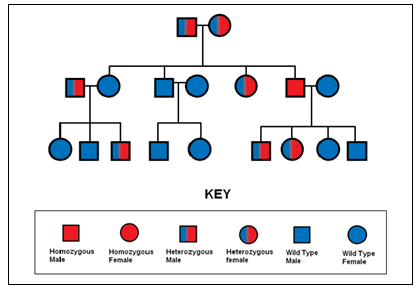
Is this pedigree dominant, recessive, or sex-linked recessive?

a)

Dominant

b)

Recessive

c)

Sex-Linked Recessive

129.

Is this pedigree dominant, recessive, or sex-linked recessive?

a)

Dominant

b)

Recessive

c)

Sex-Linked Recessive

130.

What type of inheritance is formed by recessive and dominant traits?

QQ, qq, Qq

a)

Complete dominance

b)

Incomplete dominance

c)

Codominance

131.

Which best describes multiple alleles?

a)

More than one trait

b)

many options (3 or more) for a trait

c)

less than 3 trait combinations

d)

multiple offspring with the same set of alleles

132.

With multiple alleles, how many alleles does an offspring get from each parent?

a)

one allele from each parent

b)

two alleles from each parent

c)

three alleles from each parent

133.

Which is the best definition of polygenic inheritance?

a)

many allele options

b)

when one trait completely dominates a recessive trait

c)

when many genes work together to determine the outcome of a trait

d)

sections of DNA code that determine a certain trait

134.

Is the phenotype of a polygenic trait easy to predict?

a)

No, because there are so many possible combinations.

b)

Yes, that is why we use punnett squares

c)

Yes, because there are many options

135.

____________ inheritance creates the many variations we see in hair and skin color.

a)

incomplete

b)

multiple alleles

c)

codominance

d)

polygenic

136.

How many alleles does a person carry for a trait?

a)

1

b)

2

c)

3

d)

4

137.

How many alleles does a child get from each parent for a trait?

a)

1

b)

2

c)

3

d)

4

138.

Aa, DD, Bb, yy are all examples of ---

a)

genotypes.

b)

phenotypes.

139.

In a heterozygous genotype, the _____ allele takes over in the phenotype.

a)

recessive

b)

dominant

c)

both

140.

What you see, or the physical appearance of an organism, is called the ---

a)

genotype.

b)

phenotype.

141.

In a pedigree, which shape represents a male?

a)

circle

b)

square

142.

Which gender has an X and a Y chromosome?

a)

male

b)

female

143.

On a pedigree, this symbol represents a ----

a)

not affected male.

b)

not affected female.

c)

affected male.

d)

affected female.

144.

Assuming a trait is X-LINKED RECESSIVE, a person with the genotype "XAXa" would be ____

a)

affected

b)

unaffected

145.

Assuming a trait is X-LINKED RECESSIVE, a person with the genotype "XaY" would be ____

a)

affected

b)

unaffected

146.

Assuming a trait is AUTOSOMAL RECESSIVE, a person with the genotype "Aa" would be

a)

affected

b)

unaffected

147.

The genotype XAXa represents a ________

a)

dominant male

b)

recessive male

c)

dominant female

d)

recessive female

148.

Assuming a trait is X-LINKED DOMINANT, what are the genotypes of an UNAFFECTED person?

a)

XAY

b)

XaY

c)

XAXA

d)

XAXa

e)

XaXa

149.

Assuming a trait is X-LINKED RECESSIVE, what are the genotypes of an UNAFFECTED person?

a)

XAY

b)

XaY

c)

XAXA

d)

XAXa

e)

XaXa

150.

Assuming a trait is X-LINKED RECESSIVE, what are the genotypes of an AFFECTED person?

a)

XAY

b)

XaY

c)

XAXA

d)

XAXa

e)

XaXa

151.

Assuming a trait is AUTOSOMAL RECESSIVE, what genotype would make a person AFFECTED?

a)

AA

b)

Aa

c)

aa

d)

XAY

e)

XaY

152.

Assuming a trait is AUTOSOMAL RECESSIVE, what genotypes would make a person UNAFFECTED?

a)

AA

b)

Aa

c)

aa

d)

XAY

e)

XaY

153.

Assuming a trait is AUTOSOMAL DOMINANT, what genotype would make a person UNAFFECTED?

a)

AA

b)

Aa

c)

aa

d)

XAY

e)

XaY

154.

Assuming a trait is AUTOSOMAL DOMINANT, what genotypes could make a person AFFECTED?

a)

AA

b)

Aa

c)

aa

d)

XAY

e)

XaY

155.

What do the circles represent?

a)

Male

b)

Female

156.

Examine the parents in generation I. How many children do they have?

a)

3

b)

5

c)

6

d)

7

157.

Examine the parents in generation I. How many grandchildren do they have?

a)

2

b)

4

c)

6

d)

11

158.
 Look at the Punnett square.
If the two parents represented in the Punnett square have four offspring, what does the Punnett square tells you? 
a)
Two of the offspring will definitely have the genotype Aa.
b)
It is more likely that two of them will have the genotype Aa than the genotype aa.
c)
There is a 50% chance for each of the four offspring to have the genotype Aa.
d)
It is less likely that two of them will have the genotype Aa than the genotype aa.
159.

How many individuals are there in the 3rd generation?

a)

1

b)

2

c)

4

d)

6

160.

How are individuals III-2 and II-4 related?

a)

Brother and sister

b)

Dad and daughter

c)

Uncle and niece

d)

Grandfather and granddaughter

161.

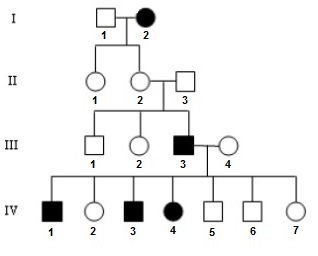
The trait this pedigree traces is recessive because it skips a generation and individuals can be carriers. What is the most likely genotype for person III-3?

a)

GG

b)

Gg

c)

gg

162.
This pedigree represents the inheritance of hemophilia in this family. How many of the females have the hemophilia trait?
a)
8
b)
5
c)
2
d)
3
163.
Huntington's Disease is a dominant trait.
What is the correct genotype for individual I-2?
a)
HH
b)
Hh
c)
hh
d)
H_
164.
What is the genotype of the mother?
a)
BB
b)
bb
c)
Bb
d)
BB or Bb
165.

How are II-5 and II-7 related?

a)

cousins

b)

married

c)

siblings

d)

uncle/nephew

166.

What is the genotype of individual III-13?

a)

AA

b)

Aa

c)

aa

167.

What is the phenotype for II-6?

a)

Normal

b)

Carrier

c)

Cystic Fibrosis

168.
In a pedigree, what shape represents a male?
a)
circle
b)
square
c)
triangle
d)
diamond
169.
How many generations are shown in this pedigree?
a)
1
b)
2
c)
3
d)
4
170.
How many kids did the mother and father from the first generation have?
a)
2
b)
4
c)
5
d)
6
171.
Which individual in the first generation is a carrier?
a)
The male
b)
The female
c)
individual 1
d)
None of the above
172.

This pedigree represents the inheritance of hemophilia in this family. How many of the males have the hemophilia trait?

a)

8

b)

5

c)

2

d)

3