wayground logo

Free Printable Worksheets

Font size

S
M
L
XL
Worksheets

Revision chemistry

Total questions: 217

Worksheet time: 5hrs 36mins

Name
Class
Date
1.
Covalent bonds are between...
a)
Metal and Non-metal
b)
Non-metal and Non-metal
c)
Metal and Metal
2.
Ionic bonds are between...
a)
Metal and Non-metal
b)
Non-metal and Non-metal
c)
Metal and Metal
3.
Atoms are most stable when their outer shell is complete.
a)
true
b)
false
4.
Covalent bonds actually "share" electrons?
a)
true
b)
false
5.
How are covalent bonds formed?
a)
Sharing of electrons
b)
Transfer of electrons
6.
How are ionic bonds formed?
a)
Transfer of electrons
b)
Sharing of electrons
7.
Is hydrogen considered a metal or a non-metal?
a)
A metal
b)
Nonmetal
c)
Metalloid
8.
Why do elements bond?
a)
To be friends
b)
To create a new element
c)
To become stable
9.
Is this ionic bond drawn correctly?
a)
Yes
b)
No
10.
Group numbers on the periodic table help us determine 
a)
The number of valence electrons
b)
Color of the elements
11.
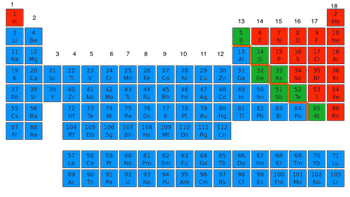
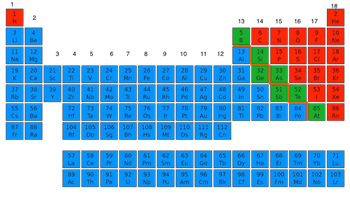
Where are metals located on the periodic table?
a)
Blue
b)
Green
c)
Red
12.
Where are the nonmetals located on the periodic table? 
a)
Blue
b)
Red
c)
Green
13.
Where are the metalloids located on the periodic table?
a)
Blue
b)
Red
c)
Green
14.

When an atom loses an electron, it becomes a

a)

positive ion

b)

negative ion

c)

neutral ion

d)

neutral atom

15.

What is the proper name for CH4?

a)

Monocarbon hydride

b)

Carbon tetrahydride

c)

Monocarbon tetrahydride

16.

What is the proper name for S2O2?

a)

Sulfur oxide

b)

Sulfur dioxide

c)

Sulfur (II) oxide

d)

Disulfur dioxide

17.

Covalent compounds can have

a)

Single Bonds

b)

Double Bonds

c)

Triple Bonds

d)

Quadruple Bonds

18.

How many valence electrons does hydrogen have?

a)

1

b)

2

c)

3

d)

4

19.

What two types of atoms make a covalent bond?

a)

2 Nonmetals

b)

1 Metal and 1 Nonmetal

c)

2 Metals

d)

2 Noble Gases

20.

How do covalent bonds form?

a)

By donating and receiving valence electrons between atoms.

b)

Scientists still aren't sure.

c)

Opposite slight charges attract each atom in the compound.

d)

Sharing valence electrons between atoms

21.

Write the correct formula for Sodium Chloride.

a)

SC

b)

SCl

c)

NaCl

d)

NaCl2

22.

When naming ionic compounds, the metal is always named first and the nonmetal is always named second.

a)

True

b)

False

23.

How many Aluminum atoms are in Al2O3?

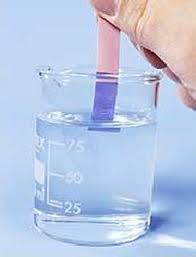
a)

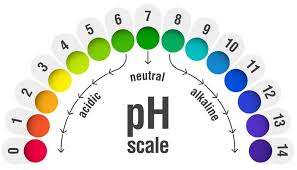
3

b)

5

c)

2

d)

1

24.

Zinc fluoride

a)

ZnF2

b)

Zn2F

c)

ZnF

d)

Zn2F4

25.

An atom with 3 valence electrons "wants" a full shell, so it can either gain 5 or lose 3. Which is more likely to occur?

a)

Gain 5

b)

Lose 3

c)

Nothing

26.

Valence electrons are found

a)

in the innermost energy level of an atom

b)

in the middle energy levels of an atom

c)

in the outermost energy levels of an atom

27.

Why do all bonds form?

a)

so the number of protons equals the number of electrons

b)

so an atom can become unstable

c)

to fill the outermost energy level

28.
How many valence electrons does calcium have?
a)
2
b)
4
c)
6
d)
7
29.
How many valence electrons does hydrogen have?
a)
1
b)
2
c)
3
d)
4
30.
When an atom loses an electron, it becomes a:
a)
positive ion
b)
negative ion
c)
neutral ion
d)
neutral atom
31.
Ionic compounds are formed when one or more valence electrons are transferred from _____
a)
a nonmetal atom to a metal atom
b)
a nonmetal atom to a nonmetal atom
c)
a metal atom to a nonmetal atom
d)
a metal atom to a metal atom
32.
Ionic compounds are formed when one or more valence electrons are transferred from _____
a)
a nonmetal atom to a metal atom
b)
a nonmetal atom to a nonmetal atom
c)
a metal atom to a nonmetal atom
d)
a metal atom to a metal atom
33.
This is a correct dot diagram for neon (Ne)
a)
true
b)
false
34.
How are covalent bonds explained?
a)
When one atom takes the other atom's electron
b)
When the atom shares an electron with an another atom
c)
When the two nucleus merge
d)
When the neutrons leave the nucleus
35.
What two types of atoms make a covalent bond?
a)
2 Nonmetals
b)
1 Nonmetal and 1 Metal
c)
2 Metals
d)
2 Noble Gases
36.
How many valence electrons do most atoms need to be stable?
a)
1
b)
2
c)
6
d)
8
37.
Where are the nonmetals located on the periodic table? 
a)
Blue
b)
Red
c)
Green
38.
What is the correct formula for this molecule?
a)
NH
b)
N3H
c)
NH3
d)
NH4
39.

Which structures conduct electricity as a liquid but not as a solid?

a)

Metallic

b)

Covalent

c)

Ionic

d)

All of the above

40.
Which of the following is NOT a property of ionic compounds?
a)
They have very high melting points
b)
They conduct electricity when in solution
c)
They have high boiling points
d)
They are insoluble in water
41.

What usually forms the negative ion?

a)

nonmetals

b)

metal

c)

none

42.
Calcium (Ca) and 2 chlorine (Cl) atoms make a covalent compound.
a)
True
b)
False
43.
Which of the following is NOT formed by a covalent bond?
a)
K2S
b)
H2O
c)
I2
d)
CO2
44.

Which structures conduct electricity as a liquid but not as a solid?

a)

Metallic

b)

Covalent

c)

Ionic

d)

All of the above

45.

When naming covalent compounds...

a)

You need roman numerals and no prefixes

b)

You do not need roman numerals or prefixes

c)

You need roman numerals and prefixes

d)

You do not need roman numerals but you do need prefixes

46.

This type of bonding can be described as a "cooperation"

a)

ionic

b)

covalent

c)

metallic

47.

Identify the following compound as ionic or covalent: CF4

a)

ionic

b)

covalent

48.

What is the formula for sodium bromide?

a)

NaBr

b)

NaBr2

c)

Na2Br

d)

SoBr

49.

What is the formula for diphosphorus pentoxide?

a)

P2O5

b)

PO5

c)

P5O2

d)

Po2O5

50.

What is the formula for sodium bromide?

a)

NaBr

b)

NaBr2

c)

Na2Br

d)

SoBr

51.

What is the formula for diphosphorus pentoxide?

a)

P2O5

b)

PO5

c)

P5O2

d)

Po2O5

52.

What is the name for SiCl4?

a)

silicon tetrachloride

b)

silicon quadchloride

c)

monosilicon tetrachloride

d)

silicon chloride

53.

What is the chemical formula of sulfur hexabromide?

a)

SBr₆

b)

S₆Br

c)

S(VI)Br

d)

SBr4

54.

What is the name of P₄S₁₀?

a)

phosphorous sulfide

b)

phosphorus sulfite

c)

tetraphosphorus decasulfide

d)

tetraphosphide decasulfide

55.

What is the name for BrO3?

a)

bromine oxide

b)

monobromine trioxide

c)

bromine trioxide

d)

bromide trioxide

56.

What is the name of the compound with the formula Ba3P2?

a)

barium phosphide

b)

barium diphosphide

c)

tribarium diphosphide

d)

barium phosphorous

57.
What is the formula for magnesium chloride?
a)
MgCl
b)
Mg2Cl
c)
MgCl2
d)
Mg(ClO3)2
58.

What is the formula for copper(I) sulfate?

a)

CuSO3

b)

CuSO4

c)

Cu2SO3

d)

Cu2SO4

59.

What is the name of the compound LiOH?

a)

lithium hydrogen oxide

b)

lithium hydroxide

c)

lithium hydride

d)

lithium oxide hydride

60.

What is the chemical formula for an ionic compound of potassium and oxygen?

a)

KO

b)

K2O

c)

K2O2

d)

KO2

61.

What is the name for the compound CaCO3?

a)

Calcium carbon oxide

b)

Calcium (II) carbonate

c)

Calcium carbonate

d)

Carbon carbonate

62.

What is the formula for sodium nitrate?

a)

Na3NO

b)

NaNO2

c)

Na3NO3

d)

NaNO3

63.

What is the name of FeCl₂?

a)

iron chloride

b)

iron (II) chloride

c)

iron (I) chloride

d)

iron dichloride

64.

What is the name of Cu₃N₂?

a)

copper (III) nitride

b)

copper (II) nitride

c)

copper nitride

d)

tricopper dinitride

65.

What is the formula for copper (II) sulfide?

a)

CuS

b)

Cu₂S

c)

CuS₂

d)

CuSO₃

66.

What's the formula for iron (II) nitride?

a)

Fe3N2

b)

Fe2N3

c)

Fe2NO2

d)

FeN

67.

What is the name for As4O10?

a)

arsenic oxide

b)

arsenide decoxide

c)

tetraarsenic decoxide

d)

arsenic decoxide

68.

What is the formula for mercury (I) oxide?

a)

HgO

b)

Hg2O

c)

HgO2

d)

Hg2O2

69.

What is the formula for manganese (IV) sulfide?

a)

Mn4S2

b)

MnS2

c)

Mn2S4

d)

MnS

70.
What is the name of N2O3
a)
Nitrogen trioxide
b)
Dinitrogen oxide
c)
Dinitrogen trioxide
d)
Nitrogen oxide
71.
What is the chemical formula for Tetrasulfur pentoxide?
a)
SO
b)
S4O
c)
S4O5
d)
S5O4
72.
What is the name of C3Cl?
a)
Carbon octachloride
b)
Tricarbon octachloride
c)
Carbon trichloride
d)
Octacarbon trichloride
73.
What is the chemical formula for Nitrogen triiodide?
a)
NI
b)
N3I
c)
NI3
d)
None of these
74.
What is the name of Br6F10 ?
a)
Bromium fluoride
b)
Hexabromine fluoride
c)
Bromium decafluoride
d)
none of the above
75.
What is the name of CO
a)
Carbon oxide
b)
Carbon dioxide
c)
Carbon monoxide
d)
Carbon II oxide
76.
What is the chemical formula for CP ?
a)
Carbon phosphide
b)
Monocarbon phosphide
c)
Carbon monophosphide
d)
none of the above
77.
phosphorus trichloride
a)
KCl3
b)
PCl3
c)
K3Cl
d)
P3Cl
78.
The chemical formula of sulfur hexabromide is
a)
SBr₆
b)
S₆Br
c)
S(VI)Br
d)
S6Br
79.
The chemical formula of dinitrogen textroxide is
a)
Ni₂O₄
b)
NiO
c)
N₂O₄
d)
NiO₂
80.
The chemical formula of tetraphosphorus heptaoxide is
a)
F₄O₁₀
b)
P₄O7
c)
PO
d)
P₁₀O₄
81.
What's the formula for chlorine dioxide
a)
ClO2
b)
CLO
c)
ClO3
d)
HClO2
82.
What is the formula for Hexaboron Monosilicide
a)
B6Si
b)
BSi
c)
BSi6
d)
B6Si6
83.
What is the OFFICIAL name for H2O
a)
Hydrogen Oxide
b)
Oxygen Dinitride
c)
Agua
d)
Dihydrogen Monoxide
84.
BrO3
a)
bromine oxide
b)
monobromine trioxide
c)
bromine trioxide
d)
bromine (III) oxide
85.
What is the formula for Tricarbon Octahydride?
a)
Ca3O
b)
C2H8
c)
C3H8
d)
Ca3H8
86.
A binary covalent bond exists between
a)
2 metals
b)
1 metal and 1 nonmetal
c)
2 nonmetals
d)
Any 2 elements
87.
Which of the following is NOT an ionic compound:
a)
CaO
b)
NaOH
c)
BaCl2
d)
Br2
88.
Which following is a molecular compound?
a)
SO2
b)
K2O
c)
CaO
d)
BeO
89.
Which of the following is NOT an ionic compound:
a)
CaO
b)
NaOH
c)
BaCl2
d)
CH4
90.

The smallest particle of an element; made of electrons, protons, and neutrons

a)

Atoms

b)

Elements

c)

Molecules

d)

Products

91.

A substance produced during a chemical reaction

a)

Product

b)

Reactant

c)

Properties

92.

Physical and chemical characteristics of matter used to describe or identify a substance

a)

Chemical Reaction

b)

Properties

c)

Product

93.

When something burns, it reacts with the __________ in the air.

a)

Nitrogen

b)

Oxygen

c)

Carbon dioxide

d)

Neon

94.

When magnesium is burnt, a white substance is formed. This substance is ____________________.

a)

Oxygen Magnetite

b)

Magnesium sulfide

c)

Magnesium oxide

d)

Magnesium chloride

95.

Burning magnesium is an example of a __________ reaction.

a)

chemical

b)

physical

c)

biological

96.

Magnesium is a/an __________________.

a)

compound

b)

ion

c)

element

d)

electron

97.

In a chemical reaction,

a)

no new substance is formed

b)

a new substance is formed

c)

products and reactants have the same properties

d)

reactants are not needed

98.

Melting candle wax is a ________________ change.

a)

chemical

b)

physical

c)

biological

99.

Chemical symbol of Magnesium is

(a)  

100.

Magnesium burns in the presence of oxygen to form

(a)  

101.

The smallest particle of an element; made of electrons, protons, and neutrons

a)

Atoms

b)

Elements

c)

Molecules

d)

Products

102.

A substance produced during a chemical reaction

a)

Product

b)

Reactant

c)

Properties

103.

Burning magnesium is an example of a __________ reaction.

a)

chemical

b)

physical

c)

biological

104.
Which problem is balanced?
(Check ALL answers)
a)
PbO2 + 2H2
b)
SO2 + H20 --> H2SO4
c)
2Na + 2H2O --> 2NaOH + H2
105.
How many HCl molecules do you need to balance this equation? 
Mg +  __HCl --->  MgCl2 + H2
a)
1
b)
2
c)
3
d)
4
106.
Is this balanced?
Al + O2 → 2Al2O3
a)
Yes
b)
No
107.

Balance this equation

_Al +_HCl --> _H2 +_AlCl3

a)

2,6,3,2

b)

it's already balanced

c)

4,12,3,4

d)

2,1,4,5

108.
Is the following equation balanced?
2C2H2 + 5O2 --> 4CO2 + 2H2O
a)
yes
b)
no
109.
Is the following equation balanced?
4Fe + 3O2 --> 2Fe2O3
a)
yes
b)
no
110.
Is the following reaction balanced?
NaHCO3 --> Na2CO3 + H2O + CO2
a)
yes
b)
no
111.
Is the following reaction balanced?
2CH3OH + 3O2 --> 2CO2 + 4H2O
a)
yes
b)
no
112.

What is the left part of a chemical equation called?

2H2 + O2 ---> 2H2O

a)

Reactants

b)

Yields

c)

Products

d)

Chemical equation

113.

What is the right part of a chemical equation called?

2H2 + O2 ---> 2H2O

a)

Reactants

b)

Yields

c)

Products

d)

Chemical Equation

114.

How many Mn atoms are found in the following compound?

2MnO4

a)

1

b)

2

c)

4

d)

8

115.

Is the following equation balanced?

Al + O2 ---> 2Al2O3

a)

YES

b)

NO

116.

Balance this equation:

H2 + Cl2 ---> HCl

a)

It is balanced.

b)

H2 + Cl2 ---> 2HCl

c)

3H2 + Cl2 ---> 6HCl

d)

H2 + 3Cl2 ---> 6HCl

117.

Balance this equation:

HgO ---> 2Hg + O2

a)

It is balanced.

b)

2HgO ---> 2Hg + O2

c)

2HgO ---> Hg + O2

d)

HgO ---> Hg + 2O2

118.

How many Oxygen atoms are in 2SO4?

a)

1

b)

2

c)

4

d)

8

119.

Balance the the following equation.

__Zn+__HCl -->__ZnCl2 +__H2

a)

1,1,2,1

b)

1,1,1,2

c)

1,2,1,1

d)

2,1,1,1

120.

Determine the coefficients to balance the equation.

__Al +__HCl --> __H2 +__AlCl3

a)

2,6,3,2

b)

it's already balanced

c)

4,12,3,4

d)

2,1,4,5

121.

Determine the coefficients to make the following equation balanced?

__N2 + __O2--> __NO

a)

1, 1, 1

b)

1, 1, 2

c)

2, 2, 2

d)

1, 2, 2

122.

What is the Law of Conservation of Mass?

a)

It states that matter cannot be created or destroyed.

b)

It states that energy cannot be created or destroyed.

c)

It states that matter can be created or destroyed.

d)

It states that sound can be created or destroyed.

123.
What is the total number of atoms present in 5Na3PO4
a)
5
b)
40
c)
55
d)
8
124.
How many Oxygens are in this molecule? 
(OH)2
a)
4
b)
1
c)
2
d)
3
125.
What are the smaller numbers that you CANNOT change in a chemical equation? 
a)
Coefficient
b)
Products
c)
Reactants
d)
Subscript
126.
What are the larger numbers that you CAN CHANGE in a chemical equation? 
a)
Coefficient 
b)
Products
c)
Reactants
d)
Subscripts
127.
How many HCl molecules do you need to balance this equation? 
Mg +  __HCl --->  MgCl2 + H2
a)
1
b)
2
c)
3
d)
4
128.
Pb(NO3)2  +  KI --> PbI2 + KNO3
What type of reaction is this? 
a)
Synthesis 
b)
Decomposition 
c)
Single Replacement
d)
Double Replacement 
129.
__Na  +  O2 ----->  __Na2O
Type of reaction? 
Balance it too. :)
a)
Synthesis, 2Na /  4Na2O
b)
Decomposition, 4Na /  2Na2O
c)
Synthesis, 4Na /  2Na2O
d)
Decomposition, 2Na /  4Na2O
130.
What type of reaction is this?  
__H2O2 ---->  __H2O + O2
a)
Synthesis
b)
Decomposition 
c)
Single Replacement
d)
Combustion 
131.
What law governs the balancing of chemical equations? 
a)
Law of Energy
b)
Law of Conservation of Matter/Mass
c)
Law of Gravity
d)
Law of Matter Movement 
132.
Balance this chemical reaction......?  
__H2O2 ---->  __H2O + O2
a)
2H2O2  //  2H2O
b)
1H2O2  //  2H2O
c)
2H2O2  //  1H2O
d)
H2O2  //  2H2O
133.
Why is it called the Law of Conservation of Matter/Mass? 
a)
Energy is created and destroyed 
b)
Energy is never created, nor destroyed-- it always moves 
c)
Energy moves between particles
d)
Energy stops moving at the end of the universe 
134.
4Si + S8 --> 2Si2S4
a)
Synthesis
b)
Decomposition
c)
Single displacement
d)
Double displacement
135.
3Ca + 2AlCl3 --> 3CaCl2 + 2Al
a)
Synthesis
b)
Decomposition
c)
Single diplacement
d)
Double displacement
136.
4Si + S8 --> 2Si2S4
a)
Synthesis
b)
Decomposition
c)
Single displacement
d)
Double displacement
137.
3Ca + 2AlCl3 --> 3CaCl2 + 2Al
a)
Synthesis
b)
Decomposition
c)
Single diplacement
d)
Double displacement
138.
3KOH + H3PO4 --> K3PO4 + 3H2O
a)
Synthesis 
b)
Decomposition
c)
Single displacement
d)
Double displacement
139.
2Pb(NO3)2 --> 2PbO + 4NO2 + O2
a)
Synthesis 
b)
Decomposition
c)
Single displacement
d)
Combustion
140.
3Mg + N2 --> Mg3N2
a)
Synthesis 
b)
Decomposition
c)
Single displacement
d)
Combustion
141.
2NO2 --> N2 + 2O2
a)
Synthesis
b)
Decomposition
c)
Single displacement
d)
Combustion
142.
P4 + 3O--> 2P2O3
a)
Synthesis 
b)
Decomposition
c)
Single displacement
d)
Combustion
143.
Fe + H2SO4 --> Fe2(SO4)3 + H2
a)
Synthesis (combination)
b)
Decomposition
c)
Single replacement
d)
Combustion
144.
Which reaction type is the following: C5H10O4 + O2 --> CO2 + H2O
a)
Decomposition
b)
Single Replacement
c)
Combustion
d)
Double Replacement
145.
Which of the following is the general formula for a decomposition reaction?
a)
A + B  → AB
b)
AB → A + B
c)
AB + C → AC + B
d)
AB + CD → AC + BD
146.
When balancing equations a ____ can be placed to the left of a formula of a substance to make the equations balanced
a)
charge
b)
subscript
c)
random number
d)
coefficient
147.
What coefficient should be used to make the following equation balanced?
N2+O2--> _NO 
a)
1
b)
2
c)
3
d)
4
148.
Balance this equation:
 __Li + __Cl2 -> __LiCl
a)
2Li + Cl2 -> 4LiCl2
b)
2Li + Cl2 -> LiCl2
c)
2Li +  Cl2 -> 2LiCl
149.
C4H12 + O2 --> CO2 + H2O
a)
Synthesis
b)
Combustion
c)
Single Replacement
d)
Double Replacement
150.
H2SO4 + Fe -->H2 + FeSO4
a)
Synthesis
b)
Decomposition
c)
Single Replacement
d)
Double Replacement
151.
PbCl2 + AgNO3 ---> Pb(NO3)2 + AgCl 
a)
Synthesis
b)
Decomposition
c)
Single Replacement
d)
Double Replacement
152.
NH3 + HCl ---> NH4Cl 
a)
Synthesis
b)
Decomposition
c)
Single Replacement
d)
Double Replacement
153.
Which chemical reaction switches 2 elements?
a)
Double Replacement
b)
Single Replacement
c)
Combustion
d)
Decomposition
154.
Which chemical reaction takes place when 2 substances react to form a single product?
a)
Decomposition
b)
Double Replacement
c)
Single Replacement
d)
Synthesis
155.
At the end of chemical reactions, what is the total mass of the reactants compared to the total mass of the products?
a)
the product is doubled
b)
the product is half the mass of the reactants
c)
the mass is the same
d)
the mass changes depending on the reaction
156.
An extremely strong acid would have a pH of...
a)
1
b)
7
c)
9
d)
14
157.
An extremely strong base would have a pH of...
a)
1
b)
7
c)
9
d)
14
158.
A neutral substance would have pH of...
a)
8
b)
7
c)
6
d)
14
159.
If a solution is neither acidic or basic it has a pH of _____________.
a)
1
b)
13
c)
6
d)
7
160.
Indicators change color in the presence of a(n) _______________.
a)
acid or base
b)
buffer
c)
water molecule
d)
ester
161.
A base has a ___________ taste.
a)
bland
b)
salty
c)
bitter
d)
sour
162.

Acid is?

a)

A substance that reacts to metals and carbonates, and has a Ph of below 7.

b)

Often used in drain cleaner.

c)

Something that can only be found in a lab

d)

A bitter tasting substance

163.

A base is

a)

A substance that feels slippery, has a higher Ph than 7, and is often used in drain cleaner.

b)

Has a Ph of below 7 and can react to metal and carbonates

c)

Is only found in a lab

d)

Something water can never be

164.

An indicator is?

a)

A lab manual or guide

b)

Something like litmus paper that can tell you if a substance is acidic or basic

c)

A PS4 game where you pretend to direct traffic

d)

Something only scientists in a lab can use

165.

Do acids and bases conduct electricity?

a)

Only acids conduct electricity

b)

Only bases conduct electricity

c)

Bases and acids conduct electricity

d)

Neither conduct electricity

166.

When you neutralize acid with a base you create

a)

a Salt and water

b)

You can not neutralize acid with a base

c)

You create carbon dioxide

d)

A moderate sized explosion

167.

Which of these taste sour?

a)

acids

b)

bases

c)

salts

168.

Which of these feel slippery?

a)

bases

b)

acids

c)

salts

169.

Which of these turn red litmus paper blue?

a)

acids

b)

bases

c)

salts

170.

The pH scale is used to determine the strength of

a)

acids and bases

b)

chemical bonds

c)

electrical charges

d)

particles in a solution

171.

Chemicals formed when an acid and a base combine.

a)

salts

b)

noble gases

c)

metalloids

d)

hydroxides

172.

How would you best describe your science class this year?

a)

awesome

b)

very strange

c)

dull

173.
what happens when a solution of  an acid is mixed with a solution of a base in a test tube?a
a)
temperature of the solution increases 
b)
temperature of the solution decreases
c)
temperature remains constant
d)
no reaction
174.
calcium phosphate is present in tooth enamel its nature is
a)
basic
b)
acidic 
c)
neutral
d)
amphoteric
175.
To protect tooth decay we are advised to brush our teeth regurlarly.The toothpaste is
a)
acidic
b)
neutral
c)
basic
d)
corrosive
176.
Which describes a base?
a)
Turns blue litmus red
b)
Turns red litmus blue
c)
pH of 7
d)
pH of 3
177.
Which of the following is an acid?
a)
Ammonia
b)
Drain cleaner
c)
Shampoo
d)
Orange
178.
What does a pH scale do?
a)
Tells you if a substance is an acid.
b)
Tells you if a substance is a base.
c)
Measures the strength or weakness of an acid or base.
d)
All of these are true.
179.
You can eat or drink an acid.
a)
True
b)
False
180.
Vinegar is a base.
a)
True
b)
False
181.
What is another name for base?
a)
Phenolphtalein
b)
Alkaline
c)
Acid
d)
pH
182.
Which of the following describes a battery?
a)
Acid
b)
Base
183.
What is the pH of distilled water?
a)
1
b)
4
c)
7
d)
11
184.
Which is an acid?
a)
Turns blue litmus red
b)
Turns red litmus blue
c)
Has a pH of 11
d)
Has a pH of 7
185.
When found in food, acids are ________
a)
Sour
b)
Bitter
c)
Salty
d)
Slippery
186.
When found in food, bases are _______.
a)
Sour
b)
Bitter
c)
Salty
d)
Soggy
187.
What color does acid turn litmus paper?
a)
It turns litmus paper purple.
b)
It turns red litmus paper blue.
c)
It turns blue litmus paper blue.
d)
It turns blue litmus paper red.
188.
What color does bases turn litmus paper?
a)
It turns litmus paper purple.
b)
It turns blue litmus paper red.
c)
It turns red litmus paper blue.
d)
It turns red litmus paper re
189.
Drain cleaner has a pH of 13. What is drain cleaner?
a)
An acid.
b)
A strong base.
c)
Neutral.
d)
A weak base.
190.
What are properties of acids?
a)
Bitter, slippery, ph above 7
b)
Sour, reacts with metals, ph below 7
c)
Sour, reacts with metals, ph above 7
d)
Bitter, ph of 7, does not react with metals
191.
A(n) ______ is a substance with a pH less than 7
a)
Acid
b)
Alkaline
c)
Base
d)
Buffer
192.
Is this substance acidic, basic, or neutral?
a)
Acidic
b)
Basic
c)
Neutral
193.
The pH scale is a range from:
a)
1-7
b)
0-14
c)
1-14
d)
1-20
194.
pH greater than 7.
a)
Acids
b)
Bases
c)
All
195.
pH less than 7.
a)
Acids
b)
Bases
c)
All
196.
Which of the following is a base?
a)
orange juice
b)
water
c)
vinegar
d)
dishwashing detergent
197.
If an acid is combined with a base of equal strength, the result will most likely be
a)
a neutral solution.
b)
a stronger acid.
c)
impossible to tell without testing the pH.
d)
a stronger base
198.
Pure water has a pH of 7. Pure water _______.
a)
is a base
b)
is a neutral substance
c)
could be either an acid or a base
d)
is an acid
199.
Which type of ion does a base produce when it is dissolved in water?
a)
oxide
b)
oxygen
c)
hydrogen
d)
hydroxide
200.

What is the meaning of the above hazard warning symbol?

a)

Corrosive

b)

Explosive

c)

Toxic

d)

Radioactive

201.

The pH of pure water

a)

5.6

b)

7.0

c)

8.1

d)

0.0

202.

Acid in our stomach:

a)

Hydrochloric acid

b)

Sulfuric acid

c)

Acetic acid

d)

Carbonic acid

203.

Acid in car battery:

a)

Hydrochloric acid

b)

Sulfuric acid

c)

Acetic acid

d)

Carbonic acid

204.
Tastes bitter.
a)
Acids
b)
Bases
c)
Salts
d)
All
205.
This image represents
a)
Neutralization reaction
b)
synthesis
c)
decompostion
d)
single displacement
206.
Most foods are 
a)
Acid
b)
Basic
c)
Neutral
d)
salts
207.
Why does vinegar help preserve things like pickles? 
a)
It keeps moisture in. 
b)
It preserves flavors and crispness
c)
It kills bacteria that break down foods. 
d)
It keeps the cells alive
208.
An extremely strong acid would have a pH of...
a)
1
b)
7
c)
9
d)
14
209.
An extremely strong base would have a pH of...
a)
1
b)
7
c)
9
d)
14
210.
A neutral substance would have pH of...
a)
8
b)
7
c)
6
d)
14
211.
If a solution is neither acidic or basic it has a pH of _____________.
a)
1
b)
13
c)
6
d)
7
212.
Indicators change color in the presence of a(n) _______________.
a)
acid or base
b)
buffer
c)
water molecule
d)
ester
213.
A base has a ___________ taste.
a)
bland
b)
salty
c)
bitter
d)
sour
214.
A base has a _________________.
a)
sour taste
b)
positive ion
c)
slippery feel
d)
pH of 5
215.
Tastes Sour
a)
Acids
b)
Bases
c)
Salts
d)
All
216.
 Which of the following is an acid?
a)
shampoo
b)
baking soda
c)
orange juice
d)
water
217.
Tastes bitter.
a)
Acids
b)
Bases
c)
Salts
d)
All