
 Worksheets
Chemistry: Material Properties
Total questions: 215
Worksheet time: 7hrs 29mins

Based on the diagram, the ship's bodies had covered with rust as it was always exposed to air and oxygen. Which of the following can be done to cover the rusting process?
Use a nitrogen to slow down the chemical reaction
Coat the bodies with zinc in a process called zinc plating
Change the bodies by using zinc that does not corrode in the air
Coat with sulfur as it does not dissolve in water
Why is copper particularly useful in electrical circuits?
does not corrode in air
very reactive metal
a very good conductor of heat
support burning
Which gases can burn in air?
oxygen
hydrogen
nitrogen
helium
Which of the following happens when sodium reacts with chlorine?
[more than one answer]
sodium chloride produced
sodium sulfide produced
bright light and white solid compound
bright light and black solid compound
calcium + oxygen ---> _____________
calcium dioxide
calcium oxygen
calcium oxide
calcium carbonate
What happens when sulfur is heated?
combine with oxygen and produces sulfuric acid
combine with oxygen and produce sulfur dioxide
combine with oxygen and produce sulfur oxide
Brittle
Metal
Non metal
None of them
Both metal and non-metals
Iron is a good conductor, malleable and magnetic. What type of element is Iron?
Metal
Non-metal
Metalloid
None of the above
Name the metal which is in liquid state.
Iron
Mercury
Zinc
Aluminium
Able to be beaten or hammered into shapes
lustre
malleable
brittle
insulator

Which words best describe NON-METALS?
ductile, shiny, brittle
malleable, dull, brittle, ductile
brittle, dull, insulators

Are metals good insulators?
No
Yes
During the chemical reaction, METALS _____ electrons, while NON-METALS____ electrons
lose
gain
gain
lose
both lose
lose
stay the same
Flourine is a metal
True
False
Lithium can be used to make
Chocolate
Battery
Wires
Medicines
Able to be drawn into wire is
malleable
insulator
lustre
ductile

1. Materials that produces a ringing sound when hit against a hard surface is:
Sound sensitive
Sonorous
Soundorous
2. Which of the following pairs of materials are sonorous?
Iron & aluminum
Iron & plastic
Ceramic & glass
Silver
S
Ag
Au
Sn
Carbon
C
Ca
Cu
Cr
Neon
No
Na
Ne
Ni
Sodium
Ne
S
Na
Mg
Plutonium
Pu
Pt
P
Po
Sulfur
S
Sn
Na
Sr
Fluorine
Fl
Ra
Fr
F
Copper
Cu
C
Cr
Co
W
Tungsten
Mercury
Gold
Copper
Pb
Plutonium
Lead
Platinum
Radon
Mo
Mercury
Molybdemum
Magnesium
Manganese
Zn
Magnesium
Silver
Zerconium
Zinc
Ar
Aluminum
Argon
Radon
Oxygen
O
Oxygen
Carbon
Boron
Silicon
K
Tungsten
Fluoride
Krypton
Potassium
The chemical symbol for calcium is
C
Ca
Na
Which correctly shows the molecule we breathe out?
CO2(l)
CO2(aq)
CO2(g)
CO2(s)
What is a precipitate?
A solid formed in a liquid
A liquid
A gas
A gas formed in a liquid
What happens to salt when it is stirred in hot water?
it solidifies
it disrupts
it melts
it dissolves
What is the name of this compound:
NaCl?
Na = sodium
Cl = chlorine
chloride sodium
sodium chlorine
sodium chloride
chlorine sodiumide
Which of the following is the correct chemical formula for iron sulfide?
fes
FES
FeS
fEs
What compound is formed when aluminium reacts with iodine?
Aluminium iodide
Iodine aluminiumide
Iodine aluminium
Aluminium iodinide

The smallest part of any element. Made up of protons, neutrons and electrons.
Atom
AMU
Ion
Isotope
The atomic mass is the
number of protons and neutrons inside the nucleus
number or electrons or protons
number of protons, neutrons and electrons
All matter is made of _________.
What did Dmitri Mendeleev invent?
Chemistry
Periodic Table
Atoms
Calculator
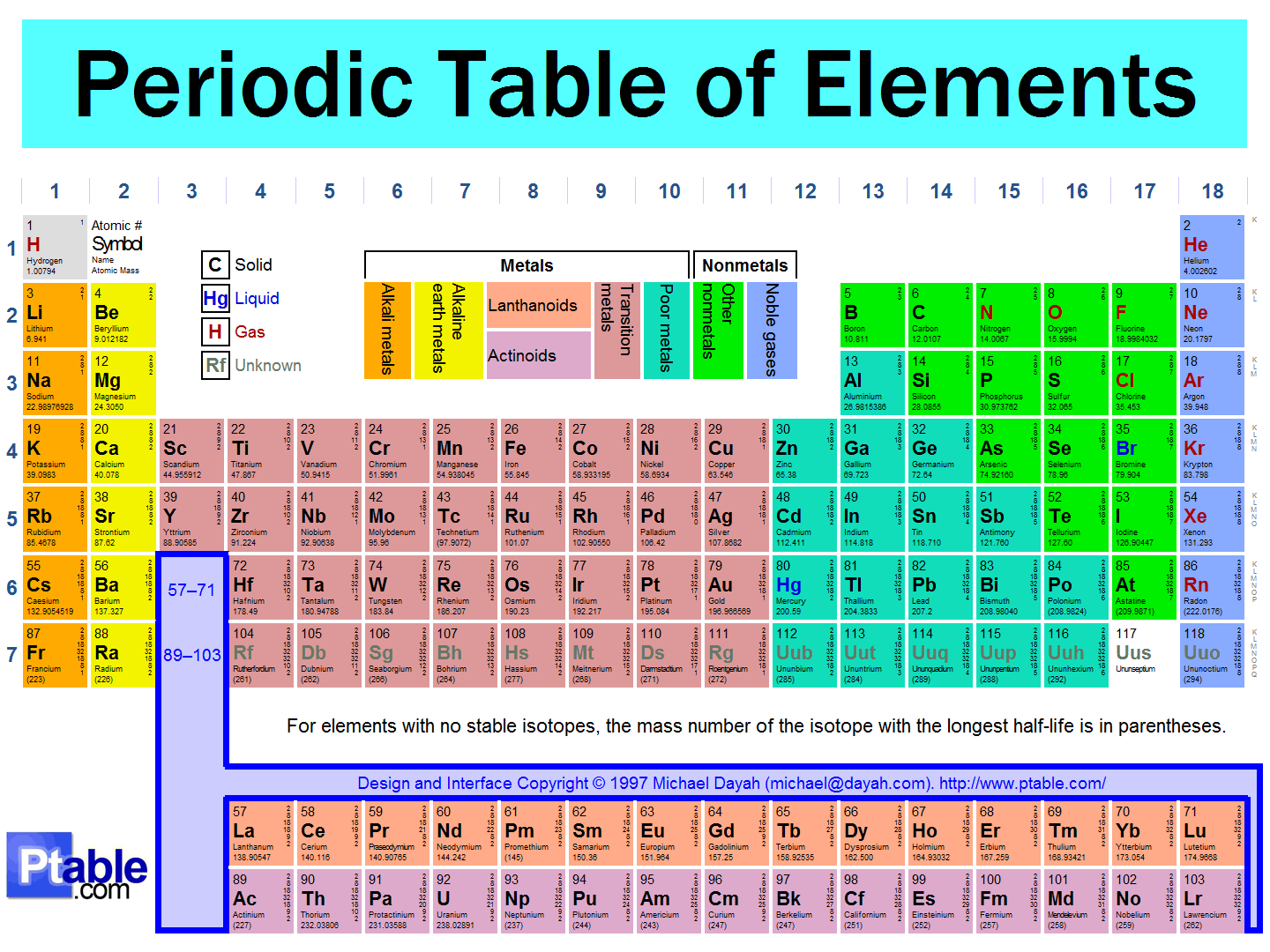



How many atoms of hydrogen are in this compound?
1
2
3
4

How man atoms of carbon are there?
1
2
3
4

How many atoms of Iron are in this compound?
1
2
3
4
How many atoms of hydrogen are in
C6H12O6
6
12
18
2
How many atoms of oxygen are in
3Fe2O3
6
9
18
2

Select the chemical formula for this molecule?
B1F3
BF
BF3
FB

What is the chemical formula for this molecule?
H1F2
H1F1
HF
HeF

What is the chemical formula for this molecule?
H1O2
H1O1
HO
H2O2

What is the chemical formula for this molecule?
C1I4
C1I1
CI4
C2I2

What is the chemical formula for this molecule?
N2He4
NeH3
N2H4
N2H2
A substance made up of atoms of two or more different elements joined by chemical bonds
Molecule
compound
polar covalent bond
nonpolar covalent bond
How many atoms of oxygen are in this compound?
2Ca(OH)2
1
2
3
4
CaF2- name?
calcium fluorate
calcium fluoride
fluoride calcite
fluorine calciumate
Na2SO4- name?
sulfur sulfate
sodium sulfide
sodium sulfate
sodium oxygenate
LiNO3- name?
lithium oxygenate
nitrogen lithate
lithium nitride
lithium nitrate
MgO- name?
oxygen magnesium
magnesium oxide
magnesium oxate
magnesium oxygenate
LiOH- name?
hydrogen lithium
lithium oxyhydride
lithium oxide
lithium hydroxide
KOH
Carbon oxide
potassium oxide
potassium hydride
potassium hydroxide
The name for the ionic compound NaF is
Sodium fluoride
Nappium fluoride
Sodium fluorine
Fluorine sodiumide
LiBr is called
lithium bromine
lithium (I) bromine
lithium bromide
lithuim (I) bromide
__ is a pure substance containing two or more kinds of atoms.
Element
compound
mixture
solution
What is the name of the compound LiCl?
Lithium Chlorine
Lithiide Chloride
Lithiide Chlorine
Lithium Chloride
What is the name of the compound K2S?
Potassium Sulfur
Potassium Sulfide
Krypton Sulfide
Krypton Sulfur
What is the name of the compound BaF2?
Barium Fluorine
Barium Fluoride
Boron Fluoride
Born Fluorine
What is the formula for Potassium Iodide?
PI
KI
PI2
KI2
What is the formula for Sodium Fluoride?
SF
SFl
NaF
NaFl
What is the formula for Magnesium Chloride?
MgCl
MgCl2
MnCl
MnCl2
What is the formula for Calcium Sulfide?
CaS
CaS2
CaSe
CaSe2
A substance made by mixing other substances together
Sediment
Insoluble
Suspension
Mixture
The substance in which a solute dissolves to produce a Mixture.
Colloid
Evaporation
Decanting
Solvent
The substance that dissolves in a solvent to produce a mixture.
Solute
Immiscible Liquid
Decanting
Mixture
The process by which water changes from a liquid to a gas or vapor.
Condensation
Evaporation
Immiscible Liquid
Solution
The process of pouring away a liquid while leaving a solid behind.
Insoluble
Sediment
Decanting
Dissolving
A substance (solid) that will not dissolve in a solvent even after mixing
Colloid
Mixture
Dissolving
Insoluble
The process in which solid particles in a liquid or gaseous fluid are removed by the use of a filter medium
Mixture
Decanting
Filtration
Evaporation
The conversion of a liquid into vapor that is subsequently condensed back to liquid form.
Dilute
Distillation
Compound
Concentrate
Substance made up of different elements joined together by a chemical bond
Dilute
Condensing
Compound
Concentrate
Make (a liquid) thinner or weaker by adding water or another solvent to it.
Dilute
Distillation
Compound
Condensing

This method is a technique used in separating a less-dense substance from a denser one.
decantation
evaporation
distillation
filtration

This technique is based on the differences of the boiling point of the substance in the mixture.
decantation
distillation
filtration
chromatography

This method is useful in a pharmaceutical industry in determining the amount of each chemical in each product.
distillation
chromatography
sieving
decantation

This method is used in separating soluble solid from a liquid such as salt from water.
evaporation
distillation
decantation
filtration

Which of of these mixtures could be separated by filtration?
sugar and milk
sand and water
milk and water
sugar and water
You want to see what colors are all present in a solution. What method would you use?
chromatography
flotation
mangetism
sifting
Which of the following best describes chromatography?
A solid is stirred in a liquid to make the solid float to the top.
A solution is heated until all the liquid turns to gas to leave a solid behind.
A solvent moves solutes up a paper based on how well the solute dissolves in the solvent.
A mixture of solids is put in a container that allows small particles to leave the container.
How to separate sugar and water?
Decantation
Distillation
Filtration
Evaporation
How to separate iron filings from flour?
Distillation
Evaporation
Filtration
Magnetic Attraction
What are the subatomic particles?
Protons, Electrons, Neutrons
Molecules, and atoms
Electrons, Protons, Nucleus
Nucleus, and Electrons
What is this subatomic particle that has positive charge?
Electron
Neutron
Proton
Megatron
What is this subatomic particle that has negative charge?
Electron
Neutron
Proton
Megatron
What is this subatomic particle that has no charge?
Electron
Neutron
Proton
Megatron
What is the smallest particle of an ELEMENT, and it has also all the properties of it?
Molecules
Nucleus
Subatomic particle
Atoms
What is the small, DENSE REGION consisting of protons and neutrons at the CENTER of an atom?
Molecules
Nucleus
Subatomic particle
Atoms
It is consisting of two or more atoms combined together in a specific arrangement. It is the smallest particle of compound that can exist independently. What is this?
Molecules
Nucleus
Subatomic particle
Atoms
Where can we find the location of the Atomic Nucleus?
Center
Left Side
Right Side
Above
What is the atomic model proposed by J.J Thompson, and suggest that negatively-charged electrons were embedded in a kind of cloud or soup of positive charge?
Asia's Next Top Model
Quantum Atomic Model
Plum Pudding Model
Nuclear Model
How many elements are in this compound formula [H2O2 ]?
2
4
8
1
How many atoms total are there in this compound Na3(OH)?
3
2
4
5

How many protons does an O2 atom have?
7
8
16
24
An atom is said to be neutral if it has same number of electrons and...…..
electrons
protons
neutrons
ions
The subatomic particle has almost no mass is.....................
proton
electron
neutron
no correct answer
This is how you find the number of neutrons in an atom.
Subtract atomic number from atomic mass
Divide atomic mass by the atomic number.
Subtract the atomic mass from the atomic number.
Add atomic mass to the atomic number.
The atomic mass is the number of .................+ ........................
protons , electrons
electrons, neutrons
protons , neutrons
positive ion , negative ion
The Atomic number is known as the _______
Number of electrons in an atom
Number of Protons in an atom
Number of neutrons in an atom
Number of Protons and electrons in an atom


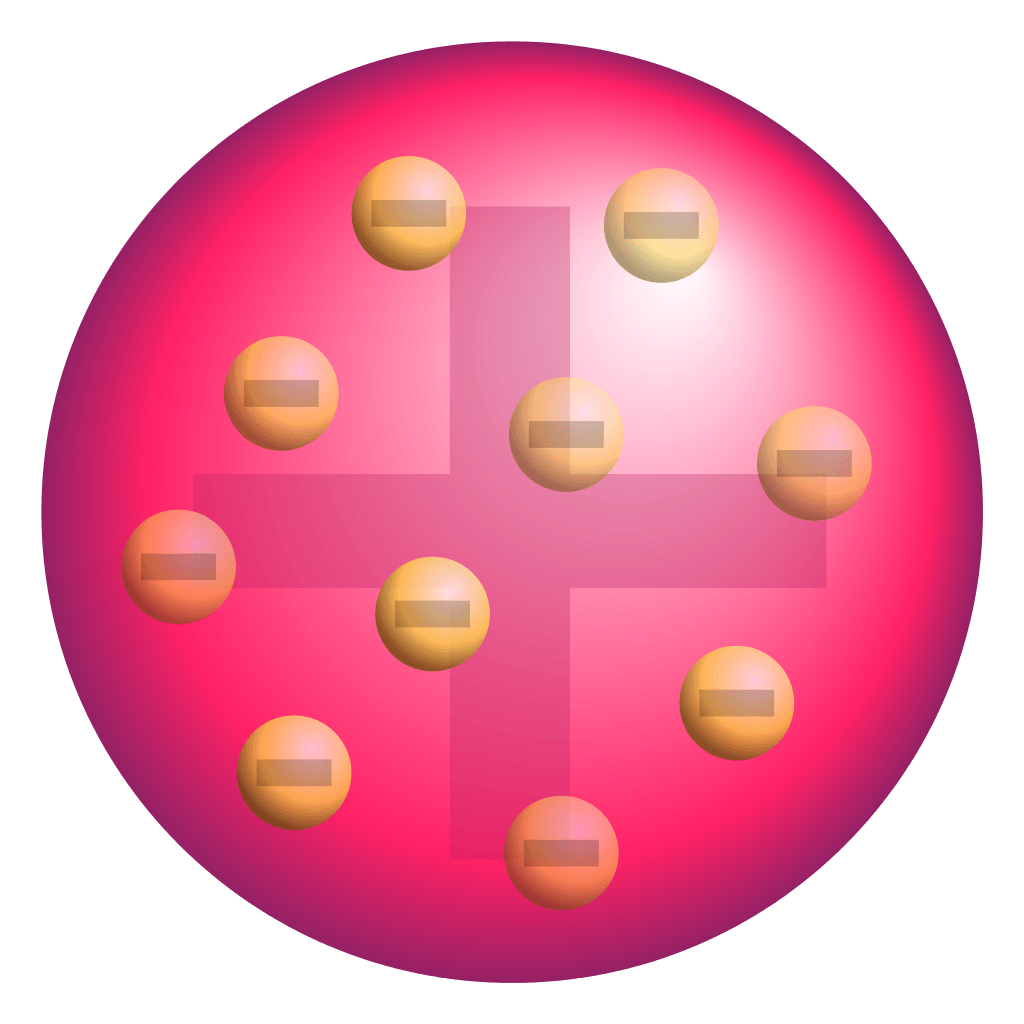
Choose the correct description of J. J. Thomson's Model of an Atom.
The model is a indivisible and indestructible sphere
The model is a semi-solid sphere in which negatively charged particles with very little mass - electrons- float freely in a positively-charged "pudding" of greater mass.
The model is a sphere in which negatively charged particles - electrons- move around the center of an atom creating an electron cloud
The model is a sphere in which negatively charged particles - electrons - move around the nucleus of an atom in a defined passes, called orbits, like planets around the sun
Why did Ernest Rutherford and his colleagues perform the Gold-Foil Experiment?
They wanted to test and confirm the Plum-Pudding model
They wanted to test John Dalton's Model
They were looking for electrons
They wanted to come up with their own Atomic Model
Which of the following is the best evidence that the particles that make up a cathode ray had a negative charge?
The particles were produced by many different metals.
The ray was attracted toward a positive electric field.
Line emission spectra for an element are always the same.
The ray caused a phosphorescent screen to glow.

JJ Thomson's experiment that he used to discover electrons
gold foil experiment
cathode ray experiment
neither of these is correct
hydrogen atom emission spectra
Choose one of the conclusions that Ernest Rutherford made based on the experimental results of his Gold-Foil experiment
He concluded that the atom is indivisible
He concluded that the atom is mostly empty space
He concluded that the atom has neutrons
He concluded that the atom is tightly packed with subatomic particles all mixed together
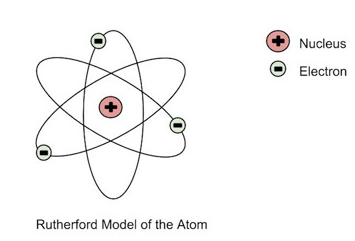
Based on Rutherford's model of the atom, electrons in the atom are located
inside of the nucleus of the atom
outside and around the nucleus of the atom
outside and inside of the nucleus of the atom
flowing freely around the positive "pudding"
Who discovered the neutron?
JOSEPH JOHN THOMSON
ERNEST RUTHERFORD
NEILS BOHR
JAMES CHADWICK
Who discovered the proton?
JOSEPH JOHN THOMSON
ERNEST RUTHERFORD
NEILS BOHR
JAMES CHADWICK
Who discovered the electron?
JOSEPH JOHN THOMSON
ERNEST RUTHERFORD
NEILS BOHR
DEMOCRITUS
Thompson

Thompson
Where are the electrons found?
In the nucleus
The same place as the protons
In shells
The same place as neutrons
The first electron shell can old how many electrons?
8
2
6
4
The second electron shell can old how many electrons?
8
2
6
4
The correct electron configuration for sodium is....
2, 8, 2
2
2, 8
2, 8, 1
Elements in group 1 have how many electrons in the outer shell?
4
1
6
8
Elements in group 5 have how many electrons in the outer shell?
1
4
6
5
The noble gases are ____ as a result of having a full outer shell.
Volatile
Reactive
Stable
Electronegative
Which of the following is an electron configuration of an element from period 3? (you can pick more than one answer)
2,5
2,8
2,8,1
2,1
What is the capacity of the second electron shell?
2
4
6
8
The number of electrons is the same as the number of neutrons.
True
False
Which statement best describes the arrangement of elements in the periodic table?
Elements are arranged in decreasing atomic mass from left to right.
Elements are arranged in decreasing atomic number from left to right.
Elements are arranged in increasing atomic number from left to right
Elements are arranged in increasing number of neutrons from left to right.
He, Ne, and Ar are all noble gases. What is common among these gases?
They are flammable.
They are highly reactive.
They are metals.
They are unreactive.
Which metal explodes when exposed to water
Alkali
Alkali Earth
Transition
Group 2 on the periodic table are the
Alkali metals
Alkali Earth Metals
Transition Metals
Group 1
Alkali Metals
Alkali Earth Metals
Transition Metals

Alkali are so reactive to air they are generally stored in what?
Water
Oil
Vaults
Cotton
a vacuum

What happens to the reactivity of the alkali metals as you move down the group?
increases
decreases
Which alkali metal is the least reactive?
lithium
sodium
potassium
rubidium
Which of the following is not an alkali metal
Sodium
Caesium
Francium
Calcium
Potassium
What is produced when an alkali metal reacts with water?
Metal oxide + Oxygen
Metal oxide + Hydrogen
Metal hydroxide + Oxygen
Metal hydroxide + Hydrogen
What are the products of the reaction between an alkali metal and oxygen?
Metal oxide + Hydrogen
Metal oxide
Metal hydroxide + hydrogen
Metal hydroxide
Which of the following does NOT describe alkali metals?
Shiny
Soft
High density
Good conductivity
What is the trend for the reactivity of alkali metals?
Reactivity decreases down the group.
Reactivity increases down the group.
Reactivity increases up the group.
There is no change in reactivity.
When added to water, which alkali metal burns with a lilac flame and whizzes across the surface of the water?
Lithium
Sodium
Potassium
Rubidium
How many valence electrons do Alkaline Earth Metals have?
1
2
3
7
Which metal is NOT an Alkaline Earth Metal?
Calcium
Radon
Strontium
Radium
Alkali Metals are brittle
True
False
Alkaline Earth metals conduct heat and electricity
True
False
Compounds of Alkaline Earth Metals form _____ solutions
Basic (Bases)
Acidic (Acids)

The letter(s) used to represent an element, instead of its full name.
Atomic branding
Chemical symbol
Elemental letters
Element mark

A combination of chemical symbols that show which elements a substance is made up of.
Chemical formula
Substance recipe
Periodic formula
Composition symbol

When a more reactive element replaces a less reactive element in a compound.
Combustion
Replacement reaction
Displacement reaction
Knock-out reaction
Which of these elements are Halogens?
Fluorine
Helium
Zinc
Bromine

Halogens are the elements of group:
1
2
7
8

Fluorine and Chlorine are ____________at room temperature.
gases
liquids
solids
amorphous

Bromine is _____________ at room temperature.
gas
liquid
solid
none

The melting and boiling points of halogens:
decrease down the group
increase down the group
remain constant
none

The atomic number and atomic mass of halogens:
increase down the group
decrease down the group
remains constant
none

Halogens exist in the:
monoatomic state
diatomic state
triatomic state
none

______________is commonly used as an antiseptic and is used to make drinking water safe and to treat swimming pools.
Fluorine
Chlorine
Bromine
Iodine

The atomic number of chlorine is 17, how many electrons does it contain?
8
17
35
none
What is the mean of the "halogens"?
acid former
salt former
alkali former
non metal former
Which of the "Halogens" has yellowish green color?
Chlorine
Bromine
Flourine
Iodine
The melting and boiling points of halogens:
decrease down the group
increase down the group
remain constant
none

