
 Worksheets
Fall Physical Science Review
Total questions: 220
Worksheet time: 3hrs 44mins
A_____ is a possible explanation for a problem using what you know and what you observe.
Theory
Conclusion
Thesis
Hypothesis
A(n) _____ occurs when what the scientist expects changes how the results are viewed.
Bias
Conclusion
Error
Fallacy
A(n) _____ represents an idea, event, or object in order to help people better understand it.
Experiment
Lab
Model
Journal
Graphing data can help you recognize______.
Hypothesis
Bias
Patterns
Inferences
The application of scientific knowledge to benefit people is ______.
Technology
Society
Ethics
Economics
The amount of space occupied by an object is its ______.
Mass
Capacity
Length
Volume
A testable prediction is a(n)_____.
Hypothesis
Exercise
Experiment
Variable
A standard for comparison that helps to ensure that the experimental result is caused by the condition being tested is the _____.
Control
Independent Variable
Constants
Dependent Variable
An organized process used to gather observations and test a hypothesis is a(n) ____.
Problem
Experiment
Exercise
Constant
A statement that describes what happens in nature is a _____.
Scientific Law
Scientific Hypothesis
Scientific Theory
Scientific Breakthrough
An explanation of an event that is based on repeated observations and experiments is a _____.
Problem
Hypothesis
Theory
Variable
An idea, event, or object that can be used to represent something you are trying to explain is a ___.
Model
Constant
Hypothesis
Variable
In an experiment to determine if the popping of popcorn is affected by the temperature at which stored, counting the popped kernels is an example of a(n)_____.
Conclusion
Control
Hypothesis
Observation
A measurement standard is defined as ______.
A system of prefixes
the distance between two points
A quantity people agree to use for comparison
the interval between two events
A beaker contains 0.32 L of water. The beaker’s volume is _____ mL.
3.2
0.032
32
320
The correct symbol for the SI unit of temperature is _____.
K
K°
C
C°
In a graph, the variable on the horizontal axis is the _____.
Variable with the longest range
Variable with the least range
Independent variable
Dependent variable
The type of graph that would be used to show how some fixed quantity is broken down into parts.
Line graph
Circle graph
Bar graph
Table
In a graph showing how the temperature of a material changes over time, temperature change is the _____.
Dependent Variable
Independent Variable
Variable with the smallest range
Variable with the largest range
Of the following, the only unit that cannot be used to express volume is _____.
kg
L
cm3
mL
The best unit to measure the distance a car travels after being released from a ramp.
meter
gram
second
ampere
The best unit to measure the mass of a chemical added to a beaker..
Meter
Gram
Second
Ampere
The best unit to measure the time it takes for a dropped object to hit the ground.
Meter
Gram
Second
Ampere
What is the SI unit for length?
Meter
Kelvin
g / cm3
Kilogram
Second
What is the SI unit for mass?
Meter
Kelvin
g / cm3
Kilogram
Second
What is the SI unit for density?
Meter
Kelvin
g / cm3
Kilogram
Second

What is the dependent variable?
Month
Profit or Loss
There isn't one
Not enough information
What is the independent variable?
Month
Profit or Loss
There isn't one
Not enough information
Which month had the most profit?
January
May
September
December
Which month had the greatest loss (lowest profit)?
January
May
September
December
What kind of graph should this be?
Line
Bar
Pie Chart
It shouldn't be a graph

According to the graph, what percentage of water is used in the shower?
16.8
26.7
21.7
15.7
According to the graph, what percentage of water is used in the toilet?
16.8
26.7
21.7
15.7
What's the dependent variable?

64,158 ml = ___________________ daL
0.0064158
6.4158
64.158
641.58
Which metric unit would be the most appropriate to measure the mass of a horse?
Grams
Pounds
Milligrams
Kilograms
Which metric unit would be the most appropriate to measure the mass of a paperclip.
Kilograms
Liters
Centimeters
Milligrams
Force that opposes the motion of objects that move through the air.
air resistance
force
gravity
inertia
A force that is directed toward the center of a curved or circular path
centripetal force
inertia
gravity
net force
A push or a pull exerted on an object
force
field
weight
friction
Force that opposes the sliding motion between two touching surfaces
friction
net force
field
air resistance
Attractive force between two objects that depends on the masses of the objects and the distance between them
gravity
net force
weight
air resistance
Tendency of an object to resist any change in its motion.
inertia
gravity
free fall
terminal velocity
States that an object moving at a constant velocity keeps moving at that velocity unless an unbalanced force acts on it.
Newton's 1st Law
Newton's 2nd Law
Newton's 3rd Law
Law of Conservation of Momentum
The maximum speed an object will reach when falling through a substance, such as air.
terminal velocity
air resistance
weight
centripetal force
Gravitational force exerted on an object.
weight
free fall
gravity
terminal velocity


Using the gravity of earth at 9.81 m/s2 , how much does a person with a mass of 35 kg weigh in Newton's?
0.28 N
343 N
3.57 N
212 N

A 20 kg bike accelerates at 10 m/s2. what was the force?
25 Newtons
20 Newtons
200 Newtons
10 Newtons


How does inertia change as mass increases?
Inertia would increase
Inertia would Decrease
Mass has no effect on inertia
It would depend on the acceleration
What states that "every object in the universe attracts every other object"?
Law of Universal Gravitation
Newton's First Law of Motion
Law of Universal Attraction
Inertia & gravity
Why does a feather fall slower than a brick?
Because it is lighter
Because it is heavier
Because it is less dense
Because it has more air resistance and a lower terminal velocity

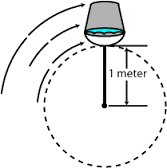
This car is turning, but there’s a puddle of water in the road. Which diagram best shows how the puddle will affect the path of the car after it hits the puddle?


What is the centripetal force acting on a satellite orbiting the Earth?
Tension
Inertia
Gravity
Acceleration
Why do astronauts appear to be weightless in space?
They are weightless, no gravity in space
They are in a state of constant free-fall
They aren't totally weightless, just in micro-gravity
Space is made up by NASA, so astronauts are just in a gravity blocking bunker

If the rocket has a mass of 5 kg, the gasses have a mass of 0.5 kg and there is 1,500 N of force being exerted, what is the acceleration of the rocket?
750 m/s2
300 m/s2
3,000 m/s2
7,500 m/s2
If the rocket has a mass of 5 kg, the gasses have a mass of 0.5 kg and there is 1,500 N of force being exerted, why does the rocket accelerate less?
The fins slow it down
The gasses have significantly less mass
Because its the action force not the reaction force
The gasses are assisted by gravity
If the rocket has a mass of 5 kg, the gasses have a mass of 0.5 kg and there is 1,500 N of force being exerted, what is the acceleration of the gas?
750 m/s2
149.5 m/s2
3,000 m/s2
7,500 m/s2
Which of the following occurs when we increase an object's mass?
A decrease in the object's momentum
An overall decrease in the object' gravitational pull
The object's inertia will increase
All of the above
None of the above
According to Newton’s Second Law, which of the following three factors are related?
Force, Mass, and Acceleration
Force, Momentum, and Velocity
Force, Speed, and Acceleration
Mass, Velocity, and Momentum
Speed, Mass, and Acceleration

After the cannon fires the cannonball, why would the cannon have less acceleration compared to the cannonball?
The cannon has more mass
The cannon has less mass
The cannon has more force acting on it
The cannon has less force acting on it

Which of the spheres have the greatest acceleration?
A
B
C
D
Which of these would be an example of friction acting as a centripetal force?
When the carnival ride spins and sticks me to the wall
When I spin a bucket of water over my head and the water stays inside the bucket
When my car goes around a sharp turn and doesn't slide off the road.
When my wheels spin in the mud, but the car stays in one spot.

Which of these experiences an acceleration of 2 m/s^2
A
B
C
D
states that an object moving at a constant velocity keeps moving at that velocity unless an unbalanced force acts on it
Newton's 1st Law
Newton's 2nd Law
Newton's 3rd Law
Law of Conservation of Momentum
If an object was accelerating at 10 m/s2, and a force of 35 newtons was required to accelerate it, what was the object's mass?
3.5 kilogram
350 kilograms
0.35 kilograms
35 kilograms

If a bowling ball and feather are dropped from the same height in the absence of air, what will happen?
The feather will hit the ground first
The bowling ball will hit the ground first
They will hit the ground at the same time
They will both float in the air
When a force is exerted on an object, an equal and opposite force is exerted by the object. These forces are referred to as ______________?
Centripetal Forces
Frictional Forces
Gravitational Forces
Action-Reaction Forces
To report the ____ of an object, we must specify both its speed and its direction .
Speed
Velocity
Displacement
Acceleration
The speedometer in your car tells you the ____ of your car.
acceleration
average speed
instantaneous speed
velocity
inertia
The rate of change of an object’s velocity is
Speed
Acceleration
Constant speed
Displacement
A freight train has more ___ than a car, so it has greater inertia.
Velocity
Mass
Speed
Acceleration

This is a graph of a student riding to school. What can you tell about the motion of the bike rider from point B to C?
The rider is accelerating.
The rider is returning at a constant speed.
The rider is stationary.
The rider has negative acceleration.

What can be said of the rider from point C to D?
The rider is accelerating.
The rider is moving back toward the start.
The rider is moving forward at a constant speed.
The rider is moving forward at a faster speed than from A to B.

What is the average speed of the rider?
0.18 km/min
5 km/min
45 km/min
50 km/min^2

Which pair of graphs show acceleration ?
B and C
B and D
C and D
D and E
B and F

Which graph shows constant (non 0) speed?
A
B
D
E

Which graph shows a stationary object?
A
B
C
D

Which graph shows an object experiencing unbalanced forces?
A
B
C
D
None of the graphs

Which graph shows constant speed ?
A
B
C
D
E

Which graph shows a stationary object?
A
B
D
E
None of these
Jose wandered 4 km at 2 km/hr. How long did Jose wander?
2 hours
8 hours
0.5 hours
2 km
How long will it take to go 150,000 m traveling at 50 km/hr?
3000 hours
3000 sec
3 hours
3 sec
The Big Bang Theory suggests that our universe formed as the result of a huge explosion that sent all existing matter flying outward from a single point. The Big Bang Theory is supported by which of these observations?
All matter in the universe is composed of the same atoms.
All galaxies appear to be moving away from all other galaxies.
All stars in the universe are approximately the same age.
The universe is relatively the same temperature in all locations.
What does it mean if a galaxy gives off light which has been shifted toward the red end of the electromagnetic spectrum?
The galaxy is much older than Earth.
The galaxy is moving away from Earth.
The galaxy is very hot and has not cooled down yet.
The remnants of an explosion are between the galaxy and Earth.
Cosmic Microwave Background Radiation (CMBR) is the term used to describe the residual microwave radiation observed everywhere in the universe that seems to have no single source. The observation of CMBR is used as evidence of The Big Bang Theory because it is believed to be -
The result of collisions between neighboring galaxies.
Particles of dust that have absorbed radioactivity.
Radiation left over from the rapid expansion of matter.
Light energy emitted from the source of The Big Bang.
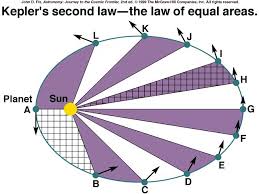
Particles are tightly packed together, usually into geometric shapes.
Bose-Einstein Condensate
Solid
Liquid
Gas
Plasma
The sub-atomic particle that is so small that the mass is nearly zero is called what?
Proton
Neutron
Electron
Quark
The tiny particle that makes up Protons and Neutrons that comes in 6 “flavors” is called what?
Muon
Gluon
Photon
Quark
The positively charged particle that makes up the identity of an element is called what?
Proton
Neutron
Electron
Positron

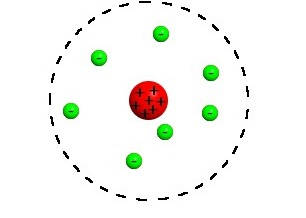
This model this model was the first to show a nucleus, consisting of protons and neutron. Electrons surround the nucleus but are not shown in distinct energy levels.
The "Rutherford Model" of the atom
The "Plum Pudding Model" of the atom
The "Quantum Mechanical Model" of the atom

This model was developed after J.J. Thompson discovered electrons, a particle smaller than an atom. It shows electrons floating freely in a positive region.
The "Plum Pudding Model" of the atom
The "Rutherford Model" of the atom
Democritus's model of the atom
The "Quantum Mechanical Model" of the atom


The temperature at which a phase change occurs turning a liquid into a solid.
Melting Point
Boiling Point
Heat of Fusion
Heat of Vaporization
The amount of energy given off when a gas turns into a liquid (also the amount of energy absorbed when a gas turns back into a liquid).
Melting Point
Boiling Point
Heat of Fusion
Heat of Vaporization
The amount of energy needed to convert a solid into a liquid.
Melting Point
Boiling Point
Heat of Fusion
Heat of Vaporization
The temperature at which a phase change occurs turning a liquid into a solid.
Melting Point
Boiling Point
Heat of Fusion
Heat of Vaporization
Which state of matter listed here has particles spread the furthest apart?
Solid
Liquid
Gas
Missouri
Which of the states of matter listed here have particles with the greatest kinetic energy?
Solid
LIquid
Gas
Euphoria
What is the main difference between plasma and gasses?
Plasma is spelled with a "P" while the "P" in gasses are silent.
Plasma is good at conducting electricity while gasses tend not to
Plasma is hot while gasses aren't ever hot
There is no difference, they are both names for the same thing
What is the main difference between liquids and gasses?
Liquids are fluids, gasses are not
All liquids are clear, but not all gasses are
All gasses are liquids, but not all liquids are gasses
Liquids change shape, but keep volume. Gasses change both shape and volume.


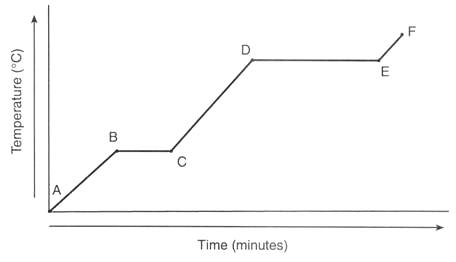
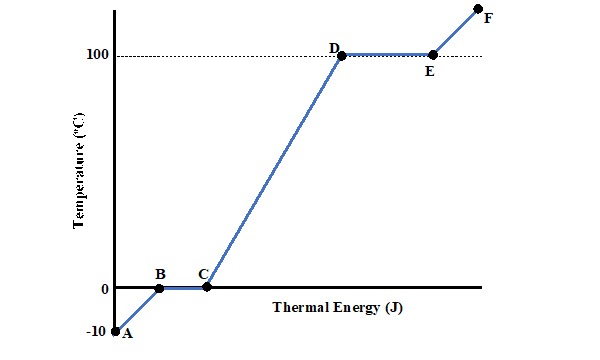
Between which two points is Heat of Vaporization?
A <----> B
B <----> C
C <----> D
D <----> E
E <----> F


Which state of matter has particles that are somewhat close together and have enough kinetic energy to slide past each other?
solid
liquid
gas


Particles in a gas move __________, than particles in a solid
faster
slower
less randomly
less fluidly
Subatomic particles with a negative charge
Electrons
Neutrons
Protons
Quarks
These are found in the nucleus and have a neutral charge.
proton
electron
neutron

The number 16 for the atomic element sulfur is the
ionic number
isotope
atomic mass
atomic number

How many protons does sulfur have?
32
16
48
12

How many electrons does sulfur have when it is neutral?
16
32
48
12
How many neutrons does Sulfur (S-32) have?
16
32
48
12
A letter or pair of letters used as a shorthand method of writing the name of an element is called the __________.
Describer
Chemical Symbol
Chemical Letters
Atomic Number
Atoms of the same element that have different numbers of neutrons are called ____.
Adams
Isotoners
Isotopes
Electrons
What is the most common element in the universe?
Carbon
Oxygen
Hydrogen
Fire
What is the charge of an electron?
+1
-1
+/- 1
0
What is the charge of an neutron?
+1
-1
+/- 1
0
What is the charge of a proton?
+1
-1
+/- 1
0
What do we call a vertical column on the periodic table?
Group
Period
Series
Pillar
What do we call a horizontal row on the periodic table?
Group
Period
Series
Pillar
What do we call the outermost layer of electrons on an atom?
Frosting Electrons
Valence Electrons
Cloud Electrons
Free Electrons
What does an Lewis Dot Diagram (LDD) show us?
Dots
Electron Dots
Valence Electrons
Protons
How many electrons can the first energy level hold?
2
4
6
Trick question, electrons are in clouds not levels.

What is part A?
Metals
Non-Metals
Metaloids
Heavy Metal
What is part B?
Metals
Non-Metals
Metaloids
Heavy Metal
What is part C?
Metals
Non-Metals
Metaloids
Heavy Metal
Why do elements in a group tend to have similar properties?
They have the same number of valence electrons
They don't, they are all unique
Because they all have similar names
Because they all have the same number of neutrons

This is a correct dot diagram for neon (Ne)
true
false


Which is the correct molecular structure for carbon dioxide CO2?



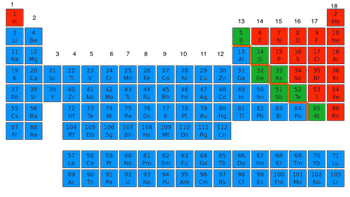
Where are metals located on the periodic table?
right side of the staircase
on the staircase
left side of the staircase

H2O has how many covalent bonds?
0
1
2
3

How many covalent bonds in this molecule
1
2
3
4

N2 is an example of a
Single Bond
Double Bond
Triple Bond

Chloroform was used as anesthesia and a sedative a long time ago. Which of these is the probable formula of the molecule shown?
Cl2
C6H12O6
CHCl3
CH4
H2O

This could be the dot diagram of
Mg
Cl
C
O
What is the goal of the Lewis Dot Structure?
To determine the electron position.
To show the element's valence electrons & bonding capabilities.
To find the atomic mass of an element.
To search for the number of electrons in an individual atom.

This is a correct dot diagram for carbon (C)
true
false
Which of the following is the correct electron-dot diagram for an atom with an electron configuration of 2-8-18-5?


Bohrs Model of the Atom shows ______ orbiting the nucleus in certain energy levels. Similar to how planets orbit the sun.
Protons
Neutrons
Electrons
I have recorded the valence numbers on my periodic table.
Yes
I do not have a copy of the periodic table
How many valence electrons does Be have?
2
4
5
9
Which element is in group 14 and period 3?
N
Na
Si
Li
Which element is in group 11 and period 5?
Na
B
Ag
Rb
How many valence electrons does Xenon have?
54
131
8
18
In what section of the periodic table can Silver be found?
Alkali Metals
Noble Gases
Transition Metals
Rare Earth Elements
An atom that gains or loses an electron becomes
an isotope
a new element
an ion
a molecule
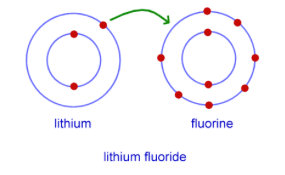
What type of bond forms CaF2
covalent bond
ionic bond
metallic bond
all answers are correct

How many electrons (total) does Si contain when it is neutral?
14
28
2
4
What are the columns referred to on the Periodic Table of Elements?
Families or groups
Periods
What are the rows referred to on the Periodic Table of Elements?
Families or groups
Periods
Atomic Mass equals the combined number of
Protons and Electrons
Electrons and Neutrons
Protons and Neutrons
The number of valence electrons ________ by 1 as you move across the period.
increases
decreases
Aluminum has an atomic number of 13 and a mass number of 27. How many neutrons does Aluminum have?
13
14
27
40
Which of the following is a metal?
Lithium
Silicon
Sulfur
Boron
Which element is a member of the halogen family?
Sulfur
Chlorine
Argon
Carbon
Which element is a member of the noble gases?
Te
Iodine
Xenon
Nitrogen
Which of the following is a nonmetal?
Sulfur
Lithium
Sodium
Silicon
Which of the following is a transition metal?
Mercury
Oxygen
Calcium
Aluminum
Where are the metalloids located on the periodic table?
To the right of the staircase
On the staircase
To the left of the staircase
Who knows
What type of element loses electrons in order to achieve a stable valence shell?
Nonmetal
Metalloid
Alkali Earth Metal
They all lose electrons
This group is the most reactive of the metals
Alkali
Alkaline earth
Transition
Other metals
Which two elements are in the same period?
Sn and Rb
F and Cl
K and Ba
Se and Te
Which element has similar properties to magnesium?
Sodium
Aluminum
Calcium
Chlorine

This group contains two elements that are used for fertilizer, and it has one of the oldest poisons on earth.
oxygen family
noble gases
nitrogen family
carbon family

