
 Worksheets
Taekwon-Do 7th Kup (Green Tags grading to Green Belt)
Total questions: 13
Worksheet time: 16mins
What is the meaning of the pattern you have learned? Complete this sentence (part 1).
(a) was the pseudonym of the (b) (c) (d) , 1876-1938.
What is the meaning of the pattern you have learned? Complete the sentence (part 2). Watch out for incorrect options!
The (a) movements in Do-San represents (b) which he devoted to furthering the (c) of Korea and it's (d) movement.
What is the purpose of the 1st part of move 7?
Block an attacking tool
Grab an attacker
Release from a grab
Name and identify the three sections.
High Section
Middle Section
Low Section
Top Section
Bottom Section
Name the three sections in Korean.
High section - (a) . Middle section - (b) . Low section - (c)
What is the significance of the number 24. A) With regard to Taekwon-Do? B) With reference to Do San.
There are 24 Taekwon-Do (a) . 24 represents the 24 (b) in a (c) and the (d) of General (e) in which he devoted his life to Taekwon-Do.
Within the three sections, there are three focus levels. Match them to the Korean word.
High Level - Eye Level
Nopunde
Middle Level - Shoulder Level
Kaunde
Low Level - Lower Abdomen
Najunde
Describe what is meant by fast motion.
Two or more movements performed with the (a) time between them.
What does the colour green signify?
The (a) growth as Taekwon-Do skills (b) .
Which part of the foot would you use? (You should be able to point to each part).
Side Kick (yop cha jirugi)
Footsword (Balkal)
Front Kick (ap cha busigi)
Front sole (Ap Kumchi)
Turning Kick (dollyo chagi)
Instep (Ap Kumchi or Baldung)
Match (point to during grading) the following parts of the hand.
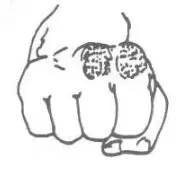
Fore Fist (Ap Joomuk)
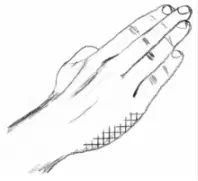
Knifehand (Sonkal)
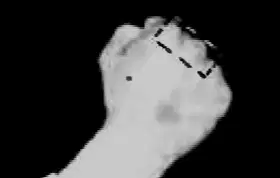
Backfist (Dung Joomuk)
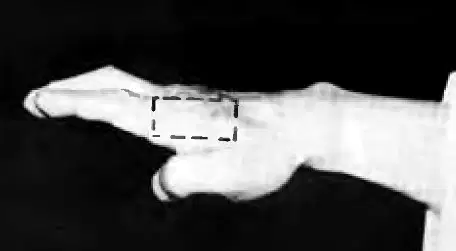
Reverse Knifehand (Sonkal Dung)
Match the English part of the hand to the Korean word.
Backfist
Dung Joomuk
Knifehand
Sonkal
Reverse Knifehand
Sonkal Dung
Forefist
Ap Joomuk
Match the English parts of the foot to the Korean word.
Footsword
Balkal
Front Sole
Ap Kumchi
Instep
Baldung

