
 Worksheets
Momentum and Energy Test Review
Total questions: 70
Worksheet time: 4hrs 30mins
_______ is stored energy.
Potential Energy
Kinetic Energy
Newton’s 2nd Law
Newton’s 3rd Law.
___________ is energy in motion
Potential Energy
Kinetic Energy
Newton’s 2nd Law
Newton’s 3rd Law.
Energy can never be created nor destroyed only changed from one form to another but the total amount of energy remains the same.
Law of conservation of energy
Law of conservation of momentum
Energy creation theory
Energy constant formula
Momentum can never be created nor destroyed only transferred from one object to another but the total amount of momentum in the system remains the same.
Law of conservation of energy
Law of conservation of momentum
Energy creation theory
Energy constant formula
The momentum of an object depends upon the object's ___________&_____________.
size and shape
mass and inertia
mass and veloctiy
mass and energy
The product of the average net force on an object and the time interval over which the force acts.
Impulse
Momentum
Angular momentum
Impulse-momentum theorem
The product of an object's mass and the object's velocity; measured in kg m/s
Impulse
Momentum
Kinetic energy
Gravitational potential energy
States that the momentum of any closed, isolated system does not change.
Law of conservation of angular momentum
Law of conservation of energy
Law of conservation of momentum
Lenz's Law
The stored energy in a system resulting from the gravitational force between objects.
Kinetic energy
Thermal energy
Elastic potential energy
Gravitational potential energy
Stored energy due to an object's change in shape.
Kinetic energy
Thermal energy
Elastic potential energy
Gravitational potential energy
A type of collision in which the kinetic energy before and after the collision remains the same.
Elastic collision
Inelastic collision
Conserved collision
Kinetic collision
A type of collision in which the kinetic energy after the collision is less than the kinetic energy before the collision.
Elastic collision
Inelastic collision
Conserved collision
Kinetic collision
As a student walks downhill at constant speed,
his gravitational potential energy
increases and his kinetic energy increases
increases and his kinetic energy remains the
same
decreases and his kinetic energy increases
decreases and his kinetic energy remains the
same
As a student walks downhill at constant speed,
his gravitational potential energy
increases and his kinetic energy increases
increases and his kinetic energy remains the
same
decreases and his kinetic energy increases
decreases and his kinetic energy remains the
same

During a collision. an object experiences an impulse. How can this impulse be calculated?
Multiplying force by time
Multiplying mass by velocity
Dividing velocity by time
Multiplying mass by acceleration
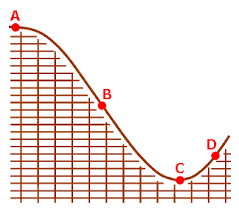
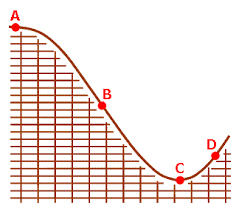
Which has more momentum, a large truck moving at 30 miles per hour or a small truck moving at 30 miles per hour?
the large truck
the small truck
Both have the same momentum
If the momentum of an object changes and its mass remains constant
its velocity is changing
it is accelerating or decelerating
there is a force acting on it
All of the above
The momentum change of an object is equal to the
force acting on it
velocity change of the object
impulse acting on it.
object's mass times the force acting on it.
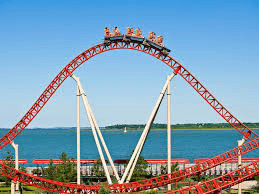
When a roller coaster is at the top of a hill it has
high potential energy
high kinetic energy
low potential energy
equal amounts of kinetic and potential energy
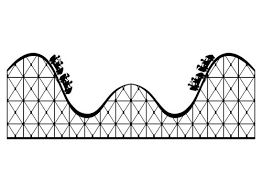
When a roller coaster is at the bottom of a hill it has
high potential energy
high kinetic energy
low kinetic energy
equal amounts of kinetic and potential energy
If all of these animals were running at the same speed, which one would have the highest momentum?


The picture is demonstrating an example of ______ .

The picture is an example of _____ .
Which of the following is NOT an example of kinetic energy?
an arrow flying through the air
a book on a shelf
kicking a soccer ball
chewing gum
Which of the following is NOT an example of potential energy?
water at the top of a waterfall
an arrow pulled back on a bow
a fully-charged battery
shooting a ball in the hoop
Calculate the kinetic energy of a moving 5 kg object travelling at a velocity of 2 m/s.
2 J
5 J
10 J
20 J


Two skaters begin at rest. Skater 1 has a smaller mass than Skater 2. After they push off each other,...
Skater 1 experiences a greater change in momentum
Skater 2 experiences a greater change in momentum
Skater 1 has a greater speed than Skater 2
Skater 1 experiences a greater force
Which of the following has the MOST momentum?
rolling ping-pong ball
rolling bowling ball
rolling soccer ball
rolling basketball
If an object has a momentum of 40 kgm/s and a mass of 60 kg, what is it's velocity?
2400 m/s
1.5 m/s
240 m/s
.67 m/s
Potential energy depends on ____________ & ______________.
mass, speed
mass, position
speed, position
mass, weight
Kinetic energy depends on _____________ & _____________.
mass, speed
mass, position
mass, weight
speed, distance
Calculate the impulse on the ball.


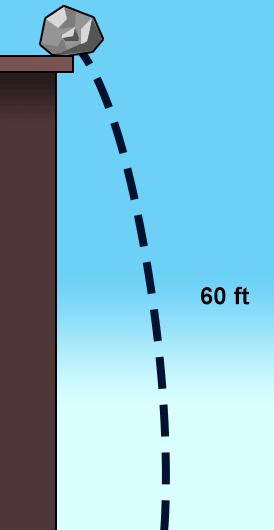
The rock in the picture is pushed over the edge and it begins to fall. Which type of energy conversion is taking place?
mechanical to heat
sound to mechanical
potential to kinetic
kinetic to potential

